We know how important the spine anterior is. It plays a key role in the vertebral column. This part of the spine helps us stand and keeps our spine stable. At Liv Hospital, we focus on how it helps us diagnose and treat spinal problems.
Our team says the spine anterior carries a lot of our body’s weight. Knowing how it works is key to managing our spine well.
Key Takeaways
- The spine anterior plays a critical role in weight-bearing and spinal stability.
- Understanding the spine anterior is essential for diagnosing spinal disorders.
- Liv Hospital provides expert, patient-focused spine management.
- The vertebral column’s anterior portion is vital for maintaining spinal stability.
- Advanced multidisciplinary solutions are available for spine care.
The Fundamentals of Spinal Column Anatomy
The vertebral column, or spine, is key to our skeletal system. It helps us stand, twist, and bend. Knowing about spinal anatomy is important for health.
Overview of the Vertebral Column Structure
The spine has 33 vertebrae, split into five parts: cervical, thoracic, lumbar, sacrum, and coccyx. The cervical area has 7 vertebrae, the thoracic has 12, and the lumbar has 5. The sacrum and coccyx are made of fused vertebrae.
The spine’s shape and vertebrae arrangement are unique. The vertebral bodies carry our weight. The posterior elements protect the spinal cord and keep the spine stable.
Anterior vs. Posterior Spine Regions
The spine is split into two main areas: the anterior and posterior spine. The anterior spine includes the vertebral bodies and discs. It’s key for weight-bearing and flexibility.
The posterior spine has the posterior elements like pedicles and spinous processes. These parts add support and protect the spinal cord.
Defining the Spine Anterior: Location and Boundaries
Understanding the spine anterior means knowing its location and role in the vertebral column. It’s a key part of the spinal anatomy.
Anatomical Definition of the Anterior Spine
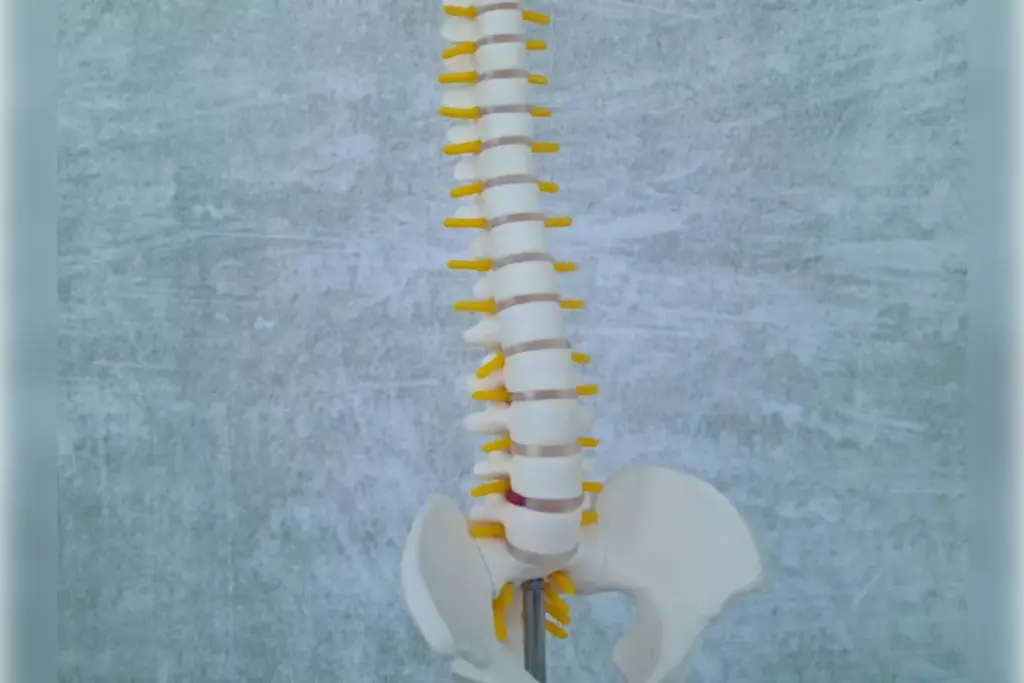
The anterior spine includes the vertebral bodies and intervertebral discs. It stretches from the anterior longitudinal ligament to the posterior longitudinal ligament. This area is vital for supporting our body’s weight and allowing spinal movement.
The anterior longitudinal ligament runs along the front of the vertebral bodies, keeping the spine stable. On the other hand, the posterior longitudinal ligament is inside the vertebral canal. It runs along the back of the vertebral bodies, helping keep the spinal canal strong.
Relationship to Surrounding Structures
The spine anterior is near many important structures. It’s bordered by the anterior and posterior longitudinal ligaments. The spinal cord and nerve roots are behind the anterior spine, inside the vertebral canal.
- The anterior spine is next to vital organs, depending on the spinal level.
- In the thoracic area, it’s near the esophagus and trachea.
- In the lumbar area, it’s close to the abdominal organs.
Knowing how the spine anterior relates to other structures is key for diagnosing and treating spinal issues. The detailed anatomy of this area needs precise knowledge to understand it well.
Structural Components of the Spine Anterior
Understanding the spine’s front part is key to its health. The spine’s front, or anterior, has several important parts. These parts support the spine, help it move, and absorb shock.
Vertebral Bodies: The Foundation
Vertebral bodies are the spine’s weight-carrying parts. They are at the front of each vertebra. Made of strong yet light bone, they bear most of our body’s weight.
As you go down the spine, these bodies get bigger. This is because they need to carry more weight. For example, the lower back vertebrae are larger than those in the neck.
Intervertebral Discs: Structure and Function
Intervertebral discs sit between the vertebral bodies. They are vital for the spine’s flexibility and shock absorption. Each disc has two main parts: the nucleus pulposus and the annulus fibrosus.
- The nucleus pulposus is the soft, gel-like center that absorbs shock.
- The annulus fibrosus is the tough outer layer that supports the spine.
These parts help the spine bend, twist, and absorb pressure. Healthy discs are key for keeping the spine mobile and preventing damage.
Anterior Longitudinal Ligament
The anterior longitudinal ligament (ALL) is a strong band along the spine’s front. It runs from the skull to the sacrum. It adds extra support to the spine’s front.
The ALL is vital for keeping the spine stable, mainly when it extends. It also helps prevent too much movement between vertebrae. This reduces injury and degeneration risks.
In summary, the spine’s front parts, like vertebral bodies, discs, and the ALL, make the spine strong, flexible, and shock-absorbing.
Regional Variations in Anterior Spine Anatomy
Exploring the anterior spine, we find different shapes and sizes in the cervical, thoracic, and lumbar areas. These differences are key for spotting and treating spinal problems.
Cervical Anterior Spine Features
The cervical spine is the most flexible part of the spine. Its vertebral bodies are smaller and more fragile. The anterior longitudinal ligament is very important here, helping to keep the spine stable.
The cervical spine’s front side also has the prevertebral fascia. This fascia wraps around the vertebral bodies and longus colli muscles. It’s vital for the spine’s function and health.
Thoracic Anterior Spine Characteristics
The thoracic spine is different because it connects with the ribs. Its vertebral bodies are a bit bigger than in the cervical area. They have special facets for joining with the ribs, forming the costovertebral joints.
The anterior longitudinal ligament is also key in the thoracic spine, giving it support from the front. The sympathetic trunk, near the vertebral bodies, also affects the thoracic spine’s front side.
Lumbar Anterior Spine Anatomy
The lumbar spine has larger vertebral bodies, carrying a lot of our body’s weight. Its intervertebral discs are thicker, making it flexible and strong.
The anterior longitudinal ligament is important in the lumbar spine too, supporting it from the front. The muscles around the lumbar spine, like the psoas major, also play a role.
Knowing about these differences in the anterior spine is important. It helps doctors and patients understand how the spine works and stays healthy.
Key Fact #1: The Spine Anterior Bears 80% of Body Weight
Our spine’s front part, the spine anterior, carries a big part of our body weight every day. It’s key for supporting our body and helping us move.
Biomechanics of Weight Distribution
The spine anterior is made to spread weight well. The vertebral bodies and intervertebral discs work together. They help the spine support our weight and stay flexible.
Weight distribution in the spine anterior is complex. The vertebral bodies bear the weight, and the discs act as shock absorbers. They protect the spine from too much stress.
Consequences of Excessive Loading
Too much weight on the spine anterior can cause spinal problems. This can lead to degenerative disc disease and vertebral compression fractures.
Keeping a healthy weight, good posture, and regular exercise can help. Knowing how important the spine anterior is helps us protect our spinal health.
Key Fact #2: Vascular Supply to the Spine Anterior
Knowing how blood reaches the front of the spine is key. It’s vital for keeping the spinal cord and vertebral bodies healthy. The blood supply to this area is complex and very important.
Anterior Spinal Artery: Critical Blood Supply
The anterior spinal artery is a major blood supplier. It comes from the vertebral arteries, which branch off the subclavian artery. This artery runs along the spinal cord’s front, giving blood to the spinal cord’s front part and the cells in the anterior horn.
The anterior spinal artery forms from two branches of the vertebral arteries. It gets extra blood from radiculomedullary arteries. These arteries come from segmental arteries. The artery feeds the spinal cord’s front, including the cells in the anterior horn and the start of the posterior horn.
Vertebral Body Vasculature
The vertebral bodies get their blood from segmental arteries, which branch off the aorta. These arteries create the equatorial arteries for the vertebral body’s edge and the metaphyseal arteries for the endplates and metaphysis.
| Region | Blood Supply | Clinical Significance |
|---|---|---|
| Anterior Spinal Cord | Anterior Spinal Artery | Supplies anterior two-thirds of spinal cord |
| Vertebral Bodies | Segmental Arteries | Supplies vertebral bodies and endplates |
In conclusion, the blood supply to the spine’s front is complex. It involves the anterior spinal artery and segmental arteries. Knowing this is key to understanding the spine’s front and managing related health issues.
Key Fact #3: Common Pathologies of the Spine Anterior
It’s important to know about common spine anterior pathologies for good spinal health. The front part of the spine can get sick in many ways. This can really hurt a person’s life quality.
We’ll look at three big problems: herniated discs, vertebral compression fractures, and degenerative disc disease. These issues are common and can be very serious if not treated right.
Herniated Discs and Anterior Protrusion
Herniated discs happen when the soft inside of the disc leaks out. This can cause pain, numbness, and weakness in the back and legs.
- Symptoms: Pain, numbness, tingling, and weakness
- Causes: Aging, wear and tear, injury
- Treatment: Conservative management, physical therapy, surgery in severe cases
Vertebral Compression Fractures
Vertebral compression fractures happen when a vertebra collapses. This can be because of osteoporosis or injury. It can cause a lot of back pain and make the spine look different.
Risk Factors:
- Osteoporosis
- Trauma
- Cancer
It’s very important to find and treat these problems early to avoid more harm.
Degenerative Disc Disease
Degenerative disc disease is when the discs between the vertebrae wear out. This can cause pain and make it hard to move.
Symptoms and Treatment:
- Pain and stiffness in the back
- Conservative management through physical therapy and medication
- Surgical options in advanced cases
In conclusion, the spine’s front part can get sick in many ways. We need to pay attention and treat these problems quickly. Knowing about these issues is the first step to keeping our spines healthy and feeling good.
Key Fact #4: Surgical Approaches to the Spine Anterior
Surgical treatments for the spine anterior are key for many spinal issues. The spine anterior supports a lot of our body’s weight. It can suffer from problems like degenerative disc disease, herniated discs, and fractures. Surgery aims to ease pain, improve function, and stabilize the spine.
Anterior Cervical Discectomy and Fusion (ACDF)
ACDF is a common surgery for neck pain and radiculopathy. It’s used for degenerative disc disease or herniated discs in the neck. The surgeon removes the bad disc and fuses the vertebrae together. This helps stabilize the spine and can greatly improve a patient’s life.
Benefits of ACDF include: less pain, better neck movement, and stopping further disc wear.
Anterior Lumbar Interbody Fusion (ALIF)
ALIF treats lower back pain from degenerative disc disease or spondylolisthesis. It involves removing the bad disc and fusing the vertebrae. This method is effective in reducing pain and improving function in the lower back.
Key advantages of ALIF: it’s less invasive, has quicker recovery times, and better fusion rates.
Artificial Disc Replacement
Artificial disc replacement is a surgery that replaces a bad disc with an artificial one. It aims to keep the spine mobile and reduce pain. This option is for those with degenerative disc disease or herniated discs who haven’t gotten better with other treatments.
- Preserves spinal mobility
- Reduces pain
- May reduce the risk of adjacent segment disease
Spine surgery can seem scary. Our team is here to offer full care and support. By using advanced methods like ACDF, ALIF, and artificial disc replacement, we aim to help our patients live better lives.
Key Fact #5: Maintaining Anterior Spine Health
We can lower the risk of spinal problems by focusing on the anterior spine. Keeping the spine healthy involves good posture, regular exercise, and the right diet.
Proper Posture and Ergonomics
Good posture is key to lessening strain on the anterior spine. Good ergonomics in daily tasks, like sitting and lifting, helps avoid spinal damage.
To keep good posture, pay attention to your daily actions. For example, when sitting, make sure your feet are on the floor or on a footrest. Your knees should be at or below hip level. When lifting, bend at the knees, not the waist.
Core Strengthening Exercises
Core exercises are vital for the anterior spine. A strong core helps keep the spine stable and lowers injury risk.
Some great core exercises include:
- Planks
- Bridges
- Pelvic tilts
- Superman exercises
It’s important to do these exercises right to avoid injury. Getting advice from a healthcare expert or physical therapist is a good idea.
Nutritional Considerations for Bone Health
Eating foods rich in important nutrients is key for bone health, including the anterior spine. Calcium and vitamin D are very important for strong bones.
| Nutrient | Food Sources | Benefit |
|---|---|---|
| Calcium | Dairy products, leafy greens, fortified foods | Essential for bone density |
| Vitamin D | Fatty fish, fortified dairy products, sunlight exposure | Enhances calcium absorption |
| Magnesium | Nuts, seeds, whole grains | Supports bone mineralization |
Eating these nutrients and living a healthy lifestyle helps keep your anterior spine healthy.
Conclusion: The Vital Importance of Spine Anterior Health
Keeping the spine anterior healthy is key for our overall well-being. We’ve looked into how the spine anterior works and why it’s so important. It helps carry our body weight and lets us move freely.
Knowing how the spine anterior is structured helps us understand its role. We’ve talked about its parts and how problems like herniated discs can affect it. We’ve also covered how surgery can help fix these issues.
To keep the spine anterior healthy, we need to stand right, do exercises that strengthen our core, and eat well. These actions help keep our spine strong and healthy.
We believe that taking care of the spine anterior is vital for our health. We urge everyone to focus on their spinal health. This includes making smart choices and seeing a doctor when needed.
FAQ
What is the spine anterior, and what is its role in spinal anatomy?
The spine anterior is the front part of the spine. It includes the vertebral bodies and intervertebral discs. It helps keep the spine stable and supports a lot of the body’s weight.
What are the structural components of the spine anterior?
The spine anterior has vertebral bodies, intervertebral discs, and the anterior longitudinal ligament. Together, they support the spine, help it move, and absorb shock.
How does the spine anterior vary across different regions of the spine?
The spine anterior changes in different parts of the spine. The cervical, thoracic, and lumbar spine have unique features. Knowing these differences helps in diagnosing and treating spinal problems.
What is the significance of the anterior spinal artery in supplying blood to the spine anterior?
The anterior spinal artery is vital for the spine anterior. It brings oxygen and nutrients to the spinal cord and vertebral bodies. Keeping it healthy is key to the spine’s function and integrity.
What are some common pathologies that affect the spine anterior?
Problems like herniated discs, vertebral compression fractures, and degenerative disc disease affect the spine anterior. These issues can harm spinal health and quality of life.
What surgical approaches are used to treat conditions affecting the spine anterior?
To treat spine anterior issues, surgeries like Anterior Cervical Discectomy and Fusion (ACDF) and Anterior Lumbar Interbody Fusion (ALIF) are used. Artificial disc replacement is also an option. These methods help with various spinal conditions.
How can individuals maintain the health of their spine anterior?
Keeping the spine anterior healthy involves good posture, core exercises, and nutrition for bone health. These steps can lower the risk of spinal disorders.
What is the importance of understanding the spine anterior in maintaining overall spinal health?
Knowing about the spine anterior is key to spinal health. It helps individuals protect and preserve their spine anterior.
What is the role of the anterior longitudinal ligament in the spine anterior?
The anterior longitudinal ligament supports the spine anterior. It runs along the front of the spine, adding stability and support.
How does excessive loading on the spine anterior affect spinal health?
Too much weight on the spine anterior can cause problems like degenerative disc disease and vertebral fractures. It shows why keeping the spine aligned and balanced is important.
What is the spine anterior, and what is its role in spinal anatomy?
The spine anterior is the front part of the spine. It includes the vertebral bodies and intervertebral discs. It helps keep the spine stable and supports a lot of the body’s weight.
What are the structural components of the spine anterior?
The spine anterior has vertebral bodies, intervertebral discs, and the anterior longitudinal ligament. Together, they support the spine, help it move, and absorb shock.
How does the spine anterior vary across different regions of the spine?
The spine anterior changes in different parts of the spine. The cervical, thoracic, and lumbar spine have unique features. Knowing these differences helps in diagnosing and treating spinal problems.
What is the significance of the anterior spinal artery in supplying blood to the spine anterior?
The anterior spinal artery is vital for the spine anterior. It brings oxygen and nutrients to the spinal cord and vertebral bodies. Keeping it healthy is key to the spine’s function and integrity.
What are some common pathologies that affect the spine anterior?
Problems like herniated discs, vertebral compression fractures, and degenerative disc disease affect the spine anterior. These issues can harm spinal health and quality of life.
What surgical approaches are used to treat conditions affecting the spine anterior?
To treat spine anterior issues, surgeries like Anterior Cervical Discectomy and Fusion (ACDF) and Anterior Lumbar Interbody Fusion (ALIF) are used. Artificial disc replacement is also an option. These methods help with various spinal conditions.
How can individuals maintain the health of their spine anterior?
Keeping the spine anterior healthy involves good posture, core exercises, and nutrition for bone health. These steps can lower the risk of spinal disorders.
What is the importance of understanding the spine anterior in maintaining overall spinal health?
Knowing about the spine anterior is key to spinal health. It helps individuals protect and preserve their spine anterior.
What is the role of the anterior longitudinal ligament in the spine anterior?
The anterior longitudinal ligament supports the spine anterior. It runs along the front of the spine, adding stability and support.
How does excessive loading on the spine anterior affect spinal health?
Too much weight on the spine anterior can cause problems like degenerative disc disease and vertebral fractures. It shows why keeping the spine aligned and balanced is important.
References
- University of Maryland Medical System (UMMS). (n.d.). A Patient’s Guide to Anatomy and Function of the Spine. Retrieved from https://www.umms.org/ummc/health-services/orthopedics/services/spine/patient-guides/anatomy-function (umms.org)
- Goodman Campbell. (n.d.). Spine Anatomy. Retrieved from https://www.goodmancampbell.com/conditions/spine/spine-anatomy/ (goodmancampbell.com)
- Lumen Learning. (n.d.). The Vertebral Column. In Anatomy & Physiology I. Retrieved from https://courses.lumenlearning.com/suny-ap1/chapter/the-vertebral-column (Lumen Learning)
- National Center for Biotechnology Information (NCBI). (n.d.). StatPearls: Anatomy, Back, Vertebral Column. Retrieved from https://www.ncbi.nlm.nih.gov/books/NBK525969/ (NCBI)
- Kenhub. (n.d.). The Spinal Cord — Anatomy, Structure, Tracts and Function. Retrieved from https://www.kenhub.com/en/library/anatomy/the-spinal-cord (Kenhub)