
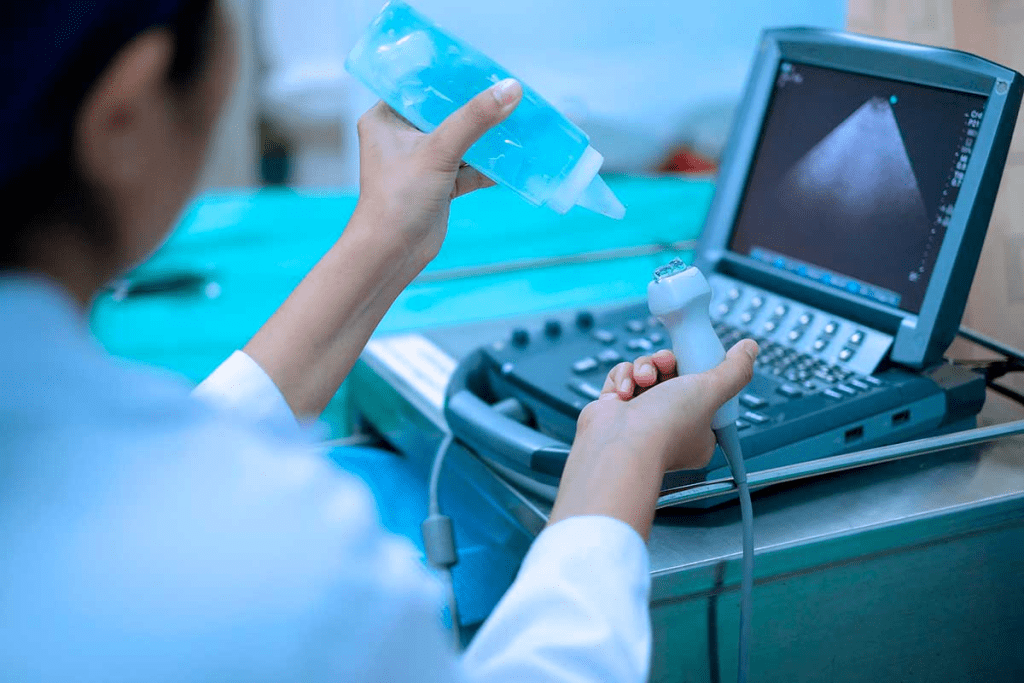
Ultrasound technology has changed how doctors diagnose diseases, including cancer, without surgery. About 1 in 2 people will get some kind of cancer in their life. Finding cancer early is key to treating it well.
Can you see cancer in the abdomen with ultrasound? Yes, in many cases, ultrasound can help doctors spot abnormal growths or masses. It sends high-frequency sound waves to create images inside the body, making it a useful tool in early cancer detection.
Ultrasound is especially great for checking the belly area. It can spot problems in organs like the liver, pancreas, and kidneys. Can you see cancer in the abdomen with ultrasound? While not always conclusive, ultrasound often helps identify suspicious areas that may need further testing.
Finding cancer early in the belly can really help patients. That’s why ultrasound is often used as a first step in evaluating abdominal pain or other symptoms.
Key Takeaways
- Ultrasound is a non-invasive diagnostic tool.
- It is effective in detecting various types of cancer.
- Abdominal ultrasound can identify cancers in organs like the liver and pancreas.
- Early detection improves treatment outcomes.
- Ultrasound is a valuable tool in medical diagnosis.
Understanding Ultrasound Technology
Ultrasound technology is key in medical diagnostics. It uses sound waves to create detailed images inside the body. This method is safe and shows real-time images, making it very useful.
How Ultrasound Imaging Works
Ultrasound imaging works by sending and receiving sound waves. These waves hit tissues and organs, bouncing back as echoes. The device captures these echoes and turns them into images.
The quality of these images depends on the sound wave frequency. Higher frequencies give clearer images but don’t go as deep. Lower frequencies penetrate deeper but are less detailed.
Key to effective ultrasound imaging is the skill of the operator. The operator must carefully move the probe to get the right views. This makes it highly dependent on the operator’s skill.
Types of Ultrasound Examinations
There are many types of ultrasound exams, each for different needs. Abdominal ultrasound is common for checking the liver, gallbladder, and kidneys. It helps find gallstones, liver disease, and some cancers.
- Transvaginal ultrasound is for gynecological exams, showing detailed images of female organs.
- Transrectal ultrasound checks the prostate gland in men.
- Musculoskeletal ultrasound looks at muscle, tendon, and ligament injuries.
Doctors say ultrasound is vital in medicine. It’s used in many areas, from checking on babies to finding cancers.
“Ultrasound is a must-have tool in medicine. It’s safe and shows images in real-time. This is key for guiding treatments and checking how the body works.”
Ultrasound technology is getting better. This could lead to finding and treating diseases, like cancers, sooner.
The Role of Ultrasound in Cancer Detection
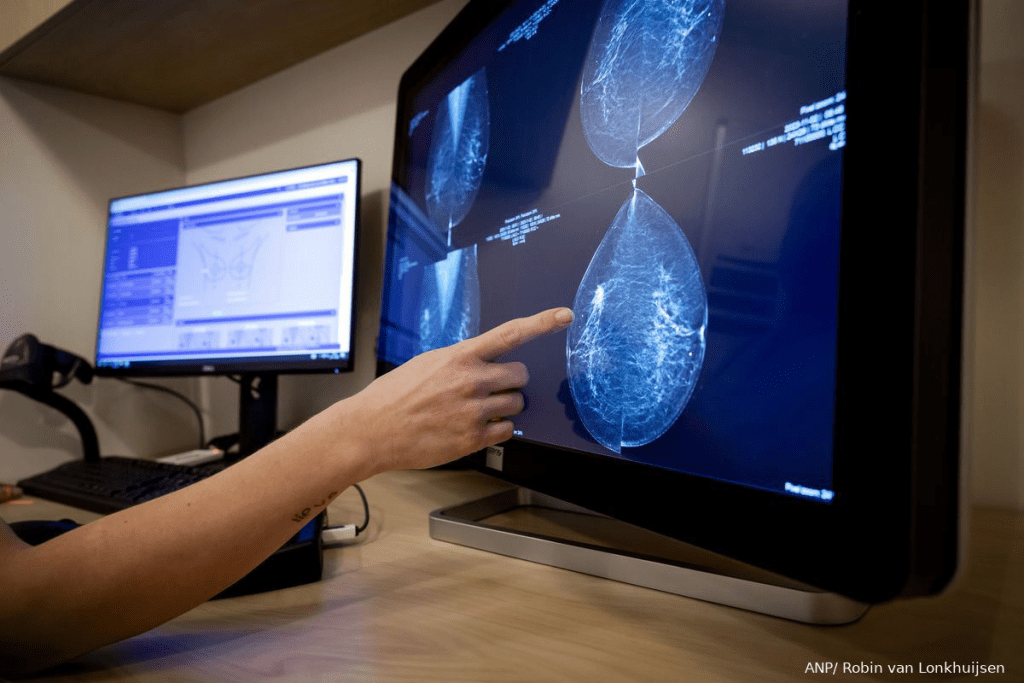
Ultrasound technology is key in finding cancer, giving doctors a non-invasive way to spot tumors. It’s safe, works well, and shows detailed pictures of inside the body.
Advantages of Ultrasound for Cancer Screening
Ultrasound is great because it doesn’t hurt or harm like other tests do. It’s also easy to get and not as expensive as MRI or CT scans.
It’s best for checking organs that are easy to see, like the liver and kidneys. It can find tumors and other problems that might mean cancer. Plus, it lets doctors do biopsies right away, making them more accurate.
Limitations of Ultrasound in Oncology
Even though ultrasound is helpful, it has some big downsides. It depends a lot on who’s doing it. The quality of the pictures and how well they can find problems can change a lot.
It’s also hard to see some cancers, like those in the pancreas. Sometimes, it can’t tell if a spot is bad or not, leading to more tests.
Can You See Cancer in the Abdomen with Ultrasound?
Ultrasound technology is key in finding and watching over abdominal cancers. It’s a non-invasive way to see inside the body. This method is great for checking organs in the belly.
Abdominal Ultrasound Capabilities
Ultrasound can help detect cancers such as those in the liver, pancreas, and kidneys. It shows live images. This helps doctors see how big the tumor is, where it is, and if it’s spreading.
Ultrasound is good at showing different organs in the belly. For example, it can find liver spots, check their details, and help with biopsies if needed.
| Cancer Type | Ultrasound Detection Capability | Factors Affecting Visibility |
| Liver Cancer | High | Tumor size, location, and patient obesity |
| Pancreatic Cancer | Moderate | Gas in the gastrointestinal tract, tumor location |
| Kidney Cancer | High | Tumor size, patient body habitus |
Factors Affecting Visibility of Abdominal Cancers
Many things can change how easy it is to see cancers on ultrasound. These include how big and where the tumor is, how fat the patient is, and if there’s gas in the belly. Bigger tumors are easier to spot, but smaller ones can be harder.
Being overweight can also mess with ultrasound pictures. In fat patients, the belly wall can block the sound waves. This makes it tough to get clear pictures of what’s inside.
Key factors affecting visibility include:
- Tumor size and location
- Patient body habitus
- Presence of gas in the gastrointestinal tract
Knowing these things helps doctors understand what ultrasound pictures mean. It tells them if they need to do more tests.
Liver Cancer Detection Through Ultrasound
Hepatocellular carcinoma, a common liver cancer, can be found with ultrasound. This method is key in diagnosing and tracking liver diseases.
Hepatocellular Carcinoma Appearance on Ultrasound
Ultrasound shows hepatocellular carcinoma as a hypoechoic or hyperechoic mass. The look can change based on the tumor’s size and type. Larger or more complex tumors may show a different echo pattern.
Doppler ultrasound helps see if the tumor is vascular. This is a key sign for diagnosing hepatocellular carcinoma. The tumor’s blood flow affects how it looks on ultrasound.
Screening Protocols for High-Risk Patients
Regular checks are vital for those at high risk, like those with cirrhosis or chronic hepatitis B. The American Association for the Study of Liver Diseases suggests ultrasound every six months for these groups.
| Risk Factor | Screening Frequency | Recommended Modality |
| Cirrhosis | Every 6 months | Ultrasound |
| Chronic Hepatitis B | Every 6 months | Ultrasound |
| Family History of Liver Cancer | Every 6-12 months | Ultrasound |
Early detection through regular screening can greatly improve treatment results for patients with hepatocellular carcinoma. It’s critical for those at high risk to follow the recommended screening plans.
Pancreatic Cancer and Ultrasound Imaging
The pancreas is deep in the abdomen, making it hard to find tumors with ultrasound. Yet, ultrasound is a key tool for checking the pancreas for problems.
Challenges in Detecting Pancreatic Tumors
There are a few reasons why finding pancreatic tumors with ultrasound is tough. These include:
- Deep-seated location: The pancreas is behind the stomach and intestines. This makes it hard for ultrasound waves to get through.
- Gas-filled intestines: Gas in the intestines can mess with ultrasound waves. This causes blurry images of the pancreas.
- Patient factors: Being overweight or having a lot of gas can make it even harder to get clear images.
Endoscopic Ultrasound for Pancreatic Cancer
To get better images, endoscopic ultrasound (EUS) is used for pancreatic cancer. EUS uses an endoscope with an ultrasound probe to get close to the pancreas.
This method gives clearer pictures of the pancreas and nearby areas. It helps find tumors and see if they can be removed.
EUS is now a key tool for diagnosing and staging pancreatic cancer. It gives more detailed information than regular ultrasound.
Kidney Cancer Visualization with Ultrasound
Ultrasound imaging is a key tool for spotting and understanding kidney masses, like renal cell carcinoma. It’s a non-invasive way for doctors to see the kidneys and find any oddities.
Renal Cell Carcinoma Characteristics on Ultrasound
Renal cell carcinoma, the most common kidney cancer, shows certain signs on ultrasound. These signs include:
- Size: Tumors can be small or quite large.
- Echogenicity: They can look brighter, the same, or darker than the kidney tissue.
- Margins: Malignant tumors often have jagged or spreading edges.
- Vascularity: Color Doppler ultrasound shows if the tumor is more vascular, which is common in cancer.
Differentiating Benign and Malignant Kidney Masses
Telling apart benign and malignant kidney masses is key for the right treatment. Ultrasound can help by looking at:
| Characteristic | Benign Masses | Malignant Masses |
| Size | Usually small | Can vary, sometimes large |
| Echogenicity | Often bright or cystic | Can be dark or complex |
| Margins | Clear boundaries | Often jagged or spreading |
| Vascularity | Usually no blood flow | Often has too much blood flow |
Ultrasound gives important clues, but sometimes more tests like CT or MRI are needed to be sure.
Gallbladder and Bile Duct Cancer Detection
Gallbladder and bile duct cancers can be found early with ultrasound. This technology is key in spotting many cancers, including these types. It helps doctors find problems before they get worse.
Ultrasound Features of Gallbladder Carcinoma
Gallbladder cancer shows up on ultrasound in specific ways. It might look like a mass filling the gallbladder or a polyp inside. Doctors also check for gallstones, thickened gallbladder walls, and how far the tumor has spread.
Key ultrasound features of gallbladder carcinoma include:
- Mass or polypoid lesion within the gallbladder
- Gallbladder wall thickening or irregularity
- Presence of gallstones
- Invasion into adjacent structures
Cholangiocarcinoma Identification
Cholangiocarcinoma, or bile duct cancer, is hard to spot because it’s in a tricky place and symptoms are vague. Ultrasound is very helpful in finding bile duct swelling, a sign of this cancer. The tumor might look like a mass in the bile duct or make the walls thick.
Ultrasound characteristics of cholangiocarcinoma include:
- Bile duct dilatation
- Mass within the bile duct
- Bile duct wall thickening or stricture
Ultrasound is a big help in finding gallbladder and bile duct cancers. It’s a non-invasive way to spot these cancers early. Finding them early can make a big difference in how well patients do.
Ovarian Cancer Screening with Transvaginal Ultrasound
Transvaginal ultrasound is key in finding ovarian cancer early. It uses a special probe in the vagina to see the ovaries and nearby areas clearly.
This method is great for spotting problems in the ovaries early. It helps doctors catch cancer when it’s easier to treat.
Effectiveness in Early Detection
Research shows transvaginal ultrasound boosts ovarian cancer detection, mainly in the early stages. Early detection is critical for better treatment and survival chances.
Many studies back using transvaginal ultrasound for screening. It could help lower death rates from this disease.
Combining Ultrasound with CA-125 Testing
Using ultrasound and CA-125 testing together makes diagnosing ovarian cancer more accurate. CA-125 is a protein on ovarian cancer cells. High levels suggest cancer might be present.
| Diagnostic Method | Sensitivity | Specificity |
| Transvaginal Ultrasound Alone | 85% | 90% |
| CA-125 Testing Alone | 80% | 85% |
| Combined Transvaginal Ultrasound and CA-125 Testing | 95% | 95% |
The table shows combining ultrasound and CA-125 testing improves detection. It’s a strong method for finding ovarian cancer.
Prostate Cancer and Transrectal Ultrasound
Transrectal ultrasound has become a vital tool for finding prostate cancer. It helps doctors take precise biopsies. This technology has changed how we detect and diagnose prostate cancer.
Guided Biopsy Procedures
Transrectal ultrasound guides biopsy procedures for prostate cancer. It shows real-time images, helping doctors target the right spots in the prostate. This is key for getting tissue samples that show cancer, if there is any.
The process starts with an ultrasound probe being put into the rectum. It gives detailed pictures of the prostate. These images help guide the biopsy needle to the suspected cancer areas.
Emerging Ultrasound Technologies for Prostate Cancer
New ultrasound technologies are changing prostate cancer diagnosis. Contrast-enhanced ultrasound uses a contrast agent to show blood flow better. This helps spot cancer areas more clearly, as tumors have different blood flow than healthy tissue.
Other new tech includes elastography and 3D ultrasound. Elastography checks tissue stiffness, and 3D ultrasound gives a detailed prostate view. These could make diagnosing prostate cancer more accurate and reduce the need for biopsies.
Breast Cancer Detection with Ultrasound
Ultrasound has changed how we screen for breast cancer, making it easier to find tumors early. It’s now a key tool in diagnosing breast cancer.
Supplemental Screening for Dense Breast Tissue
Ultrasound is essential for women with dense breast tissue. Dense tissue can hide tumors on mammograms because both look white. Ultrasound gives a clearer view of the tissue.
Benefits of Ultrasound for Dense Breast Tissue:
- Improved detection of tumors in dense breast tissue
- Enhanced characterization of breast lesions
- Guiding biopsies for suspicious lesions
Differentiating Benign and Malignant Breast Lesions
Ultrasound helps tell if a breast lesion is benign or malignant. Doctors look at the ultrasound image to guess if it’s cancerous.
| Ultrasound Feature | Benign Lesion Characteristics | Malignant Lesion Characteristics |
| Margins | Well-defined, smooth margins | Irregular, spiculated margins |
| Echogenicity | Anechoic or hyperechoic | Hypoechoic |
| Shape | Oval or round | Irregular shape |
Doctors use these features to decide on next steps, like biopsies or more tests.
Thyroid Cancer Evaluation Using Ultrasound
Ultrasound is key in checking thyroid nodules for cancer. It’s a non-invasive way to look at the thyroid gland. This makes it very useful in diagnosis.
Suspicious Features of Thyroid Nodules
Ultrasound helps spot thyroid nodule features that might mean cancer. These include:
- Hypoechogenicity: Nodules that are darker than the surrounding thyroid tissue
- Microcalcifications: Tiny calcium deposits within the nodule
- Irregular margins: Nodules with poorly defined or irregular borders
- Increased vascularity: Nodules with increased blood flow
Seeing these signs might mean the nodule is more likely to be cancerous. This calls for more tests.
Fine Needle Aspiration Guidance
Ultrasound helps guide fine needle aspiration (FNA) biopsies. It targets suspicious thyroid nodules precisely. This makes the biopsy more accurate.
Using ultrasound and FNA together has made diagnosing thyroid cancer better. It helps catch cancer early, leading to better treatment.
| Ultrasound Feature | Description | Suspicion for Malignancy |
| Hypoechogenicity | Nodule is darker than surrounding tissue | High |
| Microcalcifications | Tiny calcium deposits within the nodule | High |
| Irregular Margins | Nodule has poorly defined or irregular borders | Moderate to High |
| Increased Vascularity | Nodule shows increased blood flow | Moderate |
Knowing about suspicious nodule features and using ultrasound for FNA biopsies helps doctors. It improves finding and treating thyroid cancer.
Signs of a Bad Abdominal Ultrasound
The abdominal ultrasound is a common test used to check the inside of the belly. It helps doctors see organs and structures. This is important for diagnosing many health issues.
Concerning Findings That May Indicate Cancer
Some signs from an ultrasound might suggest cancer. These include:
- Masses or lesions in organs like the liver, pancreas, or kidneys
- Abnormal sizes or textures of abdominal organs
- Fluid buildup in the belly area
These signs don’t always mean cancer. But, they might need more tests to be sure.
When Additional Imaging Is Recommended
If an ultrasound shows worrying signs, more tests might be needed. The choice of test depends on the suspected problem and the affected organs.
| Imaging Modality | Use in Evaluating Concerning Ultrasound Findings |
| CT Scan | Provides detailed cross-sectional images, useful for assessing the extent of disease |
| MRI | Offers high-resolution images of soft tissues, helpful in characterizing lesions |
| PET Scan | Assesses metabolic activity, useful in detecting cancer spread or recurrence |
More tests like CT scans, MRI, and PET scans can give more details. They help doctors understand the ultrasound findings better. This guides the best treatment plans.
Comparing Ultrasound to Other Cancer Detection Methods
Many imaging techniques are used to find cancer, each with its own strengths and weaknesses. Ultrasound is popular because it’s non-invasive and shows images in real-time. It’s important to know how it stacks up against CT scans, MRI, and PET scans for finding cancer.
CT Scans vs. Ultrasound
CT scans and ultrasound are both useful for finding cancer, but they’re used in different ways. CT scans give detailed images of the body, helping find tumors in hard-to-reach places. Ultrasound, on the other hand, relies more on the skill of the person using it and might not show as much detail for deep or complex tumors.
But ultrasound is fast, affordable, and doesn’t use radiation. This makes it great for first checks or when you need to take pictures often. For example, ultrasound is often the first choice for finding liver cancer because it can tell solid from cystic lesions well.
MRI vs. Ultrasound
MRI gives clear images of soft tissues, which is key for diagnosing cancers like prostate and breast cancer. Ultrasound can also be used, but MRI shows more about how far a tumor has spread and if it’s touching other parts.
Ultrasound, though, is easier to move around and can be used in many places, including during surgery. It’s also good for guiding biopsies and other procedures. The choice between MRI and ultrasound depends on the cancer type and the situation.
PET Scans vs. Ultrasound
PET scans show how active a tumor is, which helps figure out how aggressive it is and if treatment is working. Ultrasound mainly shows what the tumor looks like, not how it’s working. PET scans can spot changes in tumor activity early on.
But PET scans are pricier and use radiation. Ultrasound is safer and easier to get, so it’s often used for first checks and follow-ups. This is true for cancers like thyroid and some liver cancers that ultrasound can see well.
In summary, ultrasound has its limits compared to CT scans, MRI, and PET scans. Yet, it’s a valuable tool for finding cancer because it’s safe, easy to use, and shows images in real-time. The right imaging method depends on the cancer type, the situation, and what each tool can do best.
The Ultrasound Procedure: What to Expect
Learning about the ultrasound procedure can make you feel less anxious. It’s a non-invasive way to see inside your body. High-frequency sound waves create images of your internal organs.
Preparation for an Abdominal Ultrasound
Getting ready for an abdominal ultrasound is important. You might need to fast for 8-12 hours before. This makes sure your stomach and intestines are empty for clearer images.
- Follow dietary restrictions: You might need to eat a certain way or avoid some foods and drinks before the test.
- Disclose medications: Tell your doctor about any medicines you’re taking. Some might need to be changed or stopped before the test.
- Wear comfortable clothing: Choose loose, comfy clothes. This makes it easier to get to your belly during the test.
During and After the Examination
A sonographer will put gel on your belly and use a transducer to take pictures. The test is usually painless and takes 30-60 minutes.
After the test, you can go back to your usual activities right away. The sonographer will tell you how to look at the pictures and what to expect from the results.
Sometimes, more tests might be needed to make a diagnosis. Your doctor will talk to you about the results and what to do next.
Advances in Ultrasound Technology for Cancer Detection
Ultrasound technology has made big strides, opening new doors for early cancer detection. These new developments help doctors spot and diagnose cancer more accurately.
Contrast-Enhanced Ultrasound
Contrast-enhanced ultrasound (CEUS) is a big leap forward. It uses tiny bubble agents to show blood flow and tissue details better. CEUS is great for checking liver lesions and tumor blood flow.
Benefits of CEUS include:
- Improved detection of small lesions
- Enhanced characterization of liver masses
- Real-time assessment of tumor vascularity
Elastography and 3D Ultrasound
Elastography is a new method that checks tissue stiffness. It helps tell apart benign and malignant lesions. Tumors are usually stiffer. 3D ultrasound gives a clearer view of the body’s structures and lesions.
| Technology | Application | Benefits |
| Elastography | Tissue stiffness measurement | Differentiates benign and malignant lesions |
| 3D Ultrasound | Multi-dimensional imaging | Enhanced assessment of complex anatomy |
These ultrasound tech upgrades are changing how we find and treat cancer. They give doctors more detailed and precise info. This helps them make smarter choices for patient care.
Conclusion
Ultrasound technology is key in finding cancers without surgery. It helps spot cancers in many body parts. This includes the abdomen, liver, pancreas, kidneys, gallbladder, ovaries, prostate, breast, and thyroid.
Ultrasound has many benefits. It shows real-time images and helps guide biopsies. It also checks how well treatments are working. Even though it has some downsides, new tech like contrast-enhanced ultrasound and elastography are making it better.
In short, ultrasound is very important in finding cancers early. It helps doctors start treatments sooner. As tech keeps getting better, ultrasound will play an even bigger part in fighting cancer.
FAQ
Can you see cancer in the abdomen with ultrasound?
Yes, an abdominal ultrasound can spot different cancers. This includes liver, pancreatic, and kidney cancers. It depends on the tumor and the patient’s health.
What cancers can be detected by ultrasound?
Ultrasound can find many cancers. This includes liver, pancreatic, kidney, ovarian, prostate, breast, and thyroid cancers. It’s a useful tool for finding tumors.
Can ultrasound detect cancer?
Yes, ultrasound can find cancer. But how well it works depends on the cancer type, the tumor, and the operator’s skill.
What does an abdominal ultrasound show?
An abdominal ultrasound can show many organs. This includes the liver, pancreas, kidneys, and gallbladder. It can also find tumors, cysts, and inflammation.
Can an ultrasound detect colon cancer?
Ultrasound isn’t usually used for colon cancer screening. But it might find signs of colon cancer, like bowel obstruction or liver metastases.
Can ultrasound detect stomach cancer?
Yes, ultrasound can find stomach cancer. It works best when used with other tests, like endoscopy.
What are the signs of a bad abdominal ultrasound?
Bad signs on an ultrasound include masses, lesions, or abnormal fluid. These might mean cancer or other serious problems. They need more checking.
How does cancer look on an ultrasound?
Cancerous lesions on ultrasound can look like hypoechoic or hyperechoic masses. The look depends on the cancer type and where it is.
Can ultrasound detect pancreatic cancer?
Yes, ultrasound can find pancreatic cancer. But it’s hard because of the pancreas’s shape and the operator’s skill.
Can ultrasound detect liver cancer?
Yes, ultrasound is key for liver cancer screening. It’s used a lot for high-risk patients and can find hepatocellular carcinoma.
Can ultrasound detect prostate cancer?
Yes, ultrasound is used in prostate cancer diagnosis. It’s often used for guiding biopsies.
Can ultrasound detect ovarian cancer?
Yes, ultrasound is used for ovarian cancer screening. It’s often used with CA-125 testing.
What is the role of ultrasound in cancer detection?
Ultrasound is very important for finding cancer. It’s non-invasive and not too expensive. It’s a good tool for screening and diagnosis.
What are the advantages of ultrasound for cancer screening?
Ultrasound has many benefits. It’s easy to use, non-invasive, and shows things in real-time. It’s a great tool for screening.
What are the limitations of ultrasound in oncology?
Ultrasound has some downsides. It depends on the operator, can miss some cancers, and can’t see very deep. These can affect its ability to find cancer.
References
- Wang, W., et al. (2021). Diagnostic significance of a color Doppler ultrasound combined with serum CXCL16 and E-cad levels in cervical cancer. Translational Cancer Research, 10(12), 5554-5564.
https://www.ncbi.nlm.nih.gov/pmc/articles/PMC8799128
- Moustafa, A. F., et al. (2020). Color Doppler Ultrasound Improves Machine Learning Diagnosis of Breast Cancer. Radiologic Clinics of North America, 58(4), 727-737.
https://www.ncbi.nlm.nih.gov/pmc/articles/PMC7555557
- Scientific Research Publishing Inc. (2016). Transvaginal Color Doppler in the Assessment of Cervical Cancer.
https://www.scirp.org/journal/paperinformation?paperid=69759