
We are entering a new era in medical recovery. Neurological limits no longer define a patient’s future. The end of the year brings a shift in assistive technology from trials to life-changing tools.
This brain-computer interface news october 2025 shows how science brings independence to those trapped by their bodies. We see a future where digital innovation erases physical limits.
Recent breakthroughs let people with paralysis or ALS control digital environments with their thoughts. These systems bring unprecedented hope by making it easier for the mind to connect with software.
Every modern brain-computer interface implant now helps patients recover faster. Users can learn to control devices in just a few days after surgery.
By combining innovative healthcare with advanced engineering, we’re at a turning point in neurotechnology. Our team offers world-class medical support for those seeking these treatments to enhance their lives.
In this article, we dive into the top five systems leading this medical revolution. We look at how these devices are changing neurological care today.
Key Takeaways
- Assistive neural systems are moving from labs to real-world use.
- New surgeries let patients control devices in days, not years.
- Mind-linked tools offer life-changing freedom for those with ALS or paralysis.
- The global market for these devices is growing fast to meet patient needs.
- In 2025, innovation focuses on less invasive procedures and faster training.
- We provide specialized guidance and care for international patients seeking neuro-solutions.
Brain-Computer Interface Technology Reaches New Heights in 2025
Brain-computer interface technology is changing lives in 2025. It’s helping those with severe paralysis and motor disorders. Companies are leading this innovation, making big strides in brain computer interface news.
Neuralink, Synchron, Blackrock Neurotech, Paradromics, and Precision Neuroscience are at the forefront. They’re working on advanced BCI tech. Their work is showing great promise, allowing patients to control devices with their minds.
This tech mix of tech and neuroscience is creating new possibilities. With brain chip implants, patients can interact with their world in new ways. The brain machine interface news is showing real-life benefits for many.
We’re exploring new limits with BCI tech. It’s not just improving lives for those with paralysis. It’s also opening doors for future breakthroughs. The progress in 2025 shows BCI’s huge impact on healthcare.
The 5 Latest Brain Computer Interface Implants
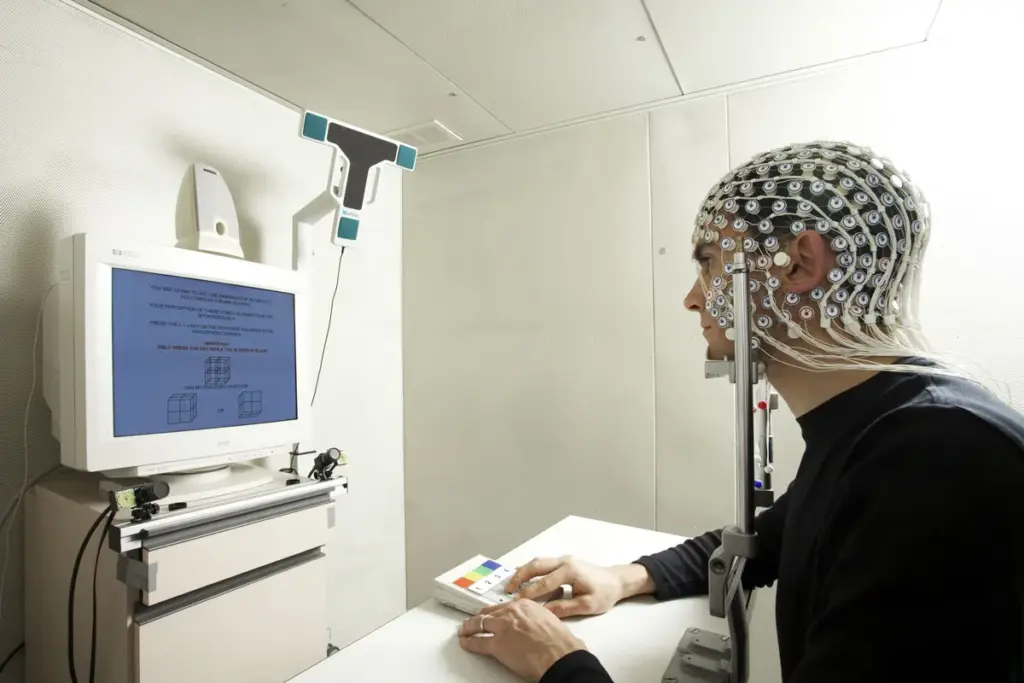
Neurotechnology has seen big leaps, leading to advanced brain-computer interface implants. These new tools are changing how we treat neurological issues and injuries.
1. Neuralink N1 Implant
The Neuralink N1 Implant is a brain-computer interface chip that reads and writes neural signals. It’s part of Neuralink’s goal to create implantable brain–machine interfaces (BMIs) for many medical needs.
This implant can record neural activity with great detail. It might help treat paralysis and depression.
2. Synchron Stentrode
Synchron’s Stentrode is an implant chip in brain that’s easy to put in. It goes through a blood vessel, avoiding open-brain surgery. This makes it safer for patients.
It lets patients control digital devices with their thoughts. This greatly improves life for those with severe motor disabilities.
3. Blackrock Neurotech NeuroPort Array
Blackrock Neurotech’s NeuroPort Array is a brain chip implant for recording neural activity. It’s for both research and clinical use, giving detailed insights into brain function.
This implant has helped in clinical trials. It’s helped patients regain control over paralyzed limbs and has deepened our understanding of the brain.
4. Precision Neuroscience Layer 7 Cortical Interface
Precision Neuroscience’s Layer 7 Cortical Interface is a thin, flexible computer brain chip. It’s meant to be implanted on the brain’s surface. It reads neural signals accurately and aims to treat various neurological conditions.
| Implant | Description | Key Features |
| Neuralink N1 Implant | High-bandwidth brain-computer interface | High precision neural signal recording, possible treatments for paralysis and depression |
| Synchron Stentrode | Minimally invasive endovascular BCI | Controls digital devices with thoughts, safer due to minimal invasiveness |
| Blackrock Neurotech NeuroPort Array | High-resolution neural recording device | Used for research and clinical use, aids in regaining control over paralyzed limbs |
| Precision Neuroscience Layer 7 Cortical Interface | Thin, flexible cortical interface | Accurate neural signal reading, treats various neurological conditions |
These implants mark big steps in brain-computer interface technology. They offer new hope for those with neurological disorders. As research goes on, we’ll see even more breakthroughs.
What Makes 2025 BCI Implants Revolutionary
The latest BCI implants of 2025 are a big step forward in brain technology. They are designed differently and work better with our brains. This is a huge leap in how we interact with technology.
These new BCI implants have some amazing features. They are better than the old ones in many ways. Some key improvements include:
- Improved Signal Processing: New algorithms make it easier for our brains to talk to devices.
- Advanced Electrode Design: The design of the electrodes is now better. This means they can pick up brain signals more accurately.
- Integration of AI: Adding AI to BCI technology has opened up new possibilities. It makes the systems more smart and adaptable.
The addition of AI to BCI technology is a big deal. AI can learn and change to fit how each person’s brain works. This makes the implants, like the brain chip or computer chip in brain, work better. Also, new ways of decoding brain signals mean we can control devices more precisely.
Another important thing about the 2025 BCI implants is how safe and less invasive they are. Companies are working on making implants that are safer and less invasive. This makes the experience better for people with a chip for brain.
In short, the BCI implants of 2025 are a big deal. They have better signal processing, advanced electrode designs, AI integration, and are safer. These changes will make BCIs more useful for more people.
Conclusion
Looking back, 2025 is a big year for Brain-Computer Interface (BCI) tech. New chip implants from Neuralink and Synchron are changing neurotechnology. These advancements are exciting.
These chips could change lives for millions. They might help people move again, think better, and live happier. It’s a big deal.
BCIs are becoming more common in medicine. The tech is getting smarter. More companies are joining in, making the future look bright.
The hard work of researchers and companies is paying off. They’re making BCI tech better every day. It’s amazing to see.
FAQ
What is the most significant brain-computer interface news in October 2025?
There is no single universally confirmed breakthrough labeled as the most significant October 2025 BCI news.
Most updates in this field generally come from ongoing clinical trials, academic studies, and company progress reports.
How does a computer chip in brain technology actually work?
A brain chip works by detecting electrical signals from neurons and translating them into digital data.
This data is then decoded to control external devices or stimulate specific brain activity.
Are brain chip implants safe for long-term use?
Brain chip implants are still under long-term study, and safety varies by device and patient condition.
Potential risks include infection, device failure, or tissue response, while benefits depend on medical need.
What is the difference between a bci chip and a traditional neuroprosthetic?
A BCI chip directly connects brain signals to external systems for communication or control.
Traditional neuroprosthetics replace or support lost body function without direct brain signal decoding.
Can I receive a brain computer interface implant if I have ALS?
Some patients with ALS may be eligible for BCI clinical trials depending on medical evaluation.
Eligibility depends on condition severity, trial requirements, and approval by medical specialists.
Which company offers the least invasive chip for brain interaction?
Companies like Synchron focus on minimally invasive brain interface implants delivered via blood vessels.
Other approaches, such as Neuralink, involve more invasive surgical implantation methods.
How has AI changed the functionality of the computer brain chip?
AI has improved how brain signals are decoded, making communication and control faster and more accurate.
It also helps adapt systems to individual users for better real-time performance.
Is the brain machine interface news regarding speech synthesis real?
Yes, research in brain-machine interfaces has shown progress in decoding neural signals into synthesized speech.
However, most systems are still experimental and not widely available for everyday clinical use.
References
New England Journal of Medicine. Evidence-Based Medical Insight. Retrieved from https://www.nejm.org/doi/full/10.1056/NEJMoa2301407



 Departments
 Related Videos
 Our Doctors
 News
News