

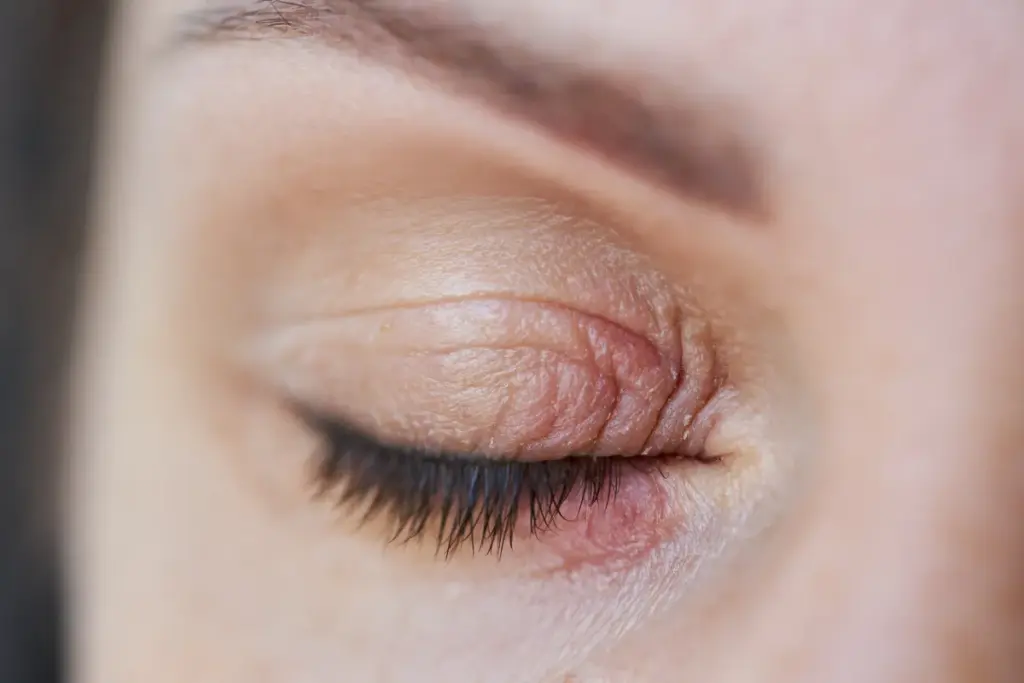
Yellow bumps and waxy patches around your eyes or face might signal high cholesterol levels. These are called xanthelasmas and xanthomas. They are more than just skin issues; they warn of dangerous lipid levels.
Studies show that high cholesterol can show up on the face early. This can mean serious health problems like heart disease and stroke. We often miss the early signs of high cholesterol on our face. But knowing these signs is key to avoiding big health problems. For more on signs of high cholesterol on your face, check out Atlantic Cardiovascular.
Key Takeaways
- Recognizing facial signs of cholesterol buildup is key for early detection.
- Xanthelasmas and xanthomas are firm, yellowish skin lesions.
- High cholesterol can show up in different skin lesions and deposits.
- Early detection can prevent serious health issues like heart disease and stroke.
- Knowing the signs can lead to timely medical check-ups.
Understanding Facial Cholesterol Deposits and Their Health Implications
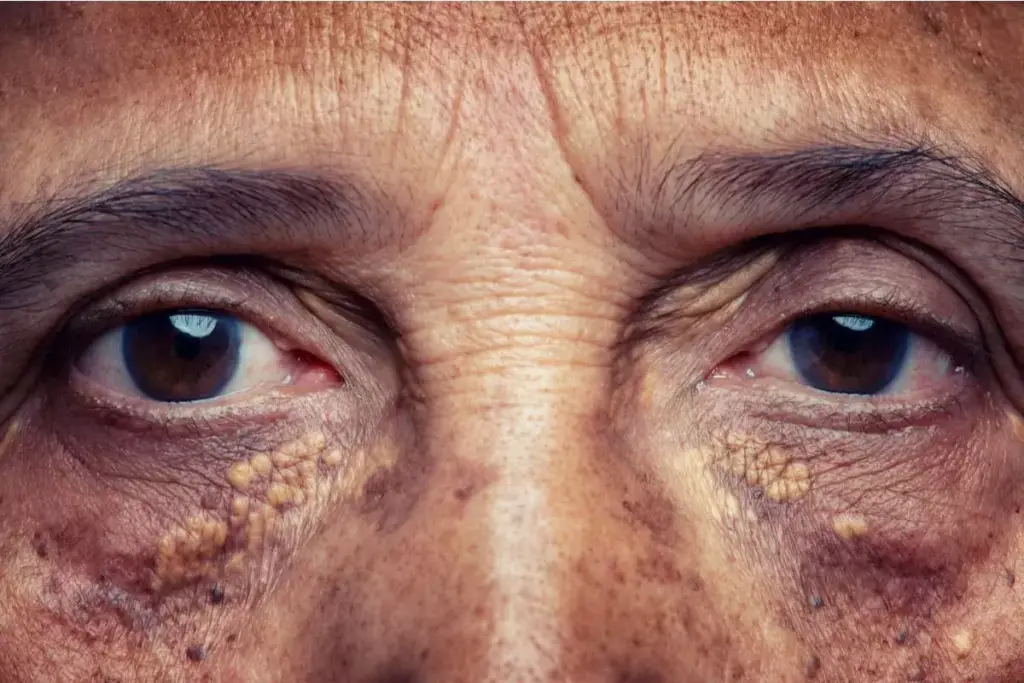
It’s important to know about facial cholesterol deposits for your health. These yellowish patches or bumps can show lipid disorders.
How Excess Lipids Accumulate Under the Skin
High cholesterol in the blood can cause lipids to build up under the skin. This leads to xanthomas and xanthelasmas. Xanthelasma palpebrarum is the most common, showing up as yellowish patches or bumps around the eyelids.
The process of lipid buildup involves the immune system reacting to high cholesterol. Macrophages, immune cells, engulf excess lipids, forming foam cells. These cells gather under the skin, becoming visible as cholesterol bumps.
Why Facial Signs Shouldn’t Be Overlooked
Don’t ignore facial signs of cholesterol buildup. They can signal cholesterol problems that need medical attention. Studies show about 50 percent of adults with xanthelasma have abnormal lipid levels.
Dr. Blen Tesfu says high cholesterol sends warning signals. “Cholesterol deposits on the face can warn of high cholesterol and heart risks.”
Here’s why you should see a doctor for facial cholesterol signs:
- Early detection of lipid disorders
- Assessment of cardiovascular risk factors
- Prevention of further lipid accumulation
- Management of underlying cholesterol problems
Understanding facial cholesterol deposits helps keep your heart healthy. If you notice unusual facial changes, see a doctor. It’s key for your cardiovascular well-being.
5 Visual Indicators of Cholesterol Buildup on Face
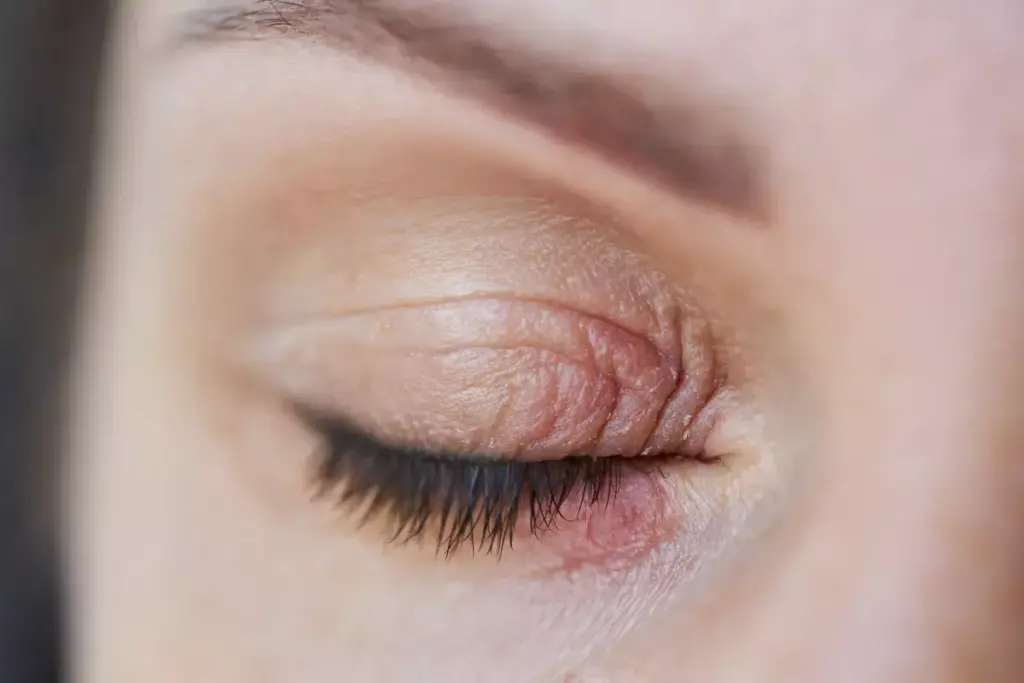
Knowing how to spot cholesterol buildup on the face is key. It helps catch problems early. Cholesterol can show up in different ways, and knowing these signs can lead to getting checked by a doctor.
Xanthelasma Palpebrarum: Yellowish Patches Around Eyelids
Xanthelasma palpebrarum is a common sign of cholesterol buildup. It looks like yellowish patches around the eyelids. These patches are soft, flat, and don’t hurt. Dr. Evan Levine says seeing xanthelasma in people under 30 is a warning sign of serious cholesterol issues.
Varying Colors: Yellow to Orange-Red Deposits
Cholesterol deposits can be different colors. They can be yellow, orange-yellow, or even red-yellow. The color shows how much and what kind of lipids are under the skin.
- Yellow deposits usually mean high LDL cholesterol.
- Orange-red deposits might show a mix of cholesterol and other lipids.
Progressive Growth: From Pinhead to Larger Lesions
Cholesterol deposits grow slowly. They start as small bumps and can get bigger. Watching how they grow is important. It shows if cholesterol levels are getting worse.
Eruptive Xanthomas: Multiple Small Bumps with Redness
Eruptive xanthomas are another sign of cholesterol buildup. They look like many small bumps with redness. These can pop up fast and are linked to very high triglyceride levels.
It’s important to know these signs to act early. If you see any, see a doctor right away. They can help figure out what’s going on and how to fix it.
Conclusion: When to Seek Medical Evaluation for Facial Cholesterol Signs
It’s vital to get a medical check-up for facial cholesterol signs to avoid serious health issues. High cholesterol often doesn’t show symptoms, so regular blood tests are key, as the NHS points out.
Seeing cholesterol marks, bumps, or spots on your face can mean you have a cholesterol problem. These signs are a warning that you shouldn’t ignore.
Acting fast and getting medical help can lower your risk of serious health problems linked to high cholesterol and skin issues. We urge everyone to know about the connection between cholesterol and skin. If you see any unusual changes, talk to a doctor.
Spotting and treating cholesterol problems early can greatly improve your health. It’s important to tackle these issues quickly.
FAQ
What are the signs of high cholesterol on the face?
High cholesterol can show up on your face in different ways. You might see yellowish patches, orange-red bumps, or small nodules. These often appear around your eyelids or on other parts of your face.
What are cholesterol bumps on the face?
Cholesterol bumps, or xanthomas, are deposits of extra lipids under your skin. They can be yellow, orange, or red and vary in size. They can be as small as a pinhead or as big as a large nodule.
Can high cholesterol cause pimples or acne-like symptoms on the face?
High cholesterol isn’t a direct cause of acne. But, it can lead to eruptive xanthomas. These are small, red, or orange bumps that look like pimples but are actually a sign of cholesterol issues.
What is xanthelasma palpebrarum, and how is it related to high cholesterol?
Xanthelasma palpebrarum is a cholesterol deposit that looks like yellowish patches around your eyelids. It’s often linked to high cholesterol and can signal lipid disorders. While usually harmless, it can hint at higher heart disease risk.
Are cholesterol deposits on the face a sign of a serious health problem?
Yes, cholesterol deposits on your face can signal serious cholesterol issues. They might look cosmetic, but they can point to heart disease risks. If you notice these signs, get medical help to check for health problems.
How can I determine if my facial skin lesions are related to high cholesterol?
To find out if your facial skin lesions are from high cholesterol, see a doctor. They’ll check your health, history, and do tests to figure out what’s causing your skin issues.
Can cholesterol buildup on the face be treated?
Yes, you can treat cholesterol buildup on your face. Doctors might suggest lifestyle changes, medication, or surgery. Depending on your case, removing xanthelasma or other deposits might be needed.
References
National Center for Biotechnology Information. Evidence-Based Medical Guidance. Retrieved from https://www.ncbi.nlm.nih.gov/books/NBK531501/
























