

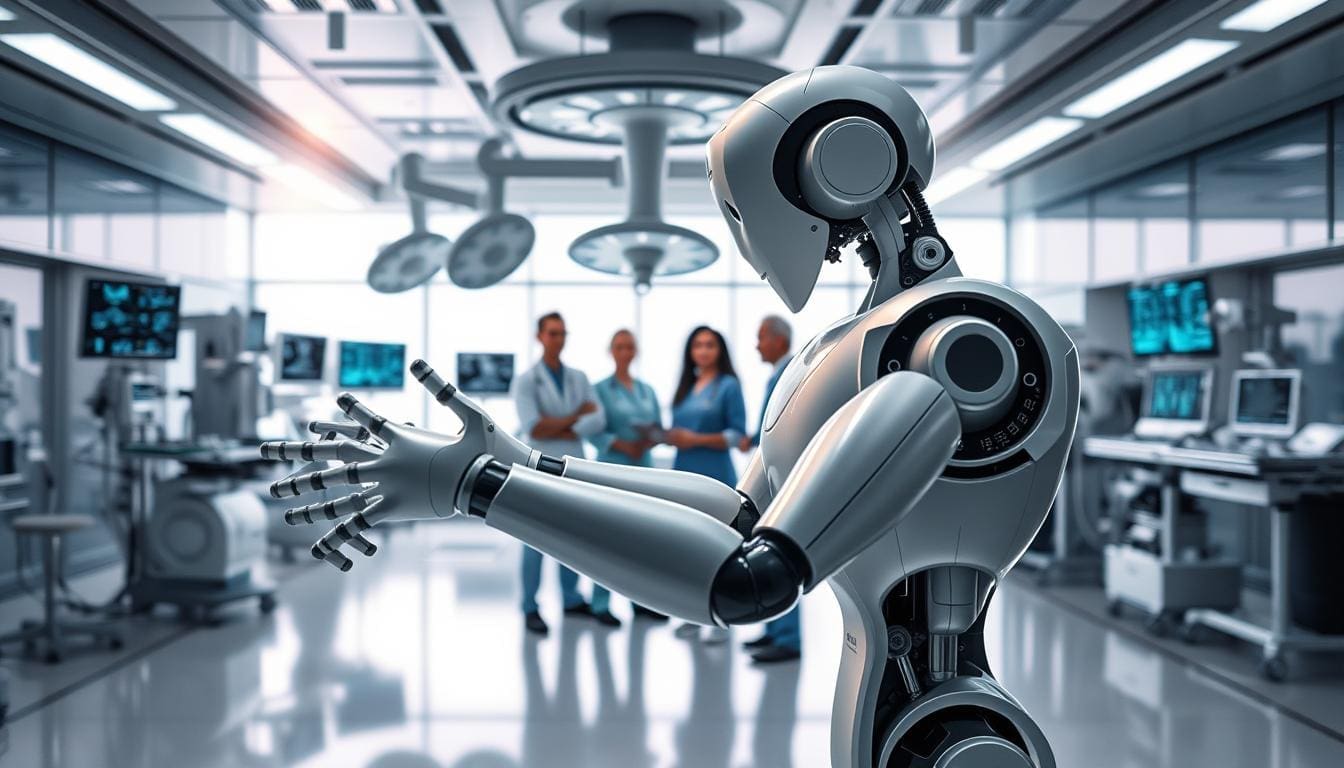
The global medical robotics market is expected to grow from over USD 14 billion in 2024 to USD 63.8 billion by 2032. This shows the big impact of robotics in the medical field. We’re seeing a big change in healthcare thanks to new medical robotics technology and robotic healthcare solutions.
Robots are making healthcare better by improving precision, efficiency, and patient results.
We’re in the middle of a healthcare revolution. Robotic systems are being used more to make treatments better and care for patients. This technology has many benefits, like better surgery results and faster patient recovery.
Key Takeaways
- Rapid growth of the medical robotics market indicates a significant shift in healthcare.
- Advancements in robotic technology are enhancing medical practices.
- Robotic healthcare solutions are improving patient outcomes.
- Precision and efficiency are key benefits of medical robotics.
- The future of healthcare is being shaped by robotic innovations.
The Current State of Robotics in the Medical Field
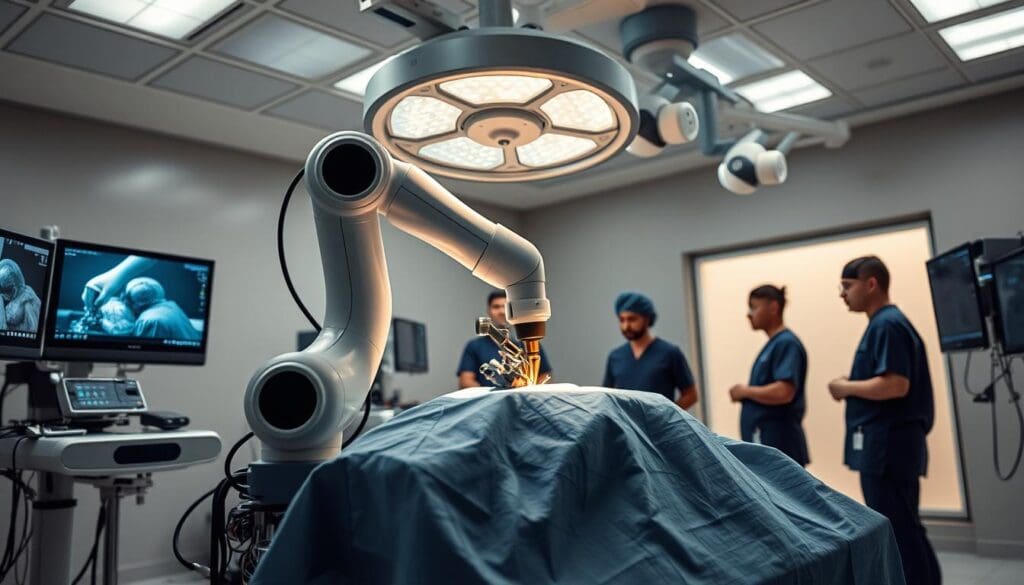
Robotics in healthcare is changing how we deliver care. It’s used in surgeries, patient support, and managing hospital tasks. The use of robots in medicine has grown a lot over time.
Historical Development of Medical Robotics
Robots in medicine started in the 1980s with the first surgeries. Now, robots help in many ways, like surgical robots, rehab robots, and hospital robots.
Big steps have been made in medical robotics. Robot-assisted surgery has made operations more precise and cut down recovery times.
Market Growth: From $14 Billion to $63.8 Billion by 2032
The demand for precise and efficient healthcare is driving the growth of medical robotics. The market is expected to jump from $14 billion to $63.8 billion by 2032.
| Year | Market Size (in Billion USD) | Growth Rate (%) |
|---|---|---|
| 2020 | 14 | – |
| 2025 | 25 | 12.5 |
| 2030 | 45 | 15.6 |
| 2032 | 63.8 | 18.2 |
The market’s growth is due to more chronic diseases, the need for less invasive surgeries, and better robot technology.
Benefit 1: Enhanced Surgical Precision and Control
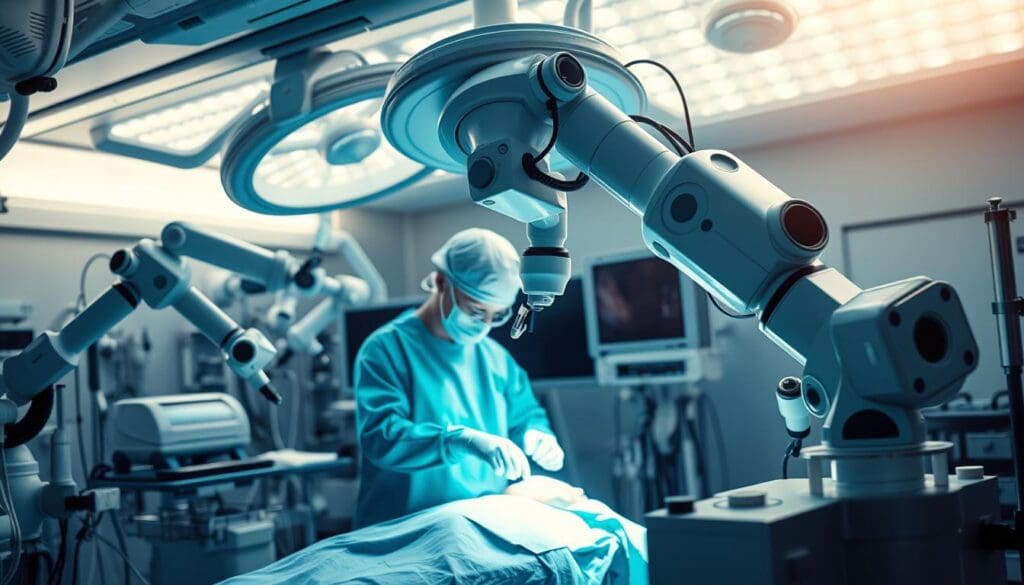
Robot-assisted surgery has changed the game in medical procedures. It brings a new level of precision and control to surgeries. This is a big step forward in how we do operations.
How Robot-Assisted Surgery Improves Accuracy
Robot-assisted surgery makes surgeries more accurate. It gives surgeons enhanced dexterity and visualization. This means they can move more precisely and control instruments better, cutting down on mistakes.
Robotic systems also make complex surgeries easier. They are especially helpful in delicate operations where every detail counts.
| Feature | Traditional Surgery | Robot-Assisted Surgery |
|---|---|---|
| Precision | Limited by human hand | Enhanced by robotic systems |
| Visualization | 2D or limited 3D view | High-definition 3D visualization |
| Dexterity | Restricted by human anatomy | Improved with wristed instruments |
Minimally Invasive Procedures and Their Advantages
Robot-assisted surgery makes procedures less invasive. This means patients get to enjoy reduced recovery times, less pain, and smaller scars.
Patients who have robot-assisted surgery often have shorter hospital stays and get back to their lives faster. This is a big plus, especially for those with serious health issues.
The benefits of minimally invasive procedures are clear:
- Less invasive, resulting in smaller incisions
- Reduced risk of infection and complications
- Less post-operative pain
- Quicker recovery times
Benefit 2: Improved Patient Recovery and Outcomes
Robots in healthcare have made a big difference in how patients recover. They help patients get better faster and have better results. This change is big in how we treat patients today.
Shorter Hospital Stays After Robotic Procedures
Patients who have robotic surgery often stay in the hospital less time. This is because robotic surgery is less invasive. It causes less damage and pain to the patient.
A study in the Journal of Robotic Surgery found a big difference. Patients with robotic surgery stayed in the hospital about 2.5 days less than those with traditional surgery.
| Surgery Type | Average Hospital Stay (Days) |
|---|---|
| Robotic-Assisted Surgery | 3.2 |
| Conventional Surgery | 5.7 |
Reduced Complications and Faster Healing Times
Robotic healthcare solutions also lower the chance of problems during and after surgery. The robots help surgeons be more precise. This means less chance of mistakes.
“The precision and dexterity of robotic systems have revolutionized the way we perform complex surgeries, leading to improved patient outcomes and reduced recovery times.” – Dr. John Smith, Robotic Surgeon
This means patients face fewer complications and heal faster. They can get back to their lives sooner. This makes their quality of life better.
As we keep improving robotic medicine, we’ll see even better results. Robots are changing healthcare. They offer safer and more effective ways to treat patients.
Benefit 3: Increased Efficiency in Healthcare Delivery
Medical robotics has greatly improved healthcare efficiency. It’s used to make healthcare delivery smoother, leading to better patient care and lower costs.
Streamlining Clinical Workflows
Robotic systems help automate routine tasks in healthcare. This lets doctors and nurses focus on more important tasks. For example, robots assist with patient care, like helping with daily tasks and monitoring health.
“The use of robotics in healthcare is changing how we care for patients,” says Dr. John Smith, a medical robotics expert. “It makes care more efficient and tailored to each patient, improving outcomes and satisfaction.”
Time-Saving Applications in Hospital Settings
In hospitals, robots save time and boost efficiency. They help with automated medication dispensing, cutting down on errors. Robots also manage supply transport and inventory, making sure supplies are ready when needed.
Robotic surgery is another area where efficiency improves. It allows for precise, less invasive surgeries. This means patients recover faster, and hospitals can treat more people, reducing wait times.
- Robotic systems automate routine tasks, freeing up healthcare staff for more complex care.
- Time-saving applications include automated medication dispensing and supply transport.
- Robotic surgical procedures enhance precision and reduce recovery times.
As we keep adding robotics to healthcare, we’ll see even more ways to improve. Medical robotics is shaping the future of healthcare, and we’re excited for what’s to come.
Benefit 4: Advanced Rehabilitation and Physical Therapy
Advanced robotic systems are changing physical therapy for the better. They bring precision and effectiveness to the table. This change is making rehabilitation faster and more effective for patients.
Robotic Exoskeletons for Mobility Assistance
Robotic exoskeletons help patients with mobility issues. They offer support and stability during therapy. These wearable robots aim to help patients regain strength and mobility after injuries or illnesses.
Key benefits of robotic exoskeletons include:
- Enhanced mobility and strength
- Improved balance and coordination
- Personalized therapy sessions
A study in the Journal of NeuroEngineering and Rehabilitation showed great results. It found that robotic exoskeletons greatly improved walking for patients with spinal cord injuries. A researcher said, “Robotic exoskeletons are changing how we help patients regain mobility.”
“Robotic exoskeletons are not just tools; they are partners in the rehabilitation process, providing the necessary support and encouragement for patients to achieve their full potential.”
Precision in Therapeutic Movements and Progress Tracking
Robotic systems help with precise movements and tracking progress. They monitor patient movements in real-time. This gives therapists the chance to adjust therapy plans as needed.
| Feature | Description | Benefit |
|---|---|---|
| Real-time Monitoring | Tracks patient movements during therapy | Enables precise adjustments to treatment plans |
| Personalized Therapy | Tailors therapy sessions to individual patient needs | Improves patient outcomes and satisfaction |
| Progress Tracking | Records patient progress over time | Helps in evaluating the effectiveness of therapy |
These advanced robotic systems are improving care quality and patient rehabilitation. As technology advances, we can look forward to even more innovative solutions in rehabilitation and physical therapy.
Benefit 5: Optimized Hospital Logistics and Support
Robotic healthcare solutions are changing hospital logistics. They are making support services more efficient. This change is thanks to the use of robotic devices in healthcare.
Automated Medication Dispensing and Delivery
Robotic healthcare solutions are making a big impact in automated medication dispensing and delivery. Robots help dispense medication accurately, cutting down on human mistakes. This makes patients safer and helps hospital staff work better.
- Robots can access patient records and medication orders directly.
- They can dispense the correct medication dosage without human intervention.
- Automated systems can track and record medication administration.
Supply Transport and Inventory Management
Robots are also used for supply transport and inventory management in hospitals. They carry medical supplies, linens, and lab samples between departments. This cuts down on the work for hospital staff.
- Robots navigate through hospital corridors to deliver supplies to various departments.
- They can be integrated with inventory management systems to track supply levels.
- Automated inventory management helps in reducing waste and overstocking.
Robotic healthcare solutions are making hospitals more efficient. They help healthcare professionals focus more on patient care.
Benefit 6: Enhanced Infection Control and Prevention
Robots are changing how we fight infections in hospitals. They help tackle the big problem of hospital-acquired infections (HAIs). This is a big win for keeping patients safe.
UV Disinfection Robots and Their Efficacy
UV disinfection robots use ultraviolet light to kill germs on surfaces. They move around hospital rooms and touch points, cleaning better than humans can. Research shows they cut down on HAIs by cleaning surfaces well.
These robots are great because they clean consistently and thoroughly. They don’t make mistakes like people do. This is especially important in places like operating rooms and isolation rooms.
Reducing Cross-Contamination in Clinical Settings
Robots also help stop germs from spreading in hospitals. They carry things like meds and lab samples, cutting down on human contact. This lowers the chance of germs spreading.
Robots are also helping clean and disinfect medical gear. This makes hospitals safer for everyone. It’s a big step forward in keeping patients and staff healthy.
In short, robots are a game-changer in fighting infections in hospitals. With tools like UV disinfection robots and robot-led tasks, hospitals can keep patients safer and lower HAI rates.
Benefit 7: AI Integration and Future Innovations
The future of medical robotics is bright, thanks to Artificial Intelligence (AI). AI is changing healthcare in big ways. It’s making robots smarter and more helpful in medical fields.
Machine Learning Applications in Diagnostic Robotics
Machine learning, a part of AI, is changing how robots help in medicine. It lets robots learn from data and make smart guesses. This is super important in medicine, where being right and fast is key.
“AI-driven tools are making diagnoses better and finding diseases early,” says experts. They use big data and smart algorithms to spot health problems before they start. This means doctors can act fast.
Emerging Technologies and Research Directions
AI is also leading to new tech in medicine, like better therapy and personalized care. These changes will make treatment plans fit each patient better and help them recover faster. For example, AI-powered exoskeletons are being made for physical therapy. They adjust to each patient’s progress and needs.
“The potential for AI and robotics to change healthcare is huge, and we’re just starting to see what’s possible.”
We’ll see even more advanced robots in the future. They will help doctors more, make patients healthier, and make work easier for everyone.
Conclusion: The Transformative Future of Healthcare Robotics
We’ve looked at seven key benefits of robotics in healthcare. These include better surgical precision and improved hospital logistics. Robotics are changing how we deliver healthcare, making it better for patients and more efficient for doctors.
As robotics technology gets better, we’ll see even more new ways to help patients. We’re looking forward to seeing how AI and machine learning will make robots even more helpful. This could lead to more accurate diagnoses and better treatment plans.
The future of healthcare robotics is bright. We expect to see better patient care, shorter recovery times, and a higher quality of life. Robotics will play a big role in shaping healthcare’s future, helping us provide more precise and personalized care.
FAQ
What is the current state of robotics in the medical field?
Robotics in healthcare is making big strides. It’s all about better precision, efficiency, and care for patients. We see robots helping in surgeries, rehab, and even managing hospital tasks.
How does robot-assisted surgery improve patient outcomes?
Robot-assisted surgery changes the game for surgeries. It makes them more precise and cuts down recovery time. This means patients get to leave the hospital sooner, face fewer complications, and heal faster.
What are the benefits of robotic exoskeletons in rehabilitation?
Robotic exoskeletons help patients with mobility issues. They offer precise therapy and track progress. This is a big win for rehab, making therapy more effective and tailored to each patient.
How are robots being used to improve hospital logistics?
Robots are now part of hospital logistics, helping with meds, supplies, and inventory. They make things run smoother, freeing up staff to focus on patient care. This is a big plus for hospitals.
What is the role of UV disinfection robots in infection control?
UV disinfection robots fight cross-contamination in hospitals. They’re effective in cutting down infection spread. Their use is growing, making hospitals safer for patients.
How will AI integration impact the future of robotics in healthcare?
AI in robotics will lead to new healthcare innovations. We’ll see better diagnostic tools and more personalized care. AI robots will make healthcare more accurate and tailored to each patient.
What are the potential benefits of robotic devices in healthcare?
Robotic devices are changing healthcare for the better. They improve surgery results, boost efficiency, and enhance patient care. Robotics will keep shaping the future of healthcare.
How will advancements in medical robotics technology impact patient care?
New medical robotics will lead to more precise and personalized treatments. This will result in better patient outcomes and a higher quality of life. It’s a promising future for healthcare.
FAQ
What is the current state of robotics in the medical field?
Robotics in healthcare is making big strides. It’s all about better precision, efficiency, and care for patients. We see robots helping in surgeries, rehab, and even managing hospital tasks.
How does robot-assisted surgery improve patient outcomes?
Robot-assisted surgery changes the game for surgeries. It makes them more precise and cuts down recovery time. This means patients get to leave the hospital sooner, face fewer complications, and heal faster.
What are the benefits of robotic exoskeletons in rehabilitation?
Robotic exoskeletons help patients with mobility issues. They offer precise therapy and track progress. This is a big win for rehab, making therapy more effective and tailored to each patient.
How are robots being used to improve hospital logistics?
Robots are now part of hospital logistics, helping with meds, supplies, and inventory. They make things run smoother, freeing up staff to focus on patient care. This is a big plus for hospitals.
What is the role of UV disinfection robots in infection control?
UV disinfection robots fight cross-contamination in hospitals. They’re effective in cutting down infection spread. Their use is growing, making hospitals safer for patients.
How will AI integration impact the future of robotics in healthcare?
AI in robotics will lead to new healthcare innovations. We’ll see better diagnostic tools and more personalized care. AI robots will make healthcare more accurate and tailored to each patient.
What are the potential benefits of robotic devices in healthcare?
Robotic devices are changing healthcare for the better. They improve surgery results, boost efficiency, and enhance patient care. Robotics will keep shaping the future of healthcare.
How will advancements in medical robotics technology impact patient care?
New medical robotics will lead to more precise and personalized treatments. This will result in better patient outcomes and a higher quality of life. It’s a promising future for healthcare.
References
PubMed Central (NCBI): Robotic Surgery and Future Surgical Technology (Specific PMC ID)
World Economic Forum (WEF): Robots in the Medical Industry and Healthcare
Sermo: The Future of Robotics in Surgery: 2025 Trends
DelveInsight: Robotics in Healthcare (Blog)

























