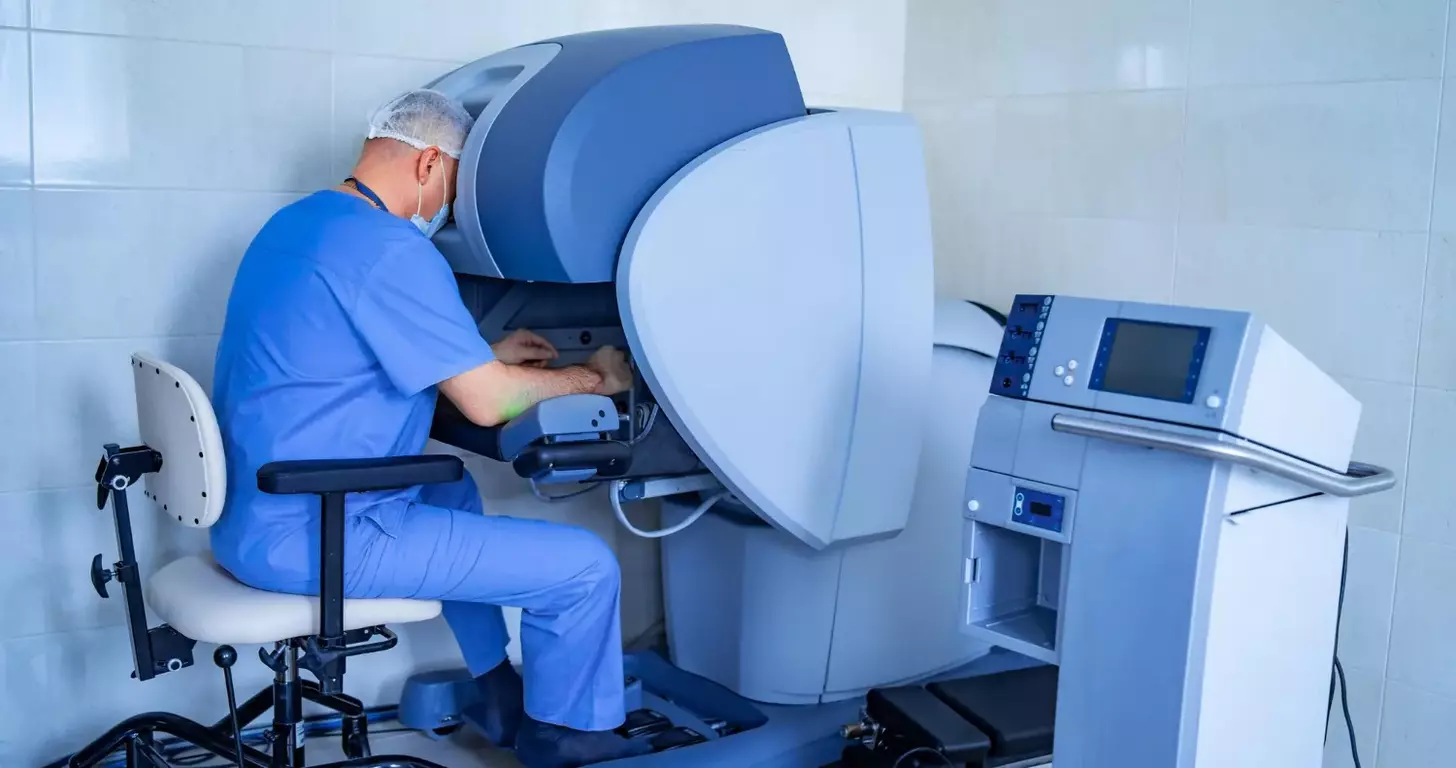
At Liv Hospital, we focus on precise, patient-centered care with the latest surgical tech. The da Vinci console is key in our robotic surgery systems. It lets surgeons do precise, small operations. Its design and 3D view make it easy to use for complex surgeries.
We’ve added the da Vinci system to our surgeries. This move shows our commitment to using the best tech. With over 1,700 units worldwide, the da Vinci system proves it improves surgery results.
Key Takeaways
- Enhanced precision and dexterity in surgical procedures
- Ergonomic design for reduced surgeon fatigue
- Immersive 3D visualization for improved accuracy
- Minimally invasive operations with reduced recovery time
- Significant global adoption with over 1,700 units installed
The Evolution of Robotic Surgery and Minimally Invasive Procedures
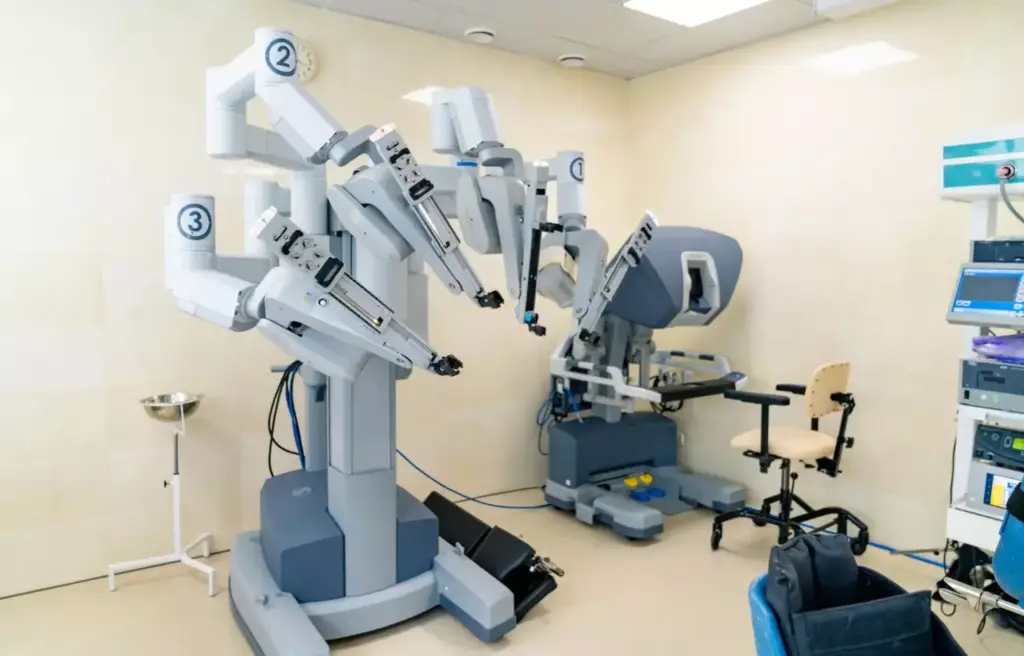
Robotic surgery has changed the game, moving towards less invasive methods. This shift has greatly improved patient results. The da Vinci Surgical System is a key player in this change, bringing better precision and control to surgeries.
Advancements in Robotic Assistance
The move from old-school surgery to robotic help has been slow but steady. Systems like the da Vinci system robotic have made complex surgeries easier and more precise. The da Vinci surgery system shows how robotic tech has changed surgery for the better.
Robotic surgery has made a big difference in patient care. It means less blood loss, quicker recovery times, and smaller scars. As we keep improving, the benefits for patients will only grow.
Development History of Intuitive Surgical’s Technology
Intuitive Surgical, the makers of the da Vinci System, have led the way in robotic surgery. Their tech has grown a lot over time, with regular updates to their robotic surgery systems. For more on this, check out educational materials that dive into the history of robotic surgery.
| Year | Milestone | Significance |
|---|---|---|
| 1999 | First da Vinci Surgical System approved by FDA | Marked the beginning of robotic-assisted surgery |
| 2003 | Introduction of da Vinci S System | Enhanced visualization and instrumentation |
| 2009 | Launch of da Vinci Si System | Improved flexibility and surgeon control |
The story of Intuitive Surgical’s tech shows how fast robotic surgery has advanced. Looking ahead, it’s clear that robotic surgery will keep changing the medical world.
The da Vinci Console: The Surgeon’s Command Center
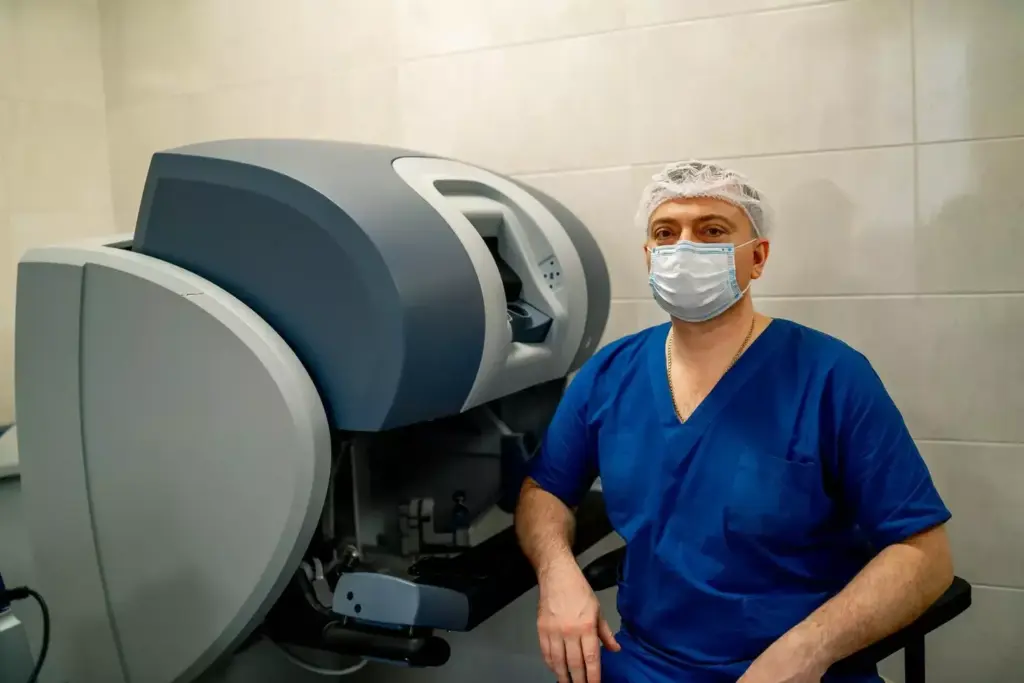
The da Vinci system’s heart is the console, a high-tech command center for surgeons. Here, the surgeon controls the robotic arms and tools. They get an easy and immersive experience.
Core Components of the Control Interface
The console’s control interface is made for surgeons to control the robotic instruments easily. It has high-definition 3D visualization, ergonomic controls, and a simple interface. This makes precise instrument manipulation possible.
A good interface is key to reduce surgeon fatigue and boost procedure accuracy. The console’s design offers an immersive experience. It closely mimics traditional surgical techniques.
How the Console Integrates with the Patient-Side Cart
The da Vinci console works well with the patient-side cart. This setup lets surgeons control the surgical instruments precisely. It’s vital for robotic surgery success, allowing for complex procedures with better dexterity and less invasion.
The patient-side cart has robotic arms controlled by the surgeon from the console. This setup enables precise movement and manipulation of the instruments. It makes procedures that are hard or impossible with traditional methods possible.
The da Vinci console and patient-side cart together form a top-notch robotic surgery system. This system has changed surgery, giving patients less invasive treatment options with better results.
Feature 1: Immersive 3D High-Definition Visualization
The da Vinci console offers immersive 3D high-definition visualization. This feature greatly improves surgeons’ ability to see depth during complex surgeries.
The stereoscopic imaging technology in the da Vinci system gives a clear view of the surgical area. This makes surgeries more accurate than with old methods.
Advanced Stereoscopic Imaging Technology
The da Vinci system’s stereoscopic imaging shows the surgical area in high definition. It displays a three-dimensional view on the console’s screen. This helps surgeons navigate complex anatomy better.
Research shows that the 3D view from the da Vinci system improves surgery results. It’s key for detailed work like dissection or suturing.
Benefits of Depth Perception During Complex Procedures
Depth perception is vital in complex surgeries. It lets surgeons judge distances and handle delicate parts. The immersive 3D visualization from the da Vinci console boosts this skill, leading to better surgery results.
Surgeons feel more confident with the da Vinci system. They say it’s because of its advanced visualization.
Comparison with Traditional Laparoscopic Visualization
The da Vinci system’s 3D view is more immersive than traditional laparoscopy’s 2D images. Traditional methods can make complex surgeries harder due to limited depth perception.
The da Vinci surgical system offers high-definition 3D visualization. It sets a new standard in surgical technology.
Feature 2: Ergonomic Design for Surgeon Comfort and Control
The da Vinci console is designed to be ergonomic. This makes it comfortable for surgeons, reducing fatigue during long surgeries. It’s key for keeping precision and focus during complex procedures.
Adjustable Console Settings for Extended Operations
The da Vinci console has adjustable settings for surgeons. These settings can be customized to fit individual needs. This ensures surgeons stay comfortable and in control during long surgeries.
Customization helps reduce surgeon fatigue. Fatigue is a big factor in keeping precision in robotic surgery.
Reducing Surgeon Fatigue During Long Procedures
Surgeon fatigue is a big worry in long surgeries. The da Vinci console’s design and adjustable settings help a lot.
It offers a personalized and comfortable space for surgeons. This helps them stay focused and precise, even in long surgeries. It makes the surgery safer and leads to better patient results.
We know how important comfort and control are in robotic surgery. The da Vinci console’s design helps reduce fatigue and improves precision. It’s a key part of the da Vinci surgical system.
Feature 3: Intuitive Motion Control with EndoWrist Technology
Surgeons using the da Vinci system get precise control thanks to EndoWrist technology. This feature boosts the dexterity and flexibility needed for complex surgeries.
The EndoWrist technology is key to the da Vinci Surgical System. It lets surgeons control movements intuitively, just like with their hands. This is vital for doing delicate work inside the patient’s body.
Replicating Human Hand Movements
EndoWrist instruments are made to move like the human wrist. This lets surgeons do complex tasks easily. The technology behind EndoWrist offers:
- Precise replication of hand movements
- Enhanced flexibility during surgery
- Improved control over surgical instruments
Enhanced Dexterity and Range of Motion
The da Vinci robotic surgery system, with EndoWrist technology, gives surgeons more motion than traditional tools. This extra dexterity is very helpful in tight spaces, where exact control is key.
Precision in Confined Anatomical Spaces
The da Vinci system’s EndoWrist instruments work well in small areas. They allow for precise dissection and suturing. This is important for many surgeries, like those in the heart, urology, and gynecology.
By combining smart motion control with advanced tools, the da Vinci system helps surgeons get the best results in tough cases.
Feature 4: Tremor Filtration and Motion Scaling
The da Vinci robotic surgery system has tremor filtration and motion scaling. These features give surgeons better control and precision. They are key in complex surgeries where accuracy is essential.
Eliminating Natural Hand Tremors for Steady Instrument Control
Tremor filtration in the da Vinci console removes natural hand tremors. This ensures instruments move steadily. It’s great for delicate surgeries needing precision and stability.
Even skilled surgeons can have hand tremors, which can get worse with fatigue or high-pressure situations. The da Vinci system’s technology helps reduce these tremors. This makes instrument movements smoother and more precise.
Scaling Surgeon Movements for Microscopic Precision
Motion scaling in the da Vinci system lets surgeons scale their movements for precision. It turns big hand movements into small, precise actions inside the body. This makes complex procedures easier and more accurate.
Scaling down movements allows surgeons to achieve precision that’s hard or impossible with old surgical methods. This is very useful in surgeries needing fine detail, like dissection or suturing.
We think tremor filtration and motion scaling in the da Vinci system are big steps forward. They give surgeons the tools to provide top-notch care to patients.
Feature 5: Integrated Control of Multiple Robotic Arms
The da Vinci system’s ability to control multiple robotic arms is a key feature. It improves surgical results. Surgeons can do complex tasks with better precision and control.
Managing the da Vinci Arm System During Surgery
Managing the da Vinci arm system is vital during surgery. The system lets surgeons control multiple robotic arms at once. This makes the surgery smoother and more efficient.
Coordination Between Visualization and Instrument Movement
The da Vinci system’s design is all about coordination. It makes sure the surgeon’s view and the robotic arms’ movements are perfectly in sync. This creates a very intuitive and responsive surgery experience.
Seamless Switching Between Different Surgical Tools
Switching between tools in the da Vinci system is seamless. This feature cuts down on surgery time. It lets surgeons stay focused on the task at hand. The ease of tool switching also makes the surgery more efficient, which is good for patients.
We see how important integrated control is in robotic surgery. The da Vinci system is a leader in this area. It lets surgeons manage multiple arms with precision, improving surgical care quality.
Feature 6: Customizable User Interface and Settings
The da Vinci console lets surgeons customize their experience. This is key for complex surgeries, where feeling comfortable and in control matters a lot.
Personalization Options for Individual Surgeons
Surgeons can make the da Vinci console their own. They can adjust settings to fit their needs. Personalization options include ergonomic adjustments, helping surgeons stay comfortable during long surgeries. This makes them more precise and less tired, leading to better results.
Procedure-Specific Configurations
The da Vinci console also has settings for different surgeries. Surgeons can set it up for various procedures beforehand. This makes the surgery smoother, cutting down on time spent on setup and letting the team focus on the surgery.
User Experience Improvements in Latest Console Generations
We’ve made big improvements in the latest da Vinci consoles based on surgeon feedback. These updates include intuitive controls and streamlined interfaces. They make surgery smoother and more efficient. We keep updating and refining to give surgeons the best tools for success.
We’re committed to making the da Vinci console better. We’re always looking for new ways to improve robotic surgery. Our goal is to keep our systems at the top of performance and usability.
Feature 7: Training and Simulation Capabilities
Thorough training is key in robotic surgery. That’s why the da Vinci System has advanced simulation features. It helps surgeons improve their skills in a safe, real-like setting.
Comprehensive Training Modules
The da Vinci System has built-in training modules. These modules offer a step-by-step learning path. They cover various surgical procedures and techniques, helping surgeons get better at using the system.
Certification and Proficiency Measurement
To make sure surgeons are skilled with the da Vinci System, the training includes certification and proficiency measurement tools. These tools check a surgeon’s skills and give feedback on how to get better. This helps keep surgical care at the highest level.
Virtual Reality Integration
The da Vinci System also uses virtual reality (VR) technology for training. This is a big step forward in teaching surgery. Surgeons can practice in realistic, interactive simulations that mimic real surgeries. This makes them better prepared for actual procedures.
With its training modules, certification, and VR, the da Vinci System is a powerful tool for learning surgery. It helps surgeons get better and improves patient care. This is because surgical teams are well-trained and skilled in using advanced robotic systems.
Conclusion: The Impact and Future of da Vinci Console Technology
The da Vinci console technology has changed the game in robotic-assisted surgery. It offers unmatched precision and control. As it keeps getting better, it will keep changing surgical practices around the world.
The da Vinci robotic surgery system was made by Intuitive Surgical. It has already shown it can improve patient results. With its advanced 3D view and easy control, the da Vinci console is set to make even more waves.
Looking ahead, the da Vinci console tech will grow its reach in many surgical areas. It will stay a leader in robotic-assisted surgery. This means top-notch healthcare for everyone, including international patients.
What is the da Vinci console, and how does it enhance surgical procedures?
The da Vinci console is a key part of the da Vinci robotic surgery system. It gives surgeons a precise and easy-to-use interface for complex surgeries. Its design and 3D view help surgeons work with better dexterity and accuracy.
What are the key features of the da Vinci console?
The da Vinci console has features like 3D high-definition visualization and an ergonomic design. It also has EndoWrist technology, tremor filtration, motion scaling, and control of multiple robotic arms. These features help surgeons work with precision and ease.
How does the da Vinci console’s 3D visualization compare to traditional laparoscopic visualization?
The da Vinci console’s 3D visualization is more immersive than traditional laparoscopic views. It gives a clear and detailed view of the surgical site. This helps surgeons work more accurately and can lead to better results.
What is EndoWrist technology, and how does it enhance surgical precision?
EndoWrist technology is a key feature of the da Vinci system. It lets surgeons do complex maneuvers with great precision. By mimicking human hand movements, EndoWrist instruments offer the dexterity needed for delicate surgeries.
How does the da Vinci console reduce surgeon fatigue during long procedures?
The da Vinci console is designed for comfort, reducing surgeon fatigue. It has adjustable settings that let surgeons customize their experience. This helps them stay focused and precise during long surgeries.
What training and simulation capabilities are available with the da Vinci console?
The da Vinci console offers advanced training and simulation tools. It has built-in training modules and virtual reality integration. These tools help surgeons develop their skills and practice complex scenarios in a realistic environment.
How does the da Vinci system integrate with the patient-side cart?
The da Vinci console works with the patient-side cart, allowing precise instrument manipulation. This integration makes complex procedures easier and ensures smooth coordination between visualization and instrument movements.
Can the da Vinci console be customized to individual surgeon preferences?
Yes, the da Vinci console can be customized to fit individual surgeons’ needs. It offers personalization options and procedure-specific configurations. This versatility lets surgeons tailor the console for each procedure.
References
National Center for Biotechnology Information. Evidence-Based Medical Guidance. Retrieved from https://www.ncbi.nlm.nih.gov/pmc/articles/PMC5018031/