
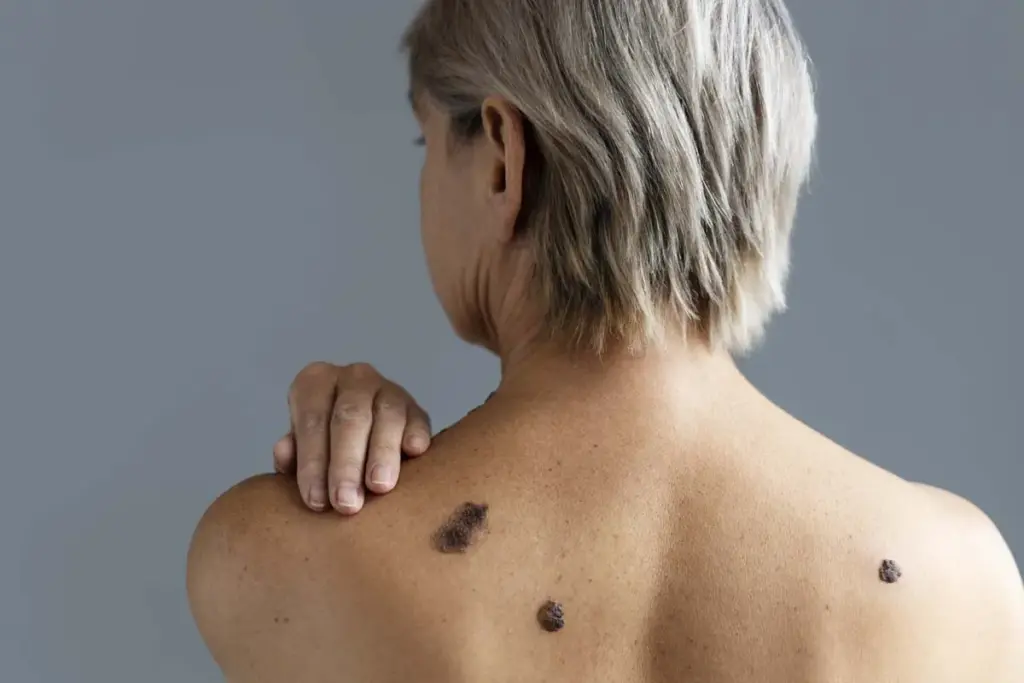
Finding an unexpected mark on your body often causes worry. Most cutaneous findings are actually harmless and do not pose a threat. We see many patients who seek clarity regarding a benign neoplasm of skin during their routine checkups.
Liv Hospital is dedicated to top-notch healthcare for international guests. We focus on you, using a patient-centered approach for accurate diagnoses. Our team is skilled in handling epidermal tumors with the latest medical techniques.
We offer comprehensive evaluations for everyone. These growths often appear more frequently as we age. Whether you have questions about these marks, we offer clear answers.
Our personalized treatment strategies ensure you get the best care. Dealing with these lesions requires a professional touch. We combine medical authority with empathetic understanding to support you. Trust our team to manage your health with wisdom and nurturing care.
Key Takeaways
- Most cutaneous growths are non-cancerous and harmless.
- Professional evaluation ensures an accurate diagnosis.
- Liv Hospital offers world-class care for international patients.
- Advanced treatments are available for various lesion types.
- Personalized strategies improve patient outcomes and comfort.
- Expert support helps manage concerns about new marks.
Understanding Benign Neoplasm of Skin
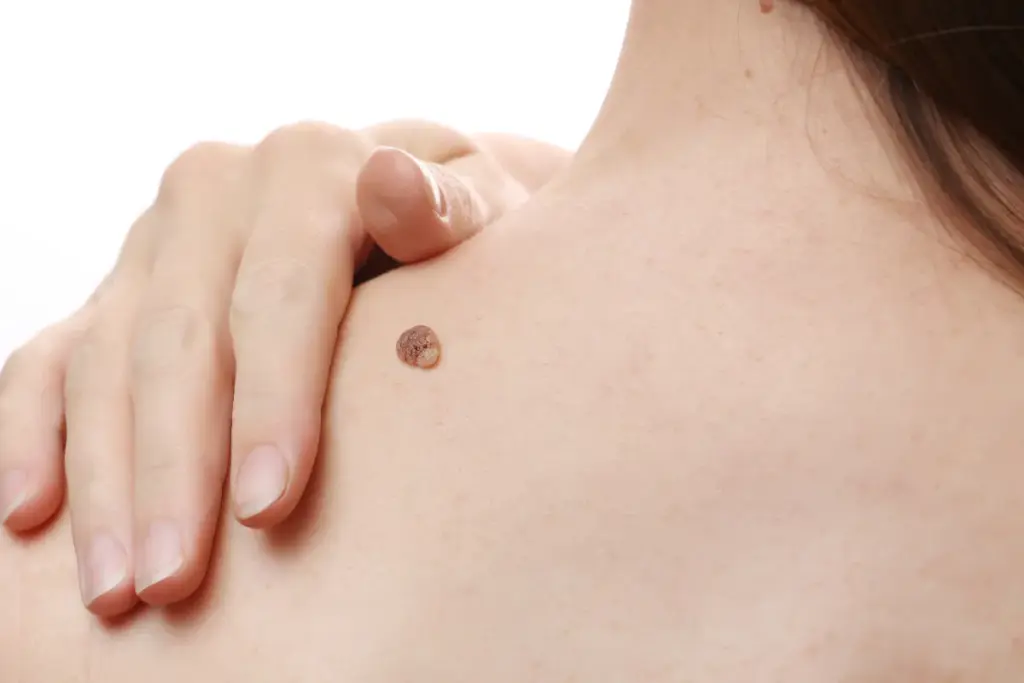
A benign neoplasm of the skin is when cells grow abnormally but don’t harm nearby tissues or spread. These growths, or benign skin tumors, come from different skin parts and are usually not dangerous.
Characteristics of Benign Tumors
Benign skin tumors are non-cancerous growths that look different and can be caused by many things. They stay in one place and don’t spread. Knowing about these tumors helps patients understand their condition and treatment options.
The exact reason for benign skin tumors is not always clear. But, things like genetic mutations, environmental factors, and cell division errors can play a part. We want to teach our patients about their condition and help them decide on their care.
Risk Factors and Prevalence
Some risk factors for benign skin tumors include age, sun exposure, and genetics. These tumors are common and can happen to anyone at any age.
It’s important for people to watch their skin for any unusual growths or changes. If they notice something, they should see a healthcare professional. Early checks can help figure out what the growth is and what to do next.
7 Common Types of Benign Skin Tumors
Knowing about different benign skin tumors is key for the right treatment. These growths are common and come in many forms. At Liv Hospital, we aim to give our patients the best care and support.
1. Seborrheic Keratosis
Seborrheic keratosis is a common skin tumor. It looks like brown, black, or tan spots on the skin. These spots can be different sizes and feel waxy or like a wart. They’re usually not harmful but can be removed for looks or if they get irritated.
2. Dermatofibroma
Dermatofibroma is a skin growth that looks firm and round. It’s often brownish to purple and found on the legs. It’s usually not painful but can be tender. The cause is not known, but it might be linked to minor injuries.
3. Lipoma
A lipoma is a soft, fatty tumor under the skin. It’s usually harmless and moves easily when touched. Lipomas can grow almost anywhere on the body and grow slowly.
4. Cherry Angioma
Cherry angiomas are small, bright spots from blood vessels. They’re common and appear as people age. They’re not harmful but can be removed for looks.
Here’s a quick look at these benign skin tumors:
| Type | Appearance | Common Locations |
| Seborrheic Keratosis | Brown, black, or tan growths, waxy or wart-like | Face, trunk |
| Dermatofibroma | Firm, round, brownish to purple | Legs |
| Lipoma | Soft, fatty tumor under the skin | Anywhere on the body |
| Cherry Angioma | Small, bright-red or purple spots | Trunk, arms, legs |
At Liv Hospital, our team is dedicated to personalized care. We know dealing with skin issues is tough. We’re here to help you through every step of your treatment.
Diagnosis and Treatment Options for Benign Skin Neoplasms
Diagnosing and treating benign skin neoplasms is a detailed process. Our medical team is dedicated to providing the best care. We focus on accurate diagnosis and effective treatment plans for patients with benign skin tumors.
Clinical Evaluation and Diagnostic Methods
Diagnosing benign skin tumors starts with a detailed clinical evaluation. Our dermatologists look at the tumor’s size, location, and appearance. They also consider the patient’s medical history to guide the diagnosis and treatment.
Several methods are used to figure out what a skin tumor is. These include:
- Visual Examination: A thorough visual examination is often the first step in diagnosing benign skin tumors.
- Biopsy: In some cases, a biopsy may be performed to examine the tissue more closely.
- Imaging Tests: Imaging tests such as ultrasound or MRI may be used to assess the size and depth of the tumor.
Treatment Approaches and When to Seek Care
The treatment for benign skin neoplasms depends on the tumor’s type, size, and location. It also depends on the patient’s health and preferences.
| Treatment Option | Description | Indications |
| Surgical Removal | Surgical excision of the tumor | Large or symptomatic tumors |
| Cryotherapy | Freezing the tumor | Small, superficial tumors |
| Laser Therapy | Using laser to remove or reduce the tumor | Tumors that are cosmetically concerning |
We are committed to delivering high-quality medical care and support. Our team works closely with each patient. We create a personalized treatment plan that meets their unique needs and concerns.
Conclusion
Benign skin tumors, like those on the face, are common and usually harmless. At Liv Hospital, we know how important it is to check any new or changing skin growth. This helps us make sure it’s not skin cancer.
Our team is all about giving you the best care for benign skin neoplasms. We understand the different types, like neoplasm skin benign and neoplasm benign skin. This knowledge helps us treat you better and ease your worries.
If you’re worried about a skin growth, don’t hesitate to reach out. We’re here to help and support you every step of the way. We want your experience with us to be positive and helpful.
FAQ
What exactly is a benign skin tumor, and how does it differ from a malignant one?
Another link to skin tumors explains that a benign skin tumor is a non-cancerous growth that does not invade surrounding tissues or spread to other parts of the body, whereas malignant tumors are cancerous, can grow aggressively, and may metastasize.
Should I be concerned if I discover a lump skin benign tumor on my body?
Another link to evaluating lumps shows that most benign skin tumors are harmless, but any new, rapidly growing, painful, or changing lump should be examined by a dermatologist to rule out malignancy or other complications.
Are benign tumors on the face treated differently than those on other parts of the body?
Another link to facial tumors explains that lesions on the face are often treated with extra care to preserve cosmetic appearance. Options may include minimally invasive excision, laser removal, or other techniques that reduce scarring compared to tumors on less visible areas.
What are epidermal tumors, and are they always non-cancerous?
Another link to epidermal tumors shows that these growths originate from the outer layer of the skin (epidermis) and include both benign types, like seborrheic keratosis, and malignant types, like squamous cell carcinoma. They are not always non-cancerous, so evaluation is essential.
Is a benign skin neoplasia the same thing as a skin benign tumor?
Another link to terminology clarifies that “benign skin neoplasia” and “benign skin tumor” are generally used interchangeably, both referring to non-cancerous growths of skin cells that do not spread or invade tissues.
What are the most common benign cutaneous tumors seen in clinical practice?
Another link to common benign tumors lists seborrheic keratosis, lipomas, dermatofibromas, hemangiomas, skin tags (acrochordons), and epidermoid cysts as frequently observed in dermatology clinics.
Can a benign tumor of the skin eventually become cancerous?
Another link to risk assessment explains that most benign skin tumors remain non-cancerous, but certain lesions, especially those with atypical features or repeated irritation, should be monitored, as rare cases can undergo malignant transformation.
What treatment options are available for a benign neoplasm of the skin?
Another link to treatment options shows that depending on size, location, symptoms, or cosmetic concerns, treatment may include observation, surgical excision, cryotherapy, laser therapy, or topical medications, with dermatologists tailoring care to minimize risk and optimize appearance.
Reference
National Center for Biotechnology Information. Evidence-Based Medical Insight. Retrieved from https://pmc.ncbi.nlm.nih.gov/articles/PMC12793825/[1



 Departments
 Related Videos
 Our Doctors
 News
News