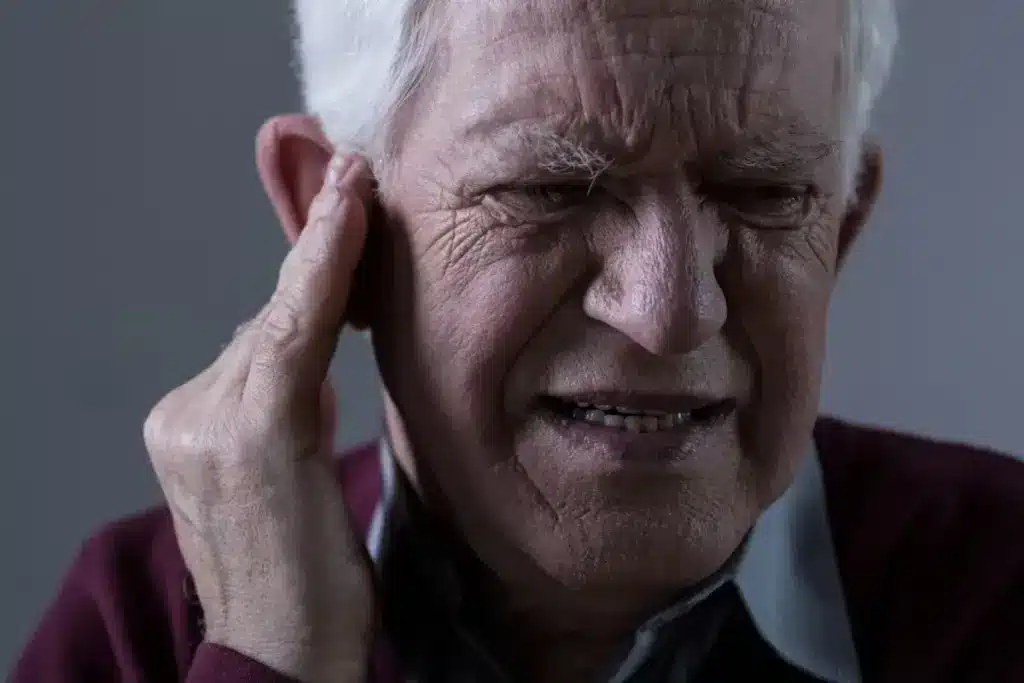
Do you hear a constant ringing, buzzing, or hissing in both ears? This is called tinnitus in both ears and affects millions globally. Veterans Affairs Canada defines tinnitus as hearing sounds in one or both ears, or in the head, without any outside sound. Tinnitus comes in many forms, and knowing them is key to finding relief.
At Liv Hospital, we blend international medical standards with caring service. Our focus is on you, ensuring you get the right support and treatment for your tinnitus.
Key Takeaways
- Tinnitus affects a significant portion of the population, with bilateral cases being a common presentation.
- The condition can manifest as different sounds, including ringing, buzzing, and hissing.
- Understanding the types of tinnitus is essential for effective management and relief.
- Liv Hospital offers a patient-centered approach to treating tinnitus.
- Comprehensive care includes diagnosis, treatment, and support tailored to individual needs.
What You Need to Know About Bilateral Tinnitus

Bilateral tinnitus is when you hear ringing or sounds in both ears. It’s important to know about it for better management. We’ll look at what it is, how common it is, and how it’s different from tinnitus in just one ear.
Definition and Prevalence
Bilateral tinnitus means hearing noise or ringing in both ears. Studies show that 54 percent of military personnel with tinnitus have it in both ears. This shows how common it is in certain groups.
Tinnitus can be either subjective or objective. Subjective tinnitus is what you hear and can’t be detected by doctors. Objective tinnitus, though, can be heard by doctors. Healthdirect says knowing this helps in diagnosing and treating it.
| Type of Tinnitus | Description | Detectable by Healthcare Provider |
| Subjective Tinnitus | Perceived by the individual | No |
| Objective Tinnitus | Can be heard by others | Yes |
How Bilateral Differs from Unilateral Tinnitus
Bilateral tinnitus affects both ears, while unilateral tinnitus is in just one. Knowing this is key to finding the cause and treatment. It’s important to figure out if your tinnitus is in both or just one ear.
The differences in diagnosis and treatment are big. Bilateral tinnitus might be due to something affecting both ears. Unilateral tinnitus could be a problem in just one ear.
Understanding bilateral tinnitus helps you manage it better. Knowing its definition, how common it is, and its differences from unilateral tinnitus is key. This knowledge helps you get the right medical care.
3 Primary Types of Bilateral Tinnitus

There are three main types of bilateral tinnitus: subjective, objective, and pulsatile tinnitus. Each has its own features. Knowing these types helps in diagnosing and treating tinnitus.
Subjective Tinnitus
Subjective tinnitus is the most common type. It’s heard only by the person with it. Sounds like ringing, buzzing, or hissing are common.
Key characteristics of subjective tinnitus include:
- Perceived by the individual only
- Variety of sounds, such as ringing or buzzing
- Caused by factors like noise exposure or age-related hearing loss
Objective Tinnitus
Objective tinnitus is rare. It can be heard by both the person and a doctor. It’s linked to physical issues in the body.
Notable aspects of objective tinnitus include:
- Can be heard by others
- Often related to a physical condition
- Rare compared to subjective tinnitus
Veterans Affairs Canada
Pulsatile Tinnitus
Pulsatile tinnitus sounds like a heartbeat. It’s linked to blood vessel problems or heart issues.
Key features of pulsatile tinnitus include:
- Rhythmic sound synchronized with the heartbeat
- Often related to vascular or cardiovascular conditions
- Can be a sign of an underlying serious health issue
| Type of Tinnitus | Characteristics | Causes |
| Subjective Tinnitus | Perceived by individual, various sounds | Noise exposure, age-related hearing loss |
| Objective Tinnitus | Can be heard by others, associated with physical conditions | Vascular or muscular issues |
| Pulsatile Tinnitus | Rhythmic sound with heartbeat | Vascular or cardiovascular conditions |
Knowing the main types of bilateral tinnitus is key to managing it. Each type has its own signs and causes. This means treatment needs to be specific to each case.
4 Specialized Forms of Bilateral Tinnitus
It’s important to know about the different types of bilateral tinnitus. This knowledge helps in creating the right treatment plans. Each type has its own causes and symptoms, so identifying them is key to proper care.
Neurological Tinnitus
Neurological tinnitus is linked to nervous system disorders. Meniere’s disease and certain tumors can cause it. We’ll look into how these conditions affect tinnitus.
Diagnosis requires a detailed neurological check-up. Treatment might involve managing the root cause.
Somatic Tinnitus
Somatic tinnitus is connected to muscle and bone issues. TMJ disorders are a common cause. We’ll explore how muscle and bone problems can lead to tinnitus.
For somatic tinnitus, physical therapy and TMJ management are often recommended.
| Form of Tinnitus | Associated Conditions | Treatment Approaches |
| Neurological Tinnitus | Meniere’s disease, Tumors | Neurological examination, Managing underlying conditions |
| Somatic Tinnitus | TMJ disorders | Physical therapy, TMJ management |
| Musical Tinnitus | Hearing loss, Stress | Sound therapy, Stress management |
| Low-Frequency Tinnitus | Meniere’s disease, Earwax buildup | Hearing aids, Earwax removal |
Musical Tinnitus
Musical tinnitus is rare, where people hear music. Hearing loss and stress can lead to it. We’ll look into its causes and diagnosis.
Treatment might include sound therapy and stress management.
Low-Frequency Tinnitus
Low-frequency tinnitus makes people hear low sounds. Meniere’s disease and earwax buildup can cause it. We’ll discuss how to diagnose and treat it.
Understanding these specific types of bilateral tinnitus helps us see how complex it is. It shows the need for treatments tailored to each person.
Conclusion
Bilateral tinnitus affects about 10 percent of people, greatly impacting their lives. There are many types of tinnitus, like subjective, objective, and pulsatile tinnitus.
Knowing the different types of bilateral tinnitus is key to managing and treating it. Healthcare experts can offer better support by understanding the various forms of bilateral tinnitus.
Tinnitus is a common issue that can deeply affect daily life, as Veterans Affairs Canada points out. By understanding the complexity of tinnitus types, we can improve healthcare for those affected.
FAQ
What is bilateral tinnitus?
Bilateral tinnitus refers to the perception of sound—such as ringing, buzzing, or whistling—that is heard in both ears or appears to be centered within the head. It is the most common form of tinnitus and typically suggests that the cause is systemic, age-related, or due to environmental factors that affected both ears equally, such as loud noise exposure. Because the auditory system is symmetrical, issues that impact the processing centers of the brain or the delicate hair cells in both cochleae will manifest as sound in both ears.
How does bilateral tinnitus differ from unilateral tinnitus?
The primary difference lies in the likely underlying cause and the medical urgency. Bilateral tinnitus is often associated with non-acute factors like presbycusis (age-related hearing loss) or long-term noise damage. In contrast, unilateral tinnitus (hearing sound in only one ear) is frequently viewed with more clinical caution by specialists. A sound isolated to one side can sometimes indicate a localized physical issue, such as a middle ear infection, an injury to one ear, or, in rarer cases, a benign growth on the auditory nerve like an acoustic neuroma.
What are the primary types of bilateral tinnitus?
Bilateral tinnitus is generally categorized into two primary types based on who can hear the sound: subjective and objective. Subjective tinnitus is by far the most prevalent, where only the individual can perceive the noise. Objective tinnitus is exceptionally rare and involves a physical sound generated within the body—often by vascular or muscular structures—that a physician can actually hear using a stethoscope. Beyond these, it can be further typed by the sound’s characteristics, such as tonal (a continuous frequency) or noise-like (a broad-band static sound).
What is subjective tinnitus?
Subjective tinnitus is a condition where the “phantom” sounds are perceived only by the patient. It is not a physical sound wave reaching the ear, but rather a result of the brain’s auditory cortex overcompensating for a lack of input from the ears. When the hair cells in the inner ear are damaged and stop sending signals, the brain essentially “turns up the volume” on its own internal background noise, creating the ringing or buzzing sensation. This type is almost always linked to some degree of sensorineural hearing loss.
Can tinnitus occur in one ear or is it always bilateral?
Tinnitus can certainly occur in just one ear, although bilateral presentation is more common. When it occurs in one ear, it is often tied to a specific event or condition affecting that side, such as a localized ear infection, a wax blockage, or sudden idiopathic sensorineural hearing loss. If someone experiences a sudden onset of tinnitus in only one ear, especially if accompanied by hearing loss or dizziness, medical guidelines suggest a prompt evaluation to rule out specific ear pathology.
What is pulsatile tinnitus?
Pulsatile tinnitus is a unique version of the condition where the perceived sound follows a rhythmic beat, typically synchronizing with the person’s heartbeat. It often sounds like a “whooshing” or “thumping” in the ears. Unlike standard ringing, which is often neurological, pulsatile tinnitus is frequently vascular. It can be caused by changes in blood flow near the ear, high blood pressure, or narrowed arteries. Because it involves the circulatory system, it is one of the few types of tinnitus that can sometimes be heard by a doctor during an examination.
Are there different classifications of tinnitus?
Yes, tinnitus is classified using several frameworks to help guide treatment. The most common classification is based on duration: “acute” tinnitus lasts for less than six months, while “chronic” tinnitus persists longer. It is also classified by its impact on life, ranging from “slight” (only noticed in total silence) to “catastrophic” (interfering with sleep, work, and mental health). Furthermore, clinicians distinguish between primary tinnitus, which is idiopathic or linked to sensorineural hearing loss, and secondary tinnitus, which is a symptom of a specific identifiable medical condition.
How often does tinnitus occur in the general population?
Tinnitus is an incredibly widespread condition, affecting approximately 10% to 15% of the global adult population. While many people experience “transient” tinnitus—a brief ringing that lasts a few seconds after a loud noise—chronic tinnitus is a persistent reality for millions. It becomes increasingly common with age, peaking in the 60-to-70-year-old demographic. Interestingly, while many people have it, only a small percentage (about 1% to 2% of the total population) find the sound so intrusive that it severely impacts their quality of life.
What is the tonal subtype of tinnitus?
The tonal subtype refers to tinnitus that has a near-continuous sound with a well-defined frequency. Patients often describe this as a single, steady whistle, hum, or “pure tone.” This subtype is highly common in cases of bilateral tinnitus caused by noise-induced hearing loss. During an audiological exam, a specialist can often “match” the pitch of the tinnitus to a specific frequency on an audiogram, which helps in tailoring sound therapy or hearing aid settings to help mask the noise.
Can bilateral tinnitus be a symptom of an underlying medical condition?
While often linked to hearing loss, bilateral tinnitus can be a symptom of various systemic medical conditions. These include cardiovascular issues like hypertension, metabolic disorders such as hypothyroidism, or neurological conditions like migraines. It can also be a side effect of “ototoxic” medications, including high doses of aspirin, certain antibiotics, or chemotherapy drugs, which damage the inner ear on both sides. Because it can signal these underlying issues, a comprehensive medical history is a standard part of a tinnitus diagnosis.
References:
National Center for Biotechnology Information. Evidence-Based Medical Insight. Retrieved from https://pmc.ncbi.nlm.nih.gov/articles/PMC2686891/