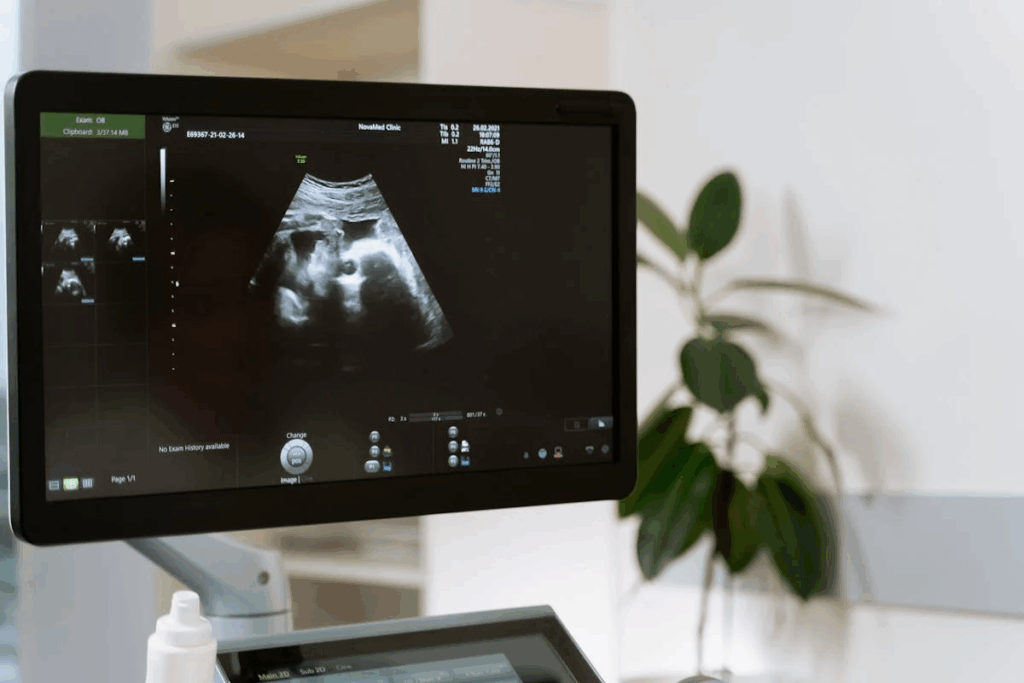
We are seeing big changes in prenatal care with 3D and 4D ultrasound technology. It lets expectant parents see their baby’s growth in amazing detail 8 week ultrasound 3d.
These new imaging methods have changed pregnancy imaging a lot. They give a clear view of fetal development from start to finish. 4D ultrasound shows the baby’s movements and growth in real-time, in 3D.
In this guide, we’ll show you the best times for detailed fetal images. We’ll talk about the benefits and uses of these advanced tools in prenatal care.
Key Takeaways
- Advanced 3D and 4D ultrasound technology enhances prenatal visualization.
- Detailed fetal imaging is possible throughout various gestational stages.
- These technologies improve the emotional experience for expecting parents.
- Comprehensive prenatal imaging programs combine diagnostic capabilities with patient-centered care.
- Expectant parents can gain a deeper understanding of their baby’s development.
Understanding 3D and 4D Ultrasound Technology

For expectant parents, knowing about 3D and 4D ultrasound is key. These technologies offer detailed views of a baby’s growth. They are popular for their ability to show fetal development in a new way.
How 3D Ultrasound Differs from Traditional 2D Imaging
2D ultrasound shows a flat view of the fetus. This can be hard to understand. 3D ultrasound technology creates detailed, three-dimensional images. These images let parents see their baby’s features clearly.
“The introduction of 3D ultrasound has been a game-changer in prenatal care,” says a leading expert in fetal medicine. “It offers a more nuanced understanding of fetal anatomy, which can be critical in detecting issues early on.”
What Makes 4D Ultrasound Unique
4D ultrasound captures real-time movement. This lets parents see their baby moving and even sucking their thumb. It makes the prenatal experience more personal and engaging.
Seeing fetal movement in real-time helps understand neurological development and health. Healthcare providers can use this to check on the baby’s well-being and spot any issues.
Medical Benefits vs. Keepsake Value
Both 3D and 4D ultrasounds have medical benefits and a keepsake value for parents. The detailed images and videos are treasured memories. They give a first look into their baby’s life.
While elective ultrasounds are often for keepsake, they also add to the medical record. They provide extra information for monitoring fetal health. So, both the medical and emotional value of these ultrasounds are important in the prenatal experience.
First Trimester: 8 Week Ultrasound 3D and Early Development

The first trimester is key for checking on fetal growth with 3D and 4D ultrasounds. It’s a time of big milestones in fetal development. Ultrasounds help confirm if the pregnancy is viable and give first looks at how the fetus is growing.
8 Week Ultrasound 3D: Confirming Viable Pregnancy
At 8 weeks, a 3D ultrasound can show if the pregnancy is viable by giving clear images of the embryo. This early scan is important for:
- Confirming the presence of a heartbeat
- Determining the gestational age with greater accuracy
- Identifying any early complications
Early detection of any issues allows for timely medical intervention. This ensures the best possible outcomes for both mother and baby.
Week | Developmental Milestones | Ultrasound Capabilities |
8 | Organogenesis, limb buds formation | Confirming heartbeat, gestational age |
12 | Facial feature development, early movements | 3D/4D imaging of facial features, detecting movements |
12 Week 3D Ultrasound: First Glimpses of Facial Features
By the 12th week, a 3D ultrasound can show the first glimpses of the baby’s facial features. This is a significant time for detailed observations of fetal anatomy.
“The 12-week 3D ultrasound is a groundbreaking moment for expecting parents, giving a first look at their baby’s features and deepening their bond.”
At this stage, the images can reveal:
- The shape and size of the head
- The formation of facial features
- The presence and activity of limbs
12 Week 4D Ultrasound: Early Movement Detection
A 4D ultrasound at 12 weeks captures early movements, giving a real-time view of the baby’s activity. This can include:
- Spontaneous movements
- Swallowing and mouthing
- Early limb movements
These observations reassure parents about their baby’s health and create a special bonding experience.
Early Second Trimester Visualization
By the 15th week of pregnancy, expectant parents can see their baby’s growth clearly through advanced ultrasound imaging. The fetus has grown a lot, and its features are more visible. This allows for a detailed look at the baby’s development.
15 Week Ultrasound Pictures: What’s Visible Now
At 15 weeks, ultrasound pictures show a lot about the fetus’s growth. The baby’s face, like eyes, nose, and mouth, is clearer. You can also see the baby’s limbs and fingers, showing how big they are.
Ultrasound can also capture the baby’s movements, like swallowing and kicking. This is exciting for expectant parents.
15 Weeks Pregnant 4D Ultrasound Experiences
Many expectant parents find the 4D ultrasound at 15 weeks memorable. This technology gives a real-time, three-dimensional view of the baby. Parents can see their child’s movements and expressions in detail.
Seeing these vivid images can make parents feel closer to their baby.
Ultrasound Images at 15 Weeks: Expectations vs. Reality
Ultrasound images at 15 weeks can be very detailed. But, it’s important to know that image quality can vary. The baby’s position, amniotic fluid, and ultrasound equipment quality all affect image clarity.
Some parents might see more detail than others. But, technology keeps getting better, improving the experience.
Knowing what ultrasound technology can and can’t do helps manage expectations. It makes the experience better for expectant parents.
Mid-Second Trimester Development
At the mid-second trimester, 3D ultrasounds show amazing details. This time is key for checking how the fetus is growing. It also gives parents a clear view of their baby’s progress.
Growing Detail
By 23 weeks, a 3D ultrasound can show the fetus’s face and body shape. “The detail at this stage is incredible,” says Medical Expert, a top obstetrician.
These images are not just for medical checks. They are also special keepsakes for families. The 23 week 3D ultrasound is special because it shows the baby’s growth when major features are clear but changing.
Accuracy and Timing
Finding out the baby’s gender is a big part of the mid-pregnancy scan. Gender ultrasound photos can be taken between 20 to 24 weeks. How accurate the gender can be depends on the baby’s position and the ultrasound quality.
A study in the Journal of Ultrasound in Medicine found that gender accuracy at 23 weeks is about 95%. “But it’s important to know there are limits and errors can happen,” says Medical Expert, a fetal medicine expert.
Preparing for Your Mid-Pregnancy Scan
To get ready for the mid-pregnancy scan, know what to expect and how to get the best images. Drink water and follow your doctor’s advice.
- Arrive at least 30 minutes before your appointment.
- Drink lots of water to fill your bladder, which helps with image quality.
- Wear comfy clothes that let you move easily.
Being ready helps parents get the most from their scan. They learn a lot about their baby and make memories that last.
The Optimal Window: 26-30 Weeks
Between 26 and 30 weeks, the conditions are perfect for capturing high-resolution 3D and 4D ultrasound images. The fetus has enough fat, and the amniotic fluid levels are just right. This makes it the best time for detailed ultrasound imaging.
Ultrasound at 27 Weeks: Peak Imaging Conditions
At 27 weeks, the fetus is fully developed. The ultrasound technology can capture detailed images. The amniotic fluid around the baby is plenty, allowing for clear views of the baby’s movements and features.
Key Features Visible at 27 Weeks:
- Distinct facial characteristics
- Active movement
- Detailed limb structures
27 Week 3D Sonogram: What You’ll See
A 27-week 3D sonogram offers a remarkable view of the baby’s features. Expectant parents can see:
- Clear facial features, including eyes, nose, and mouth
- Finger and toe details
- The baby’s overall body proportions
4D Ultrasound at 27 Weeks: Capturing Expressions
The 4D ultrasound at 27 weeks captures the baby’s dynamic movements and expressions. Parents can witness:
- Various facial expressions
- Hand movements and gestures
- The baby’s reactions to external stimuli
The following table summarizes the key differences and benefits of 3D and 4D ultrasounds at 27 weeks:
Feature | 3D Ultrasound | 4D Ultrasound |
Image Type | Static, detailed images | Real-time, moving images |
Visible Details | Facial features, limbs | Expressions, movements |
Parental Experience | Clear snapshots of the baby | Dynamic, interactive viewing |
In conclusion, the period between 26 and 30 weeks is key for 3D and 4D ultrasound imaging. At 27 weeks, parents can enjoy detailed and expressive images of their baby. It’s a memorable experience.
Early Third Trimester Visualization
At 31 weeks, 4D ultrasound technology shows us detailed views of fetal movement and behavior. This time is key for seeing how the fetus moves and what its personality might be like.
31 Weeks Pregnant 4D Ultrasound: Movement Patterns
A 4D ultrasound at 31 weeks shows the fetus’s lively movements. We see everything from small hand movements to big kicks. These actions show the fetus’s brain growth and health.
Key observations during a 31-week 4D ultrasound include:
- Fetal hand movements and finger sucking
- Kicking and leg movements
- Changes in fetal heart rate in response to stimuli
4D Ultrasound at 31 Weeks: Behavioral Observations
At 31 weeks, a 4D ultrasound lets us see the fetus’s behavior. We can tell if it’s active or calm. This might hint at its personality.
“The ability to observe fetal behavior in real-time has revolutionized our understanding of prenatal development,” says a leading expert in fetal medicine.
Comparing 3D vs. 4D Results at This Stage
At 31 weeks, both 3D and 4D ultrasounds give us useful info. But they’re different. 3D ultrasounds give us detailed pictures, while 4D shows us the fetus moving in real-time.
Feature | 3D Ultrasound | 4D Ultrasound |
Image Type | Static images | Real-time video |
Movement Observation | Limited to inference from static images | Direct observation of movements |
Behavioral Insights | Indirect insights | Direct observation of behavior |
In conclusion, while both are useful, 4D ultrasounds at 31 weeks give us a better look at fetal development. They help us understand the fetus’s behavior and movement better.
Late Pregnancy Imaging Opportunities
The last weeks of pregnancy are a special time for 3D and 4D ultrasound imaging. Parents can get lasting prenatal portraits. As we get closer to the 37-week mark, the chance to get detailed images grows.
37 Week 3D Ultrasound: Final Prenatal Portraits
At 37 weeks, 3D ultrasounds give clear images of the baby. They show the baby’s face and other details. This is a great time for parents to hold onto these moments.
The images from this time are very detailed. They often show the baby’s distinctive expressions and movements. These portraits become precious keepsakes for families.
Challenges and Limitations of Late-Term Imaging
Late-term imaging has many benefits but also some challenges. One big issue is the decrease in amniotic fluid. This makes it harder to get clear images.
The baby’s position in the womb also affects image quality. But, new ultrasound technology is making late-term imaging better.
Parents should know about these challenges when thinking about late pregnancy imaging. This way, they can have the right expectations and enjoy this special time.
Maximizing Your 3D and 4D Ultrasound Experience
We help you get the most out of your 3D and 4D ultrasound. Knowing what makes it successful and memorable is key.
Choosing the Ideal Timing for Your Goals
The timing of your 3D and 4D ultrasound is very important. Most parents find the best time to be between 26 and 30 weeks. This is when the fetus is big enough to see well but small enough to show detailed features and movements.
Ideal Timing: Between 26 and 30 weeks for the best images.
Preparing for the Best Possible Images
Getting ready is essential for the best ultrasound images. Drinking plenty of water and telling your healthcare provider about your pregnancy helps a lot. This can make the images clearer.
- Stay hydrated before the ultrasound
- Follow your healthcare provider’s instructions
- Discuss any concerns or specific goals you have for the ultrasound
Preserving and Sharing Your Ultrasound Memories
Keeping and sharing your ultrasound memories is a great way to treasure this time. Many places offer digital or printed copies of your ultrasound pictures.
Sharing your ultrasound memories can strengthen your bond with family and friends.
By picking the right time, getting ready, and keeping your ultrasound images, you can make the most of your 3D and 4D ultrasound. This thoughtful way ensures the experience is not just memorable but also fun for expecting parents.
Conclusion
3D and 4D ultrasounds have changed how we see pregnancy. They give a detailed and moving view of how a baby grows. These technologies have made prenatal care better and helped create special memories for parents-to-be.
The path of pregnancy is special and emotional. 3D and 4D ultrasounds are key in this journey. They help parents see their baby more clearly, deepening their bond.
In short, 3D and 4D ultrasounds are very important in pregnancy imaging. As medical tech keeps improving, their role in prenatal care will grow. They offer new views and experiences for parents. Whether for health reasons or as a keepsake, these ultrasounds are essential in the pregnancy journey.
FAQ
What is the difference between 3D and 4D ultrasounds?
3D ultrasounds show a three-dimensional image of the fetus. 4D ultrasounds add time, making it a moving video.
At what stage can I get a clear 3D or 4D ultrasound image?
The best time for clear images is between 26 and 30 weeks. 27 weeks is usually the peak.
Can I determine the gender of my baby during a 3D or 4D ultrasound?
Yes, you can find out the baby’s gender with 3D and 4D ultrasounds. This is usually accurate between 23 and 27 weeks.
What can be seen during an 8 week 3D ultrasound?
At 8 weeks, a 3D ultrasound confirms a viable pregnancy. It also gives early insights into fetal development.
How does a 12 week 4D ultrasound differ from a 3D ultrasound?
A 12 week 4D ultrasound shows early fetal movements. A 3D ultrasound at the same stage gives a static image.
What are the expectations for ultrasound images at 15 weeks?
At 15 weeks, images can show facial features and possibly the baby’s gender. But accuracy can vary.
Are there any challenges associated with late-term imaging, such as at 37 weeks?
Yes, late-term imaging can be tough. Less amniotic fluid can make images less clear.
How can I prepare for the best possible 3D or 4D ultrasound images?
For the best images, schedule the ultrasound at the right time. Follow any prep instructions from your healthcare provider.
Can I preserve and share the 3D or 4D ultrasound images and videos?
Yes, most places give you digital copies of the images and videos. You can then keep and share them as you wish.
What are the medical benefits of 3D and 4D ultrasounds compared to traditional 2D ultrasounds?
3D and 4D ultrasounds offer better diagnostic tools. They allow for detailed checks of fetal anatomy and development. This is key for early detection of issues.
References
National Center for Biotechnology Information. 3D and 4D Ultrasound: Advancing Pregnancy Imaging Techniques. Retrieved from https://pubmed.ncbi.nlm.nih.gov/26376219/



 Departments
 Related Videos
 Our Doctors
 News
News