The vestibulocochlear nerve, also known as cranial nerve VIII (CN VIII), is key for hearing and balance. It’s a paired nerve that sends sound signals from the inner ear to the brain. This lets us hear sounds. The 8 cranial nerve name is Vestibulocochlear. Our ultimate guide explains its 2 amazing, critical functions in hearing and balance.
This nerve has two parts: the cochlear nerve for sound and the vestibular nerve for balance. Knowing how it works helps us understand hearing and why we might lose it.
Key Takeaways
- The vestibulocochlear nerve is the eighth paired cranial nerve responsible for hearing and balance.
- It is comprised of the cochlear nerve and the vestibular nerve.
- The cochlear nerve handles auditory signals, while the vestibular nerve manages balance.
- Damage to the vestibulocochlear nerve can lead to hearing loss and balance disorders.
- Understanding the vestibulocochlear nerve is key for diagnosing and treating hearing issues.
The Cranial Nerve System: An Overview

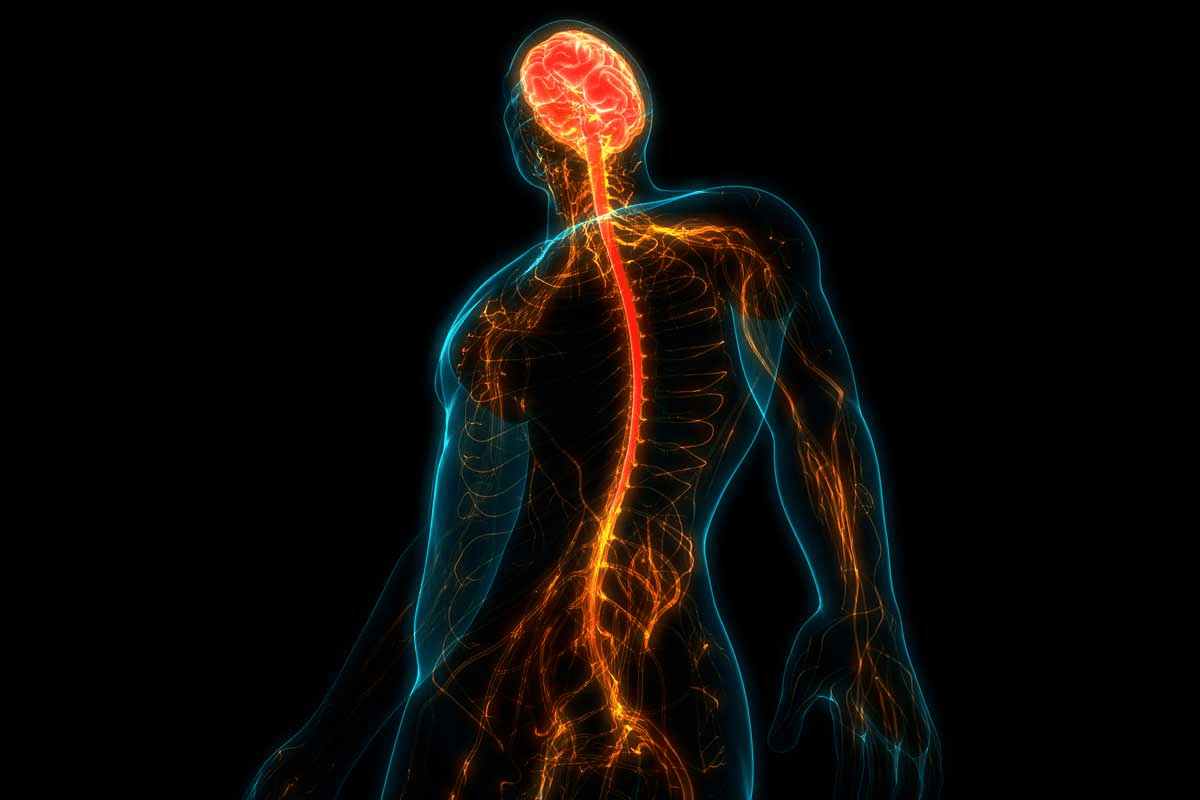
The cranial nerve system is key to how we interact with the world. It has twelve pairs of nerves that start from the brain. These nerves control many of our body’s functions.
The Twelve Cranial Nerves and Their Functions
The twelve cranial nerves handle a variety of tasks. They help us see, smell, and even move our eyes. Here’s a quick look at what each nerve does:
- Olfactory Nerve (CN I): It sends signals about smells.
- Optic Nerve (CN II): It carries visual info from the eyes to the brain.
- Oculomotor Nerve (CN III): It controls most eye movements and how the pupils work.
- Trochlear Nerve (CN IV): It helps the superior oblique muscle of the eye.
- Trigeminal Nerve (CN V): It handles facial feelings and helps us chew.
- Abducens Nerve (CN VI): It controls the lateral rectus muscle of the eye.
- Facial Nerve (CN VII): It manages facial expressions, taste, and more.
- Vestibulocochlear Nerve (CN VIII): It sends info about hearing and balance.
- Glossopharyngeal Nerve (CN IX): It’s involved in swallowing, salivation, and taste.
- Vagus Nerve (CN X): It controls heart rate, digestion, and more.
- Accessory Nerve (CN XI): It helps control neck and shoulder muscles.
- Hypoglossal Nerve (CN XII): It controls tongue movements.
Classification of Cranial Nerves: Sensory, Motor, and Mixed
Cranial nerves are grouped into three types: sensory, motor, and mixed.
- Sensory Nerves: These nerves send sensory info. The Vestibulocochlear Nerve (CN VIII) is a sensory nerve. It sends hearing and balance info from the inner ear to the brain.
- Motor Nerves: These nerves control muscle movements. For example, the Oculomotor (CN III), Trochlear (CN IV), and Abducens (CN VI) nerves help move the eyes.
- Mixed Nerves: These nerves do both sensory and motor jobs. The Trigeminal Nerve (CN V) is a mix. It handles facial feelings and helps with chewing.
Knowing about the types and roles of cranial nerves is key for diagnosing and treating brain disorders. The VIII cranial nerve is very important for our hearing and balance.
What Cranial Nerve Is Responsible for Hearing?
The vestibulocochlear nerve, also known as CN VIII, is key for hearing and balance. It carries information from the inner ear to the brain. This helps us hear and stay balanced.
Introduction to the Vestibulocochlear Nerve (CN VIII)
The vestibulocochlear nerve has two parts: vestibular and cochlear fibers. Both are sensory. The vestibular fibers help with balance, and the cochlear fibers help us hear.
Knowing about the vestibulocochlear nerve is vital. Damage to it can cause hearing or balance issues.
Historical Discovery and Naming of the Acoustic Nerve
The vestibulocochlear nerve was once called the auditory or acoustic nerve. It was named for its role in hearing. Scientists and anatomists have made big discoveries about it over time.
The name “vestibulocochlear” shows its dual role. “Vestibular” means balance, and “cochlear” means hearing. This name shows how complex and important CN VIII is.
Anatomy of the Vestibulocochlear Nerve
Understanding the vestibulocochlear nerve’s anatomy is key to grasping its role in hearing and balance. This nerve, also known as cranial nerve VIII, is vital for sound perception and balance maintenance.
Origin and Course Through the Internal Auditory Meatus
The vestibulocochlear nerve starts in the inner ear and travels through the internal auditory canal (IAC). This canal links the inner ear to the skull’s base. It’s a pathway for the nerve to send important sensory info.
The Six Nuclei in the Lower Pons
The vestibulocochlear nerve connects to six nuclei in the brainstem’s lower pons. These nuclei are essential for processing sound and balance info. The cochlear nuclei handle sound, while the vestibular nuclei manage balance.
The nuclei are split into cochlear and vestibular groups. The cochlear nuclei have an anterior and posterior part. The vestibular nuclei include four main nuclei: superior, lateral, medial, and inferior.
Nuclei | Function | Location |
Anterior Cochlear Nucleus | Auditory processing | Lower pons |
Posterior Cochlear Nucleus | Auditory processing | Lower pons |
Superior Vestibular Nucleus | Balance and equilibrium | Lower pons |
Lateral Vestibular Nucleus | Balance and equilibrium | Lower pons |
Relationship to Other Cranial Structures
The vestibulocochlear nerve is near other cranial nerves, like the facial nerve (cranial nerve VII). Knowing these connections is vital for diagnosing and treating nerve issues.
The vestibulocochlear nerve’s close ties to other nerves and brainstem structures show the complexity of the cranial nerve system. This complexity demands precise diagnostic methods to manage related disorders effectively.
The Dual Components of CN VIII
The vestibulocochlear nerve, also known as CN VIII, has two main parts: the cochlear nerve and the vestibular nerve. These parts help us hear and stay balanced.
Cochlear Nerve: Structure and Function
The cochlear nerve sends sound information from the cochlea to our brain. It’s key for hearing. It has many nerve fibers tuned to different sounds, making it possible to understand complex sounds.
The cochlear nerve’s structure is complex. Its fibers start from the cochlear nuclei. They are arranged by sound frequency, which helps process sound accurately.
Vestibular Nerve: Structure and Function
The vestibular nerve deals with balance and equilibrium from the vestibular organs. It’s essential for keeping our balance and moving around. Its fibers connect to the semicircular canals and otolith organs.
The vestibular system detects head movements and sends this info to the brain. The brain then combines this with other senses to keep us balanced.
Knowing about CN VIII’s two parts helps us understand how we hear and balance. Both nerves are vital for our interaction with the world. Problems with them can cause big issues.
How Sound Travels Through the Auditory System
When sound waves hit our ears, they start a complex journey. This journey ends with us hearing sound. It’s all about turning sound waves into neural impulses that our brain understands.
Conversion Process
The adventure starts with sound waves moving through the air and into our ear canal. These waves make our eardrum vibrate. Then, these vibrations travel through the middle ear bones to the cochlea in our inner ear.
The cochlea is key in this process. It figures out how big and how fast the sound waves are. This is important for changing sound vibrations into neural impulses.
The Organ of Corti’s Function
The organ of Corti is inside the cochlea and is very important. It has inner hair cells that react to the vibrations of the basilar membrane.
These inner hair cells send sound information to the cochlear nerve. This nerve is part of the vestibulocochlear nerve (CN VIII).
Pathways to the Brain
The cochlear nerve sends the sound vibrations turned into neural impulses to the brainstem. There, they get processed and sent to higher parts of the brain.
These neural paths lead to the auditory cortex. That’s where we actually hear sound. This complex journey lets us understand and react to different sounds.
- The cochlea detects sound wave magnitude and frequency.
- Inner hair cells in the organ of Corti convert vibrations into neural signals.
- The cochlear nerve transmits these signals to the brainstem.
- Neural pathways relay the information to the auditory cortex.
The Vestibular System and Balance
The vestibular system is key for our balance. It includes the semicircular canals and otolith organs. These parts help us sense changes in head position and movement.
Semicircular Canals and Otolith Organs
The semicircular canals and otolith organs are vital. The semicircular canals are three ring-shaped canals filled with fluid. They detect rotational movements.
The otolith organs, or utricle and saccule, have sensory hair cells. These cells are covered in calcium carbonate crystals. They detect linear movements and changes in head position relative to gravity.
The sensory hair cells in both parts are important. They convert mechanical movements into neural signals. These signals go to the vestibular nerve and then to the brain.
How the Vestibular Nerve Processes Balance Information
The vestibular nerve is key in processing balance information. It sends signals from the sensory hair cells to the brain. There, it combines with other sensory systems to keep our balance.
Vestibular Structure | Function | Detecting Movement |
Semicircular Canals | Detect rotational movements | Angular acceleration |
Otolith Organs (Utricle & Saccule) | Detect linear movements and changes in head position | Linear acceleration and gravity |
Knowing how the vestibular system works helps us understand balance disorders. It shows us how to tackle issues that affect our daily lives.
Disorders and Pathologies of the Vestibulocochlear Nerve
Problems with the vestibulocochlear nerve can cause hearing loss and vertigo. This nerve is key for hearing and balance. Damage can really affect someone’s life.
Hearing Loss and Deafness
Hearing loss from the vestibulocochlear nerve can vary. It can be mild or severe. It’s caused by aging, loud noises, and infections.
Causes and Symptoms: Hearing loss from CN VIII can be from birth or happen later. Signs include trouble hearing speech, ringing in the ears, and in bad cases, total deafness.
Cause | Symptoms | Potential Treatment |
Age-related hearing loss | Difficulty understanding speech, tinnitus | Hearing aids, cochlear implants |
Loud noise exposure | Hearing loss, tinnitus | Hearing protection, hearing aids |
Infections (e.g., meningitis) | Severe hearing loss, deafness | Cochlear implants, auditory rehabilitation |
Vestibular Disorders
Vestibular disorders happen when the inner ear’s balance system is off. They can lead to vertigo, dizziness, and trouble balancing.
Common Vestibular Disorders: Issues like vestibular labyrinthitis and benign paroxysmal positional vertigo (BPPV) are common. Vestibular labyrinthitis causes vertigo, hearing loss, and ringing in the ears.
Acoustic Neuroma and Other Tumors
An acoustic neuroma is a non-cancerous tumor on the vestibulocochlear nerve. It can lead to hearing loss, ringing in the ears, and balance issues. Other tumors can also affect this nerve, but they’re rarer.
Symptoms and Treatment: Symptoms of acoustic neuroma include hearing loss, ringing in the ears, and sometimes numbness or weakness in the face. Treatment can be watching it, surgery, or radiation, based on the tumor’s size and growth.
Clinical Assessment and Modern Treatments
The vestibulocochlear nerve is complex and needs a detailed approach for diagnosis and treatment. Understanding its anatomy and function is key to diagnosing related disorders.
Audiometry and Hearing Tests
Audiometry and hearing tests are essential for checking the cochlear nerve’s function. Audiograms measure hearing levels, helping spot hearing loss. We use tests like pure-tone audiometry and speech audiometry to see how much and what kind of hearing loss there is.
These tests help us decide the best treatment. This could be hearing aids, cochlear implants, or other options. For example, cochlear implants can help people with severe hearing loss by stimulating the auditory nerve.
Vestibular Function Tests
Vestibular function tests check the balance function of the vestibular nerve. Tests like electronystagmography (ENG), videonystagmography (VNG), and rotary chair testing are used. They help find vestibular disorders by looking at eye movements and balance.
Knowing the cause of vestibular problems helps us create a treatment plan. This could include rehabilitation exercises or other therapies.
Current Research and Therapeutic Approaches
New treatments for vestibulocochlear nerve disorders are being researched. Gene therapy, stem cell therapy, and regenerative medicine are promising areas. Cochlear implant technology and other auditory prosthetics are also improving.
Treatment varies based on the cause of cochlear nerve problems. Some hearing loss may need medical or surgical help. Others might need assistive devices like hearing aids or cochlear implants.
By keeping up with new research, we can offer our patients the latest and best treatments. This improves their quality of life.
Conclusion
The vestibulocochlear nerve, also known as cranial nerve viii, is key for hearing and balance. We’ve looked into its anatomy and how it sends sound and balance info to the brain.
This nerve has two parts: the cochlear and vestibular nerves. They work together to help us hear and stay balanced. Knowing about the vestibulocochlear nerve helps us understand and treat hearing and balance problems.
Understanding the vestibulocochlear nerve helps us see how our senses work. It also helps us understand the inner ear and brain better. This knowledge leads to better treatments for related disorders.
FAQ
What is the vestibulocochlear nerve responsible for?
The vestibulocochlear nerve, or CN VIII, sends sound signals from the inner ear to the brain. It also helps with balance and keeping steady.
What are the two components of the vestibulocochlear nerve?
The vestibulocochlear nerve has two parts. The cochlear nerve deals with hearing. The vestibular nerve handles balance and keeping steady.
What is the role of the cochlear nerve in hearing?
The cochlear nerve sends sound signals from the inner ear to the brain. There, it’s turned into sound we can hear.
What is the function of the vestibular nerve?
The vestibular nerve helps with balance and keeping steady. It detects head movements and keeps us oriented in space.
What is the vestibulocochlear nerve also known as?
It’s also called CN VIII, the acoustic nerve, or the 8th cranial nerve.
What are some common disorders associated with the vestibulocochlear nerve?
Problems with the vestibulocochlear nerve include hearing loss and deafness. It can also cause balance issues and tumors.
How is the vestibulocochlear nerve assessed clinically?
Doctors check the vestibulocochlear nerve with hearing tests and balance tests.
What are some current research and therapeutic approaches for vestibulocochlear nerve disorders?
Researchers are looking into treatments like hearing aids and cochlear implants. They also study balance therapy.
What is the significance of the vestibulocochlear nerve in our daily lives?
The vestibulocochlear nerve is key for hearing and balance. It’s vital for our daily life and quality of life.
References
National Center for Biotechnology Information. Vestibulocochlear Nerve: Hearing and Balance Cranial Nerve VIII. Retrieved from https://www.ncbi.nlm.nih.gov/books/NBK537359/