
Asthma is a big problem for kids. Nearly 1 in 10 children have a persistent cough because of it. This really affects their life.asthma cough sound childrenCommon Pediatric Pulmonol Conditions Affecting Children
It’s important to know the signs of asthma and what causes it. Knowing what a child’s asthma cough sounds like helps us manage it better. This way, we can lessen the bad times.
Listening to examples of asthma symptoms and understanding childhood respiratory sounds can be very helpful.
Key Takeaways
- Recognizing asthma symptoms early can lead to timely intervention.
- A persistent cough is a common indicator of asthma in children.
- Understanding triggers can help manage asthma symptoms.
- Familiarity with childhood respiratory sounds aids in diagnosis.
- Effective treatment can significantly reduce asthma flare-ups.
Understanding Asthma in Children

It’s key for parents and caregivers to grasp asthma in kids. Asthma makes it hard for children to breathe because it affects the airways in the lungs. It causes inflammation, blocks airways, and makes them spasm.
What is Asthma?
Asthma is a long-term lung issue where airways get inflamed and sensitive. This leads to wheezing, coughing, and shortness of breath. Kids with asthma face challenges because their lungs and airways are growing.
This condition can really impact a child’s life. It makes it hard for them to play and sleep well.
Prevalence of Asthma in Children
Asthma is a common chronic condition in kids. It affects millions of children worldwide, causing daily disruptions. The high number of kids with asthma shows the need for awareness and proper care.
Some important things to know about asthma in kids include:
- Common Symptoms: Wheezing, coughing, chest tightness, and shortness of breath are common symptoms of asthma in children.
- Triggers: Finding out what triggers asthma, like allergens and infections, is key to managing it.
- Impact on Daily Life: Asthma can limit a child’s ability to play, sleep, and enjoy life.
Understanding asthma and its effects on kids helps parents and caregivers support their health and happiness.
Identifying Asthma Cough Sounds
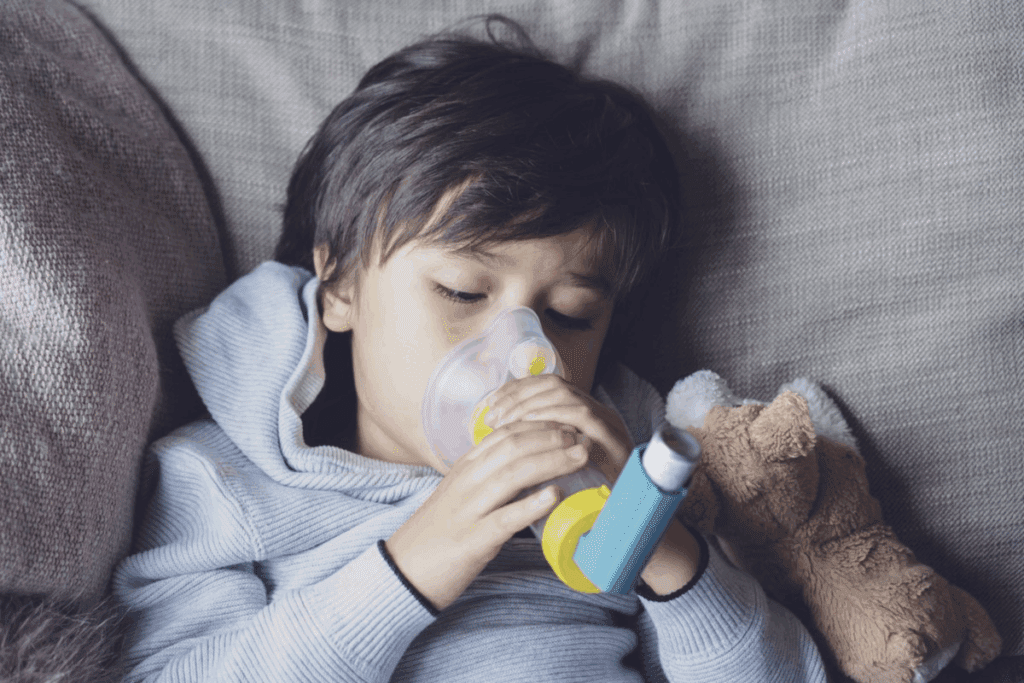
A child’s asthma can often be identified by the unique sound of their cough. This sound is frequently accompanied by wheezing. It’s important for parents and caregivers to recognize these symptoms of asthma.
Wet Cough vs. Dry Cough
Asthma coughs can be either dry or wet. A dry cough lacks mucus production, sounding harsh and irritating. In contrast, a wet cough, or productive cough, brings up mucus or phlegm. In children with asthma, a dry cough is more common.
Knowing the difference between a wet and dry cough is key. A dry cough is often linked to asthma due to airway inflammation and irritation.
Wheezing: A Distinctive Asthma Sound
Wheezing is a high-pitched whistling sound when a child breathes out. It’s a key symptom of asthma, caused by narrowed airways. Wheezing can signal an asthma episode or worsening.
Not all wheezing is asthma, but it’s a big clue when coughing and shortness of breath are present. Spotting wheezing and understanding its role can guide you to the right medical help.
Characteristics of an Asthma Cough
An asthma cough can tell us a lot about a child’s breathing health. We’ll look at what makes an asthma cough unique and how it’s different from other coughs.
What Makes it Different?
An asthma cough is persistent and can worsen at night. This can disturb a child’s sleep and daily life. It’s often paired with wheezing, chest tightness, and shortness of breath.
The sound of an asthma cough is often breathing difficulty sounds and respiratory distress sounds. These sounds can be scary for parents. They show that the child is having serious breathing problems.
| Characteristics | Asthma Cough | Other Coughs |
| Persistence | Often persistent and chronic | Usually temporary |
| Triggers | Triggered by allergens, cold air, exercise | Various, including infections |
| Associated Symptoms | Wheezing, chest tightness, shortness of breath | May not have associated respiratory symptoms |
| Timing | Worsens at night | Can occur at any time |
How Asthma Affects Coughing Patterns
Asthma changes how coughing happens, making it worse at night. This is called nighttime cough asthma. It can be hard for kids and their families.
Managing asthma means understanding how it changes coughing. By finding and avoiding triggers, and using the right treatments, we can lessen asthma coughs.
- Asthma coughs are often worse at night due to increased exposure to allergens like dust mites.
- Cold air and exercise can trigger asthma coughs during the day.
- Understanding and managing these triggers is key to controlling asthma symptoms.
Triggers of Asthma Cough in Children
It’s important to know what makes asthma cough in kids worse. Different things can set off asthma in each child. But, some common things like environmental factors and allergens often cause asthma symptoms.
Common Environmental Triggers
Things around us can make asthma symptoms worse in kids. Tobacco smoke is a big problem because it irritates the airways. Also, air pollution from cars and factories can cause asthma attacks.
Weather changes, like cold air, can also make kids with asthma cough. Another big problem is respiratory infections, like the common cold or flu. These infections can make airways inflamed and trigger asthma symptoms.
Allergens and Their Impact
Allergens are another big cause of asthma in kids. Common allergens include dust mites, pet dander, and pollen. When kids with allergic asthma are around these allergens, their airways get inflamed. This leads to symptoms like coughing.
“Reducing exposure to allergens is a key component of managing asthma in children.”
– American Academy of Pediatrics
We suggest parents try to keep their kids away from these allergens. Using allergen-proof bedding and keeping pets out of bedrooms can help. Also, staying indoors when pollen counts are high is a good idea.
Recognizing Symptoms Beyond Coughing
There are more symptoms of asthma in children than just coughing. Asthma can show up in different ways. It’s important to know these symptoms to manage asthma well.
Shortness of Breath
Shortness of breath is a big symptom of asthma. Kids with asthma might find it hard to breathe, even when they’re not doing much. This happens because asthma makes the airways narrow and inflamed, making it hard to breathe.
Look out for these signs:
- Rapid breathing rate
- Use of accessory muscles for breathing
- Feeling of chest tightness
Frequent Coughing at Night
Nighttime coughing is common in kids with asthma. It gets worse at night because of things like dust mites in bedding. Also, the body’s natural drop in cortisol levels can make inflammation worse.
Here’s a table that shows the difference between a regular cough and an asthma cough at night:
| Characteristics | Typical Cough | Asthma-Related Cough |
| Timing | Variable | Often worsens at night |
| Associated Symptoms | Usually isolated | Often accompanied by wheezing, shortness of breath |
| Response to Treatment | May respond to over-the-counter cough medicines | Typically requires asthma-specific treatment |
Knowing these symptoms is key to managing asthma. By understanding all the symptoms, parents can work with doctors to create a good treatment plan.
When to Seek Medical Attention
If your child has asthma, knowing when to seek medical help is key. Asthma can sometimes cause severe attacks that need quick action. We’ll help you understand these signs and what to do next.
Signs for Emergency Care
Severe asthma attacks can be very dangerous. It’s important to know the warning signs that mean you need to get emergency help. These include:
- Severe trouble breathing
- Lips or face turning blue
- Confusion or difficulty speaking
- Chest pain or tightness
- Severe wheezing or coughing
These symptoms mean your child’s asthma is not being managed well. If you see any of these signs, get emergency care right away.
Consulting a Pediatrician
Even without a severe attack, seeing a pediatrician is important. They can help you understand your child’s asthma better. A pediatrician can:
- Help you understand your child’s symptoms and triggers
- Develop an asthma action plan
- Prescribe the right medication and teach you how to use inhalers
Regular visits to a pediatrician can help manage your child’s asthma well. This can lower the chance of severe attacks.
Diagnostics for Asthma
To diagnose asthma, doctors use a mix of clinical checks and tests. They look at symptoms, medical history, and lung function tests. This helps them understand how severe the asthma is and what might cause it to flare up.
Pulmonary Function Tests
Pulmonary function tests (PFTs) are key in spotting asthma. These tests check how well the lungs work by measuring air intake and output speed. The spirometry test is often used for this.
During a spirometry test, you breathe deeply and then blow hard into a tube. This tube is connected to a spirometer. The test compares your lung function to normal values. In asthma, spirometry might show lower forced expiratory volume (FEV1) and forced vital capacity (FVC), showing airway blockage.
Allergy Testing
Allergy tests are also vital, mainly if allergies might be causing asthma symptoms. Allergy testing finds out which allergens might be making asthma worse. There are two main allergy tests: skin prick tests and blood tests.
- Skin prick tests involve a small prick on the skin with an allergen. The skin is then watched for a reaction.
- Blood tests check for allergy-related antibodies in the blood. These are useful when skin tests can’t be done.
Knowing which allergens cause problems helps doctors manage asthma better. They can suggest avoiding certain triggers and might even suggest immunotherapy.
Management of Asthma Cough
Managing asthma cough in kids needs a full plan. This includes medicine, lifestyle changes, and staying away from things that can trigger it. A good plan helps cut down on coughing and makes life better for kids with asthma.
Medications and Inhalers
Medicine is key in controlling asthma symptoms, like coughing. Inhalers are the main way to get asthma medicine into the body. They offer fast relief or long-term control. We’ll talk about the different medicines and how to use them.
- Reliever inhalers give quick help during asthma attacks.
- Controller inhalers are used every day to keep symptoms under control.
Parents need to know the difference between reliever and controller medicines. They also need to make sure their child uses them right.
Lifestyle Changes to Alleviate Symptoms
Changing your lifestyle can also help a lot with asthma cough symptoms. Avoiding triggers is a big part of managing asthma well.
- Find and stay away from things that make asthma worse.
- Keep your home clean to cut down on dust mites, pet dander, and mold.
- Encourage regular exercise, as it can help lungs work better. But, make sure your child takes medicine before exercising if needed.
By mixing medicine with lifestyle changes, parents can help their kids handle asthma cough better.
Coping Strategies for Parents
Managing a child’s asthma can be tough. But, there are ways to make it easier. Here are some tips to help you cope:
- Stay Informed: Learn about asthma and how it affects kids. Knowing the basics helps you understand your child’s needs better.
- Communicate with Your Child: Talk openly with your child about their asthma. Explain what it is and how to manage it. This helps them feel more in control.
- Develop a Plan: Create an asthma action plan with your child. It outlines what to do in different situations. This plan helps you both stay on track.
- Seek Support: Talk to your child’s doctor or a respiratory therapist. They can offer advice and help you find resources.
- Practice Relaxation Techniques: Teach your child relaxation methods like deep breathing or meditation. These can help them manage stress and asthma symptoms.
- Stay Positive: Focus on the good things. Celebrate small victories and show your child that they can handle asthma.
Remember, managing asthma is a team effort. By working together, you and your child can face challenges head-on.
Edit
Full screen
Delete
coping strategies for parents
By following these strategies, you can help your child cope with asthma. This makes managing their condition easier for both of you.
Resources for Families
Families facing pediatric asthma cough have many resources to help. Managing childhood asthma well is key. There are many organizations and online platforms ready to assist.
Navigating Support Groups
Support groups are a place for families to share and get support. They are led by healthcare experts or asthma groups. This ensures the advice given is safe and reliable.
Utilizing Online Resources
Online, families can find lots of info on managing asthma in kids. They can learn about treatments, research, and more. This helps them make better choices for their child’s health.
Using support groups and online resources helps families manage asthma better. It improves their child’s life and health.
FAQ
What are the common sounds associated with asthma in children?
Asthma in kids often makes a wheezing sound. This is a high-pitched whistling when they breathe out. They might also have a dry cough or cough a lot, mostly at night.
How can I distinguish between an asthma cough and other types of coughs?
An asthma cough is dry and lasts a long time. It’s worse at night and might be with wheezing or trouble breathing. If your child’s cough keeps them awake or affects their day, see a doctor.
What are the common triggers of asthma cough in children?
Kids with asthma cough often get it from things like dust, pollen, and smoke. Pet dander and mold are also common triggers. Knowing and avoiding these can help reduce symptoms.
How is asthma diagnosed in children?
Doctors use a child’s medical history, a physical check, and tests to diagnose asthma. Tests like pulmonary function tests and allergy tests help figure out how severe it is and what triggers it.
What are the management strategies for asthma cough?
Managing asthma cough involves using medicines and inhalers to control symptoms. Changing your lifestyle to avoid triggers and keep a clean environment is also key. Working with a doctor to make a detailed plan is important.
How can parents cope with their child’s asthma?
Parents can manage their child’s asthma by making an action plan and teaching them about the condition. Working with doctors to create a detailed plan is essential. Support groups and online resources can also offer help and advice.
What are the signs that indicate a need for emergency medical care for asthma?
You should seek emergency care if your child has trouble breathing, wheezing that doesn’t get better with medicine, or a cough or chest tightness that gets worse. Always be cautious and get help if you’re worried about your child’s symptoms.
How can I help my child manage their asthma symptoms?
Helping your child manage asthma means working with their doctor to make a treatment plan. Avoiding triggers and teaching them about their condition is also important. A healthy lifestyle, like eating well and exercising, can also help.
What are the benefits of creating an asthma action plan?
An asthma action plan helps manage symptoms by outlining steps for an attack or worsening symptoms. It also lets doctors keep track of the condition and adjust the treatment as needed.
Where can I find reliable online resources for managing childhood asthma?
Good online resources for managing childhood asthma include health websites and organizations. They offer the latest information on diagnosing, treating, and managing asthma. These resources can help families deal with the challenges of asthma.