


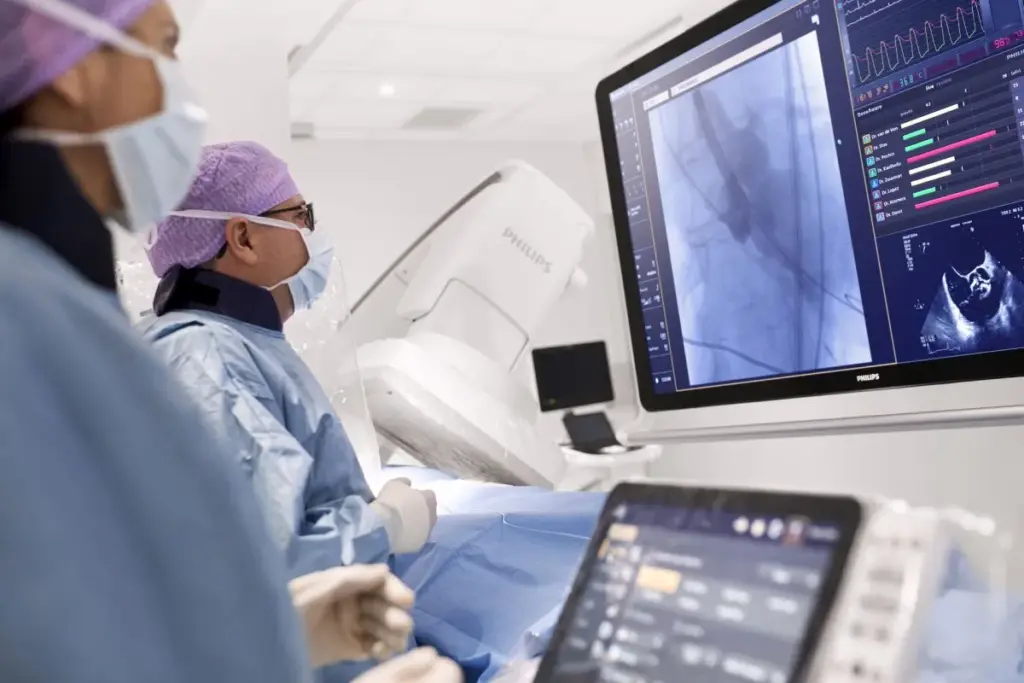
Interventional radiology (IR) is revolutionizing patient care by providing innovative, less invasive treatment options. It offers minimally invasive alternatives for many health issues. This includes trauma, vascular disease, cancer, and lung problems. IR uses advanced imaging to make treatments safer and shorter than surgery.
IR greatly improves patient care and life quality. It’s perfect for those who can’t have surgery or need exact treatments. IR’s less invasive approach cuts down recovery time and lowers the chance of complications.
Key Takeaways
- Interventional radiology offers minimally invasive alternatives for various medical conditions.
- IR procedures can reduce complications and hospital stays.
- IR is useful for patients who are not ideal candidates for surgery.
- IR can help reduce recovery time and minimize the risk of complications.
- IR improves patient outcomes and quality of life.
What Is Interventional Radiology and How Does It Transform Patient Care
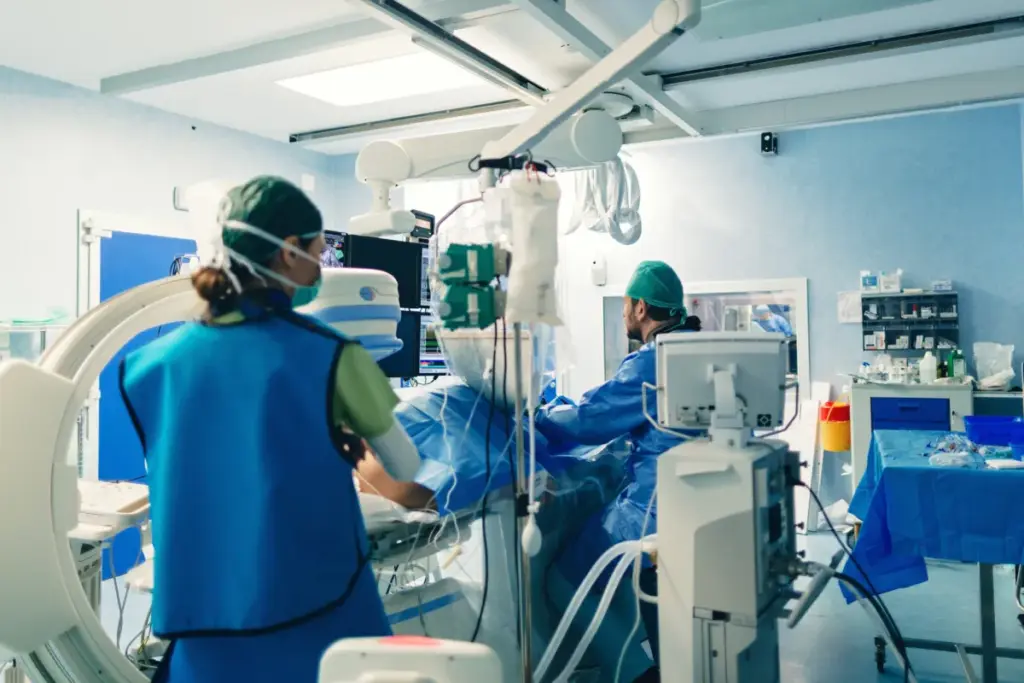
Interventional radiology (IR) is changing patient care by giving new, less invasive ways to treat patients. It uses to guide treatments that help diagnose and treat diseases.
Definition and Core Principles of Interventional Radiology
IR uses imaging like X-ray and MRI for procedures that are less invasive than surgery. It aims to achieve treatment goals with less risk and quicker recovery. IR helps treat many conditions, from blood vessel diseases to cancer.
Interventional radiologists perform many procedures, like angiography and tumor ablation. These are done with real-time imaging, making them precise and less harmful to the patient.
The Evolution of Interventional Radiology in Modern Medicine
IR has grown a lot in the last few decades, thanks to better imaging and technology. The need for less invasive treatments has made IR key in healthcare. The global market for Transradial Access Devices is growing, showing a trend towards less invasive care.
As IR keeps improving, new techniques and technologies are being developed. This integration into mainstream medicine is making healthcare more focused on the patient and more efficient.
The Specialized Role of the Radiologist in Interventional Procedures

Interventional radiology depends on radiologists with special training. They perform minimally invasive procedures. Their role is key to the success of these treatments.
Training and Expertise Required for Interventional Radiologists
Interventional radiologists get a lot of training. This prepares them to diagnose and treat many medical issues. Their training includes:
- Completing medical school and a radiology residency
- Specialized training in interventional radiology through fellowships
- Certification from boards like the American Board of Radiology
This training helps them handle complex procedures, even in tough situations.
How Radiologists Collaborate with Other Medical Specialists
Radiologists team up with other specialists for patient care. This teamwork is vital for:
- Planning patient care: They work with doctors to find the best treatment.
- Doing procedures: Radiologists team up with surgeons and others for complex treatments.
- Following up: After treatments, they keep in touch with other doctors for patient care.
This teamwork ensures patients get top-notch care that fits their needs.
Evidence-Based Advantages of IR Over Traditional Surgery
Interventional Radiology (IR) offers many benefits over traditional surgery. It leads to fewer complications and shorter hospital stays. Understanding these advantages is key for both patients and healthcare providers.
2023 Research on Reduced Post-Procedure Complications
A 2023 study showed IR procedures have fewer complications than traditional surgery. Patients who got IR treatments had fewer problems after their procedure. This not only helps patients but also saves money in healthcare costs.
Shorter Hospital Stays and Faster Recovery
IR is known for being minimally invasive. This means patients stay in the hospital less and recover faster. IR causes less damage and is less stressful for patients, helping them get back to normal sooner.
Patient Satisfaction and Quality of Life Improvements
IR’s benefits go beyond the immediate recovery. Many patients see a big improvement in their quality of life. IR helps patients recover faster and live more independently, making daily activities easier.
|
Benefits of IR |
Traditional Surgery |
Interventional Radiology |
|---|---|---|
|
Post-Procedure Complications |
Higher Risk |
Lower Risk |
|
Hospital Stay Duration |
Longer Stays |
Shorter Stays |
|
Recovery Time |
Slower Recovery |
Faster Recovery |
As IR continues to grow, its advantages are clear. IR is a safe, effective, and less invasive treatment for many conditions. It improves patient outcomes and quality of life.
Trauma Patients: When IR Becomes a Lifesaving Option
Trauma patients with spleen, liver, or kidney injuries are seeing big changes thanks to interventional radiology. This field is changing trauma care a lot. IR is key because it’s less invasive and works well for tough injuries.
Management of Splenic Injuries
More doctors are using IR for spleen injuries. The use went up from 29% to 44% from 2011 to 2018. This is because IR helps keep organs working better and cuts down recovery time.
|
Year |
Percentage of IR Use in Splenic Injuries |
|---|---|
|
2011 |
29% |
|
2018 |
44% |
Interventional Approaches to Liver and Kidney Trauma
IR has many ways to help with liver and kidney injuries. It uses embolization and stenting. These methods are key in stopping bleeding and keeping organs working.
Interventional Radiologist
Pelvic Trauma Management Through IR
IR is also helping with pelvic trauma. It uses angiographic embolization to stop severe bleeding. This has greatly improved patient results for complex pelvic injuries.
In summary, IR is a lifesaver for trauma patients, mainly those with spleen, liver, or kidney injuries. Its non-invasive nature and success make it a vital part of modern trauma care.
Vascular Disease: The 200 Million Patients Worldwide Who Benefit
Vascular disease affects over 200 million people globally, making it a big health issue. It includes conditions like peripheral artery disease, aneurysms, and venous disease. Interventional radiology (IR) is key in treating these, providing less invasive options than surgery.
Peripheral Artery Disease Interventions
Peripheral artery disease (PAD) is when blood vessels outside the heart get narrowed or blocked. IR’s angioplasty and stenting have changed PAD treatment. These methods use a balloon to widen the artery and a stent to keep it open, boosting blood flow to the limbs.
Minimally invasive PAD interventions cut down the need for open surgery. This leads to quicker recovery times and fewer complications.
Aneurysm Treatment Options
An aneurysm is an abnormal bulge in a blood vessel that can rupture and cause severe bleeding. IR’s endovascular aneurysm repair (EVAR) is a top treatment. EVAR puts a stent-graft in the aneurysm to stop blood flow into the bulge, lowering rupture risk.
This minimally invasive approach is great for patients at high risk for open surgery.
Venous Disease Management
Venous disease includes varicose veins and deep vein thrombosis (DVT). IR manages these with venous stenting and thrombolysis. Venous stenting treats narrowed or compressed veins, while thrombolysis dissolves blood clots to restore flow.
These treatments greatly improve life quality for those with venous disease.
In conclusion, IR is essential in managing vascular disease. It offers effective, minimally invasive treatments for PAD, aneurysms, and venous disease. IR improves patient outcomes and enhances life quality for the over 200 million affected by vascular disease worldwide.
Cancer Patients and the Growing Field of Interventional Oncology
Interventional radiology (IR) is now key in cancer care, thanks to interventional oncology. Cancer is a big health problem worldwide, so new treatments are needed fast. Interventional oncology offers new ways to diagnose and treat cancer without big surgeries.
Image-Guided Biopsies for Accurate Diagnosis
Image-guided biopsies are a main part of interventional oncology. They let doctors take precise samples from tumors for accurate diagnosis. These biopsies use ultrasound, CT, or MRI to guide the needle, making them safer and more accurate than surgery.
Image-guided biopsies have many benefits:
- They are less invasive, so patients recover faster.
- They get accurate tumor samples.
- They can be done with just local anesthesia.
- They lower the chance of spreading cancer cells.
Tumor Ablation Techniques
Tumor ablation uses energy to kill cancer cells. Methods like radiofrequency ablation (RFA), microwave ablation (MWA), and cryoablation are used for tumors in the liver, kidney, and lung. These methods are less invasive than surgery and can be guided by imaging.
The benefits of tumor ablation include:
- They are less invasive, keeping more organ function.
- They can be done on an outpatient basis.
- They have fewer complications than surgery.
- They can be repeated if needed.
Embolization Procedures for Primary and Metastatic Tumors
Embolization cuts off a tumor’s blood supply to shrink it or ease symptoms. Techniques like transarterial chemoembolization (TACE) and radioembolization (SIRT) are used for liver cancers and metastases. These methods deliver treatments directly to the tumor, reducing side effects.
Embolization procedures offer:
- Targeted treatment with fewer side effects.
- They’re good for patients who can’t have surgery.
- They can shrink tumors and relieve symptoms.
- They can be used with other treatments for better results.
In conclusion, interventional oncology is changing cancer care with new, less invasive treatments. As technology gets better, we’ll see even more effective ways to fight cancer.
Pulmonary Complications: IR Solutions for Respiratory Patients
IR is changing how we treat pulmonary complications, making patient care better. Conditions like pulmonary embolism, pleural effusions, and pneumothorax are serious and need quick, effective treatment. IR offers new, less invasive ways to treat these problems, avoiding the need for big surgeries.
Pulmonary Embolism Treatment Options
Pulmonary embolism is a dangerous condition where a blood clot blocks a lung blood vessel. It can be very serious. IR has several treatments, like catheter-directed thrombolysis and mechanical thrombectomy. These methods use imaging to get drugs to the clot or remove it, helping blood flow again.
Management of Pleural Effusions and Pneumothorax
Pleural effusions and pneumothorax can really hurt a patient’s health. IR uses techniques like thoracentesis and chest tube placement to help. For pleural effusions, IR can drain fluid, easing symptoms and improving lung function. For pneumothorax, IR helps expand the lung by removing air.
Lung Biopsy and Drainage Procedures
IR is key in diagnosing and treating lung issues. Lung biopsy lets doctors take precise tissue samples. IR also helps with drainage for lung abscesses or fluid, a less invasive option than surgery.
IR gives healthcare providers new, effective ways to treat pulmonary complications. This leads to better patient outcomes and shorter recovery times. As IR grows, it will likely play an even bigger role in treating these serious conditions.
Gastrointestinal Conditions Effectively Treated with IR
IR has become a key tool in treating gastrointestinal disorders. It has changed how we handle these conditions, thanks to IR’s progress.
Biliary Interventions for Obstruction and Infection
Biliary interventions are vital in IR for the gut. They help with blockages and infections in the bile ducts. Methods like percutaneous transhepatic cholangiography (PTC) and biliary drainage are used.
- PTC helps find and treat bile duct blockages.
- Biliary drainage removes infected bile, easing symptoms.
GI Bleeding Management Techniques
GI bleeding is a serious issue that IR can manage well. We use angiography to find the bleeding source. Then, we use embolization to stop it.
Key techniques include:
- Angiographic embolization to control bleeding.
- Coil embolization for precise occlusion of bleeding vessels.
Enteral Access and Feeding Tube Placement
Enteral access is key for long-term nutrition support. IR helps place feeding tubes for safe nutrition.
IR techniques greatly improve patient care in the gut. These methods are less invasive, cutting down on recovery time and complications. This improves patients’ quality of life.
Urological Applications: When Patients Should Consider IR
Interventional radiology (IR) is now a key part of treating urological issues. It offers patients a less invasive option compared to traditional surgery. This shift is changing how we treat urological problems, with IR becoming more important.
Nephrostomy and Ureteral Stenting for Obstruction
IR is vital in managing urinary tract blockages. Nephrostomy and ureteral stenting help when urine flow is blocked. This can be due to stones, tumors, or strictures. These procedures are guided by imaging, ensuring precise placement and reducing risks.
Treatment Options for Benign Prostatic Hyperplasia
Benign prostatic hyperplasia (BPH) is common in older men, causing urinary issues. IR offers several non-invasive treatments for BPH, like prostatic artery embolization. This method reduces the prostate’s size by cutting off its blood supply, easing symptoms.
Management Approaches for Renal Tumors
Renal tumors, including renal cell carcinoma, can be tough to treat, often not suitable for surgery. IR offers alternatives like ablation and embolization. These methods help control tumor growth and manage symptoms, improving patients’ quality of life.
Considering IR for urological issues can lead to less invasive treatments. This means fewer complications and quicker recovery times. We aim to provide the latest and most effective treatments, ensuring our patients receive top-notch care.
Neurological Patients Benefiting from IR Procedures
Interventional radiology (IR) is key in treating neurological conditions. It offers patients less invasive options than traditional surgery. This shift in treatment is improving patient outcomes.
Acute Stroke Intervention and Time-Critical Care
IR has greatly impacted acute stroke care. Techniques like mechanical thrombectomy quickly remove blood clots. This restores blood flow to the brain.
Timely intervention is critical. The sooner blood flow is restored, the less brain damage there is.
Cerebral Aneurysm and AVM Treatment
IR also treats cerebral aneurysms and AVMs effectively. Endovascular coiling and embolization are used. These methods are minimally invasive and reduce the risk of rupture.
The precision of IR allows for targeted treatment. This spares healthy tissue around the affected area.
Spine Interventions for Pain and Stability
IR offers treatments for spinal conditions. Procedures like vertebroplasty and kyphoplasty stabilize vertebral fractures. They also target chronic pain causes.
These treatments improve patients’ quality of life. They offer a less invasive option compared to traditional surgery.
By expanding IR in neurological care, we offer more treatment options. This personalized approach ensures each patient gets the best treatment for their condition.
Women’s Health Conditions Transformed by Interventional Radiology
Interventional radiology (IR) is changing how we treat women’s health issues. It’s making big changes in treating gynecological problems. IR uses minimally invasive methods to help.
Uterine Fibroid Embolization as an Alternative to Hysterectomy
Uterine fibroid embolization (UFE) is a key example of IR’s impact. It stops fibroids from getting blood, making them shrink. UFE is a safe and effective alternative to hysterectomy, letting women keep their uterus and avoid big surgery.
The benefits of UFE include:
- Minimally invasive procedure
- Less recovery time compared to traditional surgery
- Preservation of the uterus
- Significant reduction in symptoms
Fallopian Tube Recanalization for Fertility
IR helps women with infertility by clearing blocked fallopian tubes. This method uses a catheter to open up the tubes. This technique is great for women who want to get pregnant.
The process is simple and can be done without staying in the hospital. It’s a good choice for many women.
Pelvic Congestion Syndrome Treatment Options
Pelvic congestion syndrome (PCS) causes chronic pain from varicose veins in the pelvis. IR offers a solution through embolization. This blocks the bad veins and relieves pain. This minimally invasive approach can greatly improve life for women with PCS.
IR tackles the pain’s source, giving women a hopeful solution for this tough condition.
Pediatric Applications: Minimizing Trauma in Young Patients
IR is changing how we treat kids with complex conditions. It makes recovery faster and reduces trauma. IR is a gentler option than old-school surgery, which is great for kids.
Vascular Malformations in Children
Vascular malformations are a big worry for kids. IR offers safe treatments that are less invasive. Image-guided techniques help avoid harming nearby tissues.
Non-Invasive Approaches to Complex Pediatric Conditions
IR makes treating tough conditions in kids easier and safer. It’s used for tumors and vascular issues. These methods cause less harm and help kids get better faster.
Safety Considerations and Radiation Dose Management
Keeping kids safe is key when using IR. We manage radiation doses carefully to avoid long-term risks. We use the latest tech to keep radiation low while getting clear images.
Elderly Patients: Reducing Surgical Risk Through IR
Interventional radiology (IR) is changing how we care for older patients. It makes surgery safer. As more people live longer, we need treatments that are less invasive.
IR is great for older patients because it uses less anesthesia. Many older people have health issues that make surgery risky. IR procedures need only local anesthesia or light sedation, lowering anesthesia risks.
Managing Comorbidities in High-Risk Elderly Patients
Older patients often have many health problems. IR offers a solution with its targeted, non-invasive treatments. It can handle vascular diseases, tumors, and other common issues in the elderly.
Quality of Life and Functional Improvements
IR boosts the survival and quality of life for older patients. It makes procedures less invasive, helping patients heal faster and stay independent. This is key for older patients, as keeping their quality of life is essential.
Using IR, healthcare can give older patients a safer, more effective treatment. It meets their complex needs and improves their well-being.
Patient Selection Criteria and Contraindications for IR
Interventional radiology (IR) procedures need a detailed check to ensure safety and effectiveness. We thoroughly review patients to see if they’re right for IR treatments.
Medical Evaluation and Risk Assessment
A detailed medical check is key to spotting risks and things we can’t do. We look at patients’ health, past medical issues, and current state to decide if IR is right for them. A study in shows picking the right patients is vital for good results in IR.
When Traditional Surgery May Be Preferred
At times, traditional surgery might be better than IR, depending on the patient’s health or the procedure’s complexity. We weigh the patient’s health, how serious their condition is, and the risks and benefits of each option.
Absolute and Relative Contraindications
Some conditions make IR treatments not possible. We look at each patient’s case to find the best treatment. Contraindications include:
- Severe bleeding disorders
- Active infections
- Severe kidney or liver disease
By carefully checking who’s right for IR, we make sure these treatments are safe and work well.
The Patient Experience During Interventional Radiology Procedures
The journey through interventional radiology procedures is complex. It involves preparation, precise care, and follow-up. We help patients know what to expect at every step.
What to Expect Before, During, and After Treatment
First, patients get a detailed health check. This helps us understand their health and any risks. During the treatment, we use advanced imaging to ensure accurate care.
After, we watch for any bad reactions. We also give clear instructions for aftercare.
Pain Management and Sedation Options
Pain management is key. We offer different sedation options to reduce pain. This includes local anesthesia and conscious sedation.
We work with patients to find the best pain management plan for them.
Recovery Process and Follow-up Care
The recovery plan is made just for each patient. We give detailed care instructions. Our team stays in touch to help with any issues.
Important parts of recovery include:
- Watching for complications
- Managing pain
- Checking in with follow-up appointments
Understanding the patient experience helps us improve our care. We aim to make outcomes better for everyone.
Future Directions: Expanding the Reach of Interventional Radiology
Interventional radiology is growing fast, with new technologies promising better patient care. We’re exploring new ways to improve IR, focusing on several key areas.
Emerging Technologies and Techniques
New tools are being made to make IR procedures safer and more precise. For example, better imaging lets doctors guide treatments in real-time. Artificial intelligence (AI) is also being used to help diagnose and tailor treatments.
New Patient Populations and Applications
IR is now helping patients with complex conditions that were hard to treat before. IR is becoming a critical component in managing diseases. It offers less invasive options compared to surgery.
Integration with Artificial Intelligence and Robotics
The use of AI and robotics in IR is changing the game. Robotics improves the accuracy of procedures, while AI helps choose the right treatments. These technologies are making IR more precise and effective.
Conclusion: The Growing Impact of Interventional Radiology on Patient Care
Interventional radiology (IR) is revolutionizing patient care by providing innovative, less invasive treatment options. It offers a less invasive way compared to traditional surgery. IR has shown great benefits in treating many health issues, from blood vessel problems to cancer.
This approach leads to fewer complications, shorter hospital stays, and quicker recovery times. These advantages make IR a popular choice for many. As IR keeps improving, we can look forward to even more advanced treatments and better care for patients.
Looking ahead, IR’s role in healthcare will only grow stronger. It will help provide top-notch care to more people around the world. The impact of IR on patient care is clear and exciting. We’re eager to see what the future holds for this field.
FAQ
What is interventional radiology?
Interventional radiology (IR) is a medical field that uses imaging to guide small procedures. It’s a less invasive option compared to traditional surgery. It helps with many issues like trauma, vascular disease, and cancer.
What are the benefits of interventional radiology?
IR has many benefits. It leads to fewer complications, shorter hospital stays, and quicker recovery. Patients also report higher satisfaction and better quality of life.
What conditions can be treated with interventional radiology?
IR treats a wide range of conditions. This includes vascular disease, cancer, and pulmonary issues. It also helps with gastrointestinal, urological, neurological, and women’s health problems.
How does interventional radiology work?
IR uses imaging like X-ray and CT scans to guide procedures. This way, doctors can diagnose and treat without open surgery.
What is the role of the radiologist in interventional radiology?
Radiologists are key in IR. They use their skills to perform procedures and work with other doctors. They provide complete care to patients.
Is interventional radiology safe?
IR is usually safe, with low complication risks. But, like any procedure, there are risks and things to consider.
What can I expect during an interventional radiology procedure?
During an IR procedure, you’ll get local anesthesia and sedation. The radiologist will use imaging to guide the procedure. This might involve inserting a catheter.
How long does it take to recover from an interventional radiology procedure?
Recovery time varies. But IR procedures often mean shorter hospital stays and quicker recovery than traditional surgery.
Can interventional radiology be used in pediatric patients?
Yes, IR is used in kids. It helps reduce trauma and promotes faster healing in young patients.
Can interventional radiology be used in elderly patients?
Yes, IR is used in older adults. It helps reduce surgical risks and improve outcomes for seniors.
What are the future directions of interventional radiology?
IR is growing fast. New technologies and techniques are emerging. It’s also being used in more areas, with help from artificial intelligence and robotics.
How does interventional radiology improve patient outcomes?
IR offers better outcomes by providing less invasive options. It reduces complications and promotes faster recovery. This improves quality of life and patient satisfaction.
References
National Center for Biotechnology Information. Evidence-Based Medical Insight. Retrieved from




 Departments
 Related Videos
 Our Doctors
 News
News


