

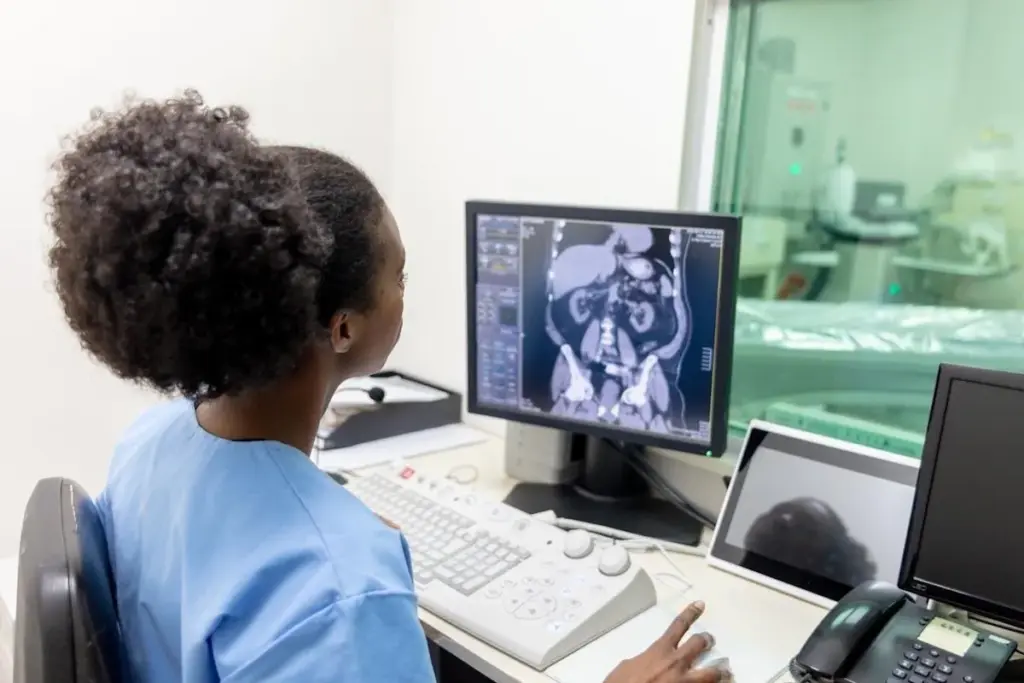
We often wonder about the earning power of radiologists. The answer is quite impressive.
The Doximity Physician Compensation Report states the mean salary for radiologists is $571,749. This is a 7.5% increase in just one year. This big jump shows how much we need skilled radiologists in healthcare.
As medical tech gets better, the need for skilled radiologists keeps growing. This leads to very good pay. With their ability to read imaging results, radiologists are among the top earners in medicine. This makes a career in radiology very rewarding.
Key Takeaways
- Radiologists earn six-figure salaries, with average annual compensation above $500,000.
- A 7.5% rise in radiologists’ salaries in one year reflects the growing demand for their expertise.
- Advances in medical technology contribute to the increasing demand for skilled radiologists.
- Radiologists are among the highest-paid physicians due to their critical role in healthcare.
The Six-Figure Reality of Radiologist Compensation

Radiologists are among the highest-paid in medicine. Their salaries show their skill and the importance of their work. The need for experts in radiology has led to big financial rewards.
Average Radiologist Salaries in 2024-2025
Recent data shows radiologists are well-compensated. The Doximity Physician Compensation Report found their mean salary to be $571,749. This is a 7.5% increase in just one year. SalaryDr reports a median salary of $590,000, with some making up to $800,000.
“The financial rewards in radiology are substantial,” as highlighted by the significant mean and median salaries. These figures show the value placed on radiologists and the strong demand for their expertise.
Salary Growth Trends in Radiology
The trend in radiologist compensation is clearly upward. With a 7.5% rise in mean salary over a year, radiologists are seeing significant salary growth. This growth shows the increasing importance of radiology in healthcare and the ongoing demand for skilled radiologists.
Factors contributing to this growth include the expanding role of imaging in patient care and the shortage of skilled radiologists in certain regions. As a result, radiologists can expect their compensation to continue reflecting their value to the healthcare system.
Understanding the Diagnostic Radiography Salary Landscape

To understand the salary for diagnostic radiography, we must look at several factors. These include experience, location, and the type of employer. Each one affects how much someone earns.
Median vs. Mean Salary Figures
It’s important to know the difference between median and mean salaries. The median is the middle value, while the mean is the average. The median is often more accurate because it’s not skewed by very high or low salaries.
A recent study found the median radiology tech salary in the U.S. was about $62,000. The mean salary was $65,000. This shows why we should look at both figures when talking about salaries.
Regional Variations in Radiologist Compensation
Salaries for medical imaging technician wages vary by region. This is because of different costs of living, demand, and local economies.
- The West Coast and Northeastern United States tend to offer higher salaries for radiologic technologists.
- Rural areas often have different compensation structures compared to urban centers.
- States with a high cost of living, such as California and New York, typically offer higher wages to compensate.
High earnings in some areas are due to a supply-demand gap and more imaging needs. As we study salaries, it’s clear that where you work greatly affects your pay.
Entry-Level Radiologist Earnings
The journey for radiologists starts with a competitive salary. This salary is the first step towards future earnings. It shows that radiology is a promising career.
This high salary reflects the education and training needed. It also shows how valuable radiologists are in healthcare.
Starting Salaries for New Radiologists
New radiologists can expect a lucrative starting compensation. The average starting salary is competitive with other medical fields. Here’s a table showing average starting salaries in different settings:
Progression Path for Early-Career Radiologists
Early-career radiologists can see significant salary growth. This growth comes from specialization, leadership roles, and more demand for radiology services.
As they gain experience, radiologists can earn more. They can take on higher-paying roles or specialize in areas with high demand. We’ll look into these opportunities further.
Mid-Career to Experienced Radiologist Compensation
Experienced radiologists earn a lot, showing their skill and knowledge. As they get more experience, their pay goes up a lot.
Salary Growth After 5-10 Years
After 5-10 years, radiologists see a big pay increase. This time is key for handling tougher cases and possibly leading teams. It also means they can specialize more, earning more.
Studies show mid-career radiologists can make $400,000 to $500,000 a year. Their pay goes up because they are more valuable to hospitals. They are in high demand for their top-notch diagnostic work.
Top-Earning Radiologists
Veteran radiologists, with over 10 years of experience, earn even more. The top ones can make up to $800,000 a year. Their high pay comes from specializing, leading, and working in places that need them most.
|
Experience Level |
Average Salary Range |
|---|---|
|
5-10 years |
$400,000 – $500,000 |
|
10+ years |
$600,000 – $800,000 |
Experience is key in how much radiologists get paid. As healthcare changes, the need for skilled radiologists will keep growing. This supports strong pay trends for those with lots of experience.
Radiologist vs. Radiographer: Clarifying Salary Differences
It’s important to know the difference between radiologists and radiographers to understand why they earn different salaries. Both are key in medical imaging, but their jobs, skills, and pay vary a lot.
Physician Radiologists vs. Radiologic Technologists
Physician radiologists are doctors who use imaging to diagnose and treat diseases. They read images, do procedures, and talk to other doctors. Radiologic technologists, or radiographers, run the machines to take body images for doctors to look at.
Physician radiologists make a lot more money than radiologic technologists. They can earn between $400,000 and over $600,000 a year in the U.S. Radiologic technologists, though, make between $60,000 and $90,000 a year. Their pay depends on where they work, how long they’ve been doing it, and who they work for.
Education Requirements and Salary Correlation
The amount of education and training affects how much someone makes. Physician radiologists need 13 years of school after high school. This includes four years of college, four years of medical school, and five years of residency.
Radiologic technologists need less education. They usually get an associate’s degree or a certificate, which takes two years. This shorter education path means they make less money than doctors.
Knowing these differences helps people thinking about a career in medical imaging. It also helps those running hospitals and making policies to plan better.
Subspecialty Impact on Radiologist Earnings
The choice of subspecialty can greatly affect a radiologist’s earnings. Different areas within radiology have varying financial rewards.
Highest-Paying Radiology Subspecialties
Some of the highest-paying subspecialties in radiology include:
- Interventional Radiology: This subspecialty involves minimally invasive procedures using imaging guidance. It is often associated with higher earnings due to the complexity and demand for these services.
- Neuroradiology: Neuroradiologists specialize in diagnosing and treating conditions related to the brain and nervous system. They are typically well-compensated due to the high level of expertise required.
- Musculoskeletal Radiology: Musculoskeletal radiologists focus on diagnosing conditions related to the musculoskeletal system. They are also among the higher earners in the field.
For more detailed information on radiologist salaries, you can refer to our in.
Emerging Specialties with Growing Compensation
Emerging subspecialties in radiology are also seeing growth in compensation. These include:
- Oncologic Imaging: With the increasing prevalence of cancer, oncologic imaging is becoming more critical. This leads to higher demand and potentially higher salaries for specialists in this area.
- Cardiovascular Radiology: As cardiovascular diseases remain a major health concern, cardiovascular radiology is seeing an increase in demand. This can translate to better compensation for radiologists in this subspecialty.
These emerging specialties not only offer growing compensation but also represent areas where radiologists can make significant contributions to patient care and medical advancements.
Educational Investment and Return for Radiologists
Starting a career in radiology means a big investment in education. It takes many years of hard work and study after high school.
We’ll look at the money side of this choice. The cost of medical school is a big part of it.
Cost of Medical Education and Specialization
Getting to be a radiologist costs a lot. You’ll pay for medical school, residency, and sometimes fellowship. Recent numbers show that medical students often graduate with a lot of debt.
Breaking down the costs:
- Medical school tuition
- Residency program fees
- Living expenses during training
ROI Analysis for Radiology Career Path
Even with the high costs, the payback for a radiology career is big. Radiologists earn a lot because of their skills and the need for their work.
We check the radiology tech salary and diagnostic radiography salary to see the financial gains. The numbers show that while the education costs a lot, the long-term benefits are worth it.
Factors Driving High Radiologist Salaries
Radiologists earn high salaries due to several key factors. We look at what makes their pay so good, giving insight into their profession.
Supply-Demand Dynamics in Radiology
The gap between the number of radiologists and the demand for them is a big factor. The healthcare world keeps growing, and so does the need for skilled radiologists. This demand makes their pay packages very attractive. Recent data shows the demand for radiologists is going up, making the gap even bigger.
Increasing Imaging Volumes and Workload
More imaging procedures also play a part in radiologists’ high salaries. With new medical tech, more exams are done, making radiologists’ workloads heavier. A study showed a big jump in the number of exams per radiologist in the last ten years.
Night and Weekend Shift Premiums
Working nights and weekends also boosts radiologists’ pay. Hospitals pay extra for those who work outside regular hours. A survey found many radiologists get extra pay for these shifts, showing how it affects their total earnings.
|
Factor |
Impact on Salary |
|---|---|
|
Supply-Demand Dynamics |
High demand, limited supply |
|
Increasing Imaging Volumes |
Rising workload, higher compensation |
|
Night and Weekend Shift Premiums |
Additional compensation for non-traditional hours |
These factors together create a perfect storm for high radiologist salaries. As healthcare changes, understanding these elements is key to seeing the value of radiologists’ work.
Total Compensation Beyond Base Salary
Looking into a career as a radiologist means more than just the base salary. Other benefits and incentives play a big role in how much radiologists earn. These extras make their financial situation better.
Benefits Packages for Radiologists
Radiologists get great benefits like health insurance and paid time off. These help them financially and balance work and life. A good benefits package is key to their total pay, keeping them safe from big medical bills.
Productivity Bonuses and Incentive Structures
Many radiology jobs offer bonuses for being efficient and doing great work. These bonuses can really increase what radiologists earn. They encourage top performance and reward hard work.
Retirement and Investment Options
Radiologists can save for retirement with plans like 401(k). Some jobs even match their contributions. This helps them plan for the future and adds to their total pay.
In short, radiologists’ pay is more than just their salary. It includes many benefits and bonuses. Understanding these extras helps radiologists see the full picture of their earnings and make better career choices.
Practice Settings and Salary Variations
The place where a radiologist works can greatly affect their pay. They can work in hospitals, private clinics, schools, or community centers. Each setting has its own pay scale.
Hospital-Employed vs. Private Practice Compensation
Hospital-employed radiologists usually get a steady salary and benefits. But, their earnings might not grow much. Private practice radiologists, on the other hand, can make more money. They can earn up to $200,000 more each year than those in hospitals.
Academic vs. Community Practice Earnings
Academic radiologists often earn less. Their pay is linked to research grants, teaching, and clinical work. Yet, they get to grow professionally and contribute to research.
Community practice radiologists focus on patient care. They might earn more because they see more patients.
Locum Tenens and Alternative Practice Models
Locum tenens radiologists work on a temporary basis. They can earn up to $650,000 a year. Teleradiology and hybrid models also offer flexibility and higher pay.
Geographic Factors Affecting Radiologist Pay
Where you live greatly affects how much radiologists get paid. The cost of living, how much people need radiology services, and the local economy all play a part. These factors lead to different pay for radiologists.
Highest-Paying States and Cities
Some places pay radiologists more because they need more services. For example, New York City is known for its high salaries. Radiographers in New York get some of the highest pay in the country.
States with big cities and lots of medical work tend to pay more. Places with famous hospitals and research centers also offer better pay to draw in the best radiologists.
Cost of Living Adjustments and Real Income
Even though some places pay more, it’s important to think about the cost of living. A high salary in a pricey city might not go as far as a lower salary in a cheaper area. This is because the cost of living affects how far your money goes.
When looking at the best radiology jobs, you must consider more than just salary. Things like housing costs, taxes, and the quality of life are important. This helps radiologists choose where to work wisely.
Future Outlook for Radiologist Compensation
The future of radiologist pay is complex. It depends on new tech and changing market needs. Understanding these factors is key to knowing what radiologists can expect financially in the coming years.
Impact of AI and Automation on Future Earnings
AI and automation in radiology have both good and bad sides. They could make diagnoses more accurate and quick, which might lead to more work for radiologists.a well-known radiologist, says, “AI won’t replace radiologists, but those who use AI will outdo those who don’t.”
But, there’s worry that automation might cut down on some radiology jobs. This could affect how much radiologists get paid.
Projected Salary Trends for the Next Decade
In the next ten years, radiologist pay will be shaped by many things. These include new tech, changing healthcare needs, and market trends. Experts think the need for radiologists will keep growing, thanks to more older people and the need for imaging tests.
This means the radiography salary range will likely stay high, possibly over $400,000. A recent report says,
“The diagnostic imaging career salary is expected to grow, driven by increasing demand for specialized radiological services.”
This growth won’t be the same for all areas and specialties. Some will see bigger pay hikes than others.
Conclusion
We’ve looked into what it’s like to work in radiology, from salaries to what makes the job pay well. Radiologists make a lot of money, with figures over $500,000 in 2024-2025. This indicates that radiologists earn higher salaries compared to numerous other medical professions.
The need for skilled radiologists is growing faster than the number of them. This means they get paid well. With more imaging needed, radiologists will keep earning good money. This makes radiology a great career choice.
It’s important to know about salaries in radiography. Knowing the difference between median and mean salaries helps. Also, how pay changes based on where you work is key. This is true for both radiologic technologists and radiology techs.
Looking ahead, AI and automation will change how much radiologists earn. But, the need for experts to read complex images will keep demand high. With the right education, radiologists can have a fulfilling career with good pay.
FAQ
What is the average annual salary for radiologists?
Radiologists earn an average of $571,749 per year. The median salary is $590,000.
How much do entry-level radiologists earn?
New radiologists start with salaries over $310,000. This makes radiology a great career for new doctors.
What is the difference between a radiologist and a radiographer?
Radiologists are doctors who use imaging to diagnose and treat diseases. Radiographers, or radiologic technologists, run the imaging machines. Their education and pay are different.
How do subspecialties affect radiologist earnings?
Some radiology subspecialties, like interventional radiology, pay more. This makes them appealing to radiologists.
What factors contribute to high radiologist salaries?
High salaries come from a few things. These include the balance between supply and demand, more imaging, and extra pay for night and weekend work.
How does practice setting impact radiologist salary?
Salaries vary by where radiologists work. Hospital jobs, private practices, and academic settings all have different pay.
Which geographic locations offer the highest salaries for radiologists?
Some places, like certain states and cities, pay radiologists more. These areas are attractive to medical professionals.
How will AI and automation impact radiologist salaries in the future?
The future of AI and automation on radiologist pay is debated. Some think it might lower pay, while others believe it won’t change much.
What is the total compensation for radiologists beyond base salary?
Radiologists get more than just a salary. They also have benefits, bonuses, and options for retirement and investments.
What is the return on investment for a radiology career path?
A career in radiology is very rewarding financially. High salaries and benefits make it a smart choice.
How do radiologist salaries compare to other medical specialties?
Radiologists earn some of the highest salaries in medicine. This is because they are in high demand and there are not enough skilled ones.

























