
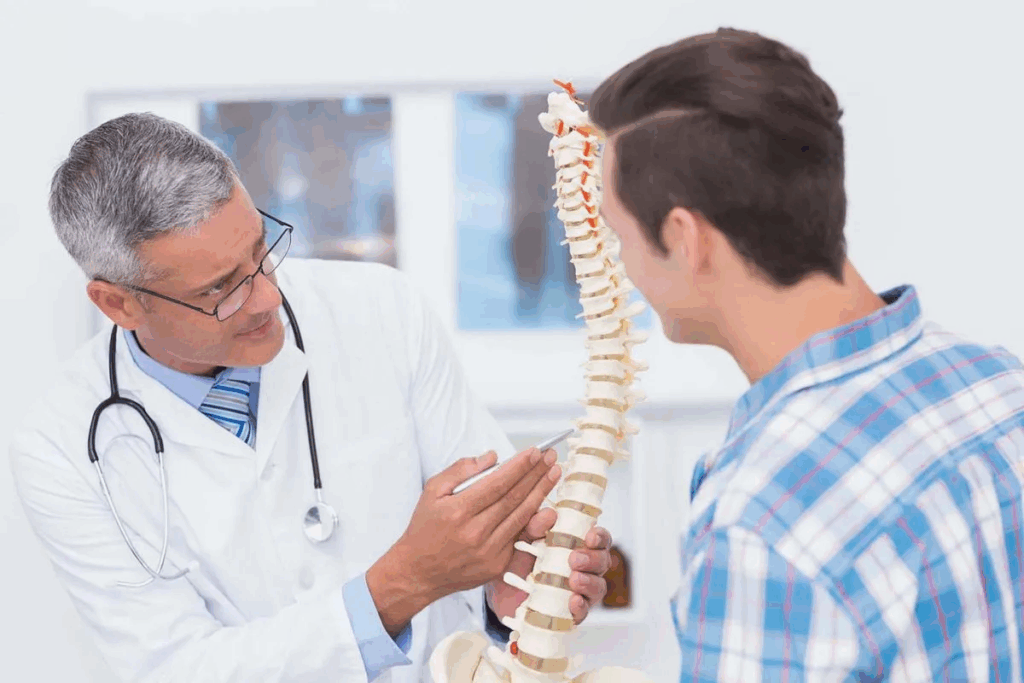
Did you know a herniated disc can cause severe pain? It can really disrupt your daily life and even lead to emergencies. She stresses the need to understand the severity of symptoms and get medical help quickly. Learn when Herniated Disc Emergency Symptoms require immediate ER attention and urgent care.
A herniated disc happens when the soft inner gel leaks out through a tear in the outer disc. This causes pain and discomfort. In bad cases, it might need urgent care, which means a trip to the emergency room.
Key Takeaways
- Understanding herniated disc emergency symptoms is key to quick medical help.
- Severe herniated disc cases might need urgent care and ER visits.
- Slipped disc pain medication can help, but always talk to a doctor first.
- A ruptured disc can cause a lot of pain and discomfort.
- Knowing the symptoms of a slipped disc can help avoid more problems.
Understanding Herniated Discs: Anatomy and Mechanisms
It’s important to know how the spine works and what causes disc herniation. The spine has vertebrae, discs, and nerves. They all work together to support the body and help it move.
Spinal Anatomy and Disc Function
The spine has 33 vertebrae with discs in between. These discs help absorb shock and make movement easier. They have a tough outer layer and a soft center.
What Happens When a Disc Herniates
When a disc herniates, the outer layer tears. This lets the soft center leak out. This can hurt nearby nerves, causing pain and weakness.
The symptoms depend on where and how bad the herniation is. Common signs include back pain and numbness in the legs.
| Location of Herniation | Common Symptoms |
| Lumbar Region | Lower back pain, sciatica, and numbness in the legs |
| Cervical Region | Neck pain, radiating pain to arms, numbness or tingling in hands |
| Thoracic Region | Upper back pain, possible numbness or weakness in the torso or legs |
Common Causes of Disc Herniation
Disc herniation can be caused by various factors, primarily aging and injuries. As we get older, our discs lose water and become less flexible. Heavy lifting and sudden movements can also lead to herniation.
People like Matt Heafy, who have had injuries, show how important it is to take care of the spine. Knowing the causes and symptoms helps prevent and treat herniated discs.
Herniated Disc Emergency Symptoms

It’s important to know the emergency signs of a herniated disc. This condition can cause mild to severe symptoms. Knowing these signs helps decide when to seek medical help right away.
Red Flag Symptoms Requiring Immediate Medical Attention
Some symptoms of herniated discs are serious and need quick medical help. These include:
- Severe pain that radiates down the legs
- Numbness or tingling sensations in the extremities
- Muscle weakness that interferes with daily activities
- Loss of bladder or bowel control
If you have any of these symptoms, see a doctor fast. This can prevent serious damage.
“The presence of red flag symptoms should prompt urgent evaluation, as timely intervention can significantly impact outcomes.”
— Spine Care Foundation
Cauda Equina Syndrome: A True Spinal Emergency
Cauda Equina Syndrome (CES) is a serious issue caused by nerve compression in the lower spine. It’s a true emergency because it can cause permanent damage if not treated quickly.
| Symptom | Description |
| Severe Lower Back Pain | Pain in the lower back that may radiate to the legs |
| Bladder Dysfunction | Difficulty urinating or loss of bladder control |
| Bowel Dysfunction | Constipation or loss of bowel control |
| Saddle Numbness | Numbness in the areas that sit on a saddle (perineal region) |
Progressive Neurological Deficits
Progressive neurological deficits mean symptoms get worse over time. For a herniated disc, this could be more numbness, weakness, or pain in the limbs.
It’s important to watch these symptoms closely. If they get worse, it might mean you need surgery.
Seeing a doctor quickly is key. They can figure out the best treatment for you.
When to Go to the Emergency Room for a Herniated Disc

If you have severe back pain or other worrying symptoms from a herniated disc, knowing when to go to the emergency room is key. A herniated disc can cause a lot of pain and serious problems if not treated quickly.
Severe Pain That Doesn’t Respond to Home Treatment
Going to the emergency room is a must if you have severe pain that doesn’t get better with home care. If your pain is too much and doesn’t get better with rest, ice, or pain meds, you need to see a doctor.
Neurological Symptoms Requiring Immediate Attention
Neurological symptoms can mean a serious problem. If you feel numbness, tingling, or weakness in your limbs, go to the ER right away. These signs might mean your nerves are being compressed or damaged.
Loss of Bladder or Bowel Control
The loss of bladder or bowel control is a big emergency sign. This is called cauda equina syndrome and needs quick help to avoid lasting harm.
Spotting these signs early can greatly help your treatment and recovery. If you’re not sure how serious your symptoms are, it’s safer to get medical help.
The ER Triage Process for Suspected Herniated Discs
When you arrive at the ER, you’ll get a quick check-up if you think you have a herniated disc. This fast check is key to figuring out how serious your condition is and what treatment you need.
Initial Assessment and Priority Assignment
The ER starts by checking your symptoms and vital signs to decide how fast you need care. This is important to spot who needs help right away.
Key factors considered during initial assessment include:
- Severity of pain
- Presence of neurological deficits
- Ability to ambulate
- Presence of red flag symptoms
Medical History Collection
Getting a detailed medical history is a big part of the ER’s work. It helps doctors understand your health, past injuries, and what might be causing your symptoms now.
A complete medical history includes:
- Previous spinal injuries or surgeries
- Existing medical conditions (e.g., diabetes, arthritis)
- Current medications
- Allergies
Preliminary Physical Examination
Doctors do a quick physical check to see how your nerves and muscles are doing. This helps spot any big problems that need quick action.
A medical expert says, “A detailed physical check is key to spotting and treating herniated discs correctly.”
“The physical check gives us important clues about your health and helps us decide what tests and treatments you need.”
Here’s a quick summary of what happens in the ER for herniated discs:
| Component | Description | Importance |
| Initial Assessment | Evaluation of symptoms and vital signs | High |
| Medical History | Collection of patients’ health information | High |
| Preliminary Physical Examination | Assessment of neurological function and muscle strength | High |
Diagnostic Procedures in the Emergency Room
Diagnosing a herniated disc in the emergency room is a detailed process. It combines clinical checks and advanced tests. This approach helps ensure patients get the right diagnosis, which is key for treatment.
Comprehensive Neurological Examination
A thorough neurological exam is key in diagnosing herniated discs. It checks motor function, sensory function, and reflexes for any deficits. The doctor will look at how well the patient moves, check for numbness or tingling, and test reflexes.
For example, a herniated disc in the lower back might cause leg or foot weakness. It could also lead to numbness or tingling and weaker reflexes. These signs help pinpoint where the herniation is and guide further tests.
Imaging Tests for Herniated Discs
Imaging tests are essential to confirm a herniated disc diagnosis. The main imaging tools are:
- Magnetic Resonance Imaging (MRI): MRI is the top choice for spotting herniated discs. It shows detailed images of soft tissues like discs, nerves, and the spinal cord.
- Computed Tomography (CT) Scan: CT scans are good for seeing the spine’s bony parts. They can spot bone spurs or a narrowed spinal canal that might be causing symptoms.
- X-rays: X-rays aren’t as good for herniated discs, but they can help rule out other back pain causes like fractures or tumors.
“MRI has changed how we diagnose spinal problems. It lets us see disc issues and their effects on nerves very clearly.”
| Imaging Modality | Advantages | Limitations |
| MRI | High sensitivity for soft tissue pathology | Contraindicated in patients with certain metal implants |
| CT Scan | Excellent for visualizing bony structures | Involves radiation exposure |
| X-rays | Quick and widely available | Limited sensitivity for soft tissue pathology |
Laboratory Tests to Rule Out Other Conditions
Laboratory tests are also used to check for other conditions that might be causing symptoms. These tests include:
- Complete Blood Count (CBC): To check for infection or signs.
- Erythrocyte Sedimentation Rate (ESR) or C-reactive Protein (CRP): To see if there’s inflammation.
- Blood Cultures: If there’s a chance of a spinal infection.
These tests help narrow down what might be wrong and ensure the right treatment is given.
Emergency Pain Management for Herniated Discs
Severe pain from a herniated disc needs quick and effective treatment. Herniated discs can cause a lot of pain. The main goal in emergencies is to ease the pain and avoid more problems.
Intravenous Medications
Intravenous (IV) medications are key in emergency pain management for herniated discs. These drugs are given directly into the blood. This way, they work fast to help.
Common IV medications used include:
- Opioids (e.g., morphine, fentanyl) for severe pain
- Nonsteroidal anti-inflammatory drugs (NSAIDs) like ketorolac are used for inflammation and pain.
- Muscle relaxants such as diazepam are used to reduce muscle spasms
Nerve Blocks and Injections
Nerve blocks and injections are also effective for herniated disc pain. These methods involve injecting local anesthetics or steroids near the affected nerves. This helps reduce inflammation and pain.
The benefits of nerve blocks include:
- Targeted pain relief
- Reduced need for systemic medications
- Potential for longer-lasting pain relief
Non-Pharmaceutical Pain Relief Methods
There are also non-pharmaceutical ways to help with herniated disc pain. These methods are often used along with other treatments.
| Method | Description | Benefits |
| Physical Therapy | Gentle exercises and stretches to improve mobility and reduce pain | Non-invasive, promotes healing |
| Heat or Cold Therapy | Application of heat or cold packs to reduce pain and inflammation | Easy to apply, reduces discomfort |
| Relaxation Techniques | Methods such as deep breathing, meditation, or guided imagery to reduce stress and pain | Non-pharmacological, reduces anxiety |
Managing pain from herniated discs in emergencies requires a mix of treatments. This includes both medicines and non-pharmaceutical methods. Together, they help relieve pain and improve patient care.
Cervical Herniated Discs: Emergency Presentation and Care
Cervical disc herniations are a serious issue that can cause a lot of pain. They can also lead to serious problems if not treated quickly. The cervical spine is very important and can easily be hurt.
Unique Symptoms of Neck Disc Herniations
Neck disc herniations can show in different ways. Some common symptoms include:
- Neck pain that spreads to the arms or shoulders
- Neurological symptoms like numbness, tingling, or weakness in the arms or hands
- Headaches or migraines that get worse because of the herniation
Potential Complications of Cervical Disc Emergencies
If not treated, cervical disc herniations can cause serious problems. These include:
- Permanent nerve damage leading to chronic pain or loss of function
- Getting worse neurological problems that can really affect your life
- In very bad cases, it can cause spinal cord compression. This can lead to paralysis or other serious nerve problems
Cervical Collars and Immobilization
In emergency cases, using a cervical collar is often needed. It helps prevent more injury and eases pain. The collar keeps the neck stable, which reduces the chance of harming the spinal cord or nerves more.
Doctors decide to use a cervical collar in the emergency room. They look at how bad the symptoms are and the patient’s health history.
Thoracic and Lumbar Herniated Discs in the ER
In the emergency department, doctors deal with thoracic and lumbar herniated discs differently. Each condition has its own signs and symptoms. Knowing these details is key to giving the right care.
Upper Back Disc Emergencies
Thoracic herniated discs are less common but can cause serious problems. They happen in the upper back where the spinal canal is narrower. Quick diagnosis and treatment are needed to avoid lasting harm.
- Key symptoms: Severe upper back pain, pain or numbness in the chest or abdomen, and sometimes, serious nerve problems.
- Diagnostic challenges: Finding thoracic disc herniations can be hard because they’re rare and symptoms are not always clear. MRI is often needed for a proper diagnosis.
Lower Back Disc Herniations
Lumbar herniated discs are more common and can lead to a lot of pain and nerve issues. The ER’s main goal is to find out who needs help right away.
- Checking how bad the pain and nerve problems are.
- Looking for signs of serious nerve damage like cauda equina syndrome.
- Managing pain and deciding if surgery is needed.
Specific ER Protocols for Different Spinal Regions
ERs have different plans for treating thoracic and lumbar herniated discs. Knowing these differences is important for good patient care.
| Spinal Region | Common Symptoms | ER Protocol |
| Thoracic | Upper back pain, radicular chest pain | Advanced imaging, neurological monitoring |
| Lumbar | Lower back pain, sciatica, neurological deficits | Pain management, assessment for surgical need |
Handling thoracic and lumbar herniated discs in the ER needs a deep understanding of their unique signs and the right care plans for each area. By following these steps, doctors can help patients get the best care.
Emergency Surgical Interventions for Herniated Discs
In severe cases of herniated discs, emergency surgery is needed. This is to ease symptoms and prevent further damage. Sometimes, herniated discs can cause serious problems that need immediate surgery.
Indications for Emergency Surgery
Not every herniated disc needs surgery. But some cases are urgent. These include:
- Cauda Equina Syndrome, where nerves in the lower spine are compressed. This causes severe pain, numbness and can lead to permanent nerve damage if not treated quickly.
- Significant neurological deficits, such as progressive weakness or paralysis in the limbs.
- Severe, unrelenting pain that doesn’t get better with conservative treatments.
Types of Emergency Surgical Procedures
Several emergency surgeries can treat herniated discs. The right procedure depends on the disc’s location and severity, and the patient’s health.
| Surgical Procedure | Description | Indications |
| Discectomy | Removal of the herniated disc material compressing the nerve. | Nerve compression causes pain or neurological deficits. |
| Microdiscectomy | A minimally invasive version of discectomy, using a microscope for precision. | Similar to a discectomy, with the added benefit of less tissue damage. |
| Laminectomy | Removal of part or all of the vertebra (lamina) to relieve pressure on the spinal cord or nerves. | Severe spinal stenosis or significant nerve compression. |
These surgeries aim to relieve pressure, reduce pain, and improve function.
Surgical Consultation Process in the ER
When a patient with herniated disc symptoms comes to the ER, a neurosurgeon or orthopedic surgeon is consulted. They evaluate the patient’s condition, looking at imaging studies and doing a physical exam.
The decision to do emergency surgery depends on the severity, neurological deficits, and the chances of success. Patients are told about the risks and benefits. They give consent before surgery.
Discharge Planning and Follow-Up Care
Recovering from a herniated disc doesn’t stop at the ER. It’s all about the right care and planning after you leave. Good discharge planning helps patients manage their condition well after the emergency room.
Medications Prescribed at Discharge
When you go home, you might get meds for pain and swelling. These could be:
- Nonsteroidal anti-inflammatory drugs (NSAIDs) are used to cut down on pain and swelling.
- Muscle relaxants to help with muscle spasms.
- Oral steroids for quick relief from severe swelling.
It’s key to follow your meds as told and know about any side effects.
Activity Restrictions and Guidelines
Changing how you move is a big part of getting better. You’ll likely be told to:
| Activity | Recommendation |
| Lifting | Stay away from heavy lifting to avoid making things worse. |
| Bending | Try not to bend at the waist too much. |
| Exercise | Start with gentle exercises, as your doctor suggests. |
Scheduling Follow-Up Appointments
Seeing your doctor again is important for checking on your healing. You should make appointments to:
- Check how you’re doing and change your treatment if needed.
- Talk about more tests or treatments.
- Learn about physical therapy or rehab.
By focusing on discharge planning and follow-up, patients can handle their recovery better. This helps avoid more problems.
Long-Term Management After an ER Visit
Managing a herniated disc long-term is key to avoiding future problems and helping it heal. This involves a mix of physical therapy, pain management, and changes in lifestyle.
Physical Therapy and Rehabilitation
Physical therapy is a big part of getting better. A physical therapist creates a special exercise plan to:
- Strengthen the muscles around the spine
- Improve flexibility and range of motion
- Enhance posture and body mechanics
- Reduce pain and inflammation
Physical therapy also teaches patients how to lift and move properly to avoid more injuries.
Pain Management Strategies
Managing pain well is important for long-term recovery. This can include:
- Medications: Over-the-counter or prescription pain relievers as advised by a doctor
- Alternative therapies: Like acupuncture, chiropractic care, or massage therapy
- Lifestyle adjustments: Including stress management and relaxation exercises
Pain management plans should fit each person’s needs and might need to change often.
Lifestyle Modifications to Prevent Recurrence
Some lifestyle changes can help prevent a herniated disc from coming back:
- Maintaining a healthy weight to reduce spinal pressure
- Doing regular exercise to strengthen core muscles
- Improving posture and using proper body mechanics
- Avoiding smoking, which can reduce blood flow to the discs
By making these lifestyle modifications, people can greatly improve their long-term health.
Potential Complications of Untreated Herniated Disc Emergencies
Untreated herniated disc emergencies can cause serious problems. These include permanent nerve damage and psychological issues. If a herniated disc is not treated, serious health problems can arise.
Permanent Nerve Damage
Permanent nerve damage is a major risk. A herniated disc can press on nerves, causing lasting harm. This can lead to numbness, tingling, or weakness in limbs.
Chronic Pain Syndromes
Chronic pain syndromes are another issue. Untreated herniated discs can cause ongoing pain. This pain can make daily life hard.
Loss of Function and Disability
In severe cases, there can be loss of function and disability. Severe nerve damage can cause muscle weakness or paralysis. This can be temporary or permanent.
Psychological Impact of Delayed Treatment
The psychological impact of delayed treatment is significant. Chronic pain and limited mobility can lead to depression and anxiety. Quick medical care can help avoid these issues.
In summary, untreated herniated disc emergencies can have severe consequences. They can affect a person’s health and quality of life. It’s important to get medical help right away if symptoms don’t improve or get worse.
Conclusion: Navigating Herniated Disc Emergencies Effectively
Handling herniated disc emergencies well means knowing the signs and getting help fast. It’s key to understand how serious it is and get medical help right away. This can really help manage the condition better.
Good herniated disc care means a whole plan, from the first visit to ongoing care. Spotting serious signs like bad pain, nerve problems, and trouble with the bladder or bowel is very important. It helps doctors act quickly.
Knowing how to handle herniated discs can make a big difference. It helps not just in the short term but also in avoiding bigger problems later. This way, people can live better lives despite these tough conditions.
FAQ
What are the emergency symptoms of a herniated disc?
Severe pain, numbness or tingling, and weakness in arms or legs are signs. Losing bladder or bowel control is also a warning sign. If you notice these, get help right away.
How can I tell if I have a herniated disc?
Look for back pain, numbness, tingling, or weakness in arms or legs. A doctor can check for a herniated disc with a physical exam, medical history, and tests like MRI or CT scans.
What does a herniated disc feel like?
It can cause sharp pain, numbness, tingling, or weakness in the back, arms, or legs. The pain might stay in one spot or spread out, depending on where the disc is herniated.
When should I go to the emergency room for a herniated disc?
Go to the ER for severe pain, numbness, tingling, or weakness in arms or legs. Also, seek help if you lose bladder or bowel control. These signs mean you need urgent care.
What will the ER do for a herniated disc?
ER doctors will check your condition and manage your pain. They might do tests, give medicine, or suggest surgery, based on how bad your condition is.
Can a herniated disc cause paralysis?
Yes, in severe cases, a herniated disc can press on nerves and cause paralysis or weakness. If you suddenly feel weak or paralyzed, get medical help fast.
How is a herniated disc diagnosed in the ER?
ER doctors use a physical exam, medical history, and tests like MRI or CT scans to diagnose. These help them figure out the best treatment for you.
What are the treatment options for a herniated disc?
Treatments include pain meds, physical therapy, and changing your lifestyle. In serious cases, surgery might be needed to relieve nerve pressure.
Can a bulging disc cause diarrhea?
A bulging disc usually doesn’t cause diarrhea, but it can lead to back pain, numbness, and tingling. If you have unusual symptoms, talk to a doctor to find out why.
How can I prevent a herniated disc from recurring?
Stay healthy by exercising regularly, lifting right, and keeping good posture. Also, watch your weight and don’t smoke to lower your risk.
What are the long-term management strategies for a herniated disc?
Long-term management with physical therapy, pain control, and lifestyle changes. These can help reduce symptoms, prevent more problems, and improve your quality.
What are the possible complications of untreated herniated disc emergencies?
Untreated emergencies can cause permanent nerve damage, chronic pain, loss of function, and disability. Delayed treatment can also harm your mental health, making it vital to seek help quickly.
References
- Chou, R., Loeser, J. D., Owens, D. K., Rosenquist, R. W., Atlas, S. J., Baisden, J., … & Kent, D. L. (2011). Interventional therapies, surgery, and interdisciplinary rehabilitation for low back pain: An evidence-based clinical practice guideline from the American Pain Society. Pain Medicine, 12(4), 577-591. U.S. National Library of Medicine. https://www.ncbi.nlm.nih.gov/pmc/articles/PMC3685049/