
At Liv Hospital, we are committed to providing world-class healthcare with a patient-centered approach. Abdominal aortic aneurysm (AAA) is a serious condition that can be life-threatening if left undetected. Early detection is key, and ultrasound screening plays a vital role.
Guidelines suggest a one-time ultrasound screening for men aged 65 to 75 who have ever smoked. This simple, non-invasive test can spot AAA and prevent rupture. Thanks to new ultrasound tech, we can now find AAA more accurately.
The U.S. ultrasound market is booming. This is because more people have chronic diseases and new ultrasound devices are coming out. We use these new tools to give our patients the best care.
Key Takeaways
- Ultrasound screening is recommended for men aged 65-75 who have ever smoked.
- Early detection of AAA is key to prevent rupture.
- Advancements in ultrasound technology have improved AAA detection.
- Liv Hospital provides patient-centered care with a focus on advanced vascular care.
- One-time ultrasound screening can help identify AAA and prevent life-threatening complications.
Understanding Abdominal Aortic Aneurysm: A Silent Cardiovascular Threat
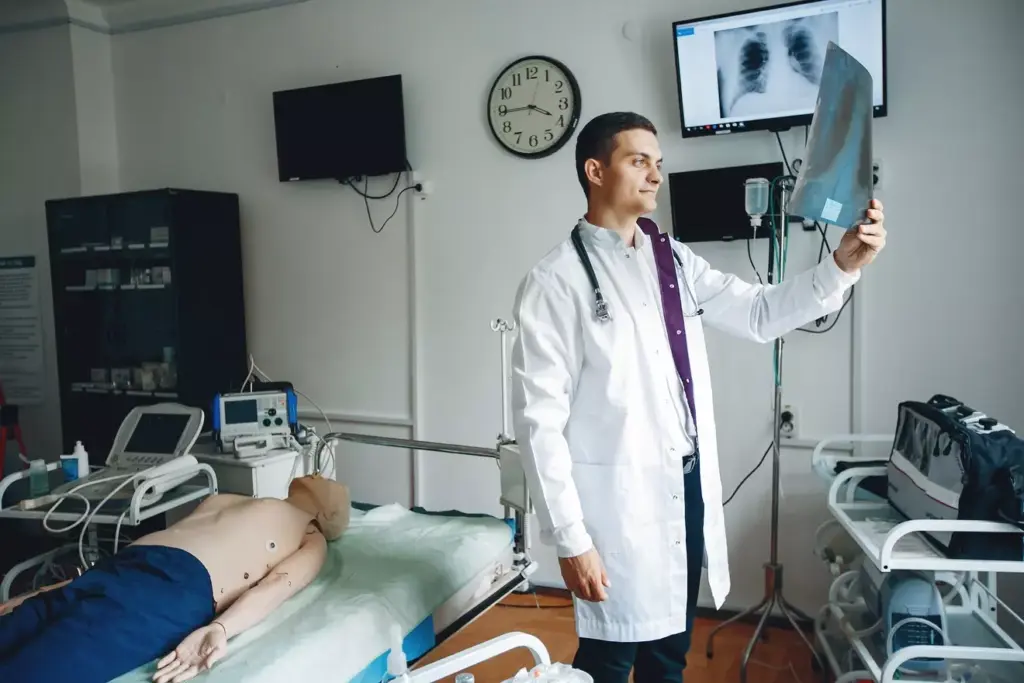
It’s important to know about abdominal aortic aneurysm because it’s a big risk to heart health. It often doesn’t show symptoms. An abdominal aortic aneurysm (AAA) is when the lower part of the aorta in the abdomen gets bigger. This usually happens because of atherosclerotic degeneration and can lead to a rupture.
What Is an Abdominal Aortic Aneurysm?
An abdominal aortic aneurysm happens when the aorta, the main blood vessel, gets weak and bulges. This can cause a rupture, which is a serious emergency. AAAs are more common in men, with a 4:1 male-to-female ratio. They are a big cause of death in men aged 65-85 in developed countries.
Why Undetected AAAs Can Be Life-Threatening
The risk of AAA is because it often doesn’t show symptoms until it’s too late. If an AAA ruptures, it can cause severe bleeding. This can lead to shock or death if not treated right away. The death rate for ruptured AAAs is very high, making early detection and treatment key.
Key Risk Factors for Developing Abdominal Aortic Aneurysms

Abdominal aortic aneurysms (AAAs) can be caused by many factors. Some can be changed, while others can’t. Knowing these factors helps find people at risk and prevent problems.
Smoking as the Primary Modifiable Risk Factor
Smoking is the biggest risk for AAAs. Smoking makes your aorta twice as likely to dilate. Every year you smoke, your risk of getting an AAA goes up by 4%. Quitting smoking is key to lowering this risk.
Age, Gender, and Genetic Predisposition
Age is a big risk factor, with more cases after 65. Men are more at risk than women. Family history also matters a lot. If you have a relative with AAA, you’re at higher risk. Research shows genetics play a big role in getting AAAs.
Comorbidities That Increase AAA Risk
Some health issues raise your risk for AAAs. These include high blood pressure, atherosclerosis, and heart disease. By managing these conditions, you can lower your risk of getting an AAA.
Healthcare providers can spot risk factors better. This helps them use the right screening and prevention plans for each person.
Essential Fact #1: Current AAA Screening Guidelines for High-Risk Individuals
Targeted AAA screening is very important, mainly for those with certain risk factors. The US Preventive Services Task Force (USPSTF) has set clear guidelines for abdominal aortic aneurysm (AAA) screening. These guidelines aim to lower AAA-related deaths by catching them early.
Men Aged 65-75 Who Have Ever Smoked
A one-time ultrasound screening is recommended for men aged 65 to 75 who have ever smoked. This advice is based on strong evidence. It shows that screening this high-risk group can greatly lower AAA-related deaths.
Smoking greatly increases the risk of AAA. Screening is key to catching it early. Here’s some data to show why:
| Smoking Status | AAA Risk | Screening Recommendation |
|---|---|---|
| Current or former smoker | High | One-time ultrasound screening at 65-75 years |
| Never smoked | Lower | Screening not routinely recommended |
Recommendations for Those With Family History
People with a family history of AAAs are at higher risk. While guidelines can vary, those with a first-degree relative (parent or sibling) diagnosed with AAA are often recommended for screening. The exact timing may depend on other risk factors and overall health status.
Evidence Supporting Targeted Screening Approaches
Many studies have shown that targeted AAA screening can lower mortality rates. The evidence supports a one-time screening approach for high-risk individuals, like men aged 65-75 with a smoking history. This method balances the benefits of early detection with the risks of screening.
By focusing on high-risk groups and using targeted screening, we can make the most of healthcare resources. This approach maximizes the benefits of AAA screening.
Essential Fact #2: Ultrasound Screening for Abdominal Aortic Aneurysm
Ultrasound screening is key for finding abdominal aortic aneurysms (AAAs). It’s accurate and doesn’t hurt. We use it to spot aneurysms early, before they’re dangerous.
Why Ultrasound Is the Gold Standard for AAA Detection
Ultrasound is top for AAA screening. It’s non-invasive, so no surgery is needed. It’s also cheap and easy to find, unlike CT or MRI scans.
Ultrasound shows the aorta in real-time. Doctors can then measure it accurately. Knowing the size helps decide if action is needed.
Accuracy, Safety, and Cost-Effectiveness
Ultrasound for AAA is accurate, safe, and cost-effective. It’s reliable for finding AAAs. Studies prove its high sensitivity and specificity.
- Accuracy: Ultrasound measures the aorta’s diameter well, key for diagnosing and tracking AAAs.
- Safety: It’s non-invasive, avoiding radiation and contrast agents. This makes it safe for many patients.
- Cost-Effectiveness: Ultrasound is cheaper than other methods. This is good for big screening programs.
What to Expect During an Abdominal US Screening Procedure
Getting an ultrasound for AAA is simple. You lie on a table and gel is applied to your belly. Then, a probe moves over your abdomen to capture images of the aorta.
The process is painless and takes 15-30 minutes. You’ll get your results right away. Sometimes, you’ll hear them immediately, other times at a later visit.
Knowing what happens during an ultrasound helps you prepare. It’s an important step in keeping your heart healthy.
Essential Fact #3: Decoding Triple AAA Screening (“Triple A Screen”)
Triple AAA screening is a detailed way to check the abdominal aorta. It’s a top-notch method for doctors to spot problems early. This helps avoid serious health issues.
Components of Complete Aortic Check
A complete aortic check, like Triple AAA screening, looks closely at the abdominal aorta. It includes:
- Measuring the aorta’s size to find any odd dilations.
- Checking the aortic wall’s health.
- Finding any aneurysms or other aortic problems.
Triple AAA screening uses advanced ultrasound. It’s a safe and precise way to check the aorta.
How Triple AAA Screening Differs from Standard Screening
Standard AAA screening mainly looks for aortic aneurysms. But Triple AAA screening does more. It checks the whole aorta.
This detailed check helps doctors find more issues. It’s not just about aneurysms. It’s about the whole aorta’s health. This way, doctors can catch problems early and prevent big issues.
We know Triple AAA screening isn’t often talked about. But it’s a big step forward in heart health checks. Knowing its benefits helps doctors pick the right patients for this screening.
Essential Fact #4: Selective Screening Recommendations for Lower-Risk Men
Screening for abdominal aortic aneurysms (AAAs) in men at lower risk depends on several factors. These include their smoking history and family history of the condition. We look at these factors to see who should get screened.
Guidelines for Men Who Have Never Smoked
Men who have never smoked have a lower risk of getting an AAA. But, they’re not completely safe, thanks to other risk factors. Guidelines say men aged 65-75 who never smoked might not need regular screening unless they have other risk factors. We look at each person’s health and medical history to decide.
When Family History Should Trigger Screening
A family history of AAA is a big risk factor. Men with a first-degree relative (like a parent or sibling) who had an AAA are at higher risk. Even if they’ve never smoked, screening is recommended. This is because family history can greatly increase the risk of getting an AAA.
Balancing Benefits Against Potencial Harms
When we decide on screening for lower-risk men, we weigh the benefits against the risks. Screening can find AAAs early, which can save lives. But, it can also lead to false positives, anxiety, and complications from follow-up tests. Guidelines try to make sure the benefits outweigh the harms, focusing on the right people.
By understanding these guidelines, we can better figure out who will really benefit from AAA screening. This helps use healthcare resources better and improves health outcomes.
Essential Fact #5: AAA Screening Guidelines for Women
AAA screening guidelines for women are more specific. They look at each woman’s risk factors individually. This is different from men, where guidelines are more general.
Why Routine Screening Is Not Recommended for Most Women
Women are less likely to have AAA than men. This is why routine screening isn’t advised for all women. Research shows women are 1/4 to 1/6 as likely to have AAA as men.
Key reasons for not recommending routine AAA screening for women include:
- Lower overall prevalence of AAA
- Different risk factor profiles compared to men
- Lack of evidence supporting universal screening benefits for women
Identifying High-Risk Women Who May Benefit
Even though routine screening isn’t for all, some high-risk women might benefit. This includes those with a family history of AAA, smokers, and women with heart disease.
High-risk criteria that may warrant AAA screening for women:
- A family history of abdominal aortic aneurysms
- History of smoking
- Presence of other cardiovascular diseases
Women in these high-risk groups should talk to their doctor. They can discuss the benefits and risks of AAA screening.
By focusing on high-risk groups, we can help those who need AAA screening the most. This approach also reduces unnecessary tests for those at lower risk.
Essential Fact #6: The Science Behind AAA Screening Age Recommendations
Knowing the best time for AAA screening is key. It’s about finding the right balance between early detection and the risks of screening. We’ll look into why the recommended age range for AAA screening is between 65 and 75 years.
Why 65-75 Is the Optimal Age Range for Initial Screening
The age range of 65 to 75 is best for first-time AAA screening, mainly for men. This age is chosen because it catches most AAA cases without risking younger people. AAA cases grow more common with age, hitting a peak between 65 and 75.
Research shows that screening men in this age group can lower AAA-related deaths. For example, a study in the Journal of Vascular Surgery found that screening men aged 65-75 can cut down on AAA deaths.
One-Time vs. Repeat Screening Protocols
Choosing between one-time and repeat screenings depends on several factors. These include the first screening results and the person’s risk factors. Men with a normal ultrasound first might need more frequent checks.
| Aneurysm Size (cm) | Recommended Follow-Up |
|---|---|
| 2.5-2.9 | 5-year rescreen |
| 3.0-3.9 | 3-year rescreen |
| 4.0-4.9 | 1-year rescreen |
| 5.0 or larger | Immediate vascular surgery consultation |
Age Considerations for Special Risk Groups
Some people might need to start screening earlier or more often. For example, those with a family history of AAA might start screening 5-10 years before their relative’s diagnosis. Also, people with certain health issues or risk factors might need closer monitoring.
By understanding the science behind AAA screening age recommendations, doctors can make screening plans that fit each patient’s needs. This way, they can make screening more effective and safer for everyone.
Essential Fact #7: USPSTF Abdominal Aneurysm Screening Recommendations
The U.S. Preventive Services Task Force (USPSTF) has made key recommendations for AAA screening. These guidelines help doctors and patients know who needs to be screened for abdominal aortic aneurysms. They aim to catch those at highest risk early.
Evolution of Evidence-Based Guidelines
The USPSTF’s AAA screening advice has changed with new research. At first, they focused on finding the most at-risk groups and the best screening methods. Now, thanks to detailed studies, their guidelines are more precise to help prevent AAA problems.
Key studies have driven these changes, showing ultrasound screening cuts down on AAA deaths. So, the USPSTF now recommends screening more strongly for certain high-risk groups.
Grade B Recommendation for Male Smokers 65-75
The USPSTF suggests a Grade B recommendation for men aged 65 to 75 who have smoked. This is for a one-time screening for abdominal aortic aneurysm. The evidence shows that screening this group can lower AAA-related deaths.
For men in this age range who have smoked, the benefits of screening are clear. It’s important for doctors to talk to their patients about these guidelines. This helps patients make informed choices about screening.
Comparing USPSTF Guidelines with Other Professional Organizations
While the USPSTF gives federal recommendations, other groups like the Society for Vascular Surgery also have guidelines. Looking at these guidelines together helps us understand the best ways to screen for AAA.
Variations in recommendations can happen between groups. This might be because they see the evidence differently or focus on different groups. Doctors need to keep up with these guidelines to give the best care to their patients.
Insurance Coverage and Access to AAA Screening in the United States
Understanding insurance coverage is important for those thinking about AAA screening. Knowing what’s covered can help make sure those at risk get screened.
Medicare Coverage for Eligible Beneficiaries
Medicare covers one AAA screening for those who qualify. This includes men aged 65-75 who have smoked or have a family history of AAA. Medicare coverage is a big help for those at highest risk.
Here are the rules for Medicare to cover AAA screening:
- Men aged 65-75 who have smoked at least 100 cigarettes in their lifetime
- Individuals with a family history of AAA
Private Insurance Policies and AAA Screening
Private insurance might also cover AAA screening, but details vary. It’s key to check your insurance coverage.
When looking at private insurance for AAA screening, consider these points:
- The specific criteria for coverage, such as age and risk factors
- Any out-of-pocket costs associated with the screening
- Whether the screening must be performed at an accredited vascular screening center
Finding Accredited Vascular Screening Centers
Finding an accredited vascular screening center is vital for quality and accuracy. Accreditation shows the center meets high standards for imaging and care.
To find accredited centers, look up the Intersocietal Accreditation Commission (IAC) or the American College of Radiology (ACR).
Post-Screening Protocols: What Happens After Detection
When an AAA is found, a special plan is needed. This plan includes watching the aneurysm, using medicine, and changing lifestyle habits. These steps help lower the risks linked to the aneurysm.
Follow-Up Schedules Based on Aneurysm Size
The size of the aneurysm is key in setting up follow-up visits. For small AAAs (less than 3.0 cm), watching it closely is often the best choice. This means getting imaging tests done at regular times to see if it’s growing.
For bigger aneurysms, more checks or even surgery might be needed sooner.
| Aneurysm Size (cm) | Recommended Follow-Up |
|---|---|
| <3.0 | Surveillance with imaging every 2-3 years |
| 3.0-4.0 | Imaging every 12 months |
| 4.0-5.0 | Imaging every 6-12 months |
| >5.0 | Consider surgical intervention or more frequent monitoring |
Treatment Options from Surveillance to Surgical Intervention
How to treat an AAA depends on its size, how fast it’s growing, and the patient’s health. For small aneurysms, just watching it is okay. But for bigger or growing fast ones, surgery might be needed.
There are two main surgeries: EVAR and open repair. The choice depends on the situation.
“The decision to proceed with surgical intervention depends on balancing the risk of rupture against the risks associated with surgery,” notes a vascular surgeon. “Regular monitoring and timely intervention are key to preventing complications.”
Lifestyle Modifications to Reduce Progression Risk
Changing your lifestyle is very important for managing AAA. Quitting smoking, keeping blood pressure in check, and controlling cholesterol are key. These steps can slow down the aneurysm’s growth.
By making these lifestyle changes, patients can lower their risk of the aneurysm getting worse. This approach combines watching the aneurysm, timely surgery, and personal changes.
Conclusion: The Lifesaving Impact of Following AAA Screening Guidelines
Following AAA screening guidelines can save lives by lowering the risk of rupture. Early detection and treatment are key. This approach helps prevent serious outcomes.
Targeted screening is effective, like for men aged 65-75 who have smoked. It spots high-risk individuals early. This means doctors can start the right treatment quickly, lowering rupture chances.
The benefits of AAA screening are clear. It cuts down on deaths from abdominal aortic aneurysms. Healthcare teams must keep teaching patients about these guidelines. This way, we all stay safe.
FAQ
What is an abdominal aortic aneurysm (AAA) and why is screening important?
An abdominal aortic aneurysm is a bulge in the aorta, the main blood vessel in the abdomen. Screening is key because AAAs can be deadly if they burst. Early detection through screening can prevent rupture and save lives.
Who is at high risk for developing an abdominal aortic aneurysm?
Men aged 65-75 who have smoked are at high risk. So are those with a family history of AAAs and certain health conditions. Smoking is the main risk factor you can change.
What is the recommended screening method for abdominal aortic aneurysms?
Ultrasound screening is the best way to find AAAs. It’s safe, accurate, and affordable. A technician uses a probe to send sound waves through the abdomen to create images of the aorta.
What is triple AAA screening, and how does it differ from standard screening?
Triple AAA screening checks the aorta more thoroughly than standard ultrasound. It might include extra tests. The exact tests depend on the screening center or healthcare provider.
Are women recommended to undergo routine AAA screening?
No, most women don’t need routine screening. But high-risk women, like those with a family history of AAAs, might benefit. The decision to screen should be made on an individual basis.
What are the USPSTF recommendations for abdominal aneurysm screening?
The USPSTF suggests one-time ultrasonography screening for men aged 65 to 75 who have ever smoked. This is a Grade B recommendation, showing a moderate to substantial benefit.
Is AAA screening covered by insurance, including Medicare?
Yes, Medicare covers AAA screening for eligible men aged 65-75 who have ever smoked. Many private insurance plans also cover it, but coverage can vary.
What happens after an AAA is detected during screening?
After finding an AAA, follow-up plans depend on the aneurysm’s size. Treatment options range from watching it to surgery, based on size and growth. Quitting smoking can also help.
How often should individuals undergo repeat AAA screening?
How often to screen again depends on the first results and individual risk. For small aneurysms or a normal aorta, follow-up screening intervals are set by the healthcare provider.
FAQ
What is an abdominal aortic aneurysm (AAA) and why is screening important?
An abdominal aortic aneurysm is a bulge in the aorta, the main blood vessel in the abdomen. Screening is key because AAAs can be deadly if they burst. Early detection through screening can prevent rupture and save lives.
Who is at high risk for developing an abdominal aortic aneurysm?
Men aged 65-75 who have smoked are at high risk. So are those with a family history of AAAs and certain health conditions. Smoking is the main risk factor you can change.
What is the recommended screening method for abdominal aortic aneurysms?
Ultrasound screening is the best way to find AAAs. It’s safe, accurate, and affordable. A technician uses a probe to send sound waves through the abdomen to create images of the aorta.
What is triple AAA screening, and how does it differ from standard screening?
Triple AAA screening checks the aorta more thoroughly than standard ultrasound. It might include extra tests. The exact tests depend on the screening center or healthcare provider.
Are women recommended to undergo routine AAA screening?
No, most women don’t need routine screening. But high-risk women, like those with a family history of AAAs, might benefit. The decision to screen should be made on an individual basis.
What are the USPSTF recommendations for abdominal aneurysm screening?
The USPSTF suggests one-time ultrasonography screening for men aged 65 to 75 who have ever smoked. This is a Grade B recommendation, showing a moderate to substantial benefit.
Is AAA screening covered by insurance, including Medicare?
Yes, Medicare covers AAA screening for eligible men aged 65-75 who have ever smoked. Many private insurance plans also cover it, but coverage can vary.
What happens after an AAA is detected during screening?
After finding an AAA, follow-up plans depend on the aneurysm’s size. Treatment options range from watching it to surgery, based on size and growth. Quitting smoking can also help.
How often should individuals undergo repeat AAA screening?
How often to screen again depends on the first results and individual risk. For small aneurysms or a normal aorta, follow-up screening intervals are set by the healthcare provider.
References
- U.S. Preventive Services Task Force. Screening for Abdominal Aortic Aneurysm. Available from: https://www.uspreventiveservicestaskforce.org/uspstf/recommendation/abdominal-aortic-aneurysm-screening (Serviciile Preventive din Statele Unite)
- Haque K, Bhargava P. Abdominal aortic aneurysm. American Family Physician. 2022;106(2):165-172. Available from: https://www.aafp.org/pubs/afp/issues/2022/0800/abdominal-aortic-aneurysm.html (AAFP)
- Society for Vascular Surgery. Patients with Abdominal Aortic Aneurysm (AAA). Available from: https://vascular.org/node/87 (Societatea pentru Chirurgie Vasculară)
- South Valley Vascular. Abdominal Aortic Aneurysm Screening Guidelines. Available from: https://www.southvalleyvascular.com/post/abdominal-aortic-aneurysm-screening-guidelines
- Centers for Medicare & Medicaid Services. Abdominal Aortic Aneurysm Screenings – Coverage. Available from: https://www.medicare.gov/coverage/abdominal-aortic-aneurysm-screenings (Medicare)