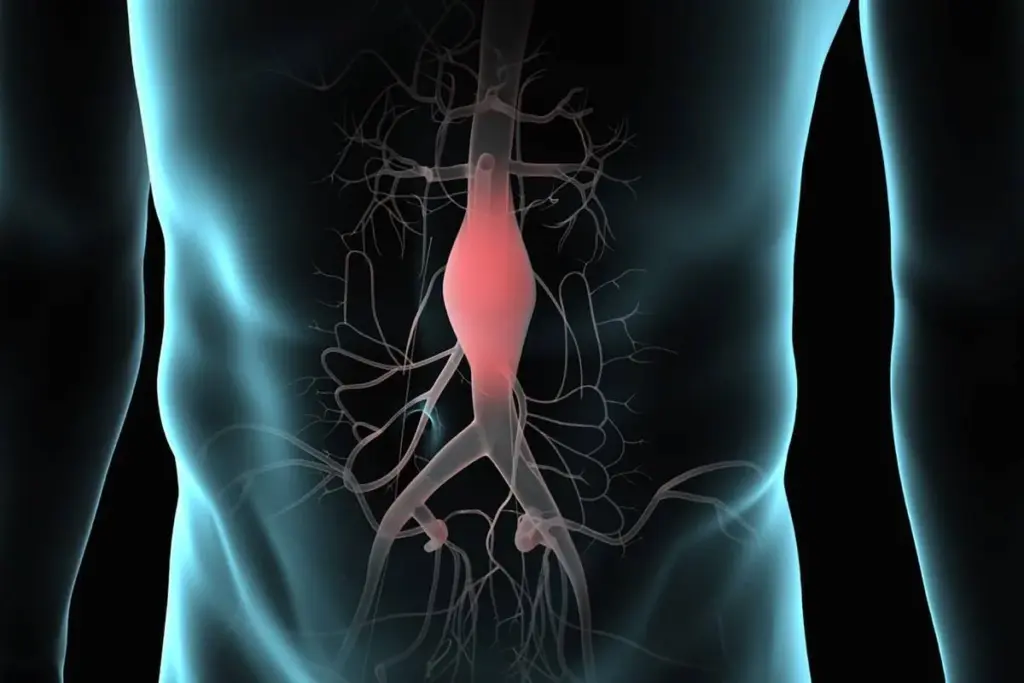
Abdominal aortic aneurysms (AAAs) are a serious condition where the aorta in the belly gets bigger. A big number of AAAs don’t show symptoms until they burst. This makes it very important to find and treat them early.What is the AAA size for surgery cut-off? Learn the crucial measurement that dictates the powerful need for surgical intervention.
The size of an AAA is very important when deciding if it needs to be fixed. Knowing when to repair an aneurysm helps both patients and doctors make the right choices.
Key Takeaways
- AAA size is a key factor in knowing the risk of rupture.
- Fixing the aneurysm is often needed based on its size.
- Knowing when to repair an aneurysm is key for making good choices.
- Early diagnosis and treatment can greatly help patients.
- Doctors look at many things when deciding how to treat AAAs.
Understanding Abdominal Aortic Aneurysms
It’s important to know about abdominal aortic aneurysms to diagnose and treat them. These aneurysms happen when the abdominal aorta gets bigger than usual, often by 1.5 times its normal size.
Definition and Anatomy of the Aorta
The aorta is the main artery that carries blood from the heart to the body. It goes through the thoracic and abdominal cavities. The abdominal aorta is key, supplying blood to the belly, pelvis, and legs. An aneurysm is a bulge in the artery wall due to weakness.
How Aneurysms Form and Develop
Aneurysms develop from a mix of genetic, environmental, and physiological factors. Inflammation and degradation of the arterial wall play big roles. Smoking, high blood pressure, and atherosclerosis weaken the aortic wall, leading to aneurysms.
“The pathogenesis of abdominal aortic aneurysms involves a multifactorial process including inflammation, proteolysis, and biomechanical stress.”
Prevalence and High-Risk Populations
AAAs are more common in older adults, mainly men over 65. People with a family history of AAAs, smokers, and those with high blood pressure or heart disease are at higher risk. Screening programs help find AAAs in these groups.
|
Risk Factor |
Description |
Impact on AAA Risk |
|---|---|---|
|
Age |
Risk increases with age, over 65 |
High |
|
Smoking |
Smoking history, current smokers |
Very High |
|
Family History |
First-degree relatives with AAA |
Moderate to High |
|
Hypertension |
High blood pressure |
Moderate |
Knowing about AAAs helps us understand their diagnosis and treatment. This includes knowing when surgery is needed based on the aneurysm size.
Risk Factors for Developing AAA

It’s important to know the risk factors for abdominal aortic aneurysms (AAAs). These include genetic predispositions, lifestyle choices, and certain medical conditions. Early detection and prevention are key.
Genetic and Family History Factors
Genetics play a big role in AAA development. If you have a family history of aneurysms, you’re at higher risk. This is true if a first-degree relative, like a parent or sibling, has an AAA.
Certain genetic conditions, like Marfan syndrome and Ehlers-Danlos syndrome, also raise the risk. They affect the aortic wall’s structure.
Lifestyle and Environmental Contributors
Lifestyle and environmental factors also increase AAA risk. Smoking damages the aortic wall and raises the risk of aneurysm formation. Hypertension and atherosclerosis also increase the risk.
Medical Conditions Associated with AAA
Certain medical conditions raise the risk of AAAs. For example, people with peripheral artery disease or coronary artery disease are at higher risk. Conditions that affect connective tissue also increase the risk.
Knowing these risk factors helps identify who needs screening and preventive measures. This can reduce the risk of AAA rupture. It also improves outcomes for patients, including those undergoing aaa size for surgery and aaa size selection for surgery.
How AAAs are Detected and Measured

It’s important to know how to find and measure AAAs. This helps doctors decide the best treatment. Accurate detection and measurement are key to understanding the risk of an aneurysm.
Screening Recommendations and Protocols
Men aged 65 to 75 who have smoked should get screened for AAAs. Ultrasound screening is the top choice because it’s safe and works well. It’s recommended for a one-time check in this age group to lower death rates from AAAs.
Women might get screened too, based on their family history or if they’ve smoked. The choice to screen depends on their personal risk factors.
Imaging Techniques for Diagnosis
Several methods help diagnose and measure AAAs. Ultrasound is often the first choice because it’s safe and affordable. It checks the aorta’s diameter for any bulges.
Computed Tomography (CT) scans give clearer images and are used for planning surgery. CT scans show the aneurysm’s size, location, and any complications like leaks or ruptures.
Standardized Measurement Methods
Using the same methods to measure AAAs is important for consistency. The biggest diameter of the aneurysm is usually measured. This is done through ultrasound or CT scans.
Measurements are taken straight across the aorta. Outer-to-outer wall measurements are best because they’re less affected by the method used.
The Natural History of Untreated AAAs
Untreated AAAs can grow and increase the risk of rupture and death. Knowing how they progress is key to deciding on treatment.
Growth Rates by Size
AAAs grow at different rates. Smaller ones grow slowly, while bigger ones grow faster. Aneurysms under 4 cm grow about 0.1-0.2 cm each year. But, those over 5 cm can grow by 0.5 cm or more yearly.
Typical Growth Rates:
|
AAA Size (cm) |
Average Growth Rate (cm/year) |
|---|---|
|
<4 |
0.1-0.2 |
|
4-5 |
0.2-0.4 |
|
>5 |
0.5 or more |
Rupture Risk Statistics
The risk of rupture depends on the AAA size. Aneurysms under 4 cm have a low risk. But, those over 7 cm face a much higher risk. Knowing these standards helps doctors decide on treatment.
Here are the rupture risk statistics by AAA size:
- Less than 4 cm: Low risk (<1% per year)
- 4-5 cm: Moderate risk (1-3% per year)
- 5-6 cm: Higher risk (3-7% per year)
- 6-7 cm: High risk (7-15% per year)
- Greater than 7 cm: Very high risk (15-30% per year)
Mortality Rates for Ruptured Aneurysms
Ruptured AAAs have a very high mortality rate. Many patients die before they even reach the hospital. Even those who get emergency surgery face a high risk of death.
Mortality Rates:
|
Condition |
Mortality Rate (%) |
|---|---|
|
Ruptured AAA, overall |
80-90 |
|
Ruptured AAA, with surgery |
40-50 |
Knowing the AAA size is vital for better surgery outcomes. Accurate sizing helps choose the right tools and devices. This improves the success and compatibility of the surgery.
AAA Size for Surgery: Current Clinical Guidelines
Clinical guidelines for AAA repair differ among medical societies. Yet, all agree on the key role of aneurysm size in deciding surgery. The size of an abdominal aortic aneurysm (AAA) is vital in determining if surgery is needed.
American College of Cardiology/American Heart Association Guidelines
The American College of Cardiology (ACC) and the American Heart Association (AHA) have set guidelines for AAA repair. They suggest surgery for AAAs that are 5.5 cm or larger. For aneurysms between 5.0 cm and 5.4 cm, the decision to operate depends on the patient’s risk and life expectancy.
Society for Vascular Surgery Recommendations
The Society for Vascular Surgery (SVS) also offers recommendations for AAA repair. The SVS advises repair for asymptomatic AAAs that are 5.5 cm or larger. For smaller aneurysms, monitoring is suggested. Repair is considered if the aneurysm grows quickly or causes symptoms.
European Society for Vascular Surgery Standards
The European Society for Vascular Surgery (ESVS) has its own guidelines for AAA management. The ESVS recommends repair for AAAs that are 5.5 cm or larger. They also suggest repair for selected patients with aneurysms between 5.0 cm and 5.4 cm, based on individual risk assessment.
International Variations in Size Thresholds
While there’s a general agreement on the size threshold for AAA repair, there are international differences. Some guidelines suggest a lower threshold for repair in certain groups, like those with connective tissue disorders or younger patients. It’s important for clinicians to understand these variations to make informed decisions about AAA management.
Size Thresholds for Different Patient Populations
AAA size thresholds for surgery vary by age, gender, and health. Each patient’s needs are unique, affecting the best size for surgery.
Gender-Specific Considerations
Studies show gender affects AAA repair size. Women face a higher risk of rupture at smaller sizes than men. This might mean they need surgery sooner.
Age-Related Considerations
Age is key in deciding if surgery is right for AAA. Older patients may have different risks and benefits because of health issues and shorter life expectancy.
Patients with Connective Tissue Disorders
People with connective tissue disorders, like Marfan syndrome, need quicker and more aggressive AAA treatment. They face a higher risk of rupture and heart problems.
|
Patient Group |
Size Threshold for Surgery |
Considerations |
|---|---|---|
|
Women |
Smaller sizes (e.g., 4.5-5 cm) |
Higher rupture risk at smaller sizes |
|
Older Adults |
Variable, often more conservative |
Presence of comorbidities, life expectancy |
|
Connective Tissue Disorders |
Often earlier intervention |
Higher risk of rupture, other cardiovascular risks |
Factors Beyond Size That Influence Surgical Decisions
Deciding to surgically repair an abdominal aortic aneurysm (AAA) looks at more than just size. Size is key, but shape, growth rate, and health also matter. These factors help decide the best treatment.
Aneurysm Shape and Morphology
The shape of an AAA affects its risk of rupture and surgery complexity. Irregularly shaped aneurysms or those with a saccular morphology are at higher risk. Knowing the aneurysm’s shape is vital for planning surgery.
Rapid Growth Rate Indicators
Watching how fast an AAA grows is critical. Aneurysms growing quickly are at higher risk of rupture. Regular scans help track growth and adjust treatment plans.
Patient’s Surgical Risk Assessment
Assessing a patient’s surgical risk looks at their overall health. This includes heart disease, diabetes, and COPD. Cardiac evaluation is key because heart problems are a big concern in AAA repair.
|
Risk Factor |
Description |
Impact on Surgical Risk |
|---|---|---|
|
Cardiac Disease |
Presence of heart conditions such as coronary artery disease |
Increases the risk of cardiac complications during surgery |
|
COPD |
Chronic obstructive pulmonary disease affecting lung function |
May complicate postoperative recovery due to respiratory issues |
|
Diabetes |
Presence of diabetes mellitus |
Can affect wound healing and increase the risk of infection |
Life Expectancy Considerations
Life expectancy is key in deciding on surgery. Patients with a limited life expectancy might not benefit from surgery. A detailed talk between patient and doctor is needed to make a good choice.
In conclusion, while size is important, it’s not the only factor. A full evaluation of shape, growth, risk, and life expectancy is needed to choose the best treatment for an AAA.
Surgical Options for AAA Repair
Treating abdominal aortic aneurysms (AAA) involves surgery based on the aneurysm’s size and the patient’s health. The main goal is to stop the aneurysm from rupturing and improve the patient’s health.
Open Surgical Repair Technique
Open surgery is a traditional way to fix AAAs. It involves cutting the abdomen to reach the aorta. Then, a prosthetic graft replaces the damaged part. Open repair is highly effective but takes longer to recover from than other methods.
Endovascular Aneurysm Repair (EVAR)
EVAR is a less invasive option compared to open surgery. It uses a stent-graft inserted through the femoral arteries to block blood flow to the aneurysm. EVAR is beneficial for those at high surgical risk or with suitable aneurysm anatomy.
Comparing Approaches Based on Aneurysm Size
Choosing between open surgery and EVAR depends on the aneurysm’s size and the patient’s health. Larger aneurysms might need open repair for its durability. EVAR is often chosen for smaller aneurysms or in patients with serious health issues.
It’s important to understand the pros and cons of each surgery. Factors like aaa size surgery consult, aaa size surgery options, and aaa size surgical recovery are key in making a decision.
The right surgery depends on a thorough evaluation of the patient’s condition. This includes the aneurysm’s size and the aaa size surgery benefits.
Risks and Benefits of Surgery at Different AAA Sizes
Surgery for abdominal aortic aneurysms (AAAs) is a big decision. It depends on the aneurysm size. Knowing the risks and benefits at different sizes is key for doctors and patients.
The risk of rupture grows with AAA size. But so does the risk of surgery problems. Smaller AAAs might not be worth the surgery risks. But bigger aneurysms might need quick action, even with higher surgery risks.
The choice of surgery method also matters. It could be open repair or endovascular aneurysm repair (EVAR). This choice depends on the AAA size and the patient’s health.
When thinking about AAA surgery, weighing risks and benefits is vital. Consider the patient’s surgery risk, life expectancy, and aneurysm shape. New medical devices and tools have made surgery safer. The decision to have surgery should be based on a detailed look at the patient’s situation and the surgery’s risks and benefits.
FAQ
What is considered a large abdominal aortic aneurysm (AAA) that requires surgery?
An AAA is considered large and might need surgery if it’s 5.5 cm or bigger. But, this can change based on the patient and medical guidelines.
How is the size of an abdominal aortic aneurysm measured?
Doctors use imaging like ultrasound, CT scans, or MRI to measure AAA size. They look at the biggest diameter to decide on treatment.
What are the risk factors that contribute to the development of an abdominal aortic aneurysm?
Smoking, high blood pressure, family history, age, being male, and certain genetic conditions like Marfan syndrome increase AAA risk.
At what size does an abdominal aortic aneurysm need surgery?
Surgery is usually needed for an AAA of 5.5 cm or larger. But, smaller ones might need surgery if they grow fast or cause symptoms.
What are the different surgical options available for AAA repair?
There are two main ways to repair an AAA: open surgery and endovascular repair (EVAR). The choice depends on the aneurysm’s size, shape, and the patient’s health.
How do size thresholds for AAA repair vary across different patient populations?
Size thresholds for AAA repair can change based on gender, age, and certain health conditions. This means each patient needs a treatment plan tailored to them.
What are the benefits and risks associated with surgical intervention for AAA at different sizes?
The risks and benefits of AAA surgery depend on the aneurysm’s size. Larger aneurysms are at higher risk of rupture but also have higher surgery risks. This makes choosing the right treatment very important.
What are the current clinical guidelines for AAA repair?
Guidelines for AAA repair come from major medical societies like the American College of Cardiology and the Society for Vascular Surgery. They suggest surgery for aneurysms 5.5 cm or larger in most cases.
How do aneurysm morphology and growth rate influence surgical decisions?
The shape and how fast an aneurysm grows are key in deciding when to operate. Irregular shapes or fast growth might mean earlier surgery is needed.
What is the role of life expectancy in determining the need for AAA surgery?
Life expectancy plays a big role in deciding if AAA surgery is needed. Patients with shorter life expectancies might not benefit from surgery, while those with longer lives might.
References
National Center for Biotechnology Information. Evidence-Based Medical Insight. Retrieved from https://pubmed.ncbi.nlm.nih.gov/29171463/