
Knowing the anatomy of the abdominal area is key for doctors to make accurate diagnoses and plans for treatment. The abdominopelvic cavity is split into either four quadrants or nine regions using imaginary lines. This way, doctors can find the exact spot of problems and share their findings clearly.Learn the 9 essential abdomen quadrants. Understand the anatomy, key organs in each region, and their clinical importance clearly.
This method is vital in medical practice. It lets doctors pinpoint where the trouble is in the belly. By dividing into four quadrants and nine regions, doctors can talk about what they find in a way everyone understands. This makes sure everyone is on the same page when it comes to treating patients.
Key Takeaways
- The abdominopelvic cavity is divided into four quadrants and nine regions.
- This division is key for making accurate diagnoses and treatment plans.
- Doctors need to know about abdominal anatomy to do their job well.
- Using imaginary lines helps divide the area in a systematic way.
- This method helps doctors communicate clearly with each other.
The Significance of Abdominal Mapping in Clinical Medicine
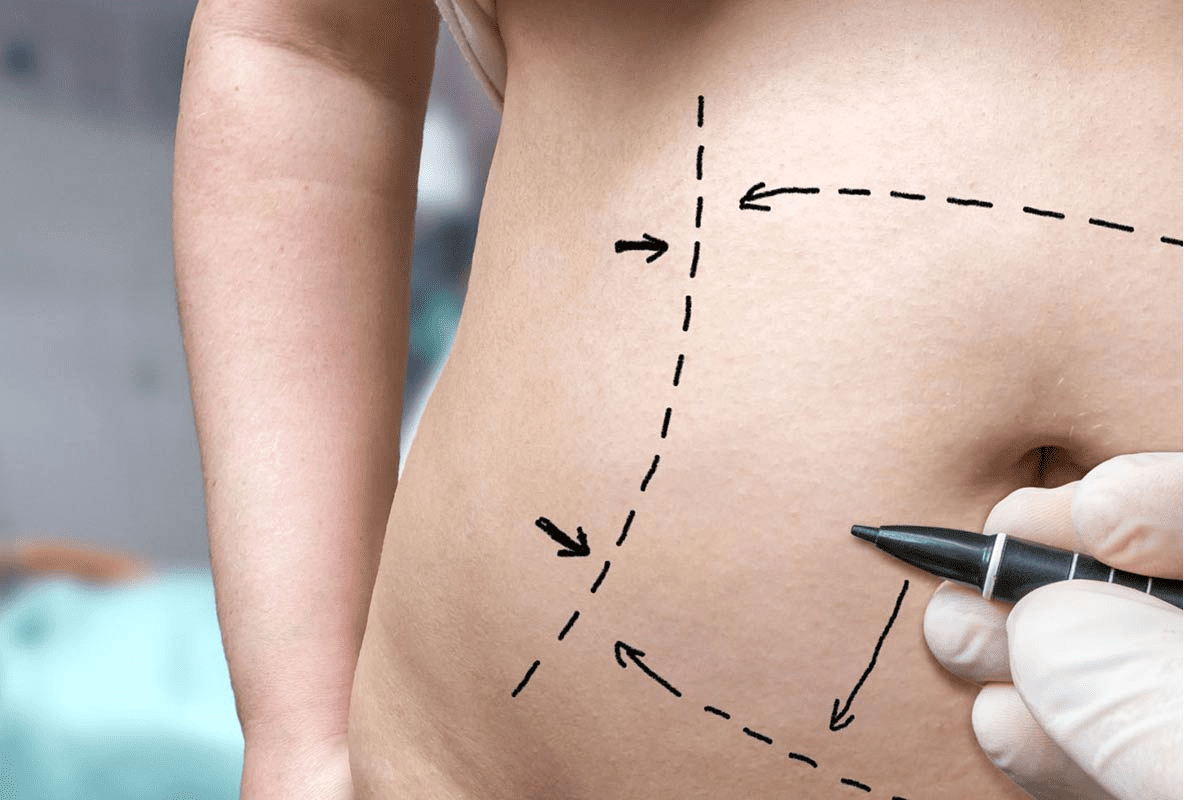
Clinical medicine uses abdominal mapping to find the source of abdominal pain. It divides the abdomen into areas to help doctors talk about symptoms and diagnoses clearly.
Why Anatomical Divisions Matter for Diagnosis
Dividing the abdomen into areas is key for finding what’s wrong. Doctors use systems like the four-quadrant or nine-region system. This helps them pinpoint where pain or problems are.
The four-quadrant system splits the abdomen into four parts. It helps doctors know which organs might be causing pain. For example, the right upper quadrant has the liver and gallbladder. Knowing this helps diagnose issues like gallstones or liver problems.
Evolution of Abdominal Mapping Systems
Abdominal mapping systems have gotten better over time. The four-quadrant system is simple but the nine-region system is more detailed. It divides the abdomen into nine parts, helping doctors find problems more accurately.
Doctors choose between these systems based on the situation. Both are useful in finding and treating abdominal issues.
Anatomical Planes and Landmarks That Define Abdominal Regions
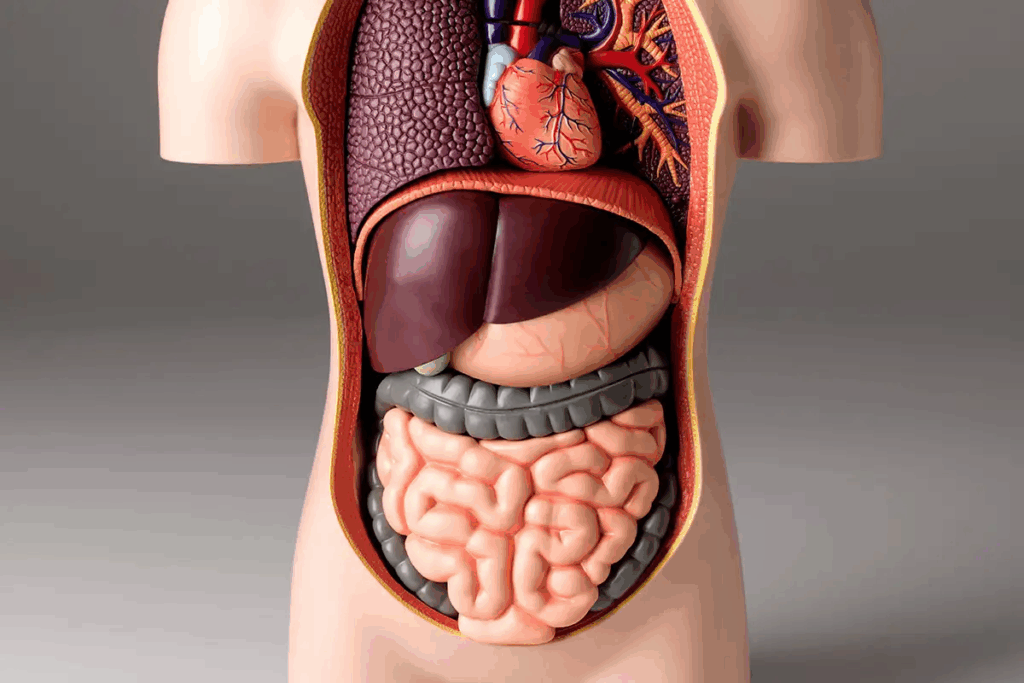
To diagnose abdominal issues, knowing the anatomical planes and landmarks is key. The abdominal cavity is complex, with many organs and structures. They are all closely connected.
The abdomen is divided into regions based on bony landmarks and imaginary lines. These references help doctors find organs and diagnose conditions.
Key Bony Landmarks for Orientation
Bony landmarks are the base for understanding abdominal anatomy. The main landmarks are:
- The xiphoid process at the top of the sternum
- The costal margins formed by the lower borders of the rib cage
- The iliac crests and anterior superior iliac spines (ASIS) in the pelvis
- The pubic symphysis at the front of the pelvis
These bony structures help identify where abdominal organs are located.
Imaginary Lines and Planes
Imaginary lines and planes also define abdominal regions. The nine-region system uses:
- The midclavicular lines, vertical planes from the middle of the clavicle
- The subcostal plane, a horizontal line at the lowest rib cage points
- The intertubercular plane, another horizontal line between the iliac crests tubercles
These lines and planes create a detailed map of the abdominal cavity. They help pinpoint organs and structures in the lumbar abdominal region and elsewhere.
Knowing these anatomical references is essential for diagnosis and surgery. By using bony landmarks and imaginary lines, healthcare professionals can accurately identify and manage abdominal conditions.
The Four Abdomen Quadrants System Explained
We divide the abdomen into four parts for medical checks. This helps us find and treat stomach problems well.
How the Median and Transumbilical Planes Create Four Quadrants
We draw two lines to make the four-quadrant system. The median plane splits the body into left and right. The transumbilical plane cuts it into top and bottom. These lines meet to form the four areas: Right Upper Quadrant (RUQ), Left Upper Quadrant (LUQ), Right Lower Quadrant (RLQ), and Left Lower Quadrant (LLQ).
Right Upper Quadrant (RUQ): Contents and Clinical Significance
The RUQ has important organs like the liver and gallbladder. It also has parts of the stomach and intestines. Problems here, like cholecystitis or hepatitis, can cause pain.
Figuring out what’s wrong in the RUQ needs a careful check-up.
- Liver pathology
- Gallbladder disease
- Right kidney disorders
- Stomach and intestinal issues
Left Upper Quadrant (LUQ): Contents and Clinical Significance
The LUQ has the spleen, stomach, and pancreas. It also has parts of the intestines. Pain here could be from splenic rupture, pancreatitis, or kidney stones.
Finding the right diagnosis is key to treating it right.
- Splenic injuries or diseases
- Gastric or pancreatic pathology
- Left kidney disorders
- Colonic or intestinal issues
Right Lower Quadrant (RLQ): Contents and Clinical Significance
The RLQ has the appendix and parts of the intestines. It also has the right ureter and, in women, the right ovary and tube. The main cause of RLQ pain is appendicitis.
Other reasons include inflammatory bowel disease, ovarian torsion, or ectopic pregnancy in women. A detailed check is needed to find out why the RLQ hurts.
- Appendicitis
- Intestinal obstruction or inflammation
- Gynecological conditions in females
- Ureteric colic
The Nine-Region System of the Abdomen: Detailed Breakdown
The nine-region system is a detailed way to understand the abdomen. It helps us pinpoint organs and structures better. This is very helpful in medical settings for accurate diagnosis and treatment.
Creating Nine Regions: Midclavicular, Subcostal, and Intertubercular Lines
To make the nine regions, we draw two vertical and two horizontal lines at the navel. The vertical lines are the midclavicular lines, from the clavicle to the inguinal ligament. The top horizontal line is the subcostal line, along the rib cage’s bottom. The bottom line is the intertubercular line, connecting the iliac crests’ tubercles.
These lines split the abdomen into nine areas. We have the epigastric, umbilical, and hypogastric regions in the middle. The sides have the hypochondriac, lumbar, and iliac regions. This helps us describe the abdomen’s anatomy and any problems more clearly.
Advantages of the Nine-Region System for Precise Diagnosis
The nine-region system is better than the four-quadrant system for finding organs and structures. This is key for making accurate diagnoses. Knowing exactly where pain or problems are helps narrow down what could be wrong.
For example, pain in the right hypochondriac region might mean gallbladder issues. Pain in the left iliac region could point to diverticulitis. This precision helps doctors diagnose and treat abdominal problems correctly.
Comparing Four-Quadrant vs. Nine-Region Approaches
Both systems are used in medicine, each with its own benefits. The four-quadrant system is simpler and used at first. The nine-region system is more detailed, great for complex cases or surgery planning.
Characteristics | Four-Quadrant System | Nine-Region System |
Complexity | Simpler, easier to use in quick assessments | More detailed, useful for complex cases or surgical planning |
Precision | Less precise, broader regions | More precise, smaller regions for better localization |
Clinical Use | Commonly used in initial patient assessments | Used in detailed diagnostic workups and surgical planning |
Healthcare professionals need to know both systems. This helps them diagnose and manage abdominal issues effectively.
Epigastric Region: Upper Central Abdominal Anatomy
The epigastric region is a key area in the upper abdomen. It houses vital organs like the stomach, liver, and pancreas. Knowing this area’s anatomy is vital for diagnosing and treating stomach issues.
Boundaries and Surface Anatomy
The epigastric region is found above the xiphoid process and below the costal margins. It’s also bordered by the midclavicular lines. This area is often where you feel the stomach’s pit.
Major Organs and Structures
This region is home to several important organs and structures. These include:
- Part of the liver
- The majority of the stomach
- Part of the pancreas
- The duodenum (first part)
- The lesser omentum
Common Clinical Conditions and Diagnostic Approach
Conditions like gastritis, peptic ulcers, and pancreatitis often affect this area. Doctors use history, physical exams, and tests like endoscopy and imaging to diagnose.
For example, someone with stomach pain might get an endoscopy. This helps check for ulcers or inflammation. CT scans can spot pancreatitis or other issues.
Umbilical and Hypogastric Regions: Central Abdominal Structures
We will explore the umbilical and hypogastric regions. We’ll look at their anatomy and why they’re important in medicine. These areas are key to understanding many health issues and guiding treatment.
Umbilical Region: The Central Abdomen
The umbilical region is around the belly button. It has parts of the small intestine and other structures. This area is often where people feel pain and where health problems can start.
This region is between the midclavicular lines laterally. It’s important for checking for tenderness and guarding. Issues here can include umbilical hernias and other problems inside the belly.
Hypogastric (Pubic) Region: Lower Central Abdomen
The hypogastric region, or pubic region, is below the umbilical region. It has organs near the pubic bone. This area is important because of its closeness to the bladder and reproductive organs.
Problems in this region can be urinary tract issues or gynecological conditions. Knowing this area well is key for making the right diagnosis.
Region | Key Structures | Common Pathologies |
Umbilical | Small intestine, umbilicus | Umbilical hernias, abdominal pain |
Hypogastric | Bladder, reproductive organs | Urinary tract issues, gynecological conditions |
Clinical Correlation and Differential Diagnosis
Knowing the anatomy of the umbilical and hypogastric regions is vital. Clinicians need to understand these areas when patients have belly pain. This helps in making the right diagnosis.
“Accurate diagnosis requires a thorough understanding of abdominal anatomy and the ability to correlate clinical findings with possible pathologies.”
— Clinical Gastroenterology
When diagnosing, consider many possible causes. This includes both gut and genitourinary problems. A careful approach is needed to find the real cause of symptoms.
Hypochondriac Regions: Upper Lateral Abdominal Anatomy
It’s key to know the hypochondriac regions for diagnosing and treating upper lateral abdomen issues. These areas are on both sides of the belly, just under the ribs. They hold important organs that help our body work right.
Right Hypochondriac Region
The right side is important because it has the liver’s right lobe, the gallbladder, and parts of the small intestine. These organs help with digestion and breaking down food. Problems here can cause a lot of pain and other serious issues.
Left Hypochondriac Region
The left side is home to the liver’s left lobe, the stomach, and parts of the pancreas and spleen. These organs are key for digestion, managing blood sugar, and fighting off infections. Issues in this area can show up as pain, nausea, and other stomach problems.
Clinical Significance and Pathologies
The hypochondriac regions are important because they can have many diseases, like liver and gallbladder problems, and stomach issues. “Getting a correct diagnosis and treatment for these areas needs a deep understanding of their anatomy and how they relate to health,” doctors say.
When we’re dealing with belly pain or other symptoms, we have to look at how all the organs in these areas work together. A good approach includes checking the body, using imaging and lab tests to find out what’s wrong.
Lumbar and Iliac Regions: Lateral and Lower Abdominal Structures
Understanding the anatomy of the lumbar and iliac regions is key for diagnosing and treating abdominal issues. These areas are important for clinical assessments.
Right and Left Lumbar Regions
The lumbar regions are on both sides of the belly button. They are marked by the midclavicular lines and the transpyloric plane. The right side has the ascending colon and the right kidney. The left side has the descending colon and part of the left kidney.
These areas are vital in clinical practice. They help pinpoint where pain is coming from and what might be wrong. For example, pain on the right could mean issues with the ascending colon or right kidney.
Region | Key Structures | Common Pathologies |
Right Lumbar | Ascending colon, right kidney | Appendicitis, kidney stones |
Left Lumbar | Descending colon, left kidney | Diverticulitis, kidney stones |
Right and Left Iliac (Inguinal) Regions
The iliac or inguinal regions are in the lower abdomen, near the groin. They have the iliac and inferior epigastric vessels. The right iliac region is often where appendicitis occurs. The left iliac region is commonly linked with diverticulitis.
“Accurate localization of abdominal pain is key for diagnosing conditions like appendicitis and diverticulitis, which often show up in the iliac regions.”
Clinical Applications and Diagnostic Approach
Knowing the lumbar and iliac regions is essential for doctors when they assess abdominal pain. Understanding the anatomy helps narrow down possible causes and guides further tests.
For instance, pain in the right iliac region might lead to imaging to check for appendicitis. Pain in the left iliac region could mean diverticulitis is being considered.
By using a patient’s history, physical exam, and knowledge of these regions, doctors can make more accurate diagnoses. This leads to better treatment plans.
Conclusion: Practical Applications of Abdominal Anatomical Knowledge
Knowing the quadrants of the abdomen is key for correct diagnosis and treatment plans. The abdominal cavity is divided into quadrants and regions. This helps doctors pinpoint pain and diagnose conditions accurately.
We’ve looked at how abdominal mapping is important in medicine. We’ve also seen how anatomical planes and landmarks define abdominal areas. Both the nine-region and four-quadrant systems have their uses. It’s important for healthcare workers to know these divisions.
The importance of knowing the abdomen’s anatomy is huge. Doctors can find the source of pain or disease more easily. This helps them create better treatment plans. It’s essential for top-notch healthcare, supporting patients from around the world.
In summary, knowing the abdominal cavity well is vital for good patient care. Using this knowledge in practice helps doctors diagnose and treat better. This leads to better care for patients.
FAQ
What is the purpose of dividing the abdomen into quadrants and regions?
Dividing the abdomen helps find the source of pain. It lets doctors talk clearly about stomach problems.
What are the four quadrants of the abdomen?
The abdomen is split into four parts. These are the Right Upper Quadrant (RUQ), Left Upper Quadrant (LUQ), Right Lower Quadrant (RLQ), and Left Lower Quadrant (LLQ).
What is the nine-region system of the abdomen?
The nine-region system uses lines to divide the abdomen into nine areas. These include the epigastric, umbilical, and hypogastric regions, among others.
What are the advantages of using the nine-region system?
The nine-region system is more detailed. It helps find the exact spot of pain, leading to better diagnoses.
What is the epigastric region, and what organs are located there?
The epigastric region is in the middle of the upper abdomen. It houses important organs like the stomach, liver, and pancreas.
What are the common clinical conditions associated with the epigastric region?
Issues like gastritis, peptic ulcers, and pancreatitis often affect this area. They cause pain and discomfort in the upper abdomen.
What is the significance of understanding the anatomy of the abdominal regions?
Knowing the anatomy is key for doctors. It helps them make accurate diagnoses and plan effective treatments for stomach problems.
How do the four-quadrant and nine-region approaches compare?
The four-quadrant method is more general. The nine-region system is more detailed. This makes the nine-region system better for precise diagnoses.
What are the key bony landmarks used to define abdominal regions?
Important landmarks include the xiphoid process, costal margins, and pubic symphysis. They help divide the abdomen into parts.
Why is abdominal mapping important in clinical medicine?
Abdominal mapping is vital. It helps doctors pinpoint pain and find the cause of issues. This leads to better diagnoses and treatments.
Reference
National Center for Biotechnology Information. Abdominal Quadrants: Anatomy and Diagnostic Significance. Retrieved from https://www.ncbi.nlm.nih.gov/books/NBK537075/