
Ultrasounds during pregnancy are key for checking on the baby’s growth. They look at the HC (head circumference) and AC (abdominal circumference). These fetal biometric parameters are important for doctors to see how the baby is doing and if there are any problems.ac ultrasound meaningDefine Carcinoma in Situ: Cancer Meaning
Knowing about HC and AC helps parents get more involved in their prenatal care. It lets them understand their baby’s growth better and what steps might be needed.
Key Takeaways
- HC measures the circumference of the fetal head, indicating brain development.
- AC measures the circumference of the fetal abdomen, reflecting overall growth.
- Both measurements are important after 12 weeks of pregnancy.
- They help in assessing fetal growth and detecting any issues.
- Understanding these measurements makes parents more involved in prenatal care.
Understanding Fetal Biometric Measurements
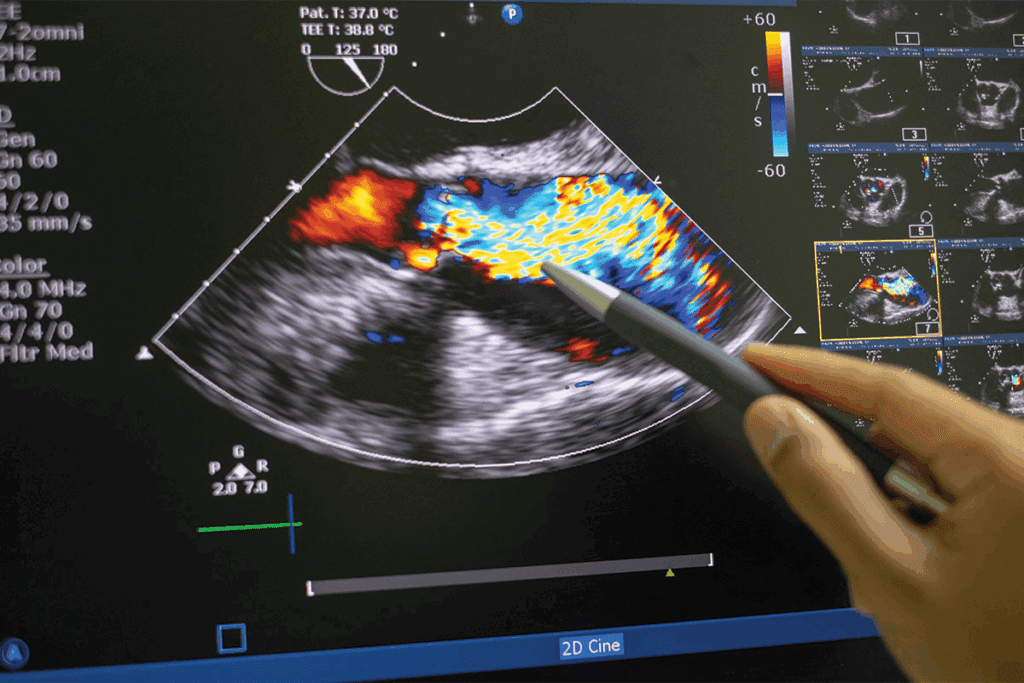
Fetal biometric measurements are key for healthcare providers to check on fetal growth and spot issues early. These measurements are vital for tracking how a fetus grows and develops during pregnancy.
The Role of Ultrasound in Pregnancy Monitoring
Ultrasound is a big help in keeping an eye on a pregnancy. It lets doctors see the fetus and measure its growth. Fetal biometry looks at different parts of the fetus, like the head, belly, and thigh, to guess the baby’s weight and check its development.
By using ultrasound, we can watch how a fetus grows and find any problems early. This helps doctors make the best choices for managing the pregnancy and step in if needed.
Key Biometric Parameters Used in Prenatal Assessment
There are a few important biometric parameters used in prenatal checks:
- Head Circumference (HC)
- Abdominal Circumference (AC)
- Femur Length (FL)
The HC/AC ratio is a key indicator of fetal growth. It’s found by dividing head circumference by abdominal circumference. If this ratio is off, it might mean the fetus is growing unevenly.
Fetal biometry uses ultrasound to measure different parts of the fetus during pregnancy. These include the size of the head, belly, and thigh. These measurements help guess the baby’s weight and check its overall development.
What is HC (Head Circumference) on Ultrasound?
Understanding head circumference (HC) on an ultrasound is key for tracking fetal growth. It’s a vital part of prenatal checks to see how the fetus is doing.
Definition and Anatomical Landmarks
Head circumference (HC) is the widest part of a baby’s head. It goes from the forehead to the back of the skull. This measurement helps check the baby’s brain and overall growth.
To get the right HC, certain spots on the baby’s head are used. These spots are where the thalami, cavum septum pellucidum, and third ventricle are seen. This makes the measurement reliable.
How HC is Measured During an Ultrasound
During an ultrasound, HC is measured by tracing the widest part of the baby’s head. This is done using an ellipse or trace around the skull’s edge. The sonographer places calipers or a trace on the image for an accurate reading.
The measurement is taken in a way that includes the thalami and cavum septum pellucidum. This ensures it gets the widest diameter of the head. This method gives a precise HC value, which is then compared to growth charts.
Normal HC Values Throughout Pregnancy
Normal HC values change as pregnancy progresses. They match the fetus’s gestational age. Healthcare providers use growth charts to compare the HC to expected values.
Usually, a normal HC is between the 10th and 90th percentiles on these charts. While there can be some variation, staying within this range is often seen as normal. If the measurement is far from this range, it may mean the baby needs extra attention.
AC Ultrasound Meaning: Defining Abdominal Circumference
Abdominal circumference (AC) on an ultrasound is the measurement around the baby’s belly. It shows how the baby is growing. This measurement is key for checking on the baby’s health and spotting any problems early.
What AC Measures and Why It’s Important
The AC measures the distance around the baby’s belly. It’s important because it shows how well the baby is doing and growing. If the AC is off, it might mean the baby is not growing right or is too big.
Doctors say, “Abdominal circumference (AC) is the measurement around the baby’s abdomen. It helps assess fetal growth and the function of the placenta.” This shows how vital AC is for checking on the baby’s health and the placenta’s work.
Technique for Measuring AC Accurately
Getting the AC measurement right is key for good results. During an ultrasound, the sonographer looks for the right spots to measure. The steps include:
- Identifying the fetal abdomen in a cross-sectional view
- Ensuring the image includes the stomach and the umbilical vein
- Taking the measurement around the abdomen at the level of the stomach and umbilical vein
Expected AC Values by Gestational Age
The expected AC values change as pregnancy goes on. Here’s a quick look at what’s expected by gestational age:
Gestational Age (weeks) | Expected AC (mm) |
20 | 140-160 |
24 | 180-210 |
28 | 230-260 |
32 | 280-310 |
36 | 320-350 |
40 | 340-370 |
These numbers are close but can vary a bit. It’s best to talk to your healthcare provider about your baby’s measurements and what they mean.
The Significance of HC and AC in Fetal Development
HC and AC measurements are key to checking on a fetus’s health. They show how the fetus is growing and if there are any problems. These numbers are important for watching how a fetus develops and spotting any issues that need more looking into.
Tracking Growth Patterns
HC and AC measurements track how a fetus’s head and belly are growing. Doctors use these numbers to see if the fetus is growing right. Any unusual growth can mean there’s a problem that needs to be looked at.
If the HC or AC numbers are way off from what’s expected, it could mean the fetus is not growing right. Keeping an eye on these numbers helps find and fix problems early.
When HC and AC Measurements Begin
Doctors start checking HC and AC in the second trimester. When exactly depends on how the pregnancy is going and the doctor’s rules. Usually, these checks become more important after 20 weeks.
Here’s when these measurements are usually taken and what they mean:
Gestational Age | Measurement Focus | Significance |
20-24 weeks | Initial HC and AC measurements | Baseline assessment of fetal growth |
24-28 weeks | Continued monitoring of HC and AC | Tracking growth patterns and detecting possible problems |
28 weeks and beyond | Ongoing assessment of HC and AC | Watching for signs of growth issues or other problems |
Knowing how important HC and AC measurements are helps doctors keep an eye on a fetus’s growth. These numbers are a big part of prenatal care. They help keep both mom and baby healthy.
Understanding the HC/AC Ratio
The HC/AC ratio is key in prenatal care. It helps check how a fetus is growing and developing.
Calculation of the HC/AC Ratio
To find the HC/AC ratio, you divide the head circumference (HC) by the abdominal circumference (AC). This gives us a peek into how the fetus is growing.
Formula: HC/AC Ratio = Head Circumference (HC) / Abdominal Circumference (AC)
Normal HC/AC Ratio Ranges
The normal HC/AC ratio is between 0.95 and 1.05. This range changes based on how far along the pregnancy is. Knowing these ranges helps spot any growth problems.
Gestational Age (Weeks) | Normal HC/AC Ratio Range |
28-30 | 1.00-1.05 |
31-33 | 0.98-1.03 |
34-36 | 0.95-1.00 |
37-40 | 0.92-0.98 |
Changes in HC/AC Ratio Throughout Pregnancy
The HC/AC ratio changes as pregnancy goes on. At first, the head grows faster than the belly. Later, the belly catches up, making the ratio smaller.
Understanding the HC/AC ratio helps doctors check on fetal growth. It helps spot any issues early.
Asymmetric Growth Restriction and HC/AC Ratio
An elevated HC/AC ratio can signal asymmetric growth restriction. This means the fetus’s head and abdomen grow at different rates. It could be a sign of fetal distress or compromise.
Recognizing Elevated HC/AC Ratios
An HC/AC ratio above 1.1 or the 95th percentile for gestational age is high. This suggests growth restriction, where the head grows normally but the abdomen doesn’t.
The HC/AC ratio is key because it shows how the fetus adapts to stress, like poor placental function. Spotting a high ratio early is vital for quick action.
Brain-Sparing Effect and Nutrient Redistribution
In asymmetric growth restriction, the fetus prioritizes vital organs like the brain and heart. This means less blood goes to less important areas. It’s a survival strategy.
The brain-sparing effect shows in the HC/AC ratio. The head grows normally, but the abdomen doesn’t because of less nutrients and oxygen. This leads to a high HC/AC ratio.
Clinical Significance and Monitoring
An elevated HC/AC ratio is important for fetal health and needs close watching. If it’s high, more ultrasounds are done to check on the fetus’s growth and health.
Regular checks, including Doppler studies, are advised. In some cases, early delivery might be considered. It’s a balance between the risks of early birth and the risks of staying in the womb too long.
HC and AC in Relation to Other Ultrasound Measurements
Doctors use several fetal biometric measurements to check how a baby is growing. These include head circumference (HC) and abdominal circumference (AC). They also look at femur length (FL), biparietal diameter (BPD), and more.
FL/AC and FL/HC Ratios: What They Mean
The femur length (FL) to abdominal circumference (AC) ratio and the FL to head circumference (HC) ratio are key. They help doctors see if a baby is growing right.
- The FL/AC ratio checks if the baby’s femur and belly are growing in balance. It helps spot growth problems.
- The FL/HC ratio looks at the balance between the baby’s femur and head. It gives clues about growth.
These ratios are vital for spotting issues like intrauterine growth restriction (IUGR) or other growth problems.
Combining Multiple Measurements for a Complete Picture
Doctors use many ultrasound measurements to get a full view of fetal development. This method gives a clearer picture of how a baby is growing. It helps find any problems early.
- Multiple Measurements: Using HC, AC, FL, and BPD together gives a detailed look at growth patterns.
- Enhanced Accuracy: Mixing these measurements makes it easier to spot growth issues and developmental problems.
- Early Detection: Finding problems early means doctors can act quickly. This helps manage the pregnancy better.
By using all these ultrasound measurements, doctors can monitor and care for babies more accurately. This leads to better health for both mom and baby.
Clinical Implications and Management
Abnormal HC and AC measurements on ultrasound can mean big things for a baby’s health. They help doctors check how a baby is growing. If these numbers are off, it might mean there’s a problem.
When Abnormal Measurements Require Further Investigation
If a baby’s HC or AC measurements are too small, it could mean the baby is not growing right. This is called intrauterine growth restriction (IUGR). Doctors need to find out why and how serious it is.
Things like:
- Fetal growth restriction
- Maternal health conditions, such as hypertension or diabetes
- Placental insufficiency
- Genetic or chromosomal abnormalities
Additional Testing and Monitoring Protocols
When HC and AC measurements are off, doctors do more tests. They want to keep an eye on the baby’s growth and health. This might include:
Test/Monitoring | Description | Frequency |
Ultrasound biometry | Regular measurements of fetal biometry to track growth | Every 2-4 weeks |
Non-stress test | Monitoring fetal heart rate in response to movement | Weekly or bi-weekly |
Doppler velocimetry | Assessment of blood flow in fetal vessels | As needed, based on clinical judgment |
Treatment Options and Interventions
The treatment for abnormal HC and AC measurements depends on the cause and how serious it is. Sometimes, just watching the baby closely is enough. But other times, doctors might need to act fast.
Potential interventions include:
- Maternal hospitalization for close monitoring
- Administration of corticosteroids to promote fetal lung maturity
- Planning for early delivery, if necessary
Understanding the meaning of abnormal HC and AC measurements helps doctors take better care of babies. This way, they can help both mom and baby have a better outcome.
Conclusion
Understanding HC and AC measurements is key for expectant parents. It gives them insights into their baby’s growth and health. Fetal biometry is vital for tracking the baby’s health and development during pregnancy.
HC and AC measurements are important in prenatal care. They help healthcare providers see how the baby is growing. This way, they can spot any problems early.
Accurate and timely measurements, like HC and AC, are critical. They help ensure the fetus’s health. By closely watching the baby’s development, healthcare providers can act fast if needed. This helps in achieving the best outcomes for both mom and baby.
FAQ
What do HC and AC mean on an ultrasound?
HC means Head Circumference, and AC means Abdominal Circumference. These are key to checking how a fetus grows during pregnancy.
How are HC and AC measured during an ultrasound?
HC is measured around the widest part of the fetal head. AC is measured around the fetal abdomen, at the stomach and umbilical vein level. These help track the fetus’s growth.
What is the normal range for the HC/AC ratio?
The HC/AC ratio’s normal range changes as pregnancy goes on. It usually goes down as pregnancy advances. An elevated ratio might show asymmetric growth restriction.
What is asymmetric growth restriction, and how is it related to the HC/AC ratio?
Asymmetric growth restriction happens when the fetus doesn’t grow evenly, often because of placental issues. An elevated HC/AC ratio can signal this, showing the head grows faster than the abdomen.
What is the brain-sparing effect, and how is it related to the HC/AC ratio?
The brain-sparing effect is when the fetus focuses on brain development, even with less nutrients. An elevated HC/AC ratio can indicate this effect.
How are HC and AC used in conjunction with other ultrasound measurements?
HC and AC are checked with other measurements like Femur Length (FL). Together, they give a full view of fetal development. Ratios like FL/AC and FL/HC offer more insights into growth.
What are the clinical implications of abnormal HC and AC measurements?
Abnormal HC and AC measurements can point to growth and development issues in the fetus. More tests and monitoring might be needed to ensure the fetus’s health.
What happens if the HC/AC ratio is outside the normal range?
An abnormal HC/AC ratio might mean asymmetric growth restriction or other issues. Healthcare providers will watch the fetus closely and might suggest more tests or actions.
How often are HC and AC measurements taken during pregnancy?
HC and AC measurements are usually done during routine ultrasounds, at 20-24 weeks and again in the third trimester. How often they’re done can vary based on individual needs.
Can HC and AC measurements predict possible complications during pregnancy?
HC and AC measurements are important for tracking fetal growth. But, they’re just a few things considered when checking pregnancy. Abnormal measurements might suggest issues, but they don’t always mean complications will happen.
References
Government Health Resource. Evidence-Based Medical Guidance. Retrieved from https://obgyn.onlinelibrary.wiley.com/doi/10.1111/j.1471-0528.1994.tb13281.x



 Departments
 Related Videos
 Our Doctors
 News
News