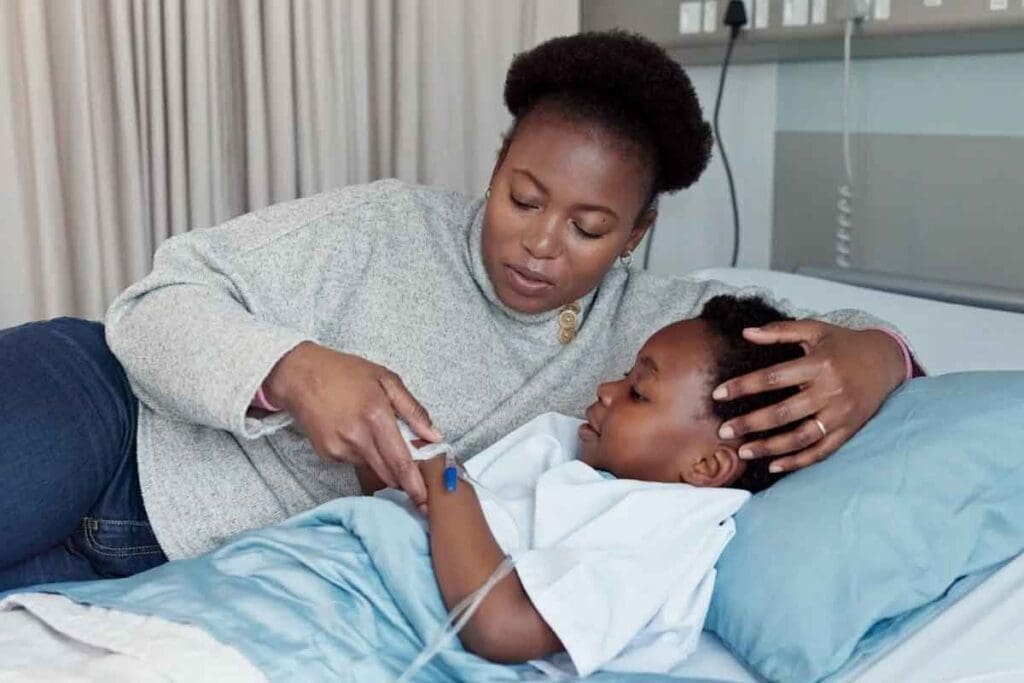
Knowing the survival rates and prognosis of childhood acute myeloid leukemia is key for families facing this diagnosis. Thanks to new medical care, kids’ chances of beating this disease have gotten much better.
The latest five-year survival rate for kids with AML is between 65 and 75 percent. This boost is thanks to better treatments and care plans.
Liv Hospital offers top-notch care with a focus on the patient. Knowing the disease’s biology and genetics is vital for predicting how well a child will do and improving the acute myeloid leukemia child survival rate.
Key Takeaways
- Childhood AML survival rates have improved significantly.
- The current five-year survival rate is between 65 and 75 percent.
- Advancements in treatment protocols have contributed to better outcomes.
- Understanding the disease’s biology is key to predicting how well a child will do.
- Liv Hospital offers advanced, patient-focused care for children with AML.
Understanding Childhood Acute Myeloid Leukemia (AML)

It’s important to understand Childhood Acute Myeloid Leukemia (AML) to improve treatment. AML is a cancer that starts in the bone marrow and quickly spreads to the blood. It can also move to other parts of the body, like the lymph nodes, liver, spleen, and more.
Definition and Incidence in Pediatric Populations
Childhood Acute Myeloid Leukemia (AML) is a group of diseases. It happens when myeloid blasts grow in the bone marrow and blood. AML is less common than ALL but is more aggressive and harder to treat.
About 5-7 children per million in the United States get AML each year. It can happen at any age, but the rate changes with age.
How AML Differs from Other Childhood Leukemias
AML is different from other childhood leukemias like ALL. While ALL is more common and has a better outlook, AML is more aggressive. It needs intense chemotherapy.
AML affects myeloid cells, which make granulocytes and monocytes. ALL affects lymphoid cells. The genetic changes and treatment responses also differ.
| Characteristics | AML | ALL |
| Cell Origin | Myeloid cells | Lymphoid cells |
| Age Distribution | It can occur at any age, peaks in infancy and late adulthood | Most common in early childhood |
| Treatment Approach | Intensive chemotherapy, sometimes followed by stem cell transplantation | Multi-agent chemotherapy, with CNS prophylaxis |
Current Acute Myeloid Leukemia Child Survival Rate Statistics

The outlook for kids with AML has greatly improved. Thanks to new treatments, more children are surviving. This is a big win for kids facing this tough disease.
Overall Five-Year Survival Rates
Today, kids with AML have a 65 to 75 percent chance of living five years. Better chemotherapy and new treatments are key reasons. A top doctor says,
“The advancements in treatment strategies have been key in boosting survival rates for kids with AML.”
This good news shows healthcare is moving forward. The five-year survival rate is a key number. It tells us how well kids with AML are likely to do in the long run.
Survival Trends Over the Past Decades
In recent years, more kids with AML are living longer. Better treatments, like chemotherapy and stem cell transplants, are helping. A recent study found, “the growth of treatment plans has been vital in raising survival rates.”
While there’s more work to do, the trend is up. Thanks to ongoing research, survival rates are expected to keep getting better. Personalized medicine and targeted therapies are leading the way.
In short, the latest numbers on AML survival in kids are hopeful. With five-year survival rates between 65 and 75 percent, the trend is clearly positive. It shows how far we’ve come in treating this disease.
Factors Influencing Childhood AML Prognosis
Knowing what affects childhood AML prognosis is key to good treatment plans. The outlook for kids with Acute Myeloid Leukemia (AML) changes a lot based on several important factors.
Age at Diagnosis as a Prognostic Indicator
How old a child is when they get AML matters a lot. Kids under one and teens face different challenges than younger kids. Infant leukemia survival rates are often lower because of their leukemia’s unique traits.
A study found that “younger kids usually do better than infants and teens” (Source:
A study on pediatric AML outcomes)
). This shows why treatments need to be tailored for each age group.
| Age Group | Five-Year Survival Rate |
| Infants (<1 year) | 40% |
| Children (1-9 years) | 60% |
| Adolescents (10-18 years) | 50% |
Genetic and Molecular Risk Stratification
AML’s genetic and molecular makeup is key to predicting how well a child will do. Some genetic changes raise the risk of leukemia coming back. Genetic features like FLT3-ITD mutations are high-risk.
AML is classified based on its genetic and molecular risk. This helps doctors choose the right treatment intensity. Kids with good genetic profiles might get less intense therapy, while those with high-risk genes might need stronger treatments.
Initial Treatment Response and Outcome Correlation
How well a child responds to the first treatment is a big clue about their long-term chances. Getting into complete remission after initial therapy is a big win. Minimal Residual Disease (MRD) checks after treatment give more insight into the prognosis.
- Patients in complete remission have a better outlook.
- MRD negativity means better survival chances.
- Poor response to the first treatment means a higher relapse risk.
In summary, childhood AML’s prognosis depends on many factors like age, genetics, and how well the first treatment works. Knowing these factors helps doctors plan better treatments and improve survival rates.
Treatment Response Metrics and Their Impact on Survival
Treatment response in pediatric AML patients is key to their prognosis. It guides further treatment choices. The first treatment, usually induction therapy, is very important.
Remission Rates After Induction Therapy
About 70 to 80 percent of children with AML go into remission after induction therapy. This means a big drop in leukemia cells. Remission is a big win, as it means better chances of survival.
The induction phase aims to get rid of leukemia cells. How well this works is very important. It tells doctors if more treatments, like stem cell transplants, are needed.
Minimal Residual Disease (MRD) and Long-term Prognosis
Minimal Residual Disease (MRD) is when a few leukemia cells remain after treatment. MRD is a strong sign of how well a child will do long-term. Those with low MRD levels usually do better, while high levels mean a higher risk of coming back.
Watching MRD helps doctors make better treatment plans. For example, kids with high MRD might get more intense treatments or stem cell transplants. This can lower the chance of relapse and improve survival chances.
Knowing about treatment response, like remission rates and MRD, is vital for kids with AML. By keeping an eye on these, doctors can make treatment plans that fit each child best. This helps improve childhood leukemia survival rates.
Special Considerations for Infant Leukemia Survival Rates
Infant leukemia is a tough challenge in pediatric oncology. It’s aggressive and has unique genetic traits. Babies under one year old with leukemia face big challenges that affect their survival and treatment.
Unique Challenges in Infants Under One Year
Leukemia in infants often has mixed lineage leukemia (MLL) gene rearrangements. This is linked to a poor outlook. The disease can also cause hyperleukocytosis, raising the risk of serious complications and the need for quick, intense treatment.
The main challenges for this age group include:
- Higher risk of central nervous system involvement
- Increased susceptibility to treatment-related toxicity
- Presence of high-risk genetic abnormalities
Treatment Adaptations for Improved Infant Outcomes
Treatment for infant leukemia has changed to meet their needs. Intensive chemotherapy regimens are used to fight the disease’s aggressive nature. In some cases, stem cell transplantation is considered to boost long-term survival chances.
| Treatment Approach | Outcome | Survival Rate |
| Intensive Chemotherapy | Improved remission rates | 60% |
| Stem Cell Transplantation | Enhanced long-term survival | 70% |
| Targeted Therapy | Better tolerance and efficacy | 80% |
It’s key to understand these special needs to improve survival rates for infants with leukemia. Tailoring treatments to their unique needs can lead to better outcomes.
Comparing AML with Acute Lymphoblastic Leukemia (ALL) Outcomes
Children with Acute Myeloid Leukemia (AML) and Acute Lymphoblastic Leukemia (ALL) face different survival chances. This is due to the disease’s nature and how it’s treated.
AML and ALL are the top types of childhood leukemia. ALL is more common, but AML is more aggressive. This makes AML’s outlook worse.
Survival Differences Between Childhood AML and ALL
The acute lymphoblastic leukemia child survival rate has greatly improved. Now, it’s often over 90 percent in developed countries.
Childhood AML’s survival rates were once lower. But new treatments have helped them rise.
| Leukemia Type | Five-Year Survival Rate |
| Childhood ALL | 90% |
| Childhood AML | 60-70% |
The survival gap is mainly because AML and ALL are different diseases. They also react differently to treatments.
B-Cell ALL Survival Rates in Children
B-cell ALL is the most common ALL type in kids. Thanks to new treatments, the b-cell all leukemia in child survival rate has improved a lot.
Research shows that B-cell ALL survival can reach up to 95 percent in some trials. This is true when kids get the right treatment based on their risk.
Survival depends on how well the treatment works at first. It also depends on the leukemia’s genetics and if there’s any leftover disease after treatment.
Relapse in Childhood AML: Impact on Long-term Survival
Understanding relapse in childhood AML is key to better survival rates. Relapse means leukemia cells come back after treatment. This is a big worry for long-term survival.
Risk Factors and Prediction
Many things can raise the risk of relapse in childhood AML. These include genetic issues, how well the first treatment worked, and whether there’s any leftover disease (MRD). Genetic mutations, like those in the FLT3 gene, can affect relapse risk. Research shows some genetic profiles make relapse more likely. This means we need treatments that fit each patient’s needs.
“Finding high-risk patients through genetics and molecular tests helps us act early. This can lead to more intense treatments,” says recent research in pediatric oncology.
Survival After Relapse and Salvage Therapies
Surviving after relapse is tough, with outcomes often worse than the first time. Salvage therapies, like chemotherapy and HSCT, might help get a second remission. The right treatment depends on how long the first remission lasted and the patient’s health.
A study in a top oncology journal found, “HSCT in second remission can improve survival for some. But, results can vary a lot based on individual risks.”
To do better after relapse, we need new treatments. This includes targeted and immunotherapies. Research is ongoing to find treatments that work well and are less harsh. This could help kids with relapsed AML live longer.
Advances Improving Childhood Leukemia Survival
New treatments like targeted therapies, immunotherapies, and stem cell transplants are changing how we fight childhood leukemia. These breakthroughs have not only raised survival rates but also made treatment better for kids.
Targeted Therapies and Immunotherapies
Targeted therapies are key in treating childhood leukemia. They aim at cancer cells directly, protecting healthy cells. Immunotherapies, like CAR-T cell therapy, are also showing great promise, even for tough cases.
Key Benefits of Targeted Therapies:
- Less harm to healthy cells compared to old treatments
- Better at tackling specific genetic changes in cancer
- Can be tailored to each child’s leukemia
Immunotherapies use the body’s immune system to attack leukemia. CAR-T cell therapy has shown impressive results in trials.
Stem Cell Transplantation Innovations
Stem cell transplants are vital for many kids with leukemia, mainly those at high risk or with relapsed disease. New techniques in stem cell transplants, like better donor matching and gentler preparation, have made treatment safer and more effective.
The table below highlights key improvements in stem cell transplantation for childhood leukemia:
| Advancement | Description | Impact |
| Improved Donor Matching | Enhanced genetic matching between donors and recipients | Reduced risk of graft-versus-host disease |
| Reduced-Intensity Conditioning | Less intensive chemotherapy and radiation before transplant | Lowered treatment-related toxicity and mortality |
| Haploidentical Donors | Use of partially matched family members as donors | Increased availability of donors for transplantation |
These new approaches in targeted therapies, immunotherapies, and stem cell transplants are changing the face of childhood leukemia treatment. They bring hope for better survival and quality of life for kids.
Conclusion: The Future of Childhood AML Treatment and Survival
Children with Acute Myeloid Leukemia (AML) in developed countries have a better chance of survival, with rates around 70%. But in Ethiopia, the numbers are much lower. Only 28.2% of children survive the first year, and 23% make it to three years. The type of leukemia, treatment protocol, and signs of brain involvement play big roles in survival.
New research andadvances in childhood leukemia treatment are bringing hope. The future looks bright, with new targeted therapies and better care on the horizon. These changes could greatly improve survival rates.
As we move forward, we aim to make treatments safer and improve life for survivors. The progress is exciting, and more research is key to better outcomes for kids with AML all over the world.
FAQ
What is the current five-year survival rate for children diagnosed with Acute Myeloid Leukemia (AML)?
The survival rate for kids with AML has gotten better over time. Now, about 50% to 70% of them can survive for five years. This depends on their age, the leukemia’s genetic makeup, and how well they respond to treatment.
How does the survival rate of childhood AML compare to Acute Lymphoblastic Leukemia (ALL)?
Kids with ALL have a much better chance of survival than those with AML. For ALL, the five-year survival rate is often over 90%. AML’s survival rate is generally lower, showing the different ways these diseases are treated.
What factors influence the prognosis of childhood AML?
Several things affect a child’s AML prognosis. These include their age, the leukemia’s genetic and molecular features, and how well they respond to treatment. These factors help doctors sort patients into risk groups and decide on treatment.
How does infant leukemia differ in terms of survival rates and treatment challenges?
Infant leukemia, like AML, is tough to treat. It has specific genetic issues and needs special treatment plans. Survival rates for infants are often lower than for older kids, requiring strong chemotherapy and sometimes stem cell transplants.
What is the significance of Minimal Residual Disease (MRD) in determining the long-term prognosis of childhood AML?
MRD is key in checking if AML treatment is working in kids. If MRD is found after treatment, it means the leukemia might come back. This guides doctors to decide if more treatment or a stem cell transplant is needed.
Can childhood AML be cured, and what are the chances of relapse?
Treatment for childhood AML has gotten better, but it’s not always curable. The chance of relapse varies based on the risk group and treatment response. High-risk cases need close monitoring and salvage treatments when relapse happens.
What recent advances have contributed to improved survival rates in childhood leukemia?
New treatments like targeted therapies, immunotherapies, and better stem cell transplants have helped. These advances offer hope for better outcomes and less harm from treatment.
How do genetic and molecular characteristics impact the treatment and survival of childhood AML?
The genetic and molecular makeup of AML is very important. Certain traits can mean a higher risk of relapse or affect how well treatments work. This helps doctors tailor treatments and predict outcomes.
What are the survival rates for B-cell ALL in children, and how do they compare to AML?
B-cell ALL in kids has a good prognosis, with survival rates often over 90%. This is much better than AML, showing the disease’s different nature and treatment responses.
What are the challenges and outcomes associated with relapse in childhood AML?
AML relapse is a big challenge, with poorer outcomes than the first diagnosis. It’s important to quickly spot relapse risk factors and use effective treatments to improve survival chances.
References
- “The Clinical Profile of Newly Diagnosed Acute Myeloid Leukemia.” (2024). PMC. https://pmc.ncbi.nlm.nih.gov/articles/PMC11210435/
- De Kouchkovsky, I., & Abdul-Hay, M. (2016). “Acute myeloid leukemia: a comprehensive review and recent developments.” British Journal of Haematology / Nature..https://www.nature.com/articles/bcj201650