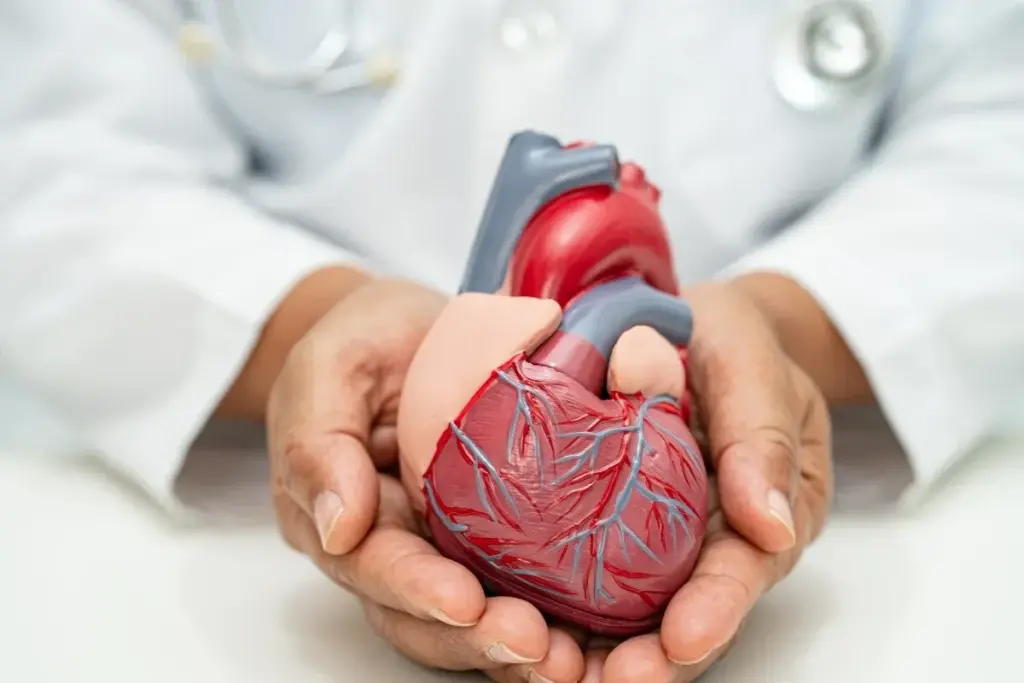
Did you know over 3 million people in the United States have heart arrhythmia? This condition makes their heartbeat irregular or shows abnormal ecg readings. This shows how common and serious arrhythmias are for many people.
Can you actually hear AFib? Discover the incredible sounds of an irregular heartbeat and learn how to monitor your heart health using your ears.
We at our institution know how tough arrhythmias can be. We want to help you regain control of your heart’s rhythm. Our expert care and latest treatments aim to ease your discomfort and manage your condition well.
Key Takeaways
- Understanding the causes and symptoms of heart arrhythmia.
- Exploring treatment options for managing arrhythmias.
- The importance of seeking professional care for abnormal ecg readings.
- Regaining control over your heart health with personalized treatment plans.
- Advancements in medical technology for diagnosing and treating irregular heartbeat.
What Is Heart Arrhythmia?
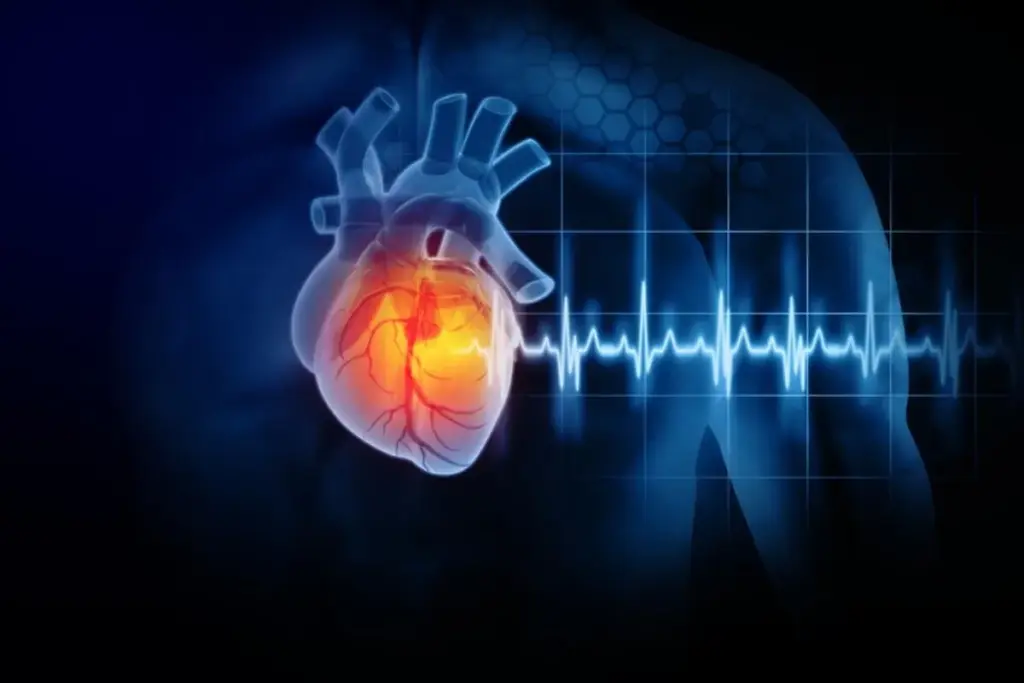
The heart’s rhythm is controlled by a complex system. When this system is disrupted, it can lead to arrhythmia, or an irregular heartbeat. Understanding this condition requires a closer look at how the heart functions normally and what happens when its rhythm is disrupted.
Definition and Basic Mechanisms
Arrhythmia refers to an abnormal heart rhythm. This means the heart beats too fast, too slow, or irregularly. It happens when there’s a problem with the heart’s electrical system, which regulates the heartbeat.
The normal heartbeat is controlled by a precise electrical impulse. This impulse travels through the heart, causing it to contract and pump blood. In arrhythmia, this electrical activity is disrupted.
To understand arrhythmia, it’s essential to know how the heart’s electrical system works. The sinoatrial (SA) node acts as the heart’s natural pacemaker. It initiates the electrical impulse that causes the heart to beat. Any disruption in this pathway can lead to irregular heartbeats.
The Normal Heart Rhythm vs. Arrhythmia
A normal heart rhythm is characterized by a consistent and coordinated heartbeat. In contrast, arrhythmia results in an irregular heartbeat. This can be too fast (tachycardia), too slow (bradycardia), or irregular.
An electrocardiogram (ECG) is a key diagnostic tool. It helps identify arrhythmias by measuring the heart’s electrical activity. Understanding the ECG meaning is vital for diagnosing and managing arrhythmias.
Sinus arrhythmia is a specific type of arrhythmia. It occurs when the heart’s rhythm is irregular but follows the normal pathway. It’s often seen in younger individuals and is usually not a cause for concern. But other forms of arrhythmia can be more serious and require medical attention.
By understanding the mechanisms behind arrhythmia and comparing it to a normal heart rhythm, we can better appreciate the importance of maintaining a healthy heart rhythm. Lifestyle factors, including sleep disorders, can significantly impact heart health. This is highlighted by cardiologists at Sri Ramakrishna Hospital, who have noted a link between sleep disorders and heart risk.
Types of Heart Arrhythmias
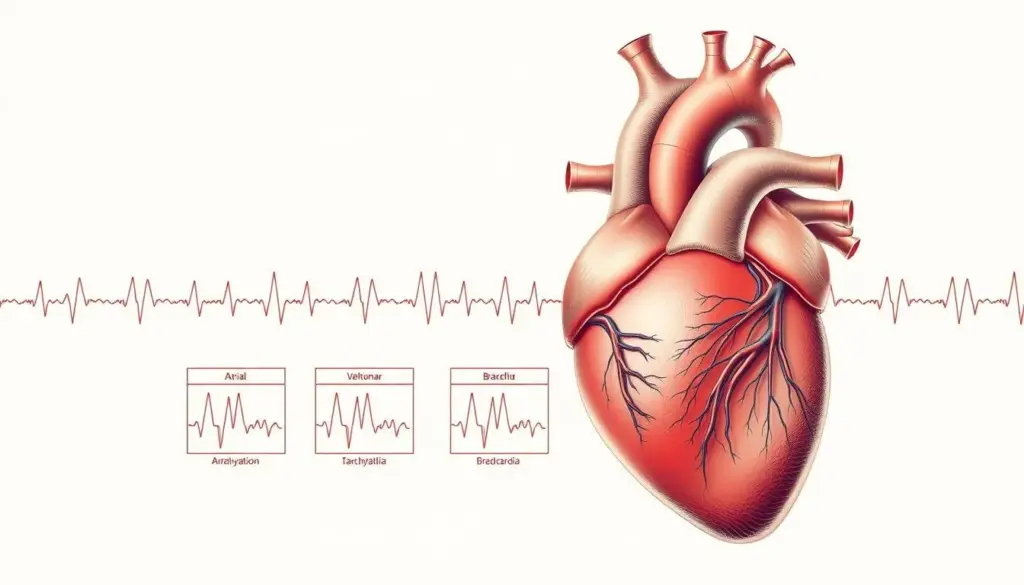
Heart arrhythmias are divided into several types, like tachycardia, bradycardia, and sinus arrhythmia. Knowing these types is key for managing and treating them well.
Tachycardia: When Your Heart Beats Too Fast
Tachycardia means your heart beats too quickly, over 100 times a minute. It can be triggered by stress, some medicines, or heart problems.
Aaron Holm had tachycardia, which made his heart race fast. He needed medical help. His story shows how important it is to get the right treatment.
Common symptoms of tachycardia include:
- dizziness
- shortness of breath
- chest pain
Bradycardia: When Your Heart Beats Too Slow
Bradycardia is when your heart beats too slowly, under 60 times a minute. It can cause tiredness, dizziness, and fainting because of poor blood flow.
|
Heart Rate |
Condition |
Common Causes |
|---|---|---|
|
>100 bpm |
Tachycardia |
Stress, medications, heart conditions |
|
<60 bpm |
Bradycardia |
Aging, heart tissue damage, certain medications |
Sinus Arrhythmia and Other Irregular Heartbeat Patterns
Sinus arrhythmia is an irregular heartbeat from the sinoatrial node. It’s usually normal in younger people.
“The complexity of arrhythmias requires a thorough approach to diagnosis and treatment. Knowing the specific arrhythmia is vital for effective management.” – Medical Expert
Other irregular heartbeats include atrial fibrillation and ventricular tachycardia. Each has its causes and effects on heart health.
Common Causes of Heart Rhythm Disorders
Knowing what causes heart rhythm disorders is key to managing them. These disorders, or arrhythmias, can really affect someone’s life. We’ll look at the different things that can lead to these problems.
Structural Heart Problems
Heart rhythm disorders often start with structural heart issues. These can include:
- Heart Valve Disorders: Issues like mitral valve prolapse can cause arrhythmias.
- Coronary Artery Disease: Not enough blood flow to the heart muscle can lead to irregular heartbeats.
- Heart Failure: When the heart doesn’t pump well, arrhythmias can happen.
- Congenital Heart Defects: People born with heart defects are more likely to get arrhythmias.
Lifestyle Factors
Lifestyle choices also play a big part in heart rhythm disorders. Some of these include:
- Caffeine and Alcohol Consumption: Too much can cause arrhythmias in some people.
- Smoking: It’s a big risk factor for heart disease and arrhythmias.
- Physical Activity: Not enough or too much exercise can affect heart rhythm.
- Stress: Too much stress can also lead to arrhythmias.
Medical Conditions That Affect Heart Rhythm
Many medical conditions can mess with heart rhythm, including:
- Thyroid Disorders: Both too much and too little thyroid hormone can cause arrhythmias.
- Diabetes: High blood sugar can harm the nerves that control the heart.
- Sleep Apnea: It can increase the risk of arrhythmias.
- Electrolyte Imbalances: Not the right levels of potassium, sodium, or calcium can affect heart rhythm.
Understanding these causes helps us manage and treat heart rhythm disorders better. It’s important to work with doctors to find the cause and plan the right treatment.
Diagnosing Arrhythmias
To find arrhythmias, we use many tools and methods. These help us know if you have an arrhythmia and what kind it is. This knowledge is key to treating it well.
Electrocardiogram (ECG) Testing
The electrocardiogram (ECG) is a main tool for finding arrhythmias. It’s a simple test that shows how the heart’s electrical system works. Knowing what an ECG meaning is helps us understand the heart’s activity.
An abnormal ECG can show many heart problems, like arrhythmias. We often start with an ECG because it’s easy and works well.
Holter Monitoring and Event Recorders
For people with symptoms that come and go, we might use Holter monitoring or event recorders. Holter monitoring is a device you wear for 24 to 48 hours. It records your heart’s activity all the time.
Event recorders work like Holter monitors but for longer, up to weeks. They’re great for finding arrhythmias that don’t happen often.
Advanced Diagnostic Procedures
Sometimes, we need more advanced diagnostic procedures. These include electrophysiology studies (EPS). In EPS, thin wires are put through a vein to the heart to check its electrical activity. This helps find where and what kind of arrhythmia you have.
We also use cardiac imaging like echocardiography or cardiac MRI. These tests look at the heart’s shape and how it works. They help us decide the best treatment for you.
The Impact of Arrhythmias on Heart Health
It’s important to know how arrhythmias affect heart health. These irregular heartbeats can harm your heart in the short and long term.
Short-term Effects on Cardiac Function
Arrhythmias can cause problems like dizziness and shortness of breath. Tachycardia, or a fast heart rate, makes the heart less efficient. On the other hand, bradycardia, or a slow heart rate, can lead to poor blood flow.
Long-term Consequences of Untreated Arrhythmias
Untreated arrhythmias can lead to serious issues. These include a higher risk of stroke and heart failure. The table below shows some long-term effects of untreated arrhythmias.
|
Condition |
Potential Long-term Consequences |
|---|---|
|
Atrial Fibrillation |
Increased risk of stroke, heart failure |
|
Ventricular Tachycardia |
Potential for sudden cardiac death |
|
Bradycardia |
Inadequate blood flow, potentially leading to organ damage |
Managing arrhythmias is key to avoiding these problems. Healthcare providers can create better treatment plans by understanding arrhythmias’ effects. This helps keep your heart healthy for the long term.
Treatment Options for Restoring Normal Heart Rhythm
Understanding the journey to a normal heart rhythm starts with knowing the treatment options. Arrhythmia management offers many strategies to help patients achieve a stable heart rhythm.
Medications for Arrhythmia Management
Medications are key in managing arrhythmias. They can control heart rate, change an abnormal rhythm to normal, or prevent arrhythmias. Common medications include beta-blockers, anti-arrhythmic drugs, and calcium channel blockers.
Beta-blockers, for example, slow the heart rate and reduce heart contractions. A cardiologist, says, “Medications are often the first treatment for arrhythmias. They can greatly improve symptoms and quality of life.”
Surgical and Catheter-Based Interventions
For some, surgical or catheter-based interventions are needed. These procedures target the arrhythmia’s cause to restore a normal rhythm.
- Catheter Ablation: Uses energy to destroy abnormal heart pathways.
- Surgical Maze Procedure: Creates scar tissue to block abnormal signals.
These options are considered when medications fail or when the arrhythmia has a specific cause.
Implantable Devices
Implantable devices are vital in managing arrhythmias. They regulate the heart’s rhythm and prevent dangerous arrhythmias.
|
Device |
Function |
|---|---|
|
Pacemaker |
Regulates heart rate with electrical impulses. |
|
Implantable Cardioverter-Defibrillator (ICD) |
Delivers shocks to restore rhythm in emergencies. |
Aaron Holm, a patient, talked about implantable devices. “The ICD has given me peace of mind,” he said. “I feel more confident knowing my heart is monitored and treated if needed.”
In conclusion, treating arrhythmias involves a wide range of options. These include medications, surgeries, catheter-based interventions, and implantable devices. Understanding these options helps patients and doctors create effective management plans.
The Recovery Process After Arrhythmia Treatment
The recovery after arrhythmia treatment is complex. It includes care right after treatment and ongoing management. We know each patient’s path is different. Our aim is to offer full support every step of the way.
Immediate Post-Treatment Recovery
Right after treatment, patients are watched closely for any issues. This time is key to make sure the heart works right and the treatment worked.
- Monitoring: Keeping a close eye on heart rhythm and overall heart health.
- Rest: Enough rest for the body to heal.
- Medication: Taking the right medicines as prescribed to control symptoms and avoid problems.
Patients might feel some discomfort or side effects from the treatment. Our team is ready to help manage these issues.
Long-term Recovery Timeline
The recovery time can vary based on the treatment and the patient’s health. Patients usually follow a detailed recovery plan. This includes:
- Lifestyle Adjustments: Changes in diet, exercise, and ways to handle stress.
- Follow-Up Appointments: Regular visits with doctors to check on progress and adjust plans if needed.
- Ongoing Monitoring: Keeping an eye on heart rhythm to catch any problems early.
By sticking to this plan, patients can improve their heart health. We’re here to support our patients, giving them the help and care they need for the best recovery.
Can Your Heart’s Natural Rhythm Be Fully Restored?
To know if the heart’s rhythm can be fully restored, we must look at the causes of arrhythmias. The heart’s chance to get back to normal depends on several things. These include the type and severity of the arrhythmia, any heart disease, and how well treatment works.
Factors Affecting Recovery
Many things can affect the heart’s ability to recover its natural rhythm. These include:
- The type and severity of the arrhythmia
- Any heart disease or other health issues
- The success of the treatment chosen
- The patient’s overall health and lifestyle
A cardiologist, noted, “The key to successful recovery is finding the right cause of the arrhythmia and picking the best treatment.”
“Restoring the heart’s natural rhythm is not just about treating the arrhythmia; it’s about improving the patient’s overall health.”
A Cardiologist
Success Rates for Different Types of Arrhythmias
The success in restoring the heart’s rhythm varies by arrhythmia type. For example:
|
Type of Arrhythmia |
Success Rate |
|---|---|
|
Atrial Fibrillation |
60-80% |
|
Supraventricular Tachycardia (SVT) |
80-90% |
|
Ventricular Tachycardia |
50-70% |
These success rates come from studies and clinical data. It’s important to remember that results can vary. Success depends on many factors, like how well the patient responds to treatment and any underlying conditions.
We know each patient’s journey is different. Restoring the heart’s rhythm needs a tailored approach. By understanding what affects recovery and success rates, patients can make better choices about their care.
Lifestyle Changes to Support Heart Rhythm Recovery
On our journey to get our heart’s rhythm back, making lifestyle changes is key. These changes help our medical treatments work better and improve our heart health.
Dietary Adjustments for Arrhythmia Patients
Eating right is essential for heart health. For those recovering from arrhythmia, some diet changes can help.
- Eat more omega-3 fatty acids from fish like salmon and sardines.
- Include foods high in potassium, like bananas and avocados, to help with heart rhythm.
- Lower sodium to avoid blood pressure changes.
- Add foods rich in antioxidants, like berries and leafy greens, to fight stress.
It’s also good to cut down on caffeine and alcohol, as they can cause arrhythmias. A heart-healthy diet includes whole grains, lean proteins, and lots of fruits and veggies.
|
Food Group |
Recommended Foods |
Benefits |
|---|---|---|
|
Omega-3 Rich Foods |
Salmon, Sardines, Walnuts |
Reduces inflammation, supports heart health |
|
Potassium-Rich Foods |
Bananas, Avocados, Spinach |
Helps regulate heart rhythm |
|
Antioxidant-Rich Foods |
Berries, Leafy Greens, Nuts |
Combats oxidative stress, supports overall health |
Safe Exercise Recommendations
Exercise is vital for heart health. But for those with arrhythmia, picking safe and helpful activities is important.
A study in a says,
“Regular physical activity can help reduce the risk of arrhythmia and improve overall cardiovascular health.”
- Try moderate-intensity exercises like brisk walking, cycling, or swimming.
- Add flexibility and stretching to improve mobility.
- Stay away from high-intensity activities that can stress the heart.
Always talk to a doctor before starting new exercises, if you have heart conditions.
Stress Management Techniques
Stress can hurt heart health and cause arrhythmias. It’s important to manage stress well.
- Try mindfulness and meditation to lower stress.
- Do yoga or tai chi for relaxation and balance.
- Use deep breathing exercises to calm your mind and body.
By making these lifestyle changes, people can help their heart rhythm recovery and improve their overall health.
Living with Persistent Arrhythmias
Managing persistent arrhythmias requires medical treatment, lifestyle changes, and self-monitoring. It’s key to adapt daily activities for heart health and keep track of your condition.
Adapting Daily Activities for Heart Health
People with persistent arrhythmias should adjust their daily routines to ease heart strain. This means choosing less strenuous exercises like walking or swimming.
Managing stress is also vital. Techniques like meditation or deep breathing can help. Eating a healthy diet full of fruits, veggies, and whole grains is also important for heart health.
“The key to managing persistent arrhythmias lies in a balanced lifestyle that prioritizes heart health without sacrificing the quality of life.”
Self-Monitoring Your Condition
Self-monitoring is a big part of managing persistent arrhythmias. It’s important to track symptoms and share any changes with your doctor. Using Holter monitors or mobile apps can give you insights into your heart rhythm.
- Keep a log of your symptoms and any factors that seem to trigger or relieve them.
- Regularly check your pulse to monitor your heart rate.
- Be aware of your body’s signals, and don’t hesitate to seek medical attention if you experience unusual symptoms.
By actively managing your condition and making smart lifestyle choices, you can live a fulfilling life with persistent arrhythmias.
When to Seek Emergency Care for Irregular Heartbeat
Knowing when to seek emergency care for irregular heartbeat is key to your health. Irregular heartbeat, or arrhythmia, can be a sign of a serious issue. It needs quick medical attention.
Warning Signs That Require Immediate Attention
Certain symptoms with irregular heartbeat mean you need to go to the emergency room. These include:
- Chest Pain or Discomfort: Chest pain or discomfort with irregular heartbeat is a sign to seek help right away.
- Shortness of Breath: Trouble breathing or feeling like you can’t catch your breath is a serious sign.
- Dizziness or Fainting: Feeling dizzy or faint means your heart might not be pumping enough blood.
- Rapid or Severe Heartbeat: A very fast or severe irregular heartbeat is dangerous and needs quick help.
The American Heart Association says, “If you have chest pain, trouble breathing, or dizziness with irregular heartbeat, call emergency services right away.”
“Quick medical help is very important for severe arrhythmia symptoms. Waiting too long can lead to serious problems, like heart failure or even death.”
Preparing for Emergency Situations
Being ready can help a lot in emergencies. Here are some steps:
|
Preparation Step |
Description |
|---|---|
|
Keep Emergency Numbers Handy |
Make sure you have emergency contact numbers ready. |
|
Wear a Medical Alert Device |
If you often have severe arrhythmias, wear a medical alert device. |
|
Inform Family and Friends |
Tell your family and friends what to do in an emergency. |
It’s also smart to carry a list of your medicines and medical history with you always.
In summary, knowing the warning signs and being ready for emergencies can greatly help if you have irregular heartbeat.
Psychological Aspects of Coping with Heart Rhythm Disorders
Arrhythmias can really affect a person’s life, both mentally and physically. The emotional side of living with arrhythmias is complex and needs a lot of care. We know the emotional burden of heart rhythm disorders is big, and we must tackle it to help patients fully.
Anxiety and Depression in Arrhythmia Patients
People with arrhythmias often feel more anxiety and depression. The uncertainty of when an episode will happen can make daily life hard. Research shows they are more likely to get anxiety and depression than others.
Signs of anxiety in arrhythmia patients include:
- constant worry about health
- trouble sleeping
- feeling their heart beat too fast
- staying away from things that might cause an episode
Depression can show up as:
- not caring about things they used to enjoy
- changes in appetite
- feeling very tired
- feeling hopeless
Support Resources and Coping Strategies
There are many support resources and coping strategies to deal with the emotional side of arrhythmias. Support groups, online or in-person, offer a community and understanding. They help people facing similar issues.
Good ways to cope include:
- Cognitive-behavioral therapy (CBT): Helps change negative thoughts to better ones.
- Stress management techniques: Like meditation, yoga, and deep breathing to lower stress.
- Regular physical activity: Safe exercises can boost mood and lessen anxiety and depression.
- Education and awareness: Knowing about arrhythmias and how to manage them can make patients feel more in control.
As we work to improve treating heart rhythm disorders, we must focus on the emotional side too. By doing this, we can help people with arrhythmias live better lives.
Emerging Treatments and Research in Heart Rhythm Management
New discoveries in heart rhythm research are leading to better treatments. The way we manage heart arrhythmias is getting more advanced. New medicines, interventions, and technologies are being created to help patients more.
New Medications and Interventions
Scientists are working on new medicines for arrhythmias. They aim to make these drugs less harmful and more effective. Also, new techniques in catheter ablation are improving for some patients.
Some of the emerging treatments include:
- Gene therapy to fix genetic causes of arrhythmias
- New anticoagulants to lower stroke risk in atrial fibrillation patients
- Advanced pacemakers that can stop arrhythmic events before they start
Technological Advances in Monitoring and Treatment
Technology is key in improving heart rhythm management. Wearable devices and apps let patients track their heart health better. They also give doctors useful data for diagnosis and treatment.
The use of artificial intelligence (AI) in cardiology is very exciting. AI can look at big data to find patterns that doctors might miss. This could lead to treatments that are more tailored to each patient.
The table below shows some new treatments and technologies in heart rhythm management:
|
Treatment/Technology |
Description |
Potential Benefits |
|---|---|---|
|
Gene Therapy |
Aims to correct genetic causes of arrhythmias |
Potential cure for certain genetic arrhythmias |
|
Advanced Pacemakers |
Can predict and prevent arrhythmic events |
Reduced risk of arrhythmia-related complications |
|
Wearable Monitoring Devices |
Enable continuous monitoring of heart rhythm |
Early detection of arrhythmias, improved patient engagement |
As research keeps moving forward, we’ll see even more new treatments and technologies. These advancements are very promising for improving the lives of people with arrhythmias all over the world.
Conclusion
Understanding and managing heart arrhythmia is key to keeping your heart healthy. We’ve looked at the different types, causes, diagnosis, and treatments for arrhythmias. This knowledge is important for your heart’s well-being.
Managing arrhythmias well means using medicine, changing your lifestyle, and keeping an eye on your heart. A heart-healthy lifestyle can greatly help your condition. It also lowers the chance of serious problems.
New medical technologies and research bring better treatments for arrhythmias. It’s important to stay up-to-date with these advancements. This helps you make smart choices for your health.
In short, heart arrhythmia may be tough, but it can be managed. Knowing about your condition, getting the right medical care, and making lifestyle changes can help. These steps can help your heart beat naturally again and improve your life.
FAQ
What is heart arrhythmia?
Heart arrhythmia is when your heart beats irregularly. This can mean it beats too fast, too slow, or in an odd pattern. Doctors use tests like ECG and Holter monitoring to find arrhythmias.
What are the different types of heart arrhythmias?
There are many types of heart arrhythmias. These include tachycardia (fast heart rate), bradycardia (slow heart rate), and sinus arrhythmia (irregular heartbeat). Other types include atrial fibrillation and ventricular tachycardia.
What causes heart rhythm disorders?
Heart rhythm disorders can come from several sources. These include structural heart problems, lifestyle choices, and certain medical conditions. High blood pressure, heart valve issues, and thyroid disorders are common causes.
How are arrhythmias diagnosed?
Doctors use different tests to find arrhythmias. These include electrocardiogram (ECG) testing, Holter monitoring, and advanced tests like electrophysiology studies.
Can arrhythmias be treated?
Yes, there are many ways to treat arrhythmias. Options include medicines, surgeries, and implantable devices like pacemakers and ICDs.
Can your heart recover from arrhythmia?
Recovery from arrhythmia varies. Some arrhythmias can return to normal, while others need ongoing care.
What lifestyle changes can support heart rhythm recovery?
A healthy lifestyle is key. This includes eating right, exercising safely, and managing stress. These habits help manage arrhythmias and improve heart health.
How can I manage persistent arrhythmias?
To manage persistent arrhythmias, make lifestyle changes. Monitor your condition and follow our advice on treatment options.
When should I seek emergency care for irregular heartbeat?
Seek emergency care for severe symptoms like chest pain, shortness of breath, or dizziness. Always have a plan ready for emergencies.
What are the psychological aspects of coping with heart rhythm disorders?
Arrhythmias can lead to anxiety and depression. We offer support and strategies to help cope with these feelings.
What are the emerging treatments and research in heart rhythm management?
New treatments and technologies are emerging. These advancements help us better manage and treat arrhythmias.
What is the meaning of asynchronous in the context of heart rhythm?
Asynchronous in heart rhythm means a lack of coordination. This can disrupt the heart’s normal rhythm, seen in certain arrhythmias.
How does rhythm energy relate to heart arrhythmia?
Rhythm energy is not directly linked to arrhythmia. It refers to the heartbeat’s energy or pattern. We focus on managing the heart’s rhythm to treat arrhythmias.
What is the significance of ecg meaning in diagnosing arrhythmias?
ECG is vital for diagnosing arrhythmias. It records the heart’s electrical activity. Understanding ECG helps us diagnose and monitor arrhythmias, guiding treatment.
How do rhythmic patterns and musical rhythm relate to heart arrhythmia?
Rhythmic patterns and musical rhythm are not directly related to arrhythmia. Yet, they help us understand the heart’s natural rhythm and the impact of arrhythmias.
References
Centers for Disease Control and Prevention. Evidence-Based Medical Insight. Retrieved from https://www.cdc.gov/heart-disease/about/atrial-fibrillation.html[5