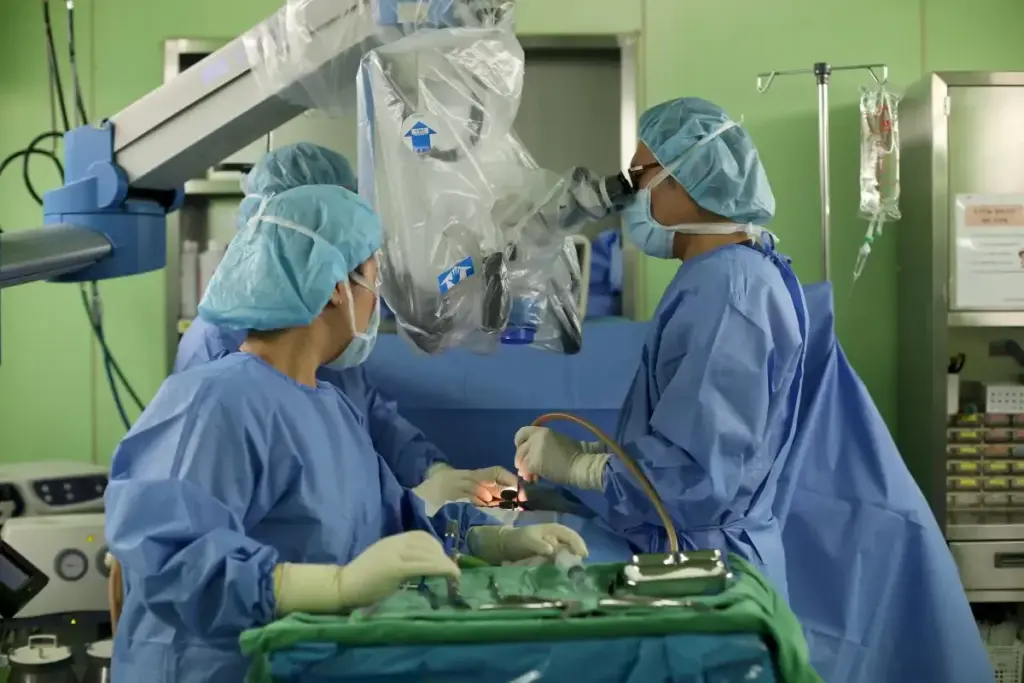
Surgeons are now using AI in surgery to improve patient care. Studies show AI-assisted surgeries have fewer complications than old methods. This change is making a big impact on the medical world, making us wonder about the future of AI in healthcare.
We are in a time of big change. AI technology assisting with patients is becoming more common. It’s important to look at both the good and bad sides of AI in surgery. By understanding AI’s role, we can move forward in surgical care.
Key Takeaways
- AI-assisted surgeries have shown a lower complication rate.
- The integration of AI in surgery is transforming patient care.
- The future of healthcare may involve more AI-driven surgical procedures.
- Understanding AI’s role is key for navigating the evolving surgical landscape.
- AI technology is improving patient outcomes in various surgical contexts.
The Current Landscape of AI in Surgical Settings

AI is changing the way surgeries are done. It’s important to know how it works and its limits in surgery.
AI is significantly transforming surgery by assisting in numerous procedures.
Key AI Surgical Systems in Use Today
Many AI systems are helping with surgeries. They make procedures more precise and successful. Some key systems include:
- Robotic Surgery Systems: These systems, like the da Vinci Surgical System, help surgeons do complex tasks with great precision and less invasion.
- AI-Assisted Diagnostic Tools: These tools help doctors diagnose faster and more accurately. This means quicker treatments.
- Intra-operative Guidance Systems: These systems guide surgeons in real-time. They help improve results and lower risks.
Adoption Rates Across Different Medical Specialties
AI use in surgery varies by specialty. Here’s a look at how it’s being used:
|
Medical Specialty |
Adoption Rate of AI Surgery |
Notable Applications |
|---|---|---|
|
Orthopedic Surgery |
High |
Robotic knee and hip replacements |
|
Neurosurgery |
Moderate |
AI-assisted tumor removal |
|
Cardiac and Vascular Surgery |
High |
Robotic bypass surgeries and angioplasties |
As AI gets better, we’ll see more new uses in surgery. This will improve patient care and change medicine a lot.
Understanding AI Technology Assisting with Patients
AI is changing how we care for patients, from finding problems to performing surgery. It helps make care better, leading to better results and fewer complications.
Pre-operative Planning and Diagnostics
AI is key in planning before surgery. It looks at medical images and patient data to spot possible issues. For example, AI can find small changes in images that show a higher risk of problems during surgery.
AI tools are getting better at analyzing big amounts of data fast and right. This helps doctors make better choices for their patients.
Benefits of AI in Pre-operative Planning:
- Enhanced accuracy in diagnostics
- Improved patient risk assessment
- Personalized treatment plans
|
Diagnostic Tool |
Function |
Benefit |
|---|---|---|
|
AI Imaging Analysis |
Analyzes medical images for abnormalities |
Early detection of possible complications |
|
Predictive Analytics |
Forecasts patient outcomes based on historical data |
Informed decision-making for treatment plans |
Intra-operative Guidance Systems
During surgery, AI helps surgeons by giving them feedback in real-time. This makes it easier to work with complex body parts. It also helps avoid problems and makes surgery more precise.
Using AI in surgery makes care better and makes the process smoother. As AI gets better, we’ll see more new uses in surgery.
The Evolution of Robotic Surgery
Robotic surgery has seen a lot of changes over the years. It started with simple systems and now we have advanced machines. These changes have made surgery better and safer.
From PUMA to da Vinci: A Brief History
The PUMA system was the first robotic tool for surgery. It was a big step forward, making surgeries more precise and less invasive.
The da Vinci Surgical System came later and changed the game. It gave surgeons better control, high-definition 3D vision, and was easier to use. It’s used in many surgeries, like urology and gynecology.
Key milestones in the evolution of robotic surgery include:
- The development of the first robotic surgical system, PUMA.
- The introduction of the da Vinci Surgical System, which set a new standard for robotic surgery.
- Advancements in robotic technology, leading to more precise and minimally invasive procedures.
Current Generation Surgical Robots
Today, we have even better surgical robots. They are more precise and flexible. These robots help surgeons do more complex surgeries with ease.
Some of the features of current generation surgical robots include:
- Enhanced visualization systems, providing high-definition 3D views.
- Improved ergonomics, reducing surgeon fatigue.
- Advanced instrumentation, allowing for more precise dissections and suturing.
Robotic surgery will keep getting better. We can look forward to even more technology advancements. This will lead to better results for patients and more uses in surgery.
AI vs. Human Surgeons: Comparing Capabilities
The use of AI in surgery has raised questions about its abilities compared to human surgeons. We need to look at how AI and humans do in precision, consistency, decision-making, and flexibility. This is key in surgical settings.
Precision and Consistency Metrics
Research shows AI can be more precise and consistent in some surgical tasks. For example, AI robots can do repetitive tasks with great accuracy. This reduces human mistakes. Important metrics include:
- Instrument tracking accuracy: AI tracks surgical tools with high precision, making procedures more accurate.
- Tissue damage minimization: AI optimizes surgical methods to reduce tissue damage and trauma.
- Suture placement accuracy: AI helps place sutures more accurately, leading to better wound healing.
These improvements in precision and consistency are vital in complex surgeries. Small errors can have big consequences.
Decision-Making and Adaptability
AI is great at precision and consistency, but humans are better at making decisions and adapting. Humans can:
- Assess complex situations: Humans quickly understand complex situations and make decisions based on their experience.
- Adapt to unexpected complications: Humans can adjust their approach when unexpected problems arise.
- Integrate patient-specific factors: Humans consider a patient’s medical history and overall health in their decisions.
The future of AI in healthcare will likely involve AI and humans working together. AI will provide data and insights to help humans make better decisions. This will lead to better patient care and outcomes. It’s important to develop disruptive AI review-gen systems to improve AI’s performance in surgery.
By understanding the strengths and weaknesses of AI and humans, we can use AI to enhance patient care. This will shape the future of AI in healthcare.
Real-World Applications of AI in Different Surgical Specialties
AI is changing surgery in many ways. It’s making operations more precise and improving patient care. This is true across different surgical fields.
Orthopedic Surgery
In orthopedic surgery, AI helps make surgeries more precise. For example, AI helps plan and do complex surgeries like knee replacements. AI algorithms look at preoperative images to find the best surgical plan, lowering the chance of problems.
Robotic systems are also used in orthopedic surgery. They let surgeons do operations with better accuracy and less invasion. Here are some key benefits of AI in orthopedic surgery:
|
Benefit |
Description |
|---|---|
|
Enhanced Precision |
AI-assisted systems improve the accuracy of surgical procedures. |
|
Reduced Complications |
AI algorithms help in identifying possible complications before surgery. |
|
Minimally Invasive |
Robotic systems allow for operations with smaller cuts. |
Neurosurgery
AI is also changing neurosurgery. AI systems analyze complex brain data to help surgeons make better decisions. AI helps spot important brain structures and predict possible issues, making neurosurgery safer.
Cardiac and Vascular Procedures
In heart and blood vessel surgery, AI helps diagnose and treat heart diseases. AI looks at images to find signs of heart problems early. AI-assisted robots also do complex heart surgeries with better precision.
Using AI in surgery comes with challenges. There are concerns about data privacy, fitting AI with current systems, and training surgeons. But, AI’s benefits in improving care and efficiency make it a key area for growth in surgery.
Patient Outcomes: AI-Assisted vs. Traditional Surgeries
AI technology is changing how surgeries are done. It’s making surgeries better and safer. Now, AI-assisted surgeries are becoming more common.
Medical research is focusing on the difference between AI-assisted and traditional surgeries. It shows that AI-assisted surgeries have fewer complications and faster recovery times.
Recovery Times and Complication Rates
Patients in AI-assisted surgeries usually stay in the hospital less and have fewer problems after surgery. For example, a study on AI-assisted orthopedic surgeries found they had shorter recovery times than traditional surgeries.
|
Surgery Type |
Average Recovery Time |
Complication Rate |
|---|---|---|
|
AI-Assisted |
6 weeks |
5% |
|
Traditional |
8 weeks |
10% |
This data shows AI-assisted surgeries can improve patient outcomes. They lead to shorter recovery times and fewer complications.
Long-term Success Metrics
Long-term success of AI-assisted surgeries is also promising. Studies show these surgeries often lead to better long-term results. This includes a lower chance of needing more surgeries later.
In AI-assisted cardiac surgeries, long-term studies found fewer major heart problems. This is compared to traditional surgeries.
Looking at AI’s impact on surgery, it’s clear AI-assisted surgeries have many benefits. They offer faster recovery times, fewer complications, and better long-term results.
The Human Element: What AI Cannot Replace
AI has made big steps in helping with patients, but there are key parts of surgery it can’t do. The human touch in surgery is more than just skills. It’s about empathy, making tough decisions, and talking clearly with patients.
Empathy and Patient Communication
AI can’t match the empathy needed in patient care. Human surgeons get and respond to patients’ feelings, giving them comfort and reassurance. It’s also important to talk clearly with patients about their treatment and risks.
Effective communication means more than just talking. It’s about listening and answering patients’ worries. This builds trust, which is key for good treatment results.
Complex Decision-Making in Uncertain Situations
Surgery often needs quick, smart decisions, even when things are unclear. Human surgeons use their experience and gut feeling to make these choices. AI can offer helpful data, but humans make the final call.
Being able to adjust to new info or surprises is a big part of being a surgeon. While AI helps, the human team makes the tough decisions. They consider each case’s unique details and make the best choices.
|
Aspect of Care |
Human Surgeons |
AI Systems |
|---|---|---|
|
Empathy and Communication |
Provide emotional support and clear information to patients |
Limited ability to understand and respond to emotional needs |
|
Complex Decision-Making |
Can adapt to unexpected situations and make nuanced decisions |
Can provide data-driven insights but may struggle with novel situations |
As we add AI to surgery, we must value the human side of care. Knowing what AI can and can’t do helps us use both wisely. This way, we get the best of both worlds in patient care.
Economic Implications of AI in Surgery
The use of AI in surgery has big effects on hospitals, insurance, and patients. It’s key to grasp the financial sides of these new tech steps.
Cost-Benefit Analysis for Hospitals
Hospitals spend a lot on AI surgical tools and training staff. But, these costs might be balanced by fewer complications and quicker recoveries. Studies show AI can save a lot by cutting down on extra surgeries and shorter hospital stays.
“AI in surgery is not just about better patient care. It’s also about making healthcare more efficient and affordable,” says a top tech expert in healthcare.
Insurance Coverage and Patient Accessibility
AI surgery’s effect on insurance and patient access is vital. As AI grows, insurance must update to cover these new surgeries. This could make treatments more available to those who can’t afford them.
- Increased insurance coverage for AI-assisted surgeries
- Reduced out-of-pocket expenses for patients
- Potential for increased healthcare costs due to the adoption of new technologies
We need to weigh AI surgical costs against their benefits. This way, we aim for a fair and lasting healthcare system.
Training the Next Generation: Surgeons in an AI-Enhanced World
AI is changing surgery a lot. We need to change how we train surgeons for this new world. They will need new skills to work with AI.
Changes in Medical Education
Medical education is about to change a lot. We must teach surgeons to work with AI. They need to know AI’s strengths and weaknesses.
They also need to learn how to use AI in their work. This means understanding AI ethics and how to work with it. This way, they can use AI to help patients more.
New Skills Required for AI Collaboration
Surgeons need new skills to work with AI. They must learn to understand AI data and work with AI during surgeries. This includes knowing how to use AI tools.
- Understanding AI algorithms and their limitations
- Interpreting data generated by AI systems
- Collaborating with AI during surgical procedures
- Making informed decisions based on AI-driven insights
With these skills, surgeons can do better for their patients. The future of surgery is linked to using AI well.
Ethical Considerations and Patient Consent
The use of AI in surgery raises big ethical questions. We must ensure patient safety and trust. As AI helps more in healthcare, we need to think about how it affects our duty to protect patients.
Informed Consent in AI-Assisted Procedures
Getting consent from patients for AI-assisted surgeries is tricky. We must make sure patients know about the surgery and AI’s role. This means explaining the good and bad sides of AI, like privacy and system errors.
- Clearly communicate the role of AI in the surgical process.
- Discuss the benefits, like better precision and quicker recovery.
- Talk about the risks, like AI failures or data breaches.
Being open about AI in surgery helps build trust. It makes sure patients are well-informed when deciding about their care.
Liability Issues When Things Go Wrong
Liability is another big ethical issue with AI in surgery. As AI news grows, we need to figure out who’s to blame when things go wrong. We must look at the legal and ethical sides of AI making decisions in surgery.
- Determine the legal framework for liability in AI-assisted surgeries.
- Set clear rules for makers, healthcare providers, and surgeons.
- Think about new laws or updates to old ones for AI issues.
By tackling these ethical issues early, we can make AI a positive force in surgery. This way, we keep our patients’ trust and safety.
Regulatory Frameworks for Surgical AI
The use of AI in surgery must follow strict rules, like the FDA’s approval process in the U.S. It’s key to follow these rules to ensure AI is used safely and effectively in surgeries.
FDA Approval Process
The FDA is very important in checking if AI medical devices are okay for use in surgeries. To get approval, makers must show their AI systems are safe and work well through lots of tests and trials.
Key Steps in the FDA Approval Process:
- Pre-submission consultation with the FDA to discuss the regulatory pathway
- Submission of a 510(k) premarket notification for clearance, or a Premarket Approval (PMA) application for more complex devices
- Clinical trials to demonstrate the safety and effectiveness of the AI system
- Post-market surveillance to monitor the performance of the AI system in real-world settings
International Regulatory Differences
While the FDA rules apply in the U.S., other countries have their own rules for AI in surgery. For example, the European Union has its own rules, like the Medical Device Regulation (MDR) and the In Vitro Diagnostic Regulation (IVDR), for AI systems.
Key differences in international regulatory frameworks include:
- Varying requirements for clinical evidence and trial design
- Different classification systems for medical devices
- Unique post-market surveillance requirements
It’s very important for makers to know these differences if they want to sell their AI surgical systems worldwide.
Limitations and Challenges of Current AI Surgical Systems
As we look into using AI in surgery, we must face its current limits and hurdles. AI can improve surgical care, but we need to overcome several obstacles to fully use its benefits.
Technical Constraints
One big challenge is the technical side. Issues like data processing limitations, algorithm complexity, and hardware reliability stand in the way. For example, AI needs quality data to learn, but getting this data can be hard due to different surgical methods and patient conditions.
The technical issues can be split into several main areas:
- Data Quality: AI needs lots of good data to work well. But, surgical data is often complex and hard to gather.
- Algorithmic Transparency: It’s important to know how AI makes decisions. But, many AI systems are hard to understand because they’re like “black boxes.”
- System Integration: Adding AI to current surgical setups is a technical challenge.
Data Privacy Concerns
Data privacy is a big issue too. AI systems use a lot of patient data, which raises worries about patient confidentiality and data security. It’s a tricky task to protect patient data while letting AI systems use it.
Some data privacy worries include:
- Patient Consent: Getting patients to agree to use their data in AI systems is important but can be tricky.
- Data Storage: Keeping patient data safe is a big challenge.
- Data Sharing: Sharing data between places while keeping patient info private is hard.
Integration with Existing Hospital Systems
Another big challenge is making AI systems work with current hospital systems. This means integrating with electronic health records (EHRs), surgical planning tools, and other systems.
Hospitals are trying different ways to solve this, like:
- Customized Implementation: Making AI systems fit the hospital’s specific needs and ways of working.
- Interoperability Standards: Using standards that help different systems talk to each other.
- Training and Support: Giving staff the training and help they need to use AI systems well.
By tackling these challenges, we can make AI work better in surgery. This will help improve patient care and results.
The Future of AI in Healthcare: Beyond Surgery
AI is changing healthcare in many ways, not just in surgery. It’s making patient care better in many areas. We’re seeing big improvements in how we treat patients.
AI in Post-Operative Care
After surgery, patients need careful care to heal well. AI helps by making care plans just for them. It uses their past health data and current info to guide care.
AI also watches patients closely with wearable devices. It spots problems early, like heart issues. This helps doctors catch and fix problems fast.
AI chatbots and virtual helpers remind patients to follow their care plans. They answer simple questions too. This cuts down on hospital visits.
Predictive Analytics for Surgical Outcomes
AI is great at predicting how well surgery will go. It looks at lots of data, like health records and scans. This helps doctors plan better care.
With AI, doctors can make smarter choices. This lowers the chance of surgery problems. It also makes patients’ recovery times better.
|
Application |
Description |
Potential Benefits |
|---|---|---|
|
Post-Operative Monitoring |
AI-powered wearable devices monitor patient vitals and detect anomalies. |
Early detection of complications, reduced readmissions. |
|
Predictive Analytics |
AI analyzes EHRs, imaging, and genomic data to predict surgical outcomes. |
Informed decision-making, reduced risk of complications. |
|
Personalized Care Plans |
AI creates tailored plans based on patient history and real-time data. |
Improved patient recovery, enhanced patient satisfaction. |
AI is becoming key in healthcare, not just in surgery. It’s making care better in many ways. By using AI, we can make healthcare better, safer, and more efficient for everyone.
Surgeon Perspectives: Interviews with Medical Professionals
Exploring AI-assisted surgeries, we learn from medical experts. Surgeons use AI to improve patient care. They share the good and the tough parts of these new tools.
Embracing AI as a Tool
Many surgeons now see AI as a helpful tool. It helps with diagnosing and planning surgeries. AI looks at lots of data to find patterns humans might miss.
One surgeon said, “AI has changed how we plan and do surgeries. It’s so precise and consistent.” Many agree AI helps make surgeries better and smoother.
Concerns About Over-Reliance
Despite the benefits, some worry about relying too much on AI. They fear losing traditional surgical skills.
“We must balance using AI and keeping our skills sharp,” another surgeon said. “AI should help us, not replace us.”
|
Concerns |
Surgeon Perspectives |
|---|---|
|
Loss of Traditional Skills |
Surgeons are concerned that over-reliance on AI could erode their traditional surgical skills. |
|
Dependence on Technology |
There’s a fear that excessive dependence on AI could compromise surgical judgment and decision-making. |
|
Data Privacy |
Surgeons are also concerned about the privacy and security of patient data used in AI systems. |
In summary, AI is changing surgery, but surgeons have mixed feelings. They see the good and the challenges. Understanding their views helps us navigate the AI-assisted surgery world.
Conclusion: Collaboration Rather Than Replacement
AI in surgery is changing healthcare, but not by replacing humans. Instead, it’s about working together. AI helps with patient care from the start to during surgery.
The goal is not to replace doctors and nurses. It’s to make them better at their jobs. By combining human skills with AI, we can improve care without losing the personal touch.
As AI gets better, it will play a bigger role in surgery. This will lead to better care for patients. We need to keep exploring how AI can help, making sure it meets the needs of both patients and healthcare workers.
FAQ
What is the current state of AI in surgical settings?
AI is becoming more common in surgery to help patients and improve results. It’s being used in many areas, like orthopedic and neurosurgery. This includes cardiac and vascular procedures too.
How is AI being used to assist with patient care in surgery?
AI helps with planning before surgery and guides during it. It aims to make care better and reduce risks.
What is the history of robotic surgery, and how has it evolved?
Robotic surgery has grown a lot from the early PUMA system. Now, systems like da Vinci offer better precision and consistency.
How do AI systems compare to human surgeons in terms of capabilities?
AI systems are more precise and consistent than humans. But, humans are better at making decisions and adapting.
What are the benefits and challenges of using AI in different surgical specialties?
AI can lead to better patient care and shorter recovery times. But, there are challenges like technical issues and data privacy.
How do patient outcomes compare between AI-assisted and traditional surgeries?
AI-assisted surgeries often have shorter recovery times and fewer complications. But, long-term results are being studied.
What aspects of surgical care are difficult to replicate with AI?
AI struggles with empathy, communication, and making decisions in uncertain situations.
What are the economic implications of AI in surgery?
AI in surgery raises questions about costs, insurance, and access. These are complex issues that need careful thought.
How will AI impact medical education and the training of future surgeons?
AI will change medical education. It will focus on teaching new skills for working with AI.
What are the ethical considerations surrounding the use of AI in surgery?
Ethical issues include informed consent and liability when AI goes wrong. These are important to address.
What regulatory frameworks govern the development and deployment of AI in surgery?
The FDA and international rules are key to regulating AI in surgery. They ensure safety and effectiveness.
What are the limitations and challenges of current AI surgical systems?
Current AI systems face technical issues, data privacy, and integration challenges. These are big hurdles to overcome.
What is the future of AI in healthcare beyond surgery?
AI will also help in post-operative care and predict surgical outcomes. These areas will shape AI’s future in healthcare.
What are the views of medical professionals on the use of AI in surgery?
Doctors have mixed opinions on AI in surgery. Some see it as a helpful tool, while others worry about relying too much on it.
Will AI replace human surgeons in the future?
AI won’t replace surgeons but will work alongside them. This collaboration will improve patient care.