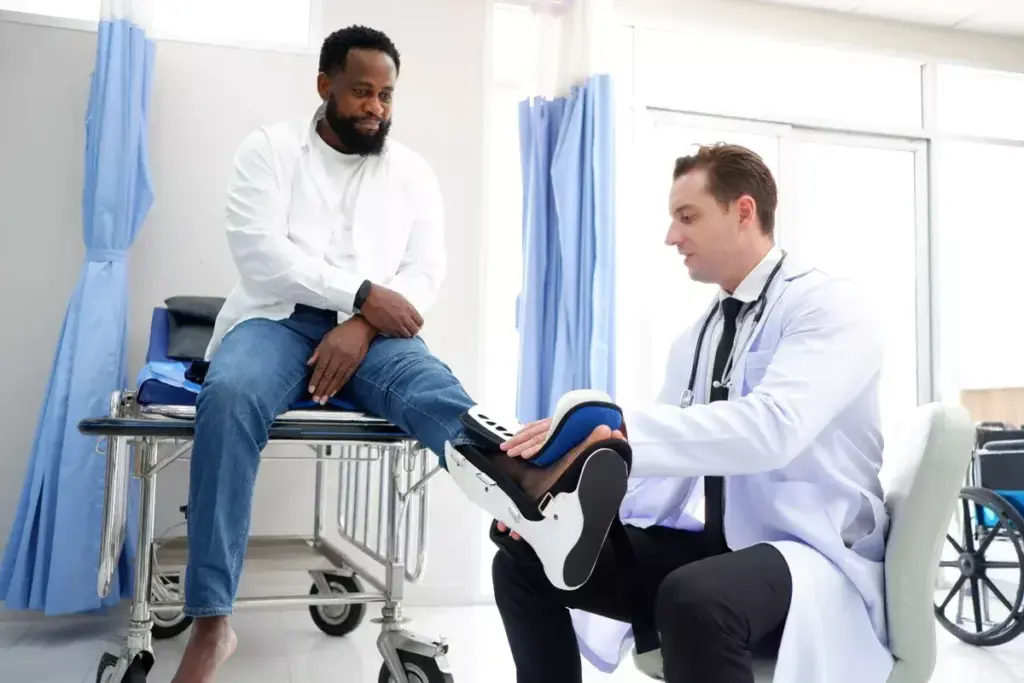
A broken ankle can really mess up your daily life. But, with the right rehab, you can get back on your feet. At Liv Hospital, we focus on structured physical therapy exercises for each recovery stage.
After a fracture, you might find it hard to move your ankle, lose muscle strength, and have trouble walking. Our team is all about using the latest research to help you. We make sure you get the best care and new ways to heal.
By sticking to a physical therapy for broken ankle plan, you can heal faster, move better, and avoid getting hurt again. We know how tough it can be after a fracture. We’re here to help you feel strong and comfortable again.
Key Takeaways
- Structured physical therapy is key for getting better from a broken ankle.
- Fractures can lead to less ankle movement and weaker muscles.
- Liv Hospital’s team offers top-notch, evidence-based care for rehab.
- Guided exercises help you heal faster and move better.
- Custom rehab plans lower the chance of getting hurt again.
Understanding Broken Ankle Injuries and Recovery

It’s important to know about broken ankle injuries to recover well. Ankle fractures often happen during accidents, falls, or sports. Signs include pain, swelling, and trouble walking.
Common Types of Ankle Fractures
Ankle fractures can be different in severity and type. Here are the main types:
- Lateral malleolus fracture: A fracture of the outer part of the ankle.
- Medial malleolus fracture: A fracture of the inner part of the ankle.
- Bimalleolar fracture: A fracture that involves both the medial and lateral malleoli.
- Trimalleolar fracture: A more complex fracture involving the medial, lateral, and posterior malleoli.
Each fracture needs its own treatment and recovery plan. Knowing the type of fracture is key to a good rehab plan.
The Importance of Physical Therapy in Recovery
Studies show that physical therapy is vital for broken ankles. It helps with movement, strength, and balance.
“Physical therapy is essential for regaining functional ability and reducing the risk of future injuries after an ankle fracture.” — Journal of Orthopaedic & Sports Physical Therapy
Physical therapists create special exercise programs. These help patients regain ankle strength and mobility, improving their life quality.
What to Expect During Rehabilitation
Rehab for a broken ankle has different stages. It starts with rest and then moves to active exercises. Patients will work on:
Phase | Focus | Typical Exercises |
Immobilization | Rest and protection | Non-weight-bearing exercises |
Early Rehabilitation | Range of motion and gentle strengthening | Ankle circles, towel stretches |
Advanced Rehabilitation | Strengthening and balance training | Resistance band exercises, balance boards |
Throughout rehab, patients should stay in touch with their healthcare team. This helps adjust the treatment plan as needed.
The Recovery Timeline for Broken Ankles

Recovering from a broken ankle takes several steps. Each step has its own goals and milestones. Knowing these steps helps patients manage their recovery and stick to their rehabilitation plan.
Immediate Post-Injury Phase (0-2 weeks)
The first step is managing pain and keeping the ankle stable. This is when the healing starts. Patients are told to follow the RICE principle (Rest, Ice, Compression, Elevation) to help with swelling and healing.
Early Recovery Phase (2-6 weeks)
Next, patients start moving their ankle again and building strength. Physical therapy for a fractured ankle becomes more important. They start with simple exercises and gradually move to more active ones.
Advanced Recovery Phase (6-12 weeks)
In the final phase, patients do more weight-bearing exercises and exercises for recovery from broken ankle. They focus on balance, proprioception, and getting back to normal activities. This phase is key for returning to sports and daily life.
Here’s a table showing what to expect during each recovery phase:
Recovery Phase | Timeline | Primary Goals | Typical Activities |
Immediate Post-Injury | 0-2 weeks | Pain management, immobilization | RICE principle, pain management medication |
Early Recovery | 2-6 weeks | Restore range of motion, initial strengthening | Non-weight-bearing exercises, gentle ankle movements |
Advanced Recovery | 6-12 weeks | Strengthening, balance, and proprioception | Weight-bearing exercises, balance training, functional activities |
Recovery times can differ, but most people get back to normal in 3 to 4 months. After surgery, it might take 6 months. Sticking to a good broken ankle rehabilitation plan is key for the best results.
Preparing for Broken Ankle Physical Therapy Exercises
Before starting broken ankle physical therapy exercises, it’s key to prepare well. This ensures a smooth recovery. Proper preparation greatly affects your rehabilitation’s success.
Necessary Equipment and Setup
To begin exercises following a broken ankle, you’ll need basic gear. This includes a resistance band, a comfy mat for floor exercises, and maybe a chair or wall for support.
- A resistance band for strengthening exercises
- A comfortable, non-slip mat for floor exercises
- A sturdy chair or wall for balance support
Having the right equipment helps you do pt after broken ankle exercises safely and well.
Safety Precautions and Considerations
When starting ankle exercises after break, safety is most important. Make sure you have enough room to move without obstacles that could cause falls or injuries.
Safety Measure | Description |
Clear Exercise Space | Ensure the area is free from obstacles and tripping hazards. |
Use Support | Utilize a chair or wall for support when necessary. |
Monitor Pain | Stop exercises if you experience sharp pain or discomfort. |
When to Start Exercises After Injury
The right time to start exercises following a broken ankle varies. It depends on the injury’s severity and your doctor’s advice. Gentle exercises can start when the pain and swelling go down, and your doctor says it’s okay.
It’s important to follow a step-by-step rehabilitation plan. This usually includes rest, restoring range of motion, and building strength.
By preparing well and knowing when to start pt after broken ankle exercises, you can have a successful recovery.
Phase 1: Rest and Protection Exercises
Rest and protection are key in the first phase of broken ankle physical therapy. This phase helps the ankle heal while keeping the rest of the body active and pain-free.
Non-Weight Bearing Exercises During Immobilization
When an ankle is broken and can’t bear weight, it’s important to do exercises that don’t put weight on it. These include toe wiggles, ankle circles with the toes, and isometric exercises. These keep the leg flexible and strong without moving the ankle.
Starting to bear weight on the ankle a bit early can help with ankle movement. But, always listen to your doctor about when to start.
Maintaining Upper Body and Unaffected Limb Strength
It’s important to keep the upper body and the healthy leg strong while recovering from a broken ankle. You can do this with:
- Arm curls and shoulder presses with light weights
- Upper body ergometry or rowing exercises
- Strengthening exercises for the healthy leg, like straight leg raises and squats
Keeping strong helps prevent muscle loss and keeps you active during recovery.
Pain Management Techniques During Early Recovery
Managing pain well is key in the early stages of recovering from a broken ankle. You can use:
Pain Management Technique | Description |
Ice Therapy | Applying ice packs to reduce swelling and pain |
Elevation | Elevating the affected ankle above heart level to reduce swelling |
Medication | Using prescribed pain relief medication as directed by a healthcare provider |
Using these pain management techniques helps patients deal with the pain of a broken ankle and the early stages of physical therapy.
Phase 2: Range of Motion Exercises
After the initial immobilization phase, we move into Phase 2. Here, range of motion exercises are key. They help improve ankle flexibility and mobility. These exercises are designed to gently increase the ankle’s range of motion, reducing stiffness and promoting healing.
Ankle Circles and Gentle Movements
Ankle circles are a simple yet effective exercise for improving flexibility. To perform ankle circles, sit or lie down with your leg straight out in front of you. Lift your foot off the ground and draw circles with your toes, starting from small circles and gradually increasing in size. This exercise helps loosen the ankle joint and prepares it for more strenuous activities.
Tip: Perform ankle circles in both clockwise and counterclockwise directions to ensure even mobility.
Towel Stretches for Improved Flexibility
Towel stretches are another effective way to enhance ankle flexibility. Sit on the floor with your leg straight out in front of you. Loop a towel around the ball of your foot and gently pull the towel towards you, stretching your ankle. Hold the stretch for 15-30 seconds and release. Repeat this exercise several times to improve your ankle’s range of motion.
Seated Range of Motion Exercises
Seated range of motion exercises involve moving your ankle through its range of motion while seated. Sit on a chair with your foot flat on the floor. Slowly lift your toes up towards your shin, then lower them back down. Repeat this motion several times. You can also perform this exercise by moving your foot from side to side or in a circular motion.
The following table summarizes the range of motion exercises discussed in this section:
Exercise | Description | Repetitions |
Ankle Circles | Draw circles with your toes | 5-10 repetitions |
Towel Stretches | Pull towel towards you | 3-5 repetitions |
Seated Range of Motion | Move ankle through its range of motion | 10-15 repetitions |
Broken Ankle Physical Therapy Exercises for Strength Building
Building strength is key in recovering from a broken ankle. It helps get your ankle working right again and keeps it safe from future injuries. It’s important to strengthen the muscles around your ankle to improve stability and prevent re-injury. We suggest adding different exercises to your program for the best strength and recovery.
Resistance Band Exercises
Resistance band exercises are great for strengthening your ankle without too much strain. You can do them in many ways and target different muscles. For example, ankle dorsiflexion (lifting your foot up) and plantarflexion (pointing your foot down) can be done with bands to strengthen your leg muscles.
To do these exercises, wrap the band around something stable and your foot. Slowly move your foot against the band, focusing on smooth movements. As you get stronger, you can use thicker bands or more than one band at a time.
Weight-Bearing Strengthening Exercises
Weight-bearing exercises are important for strengthening your ankle and improving your lower leg. They help you get back to walking and standing without pain. Examples include single-leg stands and heel raises, which work on balance and strengthen your calf muscles.
To do a single-leg stand, stand on one leg and hold onto something for support if needed. Start by holding for 30 seconds and increase the time as you get stronger. Heel raises involve standing on a step with your heels off the edge, then raising up on your tiptoes and lowering back down.
Balance and Proprioception Training
Balance and proprioception training are essential in ankle rehab. They improve your stability and lower the risk of future injuries. Examples include standing on a balance board or doing single-leg squats.
To boost proprioception, try standing on a balance board with your eyes closed. This makes it harder for your body to sense its position. Use a balance pad or cushion to make exercises more challenging. As you get better, add dynamic movements like single-leg hops to improve your ankle’s stability and strength.
“The key to successful rehabilitation is a well-rounded program that includes strength building, flexibility, and balance training. By incorporating these elements, patients can achieve a full recovery and return to their normal activities.”
Functional Rehabilitation Exercises
Functional rehabilitation is key in the recovery process. It helps people do daily tasks easily and confidently. As patients get better, they move from just strengthening the ankle to doing activities that feel like real life.
Walking and Gait Training
Walking and gait training are vital in functional rehabilitation. They help patients walk normally again, which is important for daily life. Start with short walks on flat ground and increase the distance as you get stronger and more confident.
Tips for Effective Gait Training:
- Use a walking aid like crutches or a walker if needed.
- Walk on different surfaces to get used to various conditions.
- Try to walk with a normal heel-to-toe pattern.
Stair Navigation Exercises
Navigating stairs is a big part of daily life for many. Stair exercises help build the strength and confidence to climb and go down stairs safely. Start with small steps and increase the height as you get stronger.
Key Points for Stair Navigation:
- Start with a sturdy railing.
- Use your stronger leg when going up and your weaker leg when going down.
- Take it slow, one step at a time, and don’t rush.
Return to Daily Activities Training
The main goal of functional rehabilitation is to let patients do their daily activities without pain or trouble. This means practicing things like getting in and out of a car, carrying groceries, or standing for a long time. Find your most important daily activities and practice them during your rehab.
Activity | Tips for Rehabilitation |
Getting in/out of a car | Practice bending and straightening the knee, and use support if needed. |
Carrying groceries | Start with light weights and gradually increase the load as strength improves. |
Standing for extended periods | Practice standing with good posture and take regular breaks to rest. |
By adding these exercises to your recovery plan, you make sure your rehab is complete and effective. This prepares you for the demands of daily life.
Monitoring Progress and Preventing Setbacks
Keeping an eye on our progress and avoiding setbacks is key to healing a broken ankle. As we do our physical therapy, it’s important to watch how we’re getting better.
Tracking Improvement Milestones
It’s important to track our progress. We should check how well our ankle moves, how strong it is, and how well it works. Keeping a recovery journal helps us see how far we’ve come and what needs work.
Some important milestones to watch for are:
- Increased range of motion
- Improved strength
- Enhanced balance and proprioception
- Reduced pain levels
When to Consult Your Healthcare Provider
We need to know when to see our healthcare provider. If we have any of these signs, we should go:
- Increased pain or swelling
- Instability or feeling of giving way
- Failure to improve with exercises
- New or worsening deformity
As Dr. Jane Smith, an orthopedic specialist, notes, “Regular check-ins with your healthcare provider are essential to ensure you’re on the right track and to address any concerns promptly.”
Adjusting Exercises Based on Pain and Progress
Changing our exercises based on how we feel is important. We should listen to our body and adjust our routine as needed. If pain gets worse, we might need to slow down or change what we’re doing.
A key principle is to progress gradually, avoiding sudden increases in intensity or difficulty. This helps us avoid setbacks and recover steadily.
Conclusion
Getting better from a broken ankle needs a good plan that includes physical therapy. We talked about the different steps in getting better, from the first rest to the later strengthening. A full recovery plan helps patients get back to normal by fixing ankle function, building strength, and improving movement.
Physical therapy is key for healing a broken ankle. It helps reduce pain and stops long-term problems. Adding broken ankle physical therapy to your routine helps you get your ankle strong and flexible again. This lets you go back to doing what you love.
It’s vital to have a recovery plan made just for you. This plan should change as you get better and if you feel more pain. This way, you can recover smoothly and effectively. With the right help and plan, you can beat the challenges of a broken ankle and be independent again.
FAQ
What is the importance of physical therapy in recovering from a broken ankle?
Physical therapy is key in recovering from a broken ankle. It helps restore range of motion, strength, and balance. This way, patients can regain mobility and confidence.
What are the different types of ankle fractures?
Ankle fractures come in different types. These include lateral malleolus fractures, medial malleolus fractures, bimalleolar fractures, and trimalleolar fractures. Each type needs a specific treatment approach.
How long does it take to recover from a broken ankle?
Recovering from a broken ankle takes several weeks to months. The first phase is 0-2 weeks. The early recovery phase is 2-6 weeks. The advanced recovery phase is 6-12 weeks.
What exercises can I do during the rest and protection phase?
In the rest and protection phase, you can do non-weight-bearing exercises. Keep your upper body and unaffected limb strong. Use pain management techniques to help in early recovery.
What are some range of motion exercises I can do in phase 2?
In phase 2, you can do ankle circles, towel stretches, and seated range of motion exercises. These improve flexibility and mobility.
How can I build strength after a broken ankle?
To build strength, start with resistance band exercises and weight-bearing strengthening exercises. Balance and proprioception training are also important. Start these exercises once cleared by a healthcare provider.
What are functional rehabilitation exercises?
Functional rehabilitation exercises include walking and gait training, stair navigation, and return to daily activities training. They help patients regain functional ability and return to their normal activities.
How can I monitor my progress during rehabilitation?
Track improvement milestones and consult your healthcare provider when needed. Adjust exercises based on pain and progress for a smooth recovery.
What is the role of a healthcare provider in the rehabilitation process?
Healthcare providers are vital in the rehabilitation process. They monitor progress, guide on exercises, and adjust the treatment plan as needed.
Can I do physical therapy exercises at home?
Yes, many exercises for broken ankle recovery can be done at home. But, it’s important to follow a healthcare provider’s and physical therapist’s guidance for proper technique and safety.
How can I prevent setbacks during rehabilitation?
To prevent setbacks, follow your rehabilitation plan and attend scheduled physical therapy sessions. Communicate with your healthcare provider about any concerns or changes in your condition.
References
National Center for Biotechnology Information. Evidence-Based Medical Guidance. Retrieved from https://www.ncbi.nlm.nih.gov/pmc/articles/PMC3103112/