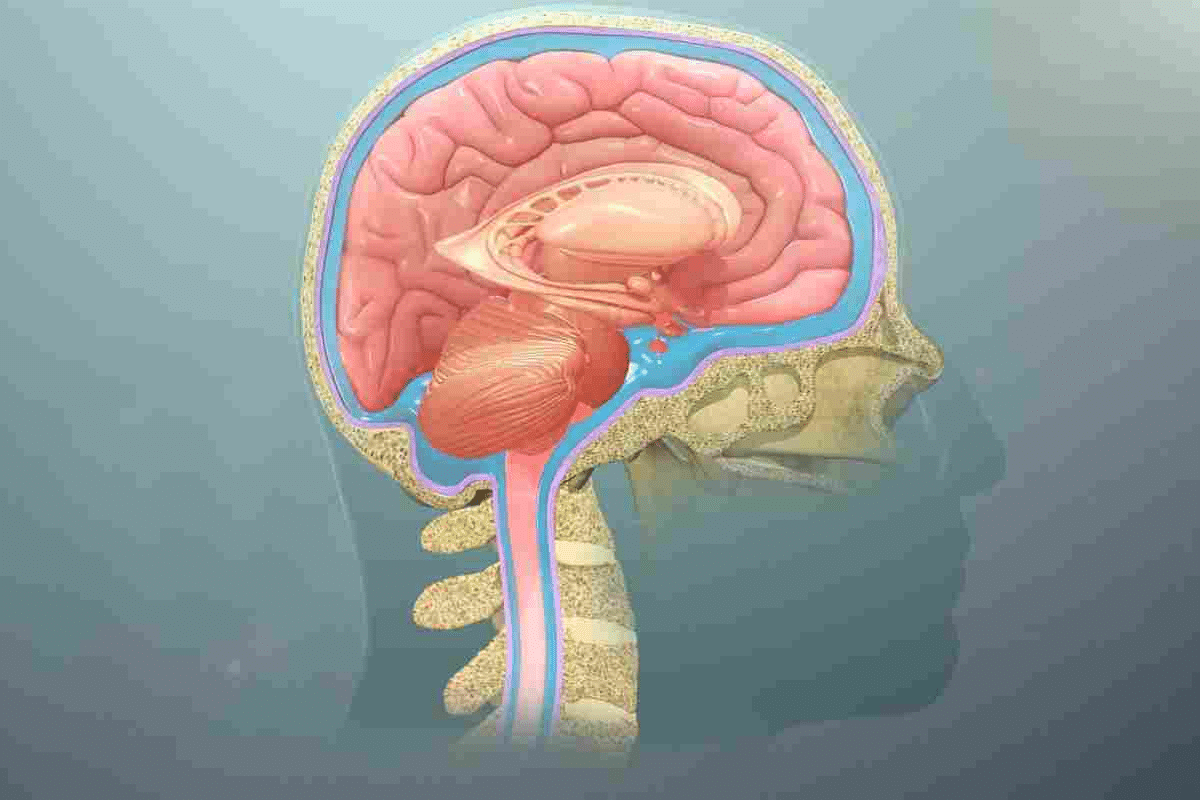
The central nervous system is a key part of our bodies. It controls our thoughts, movements, and even our heartbeat and breathing what is cns.
The central nervous system has two main parts: the brain and the spinal cord. Together, they act as the body’s control center. They get information from our senses and tell our body how to react.
We’ll look at how the brain and spinal cord work together. They keep us healthy and help us do complex things. This will help us understand the central nervous system and its importance in our bodies.
Key Takeaways
- The central nervous system is made up of the brain and spinal cord.
- These organs work together to control the body’s functions.
- The central nervous system receives sensory information and controls responses.
- Understanding the central nervous system is key for staying healthy.
- The brain and spinal cord are essential for coordinating complex functions.
What Is CNS: Definition and Core Functions

The CNS, made up of the brain and spinal cord, is the body’s control center. It handles information, controls body responses, and enables thought, movement, and feeling. We’ll look into what CNS is, its main roles, and how it’s different from the Peripheral Nervous System (PNS).
The Central Nervous System as the Body’s Processing Center
The CNS is the body’s processing center. It gets, understands, and sends out responses to different stimuli. It controls actions we can choose, like moving, and actions we can’t choose, like digestion and heart rate.
The brain, a key part of the CNS, has most of the body’s neurons. It’s split into the forebrain, midbrain, and hindbrain, each with its own job.
The brain’s structure is complex, with different regions specializing in different tasks. For example, the forebrain handles complex thinking, while the hindbrain looks after basic needs like breathing.
|
Region |
Functions |
|---|---|
|
Forebrain |
Cognitive processes, sensory processing, and control of voluntary movements |
|
Midbrain |
Auditory and visual processing, as well as the control of eye movements |
|
Hindbrain |
Regulation of basic functions like breathing, heart rate, and blood pressure |
Distinguishing Between Central and Peripheral Nervous Systems
The CNS is different from the PNS. The PNS includes all nerves outside the brain and spinal cord that send messages to the CNS. It has both sensory and motor nerves, helping the CNS talk to the rest of the body.
“The distinction between the CNS and PNS is fundamental to understanding nervous system anatomy and function.”
The CNS and PNS work together to help the body react to things inside and outside itself. The CNS handles information and controls responses, while the PNS sends signals between the CNS and the rest of the body.
In summary, the CNS is key to controlling the body’s functions. Knowing the difference between CNS and PNS is important for understanding human biology and nervous system anatomy.
The Evolution and Development of the Central Nervous System

The CNS’s development is a complex and fascinating journey. It spans from the early stages of embryonic development to the end of our lives. This journey is key to understanding how our nervous system forms and works.
Embryonic Development of CNS Structures
The CNS starts to form from a layer of cells called the ectoderm during embryonic development. This process involves several detailed steps, including:
- Neural induction, where the ectoderm turns into neural tissue
- Neural tube formation, which becomes the brain and spinal cord
- Neural crest formation, which helps develop peripheral nerves
The spinal cord is a vital part of the CNS. It runs from the brainstem down the spine, carrying messages between the brain and nerves. This structure is key for controlling reflexes and helping different parts of the body communicate.
How the CNS Changes Throughout the Human Lifespan
The CNS changes a lot as we grow older. In early life, it’s very flexible, allowing for a lot of growth and change. For example:
- As kids grow, their brains rapidly develop, making new connections and improving existing ones.
- In adulthood, the CNS is more stable but can adapt for learning and memory.
- In older age, the CNS may start to break down, losing neurons and declining in certain skills.
Understanding these changes helps us see how dynamic the CNS is. It shows how it adapts through our lives. The CNS’s development and evolution are shaped by both genetics and environment, making it a complex system.
The Brain: The Command Center of the CNS
The human brain weighs about three pounds and is the CNS’s command center. It has over 90% of the body’s neurons. The brain controls many functions like sensation, thought, and memory. It lets us understand and react to our surroundings.
Brain Structure and Weight in Adults
The average adult brain weighs about 3 pounds. It’s made of different parts, each with its own job. The outer layer, the cerebral cortex, handles sensory info and movement.
Key Components of the Brain:
- Cerebral cortex: outer layer responsible for sensory processing and cognitive functions
- Basal ganglia: involved in control of voluntary motor movements
- Limbic system: plays a critical role in emotions and memory
- Brainstem: connects the cerebrum to the spinal cord and regulates basic functions
Neurons and Neural Networks in the Brain
Neurons are the brain’s basic units, handling information transmission and processing. They form complex networks for various functions. The brain has billions of neurons, each connecting with thousands of others.
“The brain is a complex organ that uses neurons and their connections to process information, control the body, and facilitate thought and emotion.”
|
Cell Type |
Function |
Location |
|---|---|---|
|
Neurons |
Transmit and process information |
Throughout the brain and spinal cord |
|
Glial Cells |
Support and protect neurons |
Throughout the brain and spinal cord |
Information Processing Mechanisms
The brain processes info through electrical and chemical signals. Neurons talk to each other through synapses, using neurotransmitters. This lets the brain understand sensory info, control movements, and help with thought and memory.
Knowing how the brain works is key for treating neurological disorders. It also helps us understand human thinking better.
Major Divisions of the Brain
The brain is divided into three main parts. These parts are key to understanding how the brain works and controls our body. Each part has its own role in our bodily functions.
The Forebrain: Structure and Functions
The forebrain is the biggest part of the brain. It handles complex thinking and sensory processing. It’s split into four lobes: frontal, parietal, temporal, and occipital. Each lobe does different things, like controlling movement and processing memories.
The forebrain also has the cerebrum, which has two sides: right and left. This setup helps with different tasks. It also has important areas like the thalamus and hypothalamus. These areas help with sensing and controlling body functions.
“The forebrain is the most evolved part of the brain, responsible for complex thought processes and the integration of sensory information.”
|
Lobe |
Primary Functions |
|---|---|
|
Frontal |
Executive functions, motor control |
|
Parietal |
Sensory processing, spatial orientation |
|
Temporal |
Auditory processing, memory formation |
|
Occipital |
Visual processing |
The Midbrain: Structure and Functions
The midbrain connects the forebrain and hindbrain. It handles hearing, seeing, and movement. It has areas like the periaqueductal gray and substantia nigra. These areas are important for pain and movement.
The Hindbrain: Structure and Functions
The hindbrain controls basic functions like breathing and heart rate. It includes the pons, medulla oblongata, and cerebellum. The cerebellum helps with movement and balance.
The hindbrain links the brain to the spinal cord. This connection helps signals move between the brain and body.
In summary, the forebrain, midbrain, and hindbrain work together. They control everything from thinking to basic body functions.
The Cerebral Cortex and Its Four Lobes
Understanding the cerebral cortex and its four lobes is key to knowing how our brain works. The cerebral cortex is the outer layer of the brain. It handles many important brain functions like thinking, acting, and seeing.
The cerebral cortex is split into four lobes: frontal, parietal, temporal, and occipital. Each lobe has its own job, making the human brain very complex.
Frontal Lobe: Executive Functions and Motor Control
The frontal lobe is at the brain’s front. It deals with making decisions, solving problems, and planning. It also controls our movements, like walking and talking.
“The frontal lobe is key for controlling our movements and making choices,” showing its big role in our lives.
Damage to the frontal lobe can cause big problems with thinking and moving. This shows how important it is for our brain’s work.
Parietal Lobe: Sensory Processing and Integration
The parietal lobe handles touch and spatial awareness. It helps us understand our surroundings and move around. It works with other brain parts to give us a full picture of our environment.
Research shows the parietal lobe also helps with attention and memory. This shows its many roles in brain function.
Temporal Lobe: Auditory Processing and Memory Formation
The temporal lobe is key for hearing and making memories. It has the hippocampus, which turns short-term memories into long-term ones. It helps us understand sounds, like speech.
“The temporal lobe is essential for making and keeping memories,” a key part of who we are and how we interact.
Occipital Lobe: Visual Processing and Interpretation
The occipital lobe deals with visual information. It takes in and makes sense of what we see. It works with other brain areas to help us see the world clearly.
Damage to the occipital lobe can cause vision problems, like blindness. This shows how important it is for seeing and understanding our surroundings.
The Spinal Cord: The Information Highway
The spinal cord runs from the brainstem to the spine. It’s key in sending signals between the brain and the body. It helps us move, feel, and react to our surroundings.
Anatomy and Structure of the Spinal Cord
The spinal cord is a long, thin tube. It’s made of nervous tissue and goes from the skull to the first or second lumbar vertebra. It’s protected by the spinal column, which is made of vertebrae.
The spinal cord has different segments for different body parts. These segments control our movements and actions.
How the Spinal Cord Connects to the Brain
The spinal cord links to the brain through the brainstem. This connection lets signals move between the brain and the spinal cord. It helps with complex tasks like movement and feeling.
“The spinal cord is not just a passive cable; it’s an active participant in processing and integrating information.”
Key Functions of the Spinal Cord
The spinal cord has important roles. It sends messages between the brain and nerves, controls reflexes, and works on its own for some actions.
- Transmitting neural signals between the brain and the rest of the body.
- Controlling reflexes, such as withdrawing a hand from a hot surface.
- Facilitating the coordination of bodily functions.
|
Function |
Description |
|---|---|
|
Signal Transmission |
Transmits neural signals between the brain and peripheral nerves. |
|
Reflex Control |
Controls reflex actions, enabling rapid responses to stimuli. |
|
Coordination |
Facilitates the coordination of various bodily functions. |
Protective Systems of the Central Nervous System
The CNS is guarded by a mix of membranes and bones. These systems are key to keeping the brain and spinal cord safe. They protect the delicate tissues that control our body’s functions.
The Three Layers of Meninges
The meninges are three protective layers around the brain and spinal cord. They are the dura mater, arachnoid mater, and pia mater.
- Dura Mater: The outermost layer, known for its toughness and fibrous nature.
- Arachnoid Mater: The middle layer, which contains cerebrospinal fluid and blood vessels.
- Pia Mater: The innermost layer, closely adhering to the surface of the brain and spinal cord.
A leading neurosurgeon says, “The meninges play a vital role in protecting the CNS from mechanical injury and infection.”
“The meninges are a critical component of the CNS’s protective mechanisms, providing a barrier against external forces and pathogens.”
Cerebrospinal Fluid: Composition and Functions
Cerebrospinal fluid (CSF) is a clear, colorless liquid that surrounds the brain and spinal cord. It acts as a cushion and protects against infections.
|
Function |
Description |
|---|---|
|
Cushioning |
CSF acts as a shock absorber, protecting the CNS from mechanical shocks. |
|
Immunological Protection |
CSF contains immune cells and proteins that help defend the CNS against infection. |
|
Nutritional Support |
CSF supplies the CNS with nutrients and removes waste products. |
Bony Protection: The Skull and Vertebral Column
The brain is in the skull, and the spinal cord is in the vertebral column. These bones protect the CNS from harm.
The skull and vertebral column absorb and spread out external forces. This shields the CNS from damage. Their protection is vital for keeping the CNS intact.
How the Central Nervous System Communicates
The central nervous system (CNS) talks to itself through electrical and chemical signals. This complex process lets the CNS send and receive information all over the body.
To get how the CNS talks, we must look at how neurons share info. Neurons talk to each other with electrical and chemical signals. This helps with everything from simple actions to complex thinking.
Electrical Signals and Action Potentials
Electrical signals, or action potentials, are key for neuron talk. An action signal is a quick change in a neuron’s membrane. It lets the neuron send info far away.
- Generation of Action Potentials: Action signals start when ions move across the neuron’s membrane.
- Propagation: Once started, these signals move along the neuron, reaching the end.
Neurotransmitters and Chemical Signaling
Chemical signals are also vital for CNS talk. Neurotransmitters are chemicals that neurons send out to talk to other cells.
- Release of Neurotransmitters: When an action signal hits the end of the neuron, neurotransmitters are sent out.
- Binding to Receptors: These chemicals then bind to specific receptors on another neuron, changing its activity.
The Synapse: Structure and Function
The synapse is where neurons talk through chemicals. Knowing about synapses helps us understand CNS communication.
- Synaptic Structure: The synapse has the presynaptic neuron, the gap, and the postsynaptic neuron.
- Synaptic Function: Synapses let info move from one neuron to another, making complex neural paths.
In summary, the CNS talks through electrical and chemical signals. By understanding these, we can see how the CNS works.
Common Disorders and Diseases of the CNS
The central nervous system, which includes the brain and spinal cord, can face many disorders. These can greatly affect a person’s life quality. They can come from genetics, injury, or infection.
Neurodegenerative Diseases
Neurodegenerative diseases cause the loss of brain cells. Alzheimer’s disease and Parkinson’s disease are common ones. Alzheimer’s leads to memory loss and thinking problems. Parkinson’s mainly affects movement, causing tremors and stiffness.
Other diseases include Huntington’s disease and Amyotrophic Lateral Sclerosis (ALS). Huntington’s damages the brain, causing thinking and movement issues. ALS affects nerves that control muscles, leading to weakness.
Traumatic Brain and Spinal Cord Injuries
Traumatic injuries to the brain and spinal cord can be very serious. A blow to the head can disrupt brain function. The injury’s severity can vary, from mild to severe.
Spinal cord injuries (SCI) can cause loss of function or sensation. The injury’s impact depends on its severity and location. Severe injuries can lead to paralysis.
Infections and Inflammatory Conditions
The CNS can also face infections and inflammation. Meningitis is an infection of the brain and spinal cord’s protective membranes. It can be caused by viruses, bacteria, or other microorganisms.
Encephalitis is inflammation of the brain tissue, usually from a virus. These conditions can cause seizures, brain damage, and even death if not treated quickly.
It’s important to understand these disorders to find better treatments. Research into CNS disorders is ongoing, bringing hope for new treatments.
Modern Research and Discoveries About the CNS
We’re learning more about the CNS and its amazing ability to adapt and heal. New studies have helped us understand how the central nervous system works. This knowledge is leading to new treatments and therapies.
Neuroplasticity: How the Brain Adapts and Rewires
Neuroplasticity is a key area in CNS research. It shows that our brains can change and adapt, even as we age. This means our brains can reorganize themselves in response to new experiences and learning.
Key aspects of neuroplasticity include:
- Synaptic plasticity: The strengthening or weakening of connections between neurons
- Neuronal adaptation: The ability of neurons to change their function or structure
- Compensatory mechanisms: The brain’s ability to compensate for damaged areas
Researchers are looking into how to use neuroplasticity for new treatments. For example, studies show that special rehabilitation programs can help people recover from brain injuries. This is by promoting the brain’s ability to adapt.
Advanced Imaging and Diagnostic Techniques
New imaging technologies are changing how we study the CNS. Tools like functional MRI (fMRI), diffusion tensor imaging (DTI), and magnetoencephalography (MEG) give us detailed views of the brain. This helps us understand brain structure and function better.
Some of the benefits of these advanced imaging techniques include:
- Enhanced diagnostic accuracy for CNS disorders
- Better understanding of brain development and aging
- Improved monitoring of treatment efficacy
Recent studies have also shown the role of glial cells in the CNS. These cells act as immune cells in the brain. This discovery opens up new research paths for neuroinflammatory conditions and possible treatments.
As we keep learning about the CNS, we’re getting better at diagnosing and treating brain conditions. The future of CNS research looks bright. It promises to deepen our understanding of the brain and improve patient care.
Conclusion: The Remarkable Central Nervous System
The central nervous system (CNS) is a complex and vital system. It controls the body’s functions, letting us think, learn, move, and feel. The CNS includes the brain and spinal cord, working together to process information and coordinate the body’s responses.
The CNS’s structure and functions are key to our health. Knowing how the CNS works shows its importance in our daily lives. We’ve looked at how it develops, its protective systems, and how disorders affect it.
In short, the CNS is vital for our existence. Its complex mechanisms highlight the need for ongoing research and understanding. By understanding the CNS’s functions, we can value its health and seek medical care when needed.
FAQ
What is the central nervous system (CNS) and what organs does it comprise?
The CNS is a complex system. It includes the brain and spinal cord. These parts control the body’s functions, process information, and respond to the environment.
What are the core functions of the CNS?
The CNS is the body’s processing center. It controls actions, processes sensory information, and helps with thought, movement, and emotion.
How does the CNS differ from the peripheral nervous system (PNS)?
The CNS has the brain and spinal cord. The PNS has nerves that connect the CNS to the body. It sends and receives information.
What is the role of the brain in the CNS?
The brain is the CNS’s command center. It processes information, controls the body, and handles thought, movement, and emotion.
How does the spinal cord function within the CNS?
The spinal cord is like an information highway. It transmits information between the brain and the body. It also controls reflexes.
What are the major divisions of the brain and their functions?
The brain is divided into the forebrain, midbrain, and hindbrain. Each part has different structures and functions. They control movement, process sensory information, and help with thought and emotion.
What are the four lobes of the cerebral cortex and their roles?
The four lobes are the frontal, parietal, temporal, and occipital lobes. They handle executive functions, sensory processing, auditory processing, and visual processing.
How does the CNS communicate within itself and with the rest of the body?
The CNS communicates through electrical signals, neurotransmitters, and synapses. This enables the transmission and processing of information.
What are some common disorders and diseases affecting the CNS?
Common CNS disorders include neurodegenerative diseases, traumatic injuries, and infections. These can greatly affect health and function.
What protective mechanisms safeguard the CNS?
The CNS is protected by the meninges, cerebrospinal fluid, and bony structures. These provide a safe environment for the brain and spinal cord.
What advancements have been made in understanding the CNS?
Recent discoveries, like neuroplasticity and advanced imaging, have improved our understanding of the CNS. They also offer new treatments for CNS disorders.
What is the significance of the CNS in overall health?
The CNS is vital for controlling the body’s functions. Its dysfunction can significantly impact health. It’s essential to understand and protect this complex system.
References
National Center for Biotechnology Information. Evidence-Based Medical Guidance. Retrieved from https://www.ncbi.nlm.nih.gov/books/NBK279393/