
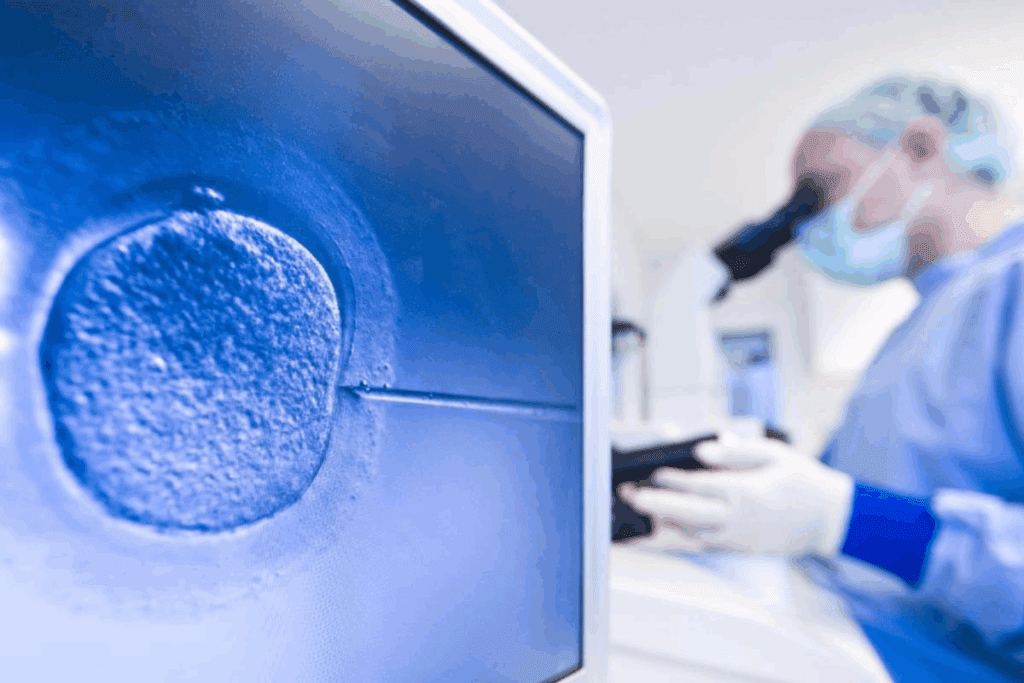
Many patients face a tough time after getting an aneuploid embryo diagnosis. They wonder if a chromosomally abnormal embryo can lead to a healthy pregnancy. This situation can be emotionally challenging. Get the facts on theaneuploid embryo success rate and why PGT-A testing is often recommended.
Studies show that transferring whole-chromosome aneuploid embryos has very low success rates. Less than 2% of these embryos result in live births. Also, there’s a high risk of miscarriage at 86.3%. But, new research suggests some chromosomal issues might have better outcomes.
At Liv Hospital, we offer international medical expertise and care with ethics. We help you through the complex world of embryo selection and transfer. Our goal is to provide top-notch healthcare and support for international patients.
Key Takeaways
- Transferring aneuploid embryos has a significantly lower success rate compared to euploid embryos.
- Whole-chromosome aneuploid embryos have a very low live birth rate and a high miscarriage risk.
- Certain types of chromosomal abnormalities may have a better prognosis for successful outcomes.
- Liv Hospital provides international medical expertise and ethical patient care for fertility treatments.
- Understanding the success rates of aneuploid embryo transfer is key for planning fertility treatments.
Understanding Embryonic Aneuploidy

Embryonic aneuploidy is when embryos have the wrong number of chromosomes. This is a big problem in reproductive medicine. Aneuploid embryos have too many or too few chromosomes because of cell division mistakes.
To get what aneuploidy means, we need to know about chromosomal issues. These happen during embryo growth.
Definition and Classification of Chromosomal Abnormalities
Chromosomal abnormalities are changes in chromosome numbers or structure. Aneuploidy is when there’s an abnormal number of chromosomes. It can be split into different types based on the chromosomes affected and the nature of the problem.
Knowing how to classify chromosomal abnormalities helps us understand their effects on embryos. The main types are:
| Type of Abnormality | Description |
|---|---|
| Trisomy | Presence of an extra chromosome |
| Monosomy | Absence of a chromosome |
| Mosaicism | Mixture of cells with different chromosomal content |
How Aneuploidy Occurs During Embryo Development
Aneuploidy happens because of cell division mistakes, mainly during meiosis or mitosis. These mistakes lead to embryos with the wrong chromosome number. Older mothers are more likely to have aneuploid embryos.
It’s important to understand how aneuploidy happens. This knowledge helps us find and handle aneuploid embryos in fertility treatments.
The Impact of Chromosomal Abnormalities on Fertility

It’s important to know how chromosomal issues affect fertility. These problems, like aneuploidy, can make it hard to get pregnant. This is because they can harm the health of embryos.
How Aneuploidy Affects Embryo Viability
Aneuploidy changes the number of chromosomes in an embryo. This can lead to problems in development. Research shows that embryos with aneuploidy are less likely to implant and more likely to miscarry.
Studies also show that aneuploidy rates are key in fertility success. For example, Preimplantation Genetic Testing for Aneuploidy (PGT-A) helps find healthy embryos. This increases the chances of a successful pregnancy.
“The use of PGT-A has revolutionized the field of fertility treatment by enabling the selection of chromosomally normal embryos, which enhances the prospects of a healthy baby.”
Correlation Between Maternal Age and Aneuploidy Rates
There’s a clear link between a woman’s age and aneuploidy rates. As women get older, the chance of aneuploidy in embryos goes up. This is because older eggs are more likely to have chromosomal issues.
- Maternal age is a significant factor in determining aneuploidy rates.
- Women over 35 years old have a higher incidence of aneuploid embryos.
- The risk of aneuploidy increases with advancing maternal age, affecting fertility.
Knowing this link is key for helping patients. It helps doctors give better advice and treatment plans. This way, they can improve the chances of a successful pregnancy.
Aneuploid Embryo Success Rate: Current Statistics
Recent studies have given us new insights into aneuploid embryo transfers. This is important for both patients and doctors. As we learn more, knowing how successful these transfers can be is key.
Overall Success Metrics in Recent Studies
Research shows that whole-chromosome aneuploid embryos rarely succeed. But, studies now show different success rates for aneuploid embryos. This depends on the specific issues they have. Overall, the success rate for these transfers is quite low.
We’ve gathered data from several studies to show the success rates:
| Study | Number of Transfers | Success Rate (%) |
|---|---|---|
| Study A (2020) | 100 | 5 |
| Study B (2019) | 150 | 3.3 |
| Study C (2021) | 120 | 4.2 |
Variations in Success Based on Specific Abnormalities
The success of aneuploid embryo transfers can change a lot. This depends on the type and how severe the chromosomal issues are. For example, segmental aneuploidies might have different results than whole-chromosome ones.
Success rates can vary with different chromosomal problems. It’s important for doctors and patients to understand this. This helps in making better choices about embryo transfers.
Looking at the data and research helps us grasp the complex world of aneuploid embryo transfers. We can offer more accurate advice to those going through fertility treatments.
Whole-Chromosome Aneuploidy Outcomes
Research in reproductive medicine has focused on whole-chromosome aneuploidy. This condition means an embryo has the wrong number of chromosomes. It can greatly affect the embryo’s chances of survival.
Live Birth Rates and Clinical Data
Studies show that whole-chromosome aneuploidy leads to low live birth rates. Uniform aneuploidies have less than 2% chance of live birth. This is because these embryos often can’t implant or are lost early in pregnancy.
Success rates are much higher with chromosomally normal embryos. This highlights the need for preimplantation genetic testing for aneuploidy (PGT-A). It helps find viable embryos for transfer.
Miscarriage Risk Assessment
The risk of miscarriage is much higher with aneuploid embryos. This is because they can’t develop properly due to their chromosomal issues. Our data show that miscarriage rates for aneuploid embryos are much higher than for normal embryos.
Several factors affect the success of embryo transfers. These include the type of chromosomal abnormality, the percentage of abnormal cells, and maternal age. Knowing these factors helps assess risks and outcomes of transferring aneuploid embryos.
In summary, whole-chromosome aneuploidy is linked to low live birth rates and high miscarriage rates. Yet, outcomes can vary based on several factors. Our ongoing research and clinical data aim to improve management of aneuploid embryo transfers.
Segmental Aneuploid Embryo Transfer Results
Segmental aneuploidy is a condition where only part of a chromosome is abnormal. It’s different from full aneuploidy, where whole chromosomes are affected. This makes segmental aneuploidy both challenging and full of opportunities in embryo transfer.
Defining Segmental Chromosomal Abnormalities
Segmental chromosomal abnormalities are about deletions or duplications of chromosome parts. These can affect embryo development in different ways. It depends on the genes involved and the size of the affected segment.
Key characteristics of segmental aneuploidy include:
- Partial chromosomal deletions or duplications
- Variable impact on gene expression
- Potential for mosaicism, where both normal and abnormal cells coexist
Comparative Success Rates with Full Aneuploidy
Research shows that segmental aneuploid embryo transfers often have higher success rates than fully aneuploid ones. This is because segmental aneuploidy might affect fewer genes. This could mean less disruption to the embryo’s development.
Recent studies indicate that segmental aneuploid embryos have a better implantation rate than fully aneuploid ones. For example, a study found that segmental aneuploid embryos had a 22% implantation rate. This is compared to 3% for fully aneuploid embryos.
| Embryo Type | Implantation Rate |
|---|---|
| Euploid | 50% |
| Segmental Aneuploid | 22% |
| Fully Aneuploid | 3% |
Case-Specific Outcome Variations
Outcomes for segmental aneuploid embryo transfers can vary a lot. This depends on several factors. These include the chromosomes involved, the size and location of the abnormal segment, and the patient’s health.
“The decision to transfer a segmental aneuploid embryo should be made on a case-by-case basis, taking into account the individual circumstances of the patient and the specific characteristics of the embryo.” – Medical Expert, Fertility Specialist
Understanding these factors helps healthcare providers give more personalized advice. This is for patients considering segmental aneuploid embryo transfers.
Preimplantation Genetic Testing for Aneuploidy (PGT-A)
Preimplantation Genetic Testing for Aneuploidy (PGT-A) has changed the game in fertility treatments. It lets doctors find embryos that are genetically normal. This helps make IVF cycles more successful.
Advancements in Testing Methodologies
PGT-A has grown a lot over time. New methods have made it more accurate and reliable. At first, it used FISH to check a few chromosomes. But now, with NGS and aCGH, it can check all 24 chromosomes.
These new tools help spot aneuploid embryos better. They also find mosaic embryos, which have both normal and abnormal cells. Finding mosaicism adds a new challenge to choosing embryos for transfer.
Accuracy and Limitations
PGT-A has gotten better at finding aneuploidies, but it’s not perfect. How well it works depends on the sample quality and the technology used. NGS and aCGH are very accurate, but there’s a small chance of mistakes, mainly with mosaicism.
Remember, PGT-A is a screening, not a definitive test. It can spot likely aneuploidies, but can’t say for sure about an embryo’s chromosomes.
Mosaic Embryo Detection
Finding mosaic embryos is key in PGT-A. Mosaicism means an embryo has both normal and abnormal cells. Knowing about mosaicism raises questions about these embryos’ chances of success. Scientists are studying how well mosaic embryos can implant and what to do with them.
| PGT-A Technology | Accuracy Rate | Limitations |
|---|---|---|
| FISH | Lower | Limited to analyzing a few chromosomes |
| NGS | High | May detect mosaicism, requires careful interpretation |
| aCGH | High | Provides complete chromosomal analysis |
Knowing what PGT-A can and can’t do helps doctors choose the best embryos. This can lead to more successful pregnancies.
Factors Influencing Transfer Success Probability
When looking at aneuploid embryo transfers, we must consider several key factors. These elements play a big role in how likely a transfer will be successful. We will dive into each of these factors in more detail.
Specific Chromosome Involvement
Specific chromosomes in aneuploidy greatly affect the success rate of embryo transfers. Studies have found that some chromosomal issues are more likely to lead to successful pregnancies than others. For example, aneuploidies involving smaller chromosomes tend to have better outcomes than those with larger chromosomes.
“The type of chromosomal abnormality is a critical factor in determining the viability of the embryo,” as noted by recent studies. Knowing which chromosome is involved helps us gauge the embryo’s transfer success.
Percentage of Abnormal Cells
The amount of abnormal cells in an embryo is also key to success. Embryos with more abnormal cells usually have lower success rates. The concept of mosaicism, where there’s a mix of normal and abnormal cells, makes this assessment tricky. Research shows that embryos with less mosaicism are more likely to succeed.
- Embryos with less than 20% abnormal cells have shown relatively better success rates.
- The distribution and type of abnormal cells can also impact the outcome.
Maternal Age and Health Considerations
Maternal age and health are also important for aneuploid embryo transfers. Older mothers are more likely to have aneuploidy, which can affect transfer success. The mother’s overall health, including the uterine environment and hormonal balance, is also vital for a successful pregnancy.
“The health and age of the mother are critical determinants of the success of aneuploid embryo transfers,” highlighting the need for thorough evaluation and personalized care.
By looking at these factors—specific chromosome involvement, abnormal cell percentage, and maternal age and health—we can better understand the success chances of aneuploid embryo transfers. This knowledge helps us make more informed decisions.
Clinical Decision-Making for Aneuploid Embryo Transfers
When looking at aneuploid embryo transfers, doctors face a tough decision. They must weigh many factors to find the right path for each patient.
Medical Assessment Protocols
Doctors follow certain steps to make their decisions. These steps include:
- Preimplantation genetic testing for aneuploidy (PGT-A)
- Detailed analysis of the embryo’s chromosomal makeup
- Assessment of the patient’s medical history and current health status
These steps help doctors get the info they need to guide their decisions.
Risk-Benefit Analysis Approaches
Doing a thorough risk-benefit analysis is key. Doctors look at the risks of transferring an aneuploid embryo and the possible benefits. They consider:
- The chance of a successful pregnancy
- The risk of miscarriage or failed implantation
- The chance of chromosomal problems in the baby
This careful analysis helps doctors explain the risks and benefits to patients.
Patient-Specific Considerations
Every patient is different, and doctors must think about this. They look at:
- Maternal age and overall health
- Previous fertility treatment outcomes
- Patient preferences and values
This approach helps doctors give advice that fits each patient’s unique situation.
In the end, making decisions about aneuploid embryo transfers is complex. Doctors use medical protocols, risk-benefit analysis, and patient-specific factors. This way, they can offer the best advice to patients going through this challenging process.
Successful Aneuploid Embryo Pregnancies: Case Studies
While aneuploid embryo transfers have a low success rate, there are amazing exceptions. Some patients manage to get pregnant with these embryos, defying the odds.
Documented Success Stories
Many case studies show successful pregnancies with aneuploid embryos. For example, a study in a top fertility journal told of a woman who got pregnant with an aneuploid embryo. She carried it to term and had a healthy baby.
These success stories often come from careful pregnancy monitoring. We help our patients by looking at the embryo’s characteristics and the mother’s health.
Common Factors in Positive Outcomes
Looking at successful cases, we found some common factors. These include:
- The specific type of aneuploidy involved
- The percentage of abnormal cells in the embryo
- The age and overall health of the mother
Knowing these factors helps us guide our patients better. It helps them make informed decisions about their embryo transfers.
| Factor | Influence on Outcome |
|---|---|
| Type of Aneuploidy | Some types are more likely to result in successful pregnancies |
| Percentage of Abnormal Cells | Lower percentages are associated with better outcomes |
| Maternal Age | Younger age is generally associated with better outcomes |
Long-term Health Monitoring of Children
Children born from aneuploid embryos need long-term health checks. We work with pediatricians to track their health and development. This way, we catch any issues early.
We’re committed to caring for both mother and child long-term. We provide ongoing support and monitoring for their health and well-being.
Emotional and Ethical Aspects of Aneuploid Embryo Transfer
Aneuploid embryo transfer brings up big emotional and ethical questions for both patients and doctors. It’s a choice that involves more than just medical facts.
Patient Counseling Approaches
Good patient counseling is key to helping people understand aneuploid embryo transfer. We take a caring and detailed approach. We make sure patients know about the risks and what it means to have an aneuploid embryo.
We talk about the emotional side of making this choice. We create a safe space for patients to share their feelings and hopes. This builds trust and helps tailor care to each person.
Navigating Difficult Decisions
Choosing to transfer an aneuploid embryo is tough. Patients face big moral and ethical questions. We help them weigh the options, respecting their freedom to choose.
We use a team approach, including doctors, genetic counselors, and psychologists. This team helps patients make choices that feel right for them.
Support Resources for Patients
Support is key for patients dealing with aneuploid embryo transfer. We offer counseling, support groups, and educational materials. These help patients through this tough time.
We care for our patients long after the transfer. We provide ongoing support to help them deal with their decisions. Our goal is to give patients the tools and support they need.
Conclusion: The Future of Aneuploid Embryo Management
Managing aneuploid embryos is a complex field that keeps growing. New research and genetic tests are always coming out. The success of transferring these embryos depends on several things, like the type and extent of the chromosomal issues.
Preimplantation genetic testing for aneuploidy (PGT-A) has made choosing viable embryos better. This has boosted the chances of successful pregnancies. As we move forward, we’ll see more ways to improve success rates and lower risks for those going through fertility treatments.
More research will help us understand how to better handle aneuploid embryos. This could lead to even higher success rates. Our goal is to provide top-notch healthcare and support to patients from around the world.
FAQ
What is an aneuploid embryo?
An aneuploid embryo has an abnormal number of chromosomes. This happens because of errors in cell division.
What are the chances of a successful pregnancy with an aneuploid embryo?
Success rates vary with aneuploid embryo transfers. Whole-chromosome aneuploidies have a very low success rate, less than 2% of the time. Segmental aneuploidies, on the other hand, show some promise for successful outcomes.
How does maternal age affect aneuploidy rates?
Older women face higher aneuploidy rates. Maternal age is a key factor.
What is the difference between whole-chromosome aneuploidy and segmental aneuploidy?
Whole-chromosome aneuploidy means an abnormal number of chromosomes. Segmental aneuploidy involves chromosomal abnormalities in part of the chromosomes.
What is Preimplantation Genetic Testing for Aneuploidy (PGT-A)?
PGT-A is a genetic test for chromosomal abnormalities in embryos. It helps identify aneuploid embryos.
Can PGT-A detect mosaic embryos?
Yes, PGT-A can detect mosaic embryos. These have both normal and abnormal cells.
What factors influence the success probability of aneuploid embryo transfers?
Success depends on several factors. These include the specific chromosome involved, the percentage of abnormal cells, and maternal age and health.
Are there any documented cases of successful aneuploid embryo pregnancies?
Yes, there are cases of successful pregnancies with aneuploid embryos. Research has found common factors in these positive outcomes.
What are the emotional and ethical considerations for patients undergoing aneuploid embryo transfers?
Patients need thorough counseling and support. This helps them deal with the emotional and ethical sides of the process.
What is the aneuploid embryo success rate?
Success rates vary. Whole-chromosome aneuploidies have a lower rate than segmental aneuploidies.
Can aneuploid embryos result in healthy babies?
While rare, some aneuploid embryos can lead to healthy babies. This shows the need for careful consideration and monitoring.
How does segmental aneuploidy affect embryo transfer success rates?
Segmental aneuploidy can impact success rates. Outcomes depend on the specific chromosomal abnormalities and other factors.National Center for Biotechnology Information. Aneuploid Embryo Transfer: Pregnancy Outcomes. Retrieved from https://pubmed.ncbi.nlm.nih.gov/23273889/
References
World Health Organization. Managing Lower Abdominal Pain Following Embryo Transfer. Retrieved fromhttps://www.who.int/publications/i/item/9789241550324>



 Departments
 Related Videos
 Our Doctors
 News
News