Chest pain or discomfort, known as angina, affects millions of people worldwide. It often signals an underlying heart condition. The Centers for Disease Control and Prevention (CDC) reports heart disease as the leading cause of death in the United States. It accounts for over 647,000 deaths each year.
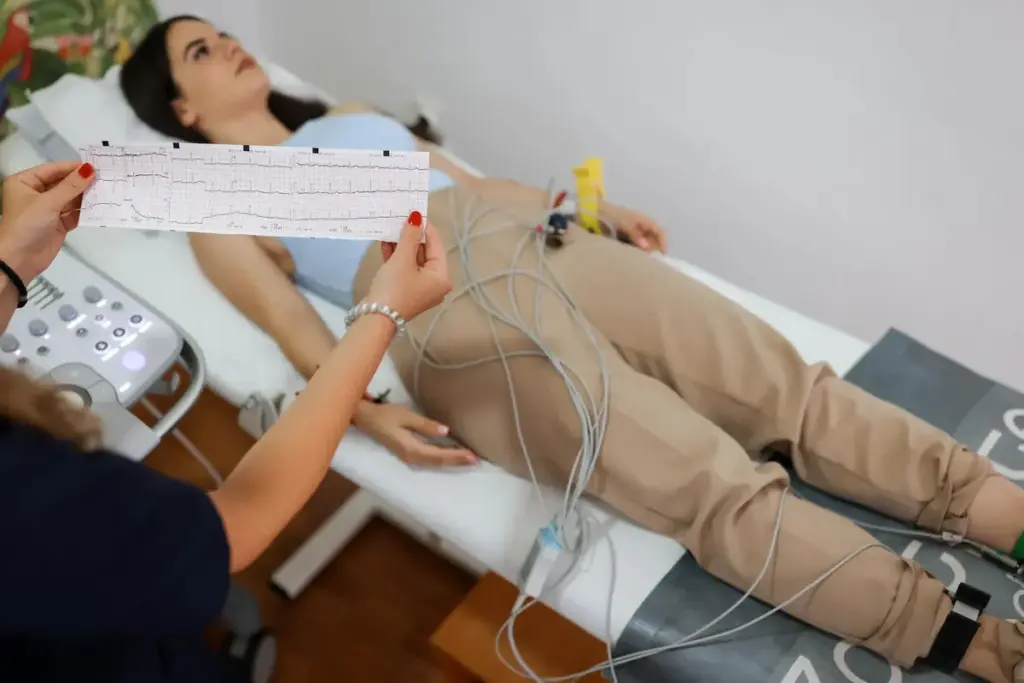
An electrocardiogram (EKG) is a key tool for checking the heart’s electrical activity. It helps spot patterns that may show heart disease, including angina. Healthcare experts can see heart rhythm issues on an EKG. These issues might mean narrowed or blocked coronary arteries.
Key Takeaways
- Angina is chest pain or discomfort caused by reduced blood flow to the heart.
- An EKG is a test that measures the electrical activity of the heart.
- EKG findings can indicate heart disease, including conditions that cause angina.
- Early detection of heart disease through EKG can be critical for effective management.
- EKG is a valuable tool in diagnosing and monitoring heart conditions.
What Is Angina and How Does It Affect the Heart?
Angina pectoris, or simply angina, is a condition where the heart muscle doesn’t get enough oxygen-rich blood. This leads to chest pain. It’s a sign of a heart problem, often linked to the coronary arteries.
Definition and Pathophysiology
Angina causes chest pain or discomfort due to less blood flow to the heart muscle. It happens when the heart needs more oxygen than it gets. The heart’s blood flow and oxygen demand play a big role in this.
The heart needs oxygen and nutrients to work right. If the coronary arteries are narrowed or blocked, the heart muscle gets ischemic. This leads to pain. Usually, this is because of coronary artery disease (CAD), where plaque builds up in the arteries.
The Role of Coronary Artery Disease
Coronary artery disease is the main reason for angina. CAD happens when plaque builds up in the coronary arteries, narrowing or blocking them. This is called atherosclerosis.
“The most common cause of angina is coronary artery disease, which is a condition where the coronary arteries become narrowed or blocked due to atherosclerosis,” as noted by cardiology experts. The narrowing or blockage reduces blood flow to the heart muscle, leading to ischemia and the characteristic chest pain of angina.
Oxygen Demand vs. Supply Imbalance
The heart’s oxygen needs change with physical activity, emotional stress, and other factors. When oxygen demand is higher than supply, ischemia happens, causing angina symptoms. This imbalance can be triggered by various factors, including physical exertion, emotional stress, or even cold weather.
Understanding the balance between oxygen demand and supply is key to managing angina. Making lifestyle changes and using medications can help reduce the heart’s workload and improve blood flow, easing symptoms.
Types of Angina: Understanding the Differences

It’s key to know the different types of angina for good diagnosis and treatment. Angina pectoris, or angina, is a sign of heart disease. It comes in various forms, each with its own traits and care needs.
Stable Angina: Predictable Patterns
Stable angina is the most common type. It follows a pattern, often triggered by stress or hard work. The pain feels like pressure in the chest, which can spread to the arms, back, or jaw.
Predictability is a hallmark of stable angina. This means patients can usually guess when they’ll have an episode.
Unstable Angina: A Medical Emergency
Unstable angina is more serious and unpredictable. It can happen without warning, may be more intense, and doesn’t always go away with rest or meds. It’s a sign of a big risk of heart attack.
Immediate medical attention is required if you have unstable angina symptoms. Quick action can prevent serious problems.
“Unstable angina is a condition where the blood flow to the heart is severely reduced, putting the individual at a high risk of a heart attack.”
Variant (Prinzmetal’s) Angina: Coronary Artery Spasms
Variant or Prinzmetal’s angina is caused by spasms in the heart’s arteries. This type can happen at rest and may show ST-segment elevation on an electrocardiogram (EKG). It’s not usually caused by hard work.
Microvascular Angina: Small Vessel Disease
Microvascular angina affects the heart’s small vessels, more common in women. It causes chest pain, even with normal coronary arteries. It’s linked to heart microvasculature issues, making diagnosis hard.
Knowing the different types of angina is vital for doctors to treat it well. Each type has its own signs, risks, and treatment plans. This shows why a personalized approach to care is so important.
Recognizing Angina Symptoms Across Different Populations
Angina symptoms vary widely among different people, making diagnosis tricky. It’s key to spot these symptoms early for the right treatment.
Classic Chest Pain and Discomfort
Angina usually feels like a tightness or pressure in the chest. It often happens when you’re stressed or active. Rest or medicine can help ease this pain.
The pain can also spread to your arms, back, neck, jaw, or stomach. So, it’s important to watch these areas too.
Atypical Symptoms in Women
Women often have different symptoms than men. Instead of chest pain, they might feel sharp pains in their neck, jaw, or back. Sometimes, these symptoms are mistaken for other issues, leading to late diagnosis.
Common atypical symptoms in women include:
- Shortness of breath
- Nausea or dizziness
- Pain in the neck, jaw, or back
- Fatigue or weakness
Symptoms in Elderly and Diabetic Patients
Older people and those with diabetes face unique challenges in diagnosing angina. They might find it hard to describe their symptoms or think they’re from other issues. Diabetics might not feel angina symptoms because of nerve damage.
Healthcare providers need to be extra careful with these groups. Look for signs like confusion, tiredness, or weakness, which could mean heart problems.
Differentiating Angina from Other Conditions
Telling angina apart from other chest pain is vital. Conditions like acid reflux, muscle pain, or anxiety can feel like angina. A detailed medical history, physical check-up, and tests are needed to get it right.
Knowing how the pain feels, when it happens, and what makes it better helps doctors figure out if it’s angina or not.
How Electrocardiograms (EKGs) Work
To understand EKGs’ role in diagnosing angina, we must first grasp how they function. An electrocardiogram, or EKG, is a non-invasive test. It measures the heart’s electrical activity, giving us key insights into its health.
The Electrical Activity of the Heart
The heart’s electrical activity is complex. It involves the coordinated contraction of cardiac muscle cells. This starts with electrical impulses from the sinoatrial (SA) node, the heart’s natural pacemaker.
These impulses then travel through the atrioventricular (AV) node and along the bundle of His. They eventually reach the ventricular muscle cells, causing them to contract.
Electrodes on the skin detect the tiny electrical changes from the heart’s activity. This information is used to create an EKG tracing. This tracing shows the heart’s electrical activity visually.
Standard 12-Lead EKG Explained
A standard 12-lead EKG uses 10 electrodes on the chest and limbs. It records the heart’s electrical activity from 12 different angles. These leads are divided into limb leads and precordial leads.
|
Lead |
Placement |
View |
|---|---|---|
|
I |
Left arm and right arm |
Lateral wall |
|
II |
Right arm and left leg |
Inferior wall |
|
III |
Left leg and left arm |
Inferior wall |
|
V1-V6 |
Chest |
Anterior and lateral walls |
What Normal EKG Patterns Look Like
A normal EKG tracing has specific characteristics. It has a consistent heart rate and rhythm. It also has a normal P wave, QRS complex, and T wave, and specific intervals between these components.
Understanding these normal patterns is key to spotting abnormalities. These could indicate conditions like angina. By analyzing the EKG tracing, healthcare professionals can make informed decisions about further testing and treatment.
Can Angina Be Detected on a Standard EKG?
To know if angina shows up on a standard EKG, we need to look at the heart’s changes during an episode. We also have to understand what EKG technology can and can’t do.
EKG Changes During Active Angina Episodes
When angina happens, the heart’s electrical activity changes. These changes can be seen on an EKG. They happen because the heart isn’t getting enough blood.
ST Segment Changes: A key sign of heart trouble on an EKG is changes in the ST segment. These can be ST segment depression or elevation.
- ST segment depression shows a mild heart problem, often seen in angina.
- ST segment elevation means a more serious heart issue, possibly a heart attack.
ST Segment Depression and Elevation
The ST segment on an EKG is very important. It tells us a lot about the heart’s state during an angina episode. Both depression and elevation are important and need careful looking at.
|
ST Segment Change |
Clinical Significance |
|---|---|
|
ST Segment Depression |
Shows a mild heart problem, often seen in angina. |
|
ST Segment Elevation |
Means a serious heart issue or a heart attack. |
T-Wave Inversions and Other Abnormalities
T-wave inversions are also a sign of heart trouble. They show a change in how the heart repolarizes. This can be linked to angina.
Other abnormalities seen during an angina episode include arrhythmias or conduction problems. But these are not as specific to angina.
The Challenge of Timing: Capturing an Episode
One big problem with using an EKG to diagnose angina is catching an episode. Angina is often on and off, making it hard to get an EKG during an episode.
Using a continuous or ambulatory EKG can help catch episodes. It shows how often and long they last.
Why Resting EKGs Often Miss Angina
Resting EKGs are useful but often miss angina episodes. Angina is chest pain or discomfort from a temporary heart issue. Knowing why is key for doctors and patients.
The Intermittent Nature of Angina
Angina symptoms come and go. This makes it hard for a resting EKG to catch an episode. It only shows the heart’s activity at one time.
Normal EKG Readings Between Episodes
Between angina episodes, EKGs can look normal. The heart’s activity seems fine when symptoms are not present. This can make people think their heart is okay.
Silent Ischemia: When Angina Has No Symptoms
Some people have silent ischemia, where the heart doesn’t get enough oxygen but they don’t feel pain. Even if an EKG is done during an ischemic event, it might not show up if it’s brief or if the EKG isn’t always on.
Limitations of Standard EKG Technology
Standard EKGs can’t watch the heart all the time. They give useful info but can miss conditions like angina because they only take a snapshot.
|
Limitation |
Description |
Impact on Diagnosis |
|---|---|---|
|
Intermittent Nature of Angina |
Angina symptoms are episodic. |
Makes it hard to capture an episode on a resting EKG. |
|
Normal EKG Between Episodes |
EKG appears normal when not experiencing symptoms. |
May lead to false reassurance. |
|
Silent Ischemia |
Ischemia without typical angina symptoms. |
Difficult to detect without continuous monitoring. |
|
EKG Technology Limitations |
Limited to snapshot monitoring. |
May miss transient conditions. |
Stress Testing: Provoking Angina for Diagnosis
Stress testing is a key tool for diagnosing angina. It helps doctors see how the heart reacts under stress. This method is used to find coronary artery disease and measure angina severity.
Exercise Stress Tests: Walking on Treadmills
Exercise stress tests, or treadmill tests, are common for diagnosing angina. Patients walk on a treadmill while their heart rate, blood pressure, and EKG are checked. The exercise gets harder to stress the heart and spot any problems.
Benefits of Exercise Stress Tests:
- Non-invasive and relatively inexpensive
- Provides immediate results
- Helps assess the heart’s function under stress
Pharmacological Stress Tests for Limited Mobility
Pharmacological stress tests are for those who can’t exercise due to health or mobility issues. These tests use medicine to mimic exercise effects on the heart. This way, coronary blood flow can be checked without needing to exercise.
Pharmacological stress tests are useful for:
- Patients with mobility limitations
- Those who can’t get their heart rate up through exercise
Nuclear Stress Tests: Adding Imaging
Nuclear stress tests combine stress testing with nuclear imaging. A radioactive tracer is injected, and heart images are taken at rest and after stress. This gives a detailed look at the heart’s blood flow and function.
Advantages of Nuclear Stress Tests:
- Provides detailed images of the heart’s blood flow
- Helps identify areas of ischemia or infarction
Interpreting EKG Changes During Stress
Reading EKG changes during stress testing is key for diagnosing angina. Changes like ST segment depression or elevation, T-wave inversions, and other abnormalities can show coronary artery disease or ischemia. Accurate reading of these changes helps doctors make better care decisions.
Understanding the different stress tests and their uses helps doctors pick the best test for each patient. This leads to better management and treatment of angina.
Advanced Diagnostic Methods Beyond the EKG
Healthcare providers use advanced tests to get a clear picture of the heart. These tests help understand how the heart works and the state of its arteries.
Echocardiography: Visualizing Heart Function
Echocardiography is a non-invasive test that uses sound waves to create images of the heart. It shows how well the heart pumps blood and spots damaged or strained areas.
Key benefits of echocardiography include:
- Non-invasive and painless
- Provides real-time images of the heart
- Can be used to assess heart valve function
Coronary CT Angiography: Seeing the Arteries
Coronary CT angiography uses X-rays to create detailed pictures of the coronary arteries. It helps find blockages or narrowing in the arteries.
The procedure involves:
- Injection of a contrast dye to highlight the arteries
- Use of a CT scanner to capture images of the heart
- Analysis of the images to identify any blockages or abnormalities
Cardiac MRI: Detailed Heart Imaging
Cardiac MRI uses a strong magnetic field and radio waves to create detailed images of the heart. It gives info on the heart’s structure and function, and the condition of the coronary arteries.
|
Diagnostic Capability |
Echocardiography |
Coronary CT Angiography |
Cardiac MRI |
|---|---|---|---|
|
Heart Function |
Yes |
Limited |
Yes |
|
Coronary Artery Visualization |
No |
Yes |
Yes |
|
Non-invasive |
Yes |
Yes |
Yes |
Invasive Coronary Angiography: The Gold Standard
Invasive coronary angiography is the top choice for diagnosing coronary artery disease. It involves inserting a catheter into an artery and guiding it to the coronary arteries. A contrast dye is then released to see the arteries on an X-ray.
These advanced tests give healthcare providers many tools to accurately diagnose and manage angina. Each test has its own strengths and specific uses.
Risk Factors That Contribute to Angina Development
Angina develops from a mix of things we can and can’t change. Knowing these factors helps in preventing and managing the condition.
Diet, Exercise, and Smoking: Modifiable Risk Factors
Things we can change are key to avoiding angina. These include:
- Diet: Eating too much saturated fat, cholesterol, and sodium raises heart disease risk.
- Exercise: Not moving enough is a big risk. Regular activity keeps weight down, blood pressure low, and heart healthy.
- Smoking: It’s a major heart disease and angina risk. Smoking damages artery linings, making blockages more likely.
Changing these habits can greatly lower angina risk.
Age, Gender, and Genetics: Non-Modifiable Risk Factors
Things we can’t change also play a part. These include:
- Age: Angina risk grows with age, more so after 45 for men and 55 for women.
- Gender: Men face higher angina risk, but women’s risk increases after menopause.
- Genetics: Heart disease history in family ups angina risk.
Knowing these factors helps in managing and monitoring risk better.
Medical Conditions That Increase Risk
Some health issues raise angina risk. These include:
|
Condition |
Description |
Impact on Angina Risk |
|---|---|---|
|
Hypertension |
High blood pressure |
Increases heart strain, raising risk |
|
Hyperlipidemia |
High cholesterol or triglycerides |
Builds plaque in arteries |
|
Diabetes |
High blood sugar |
Harms blood vessels and heart nerves |
Managing these conditions well is key to lowering angina risk.
Emerging Risk Factors: Sleep, Stress, and Environment
New risk factors are being studied for their impact on angina. These include:
- Sleep: Bad sleep quality and length can harm heart health.
- Stress: Ongoing stress can raise blood pressure and heart rate, leading to heart disease.
- Environment: Air pollution and other environmental stressors can affect heart health.
By making lifestyle and environmental changes, we can further reduce angina risk.
Comprehensive Approaches to Angina Treatment
Managing angina well needs a mix of treatments. The aim is to lessen symptoms, enhance life quality, and stop serious issues.
First-Line Medications: Nitrates, Beta-Blockers, and Calcium Channel Blockers
First-line meds are key in fighting angina. Nitrates widen blood vessels, boosting heart flow. Beta-blockers slow the heart rate and cut contraction force. Calcium channel blockers relax blood vessels, easing heart work.
Antiplatelet and Anticoagulant Therapies
Stopping clots is vital in angina care. Antiplatelet drugs like aspirin stop platelets from clumping. Anticoagulants cut clot risk by messing with clotting.
Interventional Procedures: Angioplasty and Stenting
Some may need angioplasty and stenting. Angioplasty uses a balloon to open blocked arteries. Stenting places a mesh tube to keep arteries open.
Coronary Artery Bypass Grafting (CABG)
In severe cases, CABG surgery is needed. It bypasses blocked arteries with grafts, boosting heart flow.
These treatments are customized for each patient. They aim to manage symptoms well and prevent serious problems.
Lifestyle Modifications for Angina Management
Lifestyle changes are key in managing angina. They improve life quality and chances of recovery. By adopting healthier habits, people can lessen angina episodes.
Heart-Healthy Dietary Patterns
Eating a heart-healthy diet is essential for angina management. Focus on fruits, vegetables, whole grains, and lean proteins. The DASH diet and the Mediterranean diet are great for heart health.
Limit foods high in saturated fats, trans fats, and cholesterol. Cutting down on sodium can also lower blood pressure, benefiting the heart.
Appropriate Physical Activity Guidelines
Regular exercise is vital for angina management. It boosts heart health, reduces symptoms, and improves well-being. Good activities include brisk walking, cycling, and swimming.
The American Heart Association suggests at least 150 minutes of moderate-intensity aerobic activity weekly. Or 75 minutes of vigorous-intensity activity, or a mix of both, spread out over the week.
Stress Reduction Techniques
Stress can trigger angina, making stress management critical. Methods like meditation, yoga, and deep breathing exercises can lower stress.
“The mind and body are not separate. What affects one, affects the other.”
Unknown
Medication Adherence and Monitoring
Following your medication plan is essential for angina management. Nitrates, beta-blockers, and calcium channel blockers control symptoms and prevent complications.
- Take medications as directed by your healthcare provider.
- Monitor your symptoms and report any changes to your doctor.
- Keep a log of your angina episodes to identify patterns or triggers.
By making these lifestyle changes, people with angina can manage their condition better. They can improve their quality of life and lower the risk of heart problems.
When Angina Becomes an Emergency
Knowing the warning signs of an angina emergency is critical. Angina can often be managed, but sometimes it’s a sign of a serious heart issue.
Warning Signs That Require Immediate Attention
Certain symptoms mean angina has turned into an emergency. These include:
- Chest pain or discomfort that is severe, prolonged, or worsening
- Pain or discomfort in the arms, back, neck, jaw, or stomach
- Shortness of breath or difficulty breathing
- Lightheadedness or dizziness
- Nausea or vomiting
- Rapid or irregular heartbeat
If you or someone you know is experiencing these symptoms, act fast.
Changes in Pattern or Frequency
A change in angina episodes can also be a sign of an emergency. This includes:
- Angina that occurs more frequently than usual
- Angina that is triggered by less exertion than usual
- Angina that lasts longer than usual or is more severe
- Angina that occurs at rest
These changes mean the condition is getting worse and need immediate medical help.
Angina vs. Heart Attack Symptoms
Distinguishing between angina and a heart attack can be hard. But, a heart attack is a serious emergency. Key differences include:
- Duration: Heart attack pain often lasts longer than 15-20 minutes
- Intensity: Heart attack pain is often more severe and may feel like pressure or tightness
- Associated symptoms: Heart attacks are often accompanied by nausea, vomiting, or shortness of breath
If unsure, it’s best to seek emergency help.
What to Tell Emergency Responders
When calling emergency services, give as much information as you can. This includes:
- Describing your symptoms or the symptoms of the person you’re calling about
- Mentioning any history of heart disease or angina
- Listing any medications you’re currently taking
- Providing your location or the location of the person in need
Being prepared and knowing what to do can help ensure timely medical attention in an angina emergency.
Living with Angina: Quality of Life Considerations
Angina is a serious condition, but it can be managed. This helps improve your quality of life. People with angina need to change their lifestyle to control symptoms.
Daily Activity Adjustments
Managing daily activities is key for those with angina. It’s important to pace yourself and avoid too much effort. Taking regular breaks helps reduce heart strain.
Making small changes can make a big difference. For example, use the elevator instead of stairs. Break tasks into smaller parts to feel better.
Emotional and Psychological Impact
The emotional and psychological effects of angina are significant. Many people with angina feel anxious or depressed. Getting mental health support is very important.
Counseling, support groups, and stress management can help. These tools can make dealing with angina’s emotional side easier.
Support Systems and Resources
Having a strong support system is essential for those with angina. Family, friends, and healthcare professionals offer valuable help and encouragement.
There are also many resources to manage angina. You can find educational materials, online forums, and community programs focused on heart health.
Communicating with Healthcare Providers
Talking openly with healthcare providers is vital for managing angina. It’s important to ask questions, report symptoms, and share concerns with your healthcare team.
Keeping a symptom journal can be very helpful. It helps track angina episodes and find patterns or triggers.
Conclusion
Understanding angina and how it shows up on an EKG is key for diagnosing and managing heart disease. We’ve looked at the different types of angina, their symptoms, and how they appear on an EKG.
Managing angina requires a full approach, including lifestyle changes, medication, and sometimes procedures. It’s important to know the signs of angina and understand EKG results for quick diagnosis and treatment.
A summary of the main points shows the need for a detailed plan to manage angina. This includes eating heart-healthy, staying active, and following medication instructions.
By using these strategies, people with angina can live better and lower their risk of heart disease complications. Effective management of angina depends on knowing the condition, its diagnosis, and sticking to lifestyle changes and treatment plans.
FAQ
What is angina and how does it affect the heart?
Angina is chest pain or discomfort. It happens when the heart muscle doesn’t get enough blood and oxygen. This is usually because the coronary arteries are narrowed or blocked.
Can angina be detected on a standard EKG?
Sometimes, angina can be seen on a standard EKG. This is more likely during an episode. It shows changes like ST segment depression or elevation, and T-wave inversions.
Why do resting EKGs often miss angina?
Resting EKGs often miss angina because it’s intermittent. EKG readings can be normal between episodes. Some cases involve silent ischemia without symptoms.
What is the role of stress testing in diagnosing angina?
Stress testing is used to diagnose angina. It provokes angina by monitoring EKG changes during physical or pharmacological stress. This helps identify coronary artery disease.
What are the different types of angina?
There are several types of angina. These include stable angina, unstable angina, variant (Prinzmetal’s) angina, and microvascular angina. Each has its own characteristics and implications.
How can lifestyle modifications help manage angina?
Lifestyle changes can help manage angina. Adopting heart-healthy diets and engaging in physical activity are key. Stress reduction and following medication are also important.
What are the risk factors that contribute to angina development?
Several factors contribute to angina. Modifiable factors include diet and smoking. Non-modifiable factors include age and genetics. Medical conditions like hypertension and diabetes also play a role.
When does angina become an emergency?
Angina becomes an emergency when there are severe warning signs. These include severe chest pain, changes in pattern or frequency, or symptoms that could indicate a heart attack.
How can advanced diagnostic methods help in diagnosing angina?
Advanced diagnostic methods provide detailed information. Echocardiography, coronary CT angiography, cardiac MRI, and invasive coronary angiography help assess heart function and coronary artery disease.
What are the complementary approaches to treating angina?
Treating angina involves several approaches. First-line medications and antiplatelet and anticoagulant therapies are used. Interventional procedures and coronary artery bypass grafting are also options for severe cases.
How can individuals live with angina and maintain quality of life?
Living with angina requires daily adjustments. Making activity changes and managing emotional and psychological impact are key. Using support systems and communicating with healthcare providers is also important.
References
National Center for Biotechnology Information. Evidence-Based Medical Insight. Retrieved from https://pubmed.ncbi.nlm.nih.gov/31504439/



 Departments
 Related Videos
 Our Doctors
 News
News