
The pituitary gland is a tiny gland, about the size of a pea. It’s hidden deep in our skull. Yet, it controls many important functions that keep us healthy and well.another name for pituitary glandProstate Cancer Medicine: 15 Essential Drugs for Advanced Treatment
This gland is also called hypophysis cerebri and glandula pituitaria. Its complex structure and functions earn it these names. Knowing these names helps us understand its role in our bodies.
Learning about the pituitary gland‘s alternative names helps us see its importance. It plays a key role in our health.
Key Takeaways
- The pituitary gland is known by multiple names, including hypophysis and glandula pituitaria.
- Understanding these names is key to knowing its role in human physiology.
- The gland is vital for our health and wellbeing.
- Its complex structure and functions have led to its many names.
- Exploring these names gives us insight into the gland’s significance.
The Pituitary Gland: An Essential Endocrine Structure
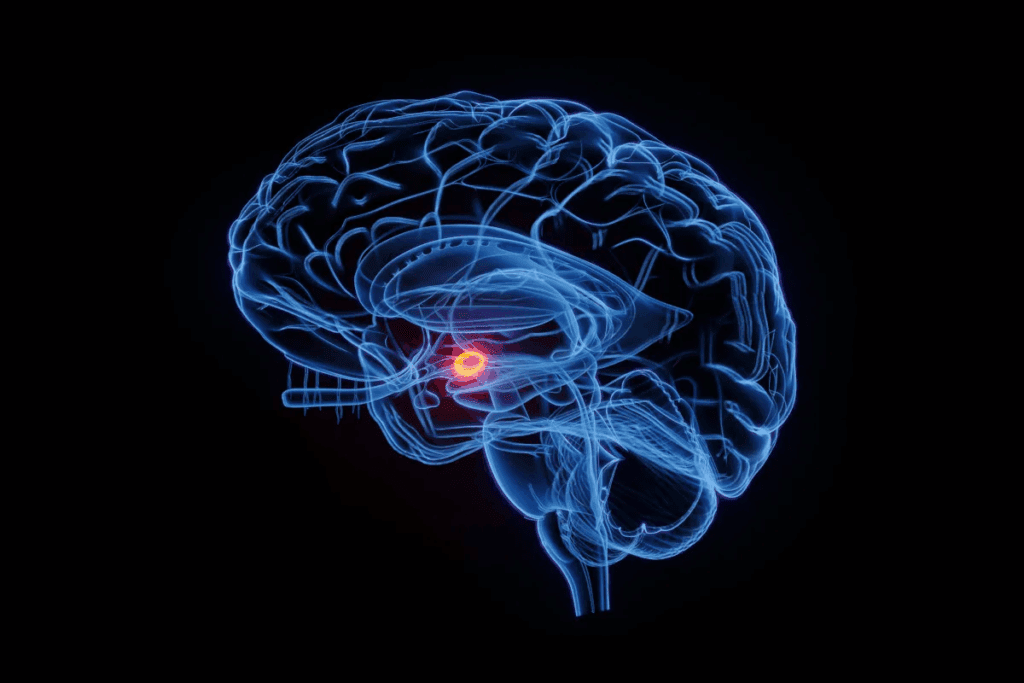
The pituitary gland, or hypophysis cerebri, is vital for our health. It’s a key part of the endocrine system. We’ll look at its structure and role to grasp its importance.
Anatomical Location and Size
The pituitary gland sits at the brain’s base, inside the sella turcica of the sphenoid bone. This spot lets it talk to the brain and other glands. It’s about 1 cm wide, making it small but very important.
Basic Functions and Importance
The pituitary gland controls many body functions by managing hormone releases. It’s like a “master gland” that guides the thyroid, adrenal glands, and gonads. It’s key for growth, metabolism, reproduction, and handling stress.
Because of its big role in the endocrine system, problems with the pituitary gland can be serious. Knowing where the pituitary gland is and its size helps in diagnosing and treating issues.
Hypophysis: The Scientific Designation
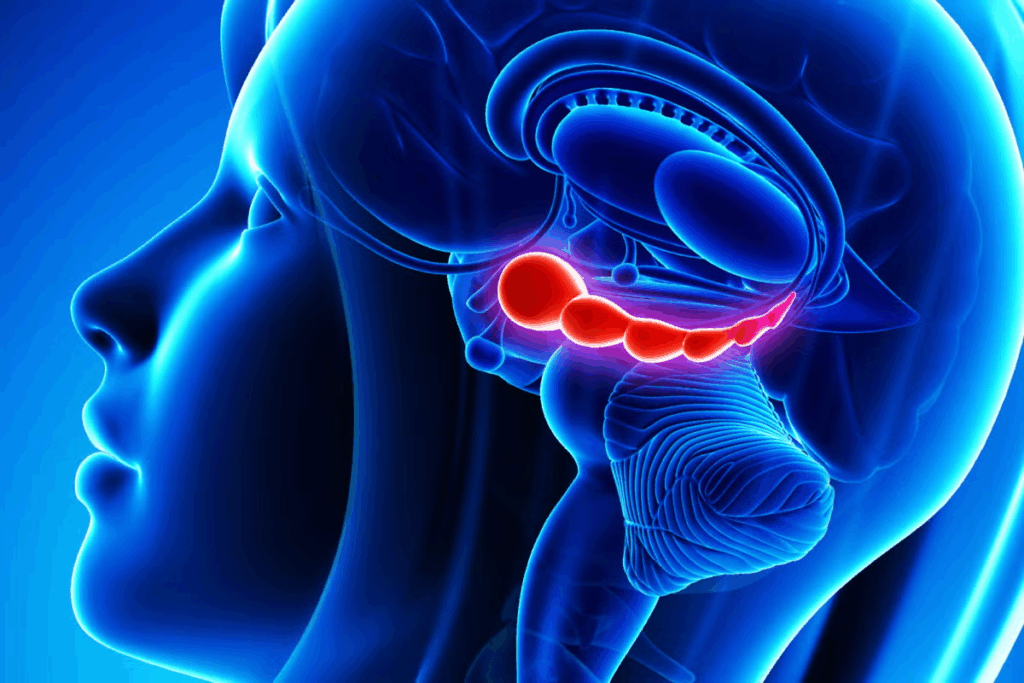
Learning about hypophysis helps us understand its role in our bodies. It comes from Greek words. Knowing its origins helps us grasp its importance as an endocrine gland.
Greek Etymology and Meaning
The word hypophysis breaks down into “hypo” (meaning “under”) and “physis” (meaning “growth” or “nature”). This tells us it’s located under the hypothalamus. The hypophysis cerebri name highlights its brain connection.
The hypophysis, or pituitary gland, sits under the hypothalamus. This spot is key to its job. It gets signals from the hypothalamus to release hormones. So, its name shows its vital role in our endocrine system.
Usage in Scientific and Medical Literature
In science and medicine, hypophysis and “pituitary gland” are often used the same way. This naming is chosen for its clear meaning and global acceptance. Using hypophysis in medical texts highlights its importance. It makes sure doctors and researchers worldwide can talk clearly.
Studies, clinical papers, and teaching materials often use hypophysis to talk about the pituitary gland. This consistent use keeps medical talk clear and precise. It ensures that information is shared accurately, no matter the language or culture.
Glandula Pituitaria: The Latin Terminology
In medical science, “Glandula Pituitaria” means the pituitary gland, a key endocrine organ. Latin terms in medicine have a long history. They offer a universal language that crosses language and geography barriers.
Historical Development of the Term
The term “Glandula Pituitaria” comes from early medical science. Galen, a Greek doctor, first described the gland. He thought it got pituita (phlegm or mucus) from the brain. This idea, though wrong, named the gland.
“The pituitary gland, often referred to as the ‘master gland,’ plays a key role in controlling many bodily functions through its hormone secretions.”
Over time, “Glandula Pituitaria” became the standard Latin name for the pituitary gland in medical texts. Its use shows the lasting impact of Latin on medical terms.
Contemporary Usage in Medical Fields
Today, “Glandula Pituitaria” is used in medical writing, mainly when formal terms are needed. Its ongoing use highlights the gland’s role in endocrine studies.
Term | Language | Usage |
Glandula Pituitaria | Latin | Medical literature, historical contexts |
Pituitary Gland | English | Common medical terminology |
Hypophysis | Greek | Scientific and medical contexts |
The table shows different names for the pituitary gland in various languages. It shows “Glandula Pituitaria” is important in medical talk.
Exploring the pituitary gland’s history gives us insights into its role in health.
Adenohypophysis: The Anterior Pituitary
The adenohypophysis, or anterior pituitary gland, is key in controlling many body functions. It does this by secreting hormones. We will look into its structure, growth, and the important hormones it makes.
Anatomical Characteristics and Development
The adenohypophysis is the front part of the pituitary gland. It has two main parts: the anterior and posterior pituitary. It comes from the ectodermal cells of the mouth during fetal development. The adenohypophysis has three parts: the pars distalis, pars tuberalis, and pars intermedia. Each part has its own role.
The largest part, the pars distalis, makes many hormones. Its growth is complex and vital for the endocrine system to work right.
Hormones and Regulatory Functions
The adenohypophysis makes important hormones. These include growth hormone (GH), prolactin (PRL), follicle-stimulating hormone (FSH), luteinizing hormone (LH), adrenocorticotropic hormone (ACTH), and thyroid-stimulating hormone (TSH). These hormones control growth, reproduction, stress, and metabolism.
For example, growth hormone helps with growth and metabolism. ACTH makes the adrenal glands produce cortisol, important for stress and metabolism. The control of these hormones is very precise, thanks to feedback from the hypothalamus and target organs. This keeps the body balanced.
The adenohypophysis is vital in the endocrine system. Its hormone production and control show its importance in human health.
“The anterior pituitary gland is often called the ‘master gland’ because of its big impact on other endocrine glands. This title fits the whole pituitary gland better.”
Neurohypophysis: The Posterior Pituitary
The neurohypophysis, or posterior pituitary gland, is a key part of our body. It stores and releases hormones made by the hypothalamus. This gland works with the hypothalamus to control many body functions.
Structural Features and Neural Connections
The neurohypophysis is different from the anterior pituitary. It has nerve fibers from the hypothalamus, making it part of the central nervous system. These connections let hormones from the hypothalamus reach the posterior pituitary for storage.
Neural connections between the hypothalamus and the neurohypophysis are vital. They help control when hormones are released. The axons of hypothalamic neurons carry hormones to the posterior pituitary.
Hormone Storage and Release Mechanisms
The main job of the neurohypophysis is to store and release hormones from the hypothalamus. It releases two important hormones: oxytocin and vasopressin (also known as ADH). These hormones are made in the hypothalamus and stored in the posterior pituitary.
The release of these hormones is triggered by the hypothalamus. When the body needs them, the posterior pituitary sends them into the bloodstream. There, they can affect organs.
Oxytocin is important for childbirth and lactation. Vasopressin helps control water balance, affecting urine concentration and volume.
The “Master Gland”: Another Name for Pituitary Gland
The pituitary gland is known as the “master gland.” This nickname shows its key role in the endocrine system. It’s not just a name; it highlights the gland’s role in keeping our hormones in balance.
Origin of the Nickname
The term “master gland” comes from the pituitary gland’s big influence on other glands. The pituitary gland is like a control center, guiding the work of many hormonal glands in the body. It does this by sending out hormones that help or stop other glands from working.
For example, it sends out Thyroid-Stimulating Hormone (TSH) to control the thyroid gland. It also sends Adrenocorticotropic hormone (ACTH) to manage the adrenal glands’ cortisol production. This shows why the pituitary gland is called the “master gland.”
Control Over Other Endocrine Glands
The pituitary gland’s control over other glands is complex. It involves many hormones and feedback loops. Let’s look at how it works with the thyroid gland:
Hormone | Function | Target Gland |
Thyroid-Stimulating Hormone (TSH) | Stimulates thyroid hormone production | Thyroid Gland |
Adrenocorticotropic hormone (ACTH) | Stimulates cortisol production | Adrenal Glands |
Growth Hormone (GH) | Regulates growth and metabolism | Various tissues |
This table shows how the pituitary gland controls the thyroid and adrenal glands, among others. The hormones it sends out are carefully controlled to keep hormone levels balanced.
“The pituitary gland is often considered the ‘master gland’ of the endocrine system because it controls the secretion of hormones from other endocrine glands.”
Justification for the Title
The pituitary gland’s nickname as the “master gland” is well-deserved. It controls the work of other hormonal glands, keeping our hormone levels in check. This balance is key for growth, metabolism, and reproductive processes.
In conclusion, the pituitary gland’s nickname, the “master gland,” shows its vital role in our body’s functions. Its control over other glands and its role in regulating hormones make it essential for our health.
The Intermediate Lobe of the Pituitary Gland
The pituitary gland’s intermediate lobe is often overlooked. Yet, it’s vital for growth and function. We’ll look at how it develops, its role in humans, and how it compares to other mammals.
Developmental Characteristics
The intermediate lobe forms from Rathke’s pouch in the womb. This is key for its growth into the adult pituitary gland. Abnormalities here can cause endocrine issues.
Research shows the intermediate lobe is bigger in some animals. This suggests it has evolved differently in various species. For example, in some mammals, it’s more developed and important for their hormones.
Functional Significance in Humans
In humans, the intermediate lobe is smaller than in other mammals. Yet, it makes melanocyte-stimulating hormone (MSH), affecting skin color. Scientists are studying its role, which could help with skin diseases.
Studies suggest MSH in humans affects more than just skin color. It might also influence energy balance and appetite control. This could lead to new insights into metabolic problems.
Comparison with Other Mammals
The size and function of the intermediate lobe vary among mammals. Rodents have a big intermediate lobe, important for their hormones. Humans and some primates have a smaller one.
Species | Intermediate Lobe Development | Functional Significance |
Rodents | Well-developed | Significant role in endocrine system |
Humans | Less developed | Produces MSH, involved in pigmentation |
Primates | Less developed | Similar to humans, with possible roles in pigmentation |
This comparison shows the intermediate lobe’s varied roles across species. It highlights its adaptability and functional diversity.
International and Linguistic Variations of Pituitary Names
The name of the pituitary gland changes with language and culture. This shows how important the gland is worldwide. It highlights the gland’s role in different medical traditions and languages.
European Terminology
In Europe, the gland is called “hypophysis” from Greek. In Dutch, it’s “hypofyse.” French and Italian use “hypophyse” and “ipofisi,” respectively. Portuguese calls it “hipofise,” showing a common root.
These names are more than just words. They show Europe’s shared scientific history. They help doctors and scientists talk clearly across borders.
“The uniformity in terminology for the pituitary gland across European languages underscore the shared scientific roots and facilitates collaboration in medical research and practice.”
Language | Term for Pituitary Gland |
Dutch | Hypofyse |
French | Hypophyse |
Italian | Ipofisi |
Portuguese | Hipofise |
Global Medical Nomenclature Variations
Outside Europe, names for the gland change a lot. In Asia, names like “” in Chinese and “” in Japanese reflect local languages. These names often come from the scientific term “hypophysis.”
The wide range of names shows the need for clear talk in global health work. Knowing these differences is key for right diagnosis and treatment.
In summary, the names for the pituitary gland vary a lot around the world. This shows both local culture and the global nature of medicine. Knowing these differences is vital for working together in healthcare.
Visualizing the Pituitary: Imaging and Cross-Sections
The pituitary gland is now seen in detail thanks to new imaging methods. This has greatly helped doctors diagnose and plan treatments for pituitary issues.
Modern Imaging Techniques
Technologies like Magnetic Resonance Imaging (MRI) and Computed Tomography (CT) scans are key. MRI gives clear images of soft tissues, showing the pituitary gland and its area well.
MRI is great for spotting tumors and other problems because it can see soft tissues well. CT scans are faster and used more often, like in emergencies.
Imaging Technique | Advantages | Common Uses |
MRI | High soft tissue resolution, detailed images | Pituitary tumors, abnormalities |
CT Scan | Quick, widely available | Emergency situations, calcification detection |
Identifying Pituitary Structures
Healthcare experts can now spot different parts of the pituitary gland with these tools. They can see the anterior and posterior lobes, the stalk, and any issues like tumors or cysts.
Knowing exactly what’s going on is key for diagnosing and planning surgeries. MRI and CT scans give doctors the details they need to understand the size, location, and effect of these problems.
Thanks to these imaging methods, we can better understand and treat pituitary issues. This leads to better care for patients.
Conclusion
The pituitary gland, also known as the hypophysis, is key in the endocrine system. We’ve looked at its many names, each showing a different part of its role. This gland is vital for our body’s functions.
Knowing the names like adenohypophysis and neurohypophysis helps us see its complex role. The pituitary gland summary shows it’s a master gland. It controls other glands and keeps hormone levels balanced.
The hypophysis is a major part of the endocrine system. It affects many body processes. Its detailed structure and function need clear medical terms to explain its health role.
By studying the pituitary gland’s names and functions, we understand its importance. This knowledge helps improve medical care and treatments for related issues.
FAQ
What is the pituitary gland also known as?
The pituitary gland is also called the hypophysis, glandula pituitaria, or the “master gland”. This is because it controls other endocrine glands.
What is the function of the adenohypophysis?
The adenohypophysis, or anterior pituitary, makes hormones. These hormones help with growth, metabolism, and reproductive processes.
What is the role of the neurohypophysis?
The neurohypophysis, or posterior pituitary, stores and releases hormones from the hypothalamus. It’s key for water balance and blood pressure.
Why is the pituitary gland referred to as the “master gland”?
It’s called the “master gland” because it controls many other glands. This includes the thyroid gland, adrenal glands, and gonads.
What is the intermediate lobe of the pituitary gland?
The intermediate lobe is a part of the pituitary gland. It’s more noticeable in some animals than in humans. Its role differs by species.
How is the pituitary gland visualized in medical imaging?
Modern imaging like MRI and CT scans can show the pituitary gland. They help doctors see its parts and find any problems.
What are some other names for the pituitary gland in different languages?
In different languages, the pituitary gland is known as hipofise, hypofyse, and hyphophysis. This shows how medical terms vary across cultures.
What is the significance of understanding the different names for the pituitary gland?
Knowing the various names for the pituitary gland is key. It helps doctors talk clearly and understand its complex role in our bodies.
References
Government Health Resource. Pituitary Gland: Alternative Names and Functions. Retrieved from https://histology.siu.edu/erg/pituit.htm