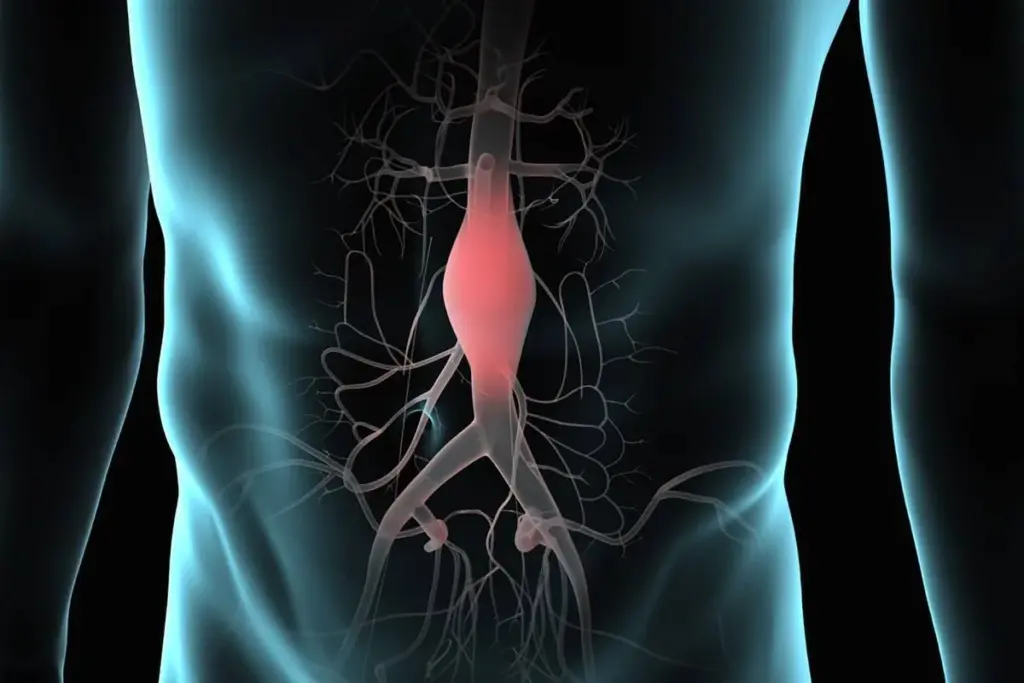
Every year, thousands of Americans are diagnosed with an aortic aneurysm. This is a serious condition that affects the body’s largest artery.aortic aneurysm
The aorta is vital for delivering blood from the heart to the rest of the body. An aneurysm happens when a part of the aorta weakens and bulges outward. This can lead to a rupture and severe bleeding inside the body.
It’s important to know the risks and symptoms of an aortic aneurysm. This knowledge helps in early detection and treatment.
Key Takeaways
- An aortic aneurysm is a serious medical condition that affects the aorta.
- The aorta is the main artery that carries blood from the heart.
- Early detection is key to treating an aortic aneurysm effectively.
- Symptoms can vary, but often include abdominal or back pain.
- Understanding the risks can help in managing the condition.
Understanding the Aorta: The Body’s Main Artery
[PLACE THE IMAGE HERE]
The aorta is at the center of our circulatory system. It’s a key artery that carries oxygen-rich blood to the body. It starts at the heart and branches out to other arteries, supplying blood to every part of the body.
Aorta Definition and Anatomy
The aorta is the biggest artery coming from the left ventricle of the heart. It has different parts, like the ascending aorta, aortic arch, descending aorta, and abdominal aorta. Each part is important for blood flow.
The Critical Function of the Aorta
The aorta’s main job is to carry oxygenated blood to the rest of the body. It does this by splitting into smaller arteries that reach organs and tissues. Its flexibility helps it handle blood pressure changes with each heartbeat, keeping blood flowing smoothly.
|
Section of Aorta |
Description |
Function |
|---|---|---|
|
Ascending Aorta |
Rises from the left ventricle |
Initial pathway for oxygenated blood |
|
Aortic Arch |
Curves backward and upward |
Gives off branches to the head and arms |
|
Descending Aorta |
Continues down through the thorax |
Supplies blood to the thoracic organs |
|
Abdominal Aorta |
Extends through the abdominal cavity |
Divides into branches for abdominal organs |
Why the Aorta’s Health Matters
Keeping the aorta healthy is very important. Damage or disease here can seriously harm your heart health. Problems like aortic aneurysm or aortic dissection can be deadly if not treated.
Our lifestyle choices, like diet, exercise, and smoking, affect the aorta’s health. Regular health checks and a healthy lifestyle can lower the risk of aortic diseases.
What is an Aortic Aneurysm?

An aortic aneurysm is a bulge in the aorta that can be deadly if not treated. The aorta carries blood from the heart to the body. Any problem with it is serious.
Definition and Basic Understanding
An aortic aneurysm is a permanent bulge in the aorta. It can happen anywhere along its length. This bulge is caused by a weak spot in the artery wall.
The aorta is a key artery that starts at the heart and goes to the abdomen. It splits into smaller arteries there. An aneurysm can happen if any part of the artery wall weakens.
How Aneurysms Form
Aneurysms form from a mix of genetic, environmental, and lifestyle factors. High blood pressure is a big risk because it puts extra stress on the artery walls.
Other things that can lead to an aortic aneurysm include plaque buildup, genetics, and certain tissue disorders.
Common Locations for Aortic Aneurysms
Aortic aneurysms can happen in different parts of the aorta. The most common places are the abdominal aorta and the thoracic aorta. Abdominal aortic aneurysms (AAAs) are more common and happen below the kidneys.
- Abdominal Aortic Aneurysm (AAA): Occurs in the part of the aorta that passes through the abdomen.
- Thoracic Aortic Aneurysm: Occurs in the part of the aorta that passes through the chest.
Knowing where an aortic aneurysm is helps doctors decide the best treatment.
Types of Aortic Aneurysms

Aortic aneurysms are mainly divided by where they happen in the aorta. Knowing this helps us understand the risks and the best ways to treat them.
Abdominal Aortic Aneurysm (AAA)
An Abdominal Aortic Aneurysm (AAA) happens in the aorta through the abdomen. AAAs are the most common and linked to smoking, high blood pressure, and atherosclerosis.
- Typically asymptomatic until rupture
- Risk factors include smoking, age, and family history
- Screening is recommended for men aged 65-75 who have smoked
Thoracic Aortic Aneurysm
A Thoracic Aortic Aneurysm happens in the chest part of the aorta. It’s less common than AAA but just as dangerous.
- Can cause symptoms like chest pain and difficulty swallowing
- Often associated with genetic conditions like Marfan syndrome
- Diagnosis typically involves imaging tests like CT or MRI scans
Aortic Root and Arch Aneurysms
Aortic Root and Arch Aneurysms affect the aorta near the heart and the curved part between the ascending and descending aorta. These are very dangerous because of their close location to the heart.
- Aortic root aneurysms can lead to aortic regurgitation
- Aortic arch aneurysms pose challenges for surgical repair
- Both types require careful monitoring and potentially complex surgical intervention
Thoracoabdominal Aortic Aneurysm
A Thoracoabdominal Aortic Aneurysm spans both the thoracic and abdominal parts of the aorta. It’s hard to treat because of its complex anatomy and the vital organs it supplies.
- Requires highly specialized surgical techniques for repair
- Often associated with significant morbidity and mortality
- Management may involve a multidisciplinary team of vascular surgeons and other specialists
The Seriousness of Aortic Aneurysms
Aortic aneurysms are a serious medical condition. They can be life-threatening if not managed properly. This condition involves many complications and risks.
Potential Complications
One major concern is the risk of rupture. A rupture can cause severe internal bleeding, often fatal if not treated quickly. Other issues include aortic dissection and compression of adjacent structures. These can cause pain and other symptoms, depending on the aneurysm’s location.
Mortality Rates
The mortality rate for aortic aneurysms is high, mainly due to rupture. Many people with a ruptured aortic aneurysm do not survive to reach the hospital. Even those who get surgery have a high mortality rate.
Factors Affecting Severity
Several factors can impact an aortic aneurysm’s severity. These include its size, location, and the patient’s overall health. Larger aneurysms are more serious and at higher risk of rupture. Aneurysms in certain areas, like the aortic root, can be harder to treat.
Enlarged Aorta vs. Aortic Aneurysm
It’s important to know the difference between an enlarged aorta and an aortic aneurysm. An enlarged aorta is a dilation less than 50% of normal diameter. An aortic aneurysm is a more significant dilation. Understanding this is key for proper diagnosis and treatment.
Abdominal Aortic Aneurysm Symptoms
It’s important to know the symptoms of abdominal aortic aneurysms early. These aneurysms often don’t show symptoms at first. But knowing the signs can help get medical help fast.
Common Symptoms to Watch For
Even though many AAAs don’t show symptoms, some people might notice a few things. These include:
- Pain in the abdomen, back, or side, which can be a deep, persistent ache
- A pulsating feeling near the navel
- Loss of appetite or a feeling of fullness
- Weight loss without a clear reason
- In some cases, a visible abdominal mass can be felt
Silent Nature of AAA
AAAs are often silent, which makes them very dangerous. Many people don’t know they have it until a doctor finds it. Or, it might burst, which is very serious. This is why it’s key to screen those at risk.
When Symptoms Indicate an Emergency
Severe symptoms mean the aneurysm might be leaking or ruptured. This is a serious emergency. Signs that need quick medical help include:
- Severe, sudden pain in the abdomen or back
- Rapid heart rate or palpitations
- Low blood pressure or fainting
- Confusion or loss of consciousness
If you or someone you know has these symptoms, get emergency care right away. Quick action can save lives.
Thoracic Aortic Aneurysm Symptoms
Knowing the symptoms of thoracic aortic aneurysms is key for quick medical help. A thoracic aortic aneurysm happens when the aorta, the main artery, gets bigger in the chest. Spotting the signs early can greatly improve treatment results.
Recognizing the Warning Signs
The signs of a thoracic aortic aneurysm can be different and not always clear. Common signs include:
- Chest pain or discomfort, which may spread to the back
- Difficulty swallowing (dysphagia) due to the esophagus being compressed
- Shortness of breath (dyspnea) from pressure on the trachea or bronchi
- A persistent cough, possibly from airway irritation
- Hoarseness, if the aneurysm presses on or irritates the recurrent laryngeal nerve
These signs can also mean other things, so it’s important to see a doctor if they don’t go away or get worse.
Differences from Abdominal Aneurysm Symptoms
Symptoms of thoracic aortic aneurysms are different from those of abdominal aortic aneurysms. Abdominal aneurysms often cause pain in the belly or a noticeable mass. But thoracic aneurysms usually cause chest and breathing problems.
|
Symptom |
Thoracic Aortic Aneurysm |
Abdominal Aortic Aneurysm |
|---|---|---|
|
Pain Location |
Chest or back pain |
Abdominal pain |
|
Respiratory Symptoms |
Difficulty swallowing, shortness of breath |
Rarely present |
When to Seek Immediate Medical Attention
It’s very important to get medical help right away if you have severe or sudden symptoms, such as:
- Severe chest or back pain
- Rapid growth of the aneurysm
- Signs of aortic dissection, like sudden, severe pain
Aortic dissection symptoms can look like a heart attack and need quick medical care. Quick diagnosis and treatment are vital for survival.
In summary, knowing the symptoms of thoracic aortic aneurysms and when to get medical help can save lives. If you’re at risk or have symptoms, talk to a healthcare professional.
Aortic Dissection: A Life-Threatening Emergency
A tear in the aorta’s inner layer can cause a serious condition called aortic dissection. This happens when blood flows through the tear, splitting the aorta’s layers. It’s important to know about this condition to get quick treatment.
Understanding Aortic Dissection
Aortic dissection occurs when the aorta’s inner layer tears. This lets blood into the media layer, causing the aorta to split. This split can lead to serious problems like aortic rupture.
The dissection can happen anywhere in the aorta. Where it happens affects how serious it is and how it’s treated.
Aortic Dissection vs. Aneurysm
Aortic dissection and aneurysm are two different serious aorta issues. An aortic aneurysm is when the aorta gets too wide. Aortic dissection is when there’s a tear in the aorta’s wall, letting blood flow between its layers.
An aneurysm can turn into a dissection if it has a tear. But, dissection can happen without an aneurysm.
Aortic Dissection Warning Signs
Knowing the signs of aortic dissection is key to getting help fast. Common symptoms include:
- Sudden, severe chest or back pain, often described as tearing or ripping
- Pain that radiates to the neck, jaw, or arms
- Difficulty breathing
- Fainting or loss of consciousness
- Weakness or paralysis in the legs
Emergency Response for Suspected Dissection
If you think you might have aortic dissection, get medical help right away. Doctors will use tests like CT scans or MRI to check.
Fixing the tear usually means emergency surgery. Sometimes, a less invasive option called endovascular repair is used.
Quick action is vital to save lives and improve outcomes.
Ruptured Aortic Aneurysm: The Most Serious Complication
An aortic aneurysm rupture is a life-threatening emergency. It requires immediate action. This condition can cause severe internal bleeding.
What Happens During a Rupture
When the aortic aneurysm wall tears, it bleeds into the tissues around it. This can lower blood pressure and harm vital organs. The rupture can be very dangerous, causing sudden, severe pain.
Symptoms of a Ruptured Aorta
It’s important to know the symptoms of a ruptured aorta to get help fast. Common signs include:
- Severe, sudden pain in the abdomen or back
- Low blood pressure
- Fast heart rate
- Dizziness or loss of consciousness
The symptoms can change based on where the rupture is.
Survival Rates and Emergency Response
The survival rate for a ruptured aortic aneurysm is much lower than for those that don’t rupture. Quick medical care is key to survival. The emergency steps are:
- Rapid transport to a hospital
- Emergency surgery to fix the aneurysm
- Blood transfusions to manage blood loss
Quick action can greatly improve survival chances. Knowing how serious a ruptured aortic aneurysm is and its symptoms can save lives.
Risk Factors for Developing Aortic Aneurysms
Several factors can increase the risk of getting an aortic aneurysm. These include genetics, lifestyle, and age. Knowing these risks helps identify who is more likely to get an aneurysm. It also helps in taking steps to prevent it.
Genetic and Family History Factors
Genetics play a big role in aortic aneurysms. If your family has a history of aneurysms, you’re at higher risk. Certain genetic conditions like Marfan syndrome can weaken the aorta, making aneurysms more likely.
- Marfan syndrome: A genetic disorder that affects the body’s connective tissue, potentially leading to aortic root dilation and aneurysm formation.
- Ehlers-Danlos syndrome: A group of genetic disorders that affect connective tissue, potentially causing vascular complications including aneurysms.
- Turner syndrome: A genetic condition in females that can involve cardiovascular abnormalities, including aortic aneurysms.
Lifestyle and Health Conditions
Some lifestyle choices and health conditions can raise your risk of an aortic aneurysm. These include:
- Smoking: Smoking damages the aortic wall and increases the risk of aneurysm formation and rupture.
- Hypertension: High blood pressure puts extra stress on the aortic walls, raising the risk of aneurysm development.
- Atherosclerosis: The buildup of plaque in the arteries can weaken the aortic walls, contributing to aneurysm formation.
Age and Gender Considerations
Age and gender also play a role in aortic aneurysm risk. The risk goes up with age, after 60. Men are more likely to get abdominal aortic aneurysms than women. But, women’s risk increases after menopause.
Aortic Ectasia and Dilation as Precursors
Aortic ectasia and dilation can lead to aortic aneurysms. Ectasia is a mild or localized dilation, while dilation is a bigger enlargement. Watching these conditions is key because they can turn into aneurysms if not managed.
Understanding and managing these risk factors can help in early detection and prevention of aortic aneurysms. This can save lives through timely intervention.
Diagnosis of Aortic Aneurysms
Finding aortic aneurysms early is key. It helps in choosing the right treatment and improves patient care.
Screening and Detection Methods
First, doctors look at your medical history and do a physical check. They check for things like smoking and high blood pressure. Ultrasound screening is often used first because it’s safe and works well for finding abdominal aortic aneurysms (AAA).
- Ultrasound: Uses sound waves to create images of the aorta.
- Physical Examination: Palpation may reveal a pulsatile mass in the abdomen.
Imaging Techniques
For a closer look, doctors use different imaging methods. These include:
- Computed Tomography (CT) scans: Give detailed images of the aorta, showing the aneurysm’s size and location.
- Magnetic Resonance Imaging (MRI): Gives clear images without radiation, good for long-term checks.
- Angiography: Uses dye to see the aorta and its branches on X-ray images.
Monitoring Aneurysm Growth
After finding an aneurysm, it’s important to watch it closely. This helps decide when to take action. How often you need to check depends on the aneurysm’s size and your health.
“Regular surveillance is key for managing aortic aneurysms, allowing for timely intervention when needed.” – A Cardiovascular Surgeon
When to Consider Genetic Testing
Genetic tests might be suggested if you have a family history of aortic aneurysms or related conditions like Marfan syndrome. Finding genetic markers helps understand your risk and plan prevention.
In summary, finding aortic aneurysms involves many steps. These include screening, advanced imaging, and regular checks. Knowing about these methods is vital for managing and treating aortic aneurysms well.
Treatment Options for Aortic Aneurysm
Treating aortic aneurysms involves different methods, from watching closely to surgery. The right treatment depends on the aneurysm’s size, where it is, and the patient’s health.
Watchful Waiting Approach
For small aneurysms, doctors might suggest watching and waiting. They use imaging tests to check the aneurysm’s size and growth. Patients are also told how to live healthier to prevent it from getting bigger.
Medication Management
Medicines are key in managing risks for aneurysm growth or rupture. They help control blood pressure and cholesterol. Beta-blockers and other drugs can also help reduce stress on the aortic wall.
|
Medication |
Purpose |
Benefits |
|---|---|---|
|
Beta-blockers |
Reduce blood pressure and heart rate |
Decreases stress on the aortic wall |
|
Statins |
Lower cholesterol levels |
Reduces the risk of cardiovascular events |
Recovery and Rehabilitation
After surgery, recovery and getting back to normal are important. This includes watching for complications, managing pain, and slowly getting back to activities. Cardiac rehabilitation programs can also help improve heart health.
It’s important to know about the different ways to treat aortic aneurysms. By looking at the aneurysm’s size, location, and the patient’s health, doctors can choose the best treatment.
Aortic Aneurysm Life Expectancy and Prognosis
Understanding the life expectancy of aortic aneurysms is key for patients and doctors. It helps in making treatment choices and improving outcomes. Knowing what affects survival rates is vital for effective management.
Factors Affecting Survival Rates
Many things can change survival rates for aortic aneurysm patients. The size and where the aneurysm is, the patient’s age, health, and other conditions matter. Smaller aneurysms are less likely to burst, but bigger ones are more dangerous.
The aneurysm’s location also matters a lot. For example, abdominal aortic aneurysms (AAAs) have different survival rates than thoracic ones. Lifestyle factors like smoking and exercise levels also play a role.
|
Factor |
Impact on Survival Rates |
|---|---|
|
Aneurysm Size |
Larger aneurysms have higher rupture risk |
|
Patient Age |
Older patients generally have poorer outcomes |
|
Overall Health |
Presence of comorbidities affects survival |
Life Expectancy Without Surgery
Life expectancy without surgery varies a lot. People with small aneurysms might live normally, but those with big ones face a higher risk of rupture and death. Monitoring and regular check-ups are key for managing the condition.
Patients with AAAs who didn’t have surgery had a much lower life expectancy than those who did.
Post-Treatment Outlook
Thanks to better surgery and medical care, the outlook for aortic aneurysm patients has improved a lot. Endovascular repair and open surgery have become more effective, cutting down on deaths and improving life quality.
After treatment, patients should quit smoking, exercise, and control blood pressure. Regular check-ups are important to watch for complications and make sure the aneurysm doesn’t come back.
Living with an Aortic Aneurysm
Getting diagnosed with an aortic aneurysm changes your life. You need to make big changes in how you live and take care of your health. This includes making lifestyle changes, keeping up with regular check-ups, and getting emotional support.
Lifestyle Modifications
Healthy choices are key for those with an aortic aneurysm. Here are some important ones:
- Dietary Changes: Eat foods that are good for your heart, like fruits, veggies, and whole grains. This helps keep your blood pressure and heart health in check.
- Exercise Regularly: Doing some exercise, like walking or swimming, is good for your heart. But, always talk to your doctor before starting any new workout.
- Smoking Cessation: Quitting smoking is very important. Smoking can make your aneurysm worse.
- Stress Management: Find ways to reduce stress, like meditation or yoga. This can help keep your stress levels down.
Monitoring and Follow-up Care
Keeping an eye on your health and going for regular check-ups are very important. Here’s what you might need to do:
- Regular Imaging Tests: You’ll need to have ultrasounds, CT scans, or MRIs to check on your aneurysm’s size and growth.
- Healthcare Visits: See your doctor often to check how you’re doing and make any needed changes to your treatment.
- Symptom Awareness: Pay attention to any changes in how you feel or new symptoms that might mean something’s wrong.
Psychological Impact
Having an aortic aneurysm can really affect your mind, leading to anxiety, depression, or stress. Here’s how to cope:
- Seek Support: Talk to loved ones, join support groups, or find online communities to share your feelings and get help.
- Mental Health Professionals: If you’re feeling really down or stressed, consider talking to a mental health expert.
Support Resources
There are many resources out there to help you manage an aortic aneurysm, including:
- Patient Support Groups: Places where you can meet others who understand what you’re going through and get support.
- Educational Materials: Reliable sources of information that can help you learn how to manage your condition.
- Healthcare Providers: A team of doctors and nurses who can give you medical advice and support.
By being proactive and well-informed, you can live a full and meaningful life with an aortic aneurysm.
Conclusion: Taking Aortic Health Seriously
Understanding aortic aneurysms is key to good heart health. The aorta is vital for blood flow, and problems here can be deadly.
It’s important to know the risks and signs of aortic issues. Early medical help is critical. Regular checks can help those with aneurysms.
By focusing on aortic health, you can lower your risk of aneurysms. Making smart choices and watching your health closely is essential.
Knowing about aortic health is the first step to managing it well. By staying informed and taking steps to prevent problems, you can keep your heart healthy and live better.
FAQ
What is an aortic aneurysm?
An aortic aneurysm is a bulge in the aorta, the main artery. It can happen in the abdominal or thoracic area.
What are the symptoms of an abdominal aortic aneurysm?
Symptoms can be silent. But, you might feel pain in the abdomen, back, or flank. You might also feel a pulsating mass in your abdomen. Severe symptoms mean it could have ruptured.
How does an aortic dissection differ from an aneurysm?
An aortic dissection is a tear in the aorta’s inner layer. Blood flows between the layers. An aneurysm is a bulge or dilation in the aorta.
What are the risk factors for developing an aortic aneurysm?
Risk factors include genetic predisposition, smoking, and high blood pressure. Atherosclerosis, certain medical conditions, age, and gender also play a role.
How is an aortic aneurysm diagnosed?
Diagnosis uses ultrasound, CT scans, and MRI. Monitoring growth and genetic testing for family history are also part of the process.
What are the treatment options for an aortic aneurysm?
Treatment options vary. They include watchful waiting, medication, and surgery. The choice depends on the aneurysm’s size, location, and your health.
What is the life expectancy for someone with an aortic aneurysm?
Life expectancy varies. It depends on the aneurysm’s size, location, and your overall health. Surgery’s success also affects it.
Can lifestyle changes help manage an aortic aneurysm?
Yes, lifestyle changes can help. Quitting smoking, keeping blood pressure healthy, and exercising regularly can manage an aortic aneurysm. They also reduce the risk of complications.
What is the difference between an enlarged aorta and an aortic aneurysm?
An enlarged aorta is a dilation that’s not necessarily aneurysmal. An aortic aneurysm is a significant bulge or dilation that can rupture.
How can I reduce my risk of developing an aortic aneurysm?
To reduce risk, avoid smoking, high blood pressure, and atherosclerosis. A healthy lifestyle also helps lower the risk of an aortic aneurysm.
What are the symptoms of a ruptured aortic aneurysm?
Symptoms include severe pain in the abdomen, back, or flank. You might also feel dizzy, nauseous, and vomit. Seek immediate medical help.
What is aortic ectasia?
Aortic ectasia is a mild dilation of the aorta. It can be a precursor to an aortic aneurysm.
Can genetic testing help identify those at risk for an aortic aneurysm?
Yes, genetic testing can identify those at risk. It’s useful for those with a family history of aortic aneurysms.
References
Centers for Disease Control and Prevention. Evidence-Based Medical Insight. Retrieved from
https://www.cdc.gov/heart-disease/about/aortic-aneurysm.html