It’s key to know if cranial nerves are part of the central or peripheral nervous system. They are seen as part of the peripheral nervous system. But, new studies show some cranial nerves have special structures.are cranial nerves part of the cns or pnsRecognizing the Cognitive Impact: What Are the Signs of brain fog?
At Liv Hospital, we offer top-notch care and focus on each patient. Our team is here to help you understand these complex issues. We make sure you get the best care and support.
Key Takeaways
- Cranial nerves are typically classified as part of the peripheral nervous system.
- Recent research highlights unique structural characteristics of certain cranial nerves.
- Liv Hospital provides international expertise in neurological assessment.
- Patient-centered care is our top priority.
- Comprehensive support is available for international patients.
The Nervous System: A Brief Overview
Our nervous system is key in noticing changes around us and acting on them. It works with the endocrine system to keep our body stable. This helps us react to different situations.
Structure and Function of the Central Nervous System
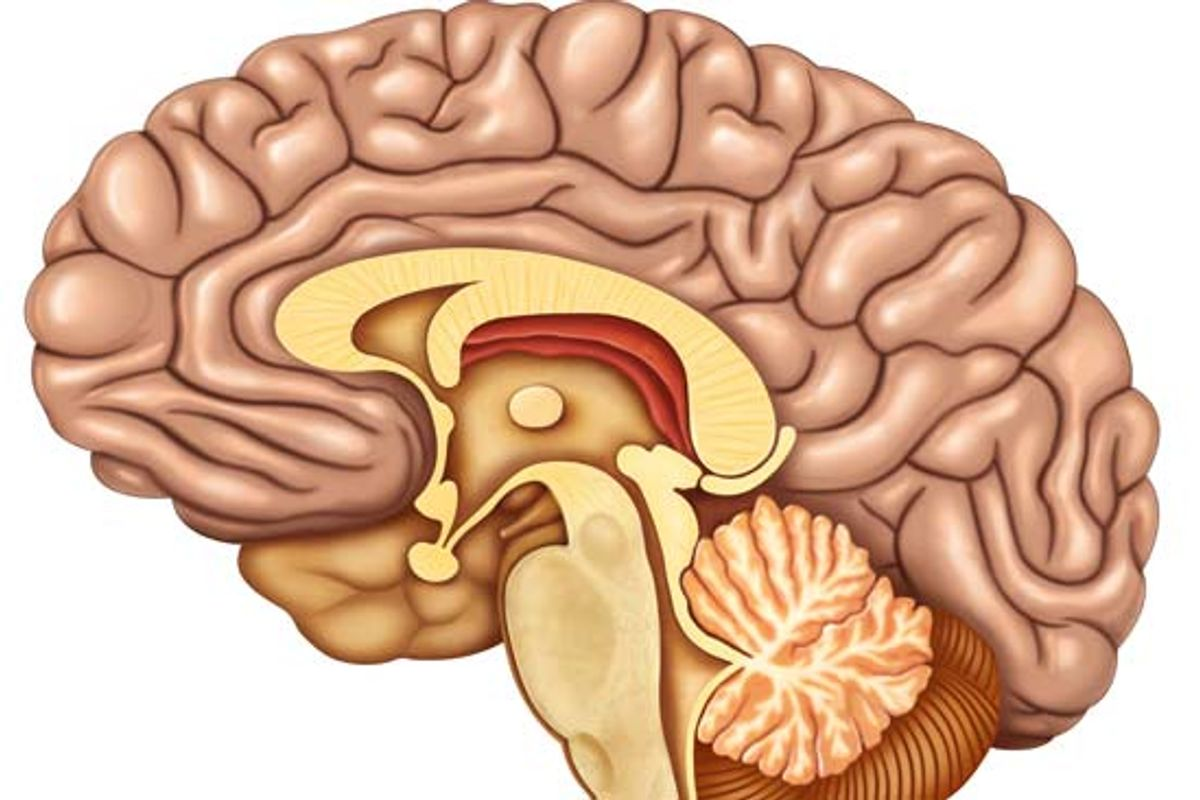
The Central Nervous System (CNS) is made up of the brain and spinal cord. It handles information from our senses and starts responses. The CNS is guarded by the blood-brain barrier and deals with processing and integrating information.
The CNS has different areas, each with its own job. These include controlling movement, handling emotions, and helping us think.
Structure and Function of the Peripheral Nervous System
The Peripheral Nervous System (PNS) includes nerves that branch from the brain and spinal cord. It sends sensory info to the CNS and motor signals to muscles and glands.
The PNS has two parts: the somatic nervous system for voluntary actions and the autonomic nervous system for involuntary functions.
The Interface Between CNS and PNS
The connection between the CNS and PNS is vital for handling sensory info and coordinating responses. Cranial nerves are key here, linking the brain to structures in the head and neck.
This connection lets the nervous system work together as a whole. It responds well to both inside and outside changes.
Understanding Cranial Nerves: Basic Anatomy
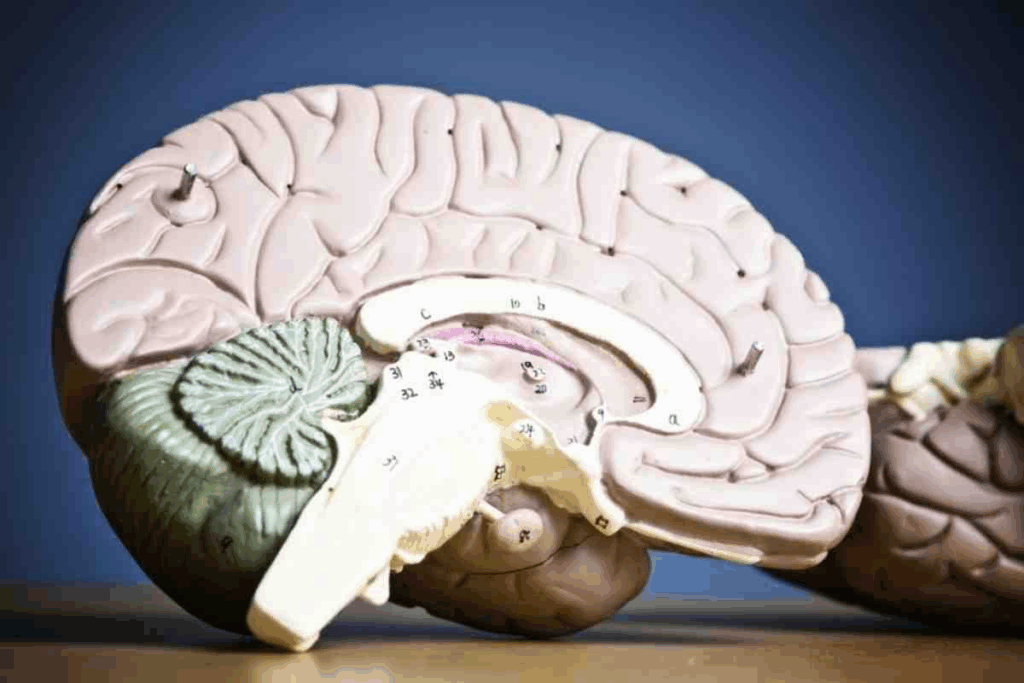
The human body has twelve pairs of cranial nerves. They come straight from the brain and brainstem. These nerves help with many important functions like feeling, moving, and controlling body functions.
Definition and General Characteristics
Cranial nerves start from the brain, including the brainstem. They control many body functions, mainly in the head and neck. There are twelve pairs, each with a Roman numeral and a name based on its role.
The twelve cranial nerves are: Olfactory (I), Optic (II), Oculomotor (III), Trochlear (IV), Trigeminal (V), Abducens (VI), Facial (VII), Auditory (VIII), Glossopharyngeal (IX), Vagus (X), Spinal Accessory (XI), and Hypoglossal (XII). Cranial nerves I and II start from the cerebrum. The other ten come from the brainstem.
Cranial Nerve | Function | Origin |
Olfactory (I) | Sensory | Cerebrum |
Optic (II) | Sensory | Cerebrum |
Oculomotor (III) | Motor | Brainstem |
Embryological Development of Cranial Nerves
Cranial nerves start forming early in a baby’s development. Neural crest cells are key in making cranial nerves, helping with sensory parts and more. Knowing how they develop helps us understand their complex roles.
“The development of cranial nerves is a complex process involving the coordinated action of multiple cell types and tissues.”
— Developmental Neuroscience
Anatomical Pathways and Distributions
Cranial nerves follow different paths and spread out in various ways. For example, the olfactory nerve carries smell information from the nose to the brain.
The paths these nerves take are complex and show their many roles. Knowing these paths helps doctors diagnose and treat nerve problems.
The Twelve Pairs of Cranial Nerves
Learning about the twelve pairs of cranial nerves is key to understanding the human nervous system. These nerves come straight from the brain. They help with sensing, moving, and controlling body functions.
Sensory Cranial Nerves (I, II, VIII)
The sensory cranial nerves send out sensory info. They include:
- Olfactory Nerve (I): It handles smell.
- Optic Nerve (II): It sends visual info from the retina to the brain.
- Vestibulocochlear Nerve (VIII): It deals with hearing and balance.
These nerves are vital for us to see and feel the world. Damage to them can cause big problems with sensing.
Motor Cranial Nerves (III, IV, VI, XI, XII)
The motor cranial nerves control muscles for movement. They are key for us to move. These include:
- Oculomotor Nerve (III): It controls most eye movements, pupil constriction, and keeps the eyelid open.
- Trochlear Nerve (IV): It works with the superior oblique muscle for eye movement.
- Abducens Nerve (VI): It controls the lateral rectus muscle for eye movement.
- Spinal Accessory Nerve (XI): It supplies muscles in the neck and shoulder.
- Hypoglossal Nerve (XII): It controls tongue movements.
These nerves are essential for voluntary movements. Problems with them can cause big motor issues.
Mixed Cranial Nerves (V, VII, IX, X)
The mixed cranial nerves have both sensory and motor fibers. They do many things. These include:
- Trigeminal Nerve (V): It has sensory and motor functions, like facial sensation and controlling chewing muscles.
- Facial Nerve (VII): It controls facial muscles, taste from the tongue’s front, and some autonomic functions.
- Glossopharyngeal Nerve (IX): It helps with swallowing, taste from the tongue’s back, and saliva.
- Vagus Nerve (X): It controls larynx and pharynx muscles and gives parasympathetic signals to organs.
As Medical Expert, a renowned neurologist, once said,
“The complexity of cranial nerves shows the detailed design of the human nervous system. It highlights the need for accurate diagnosis and treatment of related disorders.”
In summary, the twelve pairs of cranial nerves are divided into sensory, motor, and mixed types. Each type has unique roles in controlling body functions. Knowing their specific roles is important for both medical practice and research.
Are Cranial Nerves Part of the CNS or PNS?
Figuring out if cranial nerves belong to the central nervous system (CNS) or peripheral nervous system (PNS) is complex. They have special features that make them hard to fit into one category.
Traditional Classification Criteria
Traditionally, we’ve looked at how cranial nerves develop, their structure, and what they do. Some are clearly part of the PNS because of where they start and how they’re made. But others seem more like CNS parts.
The olfactory and optic nerves are often seen as CNS parts. They start in the brain and are myelinated like other CNS parts.
The Anatomical Perspective
Anatomically, cranial nerves connect to the brain and come out through holes in the skull. This connection to the brain makes them seem like CNS parts. Yet, most are myelinated by Schwann cells, like PNS parts.
The trigeminal nerve has a big sensory ganglion. It’s like the PNS’s dorsal root ganglia, making its classification tricky.
The Functional Perspective
Functionally, cranial nerves do many things. They control eye movements and facial expressions and carry sensory info. This variety makes it hard to say they’re just CNS or PNS.
The vagus nerve does both sensory and motor jobs. It connects to organs and is key to the autonomic nervous system, which is PNS.
In summary, deciding if cranial nerves are CNS or PNS is complex. We must look at their structure, function, and how they develop.
The Unique Properties of Cranial Nerves
Cranial nerves have special traits that make them stand out. These traits help us understand their roles, types, and how they affect health.
Myelination Differences: Oligodendrocytes vs. Schwann Cells
Cranial nerves are covered in myelin by two types of cells. Oligodendrocytes cover them in the brain, while Schwann cells do so in the rest of the body. This is a key feature of cranial nerves.
The switch from one type of cell to the other happens at the nerve’s exit from the brain. This area is key to understanding cranial nerve anatomy and problems. For example, nerves like the olfactory and optic have brain-like structures.
Regenerative Capabilities
Cranial nerves can heal, but not as well as other nerves. How well they heal depends on the nerve type, damage extent, and the nerve itself.
- The olfactory nerve (CN I) can regrow, helping some people regain their sense of smell.
- The optic nerve (CN II), being part of the brain, can’t heal much.
- Other nerves might heal a bit, depending on the injury and scar tissue.
Specialized Functions in the Head and Neck
Cranial nerves control many important functions in the head and neck. They help with eye movements, facial expressions, swallowing, and sensing the face and head.
- The trigeminal nerve (CN V) handles facial feelings and chewing.
- The facial nerve (CN VII) manages facial expressions and taste from the tongue’s front parts.
- The vagus nerve (CN X) helps organs and controls swallowing muscles.
These special roles show how vital cranial nerves are. Problems with them can greatly affect health and daily life.
Cranial Nerves with CNS-like Properties
Cranial nerves can be tricky to classify because some act like the central nervous system (CNS). Their unique development and structure make them stand out. We’ll look at which nerves are like the CNS, what makes them special, and why it matters for their classification.
The Olfactory Nerve (CN I)
The olfactory nerve is more like the CNS than other nerves. Olfactory receptor neurons come from the CNS and can grow back. This is because of how it develops and its structure, which is more like CNS tracts than peripheral nerves.
The Optic Nerve (CN II)
The optic nerve is also seen as part of the CNS, not just a regular nerve. The optic nerve is myelinated by oligodendrocytes, the same cells that do this in the CNS. Its development from the diencephalon also points to CNS-like properties.
The Trigeminal Nerve (CN V)
The trigeminal nerve is mostly a peripheral nerve but has some CNS-like traits. The trigeminal ganglion has cells surrounded by glial cells like those in the CNS. Yet, its overall structure and function are more typical of peripheral nerves.
In summary, nerves like the olfactory and optic nerves show CNS-like traits. Knowing this helps us understand the nervous system’s complexity and the details of cranial nerve classification.
Cranial Nerves as Predominantly PNS Structures
To understand cranial nerves as part of the PNS, we need to look at their anatomy, function, and how they develop. Classifying them as PNS is complex, involving many factors.
Anatomical Justification
Most cranial nerves belong to the PNS based on their anatomy. Their cell bodies are found in nuclei or ganglia, like other PNS nerves. They are myelinated by Schwann cells, unlike CNS nerves.
Key Anatomical Features:
Feature | Cranial Nerves | PNS Nerves |
Myelination | Primarily by Schwann cells | By Schwann cells |
Cell Body Location | In cranial nerve nuclei or ganglia | In ganglia outside CNS |
Regenerative Capability | Limited regeneration | Limited regeneration |
Functional Integration with the PNS
Cranial nerves work with the PNS to send and receive signals. They control many functions, like swallowing and facial expressions. This shows their important role in our body.
Developmental Considerations
Cranial nerves start from the neural crest and ectodermal placodes, like other PNS parts. This origin supports their PNS classification. Their development is influenced by genetics and environment.
In summary, cranial nerves are mostly PNS structures due to their anatomy, function, and development. Knowing this helps us understand their role in the nervous system.
Clinical Significance of Cranial Nerve Classification
Understanding cranial nerve classification is key in medical practice. It helps in diagnosing and treating patients. Knowing if they belong to the central nervous system (CNS) or peripheral nervous system (PNS) is vital for doctors.
Diagnostic Approaches to Cranial Nerve Disorders
Diagnosing cranial nerve disorders starts with knowing their classification. When we see them as PNS cranial nerves, it changes how we diagnose. It helps us find where problems are and what might be causing them.
Doctors use special tests to check how nerves work. This depends on if a nerve is sensory, motor, or both. Knowing this helps doctors pick the right tests and understand the results.
Treatment Implications Based on Classification
How we treat cranial nerve issues depends on their classification. Knowing they are cranial nerves PNS helps in choosing treatments. This is important when we think about how nerves can heal.
Treatments can include medicines, surgery, or therapy. Each choice is based on the nerve’s type and how it works.
Surgical Considerations in Cranial Nerve Pathology
Surgery for cranial nerve problems is very careful. The nerve’s type is a big factor. Surgeons aim to avoid harming the nerve, knowing it’s part of the PNS.
Planning and doing surgery depends on the nerve’s type. This affects how the surgeon approaches the problem. It’s all about keeping the nerve working right.
Research Perspectives on Cranial Nerve Classification
Recent studies have given us new insights into cranial nerves. This has led to a rethinking of how we classify them. As we learn more about the nervous system, scientists are looking for new ways to group these complex nerves.
Historical Evolution of Classification Systems
The way we classify cranial nerves has changed a lot over time. At first, we just looked at where they were in the body. Later, as we learned more about how nerves work, we started using both where they are and what they do.
Early classification systems mainly looked at where nerves attach to the brain. But as we learned more, we realized we needed a more detailed system.
Current Scientific Consensus
Now, scientists are debating whether cranial nerves belong to the central nervous system (CNS) or the peripheral nervous system (PNS). The traditional view says they are part of the PNS, because they are similar to spinal nerves.
But some cranial nerves don’t fit neatly into either category. For example, the olfactory and optic nerves have traits more like CNS structures.
Emerging Research and Reclassification Proposals
New research is helping us understand cranial nerves better. This has led to ideas for changing how we classify them. Some studies suggest that certain cranial nerves might have traits of both CNS and PNS, making the old ways of categorizing them outdated.
As we keep studying the nervous system, our understanding of how to classify cranial nerves will likely change. We might see a new system that better reflects their complexity.
Conclusion: Bridging the Gap Between CNS and PNS
Cranial nerves are a complex part of our nervous system. They show traits of both the central nervous system (CNS) and the peripheral nervous system (PNS). This makes their classification a bit tricky.
These nerves control many body functions, mainly in the head and neck. Knowing if they belong to the CNS or PNS is key for diagnosing and treating diseases. They are a vital part of the nervous system, which is a complex network.
Some cranial nerves, like the olfactory and optic nerves, act like CNS nerves. Others are more like PNS nerves. This shows how complex the nervous system is. Understanding this complexity helps doctors manage nerve-related conditions better.
In summary, studying cranial nerves shows how the CNS and PNS are connected. It highlights the need for a detailed understanding of the nervous system. As we learn more about cranial nerves, we gain a deeper respect for how our bodies work.
FAQ
Are cranial nerves part of the CNS or PNS?
Cranial nerves are mostly part of the Peripheral Nervous System (PNS). But, some show traits of the Central Nervous System (CNS) too.
What are the twelve pairs of cranial nerves?
There are twelve pairs of cranial nerves. These include the Olfactory (I), Optic (II), and Oculomotor (III). Also, the Trochlear (IV), Trigeminal (V), and Abducens (VI) nerves. The Facial (VII), Auditory/Vestibulocochlear (VIII), and Glossopharyngeal (IX) nerves are part of this group. The Vagus (X), Spinal Accessory (XI), and Hypoglossal (XII) nerves complete the list.
What is the difference between sensory, motor, and mixed cranial nerves?
Sensory nerves send information to the brain. Motor nerves control muscles. Mixed nerves do both.
Are cranial nerves myelinated by oligodendrocytes or Schwann cells?
Cranial nerves are covered by Schwann cells, like other peripheral nerves. But, some have CNS-like features with oligodendrocyte myelination.
Can cranial nerves regenerate?
Some cranial nerves can regrow, but it depends on the nerve and the damage.
Why is the classification of cranial nerves important?
Knowing if a nerve is CNS or PNS helps in diagnosis and treatment. It also guides surgery for nerve disorders.
What are the clinical implications of cranial nerve classification?
Correct classification helps in choosing the right treatment and surgery. It’s key for diagnosing and treating nerve issues.
Are there any cranial nerves that are considered part of the CNS?
Yes, the olfactory (I) and optic (II) nerves are sometimes seen as CNS parts. This is because of their development and CNS-like features.
How do cranial nerves develop embryologically?
Cranial nerves come from the neural crest and ectoderm in the embryo. Their development involves complex interactions that shape their anatomy and function.
What is the current scientific consensus on cranial nerve classification?
Most evidence supports that cranial nerves are part of the PNS. Yet, research is ongoing to better understand their classification.
Are there any emerging proposals for reclassifying cranial nerves?
Yes, some scientists suggest reclassifying based on new findings about their anatomy, function, and development.
References
National Center for Biotechnology Information. Evidence-Based Medical Guidance. Retrieved from https://www.ncbi.nlm.nih.gov/books/NBK10949/