
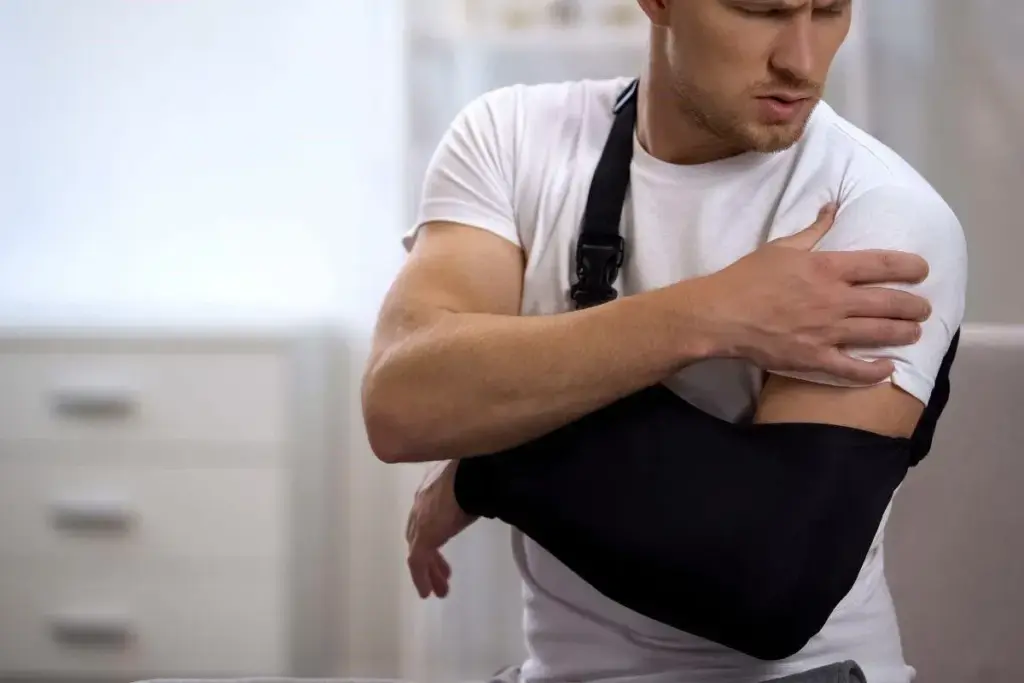
Recovering from a shoulder or arm injury can be tough and frustrating. Many patients wonder, “How long will I need to wear a sling?” The answer depends on several things, like the injury type and how severe it is, and the patient’s own health.
Wearing a shoulder immobilizer or arm support brace might be a hassle. But it’s key for healing right. How long you’ll need to wear it can vary a lot from person to person.
We aim to give top-notch healthcare info, including help for international patients. Knowing how to use a shoulder immobilizer or arm support brace is vital for the best results.
Key Takeaways
- The time you’ll wear a sling depends on the injury type and severity.
- How you heal can be influenced by your own health.
- Using a shoulder immobilizer or arm support brace correctly is important for healing.
- Knowing how to wear a sling right is key for the best results.
- Recovery times can vary a lot from one person to another.
The Purpose and Function of Arm Slings
Arm slings are key in supporting and keeping the arm in place for injuries. They help in healing, reduce pain, and improve recovery.
What Is an Arm Sling and How It Works
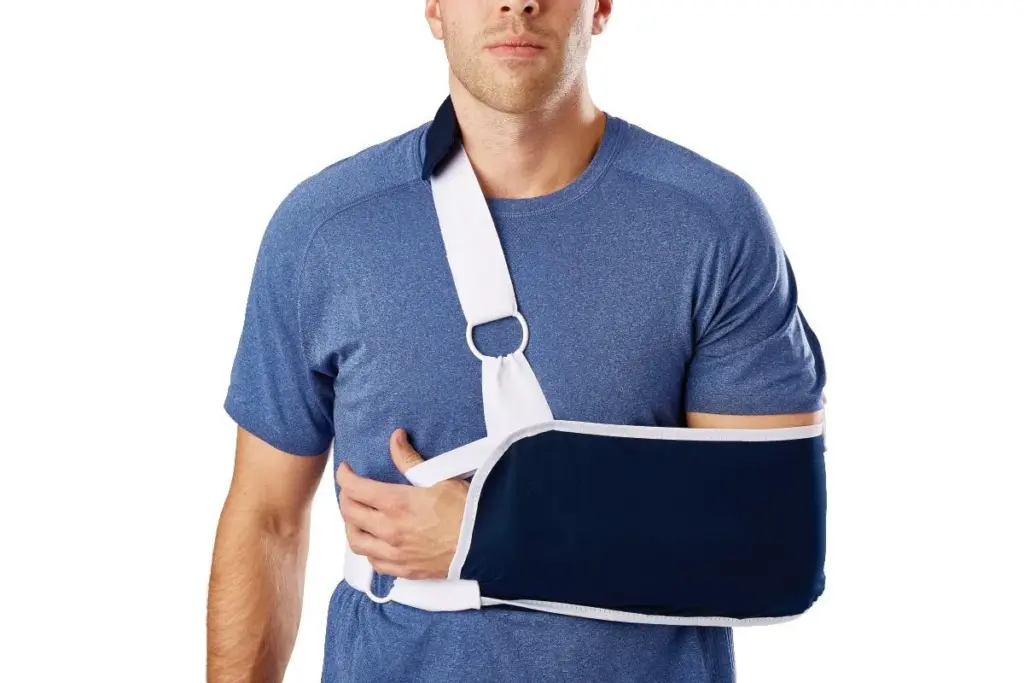
An arm sling is a medical tool for supporting and keeping the arm, shoulder, or forearm stable after injury or surgery. It has a fabric or cloth strap that goes around the neck. This strap holds up the arm, keeping it in a comfortable spot.
By limiting movement, an arm sling reduces strain on the injured area. This allows the tissues to heal correctly.
The arm sling’s success comes from its ability to provide proper immobilization. This is key for healing. It keeps the injured limb stable, preventing further injury and helping the recovery process.
Medical Benefits of Proper Immobilization
Using an arm sling has many medical benefits. It reduces pain by limiting movement of the injured area. It also supports healing by letting the body’s repair mechanisms work well.
This can lead to faster recovery and better results for patients. Plus, using an arm sling correctly can prevent complications like improper healing or chronic conditions.
Types of Arm Slings for Different Conditions
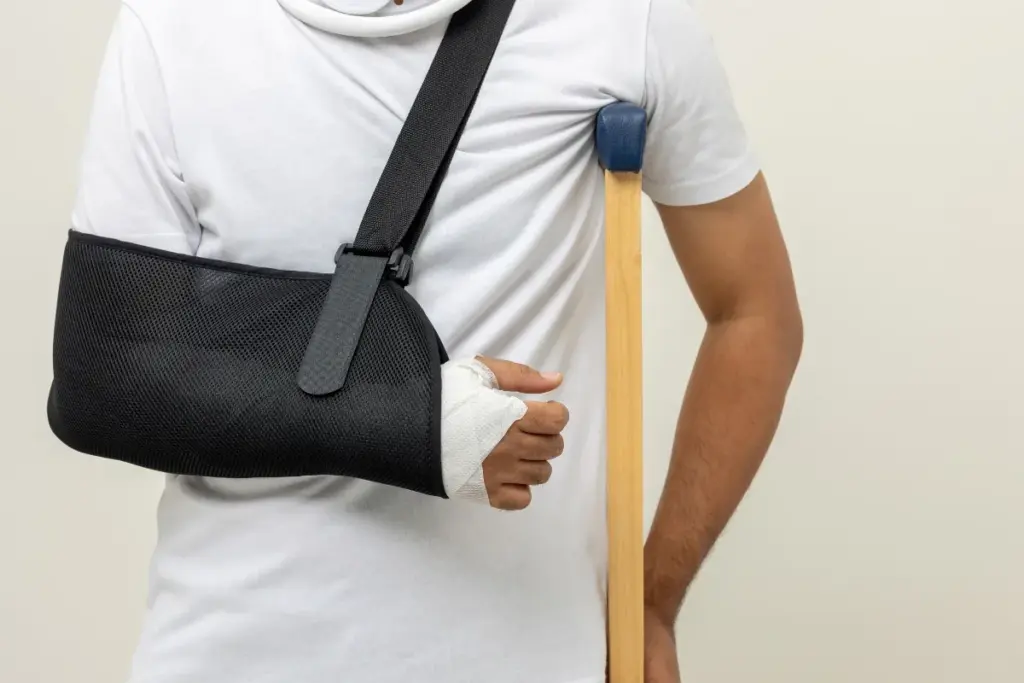
The type of arm sling used can greatly affect healing from injuries like fractures or sprains. Different injuries need different types of support. Knowing the options is key for a good recovery.
Standard Triangular Slings
Standard triangular slings are very common. They are versatile, easy to use, and support many arm injuries well. These slings have a triangular cloth piece with a safety pin or Velcro for securing.
Benefits of Standard Triangular Slings:
- Easy to adjust and wear
- Good for minor to moderate injuries
- Cost-effective and easy to find
Shoulder Immobilizers and Braces
Shoulder immobilizers and braces are for serious shoulder injuries like dislocations or fractures. They offer extra support and stability to the shoulder joint. This helps prevent more injury.
Key Features of Shoulder Immobilizers:
- More support for the shoulder joint
- Adjusts to fit different body types
- Can be worn under clothes for privacy
Specialty Slings for Specific Injuries
Specialty slings are made for specific injuries, giving tailored support and care. For instance, slings for rotator cuff injuries or shoulder separations offer focused immobilization and comfort.
Examples of Specialty Slings:
|
Sling Type |
Injury Type |
Key Features |
|---|---|---|
|
Rotator Cuff Sling |
Rotator cuff injuries |
Supports and stabilizes the rotator cuff area |
|
Shoulder Separation Sling |
Shoulder separations |
Aligns and supports the shoulder joint |
Adjustable Arm Slings and Their Benefits
Adjustable arm slings offer flexibility and comfort. They let patients adjust the fit as needed. These slings are great for those who need ongoing adjustments during recovery.
- Customizable fit for better comfort
- Adjusts as the injury heals
- Good for many arm and shoulder conditions
Sling Duration for Broken Arms and Wrists
The time you need to wear a sling after a broken arm or wrist depends on the injury’s severity. It’s important to know how a sling helps in your recovery.
Healing Timelines for Simple Fractures
Simple fractures usually heal in 2 to 6 weeks. Wearing a sling during this time is key. It keeps the area stable, helping the bone heal right.
Extended Healing Periods for Compound Fractures
Compound fractures take longer to heal. You might need to wear a sling for more than 6 weeks. Sometimes, you’ll need post-surgical support for months. The fracture’s complexity and treatment plan affect your recovery time.
|
Fracture Type |
Typical Healing Time |
Sling Duration |
|---|---|---|
|
Simple Fracture |
2-6 weeks |
2-6 weeks |
|
Compound Fracture |
6 weeks to several months |
Varied, based on treatment |
Post-Surgical Support Requirements
After surgery, a sling is vital for protection and healing. How long you’ll need to wear it depends on your surgery and doctor’s advice. Following the post-surgical support plan is essential for a good recovery.
We know recovering from a broken arm or wrist is tough. We’re here to support you every step of the way.
How Long to Wear a Sling for Shoulder Injuries
Knowing how long to wear a sling is key for healing shoulder injuries. These injuries can be from dislocations, rotator cuff tears, separations, or sprains. Each injury needs a different healing plan.
Dislocated Shoulder Recovery Timeline
A dislocated shoulder usually needs a sling for 2-4 weeks. This lets the joint heal. The exact time depends on how bad the dislocation is and your health.
Rotator Cuff Injuries and Sling Use
Rotator cuff injuries might need a sling for 4-6 weeks. If surgery is needed, you might need to wear it longer. Always listen to your doctor for the best healing.
Shoulder Separation Healing Process
Shoulder separations, or AC joint separations, might need a sling for 2-6 weeks. How long you need it depends on how severe the separation is.
Shoulder Sprains and Minor Injuries
For minor sprains or strains, a sling might be needed for 1-3 weeks. It helps with pain and support. But, it’s important to keep some movement to avoid stiffness.
Always get advice from a healthcare professional. They can make a recovery plan just for you. This plan might include a sling, physical therapy, and check-ups to help you heal well.
Sling Duration After Shoulder Surgery
Knowing how long to wear a sling after shoulder surgery is key for healing right. The time needed can change a lot, depending on the surgery type and how complex it is.
Rotator Cuff Repair: 4-6 Weeks Protocol
Those with rotator cuff repair surgery usually need a sling for 4 to 6 weeks. This helps the tendons heal. It’s important to do gentle exercises with physical therapy to keep the shoulder moving without hurting the repair.
Shoulder Replacement Rehabilitation
Shoulder replacement surgery might need a sling for 6 to 8 weeks. The exact time depends on your health, the surgery’s complexity, and the doctor’s plan. After this surgery, getting strong and moving well again is very important.
Arthroscopic Procedure Recovery Timelines
Arthroscopic procedures are less invasive, so you might only need a sling for 2 to 4 weeks. These surgeries use smaller cuts and cause less damage, which can lead to faster healing. But, how long you’ll need the sling also depends on your surgery and how you heal.
Always listen to your doctor’s advice on wearing a sling. They know what’s best for you based on your surgery. Wearing the sling as directed and doing rehabilitation exercises are vital for a good recovery after shoulder surgery.
Wearing an Arm Sling for Soft Tissue Injuries
Wearing an arm sling is key for soft tissue injuries like tendonitis or bursitis. These injuries include sprains, strains, tendonitis, and bursitis. An arm sling helps by providing support and keeping the area stable.
Sprains and Strains: 1-3 Week Guidelines
For sprains and strains, you might need to wear an arm sling for one to three weeks. The exact time depends on how bad the injury is. A mild sprain might only need a short time in a sling, while a severe strain could take longer.
It’s important to listen to your doctor’s advice on wearing the sling. Here are some tips:
- Watch the injury for any changes.
- Adjust the sling to keep it comfortable and aligned right.
- Start moving more and doing more activities when your doctor says it’s okay.
Tendonitis, Bursitis, and Inflammation
For tendonitis and bursitis, the sling helps by reducing stress and swelling. How long you wear the sling depends on how long it takes for the swelling to go down and the pain to lessen. This can take several weeks.
Important things that affect how long you wear the sling include:
- The level of swelling.
- How well treatments like physical therapy or medicine work.
- Your overall health and how fast you heal.
Understanding the role of an arm sling in healing soft tissue injuries helps you recover better. It ensures you get the right support for healing well.
Pediatric Considerations for Arm Sling Use
Using an arm sling in kids is common, but it needs special care. Their bones and soft tissues heal fast. This means their treatment must fit their unique needs.
Accelerated Healing in Children
Children’s injuries heal quicker than adults’ because of their fast metabolism and growth plates. This fast healing is both good and tricky. It’s important to watch their healing closely to avoid problems.
It’s key to follow a doctor’s advice on how long a child should wear a sling. Kids might need it for less time than adults, but it depends on the injury.
|
Injury Type |
Typical Sling Duration for Children |
Monitoring Requirements |
|---|---|---|
|
Simple Fractures |
2-4 weeks |
Regular X-rays to check bone alignment |
|
Soft Tissue Injuries |
1-3 weeks |
Monitoring for signs of improving mobility |
Special Considerations for Growing Bodies
Growing bodies need special care with slings. The sling must be adjustable to fit the child’s growth. Parents and caregivers should know how to adjust and care for the sling safely.
Wearing a sling can also affect a child’s mind. Encouraging movement in other parts of the body and keeping them active helps their mental health.
Understanding these points helps healthcare providers and parents give kids the best care with an arm sling. This makes their recovery smoother and more effective.
Elderly Patients and Extended Arm Sling Use
When elderly patients use an arm sling, their health and movement need special care. The aging body changes in ways that affect healing and sling use.
Age-Related Healing Factors
Elderly people heal slower because of less blood flow, less muscle, and other aging issues. Proper care and support are key to right healing and getting strength back.
- Reduced bone density, making bones more susceptible to fractures
- Decreased muscle mass and strength, affecting overall mobility
- Potential comorbidities that can complicate the recovery process
When caring for an elderly patient with an arm sling, we must think about these factors. Careful monitoring and adjustments to their treatment plan may be needed as they change.
Balancing Mobility and Protection
Managing elderly patients with an arm sling is a big challenge. We need to balance keeping the injured arm safe with keeping the patient mobile. This balance helps avoid stiffness and other problems.
We suggest a gradual increase in activity with a healthcare professional’s guidance. This way, we protect the injured area while keeping the patient mobile.
- Start with gentle exercises that don’t put excessive strain on the injured arm
- Gradually increase the range of motion and intensity of exercises
- Monitor the patient’s progress and adjust the rehabilitation plan as needed
Proper Arm Sling Wearing Techniques
Learning how to wear an arm sling right can greatly help your recovery. A well-worn sling supports and protects your injured arm. This makes healing smoother and more effective.
Correct Positioning and Adjustment
To wear an arm sling correctly, place it to support your injured arm without discomfort. The sling should be adjusted to keep the arm in a comfortable position, typically with the elbow bent at a 90-degree angle. This helps reduce strain and aids in healing.
Adjusting the sling is important for comfort and effectiveness. The straps should be adjusted so that the sling fits snugly but not too tightly. You should be able to fit one or two fingers between the sling and your body. You might need to adjust it often as swelling goes down or when you move.
Signs Your Sling Needs Readjustment
It’s important to watch how your sling fits over time and adjust as needed. Signs it needs adjusting include discomfort, numbness, or tingling in your arm or hand. If you notice any of these symptoms, check the sling’s positioning and adjust it. A sling that’s too loose doesn’t support well, while one that’s too tight can be too tight.
Checking your sling’s fit regularly and adjusting it as needed ensures you get the most from it. This supports a more comfortable and effective recovery.
When and How to Remove Your Sling Temporarily
Your doctor will tell you when to take off your sling. This helps you recover without getting in the way of daily life.
Doctor-Approved Breaks and Schedules
It’s important to give your arm and shoulder breaks when wearing a sling. These breaks should be doctor-approved and planned out. Your doctor will create a schedule just for you, based on your recovery needs.
During these breaks, you can move your fingers and do exercises your doctor suggests. This helps prevent stiffness. It’s also a chance to check your skin for any signs of irritation or pressure sores.
Hygiene and Bathing Considerations
Keeping clean is key, even with a sling on. You can bathe or shower with your arm dry or use a waterproof cover. Wearing loose, easy-to-remove clothes helps too, so you don’t have to take off the sling often.
When you need to remove your sling for cleaning, do it safely to avoid accidents. Having someone help you is a good idea. Make sure to dry your skin well and check for any irritation before putting the sling back on.
Following these tips helps you stay clean while your arm and shoulder heal.
How to Make a Temporary Arm Sling at Home
You can make a temporary arm sling at home with just a few items. This is great when you can’t get to a doctor right away. Or when you need something until you get a proper sling.
Materials Needed for a DIY Sling
To make a homemade sling, you’ll need:
- A piece of cloth or a scarf, preferably triangular or square in shape
- A safety pin or a brooch to secure the sling
- Optional: additional padding material like a towel or cloth for comfort
Choose a cloth that’s big enough to hold your arm’s weight. It should also keep your arm steady.
Step-by-Step Instructions
Here’s how to make your DIY arm sling:
- Put the cloth behind your injured arm. One end should be over your shoulder, and the other down your back.
- Bring the hanging end over your other shoulder. Tie or pin it to the other end, making a secure loop.
- Adjust the sling so it’s comfy and supports your arm well.
- If it’s too hard, add some padding for extra comfort.
When to Replace a Homemade Sling with a Medical One
A homemade sling is okay for a little while, but see a doctor soon. A medical sling is made to keep your arm right and prevent more harm. You should switch to a medical sling within 24 to 48 hours, or when a doctor tells you to.
Using a medical sling means your injury gets the right care and support. This helps you heal faster and better.
Exercises to Perform While Wearing a Sling
Doing specific exercises with an arm sling can prevent problems and aid in healing. It’s key to follow a plan that keeps your body flexible and helps your injury heal. This should be done without stressing the injured area too much.
Preventing Stiffness in Uninvolved Joints
When one arm is in a sling, other parts of your body might get stiff if they don’t move. Gentle exercises for the fingers, wrist, and shoulder of the uninjured arm can keep them flexible. Also, light neck stretches and torso movements can stop stiffness and lower the chance of getting other issues.
Physician-Approved Movement Exercises
Before starting any exercise with a sling, talk to your doctor. They can suggest specific exercises tailored to your condition. Approved movements include gentle shoulder swings and isometric exercises for the arm muscles.
- Do finger bends and spreads to keep your hands mobile.
- Rotate your wrist in both directions, clockwise and counterclockwise.
- Do shoulder blade squeezes to strengthen your upper back.
These exercises help prevent stiffness and support your recovery. Always pay attention to your body and stop if you feel pain.
Transitioning Out of Your Arm Sling
As you get better, it’s important to know when and how to stop using your arm sling. This step is key to getting your arm and shoulder back to full strength. We’ll help you through this process, giving you the info you need for a smooth transition.
Gradual Reduction in Sling Use
When it’s time to stop using your arm sling, do it slowly. Start by taking it off for short times, like when doing simple tasks or exercises. Then, slowly increase how long you go without it as you get more comfortable.
Pay attention to how your body feels when you use your arm more. If it hurts, slow down. Listen to your body and adjust as needed. Your doctor can give you advice based on your specific situation and how you’re doing.
Rehabilitation Milestones and Progress Markers
As you stop using your arm sling, you’ll hit certain milestones. These show how well you’re doing. They might include:
- Improved range of motion in your shoulder and arm
- Increased strength in the affected muscles
- Reduced pain or discomfort during movement
- Ability to perform daily tasks without significant difficulty
Keeping track of these milestones helps you and your doctor see how you’re doing. Regular follow-up appointments are key during this time. They help make sure you’re on the right path and address any issues.
When you’re almost done with your sling, start doing physical therapy exercises. These can make your shoulder and arm stronger. Your doctor or a physical therapist can suggest exercises that fit your needs.
Potential Complications from Prolonged Sling Use
Using an arm sling for a long time can lead to problems. It’s important to use it carefully to avoid issues. An arm sling helps keep an injured arm safe and supported.
Muscle Atrophy Concerns
One big worry is muscle atrophy, or muscle wasting. When an arm is in a sling for a long time, muscles don’t get used. This can cause a loss of strength and muscle size. Doing exercises as your doctor suggests can help avoid this.
Joint Stiffness and Frozen Shoulder Risk
Joint stiffness is another problem. It can turn into a frozen shoulder if not treated. A frozen shoulder makes it hard to move your shoulder and hurts a lot. Moving your shoulder early and doing physical therapy can stop this.
Skin Irritation and Pressure Points
Skin irritation and pressure points are common too. The sling’s constant pressure can be uncomfortable and even cause skin problems. Changing the sling often and keeping clean can help.
Knowing about these problems and taking action can make recovery better. It’s key to listen to your doctor’s advice to avoid risks and recover well.
Managing Daily Activities While Wearing an Arm Sling
Wearing an arm sling can change your daily life, but you can stay independent. It takes some planning to adjust to life with a sling. Yet, you can handle everyday tasks well.
Dressing and Personal Care Tips
Dressing with an arm sling can be tough. Choose loose clothes that are easy to put on and take off. Front-opening shirts and elastic waistbands help a lot. Clothes with simple fastenings, like magnetic or velcro, are also good.
For personal care, use adapted tools like long brushes or sponges. This keeps you clean without hurting your injured arm. A shower chair can also make bathing safer and more comfortable.
Work and Driving Considerations
Going back to work with an arm sling might need some changes. If you do manual labor, you might need to take a break or change your job. Desk jobs can usually be done with some adjustments, like using voice-to-text software or setting up your desk right.
Driving with a sling is not safe because it makes it hard to control the car. Always check with your doctor for advice, as rules can differ.
Sleeping Comfortably with Your Sling
Sleeping with a sling can be hard, but there are ways to get more comfortable. Try sleeping in a semi-reclined position to ease the strain on your shoulder and arm. Extra pillows can also support your sling and injured arm. Always listen to your doctor on how to sleep with your arm to heal right.
By using these tips, you can handle daily tasks better with an arm sling. It’s key to follow your doctor’s advice and be careful to avoid more injuries.
Conclusion: The Road to Recovery Beyond Your Sling
As we wrap up our talk on arm slings for injuries, remember recovery goes beyond the sling. It’s key to get your arm or shoulder strong and mobile again. This takes more than just a sling.
We’ve looked at the different types of arm slings and their uses. It’s clear that a sling is just the start. A good recovery plan is needed for each injury or condition.
It’s important to keep getting care and support after the sling. A doctor-approved plan helps you heal well and avoid problems. We urge everyone to stick with their recovery plan and get help from healthcare experts for the best results.
FAQ
How long will I need to wear a sling for a broken arm?
Wearing a sling for a broken arm usually lasts 2-6 weeks for simple fractures. More complex fractures might need longer healing times.
What type of sling is best for a shoulder injury?
The best sling for a shoulder injury depends on the injury’s severity. Shoulder immobilizers and adjustable arm slings are often suggested for injuries like dislocated shoulders and rotator cuff issues.
Can I remove my sling temporarily, and if so, how often?
Always follow your doctor’s advice on removing your sling. You might be allowed to take it off briefly for hygiene or bathing. Stick to a routine your doctor has set.
How do I properly wear an arm sling?
Make sure your sling fits right. It should be snug but not too tight. Your arm should be in a comfortable position.
Can I make a temporary arm sling at home?
Yes, you can make a temporary sling at home with a bandage or cloth. But, switch to a medical sling as soon as you can for better support.
What exercises can I do while wearing a sling?
You can do exercises to keep your joints loose and mobile while wearing a sling. Your doctor can suggest exercises that help with recovery.
How do I manage daily activities while wearing an arm sling?
To handle daily tasks with a sling, use dressing and personal care tips. Consider work and driving with a sling. Sleep comfortably with it. Adjust your routine to fit your sling and aid in recovery.
What are the possible complications of wearing a sling for too long?
Wearing a sling for too long can cause muscle loss, joint stiffness, and skin problems. It’s important to follow your doctor’s advice and watch for these issues.
How long does it take to recover from shoulder surgery while wearing a sling?
Recovery time from shoulder surgery with a sling varies. Rotator cuff repairs usually need 4-6 weeks. Shoulder replacement might take longer.
Are there special considerations for pediatric patients wearing an arm sling?
Yes, kids need special care with arm slings. Their fast healing and growing bodies require specific guidance and support.
How do I transition out of my arm sling?
To move out of your sling, start by using it less and follow your doctor’s milestones. This helps ensure a good recovery.
National Center for Biotechnology Information. Evidence-Based Medical Insight. Retrieved from https://pubmed.ncbi.nlm.nih.gov/16330604/



 Departments
 Related Videos
 Our Doctors
 News
News