Assisted Reproductive Technology (ART) is a group of fertility treatments. They help people and couples get pregnant by working with eggs or embryos. This is the ultimate guide to ART fertility treatments. Discover the most powerful options, from IVF to IUI, and how they work.
We use many ART methods, like In Vitro Fertilization (IVF), Intracytoplasmic Sperm Injection (ICSI), and gestational surrogacy. These help people and couples get pregnant. They involve working with eggs or embryos in a lab to boost chances of getting pregnant.
It’s important to know about the different ART types for those looking into fertility treatments. By learning about these options, people and couples can make better choices for their reproductive health. They can pick the best treatment for their situation.
Key Takeaways
- ART includes treatments like IVF, ICSI, and gestational surrogacy.
- These treatments involve manipulating eggs or embryos in a laboratory.
- Understanding ART options is key for those seeking fertility treatments.
- Different ART procedures meet different needs and situations.
- ART has helped millions of individuals and couples get pregnant worldwide.
Understanding Assisted Reproductive Technology

Assisted Reproductive Technology (ART) is a group of fertility treatments. They involve handling eggs or embryos outside the body to help with pregnancy. These treatments help those facing infertility or wanting to conceive through surrogacy.
Definition and Purpose of ART
ART includes all treatments where eggs or embryos are handled. It’s designed to help people get pregnant by working with eggs or embryos in a lab. This includes in vitro fertilization (IVF) and other methods.
The Centers for Disease Control and Prevention (CDC) tracks ART success rates. These rates change based on age and the treatment used. The CDC’s data helps everyone understand how well ART works and makes decisions easier.
Who Benefits from ART
ART helps many people, including those with infertility, same-sex couples, and those using surrogacy. Each treatment is customized for the patient’s needs. This approach helps in achieving pregnancy.
The table below shows who benefits from ART and why:
Beneficiaries | Common Reasons for Seeking ART |
Couples experiencing infertility | Issues related to egg or sperm quality, tubal damage, or unexplained infertility |
Same-sex couples | Desire to conceive through donor sperm or eggs and surrogacy |
Single individuals | Wish to conceive through donor sperm or eggs and potentially surrogacy |
Individuals with medical conditions | Conditions that affect fertility, such as endometriosis or low sperm count |
Knowing about ART helps people understand fertility treatments better. It aids in making informed choices about reproductive health.
The Evolution of ART Fertility Treatments

Assisted Reproductive Technology (ART) has grown a lot, giving hope to those facing infertility. It shows how far we’ve come in helping people have children. This journey is a sign of human creativity and our desire to help others.
Historical Development
The first baby born through ART was in 1978, thanks to in vitro fertilization (IVF). This was a big start for fertility treatments. Now, ART includes many methods, with IVF being the most used. The market for ART has also grown, reaching $38.9 billion USD in 2024.
ART has grown a lot over the years. It started with IVF and now has more advanced methods. The Centers for Disease Control and Prevention (CDC) helps track these advancements. They provide important data for both patients and doctors.
Current State of ART in the United States
In the U.S., ART is a big part of fertility treatments. The CDC’s reports on ART success rates help us understand how well these treatments work. IVF is the most common ART method, showing its key role in helping people conceive.
Today, ART in the U.S. shows progress in technology and changing views on fertility treatments. We can expect even better results and more options for building families. The CDC’s data is key for making smart choices about fertility treatments.
Looking ahead, ART will keep being important for those facing infertility. With more research and technology, we’ll see more ways to help people have children.
In Vitro Fertilization (IVF): The Primary ART Method
IVF is a key hope for those facing infertility. It’s the main method of assisted reproductive technology. In 2024, IVF made up 64.34% of the ART market, showing its popularity and success.
The IVF Process Explained
IVF has several steps. First, ovarian stimulation is done to get more eggs. This increases the chance of successful fertilization.
The IVF process is detailed and emotional. It includes:
- Ovarian stimulation through medication
- Egg retrieval via a minor surgical procedure
- Fertilization of eggs with sperm in the laboratory
- Embryo culture for 3-5 days
- Embryo transfer into the uterus
This journey is not just medical but also emotional. It’s important for patients to get full support during this time.
When IVF Is Recommended
IVF is suggested for many infertility reasons. These include blocked fallopian tubes, endometriosis, and low sperm count. It’s usually chosen after other treatments have failed.
Some main reasons for IVF are:
- Blocked or damaged fallopian tubes
- Severe male factor infertility
- Endometriosis
- Unexplained infertility after trying other treatments
- Previous failed fertility treatments
Success Rates According to CDC Data
The CDC reports on IVF success rates every year. Success rates depend on the woman’s age, infertility cause, and embryo number.
“The CDC’s annual report on assisted reproductive technology provides valuable insights into the effectiveness of IVF across different demographics and clinical scenarios.”
Success in IVF is influenced by:
- Age of the woman
- Quality of eggs and sperm
- Cause of infertility
- Number of embryos transferred
Knowing these factors helps both patients and doctors make better IVF decisions.
Intracytoplasmic Sperm Injection (ICSI)
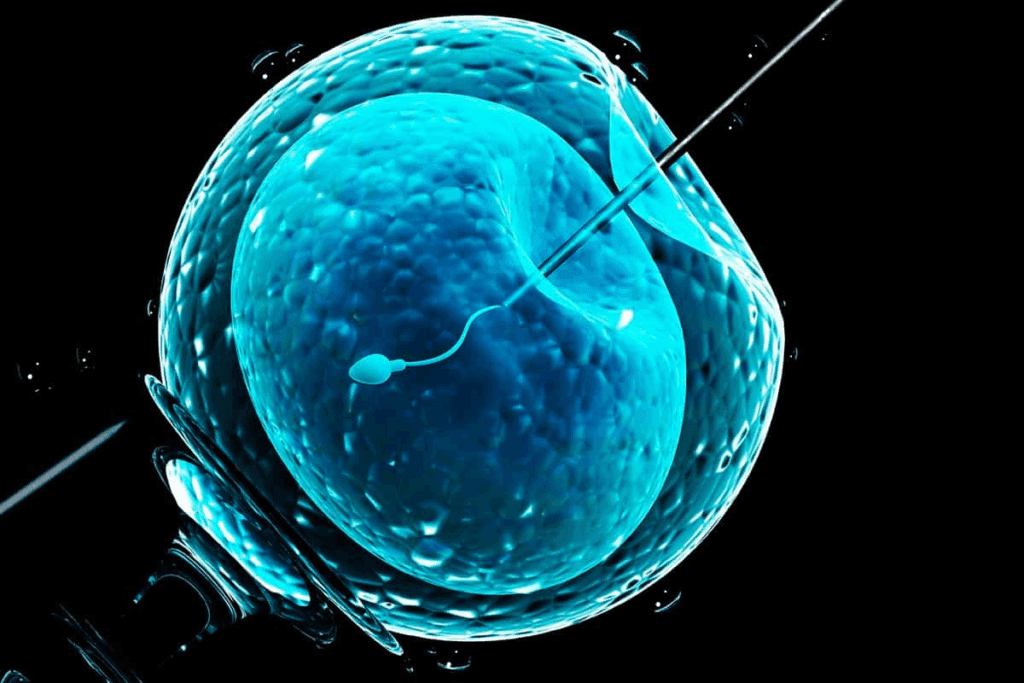
ICSI is a special kind of IVF that injects a single sperm into an egg. It helps people with severe male infertility. This method has changed the way we tackle tough fertility problems.
Differences from Standard IVF
ICSI and standard IVF differ in how they fertilize eggs. In IVF, eggs and sperm mix in a dish. But ICSI injects a sperm directly into an egg, skipping the natural process.
Key differences include:
- Method of fertilization: ICSI injects sperm, while IVF lets them mix naturally.
- Applicability: ICSI is best for severe male infertility, low sperm count, or poor motility.
Indications for ICSI
ICSI is suggested for many fertility issues, such as:
- Severe male infertility
- Low sperm count or motility
- Previous IVF failures
- Use of frozen or surgically retrieved sperm
Choosing ICSI depends on the couple’s fertility profile and past treatments.
Effectiveness and Considerations
ICSI greatly helps those with severe male infertility. But, there are things to think about:
Consideration | Description |
Success Rates | ICSI works well, with fertilization rates between 70% to 80%. |
Risk Factors | There’s a chance of egg or sperm damage during the injection. |
Cost Implications | ICSI costs more than standard IVF because of the special technique and tools. |
As ART advances, ICSI is key in helping people reach their reproductive goals. Knowing about ICSI helps us understand fertility treatments better.
Gamete and Zygote Intrafallopian Transfer
GIFT and ZIFT are ART procedures that put gametes or zygotes in the fallopian tubes. This helps with natural fertilization or early embryo growth. They are chosen based on patient needs and fertility issues.
The GIFT Procedure and Applications
Gamete Intrafallopian Transfer (GIFT) puts eggs and sperm in the fallopian tubes. This lets fertilization happen naturally. It’s good for women with open fallopian tubes and for unexplained or male-related infertility.
Key aspects of GIFT include:
- Requires at least one patent fallopian tube
- Fertilization occurs naturally within the fallopian tube
- Often used for unexplained infertility or male factor infertility
How ZIFT Works
Zygote Intrafallopian Transfer (ZIFT) fertilizes eggs in the lab, like IVF. Then, it puts the zygote in the fallopian tube. This lets the embryo go to the uterus naturally, which might help with implantation.
ZIFT is beneficial for:
- Patients who need confirmation of fertilization before transfer
- Women with at least one open fallopian tube
- Cases where a more natural early embryo development is desired
Comparing Fallopian Transfer Methods
GIFT and ZIFT have their own benefits but are less used than IVF. The choice depends on fertility factors, open fallopian tubes, and diagnostic needs.
Procedure | Fertilization Location | Key Indications |
GIFT | Within the fallopian tube | Unexplained infertility, male factor infertility, at least one open fallopian tube |
ZIFT | Laboratory (IVF), then transfer to fallopian tube | Confirmation of fertilization, at least one open fallopian tube, desire for natural early embryo development |
Knowing about GIFT and ZIFT helps patients and doctors choose the best ART for their needs.
Artificial Insemination Techniques
Artificial insemination is a way to help people have babies. It involves putting sperm into the woman’s body to help the egg get fertilized. This method is good for many fertility problems, like unexplained infertility and mild male factor infertility.
We will look at the different ways to do artificial insemination. This includes Intrauterine Insemination (IUI) and other methods. We will talk about when and why they are used.
Intrauterine Insemination (IUI)
Intrauterine Insemination (IUI) means putting sperm right into the uterus. This makes it easier for the sperm to meet the egg. It’s a good choice for many people.
IUI is great for couples with unexplained infertility, mild male factor infertility, and for same-sex couples or single women. It’s a popular fertility treatment.
Other Insemination Methods
There are other ways to do artificial insemination too. Intracervical insemination is one, where sperm is placed at the cervix. These methods might be suggested based on your fertility needs and medical history.
When Artificial Insemination Is Recommended
Artificial insemination is suggested for many fertility problems. The right method depends on the cause of infertility, the woman’s age, and past fertility treatments.
Let’s look at some success rates:
Method | Success Rate | Recommended For |
IUI | 10-20% per cycle | Unexplained infertility, mild male factor |
Intracervical Insemination | 5-15% per cycle | Minimal fertility issues, same-sex couples |
Knowing about the different artificial insemination methods helps people make better choices. It’s all about finding the right treatment for your fertility needs.
Gestational Surrogacy as an ART Option
There are many ways to become parents, including gestational surrogacy. This method means another woman carries the baby. It’s for those who can’t carry a pregnancy themselves, due to health reasons.
The Surrogacy Process
Gestational surrogacy is a detailed process. A woman, the gestational surrogate, agrees to carry a baby for others, the intended parents. This often starts with in vitro fertilization (IVF). An embryo made from the intended parents’ or donors’ cells is then put in the surrogate’s uterus.
Getting ready for surrogacy takes a lot of thought and planning. This includes mental checks and legal contracts. It’s a journey that needs medical care and emotional support for everyone involved.
“Gestational surrogacy allows individuals and couples to achieve parenthood despite significant reproductive challenges, providing a compassionate and effective solution.” –
Expert in Reproductive Medicine
Legal Frameworks in the United States
The laws about gestational surrogacy in the U.S. are complex and different in each state. Some states are more welcoming to surrogacy, while others have rules or don’t recognize it.
State | Surrogacy Laws | Legal Status |
California | Permissive laws for gestational surrogacy | Friendly |
New York | Regulates surrogacy through specific legislation | Regulated |
Texas | Allows gestational surrogacy with certain legal requirements | Permissive |
Finding and Working with a Surrogate
Looking for a gestational surrogate means working with trusted agencies or professionals. They help match intended parents with surrogates. It’s important to have clear communication, understanding, and legal agreements for a smooth journey.
- Research and select a reputable surrogacy agency.
- Understand the legal implications and create a detailed agreement.
- Keep open and respectful talks between intended parents and the surrogate.
Knowing the process, legal aspects, and the need for professional help makes navigating gestational surrogacy easier. It brings hope and confidence to those on this journey.
Factors Affecting ART Success Rates
Many things can affect how well ART works. Knowing these helps both patients and doctors make better choices.
Age-Related Considerations
Age is a big deal when it comes to ART success. As women get older, their eggs may not be as good. This can make it harder to get pregnant. The CDC says women under 35 do better with ART than older women.
Age-related decline in fertility is something to think about. We need to consider both partners’ ages when looking at success chances.
Impact of Specific Infertility Diagnoses
Different infertility problems can change how well ART works. Issues like endometriosis, PCOS, and male infertility can affect success.
Infertility Diagnosis | Impact on ART Success |
Endometriosis | May reduce success rates due to inflammation and scarring |
PCOS | Can affect egg quality and ovulation |
Male Factor Infertility | May require additional treatments like ICSI |
Previous Pregnancy History
A patient’s past pregnancy history can tell us a lot. Women who have already had successful pregnancies might do well with ART too.
Understanding what affects ART success helps us give better advice. We can create treatment plans that really work for each person.
Innovations in Assisted Reproductive Technology
The field of ART is seeing fast changes. New technologies like Preimplantation Genetic Testing (PGT) and AI-enhanced embryo selection are leading the way. These changes are making fertility treatments better, giving hope to people all over the world.
Preimplantation Genetic Testing (PGT)
Preimplantation Genetic Testing (PGT) is a new method. It checks embryos for genetic problems before they are transferred. This helps make sure the embryos are healthy, raising the chances of a successful pregnancy.
PGT is a big help in ART. It finds genetic issues that could cause miscarriage or failed implantation. By picking the healthiest embryos, we can boost IVF success rates.
“PGT has changed reproductive medicine. It gives us a genetic look at embryos, helping us choose the best ones to transfer.”
Advanced Embryo Freezing Techniques
New ways to freeze embryos, like vitrification, have greatly improved frozen embryo transfers. Vitrification freezes embryos quickly, keeping them safe from damage.
Vitrification has made frozen embryo transfers a key part of ART. This method offers flexibility. It lets patients try multiple transfers from one egg retrieval, raising the chances of getting pregnant.
AI-Enhanced Embryo Selection
AI-enhanced embryo selection uses artificial intelligence to pick the best embryos for transfer. It looks at time-lapse imaging data to guess which embryos will implant well.
This tech adds to what embryologists do. It gives more confidence in choosing embryos. As AI gets better, we’ll see even more accurate ways to pick embryos.
The Global ART Market: Statistics and Trends
The global ART market is growing fast. This is thanks to new medical tech and more people knowing about fertility treatments. Let’s look at what’s making the ART market move forward.
Current Market Size and Growth Projections
The ART market is big, valued at about $38.9 billion USD in 2024. This big size shows more people want fertility treatments. Experts think it will keep growing because of new tech, better treatment success, and more people learning about it.
Things like more infertility, people waiting to have kids, and lifestyle choices are making the market grow. Also, new ART methods like better embryo care and freezing are making treatments work better.
Regional Differences in ART Utilization
Where you are in the world affects how much ART is used. This is because of things like how people feel about fertility treatments, laws, and how easy it is to get ART. For example, some places have laws that let people use ART more, while others have rules or cultural issues that make it harder.
In places like Europe and North America, where ART is more accepted, more people use it. But in areas with strict laws or where ART is seen as taboo, fewer people use it.
Financial Considerations and Insurance Coverage
How much ART costs and what insurance covers are big deals for people thinking about it. ART can be very expensive, and insurance rules vary a lot.
In some places, like some European countries, insurance pays for a lot of ART. But in other areas, like parts of the United States, insurance might not cover as much or can change a lot.
Money matters a lot in ART. Doctors and lawmakers are working to make insurance better and help patients pay for treatments.
Conclusion: The Future of Assisted Reproductive Technology
The future of Assisted Reproductive Technology (ART) is looking bright. New technologies and innovations are driving this progress. These advancements will likely make ART more effective, giving hope to those trying to start a family.
Technologies like AI-enhanced embryo selection and preimplantation genetic testing will be key. As tech keeps improving, ART will become more accessible and successful. This means more people will be able to have the families they dream of.
ART’s future is exciting, with the chance to change how we think about fertility treatments. We’re dedicated to providing top-notch healthcare and support to international patients. The ongoing growth in ART will deeply impact many lives, bringing joy and fulfillment.
FAQ
What is Assisted Reproductive Technology (ART)?
ART is a group of treatments that handle eggs or embryos in a lab. This includes In Vitro Fertilization (IVF), Intracytoplasmic Sperm Injection (ICSI), and gestational surrogacy.
What are the main types of ART?
The main types are IVF, ICSI, Gamete Intrafallopian Transfer (GIFT), Zygote Intrafallopian Transfer (ZIFT), and gestational surrogacy.
What is IVF, and when is it recommended?
IVF is a detailed process that starts with ovarian stimulation. It involves egg retrieval, fertilization in the lab, and embryo transfer. It’s suggested for many infertility reasons, like blocked fallopian tubes and low sperm count.
How does ICSI differ from standard IVF?
ICSI is a special IVF method. It injects a single sperm directly into an egg. It’s great for severe male infertility.
What is the difference between GIFT and ZIFT?
GIFT puts eggs and sperm in the fallopian tubes for natural fertilization. ZIFT transfers a zygote into the fallopian tube.
What is gestational surrogacy?
Gestational surrogacy is when a woman carries a pregnancy for someone else or a couple using IVF.
How do age and infertility diagnoses affect ART success rates?
Age greatly affects success rates, with younger ages leading to better outcomes. Certain conditions like endometriosis or PCOS can also influence success.
What is Preimplantation Genetic Testing (PGT)?
PGT screens embryos for genetic issues. This increases the chance of a healthy pregnancy.
How has the ART market evolved?
The ART market has grown a lot. This is due to new technologies and more awareness of ART options. There are regional differences in access and cultural views.
What are the financial considerations for ART?
Money matters a lot in ART. Insurance coverage varies by region and provider, affecting patient choices.
What is the current state of ART in the United States?
ART in the U.S. has seen tech advancements and shifts in societal views on fertility treatments. The CDC tracks ART procedures and success rates.
What are the latest innovations in ART?
New advancements include PGT, advanced embryo freezing like vitrification, and AI for embryo selection. These improve ART success.
References
National Center for Biotechnology Information. Evidence-Based Medical Guidance. Retrieved from https://www.ncbi.nlm.nih.gov/books/NBK576409/