Many people don’t know that arthritis can affect the eyes. This can lead to serious problems, like vision loss. If you or a loved one has arthritis, it’s important to know how it can harm your eyes. This knowledge helps in catching problems early and treating them. What is thearthritis in eyes name? This ultimate guide explains conditions like uveitis, symptoms, and treatment.
About one in five people with rheumatoid arthritis face eye issues. Yet, many don’t get diagnosed until symptoms get bad. Eye problems like uveitis, scleritis, and keratitis can happen. Uveitis is a big worry because it can cause vision loss if not treated.
Key Takeaways
- Arthritis can affect the eyes, leading to conditions like uveitis and scleritis.
- Uveitis is a common condition associated with arthritis, potentially causing vision loss.
- Early detection and treatment are key to managing arthritis-related eye conditions.
- Approximately one in five people with rheumatoid arthritis experience eye problems.
- Understanding the connection between arthritis and eye health is vital for protecting your vision.
Understanding Eye Arthritis: What It Is and How It Occurs
Arthritis and eye health are closely linked. Different types of arthritis can cause eye problems. Arthritis is known for causing joint pain and swelling. But it can also affect other parts of the body, like the eyes.
We will look at how arthritis can harm the eyes. We will also talk about how common these eye issues are. And why it’s important to know about the connection between joints and eyes.
The Connection Between Joints and Eyes
Arthritis and eye problems are connected through inflammation. Rheumatoid arthritis can lead to uveitis and scleritis in the eyes. This is because rheumatoid arthritis is a systemic inflammatory disease.
Arthritis in the eyes can cause a range of issues. These can be from mild to severe, even leading to vision loss. It’s key to understand this link to manage both the arthritis and eye problems.
Inflammatory Processes in Ocular Tissues
Inflammation is a major factor in eye problems linked to arthritis. Uveitis is inflammation of the uvea, the eye’s middle layer. Scleritis affects the sclera, the eye’s white outer layer.
These conditions are caused by the same autoimmune processes as joint inflammation in arthritis. Treating these eye issues requires a holistic approach that addresses both arthritis and its eye effects.
Prevalence and Statistics
Eye problems are common in people with arthritis, and even more so in those with rheumatoid arthritis. Research shows a significant number of rheumatoid arthritis patients face eye complications.
Condition | Prevalence in Rheumatoid Arthritis Patients | Common Symptoms |
Uveitis | 5-10% | Eye pain, redness, vision problems |
Scleritis | 1-5% | Severe eye pain, redness, sensitivity to light |
Dry Eye Syndrome | 20-30% | Dryness, irritation, blurred vision |
Knowing the prevalence and statistics of these eye issues can help people with arthritis protect their eye health.
Types of Arthritis That Affect the Eyes
Arthritis isn’t just about the joints; it can harm your eyes too. Different types of arthritis can cause different eye problems. It’s important to know how each type affects the eyes.
Rheumatoid Arthritis and Ocular Manifestations
Rheumatoid arthritis (RA) is a chronic condition that mainly affects joints but can also harm the eyes. Uveitis and scleritis are common eye issues linked to RA. Uveitis is inflammation in the eye’s middle layer, while scleritis affects the white outer layer.
These conditions can cause eye pain, redness, and vision issues. Managing RA well is key to avoiding eye problems. Treatment may include medicines to reduce inflammation and prevent damage.
Juvenile Idiopathic Arthritis
Juvenile idiopathic arthritis (JIA) affects kids under 16. Uveitis is a common complication of JIA, often without symptoms. Regular eye checks are essential for kids with JIA to catch uveitis early and avoid vision damage.
Treatment for JIA-related uveitis usually involves eye drops or systemic medications to fight inflammation.
Spondyloarthritis and Eye Involvement
Spondyloarthritis (SpA) is a group of inflammatory diseases that can affect the spine, joints, and eyes. Uveitis is a common eye problem in SpA, often appearing as acute anterior uveitis.
Managing SpA and its eye issues requires a detailed plan. This includes medicines to reduce inflammation and prevent it from coming back.
Other Arthritic Conditions with Eye Complications
Other arthritis types, like psoriatic arthritis and lupus, can also cause eye problems. For example, dry eye syndrome is common in these conditions, leading to eye discomfort and vision issues.
It’s important to know the eye risks of different arthritis types for effective treatment. Rheumatologists and ophthalmologists often work together to provide the best care.
Arthritis in Eyes: Names and Clinical Descriptions
Eye arthritis includes conditions like uveitis, scleritis, keratitis, and dry eye syndrome. Each has its own traits. Knowing about these is key for those with arthritis to spot symptoms and get the right care.
Uveitis: The Most Common Form
Uveitis is a common eye inflammation that affects the uvea, the eye’s middle layer. It can cause eye pain, redness, light sensitivity, and blurry vision. Quick treatment is vital to avoid serious issues like cataracts, glaucoma, or vision loss. We’ll look into the types of uveitis and how they relate to arthritis.
Scleritis: Inflammation of the Eye’s White Layer
Scleritis is a painful inflammation of the sclera, the eye’s white outer layer. It can cause severe eye pain, redness, and light sensitivity. In some cases, it’s linked to autoimmune disorders like rheumatoid arthritis. We’ll cover its clinical features and treatment.
Keratitis: Corneal Inflammation
Keratitis is inflammation of the cornea, the eye’s clear front surface. Symptoms include eye pain, redness, and blurry vision. It can be due to infection or linked to conditions like arthritis. Knowing the causes and treatments for keratitis is important for keeping vision sharp.
Dry Eye Syndrome
Dry eye syndrome means the eye doesn’t get enough moisture. It can cause discomfort, blurry vision, and eye infections. It’s common in people with arthritis, like those with rheumatoid arthritis. We’ll talk about managing dry eye, including lifestyle changes and medical treatments.
In summary, various eye issues are linked to arthritis, each needing its own approach. Knowing the names and descriptions of these conditions helps people get the right care. This protects their eye health and overall well-being.
Recognizing Eye Arthritis Symptoms
Eye arthritis can show up in different ways. It’s important to spot the signs early. We’ll look at common symptoms and when to see a doctor.
Early Warning Signs
The first signs of eye arthritis can be small but important to catch. Look out for:
- Mild eye discomfort or pain
- Slight redness or inflammation
- Blurred vision or sensitivity to light
These signs might come and go or get worse if not treated.
Progressive Symptoms
As eye arthritis gets worse, symptoms can get more serious. Watch for:
- Increased eye pain or tenderness
- Significant redness or swelling
- Vision disturbances, such as double vision or loss of visual acuity
Keep an eye on these symptoms because they can mean the condition is getting worse.
Symptoms Specific to Different Eye Conditions
Arthritis can affect the eyes in different ways. For example:
- Uveitis: Inflammation of the uvea, causing eye pain, sensitivity to light, and blurred vision.
- Scleritis: Inflammation of the sclera, leading to severe eye pain, redness, and tenderness.
- Dry Eye Syndrome: Dryness, grittiness, or irritation in the eyes due to reduced tear production.
Knowing these specific symptoms can help doctors find the right diagnosis.
When to Seek Medical Attention
If you notice any of these, see a doctor right away:
- Severe eye pain or sudden vision loss
- Increased sensitivity to light or significant redness
- Eye discharge or swelling
Getting help early can make a big difference and prevent serious damage.
Risk Factors for Developing Arthritis in the Eyes
Arthritis in the eyes can be caused by genetics, age, gender, and environment. Knowing these factors helps us spot who’s at risk early. This way, we can take steps to prevent or treat it sooner.
Genetic Predisposition
Genetics play a big role in eye arthritis. If your family has arthritis, you might get eye problems too. Specific genetic markers can raise your risk of eye arthritis.
Age and Gender Considerations
Age and gender matter when it comes to eye arthritis. Women are more likely to get certain types of arthritis that affect the eyes. For example, juvenile idiopathic arthritis can hit kids and cause eye issues if not treated right.
Duration and Severity of Underlying Arthritis
How long and how severe your arthritis is affects your eye risk. People with long or severe arthritis are more likely to get eye problems. Managing your arthritis well is key to avoiding eye issues.
Environmental Triggers
Environmental factors can also play a part in eye arthritis. Some things in the environment can increase your risk. Knowing and avoiding these triggers is important for managing your condition.
By understanding these risk factors, we can better care for those at risk. This helps prevent or manage eye arthritis effectively.
Diagnosing Arthritis-Related Eye Conditions
Diagnosing arthritis of the eye requires a detailed look. We use many tools and methods to find the right diagnosis.
Comprehensive Eye Examination
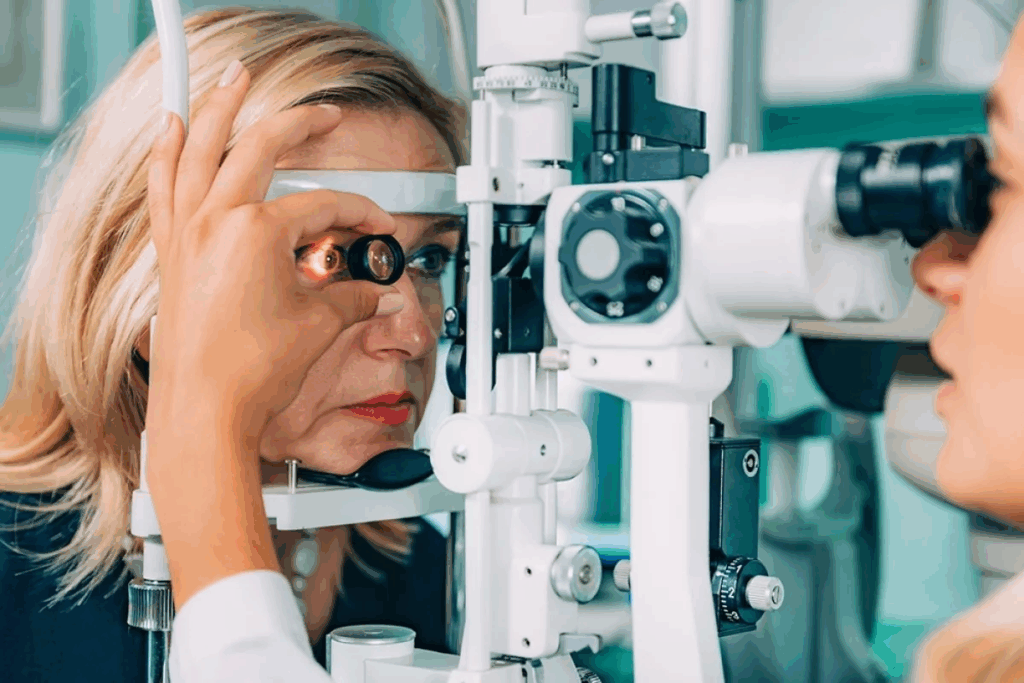
A thorough eye check is the first step. We look closely at the cornea, retina, and uvea for signs of trouble. Advanced tools help us see the eyes’ health and find any issues.
Laboratory Tests and Imaging
Lab tests and images are key in diagnosing eye arthritis. Blood tests check for inflammation and autoimmune signs. OCT gives us clear images of the eye’s inside. These help us understand the condition and plan treatment.
Collaborative Diagnosis with Rheumatologists
Working with rheumatologists is important. They help us understand the arthritis and its eye effects. Together, we create a treatment plan for both the arthritis and eye symptoms.
Differential Diagnosis
Differential diagnosis is vital. It helps us rule out other causes of eye symptoms. We carefully look at symptoms and test results to make sure we have the right diagnosis and treatment.
Treatment Options for Arthritis in the Eyes
There are many ways to treat arthritis in the eyes. These include medicines, managing other health issues, and sometimes surgery. Each person’s treatment plan is unique and based on their specific needs.
Medications for Eye Inflammation
To fight eye inflammation from arthritis, doctors use different medicines. Corticosteroids are a common choice to lower inflammation. They can be eye drops, injections, or pills, depending on how bad the condition is.
- Eye Drops: For mild to moderate inflammation, corticosteroid eye drops are often prescribed.
- Injectable Corticosteroids: For more severe cases, corticosteroids may be injected around or into the eye.
- Immunomodulators: In cases where long-term corticosteroid use is not advisable, immunomodulatory drugs may be used to manage inflammation.
Managing Underlying Arthritis
It’s important to manage the arthritis itself to prevent eye problems. This means using medicines and making lifestyle changes to control the arthritis.
- Systemic Medications: Disease-modifying antirheumatic drugs (DMARDs) and biologic agents are used to control the underlying arthritis, which in turn helps in managing eye inflammation.
- Lifestyle Changes: Keeping a healthy lifestyle, like eating well and exercising, helps manage arthritis symptoms.
Surgical Interventions When Necessary
Sometimes, surgery is needed to fix problems caused by arthritis in the eyes.
- Cataract Surgery: If cataracts develop due to long-term inflammation or corticosteroid use, surgery may be needed.
- Vitrectomy: A vitrectomy might be done for severe vitreous inflammation or hemorrhage.
Knowing about treatment options helps people with arthritis in their eyes make better choices. They can work with their doctors to manage their condition well.
Living with Arthritis-Related Eye Conditions
Arthritis-related eye conditions can really change your life. But, with the right care, you can live a happy life. We’re here to help you manage these challenges.
Coping with Visual Changes
Adjusting to eye changes takes time and creativity. Simple changes like better lighting or magnifying glasses can help a lot. We suggest looking into assistive devices for visual impairments.
Learning new ways to do daily tasks is also key. Using voice-controlled devices or apps for the blind can be very helpful.
Regular Monitoring and Follow-Up Care
Regular eye exams are a must for those with these conditions. They help track the condition and treatment success. Keeping up with follow-up care is important to adjust treatments when needed.
Working with your healthcare team is essential. This includes eye doctors and rheumatologists. They help manage both eye and body symptoms of arthritis.
Support Resources and Communities
Dealing with these conditions can be tough emotionally. Joining support groups or online forums can help. They offer emotional support and practical tips from others facing similar issues.
There are also educational resources and counseling for families. We aim to connect you with these helpful services.
Long-Term Outlook and Prognosis
Knowing what to expect long-term can help plan for the future. The outlook varies by condition and severity. But, with proper care, many manage their symptoms well.
New treatments and care strategies are improving outlooks. We’re committed to keeping you updated on the latest treatments.
Conclusion
Arthritis can really affect the eyes, causing different problems that need quick medical help. It’s key to know the signs of arthritis in the eyes, like those from rheumatoid arthritis, to manage it well.
Rheumatoid arthritis can severely harm the eyes, leading to issues like uveitis, scleritis, and keratitis. Spotting these symptoms early helps people get the care they need fast, preventing worse problems.
Knowing the risks and treatments helps people protect their eye health. Regular eye exams and working with doctors are vital to handle eye problems linked to arthritis.
We stress the need for awareness and early action to get the best results for those with rheumatoid arthritis eyes. With education and quick action, we can help keep vision sharp and improve life quality.
FAQ
Can arthritis affect the eyes?
Yes, arthritis can impact the eyes, causing issues like uveitis, scleritis, and keratitis. It’s important to understand how arthritis and eye health are connected for better management.
What are the symptoms of arthritis in the eyes?
Symptoms can vary but often include mild discomfort, redness, or vision problems. Spotting these signs early is key for timely treatment.
How is arthritis-related eye disease diagnosed?
Diagnosing eye conditions linked to arthritis involves a detailed eye exam, lab tests, and imaging. Working with rheumatologists is also important to grasp the arthritis’s impact on the eyes.
What are the treatment options for arthritis in the eyes?
Treatments include medications to fight inflammation, managing arthritis, and surgery when needed. Knowing these options helps in making informed care choices.
Can rheumatoid arthritis cause eye problems?
Yes, rheumatoid arthritis can lead to eye issues like uveitis and scleritis. It’s vital to understand how rheumatoid arthritis affects the eyes for effective management.
How can I protect my eye health if I have arthritis?
Protecting your eyes means regular eye exams, managing arthritis, and knowing risk factors for eye problems. These steps are essential for eye health.
What is the connection between joints and eyes?
The link between joints and eyes is complex, with inflammation affecting eye tissues. Grasping this connection helps in taking proactive steps for eye health.
Are there any specific risk factors for developing arthritis in the eyes?
Yes, genetic predisposition, age, and gender are major risk factors. The severity and duration of arthritis also play a role in eye complications.
Can arthritis in the eyes be treated?
Yes, eye conditions related to arthritis can be treated with medications, managing arthritis, and surgery when needed. Early treatment is key for effective management.
How can I manage my daily life with arthritis-related eye conditions?
Managing arthritis-related eye conditions requires a holistic approach. This includes coping with visual changes, regular monitoring, and follow-up care. Accessing support and communities is also important.
References
National Center for Biotechnology Information. Arthritis and the Eye: Symptoms, Risks, and Treatment. Retrieved from https://pmc.ncbi.nlm.nih.gov/articles/PMC10351586/