
We answer: what is the average age of Alzheimer? This essential guide explains when symptoms usually start and the risk factors.
Knowing when Alzheimer’s disease starts is key for early treatment. It’s a big worry for many families.
Alzheimer’s disease is a brain disorder and the main cause of dementia. It usually starts after age 60. People are often diagnosed between 75 and 84.
At Liv Hospital, we aim to give top-notch healthcare. We help international patients with early signs and age-related risks.
Key Takeaways
- Alzheimer’s disease is the most common form of dementia.
- It typically begins after age 60.
- Diagnosis often occurs between 75 and 84 years old.
- Early detection is key for good health care.
- Liv Hospital offers full support for international patients.
Understanding Alzheimer’s Disease
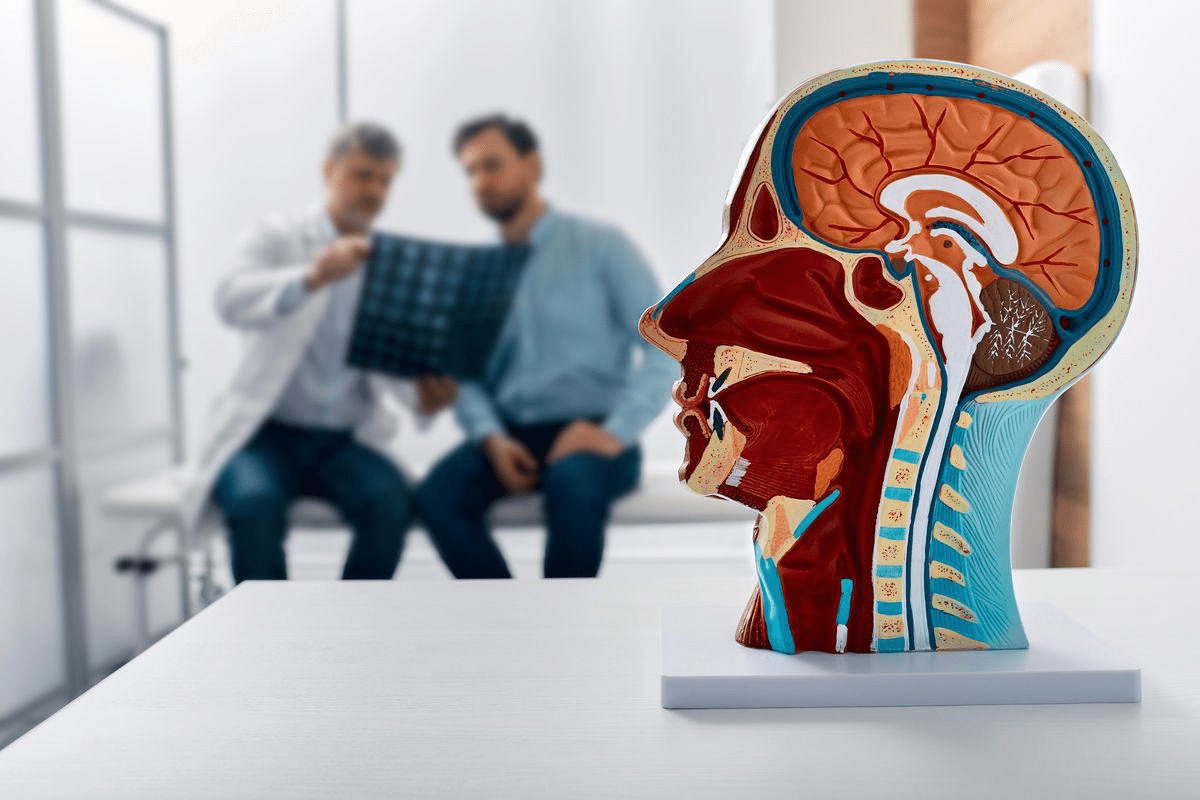
Exploring Alzheimer’s disease is key to grasping its effects on our minds and daily lives. It’s a complex issue that impacts memory, language, problem-solving, and more. These changes can significantly alter how we live and interact with the world.
What is Alzheimer’s Disease?
Alzheimer’s disease is marked by the buildup of amyloid beta (Aβ) and tau proteins in the brain. This buildup damages and kills brain cells. As a result, people lose their ability to think and function normally.
Amyloid Plaques and Neurofibrillary Tangles: The brain’s hallmark of Alzheimer’s is the formation of amyloid plaques and neurofibrillary tangles. These disrupt the brain’s normal workings.
How Alzheimer’s Affects the Brain
The disease goes through stages, from early to severe. Knowing these stages helps in creating better treatment plans and support strategies.
|
Stage |
Characteristics |
Impact on Daily Life |
|---|---|---|
|
Early/Mild |
Memory loss, confusion, difficulty with problem-solving |
Individuals may struggle with daily tasks but can manage |
|
Middle/Moderate |
Increased memory loss, communication issues, mood swings |
Daily tasks become harder, needing more help |
|
Late/Severe |
Significant loss of cognitive and motor functions |
Full-time care is needed |
Most symptoms start after age 60, with about 3 percent of those aged 65 to 74 affected. Knowing how Alzheimer’s progresses and affects people is essential. It helps patients, caregivers, and healthcare providers manage the disease better.
The Average Age of Alzheimer Onset and Diagnosis

Knowing when Alzheimer’s starts and when it’s diagnosed is key for patients and doctors. Alzheimer’s messes with memory, thinking, and behavior. It affects people of all ages.
Difference Between Onset and Diagnosis
The onset of Alzheimer’s is when symptoms first appear, often subtly. Diagnosis happens when a doctor confirms the disease after a detailed check-up. The time between when symptoms start and when they’re diagnosed can be long. Early signs might be mistaken for normal aging or other issues.
Though we don’t know what causes Alzheimer’s, it’s thought to be a mix of genetics, environment, and lifestyle. Being over 65 is the biggest risk factor, with most cases happening then.
Statistical Overview of Diagnosis Age
Most people are diagnosed with Alzheimer’s between 75 and 84 years old. This shows how common it is among the elderly. Recent numbers show most Alzheimer’s cases are in this age group.
The risk of getting Alzheimer’s goes up every five years after 65. This rapid increase shows why keeping an eye on brain health is so important as we get older.
Why Most Cases Appear After Age 60
Alzheimer’s mostly shows up after 60 because of aging and risk factors building up. As we age, our brains change in ways that can lead to Alzheimer’s.
Age-related changes in the brain, like amyloid plaques and tau tangles, are signs of Alzheimer’s. Older adults also face more health issues that can make cognitive decline more likely.
Age-Related Risk Factors
As we get older, the chance of getting Alzheimer’s disease goes up a lot. Age is the biggest risk factor for this disease.
It’s important to know how age affects the risk of Alzheimer’s. We’ll look at how risk grows with age, the idea that risk doubles every five years after 65, and how common it is in different age groups.
Increasing Risk with Age
The chance of getting Alzheimer’s disease grows a lot as people get older. After age 65, the risk doubles about every five years. This means a big jump in the number of older adults with the disease.
This fast increase in risk shows how important age-related risk factors are for Alzheimer’s. As more people live longer, understanding and dealing with these risks becomes even more key.
The “Doubling Every Five Years” Phenomenon
The “doubling every five years” after 65 is a big part of Alzheimer’s risk. If the risk is 1% at 65, it’s about 2% at 70, 4% at 75, and so on.
This fast increase shows we need to be careful and take action as we get older. Knowing this can help plan for healthcare and support for older people.
Prevalence Rates Across Different Age Groups
Alzheimer’s disease is more common in some age groups than others. Let’s look at how common it is in different age ranges:
|
Age Group |
Prevalence Rate |
|---|---|
|
65-69 years |
2% |
|
70-74 years |
4% |
|
75-79 years |
8% |
|
80-84 years |
16% |
|
85+ years |
Nearly 50% |
The table shows how Alzheimer’s becomes much more common as we get older.
Knowing about these age-related risk factors and how common Alzheimer’s is in different ages is key. As we learn more about Alzheimer’s, understanding the role of age is very important.
Early-Onset Alzheimer’s Disease
Early-onset Alzheimer’s disease is rare and affects people under 65. It’s linked to genetic mutations. This makes diagnosis and management tricky.
Defining Early-Onset Alzheimer’s
Early-onset Alzheimer’s is diagnosed before 65. This age mark is key. It shows the disease’s different causes and risk factors.
Typical Age Range
People with early-onset Alzheimer’s are usually between 45 and 64. This age group is often in their prime career and family years. The disease’s impact is huge.
Medical Expert, Chief Science Officer of the Alzheimer’s Association, said,
“Early-onset Alzheimer’s disease can have a profound impact on families, specially when it affects individuals who are stil in their working years.”
Prevalence and Unique Challenges
Early-onset Alzheimer’s makes up 5 to 10 percent of all cases. It faces unique challenges. These include delayed diagnosis and misdiagnosis due to age.
- Delayed diagnosis can lead to prolonged suffering and inadequate care.
- The disease can significantly impact family dynamics and work-life balance.
Genetic Factors in Early-Onset Cases
Genetics are key in early-onset Alzheimer’s. Mutations in APP, PSEN1, and PSEN2 genes are linked to it.
Knowing these genetic factors helps in early detection and management. Research into Alzheimer’s genetics is ongoing. It’s a vital area of study.
Late-Onset Alzheimer’s Disease
Most Alzheimer’s cases happen in people over 65. This type of Alzheimer’s is the most common. Its numbers go up a lot as people get older.
Typical Age Patterns After 65
After 65, the chance of getting late-onset Alzheimer’s goes up. We see a big jump in how many people are affected as they get older.
Prevalence in 65-74 Age Group (3%)
In the 65-74 age group, about 3% have Alzheimer’s. This might seem low, but it’s a big number because of how many people are in this age group.
Prevalence in 75-84 Age Group
Alzheimer’s becomes more common in the 75-84 age group. Studies show a big increase in those affected. This shows how much of a problem this disease is.
Prevalence in 85+ Age Group (Nearly 50%)
Nearly half of those 85 and older may have Alzheimer’s. This big jump shows how age affects the risk of getting late-onset Alzheimer’s.
It’s important for doctors and families to understand these age patterns. As more people live longer, Alzheimer’s will affect more people. We need better support and care for them.
Disease Progression Timeline
Alzheimer’s disease moves at different speeds for everyone. It’s key to know the usual timeline.
From Diagnosis to Advanced Stages
After getting Alzheimer’s, the disease can last 8 to 10 years on average. But, it can change a lot.
We’ll look at Alzheimer’s stages, from first diagnosis to later stages. We’ll also talk about what makes it progress faster or slower.
Typical 8-10 Year Progression
Most people with Alzheimer’s live with it for 8 to 10 years after diagnosis. They lose their thinking skills and daily abilities over time.
Extended Progression (Up to 20 Years)
But, some people might live with Alzheimer’s for up to 20 years. Their health, lifestyle, and other health issues can affect how fast it moves.
Factors Affecting Progression Speed
Many things can change how fast Alzheimer’s moves. These include when you get diagnosed, your health, how you live, and your genes.
To show how these factors work, here’s a table:
|
Factor |
Influence on Progression |
|---|---|
|
Age at Diagnosis |
Getting diagnosed early might mean it moves slower. |
|
Overall Health |
Having other health problems can make it move faster. |
|
Lifestyle |
Living healthy might slow it down. |
|
Genetic Factors |
Some genes can make it move faster or slower. |
Knowing these factors can help people with Alzheimer’s and their caregivers. It helps them plan and make care choices.
Factors That May Delay Onset
Research shows that a mix of mental exercises and healthy habits can slow down Alzheimer’s. This is good news because it means we can take steps to lower our risk of getting Alzheimer’s.
Cognitive Activity and Brain Health
Doing mentally challenging activities is key for brain health. Reading, solving puzzles, and learning new things can help keep your brain strong. This makes your brain more able to handle age-related changes and might delay Alzheimer’s.
Studies show that brain-stimulating activities can build a protective reserve. This reserve helps your brain stay healthy longer. It’s important to keep your brain active to stay sharp.
The 5-Year Delay Possible
Research says that keeping your mind active could delay dementia by up to 5 years. This extra time can greatly improve your life and keep you independent.
Lifestyle Changes That Help
Changing your lifestyle can also help delay Alzheimer’s. This includes regular exercise, eating well, staying social, and managing health issues.
- Regular physical exercise
- A balanced diet rich in fruits, vegetables, and omega-3 fatty acids
- Social engagement and staying connected with family and friends
- Managing chronic health conditions such as diabetes and hypertension
The Importance of Education and Mental Stimulation
Education and mental challenges are important for brain health. People with higher education levels tend to have a lower risk of cognitive decline. This suggests that learning and staying mentally active can help build a protective reserve.
|
Factor |
Description |
Potential Impact |
|---|---|---|
|
Cognitive Activity |
Engaging in mentally stimulating activities |
Delays Alzheimer’s onset |
|
Lifestyle Modifications |
Regular exercise, balanced diet, social engagement |
Reduces risk of cognitive decline |
|
Education and Mental Stimulation |
Higher education levels, continuous learning |
Builds cognitive reserve |
By adding these factors to your daily life, you might delay Alzheimer’s onset. This can improve your overall quality of life.
Recognizing Early Signs Across Different Age Groups
It’s important to know the early signs of Alzheimer’s disease for people of all ages. As we get older, the risk of Alzheimer’s grows. But, it can also happen to younger people. Spotting these signs early is key for getting medical help and support.
Warning Signs in Middle Age (45-65)
In middle age, signs of Alzheimer’s can be hard to spot. They might look like other health issues or stress. Common signs include:
- Memory loss that disrupts daily life
- Difficulty in planning or solving problems
- Confusion with time or place
- Trouble understanding visual images and spatial relationships
Medical Expert, a neurologist, notes, “Middle-aged people often think these symptoms are from stress, not Alzheimer’s.”
Warning Signs in Seniors (65+)
For seniors, signs of Alzheimer’s are often clearer. They might include:
- Increased memory loss, including forgetting important dates or events
- Challenges in conversation, such as finding the right words
- Misplacing items and losing the ability to retrace steps
- Decreased judgment, leading to difficulties in decision-making
“It’s essential for seniors and their families to be aware of these changes and seek medical advice if they persist.”
Distinguishing Normal Aging from Alzheimer’s
Telling normal aging from Alzheimer’s can be tricky. Normal aging brings some memory loss. But, Alzheimer’s causes significant memory loss that affects daily life. As
“Alzheimer’s is not a normal part of aging, though it’s common among older adults,”
says the Alzheimer’s Association.
|
Normal Aging |
Alzheimer’s Disease |
|---|---|
|
Forgetting names or appointments |
Forgetting recently learned information |
|
Misplacing items occasionally |
Losing items and unable to recall where they were last |
When to Seek Medical Evaluation
If you or a loved one is showing several symptoms, get a medical check-up. Early diagnosis can lead to treatments that help manage symptoms and improve life quality.
We recommend consulting a healthcare professional if you notice persistent memory loss or other cognitive changes. They can give a detailed assessment and guide you on what to do next.
Conclusion
Knowing when Alzheimer’s starts is key to good care and support. Alzheimer’s is a complex disease that impacts many people and families. Age is a big risk factor.
At Liv Hospital, we focus on top-notch medical care and follow proven methods. We aim to spot early signs and encourage early action. This way, we can tackle Alzheimer’s together.
We offer full care and support for international patients. Our goal is to give them the best treatment. It’s vital to understand age-related risks and get medical checks early.
Together, we can help those with Alzheimer’s. At Liv Hospital, we’re committed to excellent healthcare and support for our patients and their families.
FAQ
At what age does Alzheimer’s disease typically start?
Alzheimer’s disease usually starts after 60. Most cases are diagnosed in people over 65.
What is the average age of Alzheimer’s diagnosis?
People diagnosed with Alzheimer’s are usually between 75 and 84 years old.
What is the average age of diagnosis for all forms of dementia?
The average age for all dementia diagnoses is 83.7 years.
How does age affect the risk of developing Alzheimer’s disease?
Age is a big risk factor for Alzheimer’s. The risk doubles every five years after 65.
What is early-onset Alzheimer’s disease?
Early-onset Alzheimer’s happens before 65. It usually occurs between 45 and 64 years old.
What are the typical age patterns for late-onset Alzheimer’s disease?
Late-onset Alzheimer’s is most common after 65. Its prevalence increases a lot with age.
How long does Alzheimer’s disease typically progress?
Alzheimer’s disease usually lasts 8-10 years. But it can last up to 20 years in some cases.
Can certain factors delay the onset of Alzheimer’s disease?
Yes, staying mentally active, making lifestyle changes, and being educated can help delay Alzheimer’s.
What are the warning signs of Alzheimer’s disease in different age groups?
Alzheimer’s signs vary by age. Common signs include memory loss, language problems, and cognitive decline.
When should I seek medical evaluation for Alzheimer’s disease?
Seek medical help if you or a loved one shows Alzheimer’s symptoms like memory loss or cognitive decline.
How can I distinguish normal aging from Alzheimer’s disease?
Normal aging is different from Alzheimer’s. Alzheimer’s has significant cognitive decline and memory loss. See a doctor for a proper diagnosis.
References
National Center for Biotechnology Information. Evidence-Based Medical Guidance. Retrieved from https://www.ncbi.nlm.nih.gov/pmc/articles/PMC3220946/