

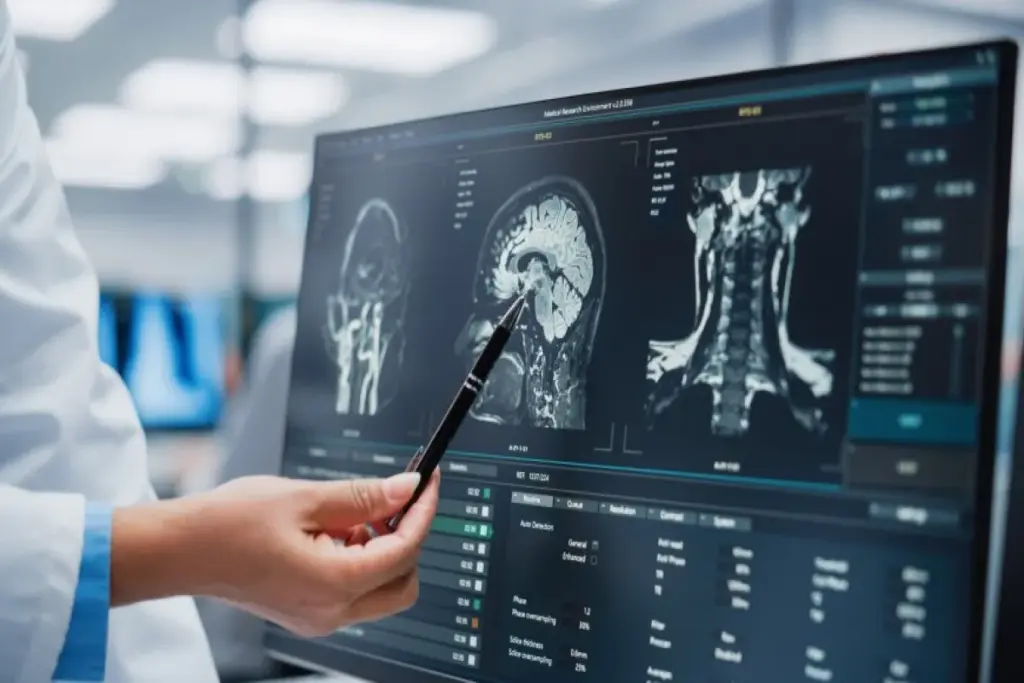
Arteriovenous malformation (AVM) is a serious condition that affects the brain’s blood vessels. Approximately 300,000 Americans are living with AVM. It’s important to know how doctors diagnose this condition.
Doctors use medical imaging tests and physical exams to diagnose AVM. These tests help find where and how bad the malformation is. This info is key for creating a good treatment plan.
Knowing how AVM is diagnosed is important for both patients and doctors. Getting the diagnosis right helps start treatment quickly. This can lower the chance of problems and make patients better faster.
Key Takeaways
- AVM is a serious medical condition affecting the brain’s blood vessels.
- Approximately 300,000 Americans are living with AVM.
- Diagnosing AVM involves medical imaging tests and physical examinations.
- Accurate diagnosis is vital for effective treatment and improved patient outcomes.
- Understanding AVM diagnosis is vital for patients and healthcare professionals.
What is AVM? Understanding the Condition
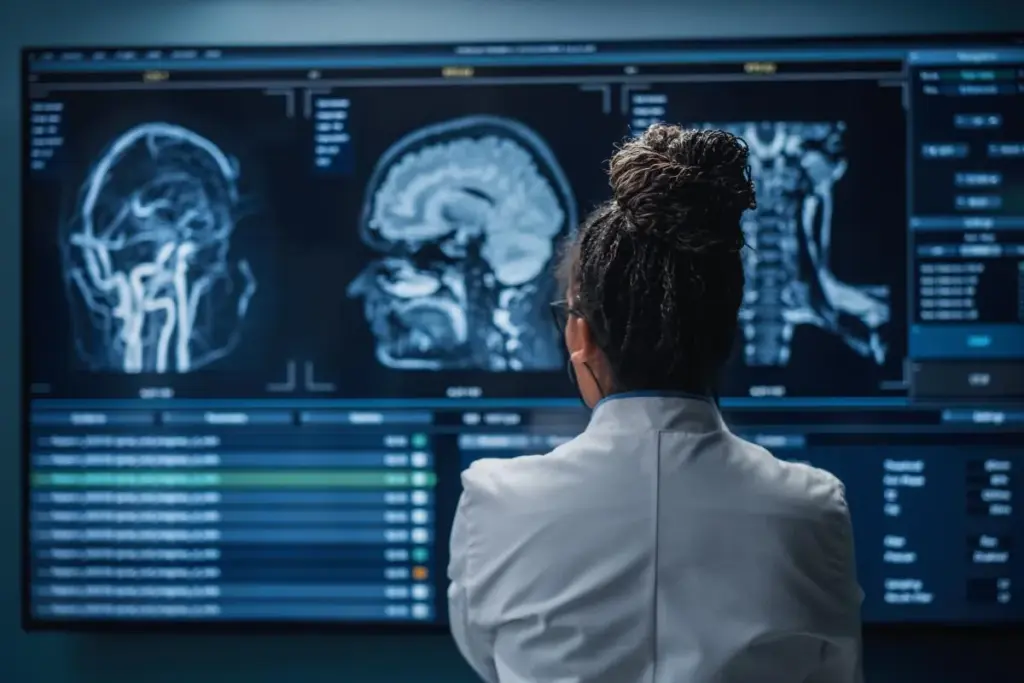
To understand AVM, we need to know what it is and how it differs from normal blood vessels. Arteriovenous malformation (AVM) is a vascular malformation with an abnormal connection between arteries and veins.
Definition and Basic Anatomy
AVM has a tangled network of blood vessels. Arteries connect directly to veins, skipping the capillary system. This can happen in the brain, spine, and limbs.
The brain arteriovenous malformation (bAVM) is very important. It’s a main cause of bleeding in the brain, often in young people.
The basic parts of an AVM are:
- Arteries that supply blood directly to the malformation
- Veins that drain blood away from the malformation
- A nidus, or the central part of the AVM where the abnormal connections occur
How AVMs Differ from Normal Blood Vessels
Normal blood vessels are designed for efficient blood flow and oxygen delivery. Arteries carry oxygenated blood to capillaries, where oxygen is exchanged. Veins then return deoxygenated blood to the heart. AVMs, on the other hand, have a direct pathway between arteries and veins.
This can cause health problems.
AVMs are different in several ways:
- Abnormal connections between arteries and veins
- No capillary bed in the AVM
- Potential for significant hemodynamic changes
Recent data shows that brain arteriovenous malformation is a big cause of bleeding in the brain. This makes understanding AVMs very important.
Types of Arteriovenous Malformations
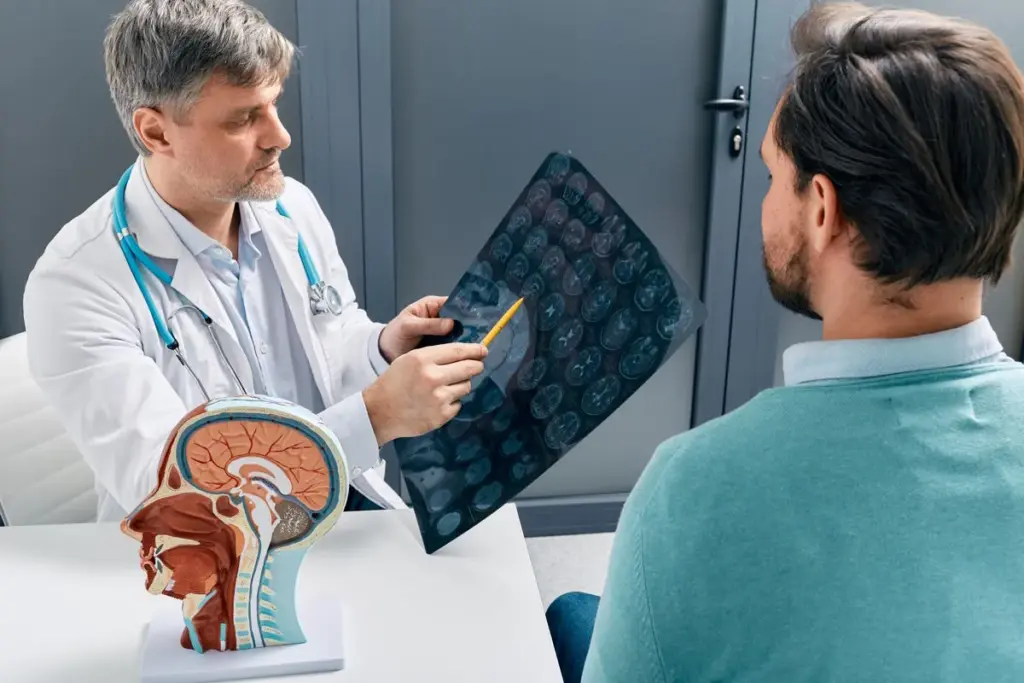
Arteriovenous malformations (AVMs) can appear in different parts of the body, like the brain, spine, and lungs. This makes symptoms and complications vary widely.
AVMs are classified by their location and the blood vessels they affect. Knowing these details is key for diagnosis and treatment.
Cerebral AVMs
Cerebral AVMs, or brain AVMs, are serious because they can cause strokes. Cerebral arteriovenous malformation is another name for them. They can lead to neurological symptoms based on their brain location.
- Cerebral AVMs can cause seizures, headaches, and neurological deficits.
- The risk of rupture is a significant concern, potentially leading to life-threatening bleeding.
- Diagnosis often involves imaging techniques like MRI or CT scans.
Spinal AVMs
Spinal AVMs are found in the spinal cord or nerve roots. They can cause pain, weakness, and sensory issues. The spinal cord is vital, and AVMs here can cause serious problems if not treated right.
Spinal AVMs are less common but risky. They need special knowledge and techniques for diagnosis and treatment.
Peripheral AVMs
Peripheral AVMs are outside the brain and spinal cord, in the body’s blood vessels. They can be in limbs. Symptoms include pain, swelling, and pulsatile masses.
Treatment for peripheral AVMs often combines embolization and surgery.
Pulmonary AVMs
Pulmonary AVMs affect lung blood vessels. They can cause shortness of breath, cyanosis, and hemoptysis. Pulmonary AVMs are linked to hereditary hemorrhagic telangiectasia (HHT).
Diagnosis usually involves CT angiography. Treatment may include embolization to block the abnormal vessels.
Common Symptoms That Prompt AVM Diagnosis
AVM diagnosis often starts with specific symptoms. These symptoms can be neurological or related to bleeding. Knowing them helps in early treatment.
Neurological Symptoms
Neurological symptoms happen when an AVM presses on brain or spinal tissue. Common signs include:
- Seizures
- Headaches
- Muscle weakness or numbness
- Vision problems, like blurred or double vision
Seizures are a big worry. They show how an AVM affects the brain. How often and how severe seizures are can differ a lot.
Hemorrhagic Symptoms
About half of bAVM patients first show intracranial hemorrhage (ICH). Symptoms of bleeding can be very serious and include:
“The rupture of an AVM can lead to sudden and severe headache, often described as ‘the worst headache of my life’.”
- Sudden severe headache
- Confusion or altered consciousness
- Nausea and vomiting
- Seizures
Pain and Physical Manifestations
Pain and physical signs can also point to an AVM. These signs might be:
|
Symptom |
Description |
|---|---|
|
Pain |
Localized pain due to the AVM or its effects on surrounding tissues |
|
Physical Manifestations |
Visible or palpable abnormalities, such as a bruit (a vascular murmur) over the area of the AVM |
Asymptomatic AVMs
Some AVMs don’t show symptoms and are found by chance during scans for other reasons. Deciding how to manage these AVMs is tricky. It’s about weighing the risks of treatment against the chance of future rupture.
Risk Factors and Causes of AVM
AVM genetic factors
Arteriovenous malformations (AVM) have several causes. These include genetic predispositions, developmental issues, and other medical conditions. Knowing these factors helps us understand the risk and outlook for AVM.
Genetic Factors
Genetics are a big part of AVMs. Hereditary hemorrhagic telangiectasia (HHT), or Osler-Weber-Rendu syndrome, is a main cause of brain AVMs in families. People with HHT are more likely to get AVMs because of genetic changes in their blood vessels.
Studies have found certain genes linked to AVMs. For example, changes in the ENG, ACVRL1, and SMAD4 genes are tied to HHT and raise AVM risk.
Developmental Abnormalities
AVMs can form during fetal development. These issues cause blood vessels to grow wrong, leading to the tangled vessels seen in AVMs.
The exact reasons for these developmental problems are not known. They are thought to involve both genetics and environment.
Associated Medical Conditions
Some medical conditions raise the risk of AVMs. For example, people with cerebral cavernous malformations or other vascular issues might be more likely to have AVMs.
Also, conditions that harm blood vessel health or cause inflammation can lead to AVMs or their rupture.
Environmental Factors
The role of environmental factors in AVMs is not fully understood. Yet, some exposures might increase risk. For instance, trauma or toxins could play a part in AVM formation or rupture, though more research is needed.
More study is required to grasp how the environment affects AVM risk. This could help find ways to prevent AVMs.
Initial Medical Assessment for Suspected AVM
When someone shows signs of an Arteriovenous Malformation (AVM), the first step is a detailed medical check. This is key to figuring out if an AVM is present and what steps to take next.
Medical History Evaluation
The first thing doctors do is review the patient’s medical history. They look at past health issues, family history, and any treatments the patient has had before. This helps find out if there’s a link to AVM, like genetic factors or past vascular problems.
Knowing the patient’s medical history can give clues about AVM. For example, if someone has had neurological problems or vascular malformations before, they might be more likely to have an AVM.
Physical Examination
After reviewing the medical history, a physical exam is done. Doctors check for neurological issues, blood pressure, and look for any signs of vascular malformations. This exam is important to find any signs that might point to an AVM.
The physical exam helps find any signs of AVM, like abnormal sounds or signs of bleeding.
Neurological Examination
A neurological exam is a big part of the initial check for AVM. It looks at the patient’s brain function, including thinking, movement, and nerve function. Any problems found can help figure out if there’s an AVM and where it might be.
|
Assessment Component |
Description |
Relevance to AVM Diagnosis |
|---|---|---|
|
Medical History Evaluation |
Gathering information about the patient’s past medical conditions and family history. |
Helps identify risk factors and genetic predispositions to AVM. |
|
Physical Examination |
Checking for signs of neurological deficits, vascular malformations, or other related conditions. |
Aids in detecting physical manifestations of AVM, such as bruits or signs of hemorrhage. |
|
Neurological Examination |
Assessing cognitive status, motor and sensory function, and cranial nerve function. |
Provides insights into the neurological impact of AVM and helps in localizing the malformation. |
The initial steps of medical history, physical exam, and neurological exam are key. They help guide further tests and plan the best treatment for AVM.
Non-Invasive Imaging Techniques for AVM Diagnosis
AVM diagnosis using MRI
Non-invasive imaging is key for spotting AVMs and learning about them. These methods let doctors see AVMs without surgery.
Computed Tomography (CT) Scans
CT scans are a top choice for AVM diagnosis. They give clear pictures of the brain or the area with the AVM. This helps find where and how big the AVM is. CT scans are great in emergencies, like when an AVM might have burst.
Magnetic Resonance Imaging (MRI)
MRI is another important tool for seeing AVMs clearly. It’s great for checking how the AVM fits with the brain around it. This is key for planning treatment. MRI also spots any extra problems, like swelling or bleeding.
Functional MRI (fMRI)
Functional MRI (fMRI) goes beyond MRI by looking at how the brain works with the AVM. It’s vital for planning treatments. fMRI is best for showing how the AVM impacts brain areas nearby.
In short, tools like CT scans, MRI, and fMRI are vital for AVM diagnosis. They give doctors the info they need to make the best treatment plans. This helps patients get the best care possible.
Advanced Imaging Methods for AVM
AVM diagnosis imaging methods
Advanced imaging is key in diagnosing and planning treatment for AVMs. These methods give detailed views of AVMs’ complex structures. This helps doctors make better choices.
Digital Subtraction Angiography (DSA)
DSA is top for AVM diagnosis. It shows blood vessels clearly. A contrast agent is used to see the AVM’s details.
Key benefits of DSA include:
- High-resolution imaging of AVM anatomy
- Detailed visualization of the nidus and feeding arteries
- Ability to assess blood flow dynamics
Positron Emission Tomography (PET)
PET scans check brain tissue around the AVM. This info is vital for planning treatment and predicting results.
Single-Photon Emission Computed Tomography (SPECT)
SPECT imaging looks at brain blood flow. It spots areas of low blood flow due to the AVM.
Transcranial Doppler Ultrasonography
This method uses sound waves to check blood flow. It finds odd flow patterns in AVMs.
The following table summarizes the advanced imaging methods used for AVM diagnosis:
|
Imaging Method |
Key Features |
Clinical Utility |
|---|---|---|
|
DSA |
High-resolution vascular imaging |
Detailed AVM anatomy, treatment planning |
|
PET |
Metabolic activity assessment |
Treatment planning, outcome prediction |
|
SPECT |
Blood flow and perfusion assessment |
Identifying ischemia or hypoperfusion |
|
Transcranial Doppler |
Non-invasive blood flow assessment |
Detecting abnormal flow patterns |
Using these advanced imaging methods, doctors get a full picture of AVMs. This helps them decide the best treatment.
Cerebral Angiography: The Gold Standard for AVM Diagnosis
Cerebral angiography is the top choice for finding AVMs. It shows the brain’s blood vessels clearly. This helps doctors spot AVMs accurately.
Procedure Details
To do cerebral angiography, a catheter is put into an artery in the leg. It’s then moved to the brain’s blood vessels. A contrast agent is used to see the blood vessels on an X-ray.
This is done under local anesthesia. It needs careful watching.
Angiography lets doctors see the AVM’s details. They can look at the arteries and veins. This info is key for planning treatment.
What Angiography Reveals About AVMs
Angiography shows AVM size, location, and type. It also finds aneurysms or special vein patterns. This info helps decide how to treat.
|
Characteristics |
Description |
Importance in AVM Diagnosis |
|---|---|---|
|
Size of AVM |
Measured in diameter |
Influences treatment options and risk assessment |
|
Location of AVM |
Eloquence of brain area affected |
Affects surgical risk and possible brain effects |
|
Feeding Arteries |
Number and origin |
Key for embolization and surgery planning |
|
Draining Veins |
Pattern and presence of stenosis |
Important for blood flow and treatment plan |
Risks and Complications
Angiography is powerful but has risks. These include stroke, bleeding, and reactions to the contrast. Rarely, there can be brain problems.
To lower risks, choosing the right patient and careful technique are key. Watching the patient closely after is also important.
Preparation and Recovery
Before angiography, patients get checked with blood tests and scans. They’re told about fasting and medicine before the test.
After, patients rest in bed and watch for problems. They usually go home the next day. They get instructions for aftercare.
Laboratory Tests in AVM Diagnosis
Laboratory tests are key in diagnosing arteriovenous malformations (AVMs). They help understand AVMs’ characteristics and causes. This information guides treatment choices.
Blood Tests
Blood tests are often the first step for AVM patients. They don’t directly find AVMs but can spot related issues or rule out other conditions.
- Complete Blood Count (CBC): Checks overall health and looks for signs of anemia or infection.
- Blood Chemistry Tests: Looks at liver and kidney function, vital for treatment planning.
- Coagulation Studies: Checks if blood can clot well, important for surgery.
Cerebrospinal Fluid Analysis
Cerebrospinal fluid (CSF) analysis is done when AVM rupture or neurological issues are suspected. It can find bleeding or infection in the brain.
The test involves a lumbar puncture. A CSF sample is taken and checked for:
- Blood Presence: Shows if there’s been a hemorrhage.
- Protein and Glucose Levels: Abnormal levels suggest infection or inflammation.
Genetic Testing for Hereditary AVMs
Genetic testing is suggested if there’s a family history of AVMs or related genetic syndromes. It looks for genetic mutations linked to AVMs, like those in Hereditary Hemorrhagic Telangiectasia (HHT).
Genetic testing includes:
- Identifying Specific Mutations: Finds mutations that raise AVM risk.
- Family Screening: Tests relatives of those with known mutations to see their risk.
Laboratory tests are essential in AVM diagnosis. They provide vital information. When combined with imaging, they help doctors understand the malformation and plan treatment.
Detecting AVM Rupture Risk
It’s key to spot the risk of AVM rupture early to avoid serious problems. Arteriovenous Malformations (AVMs) are complex blood vessel issues. They can cause big health problems or even death if they burst. Knowing the risks and using the right tests are important for taking care of AVM patients.
Imaging Markers of Instability
Imaging is very important for checking if an AVM is stable. Some signs on scans can show a higher chance of rupture. These signs include:
- Intranidal aneurysms
- Venous stenosis or varices
- Perilesional edema
- Hemorrhagic history
Tools like MRI and DSA (Digital Subtraction Angiography) help find these signs. For example, DSA shows the AVM’s structure in detail. This helps spot unstable features.
Hemodynamic Assessment
How blood flows and pressure in an AVM matters a lot. Tests like Transcranial Doppler Ultrasonography measure blood flow. This helps find AVMs at risk of bursting because of fast blood flow.
Predictive Models
There are models to guess the chance of an AVM bursting. These models look at things like AVM size, where it is, and how it drains blood. Doctors use these models to figure out a patient’s risk. Then, they plan the best care for that patient.
Emergency Diagnosis of Ruptured AVMs
If an AVM bursts, quick diagnosis is critical. CT scans are often the first choice in emergencies. They quickly show if there’s bleeding. Then, MRI or DSA might be used to learn more about the AVM and decide on treatment.
Finding out if an AVM might burst involves looking at the patient, using scans, and checking blood flow. By using all these methods, doctors can spot high-risk patients. This helps prevent serious problems.
Grading Systems for AVM
Grading systems are key in figuring out how complex AVMs are. They help doctors choose the best treatment. This makes it easier to decide on AVM treatment.
Spetzler-Martin Grading System
The Spetzler-Martin Grading System is a common way to rate AVMs. It looks at size, location, and how blood drains. AVMs with higher grades are harder to treat.
This system checks the AVM’s size, where it is in the brain, and how it drains blood. Knowing this helps doctors decide if AVM surgery is right.
Supplementary Grading Scale
There are also other grading scales for AVMs. These scales look at more details like patient age and AVM size. They help understand the risks and benefits of treatments better.
AVM Angioarchitecture Assessment
The structure of an AVM’s blood vessels is called angioarchitecture. Knowing this helps doctors plan the best AVM treatment. New imaging methods are important for this.
Clinical Significance of Grading
Grading AVMs is very important for treatment choices. It helps doctors pick the best option, like surgery or radiosurgery. This improves how well patients do.
It’s important for doctors and patients to understand AVM grading. It helps talk about what to expect and treatment options. Getting the grading right is key for good AVM diagnosis and care.
Differential Diagnosis: Conditions Mimicking AVM
Distinguishing AVMs from other vascular malformations is key. Accurate diagnosis of arteriovenous malformations (AVMs) is hard. This is because other cerebrovascular conditions share similar symptoms and imaging findings.
Cavernous Malformations
Cavernous malformations, or cavernomas, are vascular lesions with large blood vessel spaces. They can cause symptoms like seizures, hemorrhage, or neurological deficits. This makes it important to accurately diagnose them.
Imaging is key to tell cavernous malformations apart from AVMs. Cavernous malformations don’t have a big arteriovenous shunt. They look like well-defined lesions with a “popcorn” appearance on MRI due to different ages of hemorrhage.
Developmental Venous Anomalies
Developmental venous anomalies (DVAs) are benign vascular malformations. They are often found by chance during imaging for other reasons. DVAs are extreme variations of normal venous drainage.
DVAs are usually not a problem but can cause hemorrhage or seizures. This can make them seem like AVMs. They are diagnosed on imaging, showing a “caput medusae” appearance on contrast-enhanced studies.
Capillary Telangiectasias
Capillary telangiectasias are small, benign vascular malformations. They are found by chance and have dilated capillaries with normal brains in between. These lesions are usually not a problem and are often found with other vascular malformations.
On imaging, capillary telangiectasias are subtle. They may only show up on post-contrast MRI sequences. They don’t usually cause symptoms or hemorrhage, unlike AVMs.
Vascular Tumors
Certain vascular tumors, like hemangioblastomas, can look like AVMs on imaging. This is true if they have a cystic part with an enhanced mural nodule. These tumors are usually benign and can occur by chance or as part of a genetic syndrome like von Hippel-Lindau disease.
Distinguishing vascular tumors from AVMs requires careful imaging analysis and clinical context. Unlike AVMs, vascular tumors don’t have direct arteriovenous shunting. They may show specific features like a cyst wall or a solid component.
Post-Diagnosis Evaluation for Treatment Planning
After getting a diagnosis, it’s key to plan treatment that fits the patient’s AVM. A team of experts does a detailed check to find the best way to treat it.
Multidisciplinary Team Assessment
A team of specialists is vital for planning treatment. This team includes neurosurgeons, radiologists, and neurologists. They all know a lot about treating AVMs.
Together, they look at the patient’s health history and imaging. They decide the best treatment based on this information. A top neurosurgeon says, “Working together helps make a treatment plan that really works.”
“A multidisciplinary approach ensures that all aspects of the patient’s condition are considered, leading to a more effective treatment plan.”
Leading Neurosurgeon
Risk Stratification
It’s important to figure out the risk of complications from an AVM. This means looking at the AVM’s size, location, and the patient’s health.
|
Risk Factor |
Description |
Impact on Treatment |
|---|---|---|
|
AVM Size |
Larger AVMs are more likely to cause symptoms and complications. |
Influences the choice between surgical and non-surgical treatments. |
|
AVM Location |
AVMs located in critical areas may require more cautious treatment approaches. |
Affects the decision to use surgery, embolization, or radiosurgery. |
|
Patient’s Health |
The patient’s overall health and medical history can impact treatment decisions. |
May influence the choice of treatment and the need for additional precautions. |
Treatment Option Analysis
There are different ways to treat AVMs, like surgery, embolization, or radiosurgery. The team looks at each option to find the best one for the patient.
- Surgery: Surgery is often chosen for AVMs that are easy to reach.
- Embolization: This method blocks blood flow to the AVM without surgery.
- Radiosurgery: This uses radiation to close the AVM over time.
Patient-Specific Factors in Decision Making
Things like age and health are important in choosing treatment. The plan is made to fit the patient’s needs and situation.
For example, younger people might get treatments that work well over time. Older people might need safer options because of health risks.
Conclusion
Arteriovenous malformation (AVM) is a complex condition that needs accurate diagnosis and effective treatment. We’ve looked at AVM from different angles in this article. This includes its definition, types, diagnosis, and treatment options.
Diagnosing AVM involves medical checks, imaging, and lab tests. It’s important to understand the risks of AVM and find the right treatment. The Spetzler-Martin grading system helps decide the best treatment for AVM patients.
Managing AVM well needs a team effort. Neurosurgeons, radiologists, and other experts all play a part. By knowing how to diagnose and treat AVM, doctors can help patients better and lower the risk of problems.
AVM treatment varies based on the malformation’s location, size, and type. New medical technologies and treatments give hope to AVM patients. It’s key to stay updated on the latest in AVM diagnosis and treatment.
FAQ
What is an Arteriovenous Malformation (AVM)?
An AVM is a mix-up of blood vessels in the brain or body. It can mess up blood flow and lead to health problems.
What are the symptoms of AVM?
Symptoms include seizures, headaches, and weakness or numbness. You might also see bleeding in the brain.
How is AVM diagnosed?
Doctors use CT scans, MRI, or cerebral angiography. These tests show the abnormal blood vessels and their details.
What are the risk factors for developing AVM?
Risk factors include genetics, developmental issues, and certain medical conditions. Environmental factors also play a role.
What is the Spetzler-Martin Grading System used for?
It grades AVMs based on size, location, and how blood drains. This helps decide the best treatment.
Can AVMs be treated?
Yes, treatments include surgery, embolization, and radiation. The choice depends on the AVM’s details.
What is cerebral angiography?
It’s a test that injects contrast into blood vessels. It helps see the AVM and its structure.
Are there any complications associated with AVM diagnosis?
Yes, complications can include bleeding or reactions to contrast material.
How do doctors assess the risk of AVM rupture?
Doctors look at imaging markers and do hemodynamic assessments. They use predictive models to find high-risk patients.
What is the role of laboratory tests in AVM diagnosis?
Blood tests and cerebrospinal fluid analysis help find underlying conditions or genetic factors.
Can AVMs be asymptomatic?
Yes, some AVMs don’t show symptoms. They’re found by chance during tests for other conditions.
What are the different types of AVMs?
There are cerebral, spinal, peripheral, and pulmonary AVMs. Each has its own characteristics and health implications.
How do AVMs differ from normal blood vessels?
AVMs are tangled and abnormal. They disrupt blood flow and can cause health issues.
What is the significance of grading AVMs?
Grading helps decide treatment by looking at complexity and risk. It guides healthcare providers in planning treatment.
What is the role of a multidisciplinary team in AVM treatment?
Reference
National Center for Biotechnology Information. Evidence-Based Medical Insight. Retrieved from https://pmc.ncbi.nlm.nih.gov/articles/PMC4216697/[5

























