


Understand the timeline for AVM in brain surgery. Learn about the critical steps and amazing recovery paths for a successful operation.
Arteriovenous malformation (AVM) surgery is a complex procedure that needs precision and expertise. Nearly 40% of AVM patients experience hemorrhage, making timely and effective treatment very important.
The time it takes for AVM surgery changes a lot. This depends on the size and location of the malformation, and the patient’s health.
Studies show that the success of AVM treatment depends a lot on the complexity of the surgery and the skill of the team doing it.
Key Takeaways
- AVM surgery is a complex procedure requiring precision.
- The duration of AVM surgery varies based on several factors.
- Patient health and AVM location play a big role in surgery outcome.
- Effective treatment is critical due to the risk of hemorrhage.
- Surgical team expertise significantly influences AVM surgery success.
Understanding AVMs in Brain
brain AVM illustration
Brain AVMs, or arteriovenous malformations, are a big challenge in neurosurgery. They are complex and can affect brain function. An arteriovenous malformation is an abnormal connection between arteries and veins, skipping the capillary system.
What is an Arteriovenous Malformation?
An arteriovenous malformation (AVM) is a tangle of blood vessels in the brain. It disrupts normal blood flow and oxygen circulation. Unlike normal blood vessels, AVMs don’t have a capillary bed, leading to a direct flow of blood from arteries to veins. This can cause various symptoms and potentially lead to more severe complications.
Common Locations of Brain AVMs
AVMs can occur anywhere in the brain, but they are more commonly found in certain areas. Some of the typical locations include:
- The cerebral hemispheres
- The cerebellum
- The brainstem
- Deep within the brain, near vital structures
The location of an AVM is a critical factor in determining the risk it poses and the challenges associated with its treatment.
How AVMs Affect Brain Function
The presence of an AVM can affect brain function in several ways. The malformation can:
- Steal blood from surrounding brain tissue, leading to ischemia
- Cause bleeding due to the fragile nature of the vessels within the AVM
- Put pressure on adjacent brain structures
- Lead to seizures or other neurological symptoms
Understanding these impacts is key for diagnosis and treatment planning.
Diagnosing AVMs Before Surgery
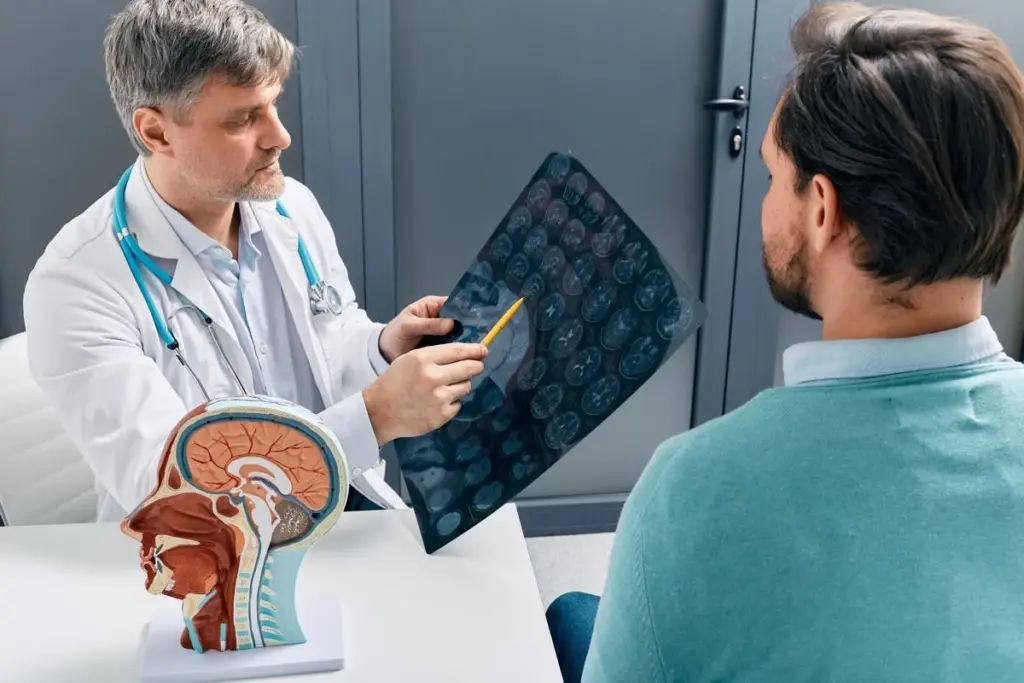
Diagnosing AVMs involves using imaging and grading systems. These tools help doctors understand how severe the malformation is. Knowing this is key to choosing the right treatment and predicting how well it will work.
Imaging Techniques Used
Several imaging methods are used to find AVMs. Magnetic Resonance Imaging (MRI) shows the AVM’s structure and its position in the brain. Computed Tomography Angiography (CTA) gives detailed views of the blood vessels in the AVM.
Digital Subtraction Angiography (DSA) is the top choice for AVM diagnosis. It shows how blood flows through the malformation in real-time. These methods help doctors see the AVM’s size, location, and how complex it is. This information is vital for planning treatment.
Grading Systems for AVMs
AVMs are graded to understand their risk level. The Spetzler-Martin grading system looks at the AVM’s size, location, and how it drains blood. This system helps predict treatment risks and guides treatment choices.
Knowing an AVM’s grade is important for both doctors and patients. It helps decide between surgery, embolization, or radiosurgery. By using imaging and grading, doctors can create a treatment plan that fits the patient’s needs.
Types of AVM Surgical Procedures
There are several ways to treat AVMs, each suited for different cases. The right procedure depends on the AVM’s size, location, and complexity. It also depends on the patient’s health.
Microsurgical Resection
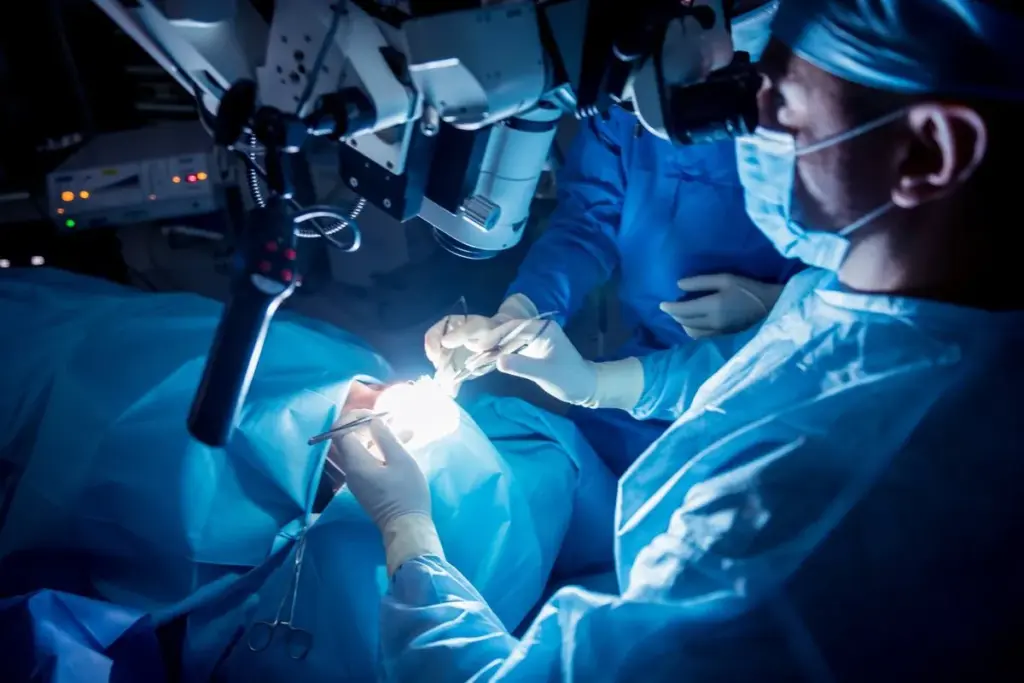
Microsurgical resection is a common and effective treatment for AVMs. It involves removing the AVM through a craniotomy. It’s often chosen for AVMs that are easy to reach and have clear boundaries. The success of this method depends on the neurosurgeon’s skill and the AVM’s specifics.
Endovascular Embolization
Endovascular embolization is a less invasive method. It involves using materials to block the AVM through its arteries. This technique can be used alone or with other surgeries. It’s great for AVMs that are hard to reach or at high risk of bleeding.
Stereotactic Radiosurgery
Stereotactic radiosurgery (SRS) is a non-surgical treatment. It uses targeted radiation to close the AVM’s blood vessels. SRS is best for small AVMs or those in hard-to-reach areas. Its success relies on accurately targeting the AVM without harming nearby brain tissue.
Hybrid Approaches
For complex AVMs, a mix of techniques might be used. For example, embolization might shrink the AVM before surgery or SRS. Hybrid methods can lead to better results for patients with tough AVMs.
Choosing the right treatment for an AVM involves a team of experts. They consider the patient’s age, health, and the AVM’s details. This helps find the best treatment plan.
Factors Affecting AVM Surgery Duration
AVM surgery time can vary due to several factors. It’s important for both patients and doctors to know these factors. This helps in preparing for the surgery and understanding its outcomes.
Size and Location of the AVM
The size and where an AVM is located greatly affect surgery time. Bigger AVMs need more time and complex methods to remove. AVMs in hard-to-reach or critical brain areas also take longer because of the delicate tissue around them.
Table: Impact of AVM Size and Location on Surgery Duration
|
AVM Size |
Typical Surgery Duration |
Complexity Level |
|---|---|---|
|
Small (<3 cm) |
2-4 hours |
Low to Moderate |
|
Medium (3-6 cm) |
4-6 hours |
Moderate to High |
|
Large (>6 cm) |
6-8 hours or more |
High |
Complexity of Blood Vessel Involvement
The complexity of blood vessels in an AVM is key. AVMs with many feeding arteries or veins make surgery harder. This requires more time to find and tie off these vessels.
“The angioarchitecture of the AVM, including the presence of aneurysms or varix, can significantly impact the surgical strategy and duration.” – Neurosurgical Expert
Patient’s Overall Health
A patient’s health and any other health issues can also affect surgery time. Patients with certain health problems may need extra care during surgery. This can make the procedure longer.
Surgical Approach Selected
The surgical method chosen also plays a big role. Different methods, like microsurgery, endovascular embolization, or radiosurgery, take different amounts of time. The right method depends on the AVM and the patient’s health.
Knowing these factors helps patients prepare for AVM surgery. It also helps them have better talks with their doctors about what to expect during and after the surgery.
Average Duration of Different AVM Surgeries
AVM surgeries come in different types, each with its own time frame. Knowing these times helps both patients and doctors plan better.
Microsurgical Resection: 4-8 Hours
Microsurgical resection is a detailed method to remove AVMs. This AVM surgery can take 4 to 8 hours. It depends on the AVM’s size and complexity.
Embolization Procedure: 2-6 Hours
The embolization procedure blocks blood flow to the AVM. This AVM procedure usually lasts 2 to 6 hours. It depends on how many blood vessels are involved.
Radiosurgery Session: 1-3 Hours
Radiosurgery is a non-invasive method that uses radiation to treat AVMs. A typical AVM operation of this type can last 1 to 3 hours.
Multi-Stage Procedures: Timeline Breakdown
Some AVMs need multiple procedures. These can include a mix of the above techniques. The total time can vary a lot, often taking weeks or months.
|
Procedure Type |
Average Duration |
|---|---|
|
Microsurgical Resection |
4-8 Hours |
|
Embolization Procedure |
2-6 Hours |
|
Radiosurgery Session |
1-3 Hours |
A medical expert notes, “The time of AVM surgery is just one thing. The surgeon’s skill and the case’s complexity are also key to success.”
“The key to successful AVM treatment lies in a thorough understanding of the patient’s condition and choosing the right surgical method.”
— A Neurosurgeon
Pre-Surgical Preparation Timeline
AVM surgery preparation timeline
Before AVM surgery, patients must prepare thoroughly. This preparation is key to getting the best results and lowering surgery risks. The time needed for these steps can change based on the patient and the AVM’s complexity.
Medical Evaluations: Weeks Before
Weeks before surgery, patients get detailed medical checks. These tests aim to check the patient’s health and spot any risks. The tests usually include:
- Blood tests to check for infections or clotting issues
- Imaging like MRI or CT scans to find the AVM’s exact location
- Heart health checks
Anesthesia Considerations
Anesthesia is vital for AVM surgery. Before the surgery, an anesthesiologist talks with the patient. They discuss the patient’s health, the surgery type, and past anesthesia experiences. This helps pick the best anesthesia for comfort and safety.
Day-of-Surgery Preparation
On surgery day, patients get specific instructions. They are told to fast, follow medication rules, and prepare personal items. Usually, they are told to:
|
Preparation Task |
Instruction |
|---|---|
|
Fasting |
Avoid eating or drinking for a set time before surgery |
|
Medication |
Take or skip certain meds as the doctor says |
|
Personal Care |
Remove jewelry, skip makeup, and wear loose, comfy clothes |
It’s important to follow these instructions closely for a smooth surgery. Knowing the prep timeline helps reduce stress and prepares patients well for their AVM surgery.
The AVM in Brain Surgery Process Step by Step
Learning about AVM brain surgery is key for both patients and doctors. The process has many important steps, each needing careful focus.
Anesthesia Administration: 30-60 Minutes
The first step is giving anesthesia, which takes 30 to 60 minutes. It makes sure the patient doesn’t feel pain and stays calm. The anesthesia team watches the patient’s health closely during this time.
Surgical Access Creation: 30-90 Minutes
After anesthesia, the team gets to the AVM. They make a small cut in the skull, called a craniotomy. This can take 30 to 90 minutes, depending on where the AVM is.
AVM Identification and Isolation: 1-2 Hours
With access, the neurosurgeon finds and separates the AVM. They use special imaging to see the malformation and its blood vessels. This step can take 1 to 2 hours, based on the AVM’s size and how complex it is.
As one neurosurgeon said,
“The key to successful AVM surgery lies in meticulous planning and precise execution.”
Removal or Treatment Techniques: 2-4 Hours
The last step is treating or removing the AVM. They might use surgery, embolization, or radiosurgery. The method and time, 2 to 4 hours, depend on the AVM’s grade and the patient’s health.
The whole AVM brain surgery shows how far neurosurgery has come. Knowing each step helps patients get ready for the surgery and its results.
Recovery Time in Hospital After AVM Surgery
Recovering in the hospital after AVM surgery is a key part of the healing process. How long you stay depends on the surgery’s complexity and your health.
Intensive Care Monitoring
Right after surgery, you’ll go to the ICU for close watch. This usually lasts 24 to 72 hours. The team will look for any complications or adverse reactions.
Ward Recovery
Once out of the ICU, you’ll move to a regular ward for more recovery. Recovery time here can be 3 to 10 days. It depends on how well you’re doing and if any issues come up.
Factors Affecting Hospital Stay Length
Several things can affect how long you stay in the hospital. These include:
- The size and location of the AVM
- The complexity of the surgical procedure
- The patient’s age and overall health
- Any complications that occur during or after surgery
Knowing these factors can help you and your family prepare for recovery. It’s also important to understand what to expect after AVM removal.
Be aware of possible AVM surgery side effects. These can include physical and cognitive challenges. Good post-operative care and follow-up appointments are key to managing these effects and ensuring a smooth recovery.
Long-Term Recovery Timeline After AVM Removal
AVM survivors often face a challenging but rewarding recovery. This can last several months to a year or more. The recovery process involves physical, cognitive, and emotional steps.
First Month Post-Surgery
The first month after surgery is key for a good recovery. Patients are watched closely for any complications. Their treatment plans are adjusted as needed.
It’s common to feel tired, have headaches, and feel mentally foggy during this time.
- Rest and relaxation are important in the first few weeks.
- Follow-up appointments with healthcare providers are critical for monitoring recovery progress.
- Patients are advised to avoid strenuous activities and heavy lifting.
Physical Rehabilitation: 1-6 Months
Physical rehabilitation is a big part of recovery for many AVM survivors. The length and intensity of rehab depend on the individual’s condition and surgery extent.
- Physical therapy may be recommended to regain strength and mobility.
- Occupational therapy can help patients relearn daily living skills.
- Speech therapy may be necessary for patients who have experienced speech difficulties due to the AVM or surgery.
Cognitive Recovery: 3-12 Months
Cognitive recovery can take time, with some seeing improvements in a few months. Others may take up to a year or more.
Cognitive rehabilitation techniques may include:
- Memory exercises to improve recall and memory retention.
- Attention and concentration training to enhance focus.
- Problem-solving activities to regain cognitive flexibility.
Return to Normal Activities: Timeline
The timeline for returning to normal activities varies among AVM survivors. Factors include the AVM’s complexity, the surgical approach, and the patient’s health and resilience.
Generally, patients can expect to:
|
Activity Level |
Expected Return Timeline |
|---|---|
|
Light activities (e.g., reading, short walks) |
1-3 months |
|
Moderate activities (e.g., light exercise, socializing) |
3-6 months |
|
Strenuous activities (e.g., heavy exercise, contact sports) |
6-12 months or more |
It’s important for AVM survivors to work closely with their healthcare team. They should develop a personalized recovery plan that meets their unique needs.
Potential Complications and Their Impact on Surgery Duration
AVM surgery is complex and comes with risks. These can affect how long the surgery lasts and its success. It’s important for both doctors and patients to know about these risks.
Intraoperative Bleeding: Additional 1-3 Hours
Intraoperative bleeding is a big risk during AVM surgery. It can happen if the AVM ruptures or nearby blood vessels get damaged. To stop the bleeding, surgeons might need to add 1 to 3 hours to the surgery.
Brain Swelling Management
Brain swelling, or cerebral edema, is another issue that can happen. It might be caused by the surgery itself or a reaction to it. To manage this, doctors might give medicines or even do a decompressive craniectomy. This can affect how long the surgery lasts and the care needed after it.
Unexpected Anatomical Challenges
AVM and surrounding structures can sometimes be tricky. This might mean the AVM is very complex or is close to important brain areas. Surgeons have to adjust their approach, which can make the surgery longer.
Equipment or Technical Issues
Though rare, technical problems can happen during surgery. These could be anything from broken tools to imaging equipment issues. Fixing these quickly is key to keeping the surgery on track.
Understanding the risks of AVM surgery is vital. It helps patients prepare better and surgeons to plan ahead. This way, everyone can work together to make the surgery as successful as possible.
- Risks associated with AVM surgery include intraoperative bleeding and brain swelling.
- Effective management of these complications is key for a good outcome.
- Surgeons must be ready for unexpected challenges and technical problems.
Knowing about the risks and how they affect surgery time helps patients and doctors. Together, they can make the surgery better and safer.
What to Expect Before and After AVM Surgery
AVM surgery can seem scary, but knowing what to expect helps. Patients need to understand the steps before, during, and after the surgery.
Pre-Surgery Consultations and Testing
Before surgery, patients go through many tests and talks. They get medical checks, imaging like MRI, and talks with the surgical team. It’s key for patients to follow all pre-surgical instructions carefully to get the best results.
Immediate Post-Operative Experience
After surgery, patients go to the ICU for close watch. The first days are very important, and doctors watch for any problems. Patients might feel some pain or confusion, which doctors manage with medicine.
Pain Management Timeline
Pain control is a big part of recovery. Good pain management makes recovery better. At first, doctors use IV meds, then switch to pills as recovery goes on.
Follow-up Appointments Schedule
Follow-up visits are key to check on recovery and remove stitches. These visits help see if the surgery worked and answer any questions. A usual schedule includes visits at 1-2 weeks, 6 weeks, and 3-6 months later.
Knowing what happens before and after AVM surgery can make things less scary. Being informed and ready helps patients get through this tough time better.
AVM Surgery Side Effects and Management
Managing side effects after AVM surgery is key for a smooth recovery. Patients often face various symptoms post-surgery. These symptoms can vary in severity and how long they last.
Common Post-Surgical Symptoms
Patients may experience headaches, nausea, and fatigue after AVM surgery. These symptoms are usually treated with medication and rest.
Headaches are a common side effect, caused by the surgery or changes in brain pressure. Effective pain management is very important during recovery.
Medication Management
Medications are vital in managing symptoms after AVM surgery. Patients may be given pain meds, anti-seizure drugs, and other meds to prevent complications.
- Pain relief medications to manage headache and discomfort
- Anti-nausea medication to prevent vomiting
- Anti-seizure medications to prevent seizures
When to Seek Emergency Care
While many side effects can be managed at home, some need emergency care. Symptoms like sudden severe headache, confusion, or weakness on one side of the body are urgent.
Long-term Monitoring Requirements
After AVM surgery, patients need ongoing care to watch for any issues. Regular imaging and check-ups are part of long-term care.
Regular follow-up appointments help catch any problems early. This ensures timely treatment.
Success Rates and Prognosis After AVM Surgery
AVM surgery success rates depend on several factors. These include the size and location of the arteriovenous malformation, the surgical method, and the patient’s health.
Complete vs. Partial AVM Removal
The main goal of AVM surgery is to remove the malformation completely. Complete removal lowers the risk of future bleeding and complications. For small, accessible AVMs, microsurgical resection can succeed in 90-95% of cases.
But, larger or more complex AVMs might need a multimodal treatment approach. This involves combining different surgical techniques.
Recurrence Rates
There’s a small chance of AVM recurrence even after successful surgery. This risk is higher in younger patients. It’s also more common in those who had partial treatment or have residual AVM.
It’s important to have long-term follow-up to watch for any recurrence.
Long-Term Outcomes Based on AVM Grade
The Spetzler-Martin grading system helps predict surgery risks based on AVM characteristics. Lower-grade AVMs (Grades I-III) usually have better outcomes and lower risks. In contrast, higher-grade AVMs (Grades IV-V) face higher risks.
Patients with low-grade AVMs who have successful surgery tend to have a good long-term prognosis.
Quality of Life Improvements
Successful AVM surgery not only lowers the risk of hemorrhage. It also improves patients’ quality of life. By removing the malformation, surgery can reduce symptoms like seizures and headaches.
This allows patients to resume their normal activities.
Conclusion
Understanding AVM in brain surgeries is key for both patients and doctors. The time needed for AVM surgery changes based on several factors. These include the size and location of the malformation, the complexity of the blood vessels, and the patient’s health.
The types of AVM surgical procedures vary in length. Microsurgical resection can take 4-8 hours. Embolization procedures usually last 2-6 hours. Radiosurgery sessions are shorter, lasting 1-3 hours.
Preparation before surgery, the surgery itself, and recovery after are all important. Knowing about possible complications helps prepare for the challenges of treating arteriovenous malformation.
Grasping the details of AVM surgeries helps patients and doctors make better choices about treatment.
FAQ
What is an Arteriovenous Malformation (AVM) in the brain?
An Arteriovenous Malformation (AVM) is a rare brain condition. It’s when arteries and veins in the brain are connected in a way they shouldn’t be. This can cause symptoms and serious health risks.
How are AVMs diagnosed?
Doctors use imaging tests like MRI, CT scans, or angiography to find AVMs. These tests help see where the AVM is, how big it is, and what it looks like.
What are the treatment options for AVMs?
There are several ways to treat AVMs. Doctors might use surgery, endovascular embolization, radiosurgery, or a mix of these methods. The choice depends on the AVM’s size, location, and how complex it is.
How long does AVM surgery typically take?
Surgery time for AVMs varies. Microsurgical resection can take 4-8 hours. Embolization might take 2-6 hours. Radiosurgery sessions are usually shorter, lasting 1-3 hours.
What is the recovery time after AVM surgery?
Recovery time after AVM surgery can be different for everyone. It can range from a few days to several weeks or months. It depends on the surgery’s complexity and your health. You might need to stay in the hospital for 24-72 hours and then recover in the ward for 3-10 days.
What are the possible complications of AVM surgery?
Complications can happen during or after AVM surgery. These include bleeding, swelling, unexpected problems with the AVM’s structure, or issues with the equipment used. These complications can affect how long the surgery takes and how long you need to recover.
How is pain managed after AVM surgery?
Doctors use medicine to manage pain after AVM surgery. The type and amount of medicine you get depends on your needs and what your surgeon recommends.
What is the success rate of AVM surgery?
Success rates for AVM surgery vary. They depend on the AVM’s size, location, and complexity, as well as the surgery method used. Some AVMs are completely removed, while others are not. Success rates can range from 50% to 90% or more.
Can AVMs recur after surgery?
Yes, AVMs can come back after surgery. The chance of recurrence depends on how well the AVM was removed and your overall health. Recurrence rates can be as low as 1% or as high as 5% or more.
How long does it take to return to normal activities after AVM surgery?
It takes different amounts of time to get back to normal after AVM surgery. It depends on your health, the surgery’s complexity, and how well you recover. Some people can get back to normal in a few weeks or months, while others may take longer.
What are the long-term outcomes after AVM surgery?
Long-term results after AVM surgery vary. They depend on the AVM’s size, location, and complexity, as well as your overall health. Some people see big improvements in their quality of life, while others may have ongoing symptoms or complications.
What is the AVM grade, and how does it affect the prognosis?
The AVM grade is a way to classify AVMs based on their complexity. It considers factors like size, location, and how the veins drain. Higher grades mean more complex AVMs and a potentially worse prognosis.
Reference
National Center for Biotechnology Information. Evidence-Based Medical Insight. Retrieved from https://pubmed.ncbi.nlm.nih.gov/12762874/

























