Learning you’re 7 weeks pregnant is thrilling. But, you might be curious about your developing baby at this time.See an image and description of what the baby at 7 weeks is developing into. Learn about the baby at 7 weeks size now.
By 7 weeks, your embryo is about 9-10mm long. That’s as small as a blueberry or a bean. Your baby is growing fast and developing quickly. Important organs and systems are starting to form.
Let’s dive into the amazing changes happening at this stage. You’ll get a clearer picture of what to expect in week 7 of your pregnancy.
Key Takeaways
- At 7 weeks pregnant, the embryo measures between 9-10mm in length.
- The embryo is comparable in size to a blueberry or a bean.
- Rapid growth and development are occurring.
- Vital organs and systems are beginning to form.
- Significant changes are happening in a short period.
The 7-Week Milestone in Pregnancy

At the seventh week of pregnancy, the embryo goes through big changes. It’s called an embryo because it has a small tail that will go away later. Knowing about these changes is key for parents-to-be.
Embryo vs. Fetus: Understanding Terminology
The words “embryo” and “fetus” are often mixed up, but they mean different things. At seven weeks, the baby is an embryo. The term changes to fetus around the eighth week. It’s important to know this to follow the baby’s growth.
Remarkable Growth From Conception
The embryo has grown remarkably from the start. It’s now 10,000 times bigger than when it began. This shows how fast and amazing the growth is.
By the seventh week, the embryo’s brain and face are growing fast. They start to form important features like nostrils, lips, and eyes. This is a key time for the baby’s health and growth.
Size and Measurements of Your Baby at 7 Weeks
At 7 weeks pregnant, your baby has grown a lot. They are now about 9-10mm long, similar to a blueberry or bean. This is a key time for growth and development.
From Microscopic to Blueberry-Sized
Just a few weeks ago, your baby was tiny. Now, they are as big as a blueberry or bean. This rapid growth is amazing.
At this stage, your baby is as big as a chickpea or blueberry. This helps you picture their size. It shows how fast they are growing and changing.
Comparing Your Baby’s Size to Everyday Objects
Comparing your baby’s size to everyday things makes it easier to understand. At 7 weeks, they are about 9-10mm long, like a grape or small bean. These comparisons help you see how small yet developed they are.
As your baby grows, these comparisons will change. But for now, seeing them as blueberry-sized helps you grasp their size and development.
Key measurements to remember at 7 weeks pregnant:
- Length: approximately 9-10mm
- Comparable in size to a blueberry, bean, or chickpea
Knowing these measurements and comparisons helps you visualize your baby’s growth. We’ll keep exploring the amazing changes in your baby as we go on.
Facial Development at 7 Weeks
At seven weeks, your baby’s face is taking shape. This is a key time for facial features to develop. These features will shape your baby’s look.
Nostrils and Lips Formation
This week, your baby’s nostrils start to show. The lips and nasal passages are also growing. These changes are important for breathing and your baby’s face.
Eye Development Under Translucent Skin
The retina starts to form, beginning eye development. The eyes are covered by skin, but vision is starting. They will move to the front of the face soon.
These changes are exciting and important. They help your baby see and shape their face. As they grow, these early signs will become the unique features of their face.
Brain and Nervous System Progress
At 7 weeks pregnant, your baby’s brain is growing fast. This is a key time for the nervous system to start forming. It’s all about setting up for your baby’s future thinking and movement skills.
Rapid Brain Cell Formation
Brain cells are multiplying at a rate of 100 new ones every minute. This makes the brain bigger than the body. It’s a normal part of how your baby grows.
This is a big moment for your baby’s brain. The neural tube is closing, and the brain is dividing into parts. This is essential for your baby’s development.
Why the Head Appears Disproportionately Large
Your baby’s head looks bigger than the rest of their body. This is because the brain is growing faster. The quick creation of brain cells makes the head larger.
Dr. [Expert Name] explains, “The big head is a normal sign of early growth. It shows how important brain development is.”
Developmental Feature | Status at 7 Weeks |
Brain Cell Formation | 100 new cells per minute |
Neural Tube Closure | Almost complete |
Head Size | Disproportionately large |
Learning about these changes helps you understand your baby’s growth. The fast development of the brain and nervous system is key. It prepares your baby for future achievements.
Limb Development: Hands and Feet Taking Shape
At 7 weeks, the fetus’s limbs start to change a lot. The limb buds turn into paddle-like hands and feet. This is a big step in how the fetus grows.
The arm buds look like paddles now. The lower limb buds are starting to form legs. This is important for the growth of fingers and toes.
Paddle-Like Limb Buds
The limb buds are getting clearer. They will become our baby’s arms and legs. These early shapes are the start of hands and feet.
- The upper limb buds are more developed, showing early signs of hand formation.
- The lower limb buds are starting to take shape, indicating the future development of feet.
Webbed Fingers and Toes
At this stage, the fingers and toes are webbed. As the pregnancy goes on, these will separate. This will make distinct fingers and toes.
Key developments in limb formation at 7 weeks include:
- The continuation of limb bud growth and differentiation.
- The initial formation of webbed fingers and toes.
- The gradual separation of digits as the pregnancy advances.
These changes are key for our baby’s limbs to work right after birth.
Cardiovascular System at 7 Weeks
At 7 weeks, your baby’s heart and blood system start to form. This is a key time for growth and health. The heart and blood system are essential for your baby’s well-being.
Heart Development and Function
The heart starts to pump blood at 7 weeks. The heart is now a muscular, four-chambered organ. It’s exciting to hear your baby’s heartbeat for the first time.
The heart forms through complex steps. Heart cells merge, and septa develop. By 7 weeks, the heart has four chambers: left and right atria, and left and right ventricles.
Formation of Blood Vessels
Blood vessels are vital for the heart. Vasculogenesis and angiogenesis create new blood vessels. These vessels bring oxygen and nutrients to the growing embryo.
The circulatory system is essential for growth. It expands and gets more complex as the embryo grows. This supports the baby’s increasing needs.
Developmental Aspect | Description |
Heart Structure | Four-chambered organ forming |
Blood Vessel Formation | Vasculogenesis and angiogenesis |
Circulation | Primitive circulatory system supporting growth |
Experts say, “The heart and blood system’s development is complex and vital for the embryo’s survival and growth.” (
This process shows how important a healthy heart and blood system are from the start.
Learning about your baby’s heart and blood system is interesting. We’ll keep exploring other systems and milestones as we go.
Other Organ Systems Developing
At 7 weeks pregnant, your baby’s growth is speeding up. Several organ systems are starting to work. This includes the heart and other vital organs getting ready for life outside the womb.
Liver Function and Blood Cell Production
The liver is key in making red blood cells. This is important for delivering oxygen to your baby’s growing body. The liver’s role in making blood cells is a big deal at this time. Experts say, “The liver’s production of red blood cells is a significant milestone in fetal development.”
Digestive System Beginnings
The digestive system is starting to form. The gut and early organs are developing. The umbilical cord is important for giving nutrients and taking away waste.
Respiratory System Formation
The respiratory system is also starting to develop. The lungs and airways are forming. The lungs won’t be fully ready until later, but the start is important.
As we move through the 7th week, it’s amazing to see how much is happening. The growth of these systems shows how complex and well-organized fetal development is.
“The development of organ systems in the embryo is a complex and highly coordinated process, involving the precise regulation of multiple genetic and environmental factors.”
– Medical Embryology
The Umbilical Cord: Your Baby’s Lifeline
The umbilical cord is a vital structure that connects your baby to the placenta. It allows for the exchange of oxygen, nutrients, and waste. By the seventh week of pregnancy, this cord has become a critical lifeline for your developing baby.
Structure and Function
The umbilical cord contains three blood vessels: two arteries and one vein. The vein carries oxygenated, nutrient-rich blood from the placenta to your baby. The arteries return deoxygenated blood and waste products to the placenta. This complex system is vital for your baby’s growth and development.
Nutrient and Oxygen Exchange
The umbilical cord plays a key role in delivering oxygen and nutrients to your baby. As your baby grows, the cord adapts to meet their increasing needs. The exchange of nutrients and oxygen occurs within the placenta, where your baby’s blood comes into close proximity with your own.
At 7 weeks, your baby is entirely dependent on this connection for their survival. The umbilical cord’s structure and function show the complex and highly specialized nature of fetal development.
Common Maternal Symptoms at 7 Weeks Pregnant
At 7 weeks pregnant, women often face a variety of symptoms. These are mainly due to hormonal changes and body transformations.
Morning Sickness and Nausea
Morning sickness is a common symptom at 7 weeks, affecting about 75 percent of pregnant women. It can happen at any time, not just in the morning. Nausea can be caused by smells or tastes and can vary in severity.
Navigating Morning Sickness:
- Eating small, frequent meals to keep the stomach from being empty
- Avoiding foods and smells that trigger nausea
- Staying hydrated by drinking plenty of fluids
- Considering ginger or vitamin B6 supplements after consulting a healthcare provider
Fatigue and Energy Changes
Fatigue is a common symptom at 7 weeks pregnant. High levels of progesterone can make women feel more tired. The body’s effort to support the growing embryo also leads to exhaustion.
Managing Fatigue:
- Prioritizing rest and sleep
- Engaging in gentle exercises like walking or prenatal yoga
- Eating a balanced diet rich in iron and other essential nutrients
Breast Changes and Sensitivity
Breast tenderness and changes are common at 7 weeks pregnant. Hormonal changes can make the breasts swollen, tender, or sore. These changes help prepare the body for milk production and breastfeeding.
Symptom | Description | Tips for Management |
Morning Sickness | Nausea and vomiting, often triggered by smells or tastes | Eat small meals, avoid triggers, stay hydrated |
Fatigue | Feeling tired or exhausted due to hormonal changes | Prioritize rest, gentle exercise, balanced diet |
Breast Changes | Breast tenderness, swelling, or soreness | Wear a supportive bra, consider breast care tips from a healthcare provider |
A pregnancy expert notes, “Understanding and managing these symptoms can significantly improve the pregnancy experience for expectant mothers.”
“The key to a healthy pregnancy is not just about managing symptoms but also about embracing the changes and preparing for the journey ahead.”
What to Expect at Your 7-Week Prenatal Visit
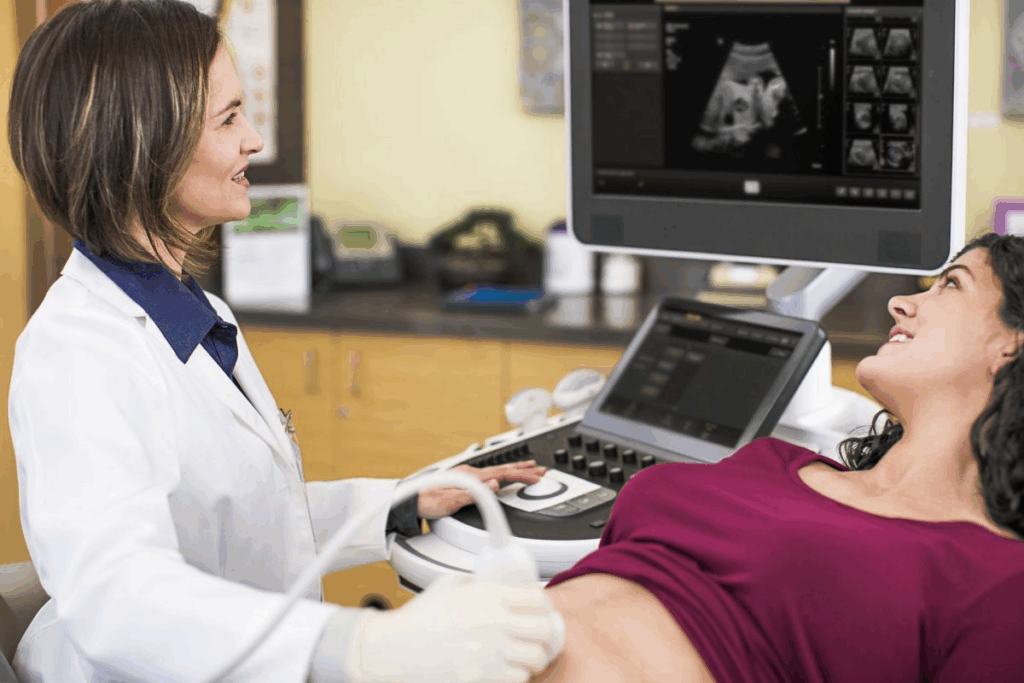
The 7-week prenatal visit is a big deal. It might include an ultrasound to check on your baby. Your healthcare provider will look at your health and your baby’s growth. They’ll also talk about any worries you have.
Ultrasound Possibilities
At 7 weeks pregnant, an ultrasound is often done. It confirms the pregnancy and checks the baby’s development. This scan might find a heartbeat, which is good news for your baby’s health. The 7 week pregnancy scan is key for watching how your baby grows.
An ultrasound at seven weeks pregnant shows important info about your baby’s growth. It can spot problems early, so you can get the right care.
Medical Tests and Screenings
Along with the ultrasound, you might get other tests. Blood tests check for infections, blood type, and Rh factor. Other tests look at your health and find problems early.
Test/Screening | Purpose |
Blood Tests | Check for infections, blood type, and Rh factor |
Urine Tests | Detect urinary tract infections and other conditions |
Ultrasound | Confirm pregnancy, check baby’s development, and detect heartbeat |
Knowing what to expect at your 7-week prenatal visit can make you feel better. It prepares you for the next part of your pregnancy journey.
Supporting Your Baby’s Development
At 7 weeks pregnant, supporting your baby’s growth is key. This involves making smart choices about what you eat and how you live. Your baby is growing fast, and the right environment is essential for their health.
Nutrition and Supplements
Eating a balanced diet is vital for your baby’s growth. Key nutrients include folic acid, iron, calcium, and protein. These nutrients help with everything from brain development to bone growth.
Eat a variety of foods like leafy greens, lean proteins, dairy, and whole grains. Drinking plenty of water is also important. Your healthcare provider might suggest supplements to make sure you get all the nutrients you need.
Lifestyle Adjustments
Healthy lifestyle choices are also important. Avoiding harmful substances like alcohol and tobacco is critical. These can harm your baby’s growth and health.
Managing stress and getting enough sleep are also key. Prenatal yoga can help with your physical and mental health. Knowing about pregnancy and having a support system are also beneficial.
By focusing on good nutrition, supplements, and a healthy lifestyle, you can support your baby’s growth. Always talk to your healthcare provider for advice that fits your needs.
Conclusion: Embracing This Special Time
Exploring fetal development at 7 weeks shows us a time of amazing growth. At 7 weeks pregnant, the baby is changing a lot. Seeing what a fetus looks like at 7 weeks is truly fascinating.
The first trimester is key for the baby’s growth at 7 weeks. It’s a time of big milestones in a short period. To embrace this time, it’s important to know what’s happening and support the baby’s health.
As the pregnancy goes on, keeping up with prenatal care and a healthy lifestyle is vital. Making smart choices and living healthily helps the baby start strong.
Learning about fetal development at 7 weeks helps parents appreciate their journey. We encourage you to stay informed and engaged throughout your pregnancy.
FAQ
What is the size of a baby at 7 weeks pregnant?
At 7 weeks, the baby is about 9-10mm long. This is similar to a blueberry or a bean.
What are the common symptoms experienced by women at 7 weeks pregnant?
Women might feel morning sickness, nausea, and tiredness. They may also notice changes in their breasts and feel more sensitive.
What is the significance of the 7-week prenatal visit?
The 7-week prenatal visit is a big deal. It’s when an ultrasound might be done. This confirms the pregnancy and checks on the baby’s growth. It can also detect a heartbeat.
How is the baby’s development supported at 7 weeks?
Supporting the baby’s growth means eating right, taking supplements, and making healthy lifestyle choices. A balanced diet and avoiding harmful things are key.
What is the difference between an embryo and a fetus?
At 7 weeks, the baby is called an embryo. It has a small tail that will go away later. It’s an embryo until it develops more.
What are the major developments occurring at 7 weeks?
Big things happening include the growth of vital organs and systems. The baby’s face, brain, limbs, and heart are also developing.
Is it normal to experience spotting or light brown discharge at 7 weeks pregnant?
Spotting or light brown discharge can happen at 7 weeks. But, it’s important to talk to a healthcare provider to make sure everything is okay.
Can a heartbeat be detected at 7 weeks pregnant?
Yes, a heartbeat might be seen during an ultrasound at the 7-week visit.
What lifestyle adjustments can support the baby’s development?
To support the baby, live a healthy lifestyle. Avoid harmful substances and manage stress. These actions help the baby’s health and growth.
Are there any specific nutrients or supplements recommended during pregnancy?
Eating a balanced diet with all the necessary nutrients is important. Some supplements, as suggested by healthcare providers, can also help the baby grow.
What is the role of the umbilical cord in the baby’s development?
The umbilical cord is vital. It brings oxygen and nutrients to the baby and takes away waste. It’s essential for the baby’s growth and development.
References
National Center for Biotechnology Information. Seven-Week Fetal Development: Appearance and Expected Symptoms. Retrieved from https://www.ncbi.nlm.nih.gov/books/NBK557746/