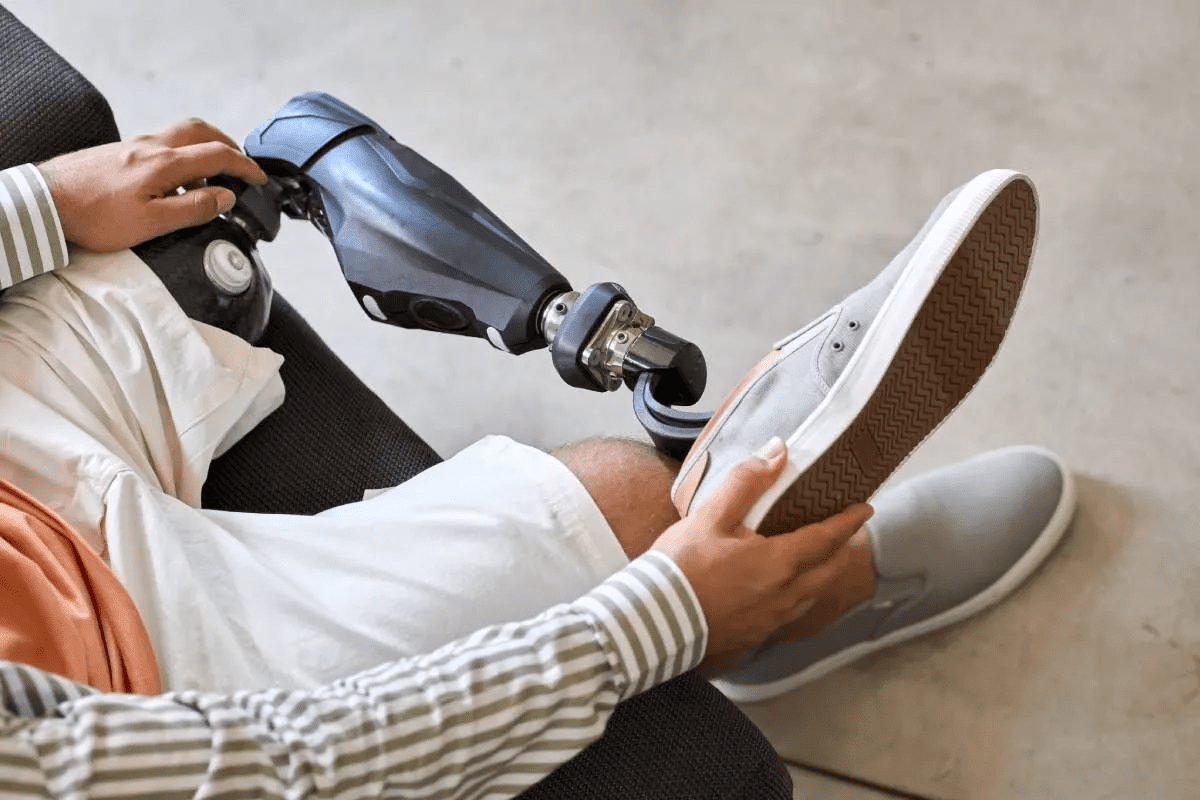
Choosing the right below knee prosthesis is very important. It affects how well you can move, live independently, and enjoy life. Today, prosthetic limbs are more advanced. They offer many choices to fit different lifestyles and needs.
Adapting to life with a prosthetic can be tough but also life-changing. People who have lost a limb due to injury, illness, or birth defects can greatly benefit from a good artificial limb. It can improve their overall health and happiness.
Finding the right prosthetic is key. The global market for prosthetics is expected to hit $3.2 billion by 2033. This shows how fast prosthetic technology is improving to help amputees all over the world.
Key Takeaways
- Understanding the impact of a well-fitted prosthetic on mobility and independence.
- Recognizing the advancements in prosthetic technology and their benefits.
- Identifying the key factors to consider when selecting a prosthetic limb.
- Exploring the range of prosthetic options available to suit different needs and lifestyles.
- Appreciating the importance of patient-centered rehabilitation protocols in prosthetic care.
The Evolution of Prosthetic Legs
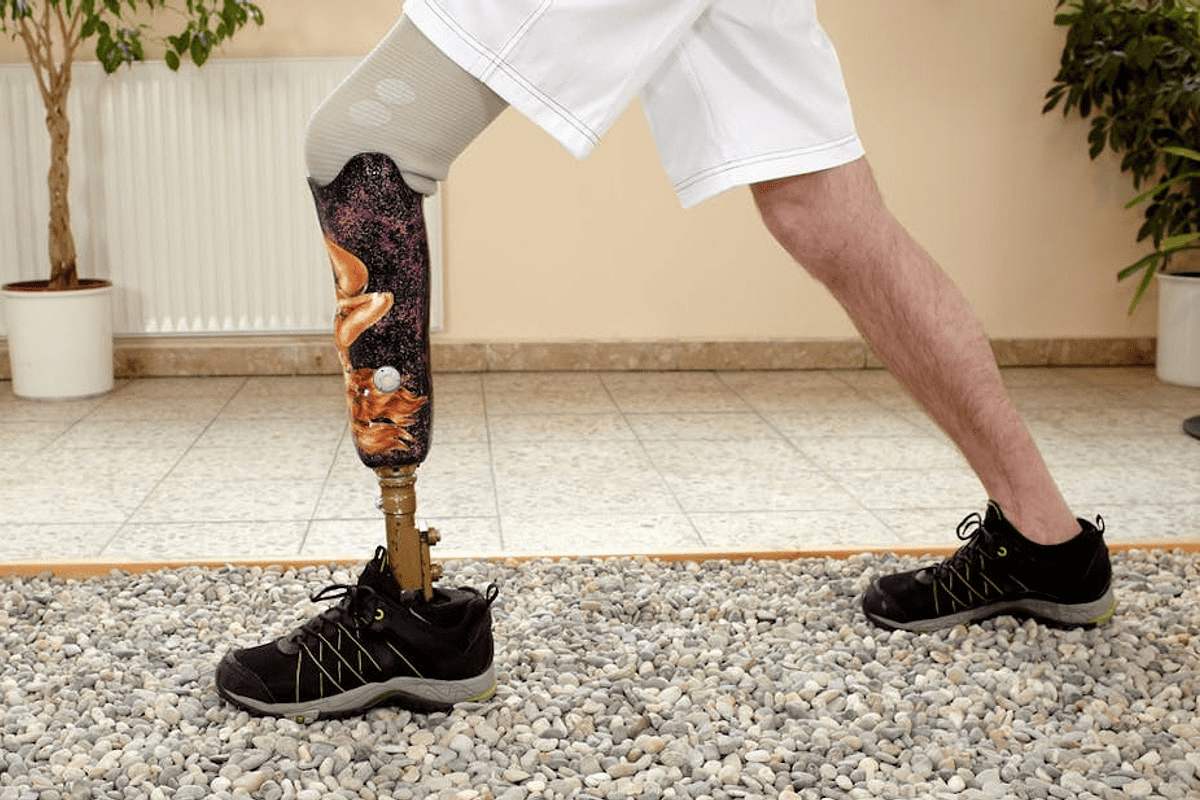
The journey of prosthetic legs has been amazing. It has changed lives for the better. From simple wooden limbs to advanced prosthetics, the progress is huge.
Historical Development of Artificial Limbs
Prosthetic legs have a long history. Early ones were made of wood and metal. They were hard to use and not very good.
Important moments in prosthetic history include:
- The use of wood and metal in ancient times
- Better materials and designs came during the Renaissance
- World War I and II led to better prosthetics for soldiers
Modern Advancements in Prosthetic Technology
Recently, prosthetic tech has made big leaps. New materials and designs have helped a lot. Some big changes are:
- Microprocessor-controlled knees: They make movement more natural and controlled.
- 3D printing: It lets us make custom prosthetics with complex shapes.
- Advanced materials: Like carbon fiber, making prosthetics lighter and stronger.
These new developments have made prosthetic legs better. They are more comfortable and useful, improving life for those with limb loss.
Understanding Below Knee Prosthesis Options
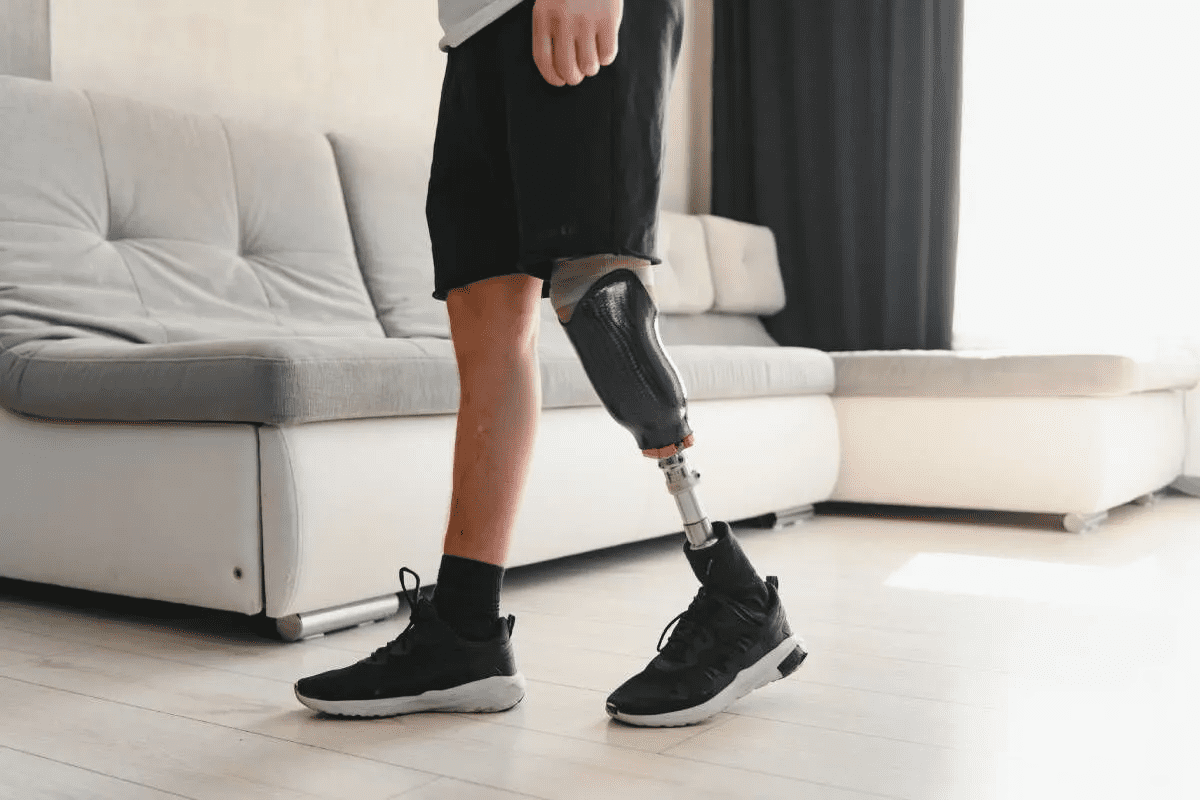
Choosing the right below knee prosthesis is key to getting back on your feet. These prosthetics, also known as transtibial prosthetics, replace the lower leg and foot. They help users walk, run, and do daily tasks with ease.
Defining Transtibial Prosthetics
Transtibial prosthetics are for those who lost their leg below the knee. They are made to fit each user’s needs, considering their lifestyle and preferences.
There are two main types: mechanical and electronic. Mechanical ones use springs and hinges for movement. They are simple and durable. Electronic prosthetics use sensors and motors for better performance and flexibility.
Key Components of a Prosthetic Leg System
A prosthetic leg system has several important parts for a natural walk. These include the socket, prosthetic foot, and connecting parts like the pylon and suspension system.
The socket is vital as it connects the prosthetic to the remaining leg. A good fit is essential for comfort and control.
Component | Function | Types |
Socket | Interface between residual limb and prosthetic | Custom-made, adjustable |
Prosthetic Foot | Provides support and facilitates movement | Mechanical, electronic, energy-storing |
Pylon | Connecting element between socket and foot | Adjustable, modular |
Suspension System | Secures the prosthetic to the residual limb | Pin lock, suction, vacuum-assisted |
Knowing how these parts work together is important for picking the right below knee prosthesis. Healthcare experts help users find the best fit for their needs, helping them regain mobility and independence.
Common Causes Leading to Below Knee Amputation
It’s important to know why below knee amputations happen. This knowledge helps prevent them and improve prosthetic care. Health issues and injuries are making prosthetic limbs more needed. Almost 2 million Americans live with limb loss, and this number is expected to double in 25 years.
Diabetes and Vascular Disease Complications
Diabetes and vascular disease are big reasons for below knee amputations. Diabetes can cause problems like peripheral artery disease and neuropathy. These issues can lead to foot ulcers and infections that might need amputation.
Vascular disease affects blood flow, causing tissue damage and limb loss if not treated well.
Trauma-Related Amputations
Trauma-related amputations happen due to accidents, injuries, or violence. These incidents can severely damage a limb, making amputation necessary. Causes include car accidents to industrial mishaps, needing quick medical help.
Congenital Limb Differences
Congenital limb differences mean some are born with limbs missing or not fully formed. While some might not need amputation, others might need surgery. Prosthetic care is key for those with congenital limb differences to improve mobility and life quality.
Knowing these causes helps prevent amputations and highlights the need for better prosthetic care. The growing need for prosthetic limbs shows the importance of ongoing support and innovation for those with limb loss.
Assessing Your Mobility Needs and Lifestyle
Choosing the right prosthetic leg is more than just the type of amputation. It’s about your daily activities and mobility goals. We look at your lifestyle and needs to find the best prosthetic for you.
K-Level Classification System Explained
The K-Level Classification System helps healthcare professionals understand your mobility level. It ranges from K0 (no mobility) to K4 (high mobility). Knowing your K-Level is key to picking the right prosthetic for your needs.
K-Level | Mobility Description |
K0 | No mobility or transfer abilities |
K1 | Ability to transfer or walk with assistance |
K2 | Ability to walk on level surfaces with the assistance of a device |
K3 | Ability to traverse uneven terrain and stairs |
K4 | High-level mobility, including high-impact activities |
Activity-Based Prosthetic Selection
Choosing a prosthetic based on your activities is important. If you’re active, like an athlete, you might need a special prosthetic. These prosthetics support and function well for different activities.
For example, athletes need prosthetics that handle high-impact activities well. Those who like walking might need something stable on various terrains. We consider your specific needs and activities to suggest the best prosthetic.
Types of Prosthetic Feet for Amputee Legs
The prosthetic foot is a key part of a below-knee prosthesis. There are many options to fit different lifestyles. The right prosthetic foot can greatly improve comfort and performance.
Non-Articulating Prosthetic Feet
Non-articulating prosthetic feet are simple and durable. They are cheaper and need less care than others. These feet are good for those who are less active or want a simple solution.
Articulating and Multi-Axial Feet
Articulating prosthetic feet move naturally, fitting well on different surfaces. Multi-axial feet move in more directions, making them stable and comfortable. These are best for active amputees or those who do many activities.
Energy-Storing and Dynamic Response Options
Energy-storing feet use carbon fiber to save and release energy with each step. This makes walking more efficient and responsive. Dynamic response feet mimic natural foot motion, improving gait. Both are great for active amputees, helping with mobility and reducing fatigue.
Type of Prosthetic Foot | Key Features | Suitable For |
Non-Articulating | Simple, durable, less maintenance | Lower activity levels, straightforward needs |
Articulating and Multi-Axial | Natural range of motion, multi-directional movement | Active amputees, varied terrains |
Energy-Storing and Dynamic Response | Energy storage, natural gait | Active amputees, improved mobility |
A leading prosthetist says, “The right prosthetic foot can greatly improve an amputee’s life. It’s not just about moving; it’s about living well.”
“Prosthetic technology has made huge strides, giving amputees more choices than ever. The key is finding the right fit for each person’s needs and lifestyle.” A prosthetist’s perspective
Knowing about the different prosthetic feet can help amputees make better choices. By thinking about their activity level, lifestyle, and preferences, they can find the best prosthetic foot for them.
Socket Design and Fitting Technologies
Socket design and fitting technologies have greatly improved for those with below-knee amputations. A well-made socket ensures a comfortable and secure fit. This affects the wearer’s mobility and satisfaction with their prosthetic leg.
Traditional vs. Computer-Aided Socket Design
Before, socket design depended on the prosthetist’s skill and experience. Manual techniques were used to create a socket that fit the patient. But, this method had its limits in precision and customization.
Now, computer-aided design (CAD) and computer-aided manufacturing (CAM) have changed the game. They make socket design more precise and accurate.
Computer-aided socket design uses 3D scanning to capture the shape of the residual limb. This information is then used to design and make the socket. The result is a better fit, less discomfort, and improved function.
Comparison of Traditional and Computer-Aided Socket Design
Feature | Traditional Socket Design | Computer-Aided Socket Design |
Precision | Dependent on prosthetist’s skill | High precision using 3D scanning |
Customization | Limited by manual techniques | Highly customized to individual anatomy |
Time Efficiency | Time-consuming | Streamlined process with CAD/CAM |
Vacuum-Assisted Suspension Systems
Vacuum-assisted suspension systems are a big step forward in prosthetics. They use a vacuum to create a tight fit between the residual limb and the socket. This reduces movement and improves control of the prosthetic.
“The use of vacuum-assisted suspension has been a game-changer for many of our patients, providing a level of security and comfort that was previously unattainable.” – Expert Prosthetist
These systems offer better stability, lower risk of skin problems, and improved feeling of the body. They are great for people who are very active, as they provide the needed support and control.
Suspension Systems for Lower Leg Prosthesis
The suspension system is key for a good fit in lower leg prosthetics. It keeps the prosthetic in place and prevents discomfort. This is important for comfort and skin health.
There are many suspension systems out there, each with its own benefits. Knowing about them helps you choose the best for your prosthetic care.
Pin Lock and Lanyard Systems
Pin lock systems connect the prosthetic to the residual limb securely. They have a pin that locks into a socket liner. Lanyard systems use a cord or strap for a secure fit.
These systems are reliable and easy to use. But, they might not be right for everyone, like those with sensitive skin.
Suction and Vacuum Suspension
Suction and vacuum systems offer a comfortable fit. They create a negative pressure environment for a secure fit without pins or straps.
They’re great for those with a well-shaped residual limb. They provide a secure fit and are comfortable for long-term use.
Anatomical Suspension Methods
Anatomical methods use the natural shape of the residual limb for suspension. This can be very effective for those with unique anatomical features.
Knowing about these systems helps you pick the best one with your prosthetist.
Suspension System | Description | Benefits |
Pin Lock | Uses a pin to lock into the socket liner | Secure, reliable, easy to use |
Lanyard | Utilizes a cord or strap for security | Adjustable, comfortable |
Suction/Vacuum | Creates negative pressure for a secure fit | Comfortable, secure, suitable for long-term use |
Anatomical | Uses natural contours for suspension | Highly effective for specific anatomies |
Temporary vs. Permanent Prosthetic Solutions
When looking at prosthetic options, it’s key to know the difference between temporary and permanent ones. People who have lost limbs might need different prosthetics at different times. This is because their needs change as they get better.
The journey to recovery involves many stages, each needing its own prosthetic. It starts with temporary prosthetics. These help with the first steps of healing and getting used to the new limb.
Immediate Post-Operative Prosthetics
Immediate post-operative prosthetics are put on right after surgery. They help with swelling, healing, and moving around early. “Experts say these prosthetics greatly improve recovery by helping patients walk sooner and avoiding problems,” as noted by experts in the field.
These prosthetics are simple and not meant for long use. They mainly support the limb while it heals.
Transitional Devices
When the limb heals more and swelling goes down, transitional devices are used. These are more advanced than the first ones and are used for months.
Transitional devices can change as the limb shape changes. They help bridge the gap between healing and getting a permanent prosthetic leg.
Definitive Prosthetic Legs
The last step is getting a definitive prosthetic leg. This one is made to fit your needs and lifestyle perfectly. It’s designed for the best function and comfort, helping you move naturally.
Definitive prosthetic legs are made when the limb is stable. They are made to last and fit your activity level and preferences.
In summary, moving from temporary to permanent prosthetics is a big part of recovery for those who have lost limbs. Knowing about immediate post-operative prosthetics, transitional devices, and definitive prosthetic legs helps people make better choices for their care.
Left Leg vs. Right Leg Prosthetic Considerations
Choosing between a left and right leg prosthetic is more than just a mirror image. It involves detailed considerations that affect how well the prosthetic fits and how it feels to use.
Anatomical Differences in Fitting
When fitting a prosthetic leg, the side of the amputation matters a lot. The design and function of the prosthetic can change based on the side. For example, the alignment and socket design must fit the person’s unique anatomy.
Every person’s body is different, and the prosthetic needs to be made just for them. We consider muscle structure, bone density, and more to ensure a comfortable fit.
Gait Pattern Adjustments
Adjusting the gait pattern is key for prosthetic care, and it varies by the side of amputation. The prosthetic must be adjusted to help the person walk naturally.
We work with our patients to improve their gait. This might mean tweaking the prosthetic’s alignment or adjusting the foot to match their natural walk.
Understanding the unique needs of left and right leg prosthetics helps us give better care. This personalized approach helps people regain their mobility and confidence, improving their life quality.
Working With Your Prosthetic Care Team
To get the most out of your prosthetic leg, it’s key to team up with a qualified prosthetist. A prosthetist is a healthcare pro trained in making, fitting, and adjusting prosthetics. They’re vital for making sure your prosthetic leg is comfy and works well.
Finding a Qualified Prosthetist
Finding a good prosthetist starts with asking your doctor or talking to other amputees. Look for certifications from groups like the American Board for Certification in Orthotics, Prosthetics & Pedorthics (ABC). A skilled prosthetist will know how to meet your needs and fit your prosthetic right.
Choose a prosthetist with experience like yours. Some focus on sports or kids. Having the right experience can really help your care.
The Fitting and Adjustment Process
The fitting process is very important. Your prosthetist will make sure your prosthetic fits well. They’ll take exact measurements and make a custom socket for your leg.
Adjustments are part of fitting. Your prosthetist will tweak things to make sure you’re comfy and the prosthetic works great. This might mean changing the socket or adjusting how it fits.
Ongoing Assessment and Modifications
Regular checks with your prosthetist are key. They help make sure your prosthetic keeps up with your needs. This way, you can avoid problems and keep your prosthetic working well.
Your prosthetist will also watch how you’re doing and suggest updates. This teamwork helps you get the best care and support with your prosthetic.
Working with your prosthetic care team can lead to great results. You can live a more active and happy life with your prosthetic leg.
Financial Considerations and Insurance Coverage
It’s important to know about the money side of prosthetic limbs. The cost can be high. Getting the right care means understanding the financial part well.
Understanding Prosthetic Insurance Benefits
Most insurance plans help with the cost of prosthetics. Knowing what your plan covers is key. Check your policy to plan for costs.
“Insurance is key for prosthetic care,” says a top prosthetist. “Knowing your benefits helps you afford a prosthetic.”
Appealing Denied Claims
If your claim is denied, don’t give up. Many claims are denied first, but appeals can succeed. You’ll need more info like medical records for your appeal.
- Know why your claim was denied and the appeal steps.
- Get all needed documents, like medical records.
- Make a strong appeal with all your evidence.
Alternative Funding Resources
When insurance doesn’t help, there are other ways to get support. Non-profits, government programs, and local groups offer help. Look into these options to find financial aid.
“Many groups help with prosthetic care costs. Looking into these can really help with the cost of a prosthetic.”
Understanding your insurance, appealing if needed, and looking at other funding can help with prosthetic care costs.
Conclusion
Choosing the right below knee prosthesis is a big decision. It involves thinking about your lifestyle, mobility needs, and what you prefer. New prosthetic technology has made life better for those with below-knee amputations. It offers many mobility solutions for different lifestyles.
Knowing about the different prosthetic options is key. This includes socket design, fitting technologies, and suspension systems. Also, thinking about the cost is important. This helps people make smart choices about their prosthetic care.
Our team is committed to providing top-notch healthcare. We offer full support to patients from around the world. The right prosthetic can really improve someone’s mobility and happiness. It lets them live an active and meaningful life.
FAQ
What is a below-knee prosthesis, and how is it different from other prosthetic limbs?
A below-knee prosthesis is for people who lost their leg below the knee. It’s made to fit their needs, making walking feel natural and comfortable.
What are the different types of prosthetic feet available for below-knee prosthetics?
There are many prosthetic feet, like non-articulating, articulating, and energy-storing ones. Non-articulating feet are simple and last long. Articulating feet move like a real foot. Energy-storing feet help active people by storing energy during walking.
How do I choose the right suspension system for my lower leg prosthesis?
Choosing the right suspension system depends on what you need and like. You can pick from pin lock, lanyard systems, suction, or anatomical suspension. A good prosthetist can help you decide.
What is the difference between a temporary and permanent prosthetic solution?
Temporary prosthetics are for healing or as a quick fix. Permanent prosthetics are made for long-term use, fitting better and being more comfortable.
How do I find a qualified prosthetist to work with?
To find a good prosthetist, ask doctors for recommendations, check their certifications, and read what others say. A skilled prosthetist will make sure your prosthetic fits right and take care of you.
What are the common causes of below-knee amputations?
Common reasons for below-knee amputations include diabetes, vascular disease, injuries, and birth defects. Knowing these can help prevent amputations and show why prosthetics are important.
How do I assess my mobility needs and lifestyle when choosing a below-knee prosthesis?
Think about your daily life, hobbies, and health when picking a prosthetic. The K-Level Classification System helps find the right level of care for you.
What is the role of socket design and fitting technologies in below-knee prosthetics?
Socket design and fitting tech are key for comfort and function in prosthetics. New methods, like computer-aided design and vacuum-assisted systems, offer a better fit.
How do I navigate insurance coverage and financial considerations for prosthetic care?
Understanding your insurance, appealing denied claims, and looking for funding help get you the care you need. A good prosthetist and healthcare team can guide you financially.
Are there different considerations for left leg versus right leg prosthetics?
Yes, the side of the amputation affects the prosthetic fitting. You need to consider anatomical differences and adjust your gait for a natural walk.
What is a fake leg called, and what are the different types available?
A fake leg is also known as a prosthetic leg or limb. There are many types, including prosthetic legs for amputees, metal legs, and artificial limbs.
What is a prosthetic amputee leg, and how is it customized?
A prosthetic amputee leg is a custom-made limb for amputees. It’s tailored to fit the individual, considering their needs and creating a design that fits perfectly.
What are legs for amputees called, and what are the different options?
Legs for amputees are called prosthetic legs or artificial limbs. There are many options, including prosthetic legs with different types of feet, like non-articulating, articulating, and energy-storing ones.
Reference
https://www.ncbi.nlm.nih.gov/books/NBK534773