
Nearly 1 in 2 people will be diagnosed with cancer at some point in their lives, highlighting the importance of understanding tumor diagnosis. A tumor is an abnormal tissue mass that can be either benign or malignant. So, what is a tumor? It’s a growth from cells that keep dividing without control.
It’s key to figure out if a tumor is malignant or benign for the right treatment. Doctors use different tools to tell if a tumor is cancerous or not. Cancerous tumors, or malignant ones, can spread to other parts of the body. Non-cancerous tumors, or benign ones, usually don’t spread.
Key Takeaways
- Understanding the difference between benign and malignant tumors is key for diagnosis.
- A tumor is considered malignant if it invades surrounding tissues or spreads to other parts of the body.
- Benign tumors are non-cancerous and typically do not spread.
- Diagnostic tests such as biopsies are used to determine if a tumor is cancerous.
- Early detection of malignant tumors significantly improves treatment outcomes.
What Exactly Is a Tumor?
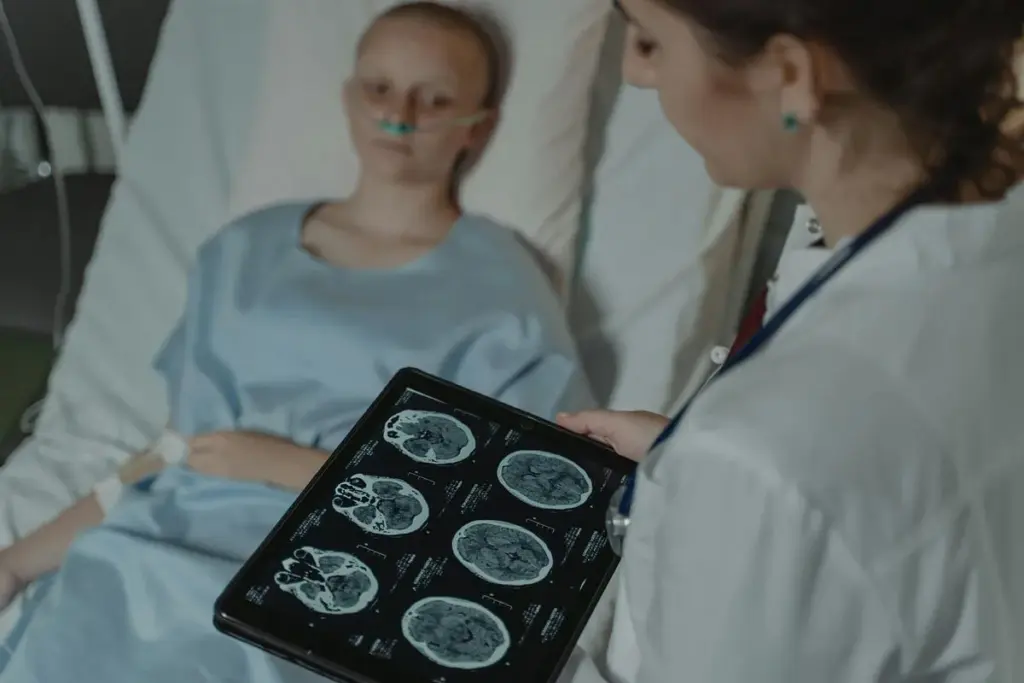
The term “tumor” often causes concern, but it’s essential to understand what it actually means in a medical context. We will explore the definition of tumors, their formation, and address some common misconceptions.
Medical Definition of Tumors
A tumor, also known as a neoplasm, is an abnormal mass of tissue. It results from cells dividing more than they should or not dying when they should. Tumors can be either benign (non-cancerous) or malignant (cancerous).
Benign tumors are typically not life-threatening. They do not invade surrounding tissues or spread to other parts of the body. In contrast, malignant tumors are cancerous. They can invade nearby tissues and metastasize to distant sites.
How Tumors Form in the Body
Tumor formation occurs due to genetic mutations. These mutations disrupt normal cell growth and division. They can be caused by genetic predisposition, environmental exposures, or errors during DNA replication.
As a result, cells begin to proliferate abnormally. This forms a tumor.
Common Misconceptions About Tumors
One common misconception is that all tumors are cancerous. As mentioned earlier, tumors can be benign or malignant. Another misconception is that tumors are always symptomatic.
Many tumors, even in their early stages, may not cause noticeable symptoms.
|
Characteristics |
Benign Tumors |
Malignant Tumors |
|---|---|---|
|
Growth Pattern |
Slow-growing, encapsulated |
Rapidly growing, invasive |
|
Metastasis |
No metastasis |
Can metastasize |
|
Cellular Appearance |
Cells resemble normal cells |
Cells are abnormal and vary in size and shape |
l Center emphasize. By clarifying what tumors are and how they form, we can better appreciate the complexities of cancer diagnosis and treatment.
Benign vs. Malignant Tumors: Critical Distinctions

” “This helps decide how to treat it and gives patients important info about their future.”
Characteristics of Benign Tumors
Benign tumors are not cancerous. They don’t spread or grow into other tissues. They grow slowly and usually stay in one place. Examples include lipomas and uterine fibroids.
- They usually have a clear boundary.
- They do not metastasize.
- They are generally not life-threatening.
Characteristics of Malignant Tumors
Malignant tumors, or cancer, can spread and grow fast. They can invade nearby tissues and spread to other parts of the body. These tumors are dangerous if not treated quickly.
Malignant tumors are characterized by their ability to metastasize. This makes finding and treating them early very important. Their growth involves changes in the tumor cells’ genes and molecules.
Cellular Differences Between Benign and Malignant Growths
Benign and malignant tumors look different at the cellular level. Malignant tumors have abnormal cell morphology and uncontrolled cell division. Benign tumors look more like normal cells and grow slower.
At The Cancer Center at St. Joseph’s Hospital, we use the latest tools to figure out what kind of tumor it is. Knowing if a tumor is benign or malignant is key to making a good treatment plan.
Warning Signs That Prompt Medical Investigation
It’s important to know the signs of a tumor for early treatment. Tumors, whether benign or malignant, show symptoms that need a doctor’s check-up.
Common Symptoms That May Indicate a Tumor
Many symptoms can point to a tumor. These signs vary based on the tumor’s size, location, and type. Common signs include unexplained weight loss, fatigue, pain, and changes in skin or bowel habits.
At St. Joseph’s Hospital and Medical Center, patients get full care. This includes tests to find the cause of symptoms. Knowing the difference between benign and malignant tumors is key. Benign tumors are not cancerous and don’t spread. Malignant tumors are cancerous and can spread.
When to Seek Medical Attention
See a doctor if symptoms don’t go away or are severe. For example, a long-lasting cough or hoarseness might mean a tumor in the lungs. Changes in bowel or bladder habits could point to a tumor in the digestive or urinary system.
Understanding malignant meaning is important. Malignancy means a tumor can grow and spread. This makes quick diagnosis and treatment vital.
Symptoms Specific to Different Body Systems
Tumors affect different parts of the body in different ways. Brain tumors can cause headaches, seizures, or problems with nerves. Breast tumors might show as a lump or changes in breast tissue.
|
Body System |
Possible Symptoms |
|---|---|
|
Nervous System |
Headaches, seizures, neurological deficits |
|
Respiratory System |
Persistent cough, hoarseness, difficulty breathing |
|
Gastrointestinal System |
Changes in bowel habits, abdominal pain, blood in stool |
|
Urinary System |
Changes in urination, blood in urine, pain during urination |
Knowing these symptoms and what malignancy means can lead to early diagnosis and treatment.
The Initial Medical Consultation Process
Knowing what to expect at your first doctor’s visit can make you feel less anxious.
What to Expect at Your First Appointment
At your first visit, we’ll collect all the details about your health history and symptoms. We’ll talk about any past illnesses, your family’s health, and your lifestyle. These things can help us understand your condition better.
Key aspects of the first appointment include:
- A thorough medical history review
- A physical examination
- Discussion of your symptoms and any concerns you may have
Questions Your Doctor Will Likely Ask
Your doctor will ask many questions to diagnose and understand your condition. They’ll want to know about your symptoms, when they started, and what makes them better or worse.
Examples of questions your doctor might ask:
|
Category |
Example Questions |
|---|---|
|
Symptom History |
When did you first notice the symptoms? Have they changed over time? |
|
Medical History |
Do you have any previous medical conditions? Have you had any surgeries? |
|
Family History |
Is there a history of cancer or other diseases in your family? |
Information to Prepare Before Your Visit
To get the most out of your consultation, prepare ahead of time. Make a list of your symptoms, any medicines you’re taking, and any important medical records.
By knowing what to expect and being prepared, you can have a better conversation with your doctor. This is true whether you’re dealing with a benign or malignant tumor. Figuring out if a tumor is malignant is key to finding the right treatment.
Physical Examination Techniques for Tumor Assessment
This first step helps figure out what the growth is and what to do next.
How Doctors Physically Evaluate Suspicious Growths
Doctors use several methods to check out suspicious growths. They start by looking at the growth’s size, shape, and color. Palpation is key, where doctors feel the tumor with their hands. This helps them understand the growth’s texture and if it’s tender.
They also check for swollen lymph nodes. This is important because cancer often spreads to these nodes. By looking at the lymph nodes near the tumor, doctors can see if the disease is spreading.
Specific Physical Characteristics Doctors Look For
Doctors look for certain signs when checking a tumor. These signs can tell if it’s benign or malignant. Here are some:
- Size and Growth Rate: Big tumors or ones growing fast might be cancerous.
- Texture and Consistency: Cancerous tumors are hard and irregular. Benign ones are softer and more even.
- Tenderness: Tenderness can hint at cancer, but it’s not always a sure sign.
- Fixation to Surrounding Tissues: Tumors stuck to nearby tissues are likely cancerous.
Limitations of Physical Examination
Physical exams are helpful but not perfect. Many tumors, even in their early stages, don’t show clear signs of being cancerous. So, our doctors at St. Joseph’s Hospital often suggest more tests like imaging or biopsies for a better diagnosis.
In summary, physical exams are key in the first steps of tumor assessment. By looking at the growth’s features and the patient’s health, our team can decide on the next steps for diagnosis and treatment.
The Role of Medical History in Tumor Diagnosis
Diagnosing a tumor depends a lot on the patient’s medical history. This includes family history and lifestyle choices. At St. Joseph’s Hospital and Medical Center, we see how important a detailed medical history is. It helps us understand the tumor’s risks and characteristics, leading to a correct diagnosis and treatment.
Importance of Family Cancer History
A family history of cancer is very telling. We look at if there’s cancer in the family, like in parents or siblings. Some genetic syndromes raise the risk of certain cancers. For example, BRCA1 and BRCA2 gene mutations increase the risk of breast and ovarian cancers. Knowing this history helps us spot who might need extra screening or prevention.
Relevant Lifestyle and Environmental Factors
Lifestyle and environment also matter in tumor development. We look at:
- Smoking history
- Alcohol consumption
- Dietary habits
- Exposure to carcinogens (e.g., asbestos, radiation)
These can raise the risk of some tumors. For example, smoking is linked to lung cancer, and too much alcohol can lead to liver cancer.
How Previous Medical Conditions Affect Assessment
Previous health issues can change how we see a tumor. Some conditions, like chronic inflammation or past radiation, can up the risk of tumors. We check the patient’s history for any relevant conditions. For instance, past radiation can up the risk of thyroid cancer.
By looking at these factors, we can make a better diagnosis and treatment plan. It’s all about tailoring care to the patient’s needs.
Imaging Technologies Used to Visualize Tumors
Diagnosing tumors accurately is key, and advanced imaging plays a big role.
X-rays and Their Applications
X-rays are a basic but powerful tool for seeing tumors, mainly in the chest and bones. They use radiation to show what’s inside our bodies. X-rays are fast and easy to get, making them a great first step.
Benefits of X-rays:
- Quick and easy to perform
- Low cost compared to other imaging modalities
- Effective for detecting bone tumors and lung abnormalities
CT Scans for Detailed Cross-Sectional Imaging
CT scans give clearer images than X-rays. They mix X-rays with computer tech for detailed body views. This helps spot tumors’ size, location, and spread.
Advantages of CT scans:
- High-resolution images of internal structures
- Ability to detect tumors in various parts of the body
- Guiding biopsies and other interventional procedures
MRI for Soft Tissue Evaluation
MRI is great for soft tissue tumors. It uses a strong magnetic field and radio waves for detailed images without radiation.
Key benefits of MRI:
- Excellent soft tissue contrast
- No radiation exposure
- Detailed images of complex anatomical structures
Ultrasound for Real-Time Imaging
Ultrasound uses sound waves for live images of the body’s inside. It’s perfect for guiding biopsies and checking tumors in organs like the liver, kidney, and thyroid.
Advantages of ultrasound:
- Real-time imaging capability
- No radiation exposure
- Portable and relatively low cost
|
Imaging Technology |
Primary Use |
Key Benefits |
|---|---|---|
|
X-rays |
Initial assessment of tumors, specially in bones and lungs |
Quick, low cost, effective for bone and lung abnormalities |
|
CT Scans |
Detailed cross-sectional imaging of tumors |
High-resolution images, guides biopsies and interventions |
|
MRI |
Soft tissue evaluation |
Excellent soft tissue contrast, no radiation |
|
Ultrasound |
Real-time imaging, guiding biopsies |
Real-time capability, no radiation, portable |
Laboratory Tests in Cancer Diagnosis
Laboratory tests are key in finding cancer. They give important info for treatment plans. This ensures quick and accurate results.
Blood Tests and Their Revelations
Blood tests help find many health problems, including cancer. They show if blood cells or proteins are off. For example, a complete blood count (CBC) can spot leukemia or lymphoma.
Also, blood tests check for certain enzymes or proteins linked to cancer. While they can’t confirm cancer alone, they help doctors make better choices with other test results.
Tumor Markers and Their Significance
Tumor markers are made by tumors or in response to them. They show up in blood, urine, or tissues of some cancer patients. For instance, PSA is a marker for prostate cancer, and hCG for germ cell tumors.
These markers help find cancer, check treatment, and watch for return. But, having a marker doesn’t always mean cancer is there. Some non-cancer conditions can also raise these levels.
Limitations and False Positives in Blood Testing
Blood tests and markers have their limits. False positives can cause worry and extra tests. False negatives can give false peace, delaying diagnosis.
Doctors must look at all test results and the patient’s whole story. This includes medical history, physical exams, and other test results.
Emerging Blood-Based Diagnostic Technologies
New tech is making blood tests better for cancer. Liquid biopsies find tumor DNA in blood, a non-invasive way to diagnose and track cancer.
These new tools promise to find cancer sooner and treat it better. As research grows, blood tests will get even better. This could change how we find and treat cancer.
Biopsy: The Definitive Diagnostic Procedure
Biopsy is the top method to find out if a tumor is cancerous or not. At St. Joseph’s Hospital, we use biopsies to help diagnose cancer.
Types of Biopsy Procedures
There are many biopsy types, each with its own use and benefits.
- Needle Biopsy: A small, non-invasive way to get tissue samples.
- Surgical Biopsy: This involves removing part or all of the tumor for testing.
- Endoscopic Biopsy: Uses a scope to get tissue from inside the body.
How Tissue Samples Are Collected and Processed
Getting and preparing tissue samples is key for a correct diagnosis.
- Tissue samples are taken with the right biopsy method.
- They are then sent to the lab for processing.
- In the lab, samples are fixed, cut, and stained for a detailed look under a microscope.
|
Biopsy Type |
Method |
Advantages |
|---|---|---|
|
Needle Biopsy |
Uses a needle to collect tissue |
Minimally invasive, quick recovery |
|
Surgical Biopsy |
Surgically removes tumor or tissue |
Can provide larger tissue samples |
Minimally Invasive Biopsy Techniques
When possible, we prefer less invasive biopsies. They are safer and lead to faster healing.
“The development of minimally invasive biopsy techniques has significantly improved patient outcomes by reducing the risk of complications and promoting quicker recovery.”Oncologist
Potential Risks and Complications
Biopsy procedures are mostly safe, but there are risks and complications.
- Infection at the biopsy site
- Bleeding or hematoma
- Reaction to anesthesia
We aim to give our patients the best care possible.
Histopathology: How Pathologists Analyze Tumor Tissue
Looking at tumor tissue is key to figuring out if someone has cancer and how serious it is.
The Microscopic Examination Process
Looking at tumor tissue under a microscope is a detailed job. Pathologists check the cells’ shape, how they’re arranged, and other details to spot any oddities. This is important to tell if a tumor is benign or cancerous.
Pathologists search for things like how the cells look, how different they are from normal cells, and how fast they’re growing. These signs help figure out how aggressive the tumor is and its impact on health.
Cell Differentiation and Tumor Grading
Cell differentiation shows how much tumor cells look like normal cells. Tumors with cells that look more normal are usually less aggressive. Tumor grading helps classify tumors based on how they look and behave, guiding doctors on the best treatment.
Immunohistochemistry Techniques
Immunohistochemistry (IHC) is a way to spot specific proteins in cells. IHC is great for figuring out what kind of tumor it is and how it might react to treatment.
At St. Joseph’s Hospital and Medical Center, pathologists use IHC to study tumor tissue. This gives them important info for diagnosing and planning treatment.
Understanding Pathology Reports
A pathology report is what you get after a tumor is examined. These reports tell you a lot about the tumor, like its type, grade, and stage. Knowing what’s in the report is key for doctors and patients, as it helps decide treatment and gives a glimpse of what to expect.
By studying tumor tissue, pathologists are essential in diagnosing and managing cancer. Their skills ensure patients get the right diagnosis and care.
Advanced Molecular and Genetic Testing
This technology helps us understand tumors better. It lets us know what kind of cancer it is and how to treat it best.
Genetic Profiling and Biomarkers
DNA sequencing and genetic profiling are key in finding cancer-causing mutations. By looking at these biomarkers, we can spot malignant tumors. This helps us create treatment plans that fit each patient’s needs.
Precision Medicine Approaches
Precision medicine changes cancer treatment by making therapies fit each patient’s genetic profile. This method has shown great promise in helping patients with malignant tumors.
We keep pushing forward in molecular diagnostics to offer top-notch healthcare. By knowing the genetic roots of cancer, we can give more effective treatments. This leads to better results for our patients.
FAQ
What is the difference between a benign and malignant tumor?
Benign tumors are non-cancerous and don’t spread. Malignant tumors are cancerous and can spread.
How do doctors determine if a tumor is cancerous?
Doctors use physical exams, medical history, and tests like biopsies to check if a tumor is cancerous.
What are the common symptoms that may indicate a tumor?
Symptoms include unexplained weight loss, pain, and changes in bowel habits. Unusual bleeding or discharge can also be a sign.
What is a biopsy, and why is it performed?
A biopsy takes tissue for a microscope check. It helps diagnose cancer or other conditions.
How do imaging technologies like CT scans, MRI, and ultrasound help in tumor diagnosis?
These technologies show internal structures. They help doctors see tumors, their size, and location for treatment planning.
What is the role of laboratory tests in cancer diagnosis?
Tests like blood tests and tumor marker tests look for cancer signs. But, they’re not the only way to confirm cancer.
How do pathologists analyze tumor tissue?
Pathologists look at tumor tissue under a microscope. They check cell differentiation and use techniques like immunohistochemistry to diagnose cancer.
What is the significance of tumor grading?
Tumor grading shows how much tumor cells look like normal cells. It helps predict tumor behavior and treatment.
How does a patient’s medical history influence tumor diagnosis?
A patient’s medical history is important. It includes family history, lifestyle, and previous conditions. It helps assess tumor risk and nature.
What are tumor markers, and how are they used?
Tumor markers are substances found in higher amounts in cancer patients. They are in blood, urine, or tissues of some cancer patients.
What is precision medicine in cancer treatment?
Precision medicine tailors treatment to a patient’s tumor. It uses genetic profiling and biomarker identification.
What are the possible risks and complications of biopsy procedures?
Biopsy procedures are usually safe. But, they can cause bleeding, infection, or, rarely, spread cancer cells. The last risk is rare with proper technique.
How do doctors physically evaluate suspicious growths during a physical examination?
Doctors check the growth’s size, shape, and consistency. They also check tenderness and if it’s fixed to surrounding tissues.
What information should a patient prepare before their initial medical consultation for a suspected tumor?
Patients should talk about their symptoms, medical history, family history, and lifestyle or environmental factors.
National Center for Biotechnology Information. Evidence-Based Medical Insight. Retrieved from https://www.ncbi.nlm.nih.gov/books/NBK554510/