
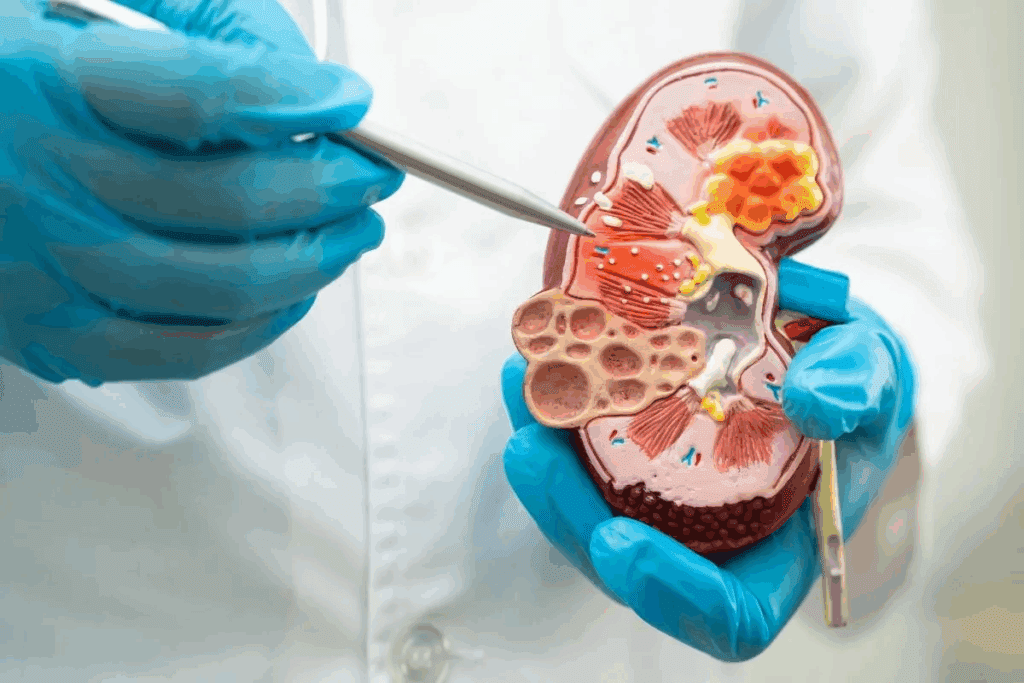
In the world of urology, some cases are truly remarkable. One such case is the removal of a very large kidney stone. We will look into this amazing medical story. It shows the challenges doctors face and the creative solutions they find. What is the biggest kidney stone peed out? We explain the natural process of passing a kidney stone and the biggest on record.
The biggest kidney stone ever removed was in Sri Lanka in 2023. It weighed about 1.76 pounds and was 13.37 cm long. This case highlights the progress in medical technology and the need for quick and effective treatment.
At Liv Hospital, we aim to give top-notch care to our patients. Our team of skilled urologists and modern facilities help us handle tough cases. We focus on each patient, making sure they get care that fits their needs.
Kidney stones form when certain substances in urine concentrate. This happens when the body makes more of these substances than it can get rid of. As a result, they crystallize and turn into stones.
Causes and Risk Factors
Eating a lot of animal protein, sodium, and sugar can lead to kidney stones. Genetics also play a part. Some people are more likely to get kidney stones because of their genes.
Not drinking enough water is another big risk factor. It makes urine more concentrated, raising the chance of stone formation. Certain health issues, like hyperparathyroidism, can also up the risk.
Knowing what causes kidney stones is key to preventing and treating them. By understanding the factors that lead to stones, people can lower their risk. They can also manage their condition better.
Understanding the Biggest Kidney Stones in Medical History
Exploring giant kidney stones means looking into their causes, symptoms, and treatments. These rare cases are tough for both patients and doctors. By studying the biggest cases and how they’re treated, we learn a lot about this complex issue.
The Current World Record: Sri Lanka’s 2023 Giant
The biggest kidney stone peed out Ever Recorded: A Medical Marvel
A Sri Lankan patient was found with the biggest kidney stone ever, measuring 13.37 cm in diameter. This case shows how complex kidney stones can be and why quick medical help is key.
Details of the Record
The huge stone was removed in a complex surgery. This shows the importance of teamwork in treating rare medical issues.
Medical Significance
This case is big not just because of the stone’s size. It also gives new insights into treating kidney stones. The successful surgery has made many doctors want to learn from it.
Implications for Future Treatment
The removal of this massive stone is a big deal for future treatments. It shows we need more research on large kidney stones. We also need better ways to treat them.
Previous Record Holders: A History of Record-Breaking Cases
The largest kidney stones ever recorded are a subject of great medical interest. A notable case is a 13 cm stone removed in Mumbai in 2004. Such large stones are extremely rare and can cause significant discomfort and health issues for patients.
Understanding these cases can provide valuable insights into the diagnosis and treatment of kidney stones. The study of these extreme cases helps in advancing medical knowledge. It also improves treatment options for patients with kidney stones.
Symptoms and Complications of Extremely Large Kidney Stones
Large kidney stones can cause severe pain, nausea, and vomiting. It’s important to know the symptoms to get medical help quickly.
Recognizing the Symptoms
Symptoms include severe pain in the side or back, below the ribs. You might also feel pain while urinating. Nausea or vomiting can also occur. These signs may mean you have a large kidney stone.
Potential Complications
If not treated, large kidney stones can lead to serious problems. These include infection, kidney damage, and blockage of the urinary tract.
Getting an early diagnosis and treatment is key. It helps avoid long-term damage and improves your chances of recovery.
Diagnostic Challenges for Massive Kidney Stones
Diagnosing massive kidney stones is tough because of their size and where they are. CT scans work well but have downsides like radiation. Other options like ultrasound are used too.
The right imaging method depends on the patient’s health and what resources are available.
Conventional Treatment Options vs. Specialized Approaches
Treating giant kidney stones needs a detailed plan. This often mixes common and special methods. Standard treatments like ESWL work well for small stones. But, bigger stones need more serious steps.
Limitations of Standard Treatments
ESWL, a non-invasive method, might not cut it for huge kidney stones. Their size and complexity are too much for it.
Role of Percutaneous Nephrolithotomy (PCNL)
PCNL is a less invasive surgery. It lets doctors remove big kidney stones directly. This makes it a good choice for patients with giant stones.
Knowing when standard treatments don’t work and when special ones do helps doctors. They can then create treatment plans that really help patients with giant kidney stones.
Surgical Removal Methods for the Biggest Kidney Stones
Surgical Removal of Large Kidney Stones
Surgical methods are key for removing big kidney stones. The choice depends on the stone’s size, location, and the patient’s health.
Open Surgery
Open surgery is a traditional method. It involves cutting the back to reach the kidney. It’s used for big stones that can’t be removed easily.
Percutaneous Nephrolithotomy (PCNL)
PCNL is a less invasive option. It makes a small cut in the back and uses a nephroscope to see the stone. Ultrasonic or laser energy breaks it down, and then the pieces are taken out.
Staged Procedures
For some big stones, one surgery isn’t enough. A staged approach might be needed. This means doing multiple procedures over time to safely remove the stone.
Knowing the surgical options helps patients and doctors choose the best treatment for big kidney stones.
Case Studies: Remarkable Removals and Patient Outcomes
Kidney stone removal has become a highly effective procedure thanks to advancements in medical technology and techniques. A notable case involved a patient who underwent a percutaneous nephrolithotomy (PCNL) to remove a large kidney stone.
The procedure was successful, and the patient experienced significant relief from symptoms. This case highlights the importance of seeking medical attention if symptoms persist or worsen over time.
Our team of experts is dedicated to providing the best possible care for patients with kidney stones. We focus on patient-centered care and the latest medical advancements. Our goal is to achieve optimal outcomes for our patients.
Innovations in Managing Giant Kidney Stones
The field of managing giant kidney stones has seen big changes. These changes come from new technologies and a team effort in patient care.
Advances in Imaging Techniques
New technologies have made it easier to see and treat kidney stones. This helps doctors do a better job.
Cutting-Edge Treatments
Now, there are less invasive ways to treat kidney stones. For example, percutaneous nephrolithotomy (PCNL) is more common. It makes recovery faster and reduces risks.
Liv Hospital is leading the way in these new treatments. They offer top-notch care for those with giant kidney stones.
Conclusion: Lessons from Extreme Cases and Future Outlook
Our journey through giant kidney stones shows us the need for a team effort. Doctors, researchers, and patients must work together. This way, we can find better ways to handle these big stones.
By using the latest medical tools and treatments, we can help patients more. We also need to keep learning and sharing knowledge in urology. This will lead to even better care for those with kidney stones in the future.
FAQ
Q: What is considered a large kidney stone?
A large kidney stone is over 1 cm in size. The biggest ones can be several centimeters wide.
Q: What are the symptoms of a giant kidney stone?
Symptoms include severe pain, nausea, and vomiting. You might also have trouble urinating. Sometimes, there are no symptoms at all.
Q: How are large kidney stones treated?
Treatment depends on the stone’s size and location, and your health. Options include surgery, lithotripsy, or other procedures.
Q: What is the largest kidney stone ever recorded?
The biggest stone was 13.37 cm in diameter. It was removed from a patient in Sri Lanka in 2023.
Q: What are the risks associated with large kidney stones?
Large stones can cause severe pain and infection. They can also damage tissue. Untreated stones can lead to kidney damage or sepsis.
Q: How are giant kidney stones diagnosed?
Diagnosis uses X-rays, CT scans, or ultrasound. A physical exam and medical history are also part of the process.
Q: What are the treatment options for giant kidney stones?
Treatment options include surgery, lithotripsy, or other procedures. The choice depends on the stone’s size, location, and your health.
Q: Can giant kidney stones be prevented?
While some risks, like genetics, can’t be changed, a healthy diet and staying hydrated can help. Managing medical conditions also reduces the risk.
Q: What are the long-term consequences of having a giant kidney stone?
Untreated stones can lead to chronic kidney disease or damage. Quick treatment can prevent long-term damage.
Q: How common are giant kidney stones?
Giant kidney stones are rare. They can happen to anyone, regardless of age or health.
Q: What is the role of Liv Hospital in treating giant kidney stones?
Liv Hospital has experienced urologists and modern facilities. They can diagnose and treat giant kidney stones.
Q: What are the latest advancements in treating giant kidney stones?
New treatments include minimally invasive surgery and advanced imaging. These help treat giant kidney stones more effectively.
References
- Government Health Resource. (2025). What Are the Biggest Kidney Stones Ever Recorded. Retrieved from https://www.niddk.nih.gov/health-information/urologic-diseases/kidney-stones-adults



 Departments
 Related Videos
 Our Doctors
 News
News