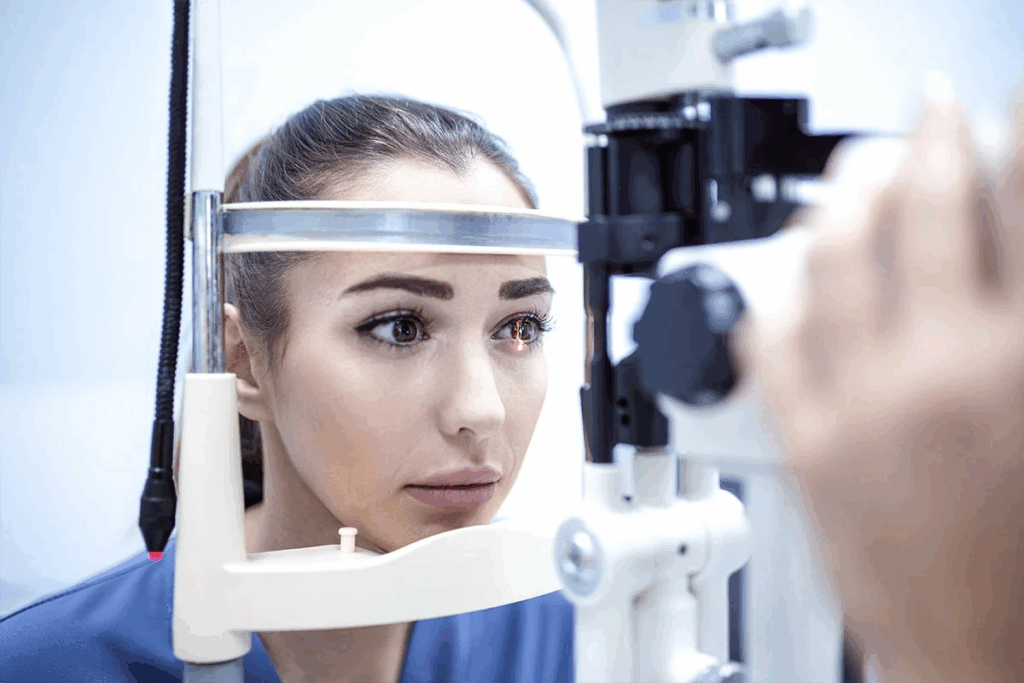
Binocular double vision is when you see two images when both eyes are open. It’s a big challenge for doctors. When you close one eye, the double vision goes away. This makes it different from seeing double with one eye open.
Studies show that binocular diplopia is behind about 89 percent of double vision cases. This shows how common it is.
Knowing what causes binocular diplopia is key to treating it. We’ll look at the different reasons for this condition. This guide will help you understand what’s happening and what to do about it.
Key Takeaways
- Binocular diplopia is characterized by double vision when both eyes are open.
- It accounts for approximately 89 percent of diplopia cases.
- Distinguishing between binocular and monocular diplopia is important.
- Many neurological and neuromuscular problems can cause binocular diplopia.
- Getting the right diagnosis is vital for good treatment.
- Knowing the causes helps in managing the condition.
Understanding Binocular Diplopia: Definition and Epidemiology

Binocular diplopia is when you see two images of one thing. This happens because your eyes don’t work together right. It’s caused by misalignment or strabismus.
Definition and Clinical Presentation
Seeing double vision that goes away when you close one eye is binocular diplopia. It can be horizontal, vertical, or oblique depending on the eye problem. Some people see double all the time, while others only sometimes.
Many things can cause binocular diplopia. These include cranial nerve palsies, neuromuscular junction disorders, and orbital or mechanical issues. Knowing what causes it helps doctors figure out how to treat it.
Epidemiology and Impact
Studies show binocular diplopia affects different people in different ways. It can happen at any age and for many reasons. This makes it hard to understand how common it is.
Cause | Prevalence | Impact |
Cranial Nerve Palsies | Common in adults | Significant impact on daily activities |
Neuromuscular Junction Disorders | Rare, but increasing | Major impact on quality of life |
Orbital and Mechanical Causes | Varies with trauma and disease | Can lead to chronic disability |
Doctors need to know about binocular diplopia to help patients better. Understanding it helps them find the best ways to treat it.
Pathophysiology of Binocular Diplopia

To understand binocular diplopia, we need to know about eye misalignment and extraocular muscles. This condition happens when the eyes don’t line up right. This can cause two images of one thing to appear. It’s often due to problems with how the muscles move the eyes or how they work together.
Ocular Misalignment Mechanisms
Ocular misalignment, or strabismus, is a big part of binocular diplopia. It can come from issues with the muscles that move the eyes, the nerves that control these muscles, or how the nerves and muscles connect. For example, cranial nerve palsies can weaken or paralyze these muscles, making the eyes misaligned.
The reasons for ocular misalignment can be complex. They might include mechanical restrictions, neurological disorders, or muscular dysfunction. Knowing these reasons is key to figuring out and treating binocular diplopia.
Extraocular Muscle Function and Coordination
Extraocular muscles are important for eye movement and keeping the eyes in line. They work together for binocular vision. If these muscles don’t work right or don’t coordinate well, it can cause binocular diplopia.
Extraocular Muscle | Primary Action | Cranial Nerve Innervation |
Lateral Rectus | Abduction | Abducens (CN VI) |
Medial Rectus | Adduction | Oculomotor (CN III) |
Superior Rectus | Elevation | Oculomotor (CN III) |
The table shows the main actions of extraocular muscles and which nerves control them. Problems with any of these can cause eye misalignment and binocular diplopia.
In summary, binocular diplopia is a complex issue. It involves eye alignment, muscle function, and nerve control. Understanding these aspects is vital for diagnosing and treating the condition.
Types of Binocular Diplopia Based on Presentation
It’s important to know the different types of binocular diplopia for proper diagnosis and treatment. This condition can be divided based on how the double vision appears to the patient.
Horizontal Binocular Diplopia
Horizontal binocular diplopia means the two images are side by side. This usually points to problems with the lateral rectus muscle or its nerve. Issues with this muscle or nerve can cause the eyes to turn inward or outward, leading to double vision. People with this type may find it hard to do things that need depth perception, like driving or reading.
Vertical Binocular Diplopia
Vertical binocular diplopia shows one image above the other. It can be caused by problems with the superior or inferior rectus muscles or their nerves. The fourth cranial nerve palsy, affecting the superior oblique muscle, is a common cause of vertical binocular diplopia. The severity of this diplopia can vary, and it might be constant or come and go.
Oblique Binocular Diplopia
Oblique binocular diplopia shows images that are tilted relative to each other. This type often comes from a mix of horizontal and vertical issues, making diagnosis harder. Seeing tilted images can mean a more complex eye movement problem, needing a detailed check-up and possibly involving more than one muscle or nerve. Dealing with oblique diplopia can be tough because of its complex nature.
In summary, the type of binocular diplopia depends on how the double vision looks. It can be horizontal, vertical, or oblique. Knowing these types helps doctors diagnose and treat the root cause better.
Cranial Nerve Palsies Causing Binocular Diplopia
The third, fourth, and sixth cranial nerves are key for eye movement. Their palsy can cause binocular diplopia. These nerves control the muscles that move our eyes. When they’re affected, our eyes don’t line up right, leading to double vision.
Third Cranial Nerve Palsy
The third cranial nerve, or oculomotor nerve, controls several eye muscles. A palsy here can cause ptosis and trouble moving the eyes. This leads to double vision.
Diabetes, high blood pressure, and aneurysms can cause third nerve palsy. The symptoms can vary based on the cause and how severe the palsy is.
Fourth Cranial Nerve Palsy
The fourth cranial nerve, or trochlear nerve, controls the superior oblique muscle. A palsy here leads to vertical diplopia, mainly when looking down. People might tilt their head to fix the double vision.
Most fourth nerve palsies come from trauma. But they can also be caused by birth defects or diseases like diabetes and microvascular disease.
Sixth Cranial Nerve Palsy
The sixth cranial nerve, or abducens nerve, controls the lateral rectus muscle. A palsy here means trouble moving the eye to the side. This causes horizontal diplopia that gets worse when looking to the side of the palsy.
Causes include microvascular disease, trauma, and high pressure inside the skull. Finding the exact cause often requires a detailed diagnostic process.
Neuromuscular Junction Disorders
Neuromuscular junction disorders are a big cause of binocular diplopia. They affect how nerves talk to muscles. This can lead to muscle weakness and binocular diplopia.
Myasthenia Gravis
Myasthenia Gravis is a chronic autoimmune disorder. It makes muscles weak and tired fast. This happens when the immune system attacks the nerve-muscle connection.
Symptoms can vary, but often include:
- Weakness in eye muscles, causing binocular diplopia
- Drooping eyelids (ptosis)
- Difficulty swallowing (dysphagia)
- Shortness of breath
To diagnose Myasthenia Gravis, doctors use clinical tests, blood tests, and electrophysiological studies. Treatment includes acetylcholinesterase inhibitors, immunosuppressive drugs, and sometimes thymectomy.
Other Neuromuscular Junction Disorders
Other neuromuscular junction disorders can also cause binocular diplopia, but less often. These include:
- Botulism: A toxin from Clostridium botulinum causes muscle weakness and paralysis.
- Organophosphate poisoning: Exposure to certain pesticides or nerve agents can disrupt neuromuscular transmission.
- Lambert-Eaton Myasthenic Syndrome (LEMS): An autoimmune disorder that affects the release of acetylcholine from nerve terminals.
It’s important to understand these conditions to manage binocular diplopia well. Treatment aims to fix the root cause. This might involve medication, lifestyle changes, or other specific interventions.
Orbital and Mechanical Causes of Binocular Diplopia
Many orbital and mechanical issues can lead to binocular diplopia. A detailed diagnosis is needed. These problems often cause the eye to move less than usual, leading to double vision.
Thyroid Eye Disease
Thyroid eye disease (TED) is a common reason for double vision. It’s linked to Graves’ disease and causes swelling around the eye. This swelling can lead to scarring and eye movement problems.
The severity of TED can vary, and in some cases, it can lead to significant visual impairment if not properly managed.
Orbital Inflammatory Conditions
Orbital inflammatory conditions, like orbital myositis and idiopathic orbital inflammation, can also cause double vision. These conditions cause inflammation in the orbital tissues. This leads to pain, swelling, and eye movement issues.
The presentation can be acute or chronic, and diagnosis often requires imaging studies to assess the extent of inflammation and rule out other causes.
Orbital Trauma and Restrictive Ophthalmopathy
Orbital trauma can cause eye movement problems due to scarring or muscle entrapment. This restrictive ophthalmopathy can lead to double vision. A thorough assessment is necessary to determine the extent of the injury and plan appropriate treatment, which may include surgery to release the restricted muscles or repair orbital fractures.
In conclusion, orbital and mechanical causes of binocular diplopia are diverse and require careful evaluation to diagnose and treat effectively. Understanding the underlying cause is key to managing the condition and improving patient outcomes.
Central Nervous System Causes
Binocular diplopia can come from many central nervous system issues. This includes brainstem lesions and cerebrovascular events. The brain and spinal cord control our eye movements and vision. Problems here can cause eye alignment issues and binocular diplopia.
Brainstem Lesions
Brainstem lesions can lead to binocular diplopia by affecting cranial nerve nuclei. These lesions can be from tumors, diseases like multiple sclerosis, or vascular issues. Even small lesions in the brainstem can greatly affect cranial nerve function, causing diplopia.
Common types of brainstem lesions include:
- Tumors: Such as gliomas or metastases
- Demyelinating diseases: Like multiple sclerosis
- Vascular lesions: Including infarctions or cavernous malformations
Cerebrovascular Events
Cerebrovascular events, like strokes and TIAs, can also cause binocular diplopia. These events can damage the brainstem or cranial nerves. This damage can lead to eye movement problems and diplopia.
The effect of cerebrovascular events on eye movements depends on the location and severity. For example, a stroke in the midbrain can harm the oculomotor nerve (third cranial nerve), causing diplopia.
It’s important to understand the central nervous system causes of binocular diplopia. This knowledge helps doctors diagnose and treat the problem. By focusing on brainstem lesions and cerebrovascular events, healthcare providers can create effective treatment plans.
Differential Diagnosis Approach to Binocular Diplopia
Identifying the cause of binocular diplopia requires a detailed differential diagnosis. This condition can stem from many sources, like cranial nerve palsies or neuromuscular junction disorders. A thorough approach is needed to pinpoint the exact cause.
Clinical History Taking
Starting with the patient’s history is key. We gather information about their symptoms, medical background, and lifestyle. Important questions include when the diplopia started, if it’s constant or comes and goes, and if it’s worse at certain times or directions.
We also ask about any related symptoms like headaches or eye pain. Knowing about past eye or neurological issues helps guide further tests.
Physical Examination Techniques
Physical exams are vital in diagnosing diplopia. We first check the patient’s vision and perform a cover test to see if the eyes are aligned. The cover test involves covering each eye one at a time to see how they move when focusing on a target.
We also examine eye movements, check for any eye movement problems, and test the pupils. Looking for signs of eye bulging or other orbital issues is also important.
Diagnostic Tests and Imaging
Diagnostic tests and imaging are essential in diagnosing diplopia. These may include blood tests to check for thyroid issues or autoimmune disorders that could be causing symptoms.
Imaging like MRI or CT scans help us see the orbit, muscles, and nerves. These can reveal structural problems like tumors or inflammation that might be causing the diplopia.
In some cases, tests like electromyography (EMG) or forced duction testing are needed to understand the cause of eye misalignment better.
Integration of Findings
After gathering all the information, we integrate it to make a diagnosis. This means combining the history, physical exam, and test results to find the most likely cause of the diplopia.
By carefully looking at all possible causes and matching them with the patient’s symptoms, we can create a treatment plan that fits the specific condition.
Conclusion
Understanding binocular diplopia is key to proper diagnosis and treatment. We’ve looked at the many reasons for binocular diplopia. These include cranial nerve palsies, neuromuscular junction disorders, and more.
To find the cause of binocular double vision, a detailed approach is needed. This includes a thorough history, physical exam, and tests. Knowing the causes helps doctors create a good treatment plan.
Treatment for binocular diplopia varies based on the cause. Sometimes, treating the underlying issue is necessary. Other times, managing symptoms is the focus.
We stress the need for a complete approach to diagnosing and treating binocular diplopia. By understanding the causes and diagnosis, doctors can offer the best care for patients.
FAQ
What is binocular diplopia?
Binocular diplopia is when you see double when both eyes are open. This happens because your eyes aren’t aligned right.
How does binocular diplopia differ from monocular diplopia?
Binocular diplopia is about eye alignment problems. Monocular diplopia is about issues with one eye, like a cataract.
What are the main causes of binocular diplopia?
Main causes include cranial nerve palsies and neuromuscular junction disorders. Also, orbital and mechanical issues, and central nervous system disorders.
What is the role of extraocular muscles in binocular diplopia?
Extraocular muscles move your eyes. Problems with them can cause misalignment and double vision.
How is binocular diplopia diagnosed?
Doctors use a detailed history, physical exams, and tests like imaging to find the cause.
What are the types of binocular diplopia based on presentation?
There are horizontal, vertical, and oblique types. Each has its own causes and symptoms.
How do cranial nerve palsies contribute to binocular diplopia?
Palsies of the third, fourth, and sixth nerves can disrupt eye movement. This leads to double vision.
What is the significance of myasthenia gravis in binocular diplopia?
Myasthenia gravis weakens eye muscles. This can cause double vision because of muscle weakness.
How do orbital and mechanical causes lead to binocular diplopia?
Issues like thyroid eye disease and orbital trauma can cause muscle problems. This leads to double vision.
What is the role of central nervous system causes in binocular diplopia?
Brain problems can affect eye nerves. This can cause double vision.
How is the differential diagnosis of binocular diplopia approached?
Doctors use a detailed history, physical exams, and tests to find the cause of double vision.
References
National Center for Biotechnology Information. Evidence-Based Medical Guidance. Retrieved from https://www.ncbi.nlm.nih.gov/books/NBK441905/