For expectant parents, knowing what Biparietal Diameter (BPD) means in ultrasound biometry is key. BPD is a key measurement. It shows the distance between a baby’s two parietal bones. This is done during routine prenatal ultrasound checks.biometry bpdBiometry: Vital Ultrasound Metric Explained
At Liv Hospital, we use BPD to figure out a baby’s weight and age. It also helps us see how fast a fetus is growing. This info lets us keep an eye on how a baby is doing and share important details with parents.
Key Takeaways
- BPD is a critical measurement in fetal biometry.
- It represents the distance between the two parietal bones of a baby’s skull.
- BPD is used to estimate fetal weight and determine gestational age.
- It helps assess the growth rate of the fetus.
- Understanding BPD is essential for expectant parents to make informed decisions.
Understanding Biparietal Diameter (BPD) in Fetal Development
The biparietal diameter (BPD) is a key sign of healthy growth in fetuses. It’s vital for doctors to check BPD to see how a fetus is growing.
Definition and Basic Aspects of BPD
The biparietal diameter (BPD) is a key measurement in fetal growth. It measures the widest part of the fetal skull. This is done from 13 weeks of pregnancy and is most precise between 13 and 20 weeks.
BPD is important in prenatal care to track fetal growth. It’s measured during an ultrasound. This gives doctors important information about the fetus’s health. The measurement is from one parietal bone to the other, which is why it’s called “biparietal.”
The Anatomical Significance of Parietal Bones
The parietal bones are two bones in the skull. They are important for measuring BPD in fetal development. These bones are part of the skull’s upper part and are watched closely during pregnancy.
Gestational Age (Weeks) | Normal BPD Range (mm) |
13 | 23-27 |
16 | 33-37 |
20 | 45-51 |
“The biparietal diameter is one of the most reliable indicators of gestational age, specially during the second trimester.”
– Medical Expert, Fetal Development Specialist
Understanding BPD helps doctors monitor fetal growth better. It helps them spot any problems early.
The Role of Biometry BPD in Prenatal Care
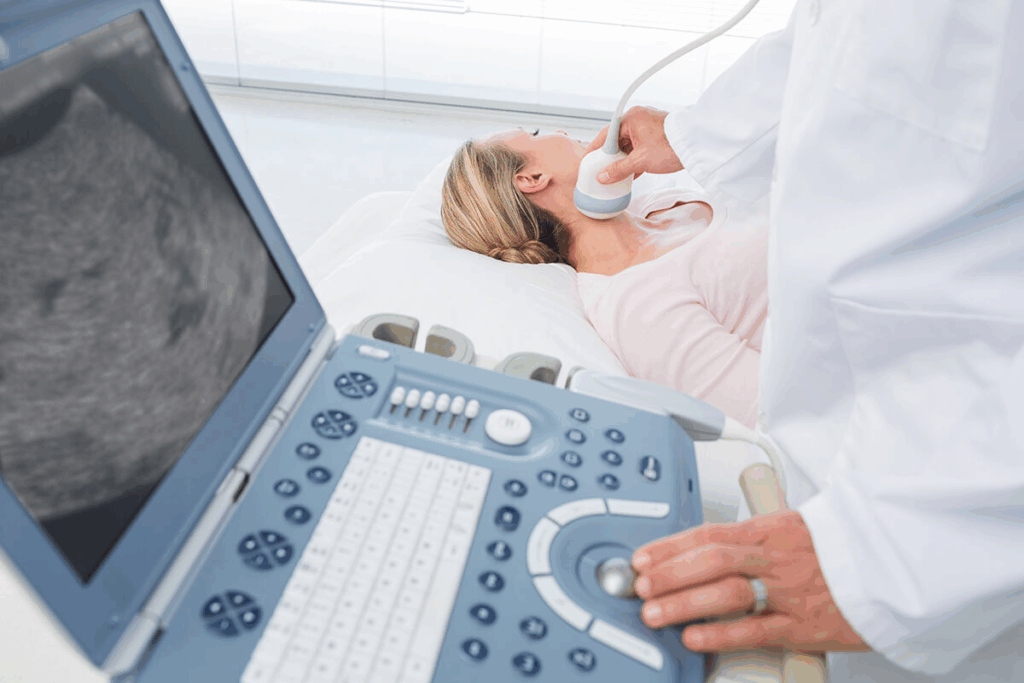
Biometry BPD is key in prenatal care. It gives us important info on how a fetus grows. We use BPD to check if a fetus is growing right and spot problems early.
Why BPD Matters for Fetal Assessment
BPD measurements are very important for checking on a fetus. They show how a fetus is doing at different times in pregnancy. Knowing biometry BPD meaning lets doctors keep an eye on how a fetus is growing and find any problems.
Some main reasons BPD measurements are important include:
- Checking how old and developed a fetus is
- Watching how a fetus is growing
- Finding any possible fetal problems
For example, at 32 weeks of pregnancy, BPD should be between 7.7 and 8.3 centimeters. This info is key when looking at bpd hc ac fl normal range charts to see if a fetus is growing as it should.
When BPD Measurements Begin During Pregnancy
BPD measurements start after 13 weeks of pregnancy and keep going with more ultrasounds. We start tracking BPD in the second trimester. It gives us important info on how a fetus is growing and developing.
By looking at bpd hc ac fl chart week by week, doctors can keep an eye on how a fetus is doing. Regular BPD checks help find any issues early. This way, doctors can act fast if needed.
How BPD is Measured During an Ultrasound
Measuring BPD during an ultrasound is key for tracking fetal growth and spotting problems early. We’ll cover how to measure BPD during an ultrasound. This includes the right way to do it and common issues that might come up.
Proper Ultrasound Technique for Accurate BPD Measurement
First, sonographers find the baby’s head. They place the probe to get a clear image at the thalami and cavum septum pellucidum level. This view is important for a precise measurement.
They make sure the image is even and the thalami are seen. Then, they freeze the image and use calipers to measure the distance between the parietal bones.
Common Challenges in Obtaining Precise BPD Readings
Getting accurate BPD measurements is tough. Fetal positioning is a big problem. If the fetus is not in the right spot, it’s hard to get the right view.
Other issues include maternal body type and fetal anomalies. These can make measuring BPD harder. Knowing these challenges helps healthcare providers get better measurements.
Understanding how to measure BPD and the challenges helps healthcare providers get accurate readings. This ensures the best care for the fetus.
BPD as a Tool for Estimating Gestational Age
Fetal growth is closely watched through ultrasound, with BPD being a key indicator. BPD biometry gives us vital info on the fetus’s growth and development.
Accuracy of BPD for Dating Between 13-20 Weeks
Between 13 and 20 weeks, BPD measurements are very accurate for guessing the fetus’s age. This is because the fetal head grows at a steady rate during this time. Ultrasound technology lets us take precise measurements, making it a trusted way to date pregnancies.
Research shows that BPD’s margin of error is small, usually just a few days. This makes BPD a key tool for doctors to figure out the gestational age and plan pregnancy care.
Limitations of BPD for Late Pregnancy Dating
While BPD is very accurate from 13 to 20 weeks, it’s less reliable later on. As the fetus grows, head shape and size can vary, making BPD less accurate. Other fetal biometry measurements, like femur length (FL) and abdominal Circumference (AC), become more important in late pregnancy for tracking growth.
It’s important for healthcare providers to know BPD’s limits in late pregnancy. By using BPD with other ultrasound measurements, we can keep track of fetal development well into pregnancy.
BPD Measurements Throughout Pregnancy: Week by Week Development
The biparietal diameter (BPD) is a key measurement in fetal biometry. It shows how a fetus grows each week. This helps doctors track growth and spot any problems early.
First Trimester BPD Expectations
In the first trimester, BPD is key for knowing when a baby is due. BPD is one of the earliest and most reliable measurements for guessing gestational age. By 12-13 weeks, BPD can be measured well, setting a base for future checks.
Here are some key expectations for BPD during the first trimester:
- BPD measurements become reliable around 12-13 weeks.
- Early BPD measurements help in establishing a accurate gestational age.
- First-trimester BPD is critical for spotting growth issues early.
Second Trimester BPD Growth Patterns
In the second trimester, BPD is a key sign of fetal growth. Between 13 and 26 weeks, BPD grows steadily, helping track growth patterns. At 20 weeks, BPD is usually 4.4 to 4.7 cm, a key marker for development.
Some key points about second-trimester BPD growth include:
- BPD growth rate is relatively consistent during this period.
- Measurements at 20 weeks provide a critical view of fetal development.
- Any big changes in BPD might mean there’s a problem.
Third Trimester BPD Development
In the third trimester, BPD keeps growing but at a slightly slower pace. By 28 weeks, BPD is usually 7.2 to 7.6 cm. While BPD is important, other measurements like head circumference (HC), abdominal circumference (AC), and femur length (FL) also matter for checking overall growth.
Key aspects of third-trimester BPD development include:
- Continued growth, though the rate may vary slightly.
- BPD is considered alongside other fetal biometry measurements for a complete assessment.
- Monitoring BPD in the third trimester helps in identifying late-onset growth restrictions or other complications.
By understanding BPD measurements throughout pregnancy, healthcare providers can give more accurate assessments of fetal development. This ensures the best outcomes for both mother and baby.
Normal BPD Ranges at Key Pregnancy Milestones
At key pregnancy milestones, knowing normal BPD ranges is key. Biparietal diameter (BPD) is a vital measurement. It shows how a fetus is growing. It’s important to know the expected BPD ranges at different stages of pregnancy.
BPD, HC, AC, FL Normal Range in 32 Weeks
By the 32nd week, certain measurements are expected. For BPD, the range is 7.7 to 8.3 centimeters. Other important measurements include Head Circumference (HC), Abdominal Circumference (AC), and Femur Length (FL). These ranges help doctors check if a fetus is growing right.
Measurement | Normal Range at 32 Weeks |
BPD (Biparietal Diameter) | 7.7 – 8.3 cm |
HC (Head Circumference) | 28.5 – 31.5 cm |
AC (Abdominal Circumference) | 24.6 – 28.6 cm |
FL (Femur Length) | 6.0 – 6.8 cm |
Understanding BPD Percentiles and Growth Charts
BPD measurements are not just about numbers. They’re also plotted on growth charts. This helps track a fetus’s growth over time. Percentiles compare a fetus’s measurements to a larger group. For example, a BPD at the 50th percentile means it’s average.
Interpreting BPD Percentiles:
- Below 10th percentile: May indicate growth restriction.
- Between 10th and 90th percentile: Generally normal.
- Above 90th percentile: May suggest larger than average size.
Knowing these percentiles is key for managing pregnancy. Doctors use this info to decide if extra monitoring or interventions are needed.
BPD in Relation to Other Fetal Biometry Measurements
Understanding BPD with other fetal biometry measurements is key for a full check-up of fetal growth. Fetal biometry uses several ultrasound measurements to track growth and spot issues early. BPD is checked with Head Circumference (HC), Abdominal Circumference (AC), and Femur Length (FL).
The Relationship Between BPD and Head Circumference (HC)
BPD and HC give insights into fetal head growth. BPD measures the distance between the fetal skull’s two parietal eminences. HC measures the fetal head’s circumference. These are vital for checking growth and spotting issues. HC is seen as a better sign of gestational age than BPD, mainly in the third trimester.
Understanding Abdominal Circumference (AC) Measurements
AC is a key measurement in fetal biometry. It measures the fetal abdomen’s circumference at a certain level. AC is important for checking growth, mainly in assessing fetal weight and spotting growth issues. AC is often paired with BPD and FL for a full check of fetal health.
The Significance of Femur Length (FL) Measurements
FL measures the fetal femur’s length and is a key growth indicator. FL is used with BPD, HC, and AC to check development and guess gestational age. FL is very useful in the second and third trimesters for spotting growth problems.
Occipitofrontal Diameter (OFD): Definition and Relationship to BPD
OFD measures the distance from the fetal skull’s external occipital protuberance to the frontal bone. OFD is used with BPD to figure out the Cephalic Index, which helps in assessing the fetal head’s shape. Knowing OFD and its link to BPD is key for a full check of fetal head growth.
Clinical Significance of Abnormal BPD Measurements
BPD measurements that are not normal can show problems with fetal growth and development. It’s important to understand what these measurements mean. This helps in checking the fetus’s health and acting quickly if needed.
When BPD Measures Smaller Than Expected
A smaller BPD measurement is a worry. It might mean the fetus is growing slower or has intrauterine growth restriction (IUGR). IUGR is when the fetus doesn’t grow as it should in the womb. This can happen for many reasons, like problems with the placenta or the mother’s health.
If a BPD is smaller than usual, more tests are done to find out why. These might include:
- Detailed checks to look for any birth defects
- Doppler studies to check blood flow in the umbilical artery and other fetal vessels
- Watching how the fetus moves and its heart rate
Even if a smaller BPD isn’t always a big problem, it’s important to keep a close eye on the fetus’s health.
When BPD Measures Larger Than Expected
A BPD that’s bigger than expected can also mean a lot. It might show the fetus is too big, which can happen with gestational diabetes or other health issues in the mother.
A bigger BPD can also mean hydrocephalus, where there’s too much fluid in the brain. More ultrasound tests and possibly MRI are needed to figure out why.
When BPD is bigger than expected, it’s important to:
- Look at the fetus’s overall shape for any oddities
- Check the mother’s health for things like diabetes
- Watch the fetus’s growth in future ultrasounds
In summary, any abnormal BPD measurements need careful checking and watching. Knowing what these measurements mean is key for good prenatal care.
Conclusion: The Importance of BPD in Monitoring Fetal Health
We’ve looked into how biparietal diameter (BPD) is key in checking on a fetus’s health. BPD measurements help doctors see how a fetus is growing and how far along it is. This knowledge helps doctors keep an eye on the fetus’s growth and spot any problems early.
BPD is a big help in understanding how a fetus is doing. It’s very useful for figuring out how far along a pregnancy is, from 13 to 20 weeks. BPD is also linked to other important measurements like head size, belly size, and leg length.
When doctors look at BPD along with these other measurements, they get a clearer picture of the fetus’s health. This helps them make better choices for the mom and get ready for any challenges during birth. As we keep improving in fetal biometry, BPD will keep being a key part of taking care of a fetus during pregnancy. This ensures the best health for both mom and baby.
FAQ
What does BPD mean in ultrasound biometry?
Biparietal Diameter (BPD) is the distance between the two sides of the fetal skull. It’s measured during an ultrasound. This helps check how the fetus is growing and estimate when it will be born.
How is BPD measured during an ultrasound?
To measure BPD, the ultrasound looks at the fetal head. It finds the thalami and cavum septum pellucidum. Then, it measures the distance between the outer edges of the parietal bones.
What is the normal range for BPD at 32 weeks of gestation?
At 32 weeks, BPD is usually around 80-85 mm. But, always check a growth chart or talk to a healthcare provider for exact numbers.
How does BPD relate to other fetal biometry measurements like HC, AC, and FL?
BPD is one of several measurements. These include Head Circumference (HC), Abdominal Circumference (AC), and Femur Length (FL). Together, they give a full picture of how the fetus is growing.
What does it mean if the BPD measures smaller or larger than expected?
If BPD is off, it might mean the fetus is growing too slow or too fast. This could be a sign of a problem. It might need more checking or care.
What is the significance of Occipitofrontal Diameter (OFD) in fetal biometry?
Occipitofrontal Diameter (OFD) is another important measurement. It, along with BPD, helps check the size and shape of the fetal head. This gives important info about the fetus’s development.
When do BPD measurements typically begin during pregnancy?
BPD measurements start in the second trimester, around 13-14 weeks. This is during the routine fetal anatomy scan.
How accurate is BPD for estimating gestational age?
BPD is very reliable for guessing when the baby will be born between 13-20 weeks. The error margin is usually okay for medical use.
What are the common challenges in obtaining precise BPD readings?
Getting exact BPD readings can be tricky. Problems include the baby’s position, the shape of the skull, and the quality of the ultrasound image. These can make the measurement less accurate.
References
National Center for Biotechnology Information. Evidence-Based Medical Guidance. Retrieved from https://pubmed.ncbi.nlm.nih.gov/40179227/



 Departments
 Related Videos
 Our Doctors
 News
News