Urinary tract ultrasonography is a key tool for checking kidney and bladder health. It helps doctors spot problems like blockages, stones, and scarring. This is thanks to bladder ultrasound, which plays an important role in accurate diagnosis.
lysis results quickly is important for spotting health issues early. Bladder ultrasound is a big part of this. At Liv Hospital, experts use kidney imaging to give patients care that fits their needs.
Key Takeaways
- Urinary tract ultrasounds diagnose various kidney and bladder conditions.
- Timely urinalysis is key for spotting health problems early.
- Liv Hospital’s experts use advanced imaging for personalized care.
- Urinary tract ultrasounds give important insights into urinary health.
- Kidney imaging is vital for diagnosing and treating kidney issues.
The Purpose and Process of Urinary Tract Ultrasound
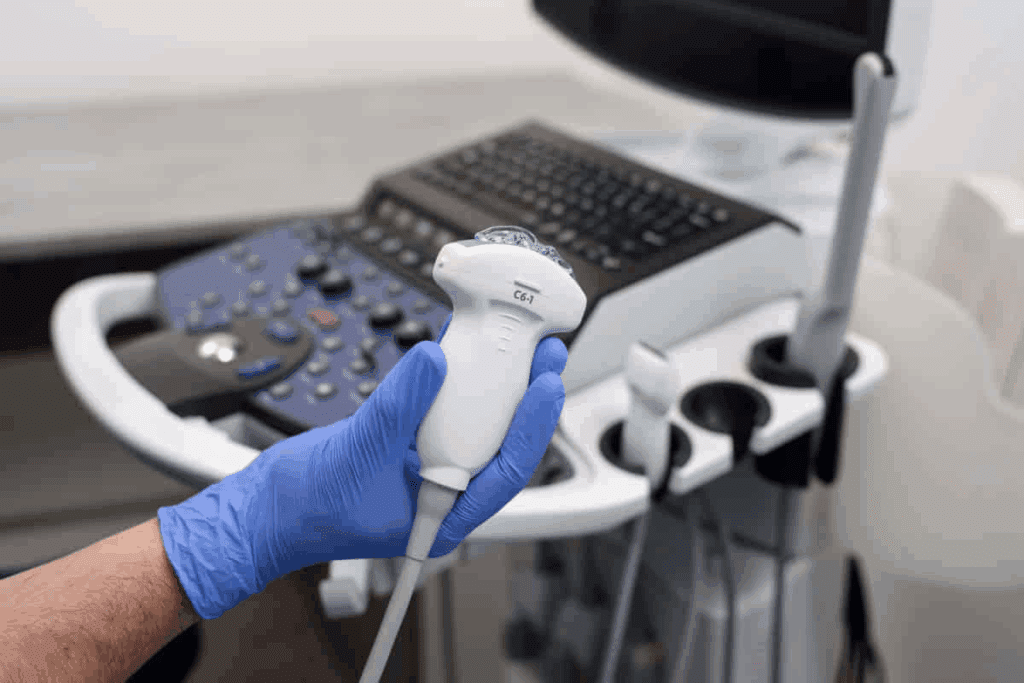
When a doctor orders a kidney ultrasound or a bladder sonogram, it’s key to know what it’s about. A urinary tract ultrasound uses sound waves to see the kidneys, ureters, and bladder. It’s a way to check these areas without harm.
Definition and Basic Principles
The urinary tract ultrasound works like echolocation. It sends sound waves into the body and catches the echoes to make images. This method is safe because it doesn’t use radiation.

Preparation and Procedure Overview
To get ready for a urinary tract ultrasound, you might drink water. This helps get clearer pictures. The test uses a gel and a transducer to send and receive sound waves. It’s usually painless and takes about 30 minutes to an hour.
Key steps in the procedure include:
- Lying on an examination table
- Application of gel to the abdominal area
- Use of a transducer to capture images
- Possible need to change positions or drink more water
Advantages Over Other Imaging Methods
Urinary tract ultrasounds have big advantages over other tests. They don’t use radiation, which is safer for pregnant women and kids. They also cost less and are quicker than CT scans.
Because they’re non-invasive and don’t use radiation, ultrasounds are a great first choice for checking urinary problems. They help doctors see what’s going on and plan treatments.
7 Key Findings Visible on Kidney Ultrasound
Kidney ultrasounds are a safe way to see the kidneys and find problems. They help doctors check the kidneys and spot issues that might affect them.
Normal Kidney Structure and Size
A normal ultrasound shows kidneys that are even and about 10-12 cm long. You can see the different parts of the kidney. If these look off, it might mean there’s a problem.
Kidney Stones and Calcifications
Kidney stones show up bright and block sound waves on an ultrasound. Doctors can see how big they are and where they are. This helps decide how to treat them. Kidney calcifications can also be seen, which might mean kidney stones or chronic disease.
Cysts and Polycystic Disease
Simple cysts are fluid-filled and look dark on an ultrasound. But polycystic kidney disease (PKD) has many cysts and makes the kidney bigger. Ultrasound helps track PKD.
Tumors and Masses
Ultrasound can spot tumors in the kidney. But, it’s hard to tell if they’re cancerous without more tests, like a kidney CT scan. Knowing the size, location, and details of these growths is key for treatment.
Ultrasound is a key tool for kidney imaging and finding problems. It’s a safe way to get important info for managing kidney issues. Sometimes, more tests, like a ct scan kidneys, are needed.
What a Bladder Ultrasound Reveals
Bladder ultrasounds are key for checking the bladder’s health and spotting issues. This method doesn’t hurt and shows a lot about the bladder’s shape and how it works.
Normal Bladder Appearance
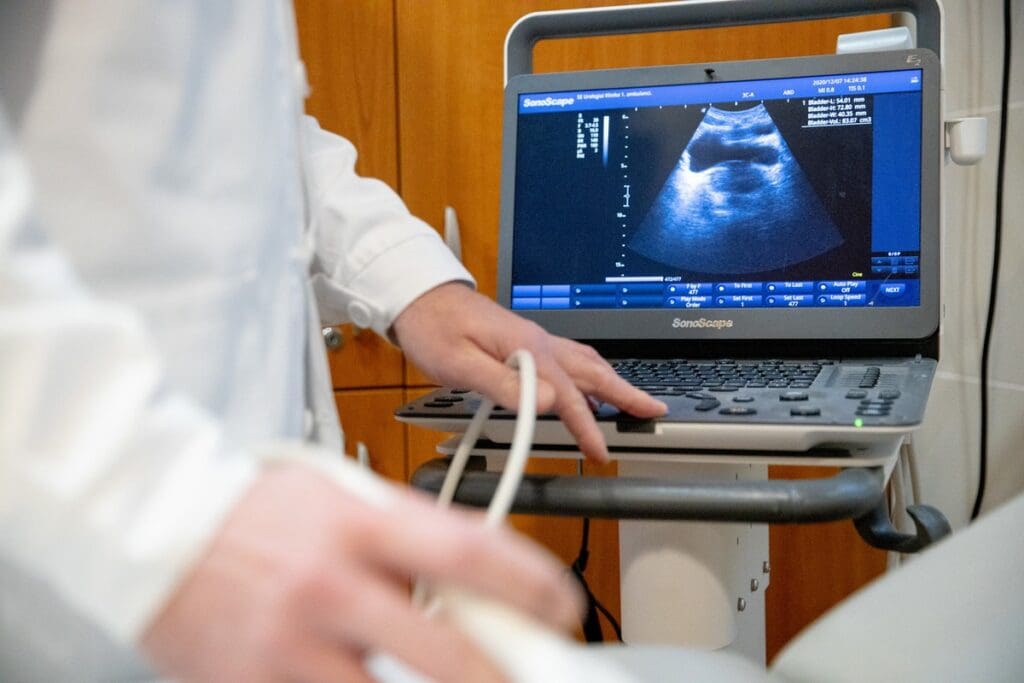
A normal bladder ultrasound shows a smooth wall and the right shape. It can measure the bladder’s size and see if it empties right. In a healthy person, the bladder wall is thin, and there are no tumors or growths.
Bladder Wall Thickening
When the bladder wall gets thicker than usual, it’s called bladder wall thickening. This can happen for many reasons like long-term infections or blockages. A bladder ultrasound can spot this thickening, showing there might be a problem that needs looking into.
Masses and Tumors
Ultrasound tech is great at finding growths in the bladder. These can be harmless or serious. A bladder ultrasound can find these growths, their size, and where they are. This helps doctors decide what to do next.
Residual Urine Volume Measurement
Another important thing a bladder ultrasound does is measure leftover urine after you pee. This is key for finding out if you have urinary retention, where the bladder doesn’t empty fully. Knowing this helps doctors figure out the best treatment.
In short, a bladder ultrasound is a powerful tool for understanding bladder health. It helps find and manage bladder problems early, which is good for patients.
Ureter Visualization and Limitations
Ultrasound technology is key in seeing ureters, but it has its limits. The ureters, which link the kidneys to the bladder, are hard to spot sometimes. This is because they are small and deep in the belly.
When Ureters Are Visible
In some cases, the ureters can be seen better during an ultrasound. Dilation or obstruction makes them bigger and easier to spot. For example, a kidney stone can block the ureter, making it visible.
Signs of Ureteral Dilation
Ureteral dilation is a sign of trouble, like a blockage from a stone or tumor. It means urine can’t flow right from the kidney to the bladder. How much it’s dilated tells us how bad the blockage is.
Monitoring ureteral dilation is key for managing urinary tract problems. Regular ultrasounds help track changes in the ureter’s size. This guides treatment plans.
Limitations in Ureter Assessment
Ultrasound has its limits in checking the ureters. It depends a lot on the person doing the scan and can be affected by things like gas in the bowel or the patient’s body shape. Also, very small ureters or those not very swollen can be hard to see.
When Additional Imaging Is Needed
When ultrasound results are unclear or more detailed images are needed, other tests like kidney ureter bladder x-ray or CT scans might be used. These can give a clearer view of the urinary system. They help spot problems that ultrasound might miss.
For those being checked for urinary tract issues, knowing how ultrasound works and its limits is important. It’s a great tool for starting, but sometimes other images are needed for a full diagnosis and treatment plan.
Comparing Urinary Tract Ultrasound to CT Scans and X-rays
Ultrasounds, CT scans, and X-rays are used to diagnose many health issues. Knowing their differences helps doctors make the right choice. The right tool depends on the patient’s condition and what doctors think might be wrong.
Ultrasound vs. Kidney CT Scan
A renal CT scan gives detailed images of the kidneys and urinary tract. It’s great for finding complex problems. On the other hand, an ultrasound is often the first test because it’s safe and doesn’t use radiation.
But, a CT scan is better at finding small kidney stones or tumors. A study found that CT scans are the best for acute kidney issues because they’re very accurate.
Smith et al.
Ultrasound vs. Kidney-Ureter-Bladder (KUB) X-ray
A kidney X-ray, or KUB X-ray, is quick and simple. It’s good for finding big kidney stones or other hard spots. But, it might miss smaller stones or soft tissue issues.
An ultrasound can find more problems, like cysts and tumors, without radiation. Experts say it’s safe and works well for checking kidney health.
Johnson et al.
When Each Imaging Method Is Preferred
Choosing the right imaging method depends on the situation. For detailed images, like in tumor cases, a ct scan kidney is best.
- Ultrasound is good for first checks and watching known issues.
- CT scans are best for detailed views and finding complex problems.
- X-rays are quick and simple for finding big kidney stones.
In summary, knowing what each imaging tool does best is key. It helps doctors make the best choices for patients and get accurate diagnoses.
Common Reasons Doctors Order Urinary Tract Ultrasound
Doctors often use urinary tract ultrasounds to check the urinary system. This method is non-invasive and gives insights into the kidneys, bladder, and ureters. It helps doctors make better decisions for patient care.
Evaluating Urinary Symptoms
Doctors order ultrasounds to look into urinary system symptoms. Symptoms like painful urination, frequent urination, or blood in the urine need to be checked. An ultrasound can find causes like kidney stones, bladder infections, or tumors.
Monitoring Known Conditions
Patients with urinary tract conditions need regular ultrasounds. This is to watch how the disease is progressing and if treatments are working. Conditions like kidney cysts, polycystic kidney disease, or bladder stones need to be closely watched.
Screening High-Risk Patients
Some people are more likely to have urinary tract problems. This includes those with a family history, age, or health issues. Doctors use ultrasounds to screen these high-risk patients early. For example, those with kidney disease or diabetes may need regular scans.
Guiding Interventional Procedures
Ultrasounds are also key for guiding certain procedures. For example, during a kidney biopsy or when draining a kidney cyst. The ultrasound helps doctors find the right spot, making the procedure safer and more accurate.
Conclusion: Understanding Your Urinary Tract Ultrasound Results
It’s important to understand your urinary tract ultrasound results. This test helps find and manage urological problems. It shows how healthy your kidneys, bladder, and ureters are through imaging.
You now know what a urinary tract ultrasound can show. It can reveal normal structures or signs of disease. This test is non-invasive and helps doctors check symptoms and monitor conditions.
If you’ve had a urinary tract ultrasound, talk to your doctor about the results. They can explain what the findings mean for you. They might suggest more tests or treatments based on your health.
FAQ
What is a urinary tract ultrasound?
A urinary tract ultrasound is a test that uses sound waves to see the kidneys, ureters, and bladder. It helps find problems in these areas.
Why would a doctor order a kidney ultrasound?
Doctors might order a kidney ultrasound for several reasons. They might check for flank pain, monitor kidney conditions, or screen for kidney problems in high-risk patients.
What can a bladder sonogram reveal?
A bladder sonogram shows details about the bladder. It can spot wall thickening, masses, tumors, and how much urine is left. This helps diagnose bladder issues.
How does a renal CT scan compare to a kidney ultrasound?
A renal CT scan gives detailed images of the kidneys and nearby tissues. It uses radiation and dye. A kidney ultrasound is non-invasive and doesn’t use radiation. It’s often the first choice for checking the kidneys.
What is a kidney-ureter-bladder (KUB) X-ray used for?
A KUB X-ray helps see the kidneys, ureters, and bladder. It’s good for finding kidney stones. But, it might not show as much detail as a CT scan or ultrasound.
Can a urinary tract ultrasound detect ureteral issues?
While a urinary tract ultrasound can see the ureters, it’s not always good at finding problems. For a better look, doctors might use CT scans.
What is the advantage of a bladder CT scan over a bladder ultrasound?
A bladder CT scan shows more detail about the bladder and nearby areas. But, it uses radiation. A bladder ultrasound is safer and can also give important information about the bladder.
How do I prepare for a kidney ultrasound?
To prepare for a kidney ultrasound, drink water to fill your bladder. Avoid certain foods or medicines that might affect the test. Your healthcare provider will tell you what to do.
What does a kidney ureter bladder X-ray show?
A kidney ureter bladder X-ray shows the size, shape, and position of the kidneys, ureters, and bladder. It helps find problems like kidney stones or other issues in the urinary tract.
Is a kidney CT scan or an ultrasound better for diagnosing kidney issues?
Choosing between a kidney CT scan and an ultrasound depends on the situation. Ultrasounds are often the first choice because they’re safe. CT scans are used when more detail is needed.
References
- StatPearls. (n.d.). Ultrasound of the Urinary Tract. In NCBI Bookshelf.https://www.ncbi.nlm.nih.gov/books/NBK535381/
- AIUM / Urology Guidelines. (n.d.). Ultrasound Examination in the Practice of Urology.https://www.aium.org/docs/default-source/resources/urology.pdf
- Orso, D., Peric, D., Di Gioia, C. C., Comisso, I., Bove, T., Ban, A., Fonda, F., & Federici, N. (2024). Renal and Genitourinary Ultrasound Evaluation in Emergency and Critical Care: An Overview. Healthcare, 12(13), 1356.https://doi.org/10.3390/healthcare12131356
- Bala, K. G., et al. (2010). Review Article: Ultrasonography of the Urinary Bladder. European Journal of Radiology, 74(3), 423-431.https://www.sciencedirect.com/science/article/pii/S092964411060015X