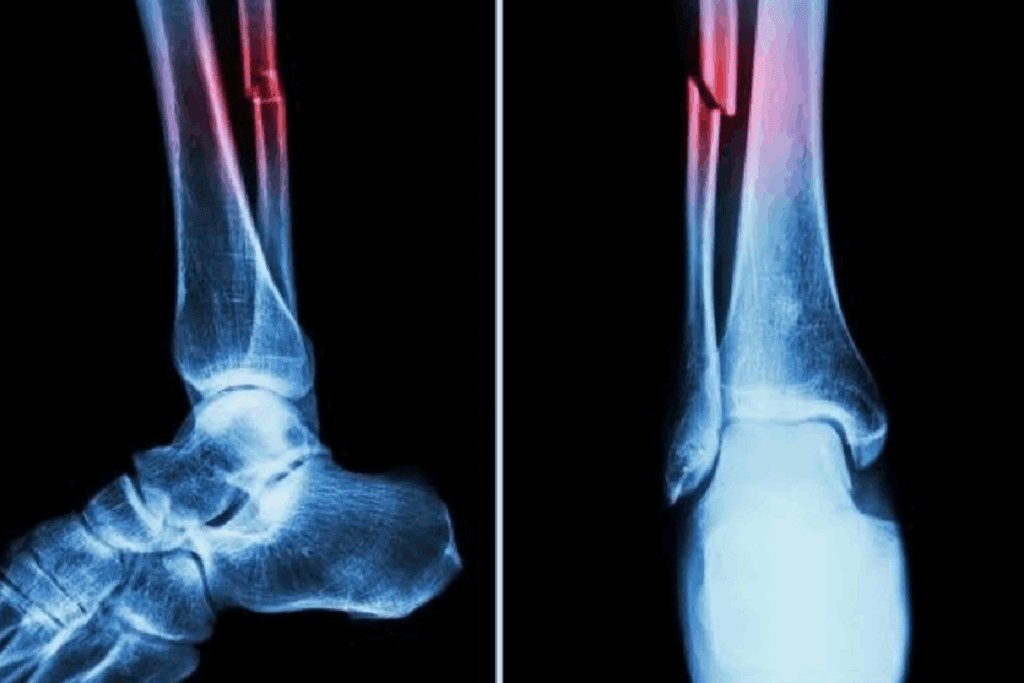
When we talk about injuries, we often say “fracture” and “break” the same way. But what does it mean when a bone is fractured? In medical terms, a fracture is the same as a break. So, a fractured bone is broken, and a broken bone is fractured.
Fractures happen for many reasons, like falls, car accidents, or sports injuries. Knowing what a bone fracture meaning is helps us see how serious the injury is. It also helps us figure out the right treatment.
The difference between a fracture and a break is mostly about the words we use. Both mean the bone is not whole anymore.
Key Takeaways
- A fracture is the medical term for a broken bone.
- Fractures can result from traumas such as falls or accidents.
- Understanding bone fracture meaning is vital for proper diagnosis.
- The terms “fracture” and “break” are used interchangeably.
- Both fractures and breaks refer to a disruption in bone continuity.
The Terminology Debate: Fractures vs. Breaks
In medical terms, “fracture” and “broken bone” mean the same thing. But, many people, including some doctors, get them mixed up. They think they’re talking about different kinds of bone injuries.
The term “fracture” is used by doctors to describe a bone break. It’s a precise term used everywhere in medicine. The important thing to know is that a fracture and a broken bone are the same injury. The only difference is in the words used.
Medical Definition of Bone Fractures
A bone fracture is when a bone breaks, either partially or completely. This happens when a bone can’t handle the stress, like from a fall or injury. The severity of a fracture can vary a lot, from a tiny crack to a bone that breaks into pieces.
Fractures are classified in different ways. This includes where the break is, how it happened, and if it’s open or closed. Knowing these details helps doctors figure out the best treatment.
Common Misconceptions About Broken Bones
Many people think a fracture is different from a broken bone. This confusion comes from the different words used by doctors, patients, and others. It’s key to understand that both terms mean the same thing: a bone is broken.
Another common belief is that a fracture is less serious than a break. But, the seriousness of the injury depends on the fracture itself, not the word used. Both simple and complex fractures can be called either a fracture or a break.
Knowing that “fracture” and “broken bone” are the same helps patients talk better with doctors. It also helps them understand their diagnosis and treatment options better.
Understanding Bone Fracture Meaning in Medical Terms
The term ‘bone fracture’ is often used with ‘broken bone.’ But what does it mean in medical terms? A bone fracture happens when a bone cracks or breaks from a strong force. This can be due to falls, accidents, or sports injuries.
What Happens When a Bone Fractures
When a bone fractures, it can break partially or completely. This damage causes pain, swelling, and makes moving hard. The fracture’s severity depends on where it is and how hard the force was.
The Anatomy of Fractured Bones
Fractured bones can be classified by their anatomy. The fracture can be transverse, oblique, or spiral, based on the break’s direction. Knowing the fracture’s anatomy is key to choosing the right treatment.
To better understand bone fractures, let’s look at the different types:
| Fracture Type | Description |
| Complete Fracture | A break that goes completely through the bone |
| Incomplete Fracture | A partial break where the bone is not completely separated |
| Displaced Fracture | A fracture where the bone is out of place |
| Nondisplaced Fracture | A fracture where the bone remains in place |
Understanding the bone fracture meaning is key for patients to grasp their diagnosis and treatment. The anatomy of fractures is vital in determining the severity and the right treatment for the injury.
Types of Bone Fractures: Complete vs. Incomplete
Bone fractures are common and can happen for many reasons. They might occur from falls, sports injuries, or other accidents. Knowing the type of fracture is key to picking the right treatment.
Bones can either break fully or partially. This difference is important for classifying fractures into complete fractures and incomplete fractures.
Complete Fractures: Full Breaks Through the Bone
A complete fracture means the bone breaks all the way through. This results in two or more pieces. Such fractures are usually more serious and might need surgery.
Here are some key traits of complete fractures:
- Full break through the bone
- Potential displacement of bone fragments
- Higher risk of complications if not properly aligned and treated
Incomplete Fractures: Partial Bone Fractures
An incomplete fracture, by contrast, is a partial break. The bone doesn’t break all the way through. This type is more common in children, whose bones are softer and less likely to break fully.
Here are some key traits of incomplete fractures:
- Partial break in the bone
- Less severe than complete fractures
- Often require less intensive treatment, such as casting or bracing
It’s important for doctors to know if a fracture is complete or incomplete. This helps them choose the best treatment. The type and severity of the fracture affect how well the bone will heal.
Classification by Fracture Pattern
Knowing how a bone breaks is key for treating it right. There are different types like transverse, oblique, spiral, and comminuted fractures. Each tells us about the injury and guides treatment.
Transverse Bone Fractures
A transverse bone fracture is a clean break across the bone. It happens when a bone is hit directly or bent suddenly. These fractures are common in long bones like the femur or humerus.
Oblique Bone Fractures
An oblique bone fracture has a diagonal break. It’s tricky to diagnose and treat because of its angle. Often, these fractures need surgery to heal right.
Spiral Fractures
Spiral fractures happen when a bone twists, causing a helical break. They’re common in sports, like skiing or football. Treating them can be tough because of their complex nature.
“Spiral fractures are notorious for their complexity and the challenges they pose in treatment. A thorough understanding of the fracture pattern is critical for effective management.”
Comminuted Bone Fractures
A comminuted bone fracture breaks into many pieces. It’s usually from a big impact, like a car crash or a fall. These fractures need careful treatment, often surgery, to heal well.
In summary, knowing about bone fracture patterns is vital for good care. By understanding transverse, oblique, spiral, and comminuted fractures, doctors can help patients better.
Open vs. Closed Bone Fractures
Bone fractures are divided into two types: open and closed. This difference is key because it changes how doctors treat them and the risks involved.
Characteristics of Closed Bone Fractures
Closed fractures happen when a bone breaks but the skin doesn’t. This makes them less complicated than open fractures. Without an open wound, the chance of getting an infection is lower, helping the bone heal faster.
Key features of closed fractures include:
- The bone is broken, but there’s no external wound.
- The risk of infection is lower.
- Treatment often involves immobilization through casts or splints.
Understanding Open (Compound) Bone Fractures
Open fractures are more serious because the bone goes through the skin. This makes it easier for bacteria to get in, raising the risk of infection and making healing harder.
Characteristics of open fractures include:
- The bone breaks through the skin, creating an open wound.
- Higher risk of infection due to exposure.
- Often require surgical intervention to clean the wound and stabilize the bone.
Severity Levels and Complications
The severity of bone fractures can vary a lot. Open fractures are usually more serious and carry a higher risk of problems like infection and poor healing.
Potential complications of bone fractures include:
- Infection, which is more common in open fractures.
- Nerve or blood vessel damage.
- Compartment syndrome, a condition with too much pressure in a muscle.
Knowing if a fracture is open or closed is important for the right treatment and avoiding complications.
Displaced vs. Nondisplaced Bone Fractures

It’s important to know the difference between displaced and nondisplaced bone fractures. This knowledge helps in choosing the right treatment and recovery plan. When a bone breaks, the pieces m ight stay in place or move out of position. This change affects how the bone heals and the treatment needed.
Nondisplaced Bone Fractures: Maintaining Alignment
Nondisplaced fractures mean the bone pieces stay in their right place, even though they’re broken. These fractures are usually simpler and might not need surgery. Because the pieces are in the right spot, healing is easier.
Displaced Bone Fractures: Shifted Bone Fragments
Displaced fractures, on the other hand, mean the bone pieces are not in line. This makes healing harder and often needs surgery to fix. These fractures are more serious and take longer to heal.
Impact on Treatment and Recovery
The type of fracture affects treatment and recovery. Nondisplaced fractures can heal with casts or splints. But displaced fractures might need surgery to fix the bone, then need to be kept stable to heal.
Recovery from displaced fractures takes longer because of the injury’s complexity. They also face a higher risk of problems like infection or healing issues. These can make recovery even harder or lead to long-term health problems.
In summary, knowing if a bone fracture is displaced or nondisplaced is key to the right treatment and recovery. Getting the diagnosis right and choosing the right treatment is vital for healing well and avoiding complications.
Stress-Related Fractures and Tiny Bone Cracks
Bones can get small cracks from too much stress, known as stress fractures or hairline fractures. This is common in athletes and those who do lots of high-impact activities.
Causes of Stress Fractures
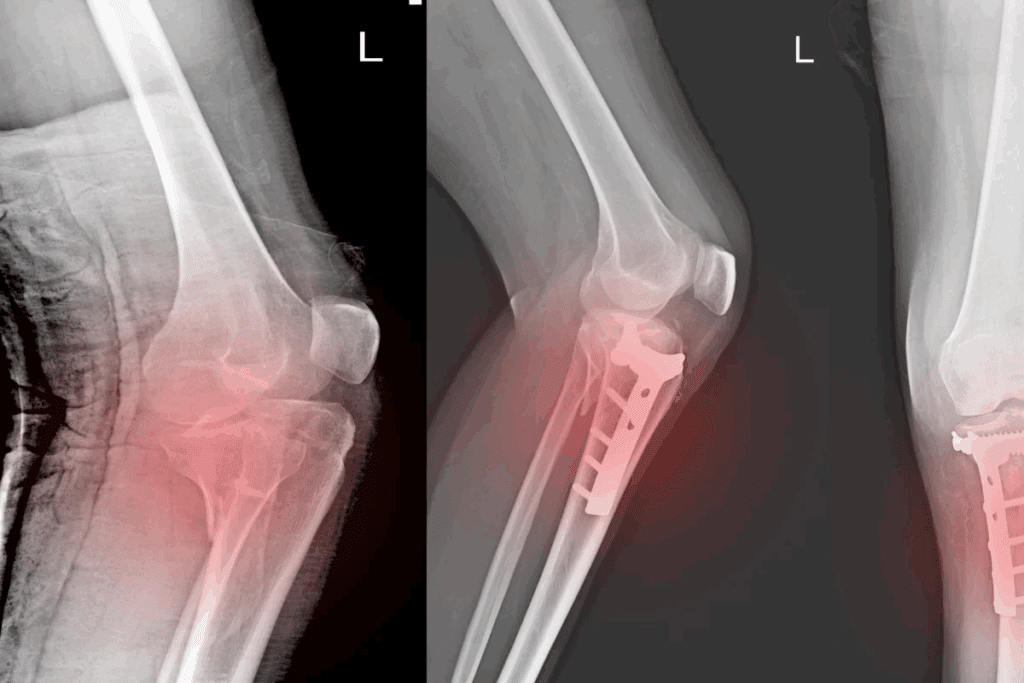
Stress fractures happen when a bone gets weak from too much strain. This strain comes from doing the same activity over and over, like running or jumping. It mainly affects bones that carry your weight, like in your legs and feet.
Common causes include:
- Overuse or repetitive strain
- Change in physical activity level
- Poor footwear or training surfaces
- Bone conditions such as osteoporosis
High-Risk Activities and Prevention
Some activities, like running, jumping, and dancing, can lead to stress fractures. To avoid them, start slowly with new activities, wear the right shoes, and do exercises that make your bones stronger.
Prevention tips:
- Gradually increase exercise intensity and frequency
- Wear appropriate footwear
- Include strength training in your workout routine
- Run or train on softer surfaces when possible
Detecting Subtle Fracture Symptoms
Symptoms of stress fractures can be hard to notice at first. They might include pain that gets worse, swelling, and tenderness. Catching it early is key to avoiding more damage.
Key symptoms to watch for:
- Pain that gradually worsens
- Swelling or tenderness
- Pain upon weight-bearing or activity
Special Types of Fractures
Fractures come in many types, each needing special care. While we know about common fractures, some are unique. They pose special challenges in treatment.
Compression Spinal Fractures
A compression spinal fracture happens when a spine vertebra collapses. This often happens in people with osteoporosis, a bone-weakening disease. It can cause sudden back pain and deformity.
“Osteoporosis is a major risk factor for compression fractures,” notes a study published in the Journal of Bone and Mineral Research.
“The incidence of vertebral fractures increases with age, and these fractures are a significant cause of morbidity in the elderly population.”
Avulsion Fractures
Avulsion fractures happen when a bone piece is pulled off by a tendon or ligament. They’re common in sports, where sudden movements can cause them. Treatment often involves keeping the area stable, but sometimes surgery is needed.
Avulsion fractures show how important the connection between bones, tendons, and ligaments is. Knowing how these injuries happen helps in preventing and treating them.
Impacted Fractures
Impacted fractures occur when bone pieces are pushed into each other. They often happen in the thigh and shin bones. Sometimes, the fragments can help stabilize the fracture, but usually, medical help is needed for healing.
Treatment for impacted fractures varies based on the fracture’s severity and location. Some may heal with just immobilization, while others need surgery to align the bones properly.
Fractures in Different Age Groups
Bone fractures have different meanings for children, adults, and the elderly. They can happen to anyone, and knowing the differences is key for the right treatment.
Pediatric Fractures: Greenstick and Buckle Fractures
In kids, bones are more flexible and less likely to break. This is because they have more collagen. Two common fractures in kids are greenstick and buckle fractures.
- Greenstick Fractures: These happen when a bone bends and partially breaks, like a green twig. They’re common in kids because their bones are softer.
- Buckle Fractures: Also called torus fractures, these occur when one side of the bone buckles. They often happen in the forearm bones and are common in young kids.
Adult Fractures: Common Patterns and Locations
Adults can get different types of fractures, often from accidents, sports, or repetitive stress. Common types include transverse, oblique, and spiral fractures.
- Transverse fractures are straight across the bone.
- Oblique fractures have an angled pattern.
- Spiral fractures twist around the bone, often from twisting injuries.
Adults often fracture their wrists, ankles, and clavicles from falls or sports injuries.
Geriatric Fractures: Osteoporosis-Related Concerns
Older adults face a higher risk of fractures due to osteoporosis. This condition weakens bones. Fractures in this age group often affect the hip, spine, and wrist.
- Osteoporosis-Related Concerns: The risk of fractures grows with age, more so in postmenopausal women and older men. Keeping bones strong through diet, exercise, and sometimes medication is key.
- Fracture Risk: Older adults with a history of fractures or osteoporosis need to be extra careful. Their bones are more likely to break.
It’s vital for healthcare providers to understand fractures in different age groups. This helps them give the right care. It also helps individuals take steps to prevent fractures.
Diagnosing Bone Fractures
Diagnosing bone fractures is a detailed process. It uses both clinical checks and advanced imaging. Getting it right is key for the right treatment and healing.
Clinical Evaluation and Physical Examination
The first step is a detailed clinical check and physical exam. Doctors look at the patient’s symptoms, medical history, and how the injury happened. They check for swelling, bruising, and tenderness.
They also see how well the patient can move and stand on the injured limb.
Key components of the clinical evaluation include:
- Patient history: Understanding the mechanism of injury and any relevant medical conditions.
- Symptom assessment: Evaluating pain, swelling, and limited mobility.
- Physical inspection: Looking for visible signs of injury, such as deformity or bruising.
Imaging Techniques: X-rays, CT Scans, and MRIs
Imaging is key to confirming bone fractures. The right imaging depends on the fracture type, location, and patient’s health.
Common imaging techniques used include:
- X-rays: The first-line imaging modality for most suspected fractures, providing a quick and effective way to visualize bone structures.
- CT scans: Useful for complex fractures or when more detailed imaging is required, specially in cases involving multiple fragments or overlapping bones.
- MRIs: Particular value for detecting soft tissue injuries and stress fractures that may not be visible on X-rays.
Detecting Subtle Fractures and Hairline Cracks
Stress fractures or hairline cracks can be hard to spot. They might not show up on first X-rays. Advanced imaging like MRI or CT scans are used to confirm these injuries.
Detecting subtle fractures requires:
- High index of suspicion based on clinical presentation.
- Use of appropriate imaging modalities.
- Careful evaluation of imaging results by experienced professionals.
Fracture Symptoms and Warning Signs
Fractures can show up in many ways, from sharp pain to signs that are easy to miss. It’s important to know these symptoms to get medical help quickly and avoid more problems.
Immediate Symptoms After Injury
When a fracture happens, you might notice several signs right away. These include:
- Sharp pain at the injury site
- Swelling and bruising around the injury
- Deformity or abnormal limb positioning
- Difficulty moving the injured limb
- A grinding sensation or sound at injury time
These signs often mean you have a fracture. But not all fractures are this obvious.
Subtle Fracture Symptoms That Are Often Missed
Some fractures, like stress or hairline fractures, don’t show big symptoms. Instead, they might cause mild signs that are easy to overlook. These include:
- Mild pain that gets worse over time
- Slight swelling that doesn’t seem big
- Pain with activity that gets better with rest
Knowing these signs is key, mainly for people who do a lot of high-impact activities or have osteoporosis risk factors.
When to Seek Medical Attention
Knowing when to get medical help for a fracture is important. You should get help right away if you have:
- Severe pain or swelling
- Deformity or instability
- Coldness, paleness, or blueness of the skin around the injury
- Difficulty moving the injured limb or bearing weight
Even if symptoms seem mild, seeing a doctor if they don’t get better or get worse is a good idea.
| Symptom | Immediate Action |
| Severe pain or swelling | Seek immediate medical attention |
| Mild pain that worsens over time | Schedule a doctor’s visit within 24-48 hours |
| Difficulty moving the affected limb | Seek immediate medical attention |
Treatment Approaches for Different Fracture Types
Bone fractures need different treatments, from simple care to surgery. The right treatment depends on the fracture’s type, how bad it is, and where it is. It also depends on the patient’s health.
Conservative Management: Casts, Splints, and Braces
For mild fractures, doctors often choose conservative management. This means using casts, splints, or braces to keep the area stable. Casts are often used for arm, wrist, or leg fractures. They provide a snug fit to protect the bone.
Splints are used when swelling is a problem. They can be adjusted. Braces offer extra support, like for spine fractures.
Surgical Interventions: Pins, Plates, and Screws
For more serious fractures, surgery is needed. It ensures the bone heals right. Doctors use pins, plates, and screws to hold the bone together. This method is called internal fixation.
The choice of surgery depends on the fracture and the patient’s health.
Emerging Treatment Technologies
Orthopedic surgery is always getting better. New tech and methods are coming out. Bone grafting and bone substitutes help bones heal better, even with big losses.
Also, minimally invasive surgery and biodegradable implants are making recovery faster. They also help patients do better.
The Fracture Healing Process
When a bone fractures, the body starts a healing process. This process has several phases. It’s key to getting the bone strong and functional again.
Stages of Bone Healing
The healing process has three main stages: inflammation, repair, and remodeling. In the first stage, the body forms a hematoma. This is replaced by a soft callus.
In the repair stage, a hard callus forms. This is when the soft callus turns into woven bone. The final stage, remodeling, replaces woven bone with lamellar bone. This makes the bone strong again.
Factors Affecting Healing Time
Many things can affect how long it takes for a fracture to heal. The severity of the fracture, the patient’s age, and their health status are important. For example, older adults or those with osteoporosis might heal slower. This is because their bones are less dense and blood flow might be poor.
Complications in the Healing Process
While healing is usually successful, problems can happen. These include delayed union and nonunion. Delayed union means healing is much slower. Nonunion means the bone doesn’t heal at all.
Other issues are malunion. This is when the bone heals in the wrong position. It can cause long-term problems with how the bone works.
Conclusion: Navigating Bone Injury Terminology
It’s key to know what a bone fracture means and the terms used. Many think “fracture” and “break” are the same. But in medical talk, “fracture” means a bone has broken.
We’ve looked at different types of bone fractures. This includes complete and incomplete ones. We’ve also talked about how to classify them. Accurate diagnosis and treatment are vital for healing right and avoiding problems.
Knowing about bone injury terms helps people understand their health better. It makes talking to doctors easier. This knowledge leads to better care and results. So, knowing the difference between a fracture and a break is very important.
FAQ
What is the difference between a fracture and a break?
Fractures and breaks mean the same thing. They describe a bone that’s cracked or shattered. Doctors often use these terms the same way.
What is a partial bone fracture?
A partial bone fracture is a crack in the bone that doesn’t go all the way through. It can be stable or unstable, depending on the crack’s severity.
What is a hairline stress fracture?
A hairline stress fracture is a small crack in the bone. It’s usually caused by too much stress or overuse. It’s hard to see on X-rays because it’s small.
What is the difference between a stable and an unstable fracture?
A stable fracture keeps the bone in place. An unstable fracture has the bone out of place. Unstable fractures need more treatment.
What is a compound bone fracture?
A compound bone fracture is when the bone breaks and goes through the skin. This is more likely to get infected and needs quick medical help.
What is a greenstick fracture?
A greenstick fracture is when a child’s bone bends but doesn’t break all the way. It’s called this because it looks like a green branch breaking.
How are bone fractures diagnosed?
Doctors use X-rays, CT scans, and MRIs to find bone fractures. They also do physical exams and check how the bone is doing. This helps them decide how to treat it.
What are the symptoms of a fracture?
Fracture symptoms include pain, swelling, and bruising. You might also feel stiff or have a dull ache. These signs can be easy to miss.
How are fractures treated?
Treatment for fractures varies. For some, casts or splints work. Others might need surgery with pins or plates to fix the bone.
What is the healing process for fractures?
Healing a fracture takes several steps. First, the area gets inflamed. Then, soft and hard calluses form. The bone eventually heals. How fast it heals depends on the fracture’s severity and your health.
What are some possible complications during the healing process?
Complications like infection or nerve damage can happen. So can problems where the bone doesn’t heal right. Quick medical care can help avoid these issues.
How can stress-related fractures be prevented?
To avoid stress fractures, don’t overdo it. Wear good shoes and take breaks. Catching and treating fractures early can also help prevent more damage.
References
- Fusaro, M., et al. (2021). Vitamin K2 and its impact on bone health: Current evidence and perspectives. Clinical Cases in Mineral and Bone Metabolism, 18(3), 185-192. https://www.ncbi.nlm.nih.gov/pmc/articles/PMC8785303/