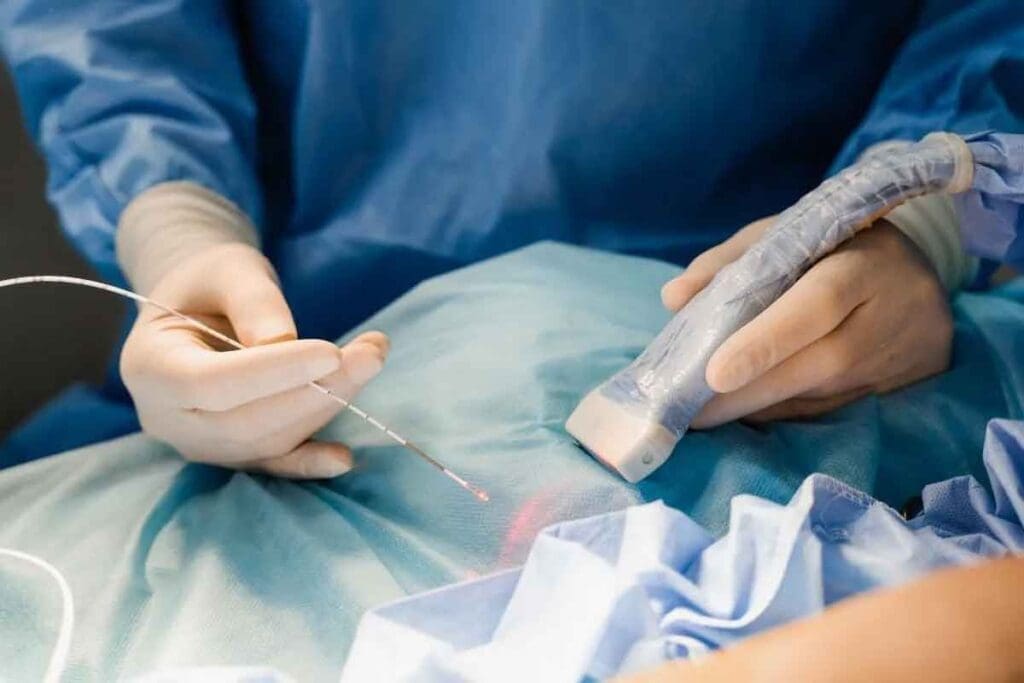
Endovascular Aneurysm Repair (EVAR) is a modern, less invasive way to treat aneurysms in blood vessels. It’s commonly used for the aorta and also plays a key role in treating a brain aneurysm endovascular aneurysm repair procedure.
An aortic aneurysm occurs when the artery wall bulges due to weakness or degeneration. If left untreated, it can cause life-threatening complications.
Traditional treatments like open surgery are often risky. EVAR offers a safer alternative with faster recovery and minimal scarring. At Liv Hospital, specialists are advancing techniques in brain aneurysm endovascular aneurysm repair, always prioritizing patient safety and quality care.
Key Takeaways
- EVAR is a minimally invasive procedure for treating aneurysms.
- Aneurysms can occur in the aorta or cerebral vessels.
- Traditional treatments involve open surgery, which can be risky.
- EVAR reduces recovery time and scarring.
- Liv Hospital sets a new standard for EVAR with its patient safety commitment.
Understanding Aneurysms and Their Risks
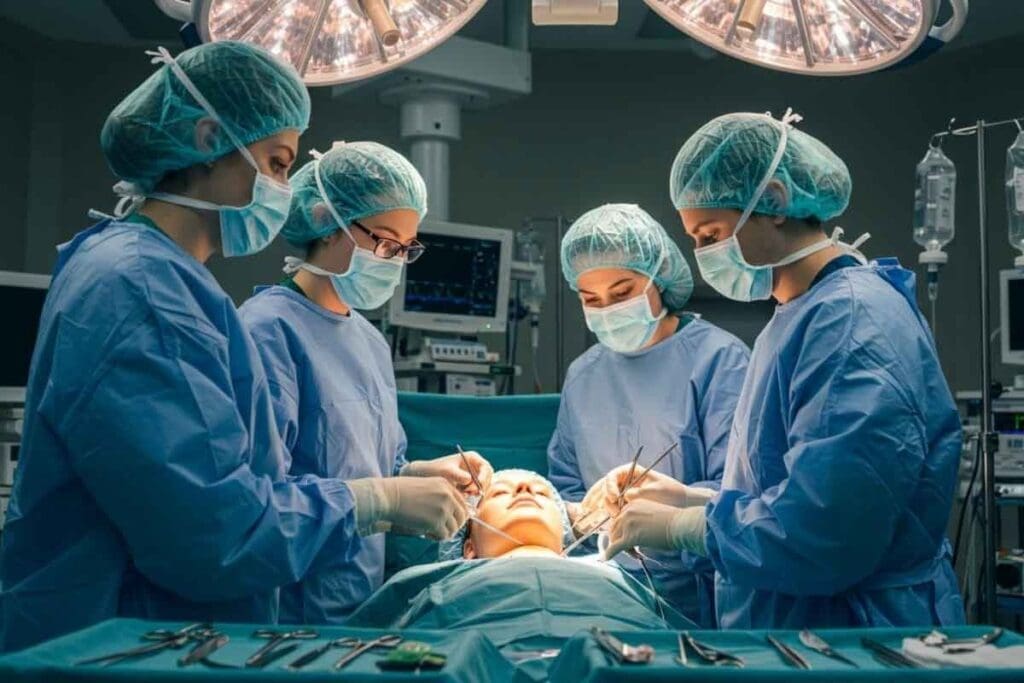
Aneurysms are serious health issues. It’s important to know what they are and why they happen. If not treated, they can lead to severe problems.
What Is an Aneurysm?
An aneurysm happens when a blood vessel wall gets weak. This causes it to bulge out. This bulge can burst, leading to dangerous bleeding. Aneurysms can occur in any blood vessel, but they often happen in the aorta and brain arteries.
Common Locations for Aneurysms
Aneurysms can pop up in different parts of the body. These include:
- The aorta, the main artery that carries blood from the heart to the rest of the body.
- Cerebral arteries, which supply blood to the brain.
- Peripheral arteries, such as those in the legs.
Each spot has its own risks and treatment challenges.
Risk Factors and Warning Signs
Several things can make you more likely to get an aneurysm. These include:
- Hypertension: High blood pressure can weaken blood vessel walls.
- Smoking: Smoking is a big risk factor for aneurysms.
- Genetic predisposition: If your family has a history of aneurysms, you might be at higher risk.
Signs you might have an aneurysm include severe headaches, double vision, or pain in the back or legs. Finding it early is key to managing it well.
The Evolution of Aneurysm Treatment
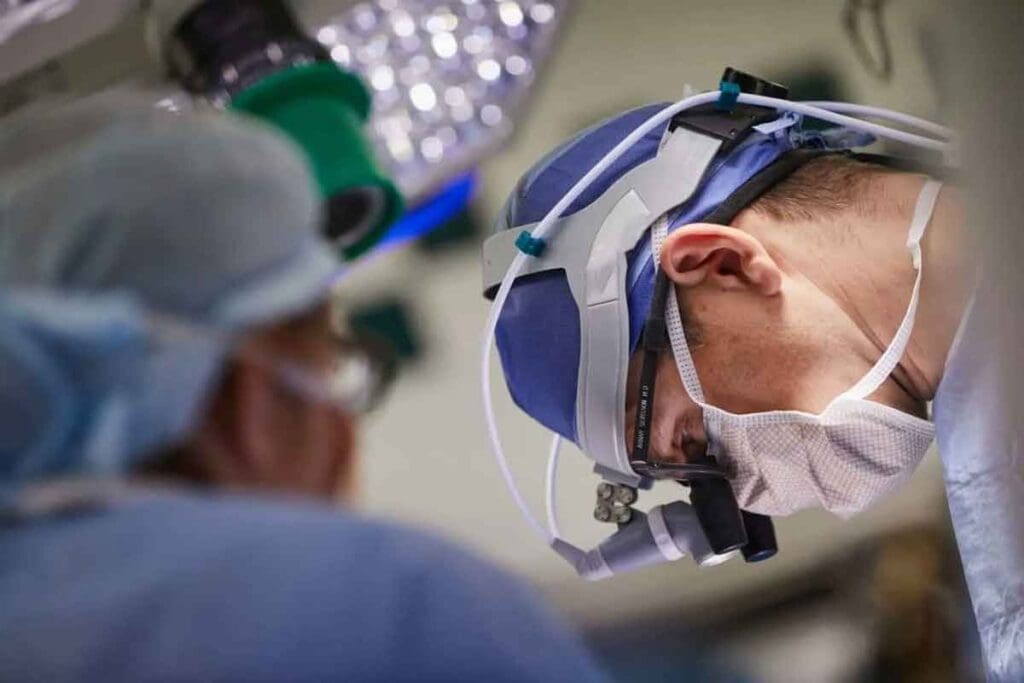
Aneurysm treatment has changed a lot. It now uses new, less invasive methods instead of old open surgeries. This change comes from better medical tech and understanding aneurysms better.
Traditional Open Surgical Approaches
Old treatments for aneurysms were open surgeries. They needed big cuts and took a long time to heal. Open surgery for aneurysms was once the standard of care, but it had big risks and long hospital stays.
The Shift Toward Minimally Invasive Techniques
New treatments for aneurysms are now less invasive. Minimally invasive aneurysm treatment like EVAR came along. It’s safer and lets patients recover faster. This change aims to cut down on risks and make patients better sooner.
- Reduced risk of complications
- Faster recovery times
- Less invasive procedure
Development of Endovascular Techniques
Endovascular techniques have changed aneurysm treatment a lot. EVAR and other methods use stent grafts or coils to block blood flow to the aneurysm. This way, they prevent it from bursting. These methods are safer than old surgeries.
Today, aneurysm treatment keeps getting better. New tech and methods in endovascular techniques are coming. These advancements will likely make treatments even better for patients with aneurysms.
What Is Endovascular Aneurysm Repair (EVAR)?
EVAR, or Endovascular Aneurysm Repair, is a new way to treat aneurysms. It’s less invasive than traditional surgery. This method is great for people who might not do well with open surgery.
Definition and Basic Principles
EVAR is a procedure that uses a stent graft to fix an aneurysm. It works by keeping the aneurysm from getting bigger or bursting. This is done by placing a stent graft in the aorta or other arteries.
The procedure uses imaging like fluoroscopy and angiography. It’s done through small cuts in the groin. This makes it safer and helps patients recover faster than open surgery.
How EVAR Works
In an EVAR procedure, a stent graft is put in through the femoral arteries. It’s guided to the aneurysm using imaging. Once there, it expands to fit the artery, sealing off the aneurysm.
Types of Stent Grafts Used in EVAR
There are many types of stent grafts for EVAR. Each is made for different needs and body types. These include:
- Main body stent grafts
- Iliac or femoral extensions
- Fenestrated and branched stent grafts for complex aneurysms
Choosing the right stent graft is key. It depends on the aneurysm’s size and location, and the patient’s body.
Brain Aneurysm Endovascular Aneurysm Repair Techniques
The brain’s blood vessels need special care when treating aneurysms. It’s important to understand the brain’s complex structure and the risks involved.
Unique Challenges of Cerebral Aneurysms
Cerebral aneurysms are tricky because of their location and the brain’s blood vessel network. The risk of rupture is high, making quick and effective treatment key.
The delicate nature of cerebral vessels means treatment must be precise. This is to avoid harming nearby tissue.
Coiling, Stenting, and Flow Diversion Techniques
Several methods are used to treat cerebral aneurysms, like coiling, stenting, and flow diversion. Coiling fills the aneurysm with coils to stop blood flow.
Stenting adds support to the vessel wall, useful for wide-necked aneurysms. It’s often used with coiling.
Flow diversion uses a device to divert blood flow, helping the aneurysm clot.
Imaging Guidance for Cerebral EVAR
Good imaging is key for successful cerebral EVAR procedures. Digital subtraction angiography (DSA) and roadmapping provide real-time images during treatment.
These tools help place devices accurately and check how the aneurysm responds. This makes the procedure safer and more effective.
EVAR for Abdominal Aortic Aneurysms
Endovascular Aneurysm Repair (EVAR) is now a top choice for treating abdominal aortic aneurysms (AAA). It’s a less invasive method compared to traditional surgery. This method is great for older adults and those at high risk for surgery.
The Standard EVAR Approach for AAA
The EVAR procedure for AAA uses a stent graft. It’s placed through the femoral arteries and guided to the aneurysm. This stent graft lines the aorta, excluding the aneurysm and reducing rupture risk. The procedure is done under local or general anesthesia and requires a short hospital stay.
Anatomical Considerations and Planning
For EVAR to be successful, careful planning is needed. CT angiography is key for checking the aneurysm’s size and shape, and the stent graft’s fit. The aortic neck’s size and shape, any thrombus, and the iliac arteries’ condition are also important.
Decreased Mortality Rates in High-Risk Patients
EVAR for AAA has lowered mortality rates in high-risk patients. It avoids the risks of open surgery. This makes it a good choice for those with many health issues.
| Patient Group | EVAR Mortality Rate | Open Surgery Mortality Rate |
| High-Risk Patients | 2% | 8% |
| Low-Risk Patients | 1.5% | 3% |
Post-Procedure Monitoring for AAA
After EVAR for AAA, patients need regular checks. These checks are to watch for complications like endoleaks or stent graft migration. Long-term imaging studies are vital to ensure the repair’s success and the aorta’s health. This monitoring helps catch any problems early, improving patient care.
Specialized EVAR Variations and Applications
Specialized EVAR techniques have emerged to treat complex aneurysms. These advanced procedures help patients who were once considered poor candidates for traditional EVAR or open surgery.
Fenestrated EVAR (FEVAR) for Complex Anatomies
Fenestrated EVAR, or FEVAR, is a customized EVAR for complex aortic aneurysms. It creates a stent graft with holes that match the patient’s visceral arteries. This keeps blood flowing to vital organs.
FEVAR is effective for complex abdominal aortic aneurysms. It’s a less invasive option than open surgery. Advanced imaging and planning are needed for FEVAR, often using 3D reconstructions.
Thoracic EVAR (TEVAR) for Thoracic Aortic Aneurysms
Thoracic EVAR, or TEVAR, treats aneurysms of the thoracic aorta. It uses a stent graft to exclude the aneurysm from blood flow, reducing rupture risk.
TEVAR is a preferred treatment for many thoracic aortic aneurysm patients. It can be done under general anesthesia or conscious sedation, depending on the case.
Branched EVAR for Preserving Vessel Patency
Branched EVAR is another advancement for complex aortic aneurysms. It uses stent grafts with branches to keep blood flowing to critical arteries.
This approach is useful for aneurysms with long segments and multiple branch vessels. It reduces the risk of complications from organ ischemia.
In conclusion, specialized EVAR variations like FEVAR, TEVAR, and branched EVAR have greatly expanded treatment options. They offer improved outcomes and reduced morbidity compared to traditional surgery.
Patient Selection and Candidacy for EVAR
Choosing the right patients for EVAR is a detailed process. It looks at both the patient’s body and health to see who fits best with this new, less invasive surgery.
Ideal Candidates for Endovascular Repair
The best candidates for EVAR have aneurysms that fit well with the surgery. They also face high risks with traditional surgery. Those with serious health problems or past belly surgeries can greatly benefit from EVAR’s gentler approach.
Anatomical Requirements and Limitations
For EVAR to work, the aneurysm must be the right shape and size. It also needs good access points and enough space to seal properly. Shapes that are too complex or small access points can make EVAR hard or impossible.
| Anatomical Feature | Ideal Characteristics for EVAR |
| Aneurysm Size and Shape | Suitable for stent graft placement |
| Access Vessels | Adequate diameter and minimal calcification |
| Sealing Zones | Sufficient length and minimal angulation |
Age and Comorbidity Considerations
Age and health issues are key in picking patients for EVAR. Older folks or those with many health problems might do better with EVAR. It’s safer than traditional surgery.
“The decision to proceed with EVAR should be based on a thorough check of the patient’s health, including age, health problems, and body shape.”
— Society for Vascular Surgery Guidelines
Multidisciplinary Approach to Patient Selection
Choosing the right patients for EVAR needs a team effort. This team includes vascular surgeons, radiologists, and other experts. They make sure all parts of the patient’s health are looked at.
By carefully checking these points and working together, doctors can pick the best patients for EVAR. This helps improve results and lowers risks.
Recovery and Outcomes After EVAR
Understanding recovery and outcomes after EVAR is key for patient care. EVAR is a new way to treat aneurysms. It’s less invasive than open surgery and cuts down recovery time.
Hospital Stay and Immediate Recovery
EVAR means a shorter hospital stay for patients. They often leave the hospital sooner than those with open surgery. The recovery is smoother, with less pain and fewer complications.
Key aspects of immediate recovery include:
- Monitoring in a recovery unit post-procedure
- Management of possible complications
- Early movement to prevent blood clots
Long-term Follow-up Requirements
Even with EVAR’s benefits, long-term checks are vital. These checks watch for issues like endoleaks or graft movement. CT scans and ultrasounds help check the aneurysm and the stent graft.
Long-term follow-up typically involves:
- Regular imaging studies (CT scans, ultrasounds)
- Checking for signs of problems
- Changing the treatment plan if needed
Comparative Outcomes: EVAR vs. Open Surgery
Research shows EVAR has lower death rates before and after surgery, mainly for high-risk patients. But, long-term results can be similar for both methods.
| Outcome Measure | EVAR | Open Surgery |
| Perioperative Mortality | Lower | Higher |
| Long-term Survival | Comparable | Comparable |
| Complication Rates | Generally Lower | Higher |
Quality of Life After Endovascular Repair
EVAR’s impact on quality of life is important. Patients usually get back to normal faster. But, the need for ongoing checks can worry some.
Factors influencing quality of life post-EVAR include:
- Speed of recovery and return to normal activities
- Presence of complications or need for reintervention
- Patient anxiety related to long-term surveillance
Conclusion: Advances and Future Directions in Endovascular Aneurysm Repair
Endovascular Aneurysm Repair (EVAR) has changed how we treat aneurysms. It’s a less invasive method compared to open surgery. This has led to better results for patients, with shorter recovery times and lower death rates.
The future of EVAR is bright, with new research and developments on the horizon. These advancements will likely make EVAR even more effective for treating complex cases. It’s set to become a top choice for many patients.
As EVAR evolves, we’ll see better stent grafts, improved imaging, and smarter patient selection. These improvements will lead to even better results for patients. EVAR is becoming a preferred treatment for many.
Innovation in EVAR will be key in the future of treating aneurysms. It will offer patients safer and more effective options. This is exciting news for those facing aneurysm treatment.
FAQ
What is Endovascular Aneurysm Repair (EVAR)?
EVAR is a minimally invasive surgery for aneurysms. It uses a stent graft to block blood flow to the aneurysm. This is done through the blood vessels.
How does EVAR work?
EVAR uses a stent graft to stop blood from entering the aneurysm. This reduces the risk of rupture. The stent graft is inserted through small incisions in the groin.
What are the benefits of EVAR compared to open surgery?
EVAR has many advantages over open surgery. It has smaller incisions, less blood loss, and shorter hospital stays. Recovery is also quicker. It’s safer for high-risk patients too.
What types of aneurysms can be treated with EVAR?
EVAR treats many types of aneurysms. This includes abdominal aortic aneurysms (AAAs), thoracic aortic aneurysms, and cerebral aneurysms. Specialized EVAR can even treat complex aneurysms.
What are the risks associated with EVAR?
EVAR is generally safe but has risks. These include endoleak, stent graft migration, and the need for more surgery. Access site complications like bleeding or hematoma are also possible.
How is patient selection done for EVAR?
Choosing patients for EVAR is a team effort. It looks at the aneurysm’s shape, the patient’s age, health, and other factors. Imaging studies help plan the procedure.
What is the recovery process like after EVAR?
Recovery from EVAR is faster than open surgery. Most patients go home in a few days. They need to follow up to make sure the stent graft works right.
Can EVAR be used for brain aneurysms?
Yes, EVAR can treat brain aneurysms. It uses coils or stents to stop the aneurysm from rupturing. This is done by navigating through the brain’s blood vessels.
What is the difference between EVAR and TEVAR?
TEVAR is EVAR for the thoracic aorta. It’s different from EVAR for the abdominal aorta. TEVAR is designed for the thoracic aorta’s unique anatomy.
How does EVAR impact quality of life?
EVAR greatly improves life for aneurysm patients. It reduces rupture risk and complications. Patients often have less pain and recover faster, getting back to normal sooner.
References
- Molyneux, A., Kerr, R., Stratton, I., Sandercock, P., Clarke, M., Shrimpton, M., & International Subarachnoid Aneurysm Trial (ISAT) Collaborative Group. (2002). International subarachnoid aneurysm trial (ISAT) of neurosurgical clipping versus endovascular coiling in 2143 patients with ruptured intracranial aneurysms: A randomised trial. The Lancet, 360(9342), 1267–1274.https://www.sciencedirect.com/science/article/pii/S0140673602113146