
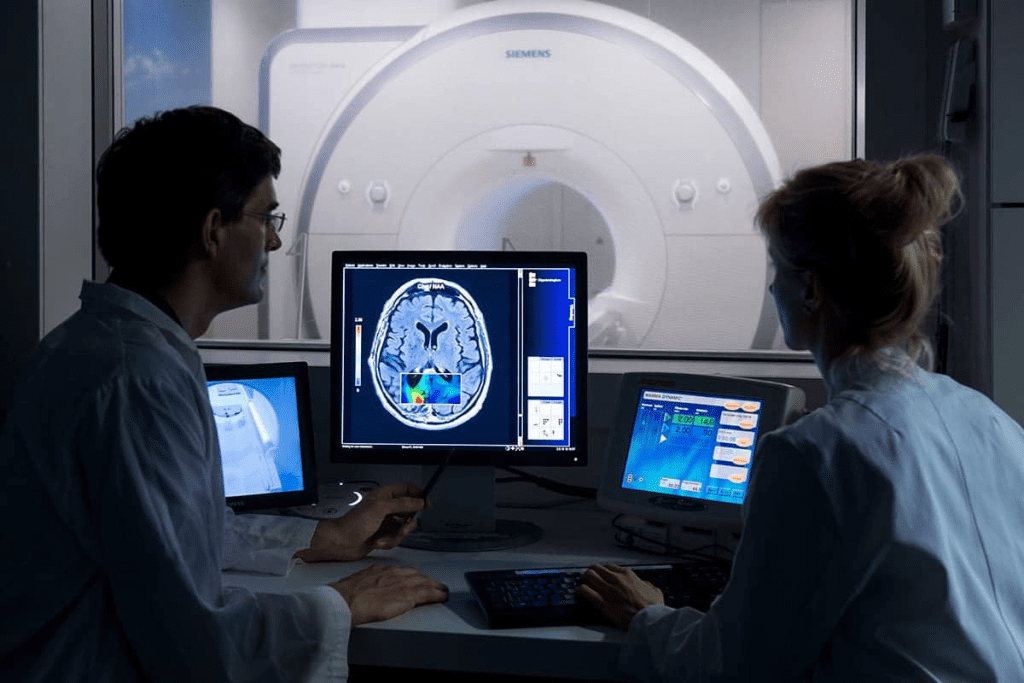
Diagnosing brain tumors needs accurate and reliable imaging. At Liv Hospital, we use advanced tools like brain cancer CT scan for precise diagnoses. A CT scan combines X-rays and computer technology to create detailed images of the brain, helping doctors spot and understand tumors. While CT scans are highly effective in detecting tumors with a sensitivity of around 90%, they are often complemented by MRI for more detailed tissue characterization. Usingbrain cancer CT scan technology allows for timely diagnosis, treatment planning, and monitoring of brain tumors.
rs.
Research shows that CT scans are very good at finding brain. They are key in medical diagnosis. Even though MRI is preferred, CT scans are a good choice when MRI isn’t possible.
Key Takeaways
- CT scans provide detailed cross-sectional images to detect brain tumors.
- They offer high sensitivity and specificity in diagnosing intracranial tumors.
- CT scans are useful when MRI is not feasible.
- Liv Hospital is committed to providing world-class healthcare with advanced diagnostic tools.
- Accurate diagnosis is key for effective treatment planning.
The Science Behind Brain Cancer CT Scan Technology
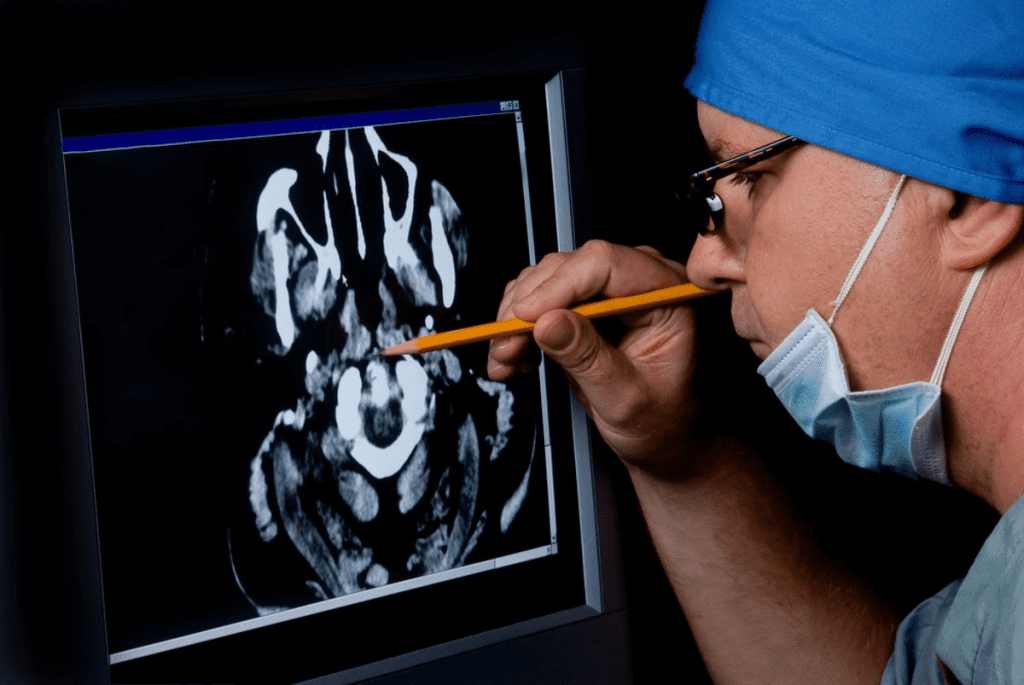
CT scans use X-rays and computer algorithms to show detailed brain images. This tech is key in finding brain tumors and seeing how big they are.
X-ray Based Cross-Sectional Imaging Principles
CT scans work by taking X-rays from different angles to see the brain. These images are then put together to show the brain’s inside parts clearly.
An X-ray tube moves around the head, capturing data. A computer then makes images from this data. These images help doctors spot tumors.
Computer Processing and Image Reconstruction
The CT scanner’s data is turned into images by computers. This makes the images clear and detailed. Doctors can then see different tissues and find tumors.
Differentiating Normal Brain Tissue from Tumors
CT scans are great at telling normal brain tissue apart from tumors. Tumors show up as different masses. Contrast agents make tumors even easier to see, helping doctors plan treatment.
| Characteristics | Normal Brain Tissue | Brain Tumor |
| Density | Uniform density | Variable density, often with necrotic areas |
| Appearance | Homogeneous appearance | Heterogeneous appearance with possible enhancement |
| Mass Effect | No significant mass effect | Often causes mass effect, displacing adjacent structures |
Knowing these differences is key for accurate diagnosis and treatment. CT scans give doctors the detailed images they need to make good decisions for patients.
The Complete CT Scan Process for Brain Tumor Detection
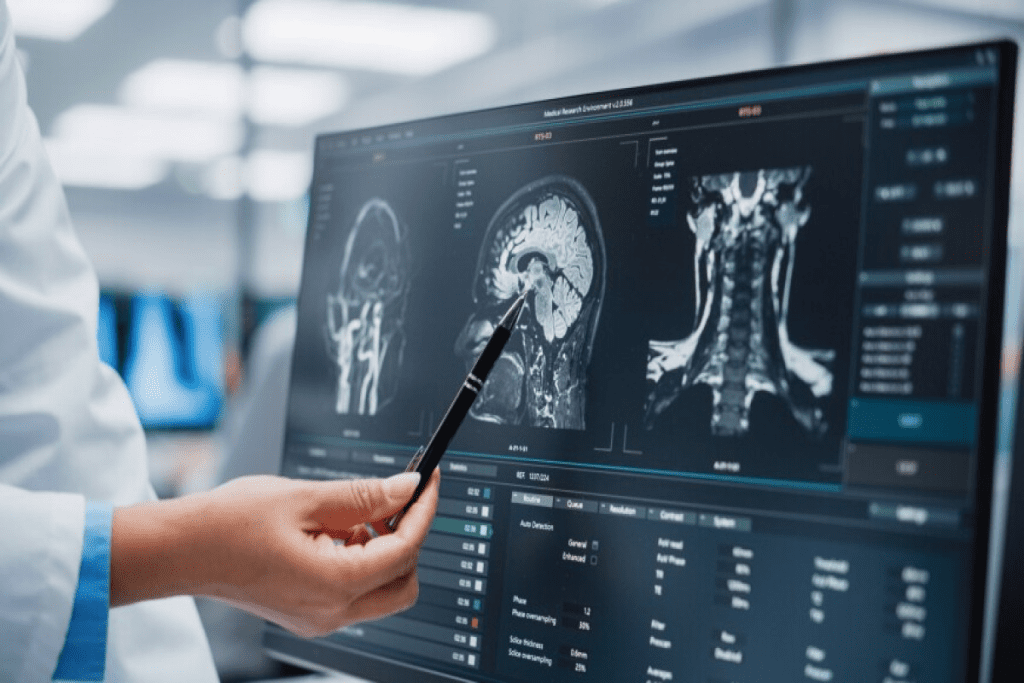
A CT scan for brain tumor detection involves several steps. It starts with patient preparation. Each step is important for accurate imaging results.
Patient Preparation and Positioning
Getting ready for a CT scan is key. Patients often need to fast for a few hours. This ensures clear images without food interference.
They also remove metal objects like jewelry and glasses. Comfortable, loose clothing is recommended. Informing us about medical conditions or implants is also important.
The patient then lies on a table that slides into the CT scanner. The radiology team positions the head correctly. Straps are used to keep the patient steady during the scan.
Contrast Enhancement Techniques
A contrast agent may be used to make certain areas more visible. It’s given through an IV. This helps highlight differences in tissue, making tumors easier to spot.
The contrast agent is usually iodine-based. While safe, there’s a small risk of an allergic reaction. Patients with allergies should tell their healthcare provider.
Duration and Experience During the Procedure
The CT scan itself is quick, lasting just a few minutes. The whole process, from start to finish, takes about 15 to 30 minutes. Patients must stay very quiet to avoid blurry images.
The scanner makes noise, but patients are not in a small space like an MRI. Our team is here to support and answer questions.
After the scan, a radiologist reviews the images. They then provide a report to the patient’s doctor. This report will detail any findings, like a brain tumor on CT scan, and suggest next steps.
How CT Scans Visualize Brain Tumors
CT scans can show brain tumors by spotting differences in tissue types. This skill is key for finding tumors and learning about them.
Density Differences Between Tumor and Normal Tissue
CT scans are great at seeing how tumors differ from normal brain tissue. Tumors often have different densities, making them stand out on scans. Some tumors look hypodense (darker), while others look hyperdense (brighter).
We use these differences to understand the tumor and plan treatment. Diagnosis guidelines say this is essential for accurate diagnosis and treatment.
Identifying Mass Effect and Midline Shifts
CT scans also spot the mass effect of brain tumors. The mass effect is when tumors push brain structures out of place. In serious cases, this can cause a midline shift, where brain structures move from their usual spot.
Finding these changes helps us see how the tumor affects the brain. Our team uses CT scans to quickly spot these serious issues.
Detection of Calcifications and Hemorrhage
CT scans can also find calcifications and hemorrhages in brain tumors. Calcifications are calcium deposits in tumors, and hemorrhages are bleeding in or around the tumor.
| Feature | Description | Clinical Significance |
| Density Differences | Variations in tissue density between tumor and normal tissue | Critical for tumor identification and characterization |
| Mass Effect | Displacement of surrounding brain structures due to tumor | Assesses tumor impact and urgency for intervention |
| Calcifications and Hemorrhage | Presence of calcium deposits or bleeding within or around the tumor | Important for diagnosing specific tumor types and complications |
CT scans give a detailed look at brain tumors, helping with diagnosis and treatment.
Types of Brain Tumors Detectable on CT Head Tumor Imaging
CT head tumor imaging can spot many brain tumors. This includes primary gliomas and metastatic lesions. Knowing the type of tumor is key for treatment.
Primary Brain Tumors: Gliomas, Meningiomas, and Others
Primary brain tumors start in the brain. Gliomas come from brain tissue and vary in severity. Meningiomas grow from the brain’s protective membranes. Most are not cancerous but can cause symptoms.
Other primary tumors include:
- Medulloblastomas, common in kids and found in the cerebellum.
- Ependymomas, from cells lining the brain’s ventricles.
- Pineal gland tumors, which can be benign or cancerous.
CT scans can show tumor size, location, and details like calcification.
Metastatic Brain Tumors from Other Cancers
Metastatic tumors come from cancers elsewhere in the body. Common sources are lung, breast, and melanoma. CT scans are great for finding these tumors, even in critical areas.
Metastatic tumors look like well-defined masses on CT scans. Contrast helps make them stand out.
“The use of CT scans in detecting brain metastases has revolutionized the management of cancer patients, allowing for timely intervention and improved outcomes.”
Benign vs. Malignant Tumor Appearances
CT scans can hint at a tumor’s nature. Benign tumors have clear borders and grow slowly. Malignant tumors have irregular shapes and may show signs of damage.
But, only a biopsy can confirm a tumor’s type. CT scans are a first step in finding and studying tumors.
We use CT scans to find and track tumors over time. This helps ensure patients get the right care for their needs.
When Is a CT Scan for Brain Tumor Diagnosis Recommended?
In some medical cases, a CT scan is the best way to find brain tumors. We suggest using CT scans in emergency situations where fast diagnosis is key.
Emergency Situations Requiring Immediate Imaging
CT scans are often the first test after head injuries or sudden stroke signs. They help monitor known conditions or plan treatment for brain cancer. In emergencies, CT scans are quick and easy to get, making them a top choice.
Emergency cases needing quick CT scans include severe head trauma, sudden severe headaches, or stroke symptoms. CT scans’ fast imaging helps in quick action, which is vital for saving lives and preventing brain damage.
Screening After Head Trauma or Injury
After a head injury, a CT scan checks the damage’s extent. This is key when there’s a chance of bleeding inside the brain or other serious injuries. The scan helps decide if surgery is needed right away.
Screening after a head injury involves checking the patient’s symptoms and medical history. Doctors decide on a CT scan based on the injury’s severity and risk factors for complications.
Situations When CT Is Preferred Over MRI
While MRI is great for soft tissue, there are times when CT is better for brain tumor diagnosis. This includes emergencies where speed matters and cases where MRI is not possible, like with certain metal implants.
Also, CT scans are chosen when fast diagnosis is more important than MRI’s sensitivity. For example, in acute head trauma, CT scans are quicker and more accessible.
Limitations: Can CT Scan Detect Brain Cancer in All Cases?
CT scans are a key tool for finding brain cancer, but they’re not perfect. Patients and doctors want to know what they can and can’t do.
CT scans give quick, detailed brain images. But, they don’t work for everyone. Some things can make them less accurate.
Size Limitations: Small Brain Tumor CT Scan Detection
CT scans struggle to find small brain tumors. Tumors too small might not show up. This can mean a late start on treatment.
New CT scan tech helps spot smaller tumors. But size is always a problem. We use other tests too to check everything.
Location-Based Detection Challenges
Where a tumor is can make it hard to see on a CT scan. Tumors near the skull base or in dense bone areas are tough to spot. Artifacts from bones or other stuff can hide tumors.
It’s key to know these challenges when looking at CT scans. Doctors might need to use other tests to get a clear picture.
False Positives and Negatives in Brain Tumor Imaging
CT scans can also give false readings. A false positive can cause worry and more tests. A false negative might make you think you’re okay when you’re not.
Things like the CT machine’s quality, the doctor’s skill, and the tumor’s type can cause errors. We always check findings with more tests if needed.
Head CT Radiation Safety Considerations
CT scans are now common for finding brain cancer. This raises concerns about head CT radiation safety. It’s important to know how we keep patients safe while using these scans.
Understanding Head CAT Scan Radiation Exposure
CT scans use X-rays to see the brain. This means some radiation exposure. But, we control the dose to get the best images with the least risk.
The dose from a head CT scan changes based on the scan and scanner. Modern scanners are better at using less dose. Doctors use specific protocols for each case.
Modern Techniques to Reduce CT Head Radiation
New CT tech has cut down radiation a lot. We use automatic controls and new algorithms to lower doses. Some key methods include:
- Low-dose protocols for routine exams
- Adaptive statistical iterative reconstruction (ASIR) for better images at lower doses
- High-pitch scanning for faster scans and less dose
These new methods are key for patients needing many scans.
Comparing Radiation Risks to Diagnostic Benefits
It’s key to balance the risks of head CT radiation with its benefits. A CT scan can be lifesaving in brain cancer cases. Though there’s some risk from radiation, the benefits often outweigh it.
We always check and improve our scan methods. This way, we get the needed info while keeping radiation low. It’s all about giving top care that’s safe and effective.
CT Scan vs. MRI for Brain Cancer Detection
CT scans and MRI are key tools in finding brain cancer. They work in different ways and have their own benefits. The choice between them depends on how fast you need the results, how detailed they need to be, and what the tumor is like.
Comparative Strengths and Weaknesses
CT scans are quicker and more common, perfect for urgent cases. They’re also better at spotting calcifications and hemorrhages, which are important for some brain tumors. MRI, on the other hand, gives more detailed images of soft tissues. This is great for seeing how big tumors are and how they affect nearby areas.
A study onNCBI shows MRI’s strength in showing brain tumors clearly without harmful radiation. This is good for patients who need to have many scans over time.
Speed and Accessibility Advantages of CT
CT scans are fast, which is key in emergencies. They’re also more common than MRI machines. This makes them easier to get for more people, which is important in places with less healthcare.
Tissue Characterization Differences
MRI is better at showing what tissues are like because it can show different things in different ways. For example, it can show anatomy clearly and also spot swelling and tumor growth. This helps doctors plan surgeries and check how treatments are working.
| Imaging Modality | Strengths | Weaknesses |
| CT Scan | Fast, widely available, good for detecting calcifications and hemorrhages | Limited soft tissue contrast, uses ionizing radiation |
| MRI | Excellent soft tissue characterization, no ionizing radiation | Slower, less available, more expensive |
In summary, both CT scans and MRI are essential for finding brain cancer. Each has its own benefits and drawbacks. The right choice depends on the situation, how detailed the images need to be, and how quickly they’re needed.
Interpreting Brain Tumor on CT Scan Results
When diagnosing brain tumors with CT scans, radiologists look for key signs. They compare the tumor to normal brain tissue. This helps identify the tumor’s type and size.
Common Radiological Features of Brain Malignancies
Brain tumors on CT scans show certain signs. These include differences in density, mass effects, and calcifications or hemorrhage. Density differences are key, as tumors can be darker, the same, or brighter than normal brain.
The mass effect of a tumor can cause midline shifts. This shows the tumor’s size and its impact on the brain. Calcifications or hemorrhage in a tumor can also hint at its type and aggressiveness.
Differentiating Between Tumor Types
It’s hard to tell different brain tumors apart on CT scans, but it’s key for treatment. For example, meningiomas look like well-defined, extra-axial masses with dense calcifications. Gliomas appear as ill-defined, intra-axial lesions with variable density and enhancement.
Knowing these signs helps doctors and radiologists make the right treatment plans.
From Imaging to Diagnosis: The Multidisciplinary Approach
Reading CT scan results is just the start. A multidisciplinary approach is needed for a correct diagnosis. This team includes radiologists, neurologists, neurosurgeons, and pathologists.
They work together to match imaging findings with clinical symptoms and medical history. This ensures patients get the best care for their condition.
Advanced CT Techniques for Improved Brain Cancer Detection
New CT techniques are changing how we find brain cancer. They give doctors more details about tumors. This helps them plan treatments better.
Perfusion CT for Tumor Blood Flow Assessment
Perfusion CT checks how blood flows through tumors. It shows how aggressive a tumor is. This helps doctors tell tumors apart and see how well treatments work.
It works by taking quick pictures after contrast material is given. These pictures help doctors understand tumor blood flow. This info is key for making good treatment plans.
Dual-Energy CT Applications
Dual-energy CT is a new way to see brain tumors. It takes pictures at two energy levels. This helps spot tumors better and see what they’re made of.
It’s great for spotting things like calcifications and hemorrhages. It also makes pictures clearer and reduces mistakes.
| Technique | Benefits | Applications |
| Perfusion CT | Assesses tumor blood flow and vascular characteristics | Tumor angiogenesis assessment, treatment response evaluation |
| Dual-Energy CT | Characterizes tissue composition, improves tumor feature detection | Identifying calcifications, hemorrhage, and tumor-related features |
| Artificial Intelligence in CT | Enhances image analysis, improves diagnostic accuracy | Tumor detection, segmentation, and characterization |
Artificial Intelligence in CT Image Analysis
Artificial intelligence (AI) is changing brain cancer diagnosis. AI can spot tumors and give details about them. This makes diagnosis more accurate.
AI helps doctors by looking at lots of data. It finds patterns that humans might miss. This makes diagnosis better and more consistent.
As AI gets better, we’ll see more uses in brain cancer imaging. This will lead to better care for patients.
Conclusion
CT scans are key in finding and diagnosing brain cancer. They use X-ray technology to create detailed images of the brain. This helps doctors spot tumors and other issues.
CT scans are very good at finding brain tumors. They are accurate and quick. But, they can’t find all tumors, depending on their size and where they are. Despite this, they are a big help in treating patients.
In short, CT scans are vital for diagnosing brain tumors. They help doctors treat patients better. Knowing how CT scans work helps healthcare teams make the best choices for their patients. This leads to better care for those with brain cancer.
FAQ
How does a CT scan detect brain cancer?
A CT scan uses X-rays and computer processing to create detailed images of the brain. It helps spot tumors and other issues.
What is the difference between a CT scan and an MRI for brain cancer detection?
CT scans use X-rays, while MRI uses magnetic fields and radio waves. CT scans are faster and more accessible. MRI is better for soft tissue tumors.
Can a CT scan detect all types of brain tumors?
CT scans can find many brain tumors, like gliomas and meningiomas. But, they might miss small or certain types of tumors.
What are the advantages of using a CT scan for brain tumor diagnosis?
CT scans are quick and easy to find. They’re great in emergencies or when MRI isn’t possible. They also spot calcifications, hemorrhage, and bone issues well.
Are CT scans safe for detecting brain cancer?
CT scans use radiation, but they’re usually safe. Modern scanners use less radiation. The benefits of accurate diagnosis are worth the risks for most patients.
How do CT scans visualize brain tumors?
CT scans show tumors by highlighting density differences. They spot mass effects, calcifications, and hemorrhage. This makes tumors stand out against the brain.
Can CT scans differentiate between benign and malignant brain tumors?
CT scans can give clues about a tumor’s nature. But, they can’t always tell if a tumor is benign or malignant. More tests or a biopsy are often needed.
What are the limitations of CT scans in detecting brain cancer?
CT scans have size and location limits. They might miss small tumors. They can also have false positives and negatives. MRI is better for some tumors.
How are advanced CT techniques improving brain cancer detection?
Advanced CT techniques like perfusion CT and dual-energy CT are getting better. Artificial intelligence in image analysis also helps improve detection and characterization of brain tumors.
What should I expect during a CT scan for brain tumor detection?
During a CT scan, you’ll lie on a table that slides into the scanner. The scan is quick. You might get contrast material to highlight the tumor. Stay very quiet during the scan.
How is radiation safety maintained during CT scans?
Radiation safety is ensured by using the lowest dose needed. Modern scanners and strict protocols help keep radiation low. This makes CT scans safe for most patients.
References
- Wollin, D. A., et al. (2015). Imaging of Localized Prostate Cancer. Journal of Clinical Oncology, 33(2), 576-583.https://www.ncbi.nlm.nih.gov/pmc/articles/PMC4768736/