
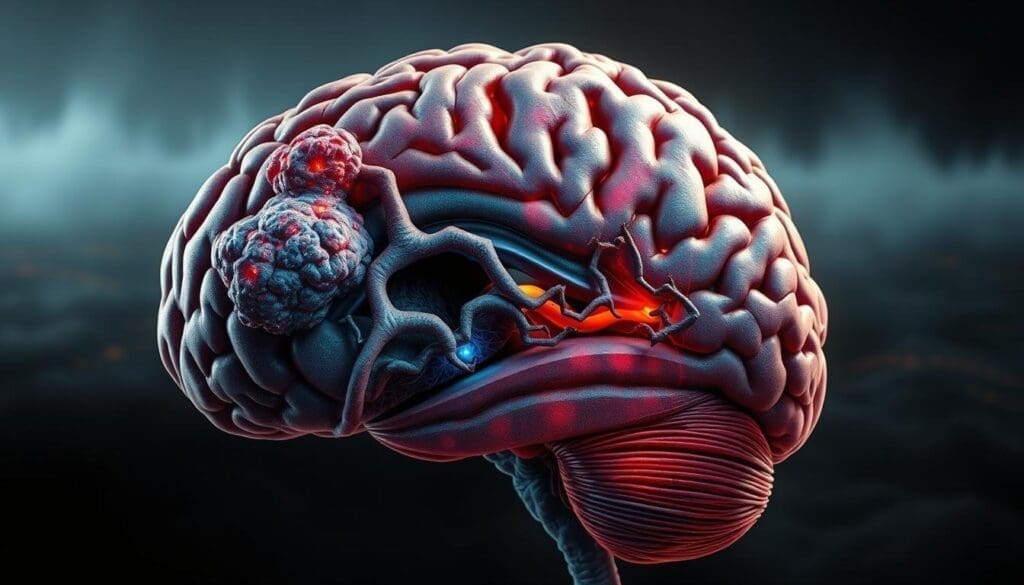
What are brain metastases? Learn how they develop, the cancers that commonly spread to the brain, and treatment options.
Dealing with cancer can be tough, even when it reaches the brain. Brain metastases are secondary tumors that form when cancer cells from other tumors spread to the brain. They do this by traveling through the bloodstream and getting past the blood-brain barrier.
These tumors are a big problem for people with advanced cancer. In the U.S., it’s thought that between 98,000 to 170,000 people get metastasis to the brain every year.
It’s important to know how cancer cells move from other parts of the body to the brain. This knowledge helps doctors find better ways to treat the disease. We’ll look into how this happens and why it’s so important in cancer.
Key Takeaways
- Brain metastases occur when cancer cells spread from primary malignancies to the brain.
- An estimated 98,000 to 170,000 patients in the U.S. are diagnosed with brain metastases annually.
- Understanding the development of brain metastases is key for better treatment.
- Cancer cells cross the blood-brain barrier to create secondary tumors.
- Brain metastases are a major issue for people with advanced cancer.
Understanding Brain Metastases
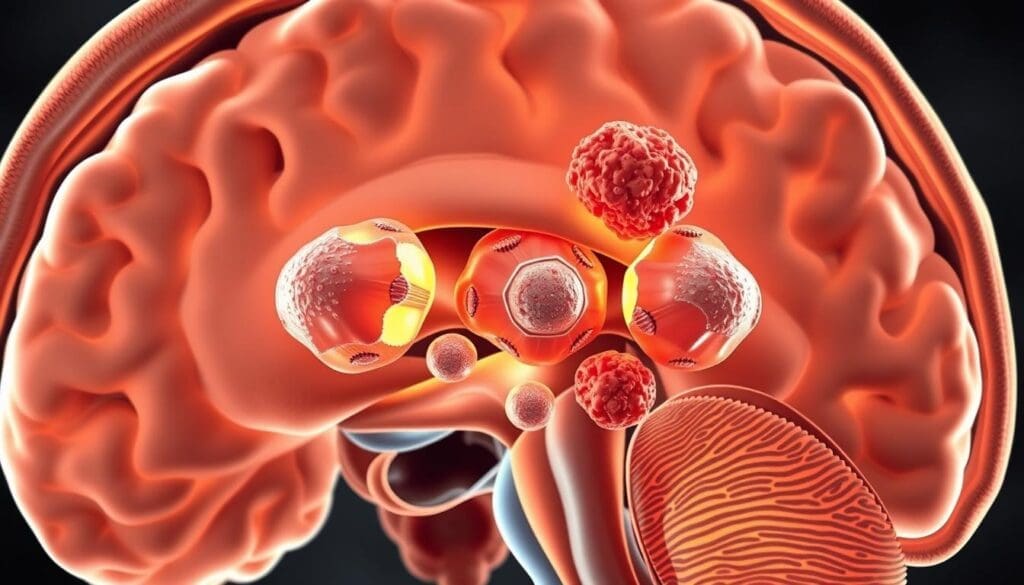
Brain metastases are when cancer cells from other parts of the body spread to the brain. This is a big problem in cancer treatment and affects how well a patient will do. It changes the treatment plan and the patient’s outlook.
Let’s look at what brain metastases are. It’s important to know the basics and how they are different from primary brain tumors. The Medical organization says brain metastases happen when cancer cells move from their original place to the brain. Many cancers can spread to the brain, but lung, breast, colon, kidney, and melanoma are the most common.
Definition and Basic Concepts
Brain metastases are tumors in the brain that come from cancer cells elsewhere. These cells break away, travel through the blood or lymph, and form new tumors in the brain. This is a complex process that involves many molecular steps.
“The development of brain metastases is a multi-step process that involves the spread of cancer cells from the primary site to the brain, where they can form new tumors.” Knowing how this happens is key to finding good treatments.
Difference Between Primary and Secondary Brain Tumors
It’s important to know the difference between primary and secondary brain tumors. Primary tumors start in the brain, while secondary tumors, or brain metastases, start from cancer cells elsewhere. This difference is key because treatment and outlook are very different.
Brain metastases are more common than primary brain tumors. This is because cancer treatment has gotten better, and people live longer. Lung, breast, melanoma, colon, and kidney cancers are the most likely to spread to the brain.
As we learn more about brain metastases, it’s clear that understanding the basics is key. Knowing the difference between primary and secondary brain tumors helps us face the challenges of brain metastases better.
The Epidemiology of Brain Metastases
It’s key to grasp the epidemiology of brain metastases to craft better treatment plans. These metastases are a big issue for cancer patients, impacting their life quality and survival chances.
Incidence and Prevalence
Studies show brain metastases occur in 8.3 to 14.3 cases per 100,000 people. This range shows the difference in reporting and the challenge in diagnosing these metastases.
Table 1: Incidence and Prevalence of Brain Metastases
| Population | Incidence Rate | Prevalence |
| General Population | 8.3-14.3 per 100,000 | 20-40% of cancer patients |
| Cancer Patients | Higher in patients with lung, breast, and melanoma | Increasing due to improved cancer survival rates |
Rising Trends in Diagnosis
Thanks to better imaging like MRI and longer survival from systemic therapies, brain metastases are being diagnosed more often. This leads to an increase in the number of cases.
These trends highlight the need for ongoing research into preventing, diagnosing, and treating brain metastases. By understanding the epidemiology, we can tackle the challenges this condition presents.
How Brain Metastases Develop
To understand brain metastases, we need to know about the metastatic cascade, the blood-brain barrier, and molecular mechanisms. It starts with cancer cells spreading from a primary tumor elsewhere in the body.
The Metastatic Cascade
The metastatic cascade is a complex process. It lets cancer cells leave the primary tumor, travel through the bloodstream or lymphatic system, and form new tumors in distant organs, like the brain. This involves several steps:
- Invasion: Cancer cells invade the surrounding tissue.
- Intravasation: Cancer cells enter the bloodstream or lymphatic vessels.
- Circulation: Cancer cells are transported through the circulatory system.
- Extravasation: Cancer cells exit the bloodstream or lymphatic vessels to enter the target organ.
- Colonization: Cancer cells establish a new tumor in the target organ.
Crossing the Blood-Brain Barrier
The blood-brain barrier (BBB) protects the brain from harmful substances. For brain metastases to develop, cancer cells must cross this barrier. Research shows that cancer cells can disrupt the BBB, allowing them to invade the brain tissue.
Molecular Mechanisms
The “seed and soil” hypothesis explains brain metastases as the interaction between cancer cells (“seed”) and the brain microenvironment (“soil”). This involves complex molecular mechanisms. Key factors include:
| Molecular Factor | Role in Brain Metastasis |
| Adhesion Molecules | Facilitate the attachment of cancer cells to the brain endothelium. |
| Chemokines | Guide cancer cells to the brain through chemotactic signals. |
| Proteases | Enable cancer cells to degrade the extracellular matrix and invade the brain tissue. |
Understanding these molecular mechanisms is key for developing targeted therapies. We are working to improve patient outcomes by exploring these complex interactions.
Primary Cancers That Commonly Spread to the Brain
The brain is a common site for metastasis from specific primary cancers. We will explore these in detail. Knowing these primary cancers is key for diagnosing and treating brain metastases well.
Lung Cancer
Lung cancer is the most common source of brain metastases, making up 30-60 percent of cases. Small cell lung cancer is more likely to spread to the brain than non-small cell lung cancer. This is because lung cancer can spread through the bloodstream and lymphatic system.
Breast Cancer
Breast cancer is another common source of brain metastases, mainly in advanced cases. Certain types, like HER2-positive breast cancer, are more likely to spread to the brain. This shows the need for better ways to diagnose and treat brain metastases in breast cancer patients.
Melanoma
Melanoma, a skin cancer, has a high chance of spreading to the brain. Patients with melanoma are at high risk of brain metastases, which often have a poor prognosis. Melanoma’s aggressive nature and tendency to spread to the brain make it a key area of study.
Renal Cell Carcinoma
Renal cell carcinoma, a kidney cancer, can also spread to the brain. Though less common than lung or breast cancer, brain metastases from renal cell carcinoma are challenging to treat due to their resistance to conventional therapies.
To better understand the frequency and characteristics of brain metastases from these primary cancers, let’s examine the data in the following table:
| Primary Cancer | Frequency of Brain Metastases | Characteristics |
| Lung Cancer | 30-60% | High propensity, specialy in small cell lung cancer |
| Breast Cancer | 10-30% | Higher in HER2-positive subtypes |
| Melanoma | 40-60% | Aggressive nature, poor prognosis |
| Renal Cell Carcinoma | 5-10% | Resistant to conventional therapies |
Understanding the primary cancers that metastasize to the brain is essential for developing effective treatment plans and improving patient outcomes. We continue to explore the complexities of brain metastases in the following sections.
Risk Factors for Developing Brain Metastases
Brain metastases are influenced by many factors. These include the type of cancer and the patient’s health. Knowing these factors helps doctors find and treat high-risk patients early.
Cancer-Specific Risk Factors
Some cancers are more likely to spread to the brain. The chance of this happening varies with each cancer type.
- Lung cancer, mainly non-small cell lung cancer (NSCLC), often spreads to the brain.
- Breast cancer, including HER2-positive and triple-negative types, can also spread to the brain.
- Melanoma is aggressive and often spreads to the brain.
- Renal cell carcinoma can spread to the brain, but it’s less common.
The genes in the primary tumor affect the risk of brain metastasis. Tumors with specific genetic changes are more likely to spread to the brain.
| Primary Cancer Type | Frequency of Brain Metastasis |
| Lung Cancer | High |
| Breast Cancer | Moderate to High |
| Melanoma | High |
| Renal Cell Carcinoma | Low to Moderate |
Patient-Specific Risk Factors
Each patient’s risk of brain metastases is different. This depends on their genes, overall health, and past treatments.
Genetic Factors: Some genetic changes can raise the risk of metastasis, including to the brain.
Previous Cancer Treatments: The treatments a patient has had can affect their risk of brain metastases.
Knowing these risk factors helps doctors catch and treat brain metastases early. This can lead to better outcomes for patients.
Clinical Presentation and Symptoms
Brain metastases can show up in many ways. This depends on where they are, how big they are, and how fast they grow. It’s important for doctors to know about all the possible symptoms.
Neurological Symptoms
Neurological symptoms are common in brain metastases. These include headaches, seizures, and weakness in different parts of the body. Morning headaches are often worse and can make you feel sick to your stomach.
Seizures can be the first sign in some people. They can be simple or full-body seizures.
“The presence of neurological symptoms can significantly impact a patient’s quality of life, making prompt diagnosis and treatment critical,” says Medical Expert, a leading neurologist. Early intervention can help manage these symptoms and improve patient outcomes.
Cognitive and Behavioral Changes
Patients with brain metastases may also have cognitive and behavioral changes. These include memory loss, confusion, and changes in personality. Some may become more shy or have mood swings. These changes can be hard for patients and their caregivers.
- Memory loss
- Confusion
- Personality changes
- Mood swings
Asymptomatic Presentation
In some cases, brain metastases have no symptoms. This makes finding them harder, as they might only show up on imaging tests for other reasons.
As Medical Expert, “Asymptomatic brain metastases highlight the importance of regular monitoring and screening for patients with cancer, particularlly those with tumors that are known to metastasize to the brain.”
Even without symptoms, these metastases are serious and need treatment. Regular check-ups with doctors are key to managing brain metastases well.
Diagnosis of Brain Metastases
Diagnosing brain metastases needs a detailed approach. This includes imaging and checking tissue samples. We use many tools to find brain metastases. This ensures our patients get care that fits their needs.
Imaging Techniques
Magnetic Resonance Imaging (MRI) with contrast is the top choice for finding brain metastases. MRI gives clear pictures of the brain. It helps us see how many and where the metastases are. Sometimes, Computed Tomography (CT) scans are used too, like in emergencies.
Choosing the right imaging tool depends on the patient’s health and how many metastases are thought to be there. Our radiologists team up with oncologists to understand the images. They help decide what to do next.
- MRI with contrast: Gives detailed brain pictures.
- CT scans: Used in emergencies or when MRI can’t be done.
Biopsy and Pathological Confirmation
Imaging is key, but biopsy and pathological confirmation are the most accurate ways to diagnose brain metastases. A biopsy takes a tissue sample from the suspected area. Then, it’s checked under a microscope.
The lab test confirms cancer cells are there. It also finds out where the cancer originally came from. This info is essential for choosing the right treatment.
- Histological examination: Confirms cancer cells.
- Primary source identification: Helps tailor the treatment plan.
Treatment Approaches for Brain Metastases
Treating brain metastases is complex and involves many steps. These include surgery, radiation, and systemic therapy. We will look at each of these in detail, showing how they help manage brain metastases.
Surgical Resection
Surgery is an option for patients with a few brain metastases. The goal is to remove the tumor completely. This can help ease symptoms and possibly improve survival chances. Thanks to new surgical techniques, surgery is safer for more patients.
Deciding on surgery depends on several things. These include the size and location of the metastases, the patient’s health, and if there’s cancer outside the brain. Careful patient selection is key to make sure surgery is safe and effective.
Radiation Therapy
Radiation therapy is a mainstay in treating brain metastases. It’s a non-invasive way to slow tumor growth. Whole-brain radiation therapy (WBRT) treats many metastases, while stereotactic radiosurgery (SRS) is better for a few lesions because it’s precise.
Choosing between WBRT and SRS depends on several factors. These include the number, size, and location of the metastases, and the patient’s health. New radiation therapy methods have made treatment better and safer for more patients.
Systemic Therapy
Systemic therapy, like chemotherapy and targeted therapy, is becoming more important. The blood-brain barrier is a challenge for many treatments. But, new treatments are better at getting past this barrier.
Choosing systemic therapy depends on the type of primary tumor, the metastases’ molecular makeup, and the patient’s health. Research is ongoing to find better systemic therapies that can fight brain metastases without harming the patient too much.
Living with Brain Metastases
Living with brain metastases is more than just treatment. It’s about keeping quality of life high. We must meet the needs of patients and their families fully.
Supportive Care
Supportive care is key in managing brain metastases. It aims to improve life quality. This includes:
- Symptom Management: Keeping symptoms like headaches and seizures under control.
- Pain Relief: Finding ways to ease pain and make patients more comfortable.
- Psychological Support: Counseling and support groups to help with emotional and mental health.
These efforts help patients deal with their condition better.
Managing Side Effects
It’s also vital to manage side effects of treatment. Treatments like surgery and chemotherapy can cause big problems. Ways to handle these include:
- Medication Adjustment: Changing meds to lessen side effects without losing their benefits.
- Lifestyle Modifications: Giving advice on diet, exercise, and rest to reduce side effects.
- Rehabilitation Services: Physical and speech therapy to improve function.
Managing side effects well needs teamwork between patients, caregivers, and doctors.
Resources for Patients and Caregivers
Having access to resources is essential for those facing brain metastases. Important resources include:
- Educational Materials: Info on the condition, treatment, and management.
- Support Groups: Places to connect with others facing similar issues.
- Professional Guidance: Help from healthcare experts.
These resources help patients and families make informed choices and cope with the condition.
By focusing on supportive care, managing side effects, and using available resources, we can enhance life quality for those with brain metastases.
Recent Advances in Brain Metastases Research
The study of brain metastases is moving fast, with new treatments coming up. We’re learning more about these complex issues, bringing hope to patients and doctors.
Novel Therapeutic Approaches
New ways to treat brain metastases are being developed. These include targeted therapies and immunotherapies. They aim to fight cancer more effectively.
Targeted Therapies: These therapies focus on specific genetic changes in tumors. For example, treatments targeting the HER2 protein in breast cancer brain metastases are showing great promise.
Immunotherapies: Immunotherapies, like checkpoint inhibitors, are changing cancer treatment. They help the immune system attack cancer cells more efficiently.
| Therapy Type | Description | Example |
| Targeted Therapy | Targets specific molecular vulnerabilities | HER2-targeting therapies for breast cancer brain metastases |
| Immunotherapy | Harnesses the immune system to combat cancer | Checkpoint inhibitors for melanoma brain metastases |
Biomarkers and Personalized Medicine
Biomarkers for brain metastases are being developed. They help doctors choose the best treatment for each patient. This makes care more personalized.
Biomarker Discovery: Researchers are working hard to find reliable biomarkers. These biomarkers help tailor treatments to match each patient’s tumor.
Emerging Clinical Trials
New clinical trials are testing treatments for brain metastases. These trials help us understand what works best for different cancers and brain metastases.
Combination Therapies: Researchers are exploring using two or more treatments together. For example, combining radiation therapy with immunotherapy might improve results.
As we learn more about treating brain metastases, teamwork is key. Researchers, doctors, and patients must work together to make progress.
Conclusion
Brain metastases are a serious issue in cancer, where cancer cells spread to the brain. They need a team effort to manage, including neurosurgeons and oncologists. This team works together to help patients.
Finding brain metastases early is key to treating them well. New imaging and tests help doctors spot and understand these tumors. Treatments like surgery, radiation, and medicine are used to help patients.
It’s vital for patients and doctors to know about brain metastases. This knowledge helps in making the right treatment choices. Research is ongoing to find new ways to treat this condition.
In summary, treating brain metastases needs a team effort. We’ve covered the main points to show how complex this issue is. Early detection and new treatments are important for better patient care.
FAQ
What are brain metastases?
Brain metastases are cancerous tumors that spread to the brain from other parts of the body. They are different from primary brain tumors, which start in the brain.
What cancers commonly metastasize to the brain?
Lung cancer, breast cancer, melanoma, and renal cell carcinoma often spread to the brain. Their genetic makeup and how they spread make them more likely to do so.
What is the metastatic cascade, and how does it relate to brain metastases?
The metastatic cascade is how cancer cells spread to distant organs, like the brain. It includes steps like invasion, circulation, and colonization, leading to brain tumors.
How do brain metastases develop?
Cancer cells from a primary tumor can migrate to the brain. They cross the blood-brain barrier and form new tumors. Genetic and environmental factors help them adapt to the brain.
What are the symptoms of brain metastases?
Symptoms vary based on the tumor’s location, size, and number. They can include neurological issues, cognitive changes, and seizures. Some people may not show symptoms until imaging finds the tumors.
How are brain metastases diagnosed?
Imaging like MRI or CT scans usually diagnoses brain metastases. Biopsy and pathological tests may confirm the diagnosis and identify the primary cancer.
What are the treatment options for brain metastases?
Treatments include surgery, radiation, and systemic therapy. The choice depends on the tumor’s location, the primary cancer, and the patient’s health.
What is the role of supportive care in managing brain metastases?
Supportive care helps manage symptoms and improve quality of life. It includes corticosteroids, anticonvulsants, and emotional support for patients and their families.
What are the latest developments in brain metastases research?
New research focuses on targeted therapies and immunotherapies. Biomarkers are being studied for personalized medicine. Clinical trials aim to find better treatments and understand brain metastases better.
What is intracranial metastasis?
Intracranial metastasis is cancer spreading to the brain or skull structures. Brain metastases are a type of this, requiring a team approach for diagnosis and treatment.
Can brain metastases be asymptomatic?
Yes, some patients with brain metastases may not show symptoms. Regular check-ups are key to catching them early, even if there are no symptoms.
References
National Center for Biotechnology Information. (2025). What Are Brain Metastases and How Do They. Retrieved from https://www.ncbi.nlm.nih.gov/books/NBK470246/