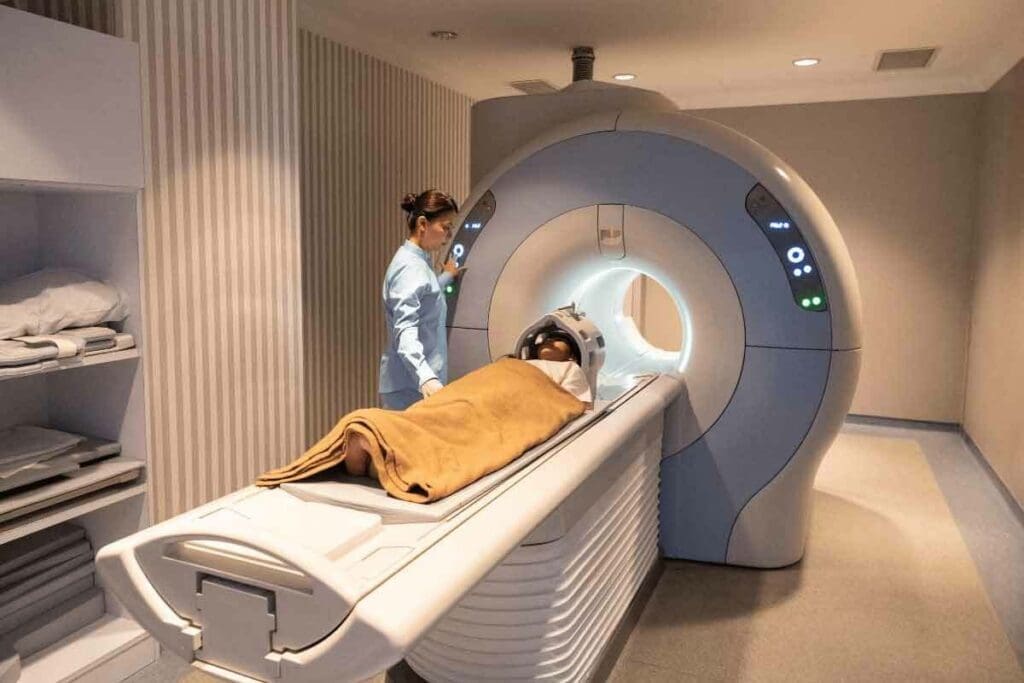
At Liv Hospital, we understand how vital MRI datasets are for brain tumor detection and research. Deep learning has brought new tools for MRI images analysis, enhancing the accuracy of identifying a brain tumor on MRI image. These tools help in tumor segmentation, quantification, and classification, improving diagnostic and treatment planning outcomes.
We aim to give clinicians and researchers the tools they need to better patient care. That’s why we’re looking into the top 10 brain tumor MRI datasets that are changing the game.
These datasets help us tell different tumor types apart, like glioma, meningioma, and pituitary tumors. They open up new chances for accurate detection.
Key Takeaways
- Curated MRI datasets are key for brain tumor research and diagnosis.
- The top 10 brain tumor MRI datasets offer valuable resources for clinicians and researchers.
- These datasets help us tell different tumor types apart.
- Deep learning tools are being made to analyze MRI images for tumor segmentation and classification.
- Liv Hospital is dedicated to making these critical resources available.
The Significance of Brain Tumor MRI Datasets in Modern Medicine
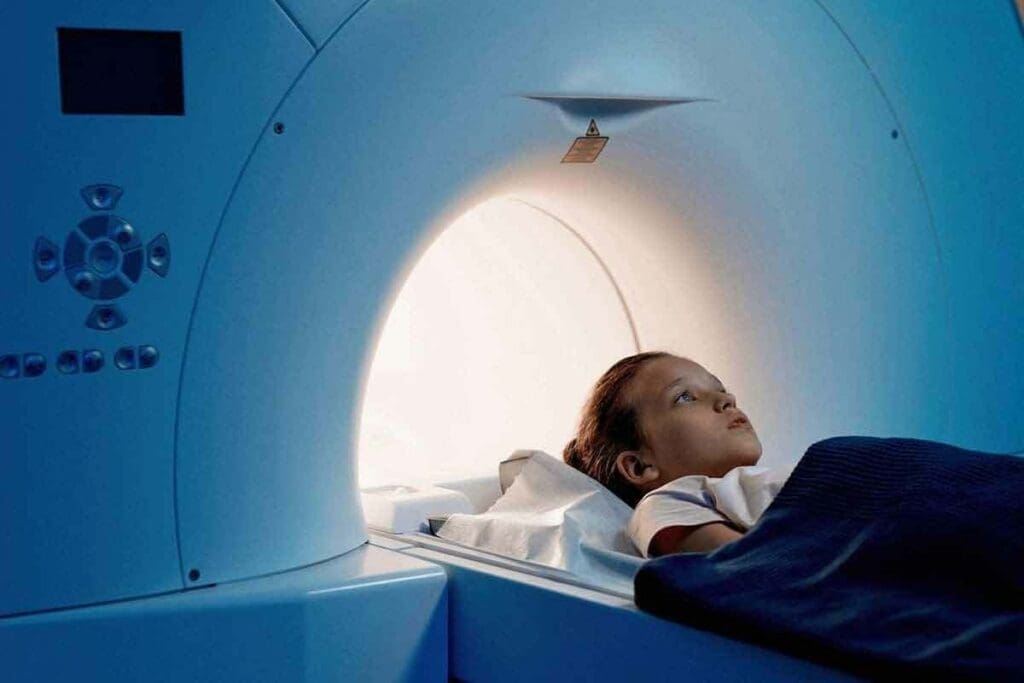
MRI datasets are key in modern medicine, mainly for brain tumors. MRI has changed neuro-oncology by giving clear, non-invasive images. These images help doctors see tumors accurately.
How MRI Technology Revolutionized Brain Tumor Visualization
MRI has made seeing brain tumors better. It lets doctors check tumor size, location, and type. MRI datasets are vital for:
- Accurate diagnosis and staging of brain tumors
- Planning and guiding surgical interventions
- Monitoring treatment response and detecting recurrence
Studies show MRI has made diagnosis and treatment better in neuro-oncology research.
The Growing Need for Comprehensive MRI Datasets
Brain tumors are complex and varied. They need detailed MRI datasets for research and treatment. These datasets help in:
- Creating new diagnostic tools with machine learning
- Creating treatment plans based on tumor details
- Studying tumor biology and behavior
As we grow our MRI datasets, we’ll see big improvements in treating brain tumors. The need for more MRI datasets shows the importance of working together and sharing data in medicine.
Identifying Brain Tumor on MRI Image: Visual Characteristics and Challenges
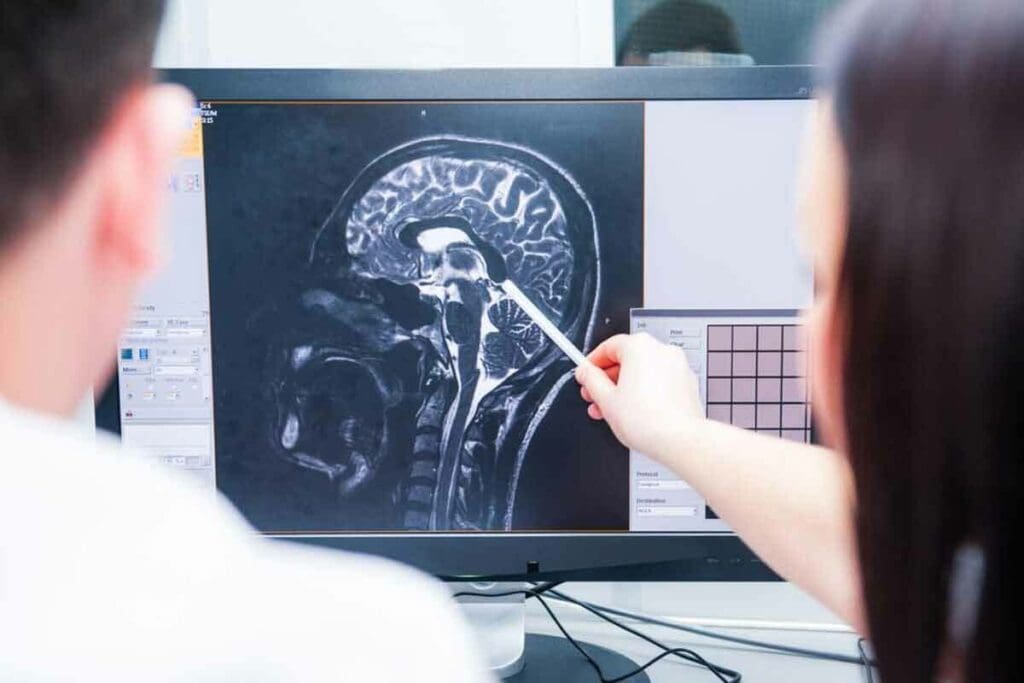
Spotting brain tumors on MRI images is key for good diagnosis and treatment plans. These tumors vary a lot, needing different treatments. We’ll look at what common brain tumors look like and the hurdles in spotting them.
Distinguishing Features of Common Brain Tumors
On MRI images, brain tumors can be told apart by certain signs. These include:
- Location and Size: Where and how big a tumor is can hint at its type and how serious it is.
- Signal Intensity: Tumors show different brightness levels on T1 and T2 images.
- Contrast Enhancement: How a tumor reacts to contrast dye can help figure out what kind it is.
- Mass Effect and Edema: How much a tumor presses on nearby tissue and causes swelling can show how aggressive it is.
For example, glioblastomas look like irregular masses with mixed enhancement and a lot of swelling around them. On the other hand, meningiomas usually have uniform enhancement and might have a dural tail sign.
Technical Considerations in Brain Tumor Imaging
Several technical things can change how well brain tumor MRI images are seen and understood. These include:
- MRI Sequence Parameters: Picking the right MRI sequences and settings can really help see tumors better.
- Image Resolution and Quality: Clear, detailed images are vital for precise tumor outline.
- Artifact Reduction: Using methods to cut down on image noise, like motion correction, is important for clear images.
When we look at MRI images, we must think about these technical points to make sure we’re diagnosing and planning treatment correctly. New imaging methods, like diffusion-weighted and perfusion-weighted imaging, can give us more info about tumors.
The BRATS (Brain Tumor Segmentation) Dataset
The BRATS challenge is a key benchmark for brain tumor segmentation. It has changed brain tumor research with its MRI images. This dataset is a big help in understanding brain tumors.
Dataset Composition and Multimodal Features
The BRATS dataset includes MRI scans from different angles. It has T1, T2, FLAIR, and T1Gd sequences. This lets researchers see tumors in new ways.
Multimodal MRI scans give a detailed look at brain tumors. They show the tumor’s structure and how it affects the brain. This is very useful for doctors.
Impact on Automated Tumor Segmentation Research
The BRATS dataset has changed how we study brain tumors. It has a big, labeled dataset for testing new algorithms. This has helped a lot in improving how we segment tumors.
Thanks to the BRATS dataset, researchers have made big strides. They’ve improved segmentation accuracy and come up with new ways to analyze tumors. This has led to better collaboration and innovation in the field.
Using the BRATS dataset has led to better tools for doctors. These tools are key for planning treatments and improving patient care. They help doctors make more accurate plans for patients.
TCGA-GBM Collection: Integrating Imaging with Genomic Data
The TCGA-GBM collection is a big step forward in brain tumor research. It combines MRI images with genetic data. This helps researchers understand glioblastoma multiforme (GBM) better. GBM is a very aggressive brain cancer.
Dataset Structure and Clinical Annotations
The TCGA-GBM dataset has lots of data types, from MRI images to genomic analyses. Clinical annotations are key, giving insights into patient info, treatment results, and survival rates. These details are vital for studying how tumors and treatments interact.
The dataset includes MRI sequences like T1-weighted, T2-weighted, and FLAIR images. These are important for seeing brain tumors clearly. By looking at these brain cancer MRI pictures, researchers can spot patterns not seen in genetic data alone.
Research Applications in Precision Medicine
The TCGA-GBM collection’s mix of imaging and genomic data is a big deal for precision medicine. By studying mri image brain tumor features and genetic profiles, researchers find biomarkers for treatment response. This helps create more targeted treatments for GBM patients.
Also, the dataset helps create machine learning algorithms. These can predict patient outcomes based on imaging and genetic data. This could change how doctors make decisions, giving patients more personalized care.
Figshare Brain Tumor MRI Dataset: Accessible Research Resource
The Figshare dataset offers unmatched access to brain tumor MRI images. It’s a key resource for international researchers studying brain tumors. This open-access tool has become essential for groundbreaking research.
Dataset Organization and Acquisition Parameters
The Figshare brain tumor MRI dataset is well-organized for easy use. It includes MRI images from various scanners and under different conditions. This makes it a valuable resource for researchers.
Acquisition Parameters: The dataset has MRI images taken with different settings. These include different magnetic field strengths, echo times, and repetition times. This variety helps researchers test algorithms under different conditions.
We have compiled the key features of the Figshare dataset in the following table:
| Feature | Description |
| Image Modality | MRI (T1, T2, FLAIR, etc.) |
| Acquisition Parameters | Varying magnetic field strengths, echo times, and repetition times |
| Dataset Size | Large collection of brain tumor MRI images |
| Accessibility | Open-access via Figshare platform |
Open-Access Benefits for Global Research
The open-access Figshare brain tumor MRI dataset offers many benefits for global research. It makes high-quality MRI images freely available. This speeds up research and encourages collaboration among scientists worldwide.
Global Collaboration: The open-access model encourages collaboration. It lets researchers from different backgrounds access and contribute to the dataset. This teamwork is key to understanding brain tumors and finding effective treatments.
We believe the Figshare brain tumor MRI dataset will remain vital for brain tumor research. Its open-access benefits will positively impact the global research community.
The Rembrandt Brain Tumor Dataset: Longitudinal Clinical Data
The Rembrandt brain tumor dataset is unique because of its detailed, long-term clinical data. It gives us a deep look into how brain tumors grow over time. This makes it very useful for researchers who want to know more about long-term patient outcomes.
Comprehensive Patient Follow-up Information
The Rembrandt dataset has a lot of follow-up data on patients. It includes information on treatment results and how long patients live. This longitudinal data helps us understand brain tumor progression better. It lets researchers find patterns and connections that could help in future treatments.
Applications in Prognostic Modeling
The detailed follow-up data in the Rembrandt dataset helps create prognostic models. These models can predict patient outcomes based on many factors, like tumor type and treatment. This could lead to more personalized medicine, giving better forecasts for each patient.
Using the Rembrandt brain tumor dataset, researchers can make big strides in neuro-oncology. They can improve patient care by using data to guide their work.
Bangladesh Brain Tumor MRI Dataset: Population-Specific Collection
The Bangladesh Brain Tumor MRI Dataset gives us a special look at brain tumors in the Bangladeshi people. It’s a great tool for those studying and treating brain tumors in this area.
Unique Demographic and Epidemiological Features
This dataset is special because it focuses on the Bangladeshi population. It helps us understand the types and how common brain tumors are in this group. This dataset is key for making treatments that really work for this population.
Some special things about this dataset are:
- A diverse collection of brain tumor MRI images
- Population-specific characteristics
- Epidemiological data relevant to the Bangladeshi population
Contributions to Global Tumor Classification Research
The Bangladesh Brain Tumor MRI Dataset is a big help in studying tumors all over the world. It makes tumor classification better by adding more variety to the images. This helps doctors diagnose tumors more accurately everywhere.
| Dataset Features | Description | Benefits |
| Population-Specific | Collection of brain tumor MRI images from the Bangladeshi population | Targeted diagnostic and treatment strategies |
| Diverse MRI Images | Variety of brain tumor types and characteristics | Enhanced accuracy in tumor classification |
| Epidemiological Data | Prevalence and characteristics of brain tumors in the region | Improved understanding of regional brain tumor epidemiology |
By using the Bangladesh Brain Tumor MRI Dataset in global research, we can learn more about brain tumors. This helps us make better treatments and diagnoses for everyone.
RIDER Neuro MRI Dataset: Focus on Small Brain Tumor MRI Images
The RIDER Neuro MRI dataset is a detailed collection aimed at improving the detection and study of small brain tumors. It’s key for spotting tumors early, giving doctors and researchers vital data to improve their skills.
Early-Stage Tumor Detection Capabilities
The RIDER Neuro MRI dataset shines in finding brain tumors early. Early detection is key for good treatment and better patient results. It offers top-notch MRI images of small brain tumors, helping scientists create better algorithms for finding tumors early.
This focus on small brain tumor MRI images helps us understand tumor growth better. This leads to more precise diagnoses and treatments.
Reproducibility Studies and Clinical Applications
The RIDER Neuro MRI dataset also aids in making research findings reliable. Reproducibility is vital in neuro-oncology, where brain tumors are complex and hard to diagnose.
It helps in making diagnostic tools stronger and more useful in clinics. This could lead to better care for patients by helping doctors make smarter treatment choices.
The TCIA Brain Cancer Collection: Multi-Institutional Collaboration
The TCIA Brain Cancer Collection brings together resources from many institutions. It has made a huge dataset that is changing brain tumor research. This shows how working together can move medical science forward.
Diverse Dataset and Quality Control
The TCIA Brain Cancer Collection has a wide range of brain cancer MRI images and brain tumor images. This variety is key for strong research results.
The collection also has strict quality control. This is important to keep the MRI dataset reliable and trustworthy.
Integration with Treatment and Outcome Data
The TCIA Brain Cancer Collection is special because it links imaging data with treatment and outcome information. This helps researchers see how well treatments work.
By studying this data, researchers can find new ways to diagnose and treat brain cancer. This could lead to better care for patients.
IvyGAP Glioblastoma Atlas Project: Histology-Imaging Correlation
The IvyGAP Glioblastoma Atlas Project is a key resource in glioblastoma research. It connects histology and imaging to better understand glioblastoma. This project could change how we see this complex disease.
Molecular and Histological Correlations
The IvyGAP project aims to map glioblastoma with detailed histology and imaging. This helps us grasp glioblastoma’s complex biology and find new treatments. Key parts of this work include:
- Histological Analysis: Examining tumor tissue for specific features.
- Molecular Profiling: Studying genetic changes in tumors.
- Imaging Data Integration: Linking histology and molecular data with MRI images.
Advanced Research Applications in Tumor Biology
The IvyGAP Glioblastoma Atlas Project has many uses in tumor biology. These include:
- Creating better diagnostic tools by combining histology and imaging.
- Finding new treatment targets through molecular studies and imaging.
- Enhancing personalized medicine with detailed tumor information.
The IvyGAP project offers a complete view of glioblastoma. It’s leading to big steps forward in understanding and treating this disease. As research grows, projects like IvyGAP will be vital for innovation and better patient care.
The MICCAI Brain Tumor Segmentation Challenge Dataset
The MICCAI Brain Tumor Segmentation Challenge dataset is key in neuro-oncology research. It helps improve algorithms for segmenting brain tumors.
Competitive Framework for Algorithm Development
The MICCAI Challenge offers a unique way to innovate in brain tumor segmentation. It has a common dataset and rules for comparing algorithms. This pushes the field forward.
Researchers make big strides in developing algorithms. This competition speeds up the creation of better tools. It also promotes sharing knowledge and best practices.
Benchmark Standards for Clinical Implementation
The dataset is a benchmark for using algorithms in clinics. It’s important to make research useful in real-world settings. Accuracy and reliability are key here.
By setting standards, the MICCAI Challenge ensures algorithms are both new and useful in clinics. This is a big step towards using these techniques in everyday care.
In short, the MICCAI Brain Tumor Segmentation Challenge dataset is vital for neuro-oncology research. It drives innovation and standardization in brain tumor segmentation. Its effects are seen in both research and clinical use.
Conclusion: Future Directions in Brain Tumor MRI Dataset Development
As we move forward in neuro-oncology, making detailed brain tumor MRI datasets is key. New advances in deep learning and MRI tech are helping us make these datasets better. This means we can better diagnose and treat brain cancer.
Adding different brain MRI images and pictures of brain cancer to these datasets is very important. It helps us get better at diagnosing and tailoring treatments. This way, researchers can create smarter algorithms for finding and classifying tumors.
The future of brain tumor MRI datasets will involve more diversity and using different types of imaging. It will also mean working together more across different places. As these datasets grow, we’ll see big steps forward in brain cancer research and treatment. This will lead to better care for patients.
FAQ
References
- Shaharudin, N. A. S., & Razak, A. H. A. (2025). The initial assessment and management of cervical spine injuries. Malaysian Orthopaedic Journal, 19(2), 1–7.https://pmc.ncbi.nlm.nih.gov/articles/PMC12376935/
- Torlincasi, A. M., & Waseem, M. (2025). Cervical injury. StatPearls. https://www.ncbi.nlm.nih.gov/books/NBK448146/
- National Institute for Health and Care Excellence. (2016). Spinal injury: assessment and initial management. NICE Guideline NG41. https://www.nice.org.uk/guidance/ng41
What is the significance of brain tumor MRI datasets in modern medicine?
Brain tumor MRI datasets are key for improving research and diagnosis. They help doctors and scientists tell different tumors apart. This leads to better detection methods.
How do MRI datasets support the development of advanced diagnostic tools?
MRI datasets offer a wide range of images. This lets researchers work on better diagnostic tools. It makes brain tumor diagnosis more accurate.
What are the distinguishing features of common brain tumors on MRI images?
Glioma, meningioma, and pituitary tumors show unique signs on MRI images. These signs help doctors identify and classify them.
What is the BRATS dataset, and how is it used in research?
The BRATS dataset is a big collection of brain tumor MRI images. It’s used for research on automated tumor segmentation.
What is the TCGA-GBM collection, and how does it integrate imaging with genomic data?
The TCGA-GBM collection combines imaging with genomic data. It helps understand glioblastoma better. This supports research in precision medicine.
What are the benefits of open-access datasets, such as the Figshare brain tumor MRI dataset?
Open-access datasets, like the Figshare brain tumor MRI dataset, help global research. They let researchers use the data. This promotes collaboration and advances research.
What is the RIDER Neuro MRI dataset, and how is it used in early-stage tumor detection?
The RIDER Neuro MRI dataset focuses on small brain tumors. It’s used for developing early-stage tumor detection methods.
What is the MICCAI brain tumor segmentation challenge dataset, and how is it used?
The MICCAI brain tumor segmentation challenge dataset is a benchmark. It helps researchers develop and test their algorithms. It’s used for clinical implementation.
How are brain tumor MRI datasets used in prognostic modeling?
Datasets like the Rembrandt brain tumor dataset help create prognostic models. These models predict patient outcomes. They help in making personalized treatment plans.
What are the future directions in brain tumor MRI dataset development?
Future developments in brain tumor MRI datasets will come from deep learning and MRI technology. This will lead to more detailed and diverse datasets.



 Departments
 Related Videos
 Our Doctors
 News
News