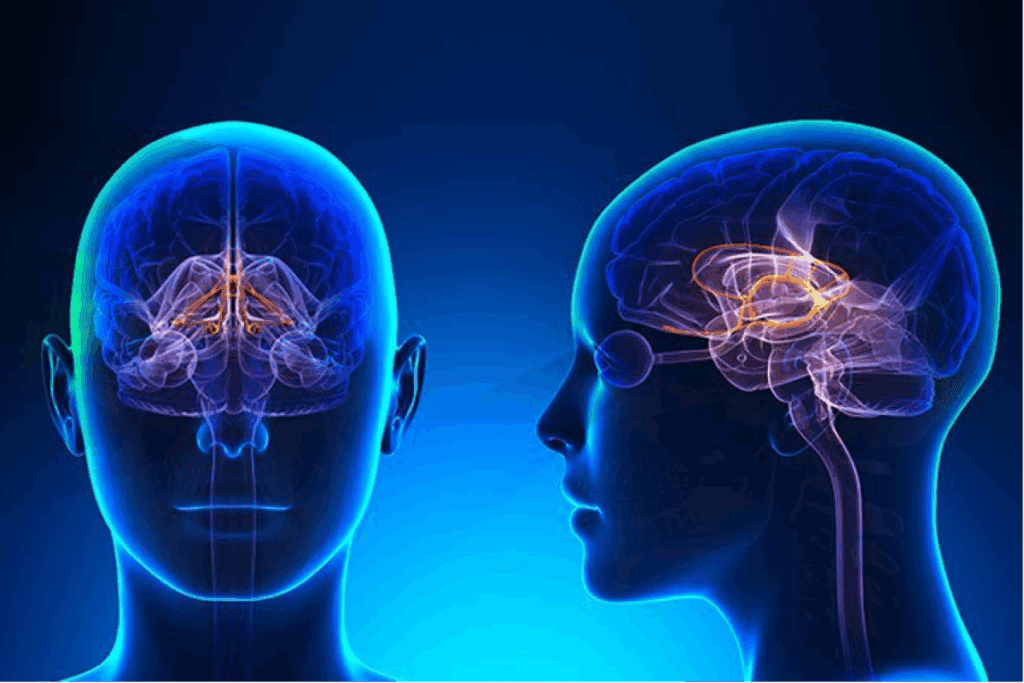
The brainstem is a key part of our central nervous system. It has three main parts that work together to keep us alive. We’ll see how these parts help us with important functions.brainstem nerves9 Key Facts About Childhood Glioma & Brainstem Glioma Symptoms
In humans, the brainstem is made up of the midbrain, pons, and medulla oblongata. Knowing about these parts helps us understand why the brainstem is so important for our health.
Learning about the midbrain, pons, and medulla oblongata shows us how this small area controls many things. It affects our facial expressions and how our heart works.
Key Takeaways
- The brainstem is divided into three main sections: midbrain, pons, and medulla oblongata.
- These components work together to maintain vital life functions.
- Understanding the brainstem’s anatomy is key to seeing its role in human health.
- The brainstem helps with important tasks like facial expressions and heart control.
- The three parts of the brainstem are different in both structure and function.
The Brainstem: An Essential Neural Bridge
The brainstem is a long, thin part of the brain. It connects the diencephalon to the cranial fossa. It is the back part of the brain and is connected to the spinal cord.
Definition and Location in the Central Nervous System
The brainstem links the cerebrum to the spinal cord. It is found at the back of the brain, right next to the spinal cord. It has three main parts: the midbrain, pons, and medulla oblongata.
The brainstem controls important functions like breathing, heart rate, and blood pressure. It has many cranial nerve nuclei. It helps send signals between the cerebrum and the spinal cord.
Part of Brainstem | Location | Main Functions |
Midbrain | Upper part of the brainstem | Visual and auditory processing, motor control |
Pons | Middle part of the brainstem | Bridge to the cerebellum, cranial nerve nuclei |
Medulla Oblongata | Lower part of the brainstem | Vital centers for breathing and heart rate |
Evolutionary Significance and Development
The brainstem is very important in evolution. It is the same in all vertebrates, showing its key role in survival. It forms from the neural tube in the embryo. Its parts and tracts grow to handle essential functions.
The brainstem’s growth is tied to the whole central nervous system’s development. It helps control basic life functions like respiration and circulation.
Overview of Brainstem Anatomy
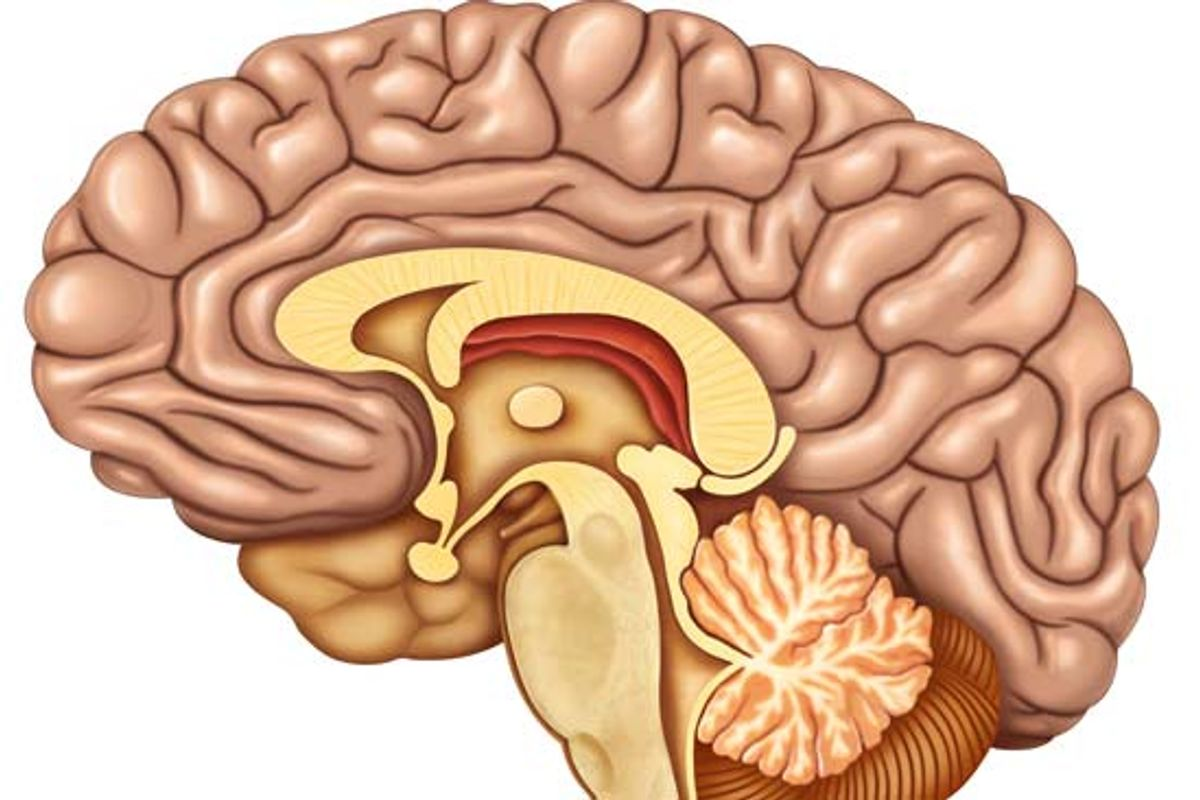
The brainstem connects the brain to the spinal cord. It’s made up of the midbrain, pons, and medulla oblongata. Knowing its anatomy helps us understand its role in the nervous system.
Structural Organization and Connections
The brainstem has three main parts: the midbrain, pons, and medulla oblongata. Each part has unique anatomical features. They all play important roles in the brainstem’s function.
The brainstem links the cerebrum to the spinal cord. It helps send signals between the brain and the body. It also houses cranial nerve nuclei that control many bodily functions.
Blood Supply and Vascular Architecture
The brainstem gets its blood from the vertebrobasilar system. This includes the vertebral and basilar arteries. This blood supply is key to the brainstem’s function.
Artery | Origin | Structures Supplied |
Vertebral Artery | Subclavian Artery | Medulla Oblongata, Posterior Inferior Cerebellar Artery |
Basilar Artery | Vertebral Arteries | Pons, Midbrain, Anterior Inferior Cerebellar Artery |
Understanding the brainstem’s anatomy is key. It shows its role in controlling the body and its importance in medicine.
The Midbrain: Superior Portion of the Brainstem
The midbrain is at the top of the brainstem, linking the diencephalon to the pons. It plays a key role in many brain functions, like controlling movement and processing sensory information.
Anatomical Boundaries and Structure
The midbrain is surrounded by the diencephalon above and the pons below. It’s a small but vital part of the brainstem.
Let’s look at what’s inside the midbrain. It has the tectum and tegmentum. The tectum is at the back and deals with vision and hearing.
Key Components: Tectum and Tegmentum
The tectum is key for handling sensory information, like what we see and hear. The tegmentum has parts that help with movement and keeping us awake.
Component | Function |
Tectum | Sensory processing (visual and auditory) |
Tegmentum | Motor control, consciousness regulation |
The Substantia Nigra and Dopaminergic Pathways
The substantia nigra is a big deal in the midbrain. It helps control movement through a special pathway. This pathway is linked to Parkinson’s disease.
Dopaminergic pathways from the midbrain are important for many things, like feeling pleasure and moving. The substantia nigra pars compacta is key because it sends dopamine to the striatum.
Functional Significance in Motor Control
The midbrain helps control movement in many ways. It uses different parts to coordinate actions. The red nucleus and the substantia nigra are important for this.
Damage to the midbrain can cause big problems with movement. This shows how important it is for our health. Knowing about the midbrain helps doctors diagnose and treat brain problems.
The Pons: Middle Section of the Brainstem
The pons is a key part of the brainstem, connecting the cerebrum and cerebellum. It’s called the “bridge” because it links different brain areas.
Anatomical Features and Boundaries
The pons is in the middle of the brainstem, between the midbrain and medulla oblongata. It looks like a bulb and has two main parts: the basilar part and the pontine tegmentum.
Pontine Nuclei and Their Functions
The pons has many nuclei that help with sleep, swallowing, and sensing. The pontine nuclei are important. They send signals from the cerebrum to the cerebellum, helping with movement.
Role as a Bridge to the Cerebellum
The pons is a key path for fibers from the cerebrum to the cerebellum. This is important for motor coordination and learning new skills. The pontine nuclei help by sending information.
Cranial Nerve Nuclei in the Pons
The pons also has nuclei for cranial nerves like the trigeminal nerve (CN V), abducens nerve (CN VI), facial nerve (CN VII), and vestibulocochlear nerve (CN VIII). These nuclei handle facial sensation, eye movement, and hearing.
The Medulla Oblongata: Inferior Portion of the Brainstem
The medulla oblongata is about three centimeters long. It connects the pons and the spinal cord. It’s key for controlling life’s essential functions.
Anatomical Characteristics and Dimensions
The medulla oblongata has a conical shape. It tapers as it goes down to the spinal cord. It links the brain and the spinal cord.
It has two main parts: the open and closed parts. The open part has the fourth ventricle, filled with cerebrospinal fluid. The closed part is solid and holds nuclei and tracts.
Vital Centers: Respiratory and Cardiovascular Control
The medulla oblongata has vital centers for autonomic functions. These include centers for the heart, breathing, vomiting, and blood pressure. The heart and breathing centers are critical.
These centers work together to keep the body stable. Damage can cause serious problems like breathing failure or heart stop.
Connection to the Spinal Cord
The medulla oblongata connects with the spinal cord. This connection is vital for signal exchange between the brain and the spinal cord. It acts as a relay station.
Medullary Nuclei and Their Functions
The medulla oblongata has nuclei for different functions. These include sensory processing, motor control, and autonomic regulation. Key nuclei are the nucleus gracilis and nucleus cuneatus for sensory processing, and the hypoglossal nucleus for tongue movements.
These nuclei help with various functions. They control voluntary movements and autonomic processes.
Nucleus | Function |
Nucleus Gracilis | Sensory processing |
Nucleus Cuneatus | Sensory processing |
Hypoglossal Nucleus | Motor control (tongue movements) |
Brainstem Nerves: Cranial Nerve Nuclei and Pathways
Cranial nerve nuclei and pathways in the brainstem are key to many bodily functions. They control the motor and sensory functions of the head.
Cranial Nerves III-XII: Origins and Functions
The brainstem is home to the nuclei of cranial nerves III-XII. These nerves are vital for eye movement, facial expressions, and swallowing. They start from different parts of the brainstem, with some carrying both sensory and motor signals.
The oculomotor nerve (III) and trochlear nerve (IV) help with eye movements. The trigeminal nerve (V) handles facial sensation and chewing. The facial nerve (VII) controls facial expressions and taste from the tongue’s front part.
Ascending and Descending Tracts Through the Brainstem
The brainstem is a pathway for ascending and descending tracts. These tracts are key for both sensory and motor functions. Ascending tracts, like the spinothalamic tract, send sensory info to the brain. Descending tracts, like the corticospinal tract, help control movement, starting from the brain and ending in the spinal cord.
These tracts go through the brainstem. Some, like the medial longitudinal fasciculus, help with eye coordination. Damage to these tracts can cause serious neurological problems.
Clinical Assessment of Brainstem Nerves
Checking brainstem nerves involves testing cranial nerves III-XII. This includes eye movement, facial expressions, and swallowing tests. A detailed neurological exam can spot brainstem or nerve damage.
Knowing how the brainstem affects cranial nerves is key for diagnosing and treating issues. By checking nerve function and finding any problems, doctors can pinpoint the cause and plan treatment.
Functional Integration of Brainstem Components
The brainstem is key in combining neural functions for our survival. It connects the cerebrum and spinal cord, allowing information exchange.
“The brainstem is not just a simple conduit for nerve signals; it’s a complex structure that integrates various functions, including sensory processing, motor control, and autonomic regulation,” highlighting its importance in maintaining overall health.
Sensory Processing and Relay Systems
The brainstem handles sensory processing, getting and sending info from sensory receptors. It has nuclei vital for processing sounds and sights.
The superior olivary complex in the pons is key for sound localization. The superior colliculus in the midbrain is important for visual processing.
Motor Control and Coordination Mechanisms
The brainstem is essential for motor control. It has nuclei and tracts for sending motor signals. The corticospinal tract, from the cerebral cortex, goes through the brainstem to the spinal cord.
The brainstem also has nuclei for movement coordination, like the red nucleus and the substantia nigra. They are part of the motor control circuitry.
Autonomic Functions and Regulation
The brainstem manages autonomic functions, like heart rate, blood pressure, and breathing. The medulla oblongata has centers for these functions, adjusting them as needed.
For example, the respiratory centers in the medulla and pons control breathing. The vasomotor center in the medulla manages blood vessel diameter and blood pressure.
In conclusion, the brainstem’s integration of components is vital for our body’s balance and response to the environment.
Clinical Significance of Brainstem Disorders
The brainstem is a key part of our central nervous system. It can get sick in many ways. This can cause problems with our nerves and lead to serious health issues.
These problems can come from injuries, tumors, strokes, infections, and more. We will look at how serious these issues are. We will talk about strokes, injuries, and diseases that affect the brainstem.
Vascular Disorders and Brainstem Strokes
Brainstem strokes are very dangerous. They can happen because of blood vessel problems. This is because the brainstem controls important body functions.
“The brainstem is a highly vascularized region, and vascular disorders can have devastating effects on its function,” as noted by medical professionals. We will discuss the clinical presentation, diagnosis, and management of brainstem strokes.
Traumatic Injuries and Their Consequences
Head injuries can hurt the brainstem badly. This can lead to serious problems and even death. These injuries can change a person’s life in many ways.
We will look at how head injuries affect the brainstem. We will also talk about how to help patients recover. Finding the right treatment is key to better outcomes.
Neurodegenerative Diseases Affecting the Brainstem
Diseases like Parkinson’s can harm the brainstem. This can make things worse over time. It’s important to know how these diseases work to find good treatments.
We will explore how these diseases affect the brainstem. We will also look at how to manage them. “Early diagnosis and intervention are critical in managing these conditions and improving patient quality of life.”
In conclusion, brainstem disorders are very serious. It’s important for doctors to understand them well. By studying these disorders, we can help patients get better care faster.
Conclusion: The Brainstem’s Critical Role in Human Physiology
The brainstem is a key part of our body. It connects the cerebrum to the spinal cord. It helps keep us alive by controlling important functions.
Knowing about the anatomy of brainstem helps us see its role. It manages things like heart rate, breathing, and sleep. It also helps us stay awake and alert.
The brainstem’s parts work together to keep us going. The midbrain, pons, and medulla oblongata control how we feel and move. They also handle our body’s automatic functions.
By understanding what does brainstem do, we value its role in our health. It’s essential for our overall well-being.
In short, the brainstem is very important. Its complex job makes it a key part of our nervous system. Problems with it can affect our health a lot.
By learning about the brainstem, we can help those with brainstem disorders. We can give them better care and support.
FAQ
What are the three main components of the brainstem?
The brainstem has three main parts: the midbrain, pons, and medulla oblongata. Together, they help control important functions like breathing and movement. They also keep our body healthy.
What is the brainstem, and what does it do?
The brainstem connects the cerebrum to the spinal cord. It’s key for controlling body functions, like breathing and movement. It helps different parts of the brain talk to each other.
What is the part of the brainstem between the diencephalon and pons?
The midbrain is between the diencephalon and pons. It helps with motor functions, like movement and balance.
Why is the brainstem important?
The brainstem keeps our body running smoothly. It controls important functions and helps our body work right. Damage can be serious, so it’s important to know about it.
What are the functions of the brainstem nuclei?
Brainstem nuclei help control body functions. They manage things like breathing and movement. They also help the brain communicate.
What is the anatomy of the brainstem?
The brainstem has three main parts: the midbrain, pons, and medulla oblongata. Its structure and connections help it do its job.
What are the clinical significance of brainstem disorders?
Brainstem disorders can be serious. They can harm vital areas and affect breathing and movement. Quick diagnosis and treatment are key to avoid lasting damage.
What does the brainstem contain?
The brainstem has nerve nuclei for important functions like breathing. It also has tracts for communication between brain parts.
What are the components of the brainstem?
The brainstem has three main parts: the midbrain, pons, and medulla oblongata. These parts work together to keep our body healthy and functioning.
References
National Health Service (NHS). Evidence-Based Medical Guidance. Retrieved from https://www.nhs.uk/conditions/brainstem/