
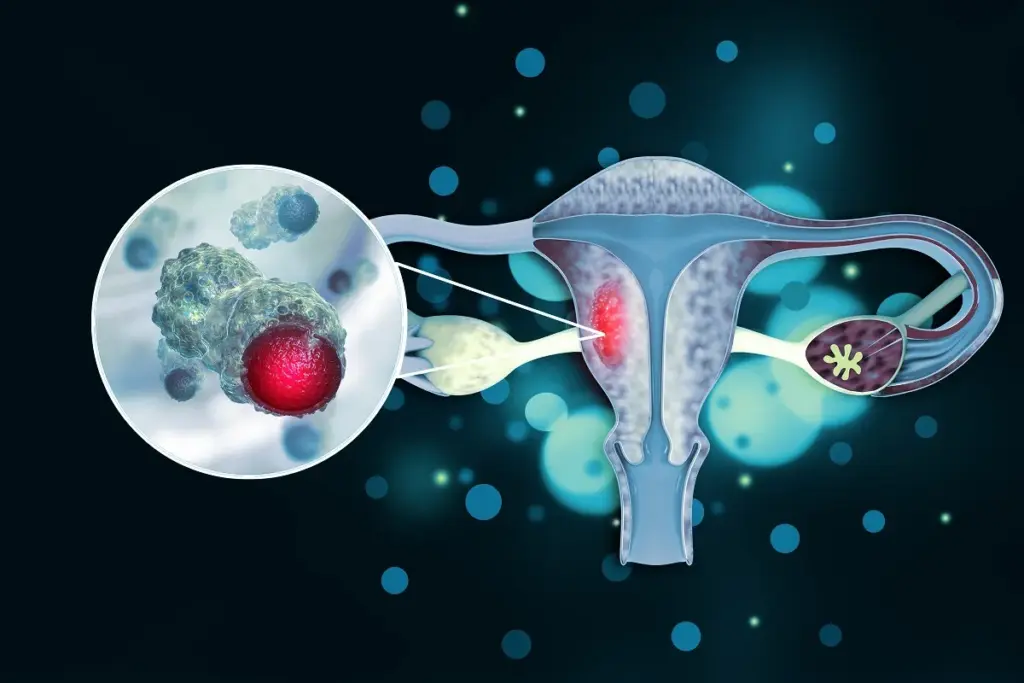
Ovarian cancer is hard to find early. Finding it early is key to better treatment. We look at how a full blood count (FBC) helps in finding ovarian cancer and its limits.
A full blood count checks your overall health. It looks at red and white blood cells and platelets. But, it’s not specific for ovarian cancer. So, FBC alone can’t reliably find ovarian cancer.
Specialized tests like the CA-125 blood test are needed for early detection. A full blood count gives general health info. But, it can’t find ovarian cancer. We must know the limits of today’s tests and look for new ways to diagnose.
Key Takeaways
- Full blood count is not a reliable test for detecting ovarian cancer.
- CA-125 blood test is a specialized diagnostic tool for ovarian cancer.
- Early detection of ovarian cancer requires advanced diagnostic techniques.
- Current screening methods have limitations in detecting ovarian cancer.
- Multidisciplinary approaches are necessary for effective ovarian cancer screening.
Understanding Full Blood Count (FBC) Tests
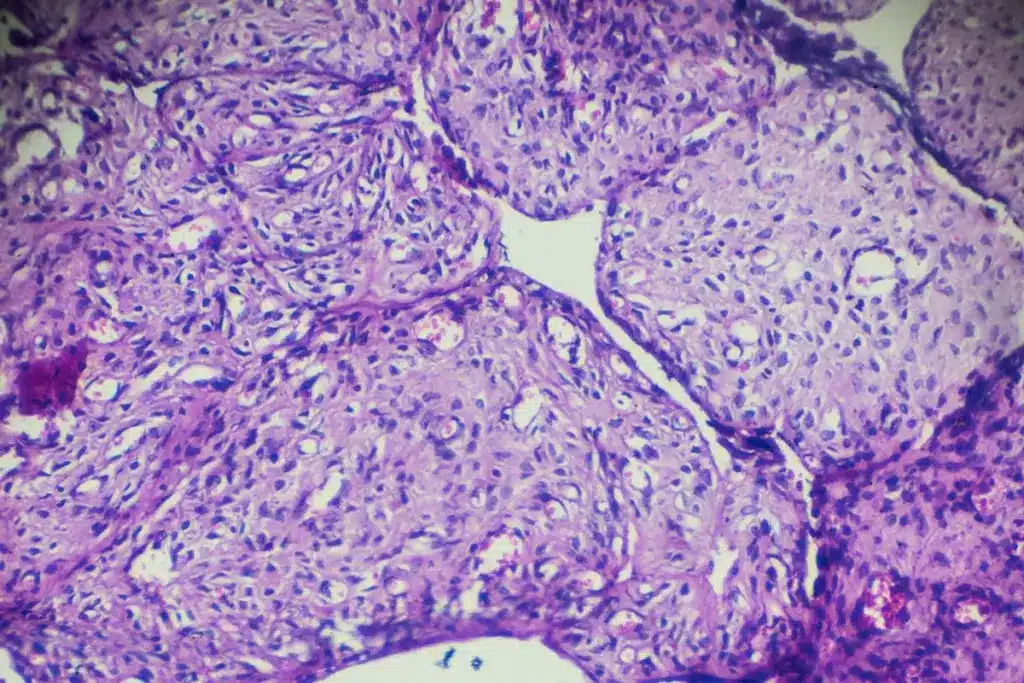
A Full Blood Count (FBC) is a key test that gives insights into a person’s health. It checks different parts of the blood. This helps doctors see if a patient is healthy or if they have conditions like anemia or infections.
What is a Full Blood Count?
A Full Blood Count is a detailed blood test. It looks at different blood cells and their levels. This includes red and white blood cells, platelets, hemoglobin, and hematocrit. These details help doctors find and track many health problems.
Parameters Measured in a Full Blood Count
An FBC checks several important things:
- Red Blood Cell (RBC) Count: Counts the red blood cells that carry oxygen.
- White Blood Cell (WBC) Count: Looks at the white blood cells that fight infections.
- Platelet Count: Checks the platelets, which help blood clot.
- Hemoglobin (Hb): Measures the hemoglobin in red blood cells that carries oxygen.
- Hematocrit (Hct): Finds the red blood cells’ share in the blood.
These details give a full picture of a patient’s blood health. They help find different health issues.
Clinical Applications of FBC Tests
FBC tests are used in many ways. They help:
- Find anemia and other blood problems.
- Watch infections and inflammation.
- Spot blood cancers like leukemia.
- See how the body reacts to treatments.
While the FBC is not specific for ovarian cancer, it remains a valuable tool for assessing a patient’s overall health. If it reveals any abnormalities, this may prompt further testing.
Ovarian Cancer: An Overview
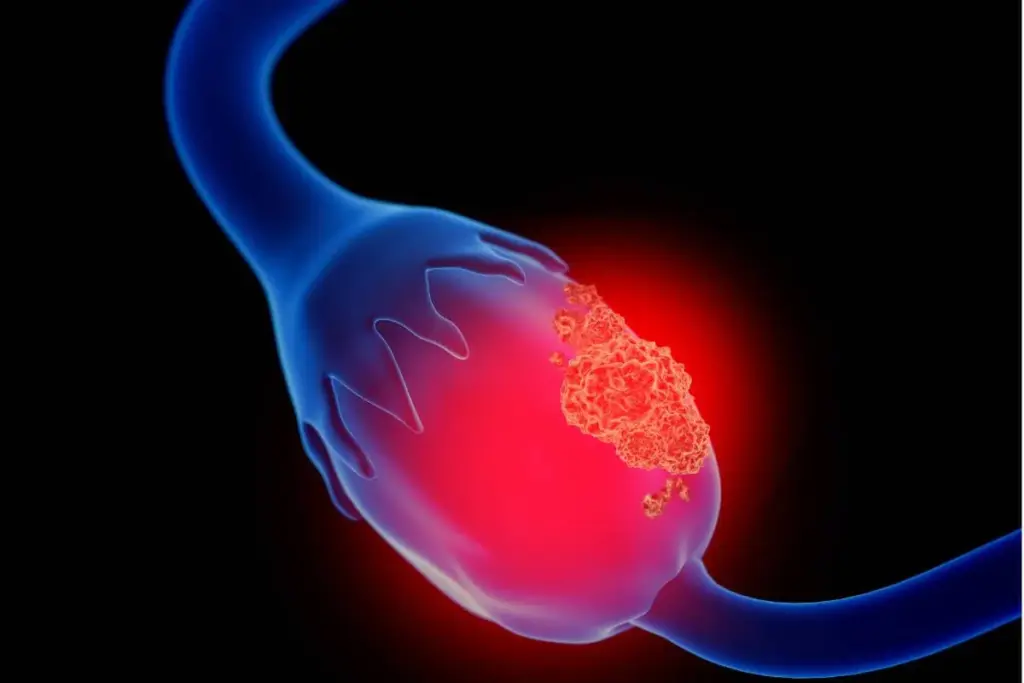
Ovarian cancer is often called a ‘silent killer.’ It needs a detailed approach for diagnosis and treatment. This disease has many types and stages, each with its own traits and outcomes.
Types and Stages of Ovarian Cancer
Ovarian cancer is divided into several types based on where it starts. The most common is epithelial ovarian cancer, which comes from the outer ovary layer. Other types include germ cell tumors and sex cord-stromal tumors.
The staging of ovarian cancer shows how far it has spread. It ranges from Stage I (limited to the ovaries) to Stage IV (spread to distant areas).
The staging is key for knowing the prognosis and treatment plan. Knowing the specific type and stage is vital for managing the disease effectively.
Risk Factors and Symptoms
Several factors increase the risk of getting ovarian cancer. These include family history, genetic mutations (like BRCA1 and BRCA2), and a history of breast cancer. Common symptoms are abdominal bloating, pelvic pain, and trouble eating.
Spotting these symptoms early can greatly improve the outcome. But, these symptoms are often vague, making it hard to diagnose on time.
Importance of Early Detection
Finding ovarian cancer early is vital for better survival chances. Early detection means a higher chance of successful treatment. We stress the need for awareness and understanding of risk factors and symptoms for early diagnosis.
“Early detection is key to surviving ovarian cancer. Awareness of the risk factors and symptoms can lead to earlier diagnosis and more effective treatment.”
Limitations of Full Blood Count in Ovarian Cancer Detection
Finding ovarian cancer with just a Full Blood Count (FBC) is hard. Blood counts can change for many reasons, not just cancer. FBC tells us about health issues like infections or inflammation. But it’s not good at finding ovarian cancer.
Why FBC Alone Is Insufficient
FBC looks at different parts of the blood. It checks red and white blood cells, platelets, and hemoglobin. But these signs don’t point directly to ovarian cancer. For example, a high white blood cell count can mean many things, not just cancer.
Key limitations of FBC in ovarian cancer detection include:
- Lack of specificity for ovarian cancer
- Non-specific changes that can be attributed to various conditions
- Inability to detect early-stage cancer
Non-Specific Blood Count Changes in Cancer
Cancer can mess with blood counts, but these changes aren’t just for ovarian cancer. Anemia, for instance, can happen in many cancers, not just ovarian. It’s caused by disease or bleeding from tumors.
|
Blood Count Parameter |
Possible Change in Cancer |
Specificity to Ovarian Cancer |
|---|---|---|
|
White Blood Cell Count |
Elevated |
No |
|
Red Blood Cell Count/Hemoglobin |
Decreased (Anemia) |
No |
|
Platelet Count |
Elevated or Decreased |
No |
When FBC May Indicate Further Testing
FBC isn’t a surefire way to find ovarian cancer. But odd results might make doctors want to do more tests. For example, if you have anemia or too many platelets, they might check for cancer, including ovarian.
“The use of FBC as a preliminary screening tool can help identify patients who require more specific diagnostic tests for ovarian cancer, even though it is not diagnostic on its own.”
How Is Ovarian Cancer Detected?
Doctors use a mix of physical checks, blood tests, and imaging to find ovarian cancer. Finding it early is key for good treatment. A detailed process helps doctors spot the disease right.
Initial Assessment and Physical Examination
The first step is a detailed medical history and physical check. Doctors look for signs like bloating, pelvic pain, and trouble eating. These could mean ovarian cancer. They also do a pelvic exam to check the ovaries.
Blood Tests and Biomarkers
Blood tests are very important in finding ovarian cancer. The CA-125 test checks for cancer antigen 125 in the blood. But, high levels can also mean other health issues.
New blood tests are showing great promise. A study found one test to be in detecting ovarian cancer.
Imaging Studies
Imaging tests are key for seeing the ovaries and finding problems. Ultrasound is often used to spot ovarian masses. CT scans and MRI might also be used to see how far the cancer has spread.
Surgical Procedures and Biopsy
Sometimes, surgery is needed to confirm ovarian cancer. A biopsy takes tissue from the ovary for a microscope check. This helps figure out how far the cancer has spread and what treatment to use.
As medical tech and research improve, so do ways to find ovarian cancer. This brings hope for earlier detection and better treatments.
CA-125: The Primary Ovarian Cancer Marker
CA-125 is a key biomarker for diagnosing and monitoring ovarian cancer. It’s a protein found on many ovarian cancer cells. A blood test measures its levels in the body.
What is Cancer Antigen 125 (CA-125)?
CA-125 is a protein often found in the blood of people with ovarian cancer. It’s not only found in ovarian cancer but is useful in checking for the disease.
The CA-125 test is not used alone for diagnosis. It’s used with other tests to understand a patient’s condition fully.
How the CA-125 Test Works
The CA-125 test checks the CA-125 protein in the blood. High levels can mean ovarian cancer, but also other conditions like endometriosis or pregnancy.
- The test is a simple blood draw in a clinic.
- Results show the CA-125 level in the blood.
- High levels might lead to more tests or surgery.
When CA-125 Testing Is Recommended
Women with symptoms like bloating, pelvic pain, or eating problems should get tested. It’s also for women with ovarian cancer history.
Key scenarios for CA-125 testing include:
- Checking how well ovarian cancer treatment is working.
- Finding cancer again in those who’ve had it before.
- Looking at pelvic masses or symptoms that might be ovarian cancer.
Limitations of CA-125 as a Standalone Test
CA-125 is useful but has big limits as a single test. It finds only 34-63% of early ovarian cancers. This makes it less good for catching cancer early.
The limitations include:
- CA-125 can be high in non-cancerous conditions.
- Not all ovarian cancers have CA-125, leading to false negatives.
- Using CA-125 alone can delay diagnosis or cause unnecessary worry.
It’s important for doctors to know these limits. This helps them understand CA-125 test results better and decide on next steps.
Understanding CA-125 Test Results
It’s important for patients and doctors to understand CA-125 test results. The CA-125 test helps check for ovarian cancer. But, knowing how to read these results is key.
Normal CA-125 Range and Values
The normal CA-125 level is usually below 35 U/mL. But, this number can change slightly from lab to lab. Levels below this range often mean a lower risk of ovarian cancer. Yet, it doesn’t mean there’s no risk at all.
What Constitutes Elevated CA-125 Levels
CA-125 levels above 35 U/mL are considered high. High levels might show ovarian cancer. But, they can also mean other issues like endometriosis or pregnancy. How high the levels are can tell us more about the problem.
CA-125 Interpretation Across Different Populations
CA-125 levels can change based on age, menopause status, and health conditions. For example, older women with high CA-125 levels face a greater risk of ovarian cancer. Doctors must look at these factors when reading CA-125 test results.
Non-Cancerous Conditions That Affect CA-125 Levels
Many non-cancer issues can raise CA-125 levels. These include endometriosis, uterine fibroids, and pregnancy. Getting a correct diagnosis means looking at these conditions. Doctors need to do thorough tests and check medical history to find out why CA-125 is high.
Sensitivity and Specificity of the CA-125 Blood Test
The CA-125 blood test’s sensitivity and specificity are key to its reliability in diagnosing ovarian cancer. Knowing these aspects helps doctors see how well the test works. It’s important for detecting cancer at different stages.
Detection Rates Across Different Cancer Stages
The CA-125 test’s ability to find ovarian cancer changes with the disease’s stage. Research shows it works better for advanced cancer than for early cancer.
|
Cancer Stage |
CA-125 Detection Rate |
|---|---|
|
Stage I |
50-60% |
|
Stage II |
70-80% |
|
Stage III |
80-90% |
|
Stage IV |
90% |
The table shows the test’s detection rate gets better as cancer progresses. This shows why using CA-125 with other tests is important for a full check.
False Positives and False Negatives
The CA-125 blood test isn’t perfect and can give false results. False positives mean the test says there’s cancer when there isn’t. False negatives mean it misses cancer when it’s there.
False Positives: Things like endometriosis, pelvic infections, and pregnancy can raise CA-125 levels, leading to false positives.
False Negatives: Early cancer or some tumor types might not make enough CA-125 for the test to find, leading to false negatives.
“The CA-125 test is not a standalone diagnostic tool; it is part of a broader diagnostic strategy that includes clinical evaluation, imaging, and other biomarkers.”
Factors Affecting CA-125 Test Accuracy
Many things can change how accurate the CA-125 test is. These include other health issues, the menstrual cycle, and some medicines.
- Menstrual cycle and pregnancy can affect CA-125 levels.
- Conditions like endometriosis and uterine fibroids can elevate CA-125.
- Certain medications and treatments may impact test results.
Knowing these factors helps doctors understand CA-125 test results better. This is key for making the right decisions about more tests or treatment.
By looking at these points, doctors can use the CA-125 test better. It’s part of a complete plan for diagnosing ovarian cancer.
Combined Approaches: Improving Ovarian Cancer Screening
Using different methods together in ovarian cancer screening is changing how we find the disease early. This mix of tools makes screening more accurate and effective. It helps spot high-risk patients and catch cancer sooner.
CA-125 with Transvaginal Ultrasound
Using CA-125 blood tests and transvaginal ultrasound together is showing great promise. The CA-125 test looks for a protein in the blood that can be high in cancer patients. The ultrasound gives clear pictures of the ovaries, spotting any issues. This combo makes finding ovarian cancer better, mainly in those at high risk.
Risk of Malignancy Index (RMI)
The Risk of Malignancy Index (RMI) helps figure out the chance of ovarian cancer. It uses CA-125 levels, ultrasound results, and if the patient is postmenopausal. It’s good at telling apart cancerous and non-cancerous tumors, helping doctors decide the best treatment.
PET/CT Scanning in Ovarian Cancer Detection
PET/CT scanning combines PET and CT scans to show how tumors work and where they are. It’s great for seeing if cancer has spread and how well treatments are working. Research shows it helps in staging ovarian cancer better and deciding on treatments.
Success Rates of Combined Approaches
Research shows that using more than one method is better than just one. For example, a study in found that mixing CA-125 with PET/CT scans boosts detection rates.
|
Diagnostic Approach |
Sensitivity (%) |
Specificity (%) |
|---|---|---|
|
CA-125 Alone |
70-80 |
80-90 |
|
CA-125 with Transvaginal Ultrasound |
85-95 |
90-95 |
|
PET/CT Scanning |
90-95 |
95-98 |
|
RMI |
80-90 |
85-92 |
In summary, combining different methods is making ovarian cancer screening better. It uses the best of each tool to find cancer early and treat it more effectively.
Ovarian Cancer Screening Guidelines
Screening for ovarian cancer needs to follow specific guidelines based on each person’s risk. These guidelines change based on risk factors and symptoms. It’s key to know these guidelines for early detection.
Recommendations for Average-Risk Women
Women at average risk don’t have a recommended screening program for ovarian cancer. Annual gynecological check-ups are suggested. During these visits, doctors can talk about symptoms and risk factors.
High-Risk Population Screening Protocols
Women with a family history of ovarian or breast cancer, or those with BRCA1 or BRCA2 mutations, are at high risk. They might need more frequent screening. This could include CA-125 blood tests and transvaginal ultrasounds.
Symptom-Based Testing Approach
Women with symptoms like persistent bloating or pelvic pain are tested further. This might include physical exams, imaging, and blood tests.
Frequency of Testing Recommendations
How often to test depends on individual risk. High-risk women might need annual or more frequent screenings. Knowing the right testing frequency is important to weigh the benefits and risks.
Emerging Blood-Based Biomarkers Beyond CA-125
New biomarkers are being researched to improve ovarian cancer detection. CA-125 is widely used but has its limits. We’re looking at new candidates to better detect cancer early.
HE4 (Human Epididymis Protein 4)
HE4 is a protein that might help find ovarian cancer better. It’s more specific than CA-125, which means fewer false positives. Researchers think using HE4 with CA-125 could find cancer sooner.
Cell-Free DNA Analysis
Cell-free DNA analysis looks at DNA in the blood that comes from tumors. It’s a new way to find cancer, including ovarian. By finding specific DNA changes, it could be a non-invasive test for early detection.
Autoantibody Detection
Autoantibodies are made by the immune system in response to cancer. Finding these in the blood could be a new way to screen for ovarian cancer. Scientists are working to find specific autoantibodies linked to ovarian cancer.
Multi-Biomarker Panels
Ovarian cancer is different in each person, so one biomarker isn’t enough. Multi-biomarker panels use several markers together. These might include CA-125 and HE4, and could be more effective in finding cancer.
We’re seeing big steps forward in finding better biomarkers for ovarian cancer. As research continues, these new markers could help diagnose cancer earlier. This could lead to better treatment and outcomes for patients.
Experimental Blood Tests: The Future of Detection
Experimental blood tests are showing great promise in finding ovarian cancer early. This could lead to better care for patients. These tests are part of a bigger push to improve how we diagnose diseases.
Breakthroughs in Research
New blood tests are being studied for their ability to spot ovarian cancer. Tests that look for biomarkers like HE4 and other proteins might work better than current tests.
Key findings from recent research include:
- Identification of novel biomarkers associated with ovarian cancer
- Improved sensitivity and specificity of new blood tests compared to traditional markers like CA-125
- Potential for detecting ovarian cancer at an earlier stage, when it is more treatable
Ongoing Clinical Trials
Many clinical trials are testing these new blood tests. These trials are key to making sure the tests work well in real-world settings.
Notable aspects of ongoing clinical trials include:
- Large-scale participant enrollment to ensure diverse and representative data
- Comparison of new blood tests with existing screening methods to assess relative effectiveness
- Investigation into the possible use of multiple biomarkers to improve test accuracy
Potential Impact on Early Detection
These new blood tests could change how we find ovarian cancer. Finding cancer early is key to saving lives and improving treatment results.
“The advent of more accurate and reliable blood tests for ovarian cancer could revolutionize our approach to diagnosis, enabling healthcare providers to identify and treat the disease at an earlier, more manageable stage.”
As research keeps moving forward, using these tests in regular screenings looks more likely. This could mean better health for women at risk of ovarian cancer.
Challenges in Ovarian Cancer Diagnosis
Ovarian cancer diagnosis is tough and affects patient outcomes. Even with new medical tech, finding ovarian cancer early is hard.
Early-Stage Detection Difficulties
One big problem is finding ovarian cancer early. It often shows no clear symptoms, making it hard to catch early.
Early detection is key to better survival rates. But, there are no clear symptoms or good screening tools yet.
Limitations of Current Screening Methods
Today’s screening for ovarian cancer has big flaws. The CA-125 test, for example, can be off because it’s not just for ovarian cancer.
- Limited sensitivity and specificity
- False positives and false negatives
- Lack of a reliable screening test for early-stage disease
More effective screening is needed. Scientists are looking for new biomarkers and methods to help.
Access to Specialized Testing
Getting to specialized tests is hard for some. Not all places have the latest diagnostic tools, which can hurt diagnosis and treatment.
|
Region |
Access to Specialized Testing |
Impact on Diagnosis |
|---|---|---|
|
Urban |
High |
Timely diagnosis and treatment |
|
Rural |
Limited |
Delayed diagnosis and treatment |
Cost and Insurance Coverage Considerations
Costs and insurance can stop people from getting tested. High prices might make patients wait too long to get checked.
We’re tackling these issues. We aim to improve diagnosis with better screening, more testing access, and cheaper tests.
Advancements in Ovarian Cancer Diagnostics
Ovarian cancer diagnosis is on the verge of a big change. New diagnostic methods are coming to light. These changes are making it easier to find and treat this disease.
Artificial Intelligence in Test Interpretation
Artificial intelligence (AI) is making a big impact in test interpretation. AI can look at medical images and lab results in new ways. This could make finding ovarian cancer earlier and more accurate.
Studies show AI can make diagnosis better. A study found AI can improve how well we can spot ovarian cancer .
Liquid Biopsy Technologies
Liquid biopsy technologies are also advancing. These tests look for cancer DNA in the blood. They are a non-invasive way to find ovarian cancer early.
- Detecting genetic mutations associated with ovarian cancer
- Monitoring treatment response and disease progression
- Identifying possible targets for therapy
Personalized Screening Approaches
We’re moving towards personalized screening based on individual risk. This means looking at family history, genetic mutations, and more. It helps find who needs closer monitoring or prevention.
Integration of Genetic Risk Assessment
Adding genetic risk assessment to screening is a big step. Genetic tests can spot high-risk mutations. This helps target screenings to those at highest risk.
These new ways of diagnosing ovarian cancer are leading to better detection and treatment. As research keeps growing, we’ll see even more ways to help patients.
Conclusion
Detecting ovarian cancer is a tough challenge. A full blood count alone is not enough. But, CA-125 and other biomarkers are key in finding this disease. We’ve looked at how these markers work and the new technologies that might help.
CA-125 is a major player in finding ovarian cancer. New ways to use it, like with ultrasound, are getting better at spotting the disease. Also, new biomarkers and liquid biopsy tech are being studied to find cancer early.
As we keep working on better ways to find ovarian cancer, we must think about how it affects patients. Using genetic tests and screening that fits each person can lead to better care. This could make managing ovarian cancer more effective.
FAQ
What is the role of a full blood count in detecting ovarian cancer?
A full blood count (FBC) is a basic test that shows a person’s health status. But, it’s not very good at finding ovarian cancer because it’s not specific.
How is ovarian cancer typically detected?
First, doctors do a physical check and talk to the patient. Then, they might do blood tests and imaging. Sometimes, they need to do surgery and take a biopsy.
What is the CA-125 test, and how is it used in ovarian cancer detection?
The CA-125 test checks for a protein in the blood that might be high in ovarian cancer. It’s the main test used for this cancer.
What are the limitations of the CA-125 test?
The CA-125 test isn’t always accurate. It can miss some cancers and give false positives. This depends on the cancer’s stage.
How are CA-125 test results interpreted?
To understand CA-125 test results, you need to know what’s normal. You also have to think about other conditions that can raise the protein levels.
What are some emerging blood-based biomarkers for ovarian cancer?
New biomarkers include HE4 and cell-free DNA analysis. There are also autoantibody tests and panels of biomarkers. These might help find ovarian cancer better.
How can ovarian cancer screening be improved?
Using CA-125 tests with ultrasound and the Risk of Malignancy Index (RMI) can help find more cancers. This combo is more effective.
What are the challenges in diagnosing ovarian cancer?
Finding ovarian cancer early is hard. Current tests have limits. Also, not everyone has access to the right tests.
What advancements are being made in ovarian cancer diagnostics?
New tech includes artificial intelligence and liquid biopsies. There are also personalized tests and genetic risk checks. These are improving diagnostics.
Who is at high risk for ovarian cancer, and what screening protocols are recommended?
Women with a big family history or certain genes are at high risk. They should get tested more often. This includes CA-125 tests and imaging.
References:
PMC. (2018). Early detection of ovarian cancer using cell-free DNA and protein biomarkers. PMC. https://pmc.ncbi.nlm.nih.gov/articles/PMC6376972/



 Departments
 Related Videos
 Our Doctors
 News
News