Millions of people worldwide suffer from back pain due to herniated discs. This condition can really affect daily life. Seeking professional help is key for managing back pain effectively. We look into how chiropractic care can help with relief and recovery. Explore how a Chiropractor for Herniated Disc can help with pain management and spine realignment effectively.
Chiropractors are experts in treating musculoskeletal and nervous system disorders. They use spinal manipulation and other techniques to ease pain and boost function. By tackling the pain’s source, chiropractic care offers a non-surgical option.
Key Takeaways
- Chiropractic care can help alleviate symptoms of herniated discs.
- Spinal manipulation is a common technique used by chiropractors.
- Non-invasive treatments can reduce the need for surgery.
- Chiropractors focus on treating the whole person, not just the symptoms.
- Personalized care plans are tailored to individual needs.
Understanding Herniated Discs: Anatomy and Causes
The human spine has many parts, like vertebrae and discs, which support and move us. Knowing how these parts work is key to understanding herniated discs.
Spinal Anatomy and Disc Function
The spine has 33 vertebrae, divided into five areas: cervical, thoracic, lumbar, sacrum, and coccyx. Between each vertebra, discs act as shock absorbers. They help us move and bend.
Intervertebral discs are essential for spinal health. They absorb shock, help us move, and spread pressure. Damage to these discs can cause problems, like herniated discs.
Common Causes of Disc Herniation
Disc herniation happens when the outer disc layer cracks, letting the soft center bulge out. This can be due to:
- Degenerative changes with age
- Sudden injury or trauma
- Repetitive strain or heavy lifting
- Genetic predisposition
These factors can weaken discs, making them more likely to herniate.
Risk Factors for Developing Herniated Discs
Some people are more at risk for herniated discs. These include:
| Risk Factor | Description |
| Age | Discs degenerate with age, increasing the risk of herniation |
| Occupation | Jobs involving heavy lifting, bending, or twisting increase the risk |
| Genetics | Family history can play a role in disc degeneration and herniation |
| Smoking | Smoking reduces oxygen supply to discs, accelerating degeneration |
Knowing these risk factors can help prevent herniated discs.
Traditional Medical Approaches to Herniated Discs

Traditional treatments for herniated discs include both conservative and surgical methods. These are often the first steps for those with herniated discs.
Conservative Medical Treatments
Conservative treatments are usually the first step. They aim to ease pain and help recovery without surgery. These include:
- Pain management through medication, such as NSAIDs or muscle relaxants
- Physical therapy to improve flexibility, strength, and posture
- Epidural steroid injections to reduce inflammation and relieve pain
Physical therapy is key in these treatments. It helps patients move better and feel less pain. A specific exercise plan can also stop future disc problems.
Surgical Options for Herniated Discs
If conservative treatments don’t work, surgery might be needed. Surgery aims to remove the part of the disc pressing on nerves. Common surgeries are:
- Discectomy: Removing the herniated disc material
- Microdiscectomy: A less invasive version of discectomy
- Spinal fusion: Fusing vertebrae together for stability
Choosing surgery depends on many factors. These include how bad the symptoms are, how big the herniation is, and the patient’s health.
Limitations of Conventional Treatments
Traditional treatments have their limits. Conservative treatments might not last, and some need surgery. Surgery works well but has risks and isn’t for everyone. It might not fix the root cause of the problem, leading to more issues.
It’s vital for patients to talk to their doctor. This helps find the best treatment plan for them.
Chiropractic Care Fundamentals
Chiropractic care is a holistic approach to healthcare. It focuses on the spine and overall well-being. It aims to diagnose and treat issues in the musculoskeletal and nervous systems, with a focus on spinal health.
The Philosophy Behind Chiropractic Medicine
The philosophy of chiropractic medicine is simple. It believes the body can heal itself. Chiropractors think that spinal misalignments, or subluxations, can harm the nervous system. This can lead to health problems.
By fixing these misalignments through spinal manipulation, chiropractors help restore balance. They aim to promote health.
This method treats the cause of pain, not just the symptoms. Chiropractors see the body as a whole system. The spine is key to overall health.
Chiropractic Education and Specialization
Chiropractors get a lot of education and training. They earn a Doctor of Chiropractic degree after 8 years of post-secondary education. They study anatomy, physiology, and biomechanics, and get hands-on training in spinal manipulation.
Many chiropractors specialize in areas like sports chiropractic or pediatric chiropractic. This makes them even more skilled.
How Chiropractors View Spinal Health
Chiropractors see spinal health as essential for overall wellness. They believe a healthy spine prevents many health problems. This includes back pain and headaches.
They aim to empower patients with knowledge about their spinal health. They provide tools and treatments for a healthy spine. This helps manage pain and improves life quality.
How Chiropractors Diagnose Herniated Discs
Diagnosing herniated discs is key, and chiropractors do it with care. They use a detailed approach that includes a patient’s history, physical tests, and imaging.
Initial Assessment and Physical Examination
We start by asking about the patient’s health history and symptoms. Then, we do a physical check to see how well they move and if their muscles are strong. We also check reflexes and do special tests to find any issues.
During the check-up, we might use the straight leg raise test. This test helps us see if sciatic pain is from a herniated disc. It shows how the condition affects daily life.
Diagnostic Imaging and Tests
To confirm the diagnosis, we use imaging tests like X-rays, MRI, or CT scans. MRI is great for seeing soft tissues like discs and nerves. It helps us see how bad the herniation is.
These tests help us rule out other problems like fractures or tumors. They give us a clear view of the disc’s state. This info is key for planning treatment.
Differential Diagnosis Considerations
Differential diagnosis is important. We look at other conditions that might cause similar symptoms. This includes spinal stenosis and degenerative disc disease. By looking at symptoms and test results, we can find the right treatment.
| Diagnostic Tool | Purpose | Benefits |
| Medical History | Understand patient’s symptoms and health background | Helps identify other causes and factors |
| Physical Examination | Assess range of motion, strength, and reflexes | Shows how severe the condition is |
| MRI | Visualize soft tissues, discs, and nerves | Accurately finds herniated discs and their severity |
Chiropractor for Herniated Disc: Treatment Approaches

Chiropractors use different treatments for herniated discs. They tailor their methods to each patient’s needs. The goal is to ease pain, improve spinal function, and boost overall health.
Spinal Manipulation Techniques
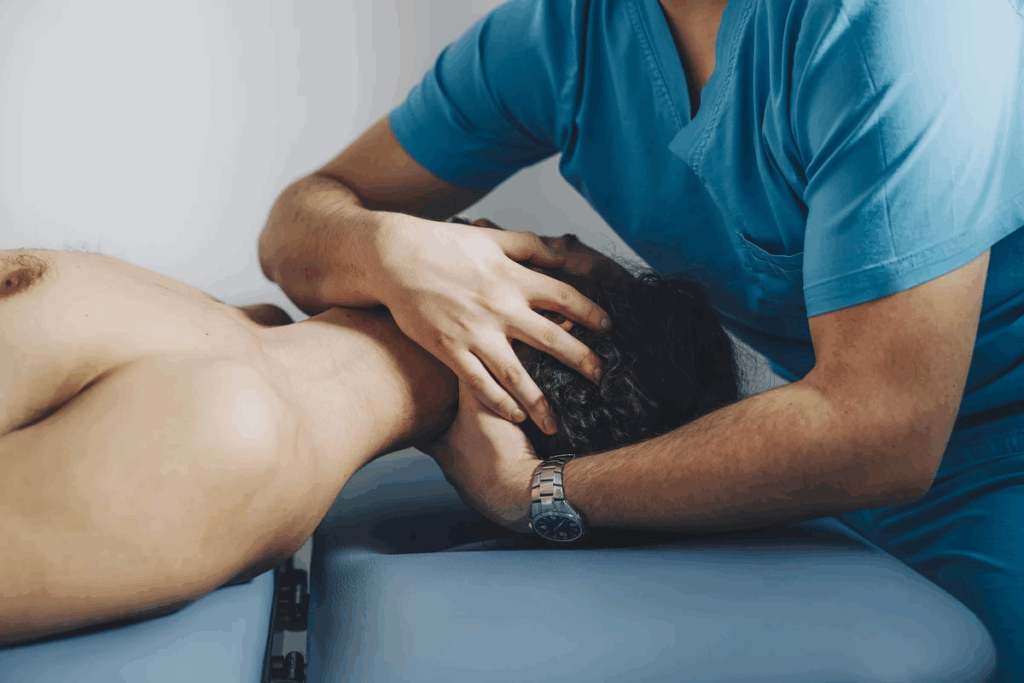
Spinal manipulation is key in chiropractic care for herniated discs. It involves applying controlled force to specific spine joints. This aims to improve mobility, reduce pain, and help the body heal naturally.
Chiropractors use spinal manipulation to relieve pressure on the affected disc. This helps restore normal spinal function and eases symptoms of herniated discs.
Flexion-Distraction Therapy
Flexion-distraction therapy is a special technique for herniated discs. It uses a table that gently stretches the spine. This creates negative pressure in the disc.
This negative pressure can help retract the herniated disc material. It reduces pressure on nerves and eases pain. This therapy is great for severe disc herniations or when other treatments fail.
Pelvic Blocking Treatments
Pelvic blocking is another technique used by chiropractors. It involves placing blocks under the pelvis to correct misalignments and reduce muscle tension. By stabilizing the pelvis and improving spinal alignment, pelvic blockinghelps ease strain on the lower back and reduces discomfort from herniated discs.
These treatments are often combined to meet each patient’s needs. Chiropractors address the root causes of herniated disc symptoms. This helps patients find lasting relief and better spinal health.
Spinal Decompression Therapy for Disc Herniation
Spinal decompression therapy gently stretches the spine to ease pressure on discs. It’s a non-surgical method that might help with herniated disc symptoms. By creating negative pressure, it tries to push herniated disc material back in place, reducing nerve irritation.
How Decompression Works
This therapy applies a gentle, sustained force to the spine. It creates a negative pressure inside the disc. This pressure is thought to help herniated disc material retract and heal. The therapy uses a special table that stretches and relaxes the spine.
Types of Decompression Equipment
There are many types of spinal decompression equipment. These range from computerized tables to manual devices. Computerized tables can follow specific treatment plans, while manual devices depend on the practitioner’s skill.
Common features of decompression equipment include:
- Adjustable settings for customized treatment
- Multiple treatment protocols for different conditions
- Monitoring systems to track patient progress
Treatment Protocols and Duration
Treatment plans for spinal decompression vary based on the herniation’s severity and the patient’s health. Each session usually lasts 15 to 30 minutes. Patients often need several sessions over weeks.
| Treatment Parameter | Typical Value |
| Treatment Duration | 15-30 minutes per session |
| Number of Sessions | Multiple sessions over 4-6 weeks |
| Frequency of Sessions | 2-3 times per week |
Spinal decompression therapy is a non-invasive way to manage herniated discs. Knowing how it works, the equipment types, and typical treatment plans helps patients make informed choices.
Additional Chiropractic Modalities for Disc Pain
Chiropractic care offers a wide range of treatments for herniated disc pain. It goes beyond just spinal manipulation. These extra therapies work together with spinal adjustments to create a treatment plan that fits each patient’s needs.
Therapeutic Exercises and Stretches
Therapeutic exercises and stretches are key in chiropractic care for herniated discs. They help improve flexibility and strengthen muscles around the spine. This helps patients achieve better spinal alignment and reduces pain.
Examples of therapeutic exercises include pelvic tilts, knee to chest stretches, and gentle lumbar extensions. These exercises are tailored to each patient’s condition and fitness level. This ensures a safe and effective treatment.
Cold and Heat Therapy Applications
Cold and heat therapy are used in chiropractic care to manage pain and inflammation from herniated discs. Cold therapy, like ice packs, reduces inflammation and numbs pain. On the other hand, heat therapy relaxes muscles and boosts blood flow to the affected area, aiding in healing.
The choice between cold or heat therapy depends on the patient’s condition and recovery stage. Chiropractors guide patients on how to use these therapies at home. This empowers patients to actively participate in their recovery.
Electrical Stimulation and Ultrasound
Electrical stimulation and ultrasound are used in chiropractic care for herniated disc pain. Electrical stimulation uses low-voltage electrical currents to stimulate muscle contractions, reduce pain, and improve circulation. Ultrasound therapy uses high-frequency sound waves to promote tissue healing, reduce inflammation, and relax muscle spasms.
These therapies are very helpful when used with spinal manipulation and other chiropractic treatments. By combining these modalities, chiropractors can create a detailed treatment plan. This plan addresses the complex needs of patients with herniated discs.
Benefits and Risks of Chiropractic Care for Herniated Discs
Herniated discs can cause a lot of pain. Chiropractic care might help ease this pain. It’s important to know both the good and bad sides of this treatment.
Potential Benefits and Success Rates
Chiropractic care for herniated discs has many benefits. It can help with pain, improve movement, and avoid surgery. Studies show it can work as well as more invasive methods.
Key benefits include:
- Non-invasive treatment approach
- Potential for significant pain reduction
- Improved spinal mobility and flexibility
- Avoidance of surgical risks
A study in the Journal of Manipulative and Physiological Therapeutics found chiropractic care effective. It treats disc herniation and related symptoms well.
Possible Risks and Complications
Chiropractic care can be helpful but also comes with risks. You might feel sore, stiff, or symptoms could get worse. It’s important to talk about these risks with your chiropractor.
Possible risks and complications:
- Temporary soreness or stiffness
- Worsening of symptoms
- Rarely, more serious complications like nerve damage
A leading chiropractic association says chiropractors aim to avoid complications. They want to make treatment as safe and effective as possible.
Who Should Avoid Chiropractic Treatment
Some people should not get chiropractic care for herniated discs. This includes those with severe osteoporosis, spinal fractures, or certain neurological conditions. Always check with your healthcare provider first.
Contraindications for chiropractic treatment may include:
- Severe osteoporosis
- Spinal fractures or dislocations
- Certain neurological conditions
- Recent spinal surgery
In conclusion, chiropractic care can be very helpful for herniated discs. But, it’s important to consider the risks and your own situation. This way, you can make the best choice for your health.
Scientific Evidence: Does Chiropractic Care Work for Herniated Discs?
Chiropractic care is seen as a possible treatment for herniated discs, backed by scientific studies. It’s important to look at the research, compare it to other treatments, and see what medical groups say.
Clinical Studies and Research Findings
Many studies have looked into chiropractic care for herniated discs. A key study in the Journal of Manipulative and Physiological Therapeutics showed it can help with pain and function. This suggests chiropractic care is a good optionfor those with this problem.
Research has also focused on chiropractic techniques. For example, spinal manipulation and flexion-distraction techniques have been studied. A study in the Spine Journal found chiropractic care helped more than standard medical care.
Comparing Effectiveness to Other Treatments
It’s important to compare chiropractic care to other treatments for herniated discs. Studies show it can be as good as, or even better than, physical therapy and medication. A study in the Journal of Orthopaedic & Sports Physical Therapyfound chiropractic care worked as well as physical therapy for lumbar disc herniation.
Chiropractic care is non-invasive and has fewer side effects than surgery or long-term medication. This makes it a good choice for those looking for a conservative treatment.
What Medical Organizations Say
Medical groups have different views on chiropractic care for herniated discs. The American Chiropractic Associationsupports it as a first-line treatment for low back pain. The National Institutes of Health also mentions spinal manipulation can help with acute low back pain.
Not all groups have specific guidelines for chiropractic care for herniated discs. But, the growing evidence supports its use and will likely shape future recommendations.
When to See a Chiropractor vs. When to Seek Medical Care
Knowing when to see a chiropractor versus a doctor is key for treating herniated discs well. The healthcare system can be tough to navigate, making it hard to know what to do with a herniated disc.
Red Flags Requiring Immediate Medical Attention
Some symptoms mean you need to see a doctor right away. These include sudden, severe pain, numbness or tingling in your legs, loss of bladder or bowel control, and trouble walking. If you have any of these, get medical help fast.
| Red Flag Symptoms | Description |
| Sudden Severe Pain | Pain that comes on suddenly and is extremely severe |
| Numbness or Tingling | Numbness or tingling sensations in the legs |
| Loss of Bladder/Bowel Control | Inability to control bladder or bowel functions |
| Difficulty Walking | Trouble walking due to pain or weakness |
Ideal Candidates for Chiropractic Treatment
Chiropractic care works well for people with herniated discs without red flag symptoms. These are those with mild to moderate symptoms looking for a gentle treatment. People who take care of their spine and do exercises well usually do great with chiropractic care.
Integrating Chiropractic with Medical Care
Combining chiropractic care with medical treatment is a great way to manage herniated discs. We think this teamwork leads to better results by using both chiropractic and medical methods. This mix might include chiropractic adjustments, physical therapy, and medical treatments like pain management or surgery.
In short, knowing when to go to a chiropractor versus a doctor is important for herniated disc treatment. By spotting red flags, finding the right people for chiropractic care, and mixing chiropractic with medical treatment, we offer a full care plan.
Finding the Right Chiropractor for Disc Herniation
Finding a chiropractor for disc herniation is key. The right one can help you recover well. They offer the right treatment and support.
Qualifications and Specializations to Look For
When looking for a chiropractor, check their qualifications and specializations. Make sure they are licensed and trained from a good school. Some might have extra certifications in sports or kids’ chiropractic.
Make sure they know how to treat disc herniation and use the latest methods.
Questions to Ask During Your Initial Consultation
The first visit is a chance to see if the chiropractor is right for you. Have questions ready, like:
- What experience do you have in treating disc herniation?
- What treatment approaches do you use, and how will you tailor them to my needs?
- Can you explain the benefits and risks of chiropractic care for disc herniation?
Listen to how the chiropractor answers your questions. A good chiropractor will listen well and explain their plan clearly.
Reading Reviews and Getting Recommendations
Reading reviews is a great way to find a good chiropractor. Check their website and online reviews. Also, ask friends, family, or your doctor for suggestions. A chiropractor with good reviews is more likely to care for you well.
A top chiropractic expert emphasizes finding a chiropractor knowledgeable about your condition and committed to your recovery. Take time to find a chiropractor who fits your needs and deserves your care.
What to Expect: Treatment Timeline and Recovery Process
Knowing the treatment timeline and recovery process is key for those thinking about chiropractic care for herniated discs. Chiropractic treatment is a journey with several steps. It starts with the first visit and ends with the final stages of recovery.
First Visit Experience
The first visit to a chiropractor for a herniated disc starts with a detailed examination. We check the patient’s condition through physical exams, medical history, and sometimes imaging. This helps us see how bad the herniation is and how it affects the patient’s health.
During the first visit, we talk about symptoms, lifestyle, and treatment goals. We use this info to make a treatment plan that fits the patient’s needs.
Typical Treatment Duration and Frequency
The time and frequency of chiropractic treatment for herniated discs change based on the condition’s severity and the patient’s health. Treatment plans can last from a few weeks to several months.
At first, treatment is more frequent, with visits several times a week. As the patient gets better, visits may become less often.
Measuring Progress and Treatment Adjustments
We keep an eye on the patient’s progress throughout treatment. We check pain levels, range of motion, and other important factors. Based on this, we adjust the treatment plan to help the patient recover best.
| Treatment Phase | Frequency of Visits | Expected Outcomes |
| Initial Phase | 3 times a week | Pain reduction, improved mobility |
| Corrective Phase | 2 times a week | Continued pain reduction, spinal realignment |
| Maintenance Phase | 1 time a week or as needed | Long-term spinal health, prevention of future issues |
Understanding the treatment timeline and recovery process helps patients prepare for what’s ahead. Chiropractic care is a holistic way to treat herniated discs. It aims for symptom relief and long-term spinal health.
Conclusion: Is Chiropractic Care Right for Your Herniated Disc?
Herniated discs can cause a lot of pain and discomfort. Chiropractic care is a non-invasive way to manage these symptoms. It offers a holistic approach to healing.
Understanding herniated discs and chiropractic treatments helps make informed decisions. Chiropractors use spinal manipulation and other methods to reduce pain and aid in healing.
It’s important to talk to a healthcare professional before starting chiropractic care. They can help find the best treatment for you. Look for a qualified chiropractor who can create a treatment plan just for you.
Chiropractic care can be a big part of treating herniated discs. It can help improve your symptoms and overall health. Adding chiropractic care to your treatment plan may lead to better results.
FAQ
What is a herniated disc, and how does it occur?
A herniated disc happens when the soft center of a spinal disc pushes through a tear. This can be due to injury, wear and tear, or pressure on the spine.
Can chiropractic care help alleviate symptoms of a herniated disc?
Yes, chiropractic care can help. It uses spinal manipulation and other techniques to ease pressure on the disc and nerves.
What is spinal decompression therapy, and how does it work?
Spinal decompression therapy is a non-invasive treatment. It uses a special table to stretch the spine, relieving pressure on discs. This can reduce pain and inflammation from herniated discs.
Are there any risks or complications associated with chiropractic care for herniated discs?
Chiropractic care is usually safe, but there are risks. These include temporary soreness or, rarely, worsening symptoms. Always talk to a qualified chiropractor about the benefits and risks.
How do I know if I’m a good candidate for chiropractic care for my herniated disc?
Good candidates have mild to moderate symptoms and are in good health. They should have a recent diagnosis of a herniated disc. Your chiropractor will assess your condition to decide the best treatment.
What can I expect during my first visit to a chiropractor for a herniated disc?
At your first visit, your chiropractor will do an initial assessment. This includes a physical exam and review of your medical history. They might also use imaging tests to confirm the diagnosis and create a treatment plan.
How long does it take to see results from chiropractic care for a herniated disc?
The time it takes to see results varies. It depends on the severity of your condition, the treatment’s effectiveness, and your health. Some people feel better after a few visits, while others need ongoing care.
Can chiropractic care be used in conjunction with other treatments for herniated discs?
Yes, chiropractic care can be used with other treatments. This includes physical therapy, pain management, or medical care. It provides a complete approach to managing symptoms.
How do I find a qualified chiropractor to treat my herniated disc?
To find a qualified chiropractor, look for those with training in herniated discs. Read reviews and ask for recommendations. Ask questions during your first consultation to make sure they meet your needs.
Is chiropractic care for herniated discs covered by insurance?
Coverage for chiropractic care varies by insurance. Check with your insurance company to see what’s covered and any costs you might have to pay.
Reference
- Oh, H., Choi, S. J., Lee, S. Y., Choi, J., & Lee, K. (2019). Effects of the flexion-distraction technique and drop technique on straight leg raising angle and intervertebral disc height of patients with an intervertebral disc herniation. Journal of Physical Therapy Science, 31(3), 201–204. https://www.ncbi.nlm.nih.gov/pmc/articles/PMC6698474/