Last Updated on December 4, 2025 by Bilal Hasdemir
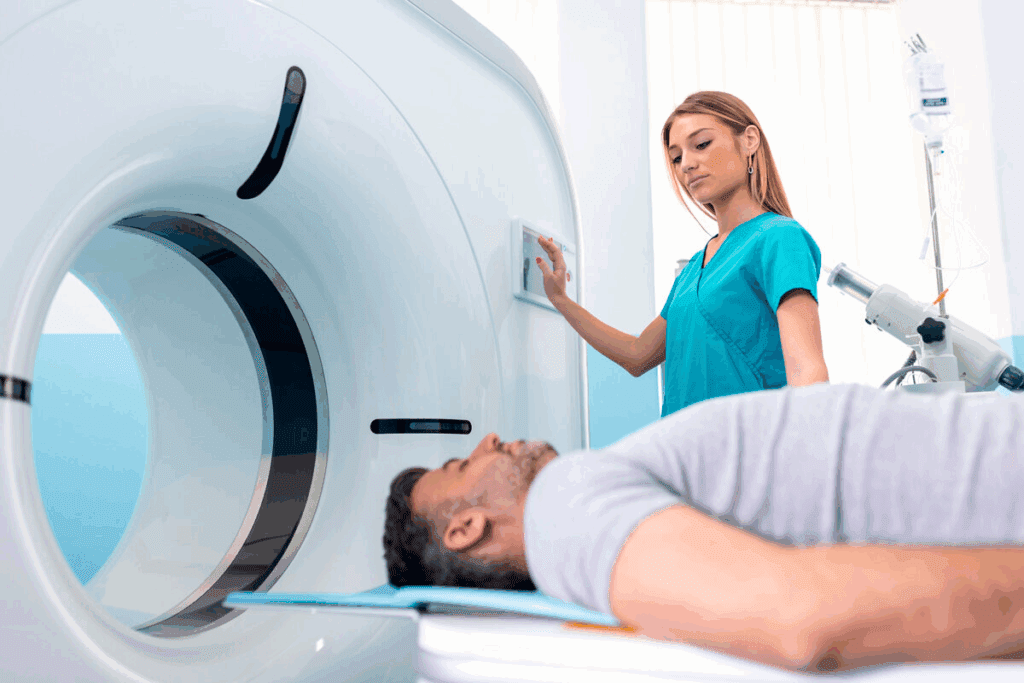
Finding colon cancer early is crucial for successful treatment. At Liv Hospital, advanced diagnostic methods are used to detect the disease at its earliest stages, helping doctors make quick and accurate decisions for patients.
Many people wonder, can a CT scan find colon cancer? The answer is yes — CT scans are an important tool in identifying colorectal cancer and assessing how far it has spread. However, while CT scans are useful for detecting larger tumors or advanced disease, they may not always catch small or early-stage growths.
Researchers are also exploring blood tests as another possible way to detect colon cancer. Yet, more studies are needed to confirm how effective these tests are compared to imaging methods like CT scans.
Understanding the strengths and limits of each diagnostic method helps patients make informed decisions about their care.
Key Takeaways
- CT scans can detect larger masses and advanced tumors with high sensitivity.
- Early-stage disease and small lesions are less likely to be detected by CT scans.
- Blood tests are being researched as a possible way to find colon cancer.
- Getting a correct diagnosis is very important for starting treatment on time.
- Liv Hospital’s focus on patient care means they use the newest ways to check for diseases.
Understanding Colon Cancer and the Importance of Early Detection

Colon cancer is a common cancer worldwide. It’s important to know its risk factors and how to detect it early. Early detection can greatly improve treatment outcomes.
What is Colon Cancer and Who is at Risk?
Colon cancer, also known as colorectal cancer, starts in the colon or rectum. Risk factors include age, family history, and genetic syndromes. Lifestyle choices like a diet high in red meat and obesity also increase risk.
- Age: Risk increases after 50 years.
- Family History: Having first-degree relatives with colon cancer.
- Genetic Syndromes: Conditions like Lynch syndrome.
Why Early Detection Matters for Treatment Outcomes
Early detection of colon cancer is key. It allows for the removal of precancerous polyps before they turn malignant. Screening tests can find cancer early, when it’s easier to treat.
Benefits of Early Detection include:
- Increased chances of successful treatment.
- Less invasive treatment options.
- Improved survival rates.
Overview of Diagnostic Challenges
Diagnosing colon cancer is tough. It’s hard to spot small lesions and tell if a tumor is benign or malignant. CT scans and other methods help solve these problems.
The complexity of colon cancer diagnosis shows the need for a multifaceted approach. This includes different screening and diagnostic techniques. It ensures accurate detection and effective treatment planning.
Can a CT Scan Find Colon Cancer? Exploring the Technology
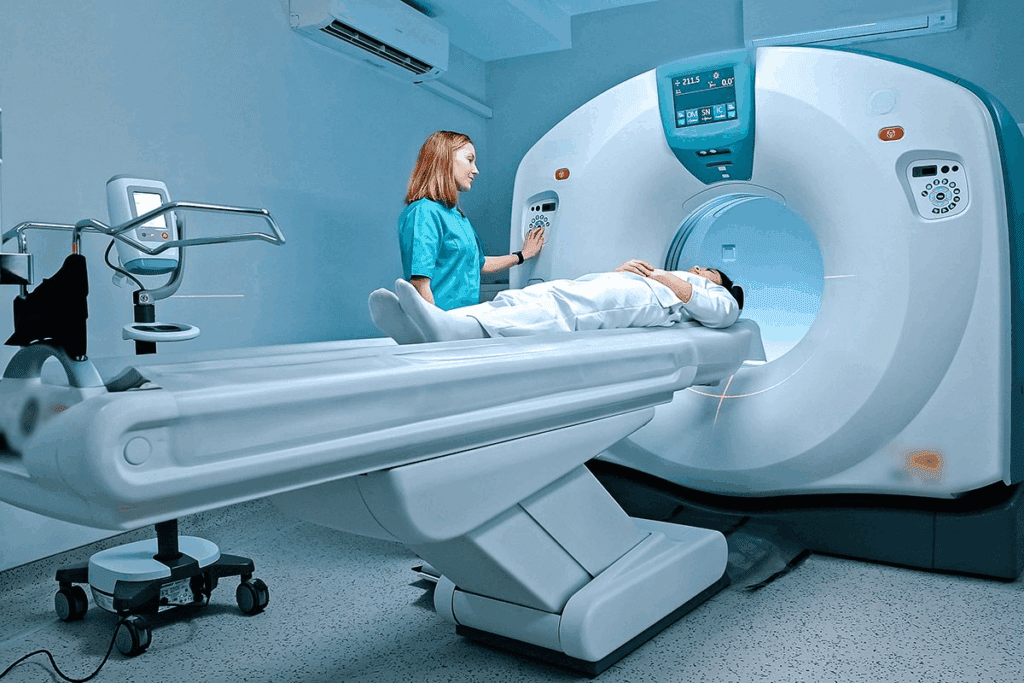
Computed Tomography (CT) scans are now a key tool in finding colon cancer. They use X-rays to make detailed pictures of the abdomen and pelvis. Doctors can spot abnormal growths and signs of colon cancer with these images.
How CT Scanning Works
CT scanning combines X-rays and computer tech to show the body’s inside. A CT scanner, shaped like a doughnut, moves around the patient. It takes pictures from different angles, then makes detailed views of the body’s inside.
Key components of a CT scan include:
- X-ray tube: Produces X-rays that penetrate the body.
- Detectors: Capture the X-rays that pass through the body.
- Computer system: Reconstructs the images from the captured data.
Types of CT Scans Used for Colon Cancer Detection
There are several CT scans for finding colon cancer, each for different uses.
CT Colonography
CT colonography, or virtual colonoscopy, is a CT scan for the colon. It’s like a standard CT scan, but it focuses on the colon and rectum. It makes detailed pictures of these areas.
| Type of CT Scan | Application | Key Features |
| Standard CT Scan | General abdominal imaging | Detailed cross-sectional images of the abdomen and pelvis |
| CT Colonography | Colon cancer screening and diagnosis | Detailed images of the colon and rectum, with minimal preparation required |
CT colonography is great for finding colon cancer. It spots polyps and other colon issues. It’s less invasive than a traditional colonoscopy and good for those at risk for colon cancer.
Accuracy Rates of CT Scans for Colon Cancer Detection
It’s important to know how well CT scans work in finding colon cancer. They are a key tool for spotting this disease. But how accurate they are can change based on different things.
Sensitivity and Specificity Statistics
CT scans can spot colon cancer well, but not always perfectly. They are good at finding cancer in people who have it. But, they can also miss it in some cases.
Studies show that CT scans can spot colon cancer in 76 to 100 percent of cases. This is more likely when the tumor is big. They are also very good at saying who doesn’t have cancer, with a success rate over 85 percent.
Sensitivity and Specificity of CT Scans for Colon Cancer Detection:
| Study | Sensitivity (%) | Specificity (%) |
| Study A | 85 | 90 |
| Study B | 92 | 88 |
| Study C | 78 | 95 |
Factors Affecting CT Scan Accuracy
Many things can affect how well CT scans find colon cancer. The size and where the tumor is matter a lot. So does the quality of the CT machine and who reads the scan.
Also, how well the patient gets ready for the scan, and if they have other health issues, can play a role. These factors can change how accurate the scan is.
Detection Rates by Cancer Stage and Tumor Size
CT scans are better at finding colon cancer in some cases than others. They do well with big tumors but might miss small ones. Finding cancer early is harder, which is why good imaging and expert analysis are key.
Detection rates improve significantly for advanced stages and larger tumors.
CT Colonography vs. Traditional Colonoscopy
Patients and doctors need to know the differences between CT colonography and traditional colonoscopy. This helps in choosing the right screening for colon cancer.
Comparative Accuracy for Different Polyp Sizes
CT colonography and traditional colonoscopy have different accuracy levels for finding colon polyps. Traditional colonoscopy is more accurate for small polyps, with over 90% sensitivity for polyps bigger than 6 mm. CT colonography has a sensitivity of 70-90% for similar-sized polyps.
For larger polyps (>10 mm), both methods are very good. But traditional colonoscopy is slightly more accurate. The choice depends on the patient’s risk and symptoms.
Patient Experience and Preparation Requirements
The experience of the two procedures is quite different. CT colonography is less invasive and doesn’t need sedation. Patients can go back to normal activities quickly. On the other hand, traditional colonoscopy requires sedation and can take a day to recover.
Both tests need bowel cleansing. CT colonography might also use air or carbon dioxide to inflate the colon for better images.
When CT Colonography is Recommended
CT colonography is suggested for those at average risk for colon cancer who don’t want or can’t have a traditional colonoscopy. It’s also for patients with incomplete colonoscopies or those who can’t have a colonoscopy.
The choice between CT colonography and traditional colonoscopy depends on the patient’s risk, medical history, and personal preferences.
Limitations of CT Scans in Colon Cancer Diagnosis
CT scans are useful in medical imaging, but have limits in diagnosing colon cancer. It’s important for doctors and patients to know these limits. This helps in making the right choices for tests.
Challenges in Detecting Small Lesions
One big problem with CT scans is that they can’t find small lesions. Small polyps or early-stage tumors might not show up. This can cause a delay in finding the problem.
Studies show CT scans miss polyps smaller than 6 mm. The quality of bowel prep and leftover feces also plays a role. Bad bowel cleaning can hide small issues.
False Positives and False Negatives
CT scans can also give false positives and false negatives. A false positive means a harmless spot looks like a tumor. This can cause worry and more tests. A false negative means a real tumor is missed. This can delay treatment.
| Result | Description | Consequence |
| False Positive | Benign lesion mistaken for a tumor | Unnecessary anxiety and additional testing |
| False Negative | Tumor not detected | Delayed diagnosis and treatment |
Radiation Exposure Considerations
Another issue with CT scans is the radiation they use. While the risk is low for one scan, it’s not zero. This is more of a worry for young people or those getting many scans.
For those needing many scans, the total radiation dose is a big concern. This can raise the risk of getting cancer later.
In summary, CT scans are helpful but have big drawbacks in finding colon cancer. Knowing these limits helps pick the best test for each patient.
Blood Tests for Colon Cancer: Types and Purpose
Blood tests are key in finding and managing colon cancer. They give clues about the disease’s presence and how it’s growing. These tests can spot biomarkers and offer important information for diagnosis and tracking.
Complete Blood Count (CBC) and Anemia as a Warning Sign
A Complete Blood Count (CBC) checks different parts of the blood, like red and white blood cells. Anemia, shown by low red blood cell count or hemoglobin, might signal colon cancer if the cancer is bleeding.
Anemia detection through CBC is key. It can lead to looking deeper into the cause, possibly finding colon cancer.
Tumor Markers in Blood: CEA and Other Biomarkers
Tumor markers are substances in the blood, urine, or tissues of some cancer patients. Carcinoembryonic antigen (CEA) is a marker often linked to colon cancer.
High CEA levels might mean colon cancer is present. But, it’s not the only disease it’s linked to. Watching CEA levels helps see if treatment is working and if cancer comes back.
| Tumor Marker | Association with Colon Cancer | Clinical Use |
| CEA | Commonly elevated in colon cancer | Monitoring treatment response and detecting recurrence |
| Other biomarkers | Emerging research on new markers | Potential future applications in screening and diagnosis |
Emerging Blood-Based Screening Technologies
New blood screening techs are promising for better colon cancer detection. They aim to find specific biomarkers or genetic material linked to colon cancer.
These new tools are just starting. But, they could change colon cancer screening by making it less invasive or non-invasive.
In summary, blood tests are very important for finding and managing colon cancer. From CBC to tumor marker tests and new techs, these tools give doctors valuable information.
Would Colon Cancer Show Up in a Blood Test? Understanding the Limitations
Blood tests are used a lot in medicine, but they can’t find colon cancer well. They can tell us about our health and show signs of colon cancer. But, they’re not perfect.
What Blood Tests Can and Cannot Detect
Blood tests look for substances that might mean colon cancer. For example, Carcinoembryonic Antigen (CEA) can be high in some colon cancers. But CEA levels are not specific to colon cancer and can be high in other cancers and health issues, too.
It’s key to know that blood tests alone can’t say for sure if you have colon cancer. They’re not good at finding all colon cancers, and not in the early stages.
| Blood Test | What It Detects | Limitations |
| Complete Blood Count (CBC) | Anemia, infection, and other blood disorders | Not specific to colon cancer diagnosis |
| Carcinoembryonic Antigen (CEA) | Elevated levels in some colon cancers | Not specific to colon cancer; can be elevated in other cancers and conditions |
| Tumor markers | Substances that may be produced by tumors | Limited sensitivity and specificity for colon cancer |
Why Blood Tests Alone Are Insufficient for Diagnosis
The main problem with blood tests for colon cancer is that they’re not accurate. Many early colon cancers don’t show up in blood tests. So, just using blood tests for diagnosis would miss many cases.
How Blood Work Guides Further Diagnostic Testing
Even though blood tests can’t confirm colon cancer, they’re important. If blood tests show something odd, like anemia or high CEA, doctors might do more tests. For example, they might suggest a colonoscopy or CT colonography to see the colon directly.
In summary, blood tests have their limits in finding colon cancer. But they help doctors decide what tests to do next. This can lead to a more accurate diagnosis.
Gold Standard Diagnostic Methods for Colorectal Cancer
Diagnosing colorectal cancer involves several key methods. Each has its own strengths. Doctors and patients need to understand these approaches.
Colonoscopy as the Benchmark
Colonoscopy is the top choice for finding colon cancer. It lets doctors see the colon and rectum directly. This helps spot polyps and cancerous growths. Doctors can also take biopsies during the test.
Key benefits of colonoscopy include:
- High sensitivity for detecting polyps and cancer
- Ability to perform biopsies during the procedure
- Potential for removing polyps, which can prevent cancer
Stool-Based Tests for Screening
Stool tests like FIT, gFOBT, and DNA tests are non-invasive. They look for blood or genetic signs in stool. These signs might mean cancer or polyps that could turn cancerous.
Characteristics of stool-based tests:
| Test Type | Description | Sensitivity |
| FIT | Detects blood in stool | High |
| gFOBT | Detects occult blood | Moderate |
| DNA Tests | Detects genetic material | High |
The Critical Role of Biopsy and Pathology
Biopsy and pathology are key to confirming cancer. Tissue samples from colonoscopy or other tests are checked for cancer cells. This gives a clear diagnosis and details about the cancer.
Together, colonoscopy, stool tests, and biopsy/pathology are the main tools for diagnosing and treating colorectal cancer.
Integrated Diagnostic Approach: Combining Methods for Optimal Detection
An integrated approach to diagnosing colon cancer uses different diagnostic methods. This strategy boosts detection accuracy and improves patient care. It ensures the right tests are used based on individual risk and symptoms.
Recommended Screening Pathways by Risk Level
Screening pathways for colon cancer depend on an individual’s risk level. This includes family history, genetic predisposition, and lifestyle. For those at average risk, screening starts at age 45. But those at higher risk may need earlier and more frequent screening.
| Risk Level | Recommended Screening Age | Screening Frequency |
| Average Risk | 45 years | Every 10 years |
| High Risk | Earlier than 45 years | More frequently than every 10 years |
How Different Tests Complement Each Other
Different tests for colon cancer have unique roles. For example, CT colonography gives detailed images, while colonoscopy allows for direct visualization and removal of polyps. Blood tests can also show biomarkers linked to colon cancer.
“The combination of imaging techniques like CT scans with endoscopic procedures like colonoscopy represents a powerful approach to colon cancer diagnosis.” – Medical Expert, Gastroenterologist.
CT scans are great for spotting larger polyps and tumors. Colonoscopy is better for finding smaller lesions. Together, they give a full view of the colon’s health.
Cost-Effectiveness and Accessibility Considerations
The cost and availability of tests are key. Advanced imaging, like CT colonography, is very sensitive but can be expensive. Simpler tests like FIT are cheaper but less sensitive.
- Cost-effectiveness analysis helps find the most efficient diagnostic paths.
- Accessibility is improved by having a variety of tests for different needs and preferences.
Using an integrated diagnostic approach helps balance accuracy with cost and accessibility. This improves outcomes for patients at risk of colon cancer.
Conclusion: Making Informed Decisions About Colon Cancer Testing
It’s key to know the good and bad of diagnostic methods for colon cancer testing. CT scans and blood tests are used, each with its own strengths and weaknesses.
When thinking about colon cancer testing, consider the pros and cons of each diagnostic method. CT scans give clear images but might miss small tumors. Blood tests can show signs of trouble, but they aren’t always sure.
Knowing about the diagnostic methods helps patients make informed decisions. They can talk about risks, screening choices, and the best tests with doctors. Making an informed decision can help find colon cancer early and treat it better.
FAQ
Can colon cancer be detected with a CT scan?
Yes, a CT scan can find colon cancer. This is true for CT colonography, a special CT scan for the colon.
How accurate are CT scans in detecting colon cancer?
CT scans’ accuracy in finding colon cancer depends on several things. These include the cancer’s size and stage, and the type of CT scan. CT colonography is very good at spotting big polyps and cancers.
Can colon cancer show up in a blood test?
Blood tests can hint at colon cancer, but they’re not sure. Tests like the Complete Blood Count (CBC) and Carcinoembryonic Antigen (CEA) might suggest its presence.
What is the role of blood tests in colon cancer diagnosis?
Blood tests help decide if more tests are needed. They also watch for cancer coming back. But, they can’t diagnose colon cancer alone.
What is the gold standard for diagnosing colon cancer?
Colonoscopy with biopsy is the best way to diagnose colon cancer. It lets doctors see the colon and take tissue for tests.
How does CT colonography compare to traditional colonoscopy?
CT colonography is less invasive than colonoscopy. It’s a good choice for some. But, it’s not as good at finding small polyps, and it can’t remove them for biopsy.
Are there any limitations to using CT scans for colon cancer detection?
Yes, CT scans have limits. They can give false results, be exposed to radiation, and miss small or early cancers.
What are the emerging trends in blood-based screening for colon cancer?
New blood tests are being developed to better detect colon cancer. They look for biomarkers in the blood linked to the disease.
How do different diagnostic tests complement each other in colon cancer detection?
Tests like CT scans, blood tests, and stool tests work together. They help find colon cancer early, when it’s easier to treat.
What are the recommended screening pathways for colon cancer based on risk level?
Screening plans for colon cancer depend on risk. Higher-risk people need more tests. Guidelines suggest using colonoscopy, stool tests, and CT colonography together.
References
- National Cancer Institute. (2024). Colorectal cancer treatment (PDQ®)–patient version.https://www.cancer.gov/types/colorectal/patient/colorectal-treatment-pdq